Kathmandu
Saturday, July 18, 2026





Having built his politics on defiant, conscious rap, Balen must now turn lyrical rebellion into real governance and address the discontent he once voiced
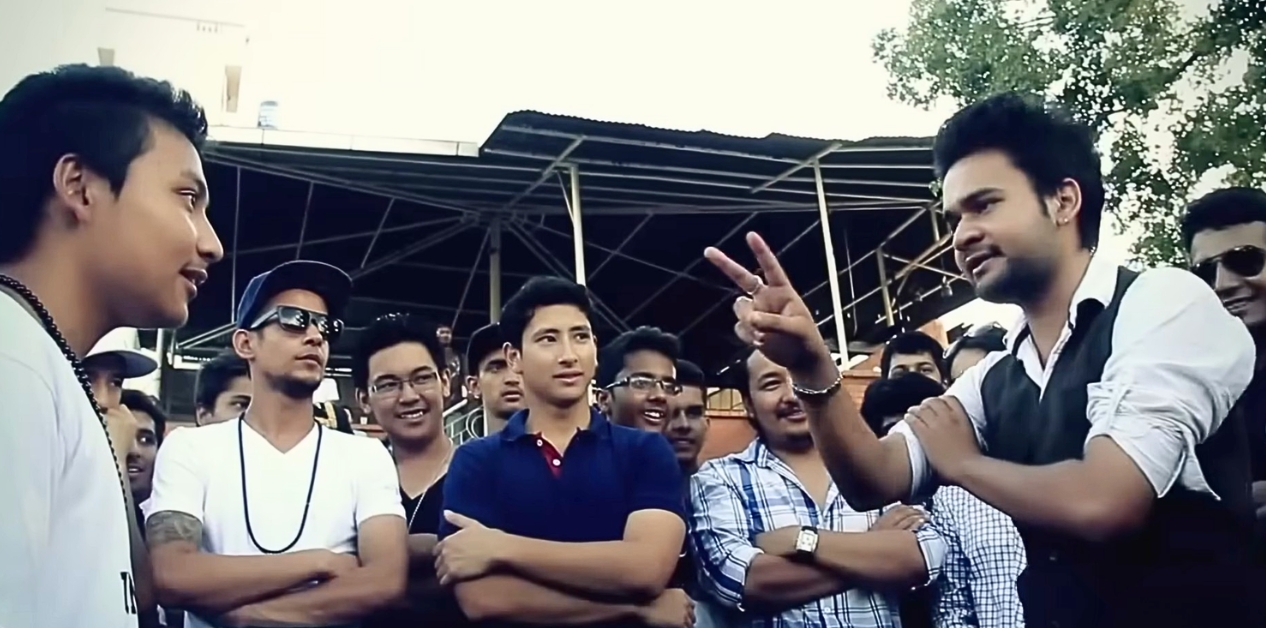
KATHMANDU: On Thursday evening, one day before his swearing-in as Prime Minister, Balendra Shah (Balen) released his new song, Jai Mahakali. The song goes:
Jaya Mahakali, Aayo Gorkhali, Bishwa Jitchhu Yaspali, daraudaina yo Nepali (Jaya Mahakali, the Gorkhali has arrived, I will conquer the world this time, this Nepali is not afraid)
The song uses footage of Balen’s travels, speeches, rallies, and engagements from east to west Nepal during the election campaign, and carries the message of not fearing opponents and bringing revolution this time no matter what.
The timing of the new music video’s release makes it clear that Balen is skilled at using the relationship between music and politics.
Balen, who entered the political scene only after a decade in music, had been doing ‘politics’ in the underground hip-hop style all along. Nearly four years ago, on Kantipur Television’s ‘It’s My Show’ with host Suraj Singh Thakuri, he had said he was making a revolution through rap. He said his songs served not for entertainment but to express disillusionment or commentary against social ills and political disorder. Balen’s musical journey and his chosen genre of hip-hop confirm this.
Balen has sung nearly two dozen songs. His first song was Sadak Balak (street child), released 13 years ago on his own YouTube channel. The song said:
Sarkari karmachari
bideshi byapari
bhashan diera haina
herideu maya gari
(Government employees, foreign traders, not through speeches, look at us with love)
Raw Barz, initiated around 2013 by Yama Buddha and Kolin Bikram Rana, gave birth to many talented rappers of the new generation such as Unique Poet, Laure, and Sacar. Raw Barz was also the primary launch-pad for Balen’s arrival and recognition as a rapper. In his rap battle against Little Grizzle, Balen didn’t just show up and drop rhymes for the first time; he dominated his opponent through his wordplay and aggressive style.
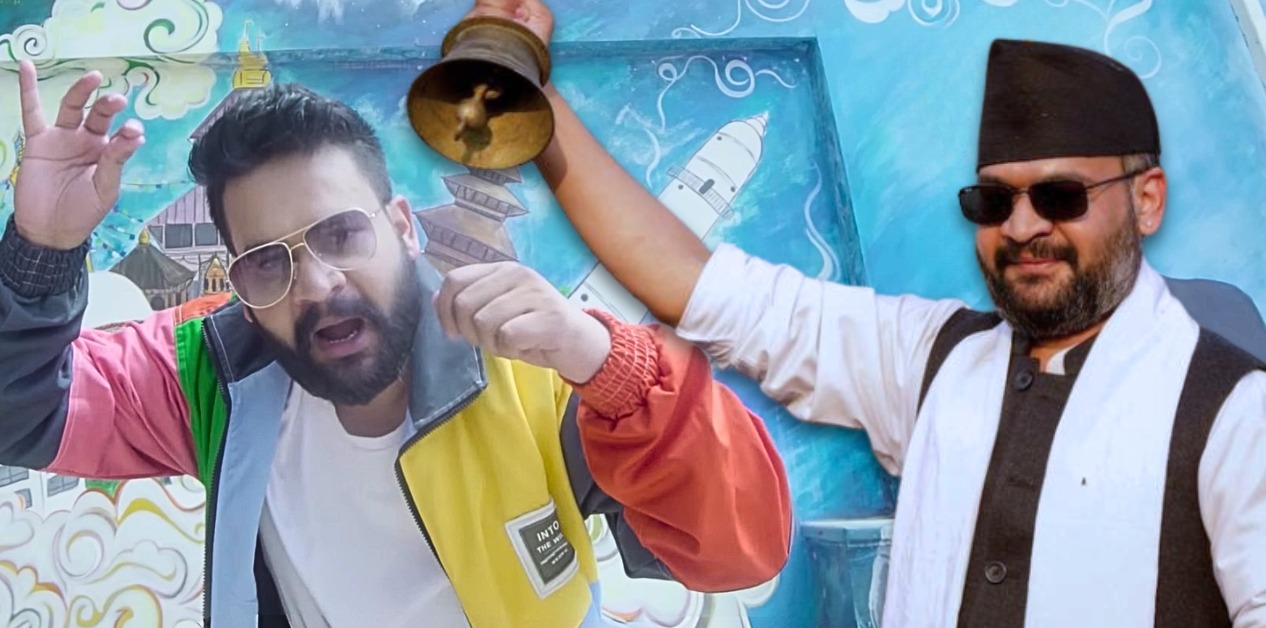
These lines from that competition with Little Grizzle even went viral after Balen announced his prime ministerial candidacy:
Tero anuhar golbheda ko, herdai thichna man lagchha,
(Your face looks like a tomato, I feel like squeezing it)
Ta linema huda jaslai pani line michna man lagchha
(When you’re in line, everyone feels like jumping the queue)
Dui char din parkhi kanchha,
(Wait a couple of days, little one)
tero baaulai ni ma sanga photo khichna man lagchha
(Even your old man will want to take a photo with me)
Raw Barz brought Balen to the center of Nephop (Nepali hip-hop). Balen, who had graduated in civil engineering from India, also earned the identity of a young engineer-rapper at that time.
After being elected Mayor of Kathmandu Metropolitan City in 2022 as an independent candidate and publishing his poetry collection Ashna, Balen had expressed his deep attachment to poetry in the 12-year-old song titled Tathya:
Balen mero naam, kapi kalam le ladchhu ma
(Balen is my name, I fight with paper and pen)
Hatiyar ko kaam, saahitya le nai garchhu ma
(The work of weapons, I do with literature)
Among the songs on Balen’s YouTube channel, Atiitka Geet, Savage, Marphako Madira, Local Thito, Ma Nepal Hanseko Herna Chahanchhu, and Balidan are well-known.
This goes back 13 years; in the name of controlling crime in Kathmandu, police would forcibly detain youth and cut their long hair. Balen made a rap at that time in protest of this police excess:
Ma Nepal prahari, janata laai dhantchhu ma
(I am Nepal Police, I deceive the people)
Garna kehi aaudaina, kapaal kaatchhu ma
(I can’t do anything useful, so I cut hair)
Ma Nepal prahari, aba kapaal ko sewa ma
(Nepal Police, now in the service of hair)
The ability to fearlessly and unapologetically voice individual or collective protest is a defining characteristic of rap. Balen can be seen to have embraced this characteristic right from the start as a rapper.
By the time of Balidan, released six years ago, Balen’s anger can be seen to have intensified even further. Saying ‘malai bolna de sarkar, aparadh haina’ (Let me speak, government, it is not a crime), he goes on:
Desh ko rachha garne jati sabai chutiya chhan
(All those supposed to protect the country are fools)
Neta jati sabai chor, desh luti kha chhan
(All the leaders are thieves, plundering and devouring the nation)
Rap features poetic presentation with rhythm and alliterative storytelling. Rebellion was at the very roots of rap, which developed in the 1970s. Black youth used rap to resist racial discrimination and oppression directed at them. This characteristic of resistance music is found in Nephop just as it is in hip-hop around the world.

Photo: Balen’s Facebook wall
Girish Khatiwada, one of the pioneering rappers who established hip-hop in Nepal, considers Balen a conscious rapper. “Conscious rap is rap that consciously expresses what is happening in society,” he says, “Balen didn’t just sing about youth’s disillusionment; he spread awareness about various problems within the country and social ills like political corruption.” Girish himself is also a rapper of this same school.
It is natural for youth to be drawn to rap when it brings up issues like their generation’s disillusionment, unemployment, and corruption. Understanding this, Balen made music a medium for conversation about social issues from the very beginning. “The purpose of my music was always to do something for society. What I am doing now is just an extension of that,” Balen has said in interviews.
However, Balen’s songs had not spread to a large audience before he entered politics. “Balen did not become a politician because of his success in rap. Rather, his songs became hits after he entered politics,” says Khatiwada, “But his political thinking and his songs were seen to align. That benefited both his music and his politics.”
Many of Balen’s songs found their audience long after they were first released; for instance, Ma Nepal Hanseko Herna Chahanchhu, which was featured in the film Laaz Sharnam, and Aamnepali Buwa, which was featured in Jharipachhi ko Indraeni.
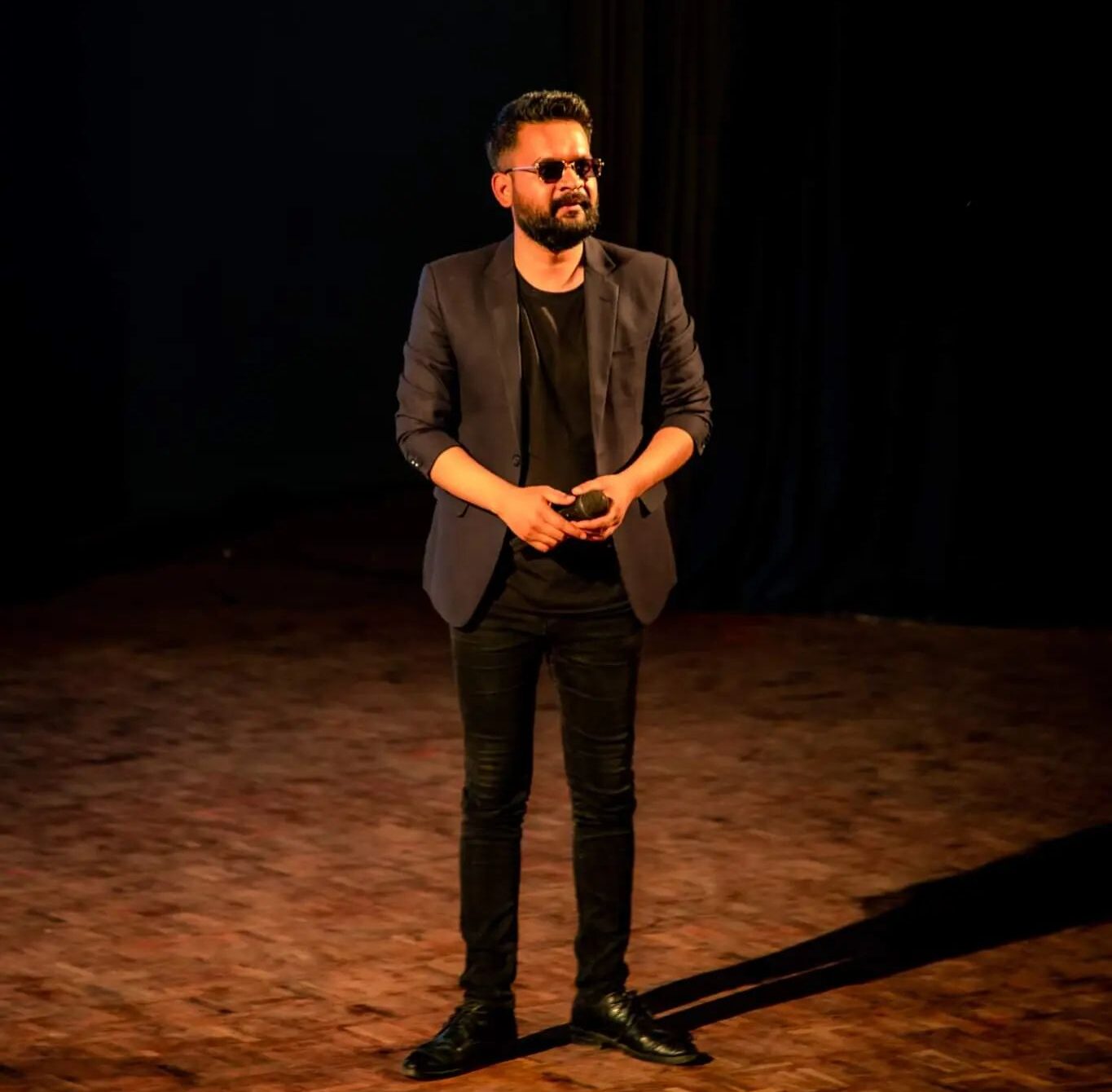
Photo: Balen’s Facebook wall
At a time when even the second Constituent Assembly was failing to promulgate a constitution, Balen was active in the ‘We Campaign for Constitution’ movement. It was then that he released Ma Nepal Hanseko Herna Chahanchhu. This song also became very popular during the election. Aamnepali Buwa is also a 13-year-old song.
In a time when algorithmic politics is being debated, there is still much discussion to be had about the use and reuse of Balen’s songs. Because to understand Balen’s politics, one must also understand his rap.
Balen, who has gained attention even in international media as a rapper-politician, likely has many people who see similarities between his social media expressions and his rap punchlines. His manner, gestures, attire, and style all clearly display rapper swag.
Political analyst Hari Sharma says, “The current era is, as writer Pankaj Mishra described, an age of anger. Music’s role is visible here. Across the world, music has become the medium for pouring out that despair and emotional voice.”
Just as the music of popular groups like Ralpha during the Panchayat era served to express non-establishment views and issue warnings, rap has more recently become a medium for pouring out ideas outside the power structure and sounding alarms. But Balen did not make music merely a medium for warnings. His conclusion was – advocacy and campaigns alone are not enough. One must take the lead oneself. Balen’s rise from Mayor to Prime Minister is the result of this very conviction.
Balen, who used rap to hold up a mirror to society, is no longer the oppositional rapper. He has now become the establishment where not a rap about problems, but a formula for solutions is expected.
In his competition against Little Grizzle at Raw Barz, he had said:
Nep-hop ko history ma, tainle jasto rebuttal kasaile khako thena
(In the history of Nephop, no one has ever taken a rebuttal like you have)
History bhaneko pherine chij ho bhai, Balen ahile samma aako theena
(But history is something that changes, brother; Balen had not yet arrived)
Balen has arrived, history has changed. Will the country now be built?