Kathmandu
Tuesday, July 28, 2026






KATHMANDU: The Supreme Court on Monday (April 6) dismissed habeas corpus petitions seeking the immediate release of former Prime Minister KP Sharma Oli and former Home Minister Ramesh Lekhak, but directed authorities to either complete the investigation by April 9 or set them free.
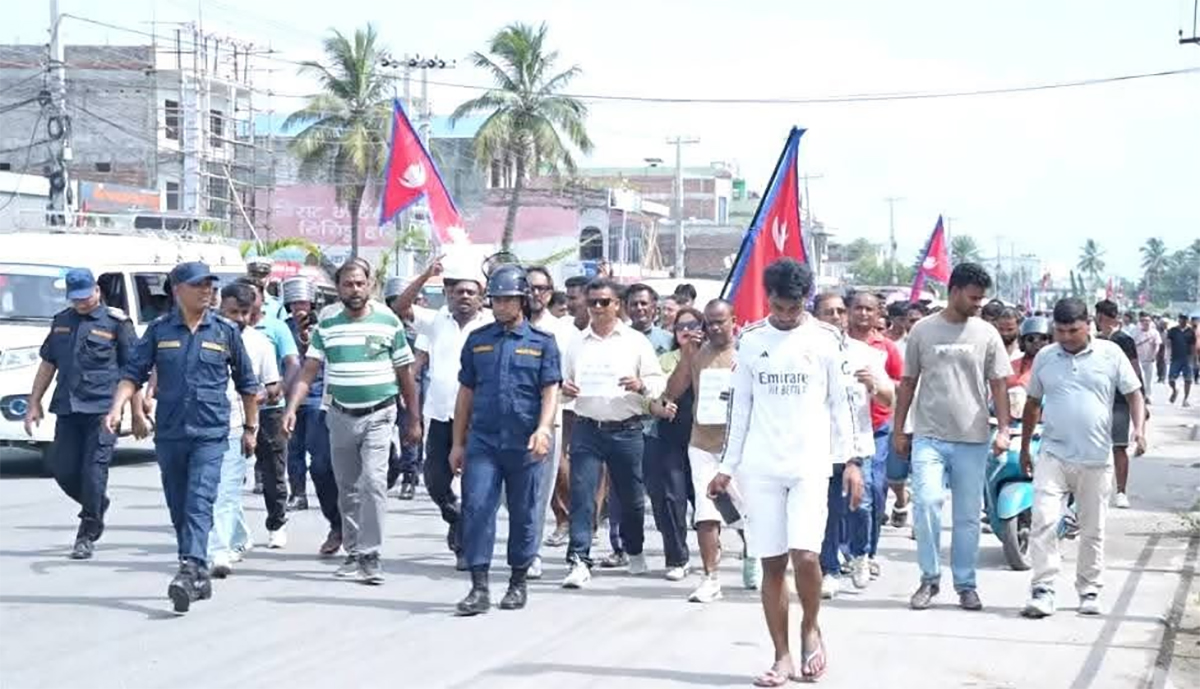
Oli and Lekhak were arrested on March 28, after a commission investigated the deadly Gen Z protests of September 2025 that resulted in at least 76 deaths.
They face charges of criminal negligence related to the handling of the demonstrations. Their wives challenged the detention through habeas corpus petitions.
What is the Supreme Court’s order issued today (April 6)?
A division bench of Justices Binod Sharma and Sunil Kumar Pokharel dismissed the requests for immediate release.
The court instructed investigating authorities to finish their probe by April 9.
If the investigation remains incomplete or no decision is made to file formal charges by that date, Oli and Lekhak must be released according to standard criminal procedures.
Further inquiries could still continue afterward if required.
What is habeas corpus and its meaning in this context?
Habeas corpus is a vital constitutional safeguard. It requires authorities to bring a detained person before the court and explain the legal basis for their custody.
If the court finds the detention unjustified, it can order immediate release. In this case, the petitioners claimed the custody was improper, but the Supreme Court determined the detention was lawful for now while imposing a strict time limit to prevent indefinite holding.
What exactly is in the court order?
The bench told officials to finish the investigation and take appropriate legal steps, or release KP Sharma Oli and Ramesh Lekhak as per the National Criminal Procedure Code.
The court did not grant immediate freedom but stressed that the current remand period cannot be extended without limit.
Arguments from both sides were fully presented on April 5 and 6 before the ruling.
Which laws did the Supreme Court refer to?
The court referred to the National Penal Code, specifically sections dealing with criminal negligence that allow up to 10 years in prison for improper use of force during public protests.
It also cited the National Criminal Procedure Code, which sets rules for investigation timelines, remand extensions, and mandatory release when probes exceed permitted periods.
The order emphasized following these rules to protect individual rights.
Who filed the habeas corpus petitions, when, and why?
The petitions were filed on March 29, 2026, by Radhika Shakya, wife of KP Sharma Oli, and Yashoda Lekhak, wife of Ramesh Lekhak.
They argued that the arrests and ongoing detention were unlawful and asked for the leaders’ prompt release.
The cases were combined for joint hearings. The Supreme Court had previously issued show-cause notices requiring the government to justify the detentions.
Why were Oli and Lekhak arrested?
The arrests occurred on March 28, 2026, based on the Gauri Bahadur Karki Commission report examining the violent handling of Gen Z protests in September 2025.
The report accused the then-prime minister and home minister of criminal negligence for failing to stop the crackdown that caused multiple deaths and many injuries.
Police later obtained several remand extensions for questioning and gathering evidence.
Who represented Oli and Lekhak in the habeas corpus petition?
A total of 94 lawyers participated in the hearing on both sides.
Of these, 89 lawyers represented Oli and Lekhak.
Senior Advocates are Radheshyam Adhikari, Harihar Dahal, Agni Kharel, Rabinarayan Khanal, Muktinarayan Pradhan, Sher Bahadur KC, Bijaykanta Mainali, Prem Bahadur Khadka and Ramnarayan Bidari.Similarly, senior advocates like Chandrakanta Gyawali, Gopal Krishna Ghimire, Tikaram Bhattarai, Amar Thapa, Bijay Prasad Mishra, Ishwariprasad Bhattarai, Ramesh Badal, Kedar Prasad Koirala, Lalit Bahadur Basnet, Lekhnath Adhikari, Bishnu Prasad Timilsina, Krishnabhakta Pokharel, Shantiram Khatiwada, Dinmani Pokharel, Arun Paudyal, Kamal Nayan Panta also argued in favor of Oli and Lekhak.
Other advocates who defended Oli and Lekhak were Jiban Neupane, Ramesh Bahadur Rawat, Taranidhi Panta, Kripa Pokharel, Babita Karki, Shobhana Adhikari, Samjhana Adhikari, Sarita Acharya, Samriddha Ghimire, Rajaram Ghimire, Suresh Bohara, Radha Regmi, Sudha Dhital, Shiv Kumar Yadav, Premraj Silwal, Vishnu Prasad Bhandari, Krishna Prasad Angdembe, Tarakumar Shrestha, Kumar Prasad Ghimire, Chiranjibi Khatriwada, Tek Prasad Bhattarai, Bhuvan Prasad Niraula, Gyanendra Raj Aran, Shobha Budhathoki (Pandey), Tulsiram Pokharel, Saraswati Shrestha, Sadiksha Bhusal, Sher Bahadur Rokaya, Santana Dahal Nyaupane, Rajib Bastola, Diksha Kandel, Anita Timilsina, Jagat Bahadur Karki, Trilok Bahadur Chand, Keshab Khatiwada, Saraswati Shrestha, Tank Prasad Bhattarai, Dharmaraj Regmi, Laxmi Prasad Regmi, Ramsharan Ghorasaini, Jyoti Regmi, Kirtinath Sharma Paudel, Mukund Prasad Bhattarai, Thammalal Sharma, Gurubhakt Niraula, Chok Bahadur Magar, Netrakumar Regmi, Ganesh Bahadur Oli, Rabindra Kumar Dhungana, Bhaktiram Ghimire, Prashansa Bhattarai, Prakash Singh Bista, Shanti Devi Khanal, Santosh Bhandari, Janak Singh Saud, Ekta Devkota, Laxmi Devi Dahal Rawat, Pavitra Acharya, Liladevi Dhamala, Tika Bahadur Kunwar, Gokarna Baruwal, Matrika Khanal, Prakash Adhikari and Bholanath Bhandari
Who represented the government in the habeas corpus petition?
The government was represented by five attorneys, including the Deputy Attorney General and the Assistant Attorney General.Sanjivraj Regmi, Lokraj Parajuli, Khemraj Gyawali, Uddhab Prasad Pudasaini, and Shanti Neupane appeared on behalf of the government.
What happens next?
Investigators have until April 9 to complete their work.
If a formal charge sheet is filed by then, the case will advance to trial. If not, the leaders must be released, though additional steps in the investigation could follow later.
This balanced ruling upholds the rights of those detained while allowing time to address serious allegations in this politically significant matter.