Kathmandu
Sunday, July 12, 2026





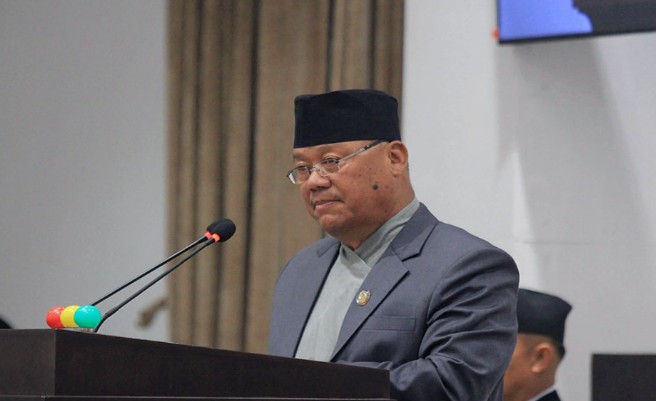
KATHMANDU: Former Speaker Krishna Bahadur Mahara, along with Joint Secretary of the Government of Nepal Arun Pokharel and others, have been charged in a corruption case for allegedly smuggling gold hidden inside electronic cigarettes (vapes) today (April 9).
The Commission for the Investigation of Abuse of Authority has filed a case at the Special Court on Thursday, naming former Speaker Mahara, Joint Secretary Pokharel, and Mahara’s son Rahul, among others, as defendants.
The case alleges that they were involved in the illegal transportation of gold concealed within vapes in collaboration with Chinese smugglers, with damages estimated at around Rs 77.86 million.
According to the charge sheet filed at the Special Court, the accused, including former Speaker Mahara, are alleged to have facilitated the clearance of gold smuggled into the country under the cover of vapes by a Chinese group in December 2022.
Mahara, arrested on October 12, 2025, and released on Rs 2 million bail by the Patan High Court on November 27, 2025, denies wrongdoing.
The probe highlights alleged abuse of influence at Tribhuvan International Airport customs.
Who is Krishna Bahadur Mahara and what is his political background?
Krishna Bahadur Mahara is a veteran senior leader of the Nepali Communist Party, born on June 29, 1958, making him 68 years old. He has had a long and influential career in Nepal’s left-wing politics, having served as the Speaker of the House of Representatives, Deputy Prime Minister, and holding several ministerial portfolios over the years.
As a former Vice-Chairman of the then-CPN (Maoist Centre), Mahara was a key figure during the Maoist insurgency period and played significant roles in the peace process and subsequent coalition governments.
His deep connections within the party, government institutions, and security apparatus have given him substantial political clout, particularly in areas involving bureaucracy and customs administration.
This extensive influence is now at the center of allegations that he leveraged his position to protect or facilitate criminal networks involved in gold smuggling.
While his supporters often portray him as a dedicated revolutionary leader who contributed to Nepal’s political transformation, critics argue that his prolonged hold on power has sometimes blurred the lines between political authority and personal or familial interests.
The gold smuggling investigation has severely tarnished his public image and sparked broader debates about accountability for senior politicians in Nepal, raising questions about whether high-ranking officials can truly be held to the same standards as ordinary citizens in cases of economic crimes.
What is the core gold smuggling case involving vapes that implicates Mahara?
The central case revolves around the smuggling of approximately 9 kilograms of gold cleverly concealed inside 730 electronic cigarettes, commonly known as vapes, which were imported through Tribhuvan International Airport (TIA) in Kathmandu.
The operation involved a Chinese national named Li Hansong (also referred to in some reports as Lui Honsong), who arrived in Nepal on December 25, 2022 (Christmas Day), carrying two suitcases packed with the vapes.
Investigations by the Central Investigation Bureau (CIB) revealed that the gold was hidden by disassembling the devices and inserting gold bars or powder inside them, making the consignment appear as ordinary commercial goods.
The total value of the smuggled gold in this consignment was estimated at over Rs 85.5 million (approximately USD 600,000 at the prevailing exchange rates).
This incident is believed to be part of a larger transnational organized crime syndicate involving Chinese nationals and local facilitators.
The gold reportedly went missing from customs storage after initial seizure attempts, suggesting possible internal collusion. Mahara and his son Rahul Mahara are accused of playing facilitating roles by exerting pressure on customs officials to release the consignment or overlook irregularities.
This vape-based smuggling method is considered sophisticated because vapes were emerging as a popular import item and could bypass stricter scrutiny applied to traditional gold concealment techniques like those used in electronics or vehicle parts.
The case stands out not only for the method but also for directly linking a former high constitutional post holder to organized crime, which has intensified public scrutiny on airport security and political interference in law enforcement.
Broader probes have connected this to other gold smuggling rackets, but the vape consignment remains the primary focus for charges against Mahara.
When and how did the smuggling incident occur in detail?
The smuggling attempt took place on or around December 25, 2022, when Chinese national Li Hansong landed at Tribhuvan International Airport from Hong Kong carrying two large suitcases. Inside the suitcases were 730 electronic vapes, which customs officials initially inspected.
Upon closer examination and subsequent intelligence inputs, it was discovered that gold had been meticulously hidden within the devices. The syndicate chose vapes as a concealment method, likely because they looked like legitimate consumer electronics and were part of growing import trends.
Phone records and investigation details later showed coordinated communications between the Chinese smugglers, Rahul Mahara, and Krishna Bahadur Mahara in the immediate aftermath of the seizure.
The gold was allegedly intended for sale in Nepal’s black market, where demand for undeclared gold remains high due to price differentials and investment purposes.
Initial customs handling allowed the consignment to be stored, but the gold eventually went missing, prompting suspicions of internal facilitation or tampering. This 2022 incident was part of multiple gold smuggling attempts through TIA during that period.
The case gained renewed momentum in 2023 with the arrest of Rahul Mahara and further intensified in 2024-2025 under different government administrations pushing anti-corruption agendas.
Detailed CIB investigations, including call detail records (CDRs) and witness statements from airport staff, mapped out the timeline from arrival to attempted clearance.
The sophistication of the operation using everyday consumer items for smuggling highlights vulnerabilities in Nepal’s airport security protocols and the role of influential figures in potentially overriding standard procedures.
What was the exact quantity, value, and method of concealment of the smuggled gold?
Court documents and police chargesheets specify that the primary consignment linked to the Mahara case involved around 9 kilograms of gold. Prosecutors have quantified the value at Rs 77.86 million, which they are seeking to recover as compensation along with penalties.
The concealment method was highly technical: the smugglers disassembled the 730 vapes and packed gold (in the form of bars, flakes, or powder) inside the battery compartments or internal structures of the devices.
This made the suitcases appear as standard electronic imports rather than high-value contraband. Scanners and initial checks could easily miss the gold unless specific intelligence or manual disassembly was applied.
While some media reports occasionally reference larger hauls (such as 61 kg hidden in brake shoes in related syndicate activities), the formal charges against Mahara center on this 9 kg vape consignment from the December 2022 incident.
The syndicate reportedly collaborated with organized groups based in China and used Nepal as a transit or destination point for black-market distribution. The high value reflects both the quantity and the premium on undeclared gold in Nepal’s market.
Investigators noted that such concealment tactics are evolving, moving away from traditional methods like hiding in vehicles or construction materials to more discreet consumer goods.
Who are the key accused and co-conspirators besides Krishna Bahadur Mahara?
Besides Krishna Bahadur Mahara, the key figures in the probe include his son Rahul Mahara, who faced earlier arrests and charges for direct coordination in the smuggling network.
Additionally, the CIAA has charged multiple individuals, including former Chief Customs Administrator at Tribhuvan International Airport Arun Pokharel; Chief Customs Officers Mukti Prasad Shrestha and Ambika Prasad Khanal; Customs Officers Ramesh Kumar Khatiwada and Subendra Shrestha; and non-gazetted first-class officers Subarnaprabha K.C., Bhuvan Raj Ghimire, Umesh Prasad Koirala, Revant Khadka, and Madhusudan Pokharel.
Also charged are Nirmal Kumar B.K., Lokendra Kumar Poudel, Dipesh Basnet, Gopal Subedi, Dinesh Basnet, Bed Prakash Agrawal, Ram Keshav Thapa Chhetri, Amrit Karki, Nima Gurung, Prerana Thapa, Lalita Thapa, Dipika Thapa, Chinese nationals Li Hang Song and Daojing Wang, Belgian national Dawa Tsering, Indian national Sahev Rao Pandurang Margale, and Dexter Travels and Tours company.
The main carrier was Chinese national Li Hang Song, who brought the vapes into Nepal.
The network extended to middlemen, importers, and possibly financiers who handled the black-market distribution of the gold. Nepal Police’s Central Investigation Bureau built the case through extensive phone record analysis, financial trails, and statements from arrested lower-level facilitators.
What specific role did Mahara’s son Rahul Mahara play in the smuggling?
Rahul Mahara was arrested in 2023 in direct connection with the 9 kg gold smuggling case involving vapes. Investigators allege that he served as a key local facilitator, maintaining frequent telephone contact with Li Hansong and other Chinese nationals involved in the operation.
His role reportedly included coordinating with customs officials at Tribhuvan International Airport to secure the release of the seized consignment and using familial political connections to smooth over irregularities.
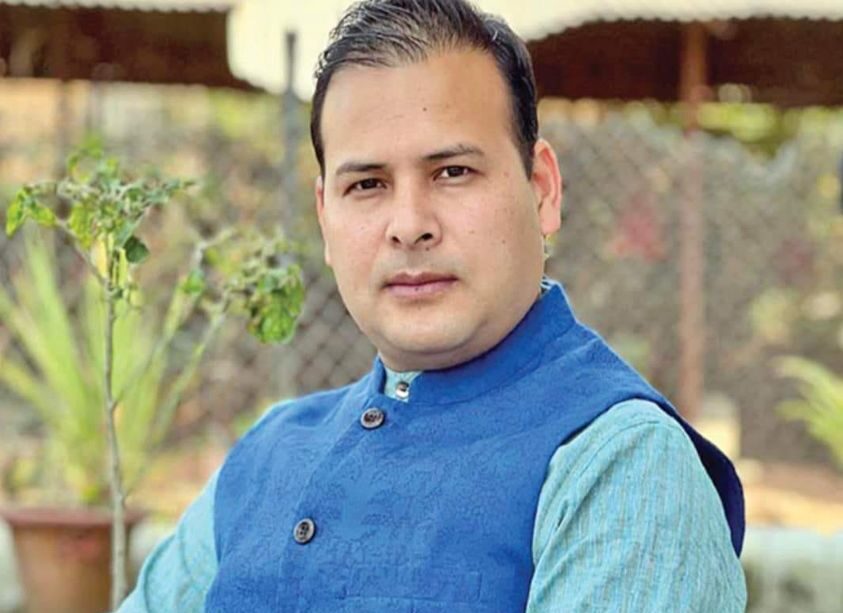
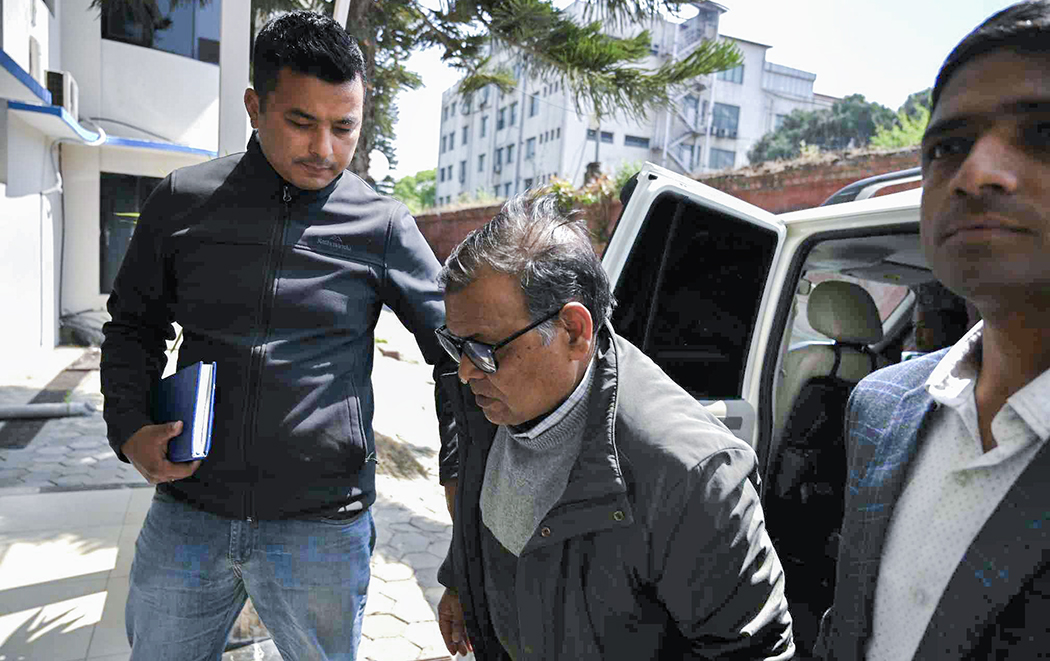
Rahul Mahara. File photo
Evidence from call detail records showed repeated communications in the days following the December 2022 arrival of the gold-laden vapes. Rahul’s involvement allegedly provided the crucial family link that later extended scrutiny to his father, Krishna Bahadur Mahara.
Court records indicate he attempted to arrange clearance of the goods from airport storage and may have provided logistical or financial support to the syndicate. His earlier arrest and questioning formed a foundational part of the evidence chain that eventually implicated the senior Mahara.
While Rahul has faced separate proceedings, his actions are seen as bridging the gap between the foreign smugglers and local influential figures. This familial dynamic has fueled public criticism about how political families may exploit their positions for illicit gains.
How was Krishna Bahadur Mahara allegedly involved in facilitating the smuggling?
Mahara stands accused of abusing his considerable political influence to pressure customs and airport officials at Tribhuvan International Airport into releasing or overlooking the smuggled gold consignment hidden in vapes.
According to CIB investigations and the CIAA chargesheet, he and his son allegedly contacted relevant authorities shortly after the December 2022 seizure, attempting to facilitate clearance of the goods.
Prosecutors frame this as part of a larger organized crime facilitation rather than isolated smuggling, emphasizing the abuse of authority by a former Speaker and senior party leader. The allegations suggest that Mahara’s stature within the then-Maoist Centre and previous government roles allowed him to exert indirect or direct influence over bureaucratic processes at the airport.
He has denied any intentional wrongdoing, claiming any communications were routine or misinterpreted. However, the case portrays him as a protector or enabler for the syndicate, helping the gold evade proper detection and recovery.
This alleged involvement is particularly damaging because it involves a person who once held one of the highest constitutional positions in Nepal. The probe underscores systemic issues where political connections can potentially undermine institutional integrity in key revenue-collection points like customs.
What evidence links Mahara to the gold smuggling network?
The primary evidence consists of intercepted phone records and detailed call logs showing frequent communications between Krishna Bahadur Mahara, his son Rahul, Li Hansong, and customs officials in the period immediately following the 2022 seizure.
These call detail records (CDRs) form the backbone of the prosecution’s case, demonstrating attempts to influence the handling of the consignment. Additional support comes from witness statements provided by customs staff and other syndicate members, including Chinese nationals who were questioned during the probe.
Financial trails and prior investigations into Rahul Mahara’s activities further corroborate the links. The CIAA’s parallel inquiry into abuse of authority recorded Mahara’s statement on October 9, 2025, and contributed to the renewed push for action.
While no large quantities of physical gold have been directly recovered from Mahara or his immediate associates in this specific consignment, prosecutors are demanding recovery of Rs 77.86 million value as compensation.
The evidence is largely circumstantial and documentary, which is common in high-level influence-peddling cases. Defense teams often challenge the interpretation of phone calls as routine political or constituent work rather than criminal facilitation.
Nonetheless, the volume and timing of the communications have been deemed sufficiently suspicious by investigators to warrant formal charges under organized crime provisions.
Why was Mahara first arrested in March 2024?
On March 18, 2024, the Central Investigation Bureau arrested Krishna Bahadur Mahara from Kapilvastu (while he was reportedly en route toward the Indian border area) and brought him to Kathmandu for questioning.
This arrest followed recommendations from a high-level gold smuggling probe commission and revived scrutiny of the 2022 vape case. At the time, investigators alleged his indirect role through family connections and possible pressure on officials.
He was questioned intensively but ultimately released shortly afterward on a “general date” without formal charges or prolonged remand, as the District Attorney’s Office at that stage determined there was insufficient immediate evidence for custody.
On March 18, 2024, the CIB arrested Krishna Bahadur Mahara from Kapilvastu
The 2024 action was part of a broader crackdown on gold smuggling syndicates that had implicated several politicians’ families. It marked the first public high-profile implication of Mahara himself, beyond his son’s earlier arrest.
The arrest generated significant media attention and political debate about selective justice and the influence of changing governments on ongoing investigations.
Mahara maintained his innocence, describing the move as politically motivated. This initial detention set the stage for later, more sustained legal actions in 2025.
What happened after Mahara’s 2024 arrest and why did the case appear to stall?
Following his March 2024 arrest and questioning, Mahara was released without bail conditions beyond a commitment to cooperate with future summons. The case appeared to lose immediate momentum due to a combination of political transitions, shifting government priorities, and alleged behind-the-scenes influence that slowed prosecutorial action.
Investigations continued at a lower intensity through the CIB and later the CIAA, with statements being recorded periodically. Critics pointed to this period as evidence of selective or delayed justice in cases involving powerful figures, where probes often stall until a new administration pushes for revival.
During this time, Mahara continued his political activities within the then-Maoist Center and now Nepali Communist Party.
The apparent stall fueled public skepticism about the independence of anti-corruption bodies in Nepal. However, underlying evidence collection persisted, including re-examination of phone records and syndicate links.
This phase illustrates how Nepal’s volatile coalition politics can impact high-profile criminal cases, sometimes allowing accused individuals breathing room before renewed pressure. The quiet continuation of the CIAA inquiry eventually led to the more decisive actions today.
Why was Mahara arrested again on October 12, 2025?
On October 12, 2025, the Central Investigation Bureau re-arrested Krishna Bahadur Mahara in Lalitpur following explicit fresh instructions from the Commission for the Investigation of Abuse of Authority (CIAA).
This came just days after the CIAA recorded his detailed statement on October 9, 2025, at its Tangal office. The arrest occurred under the interim government’s intensified anti-corruption drive, which prioritized high-profile gold smuggling cases.
Investigators cited accumulated evidence from prior probes, including call records linking him and his son to the Chinese smugglers and customs officials. Police described the action as a necessary step to crack down on organized networks that had long operated with apparent impunity.
Mahara was produced before the Kathmandu District Court, where he faced initial remand in judicial custody. This second arrest reflected a more determined prosecutorial approach compared to 2024, with the CIAA playing a stronger coordinating role on the corruption angle.
What is the exact role of the CIAA in this investigation?
The Commission for the Investigation of Abuse of Authority (CIAA) has played a pivotal parallel role by focusing specifically on the corruption and abuse-of-power dimensions of the case, rather than the pure smuggling aspects handled primarily by the CIB.
On October 9, 2025, the CIAA formally recorded Mahara’s statement as part of its inquiry into whether he misused his official or political influence over customs procedures.
The CIAA issued directives that prompted the October 12 arrest and has been actively involved in examining potential violations by public officials who may have facilitated the syndicate. While the main organized crime charges were filed at Kathmandu District Court, the CIAA’s track can lead to proceedings at the Special Court if clear evidence of authority abuse by a public figure is established.
This dual-track approach is standard in Nepal for cases blending economic crime with official misconduct. The CIAA’s involvement has added legitimacy and institutional weight to the probe, especially given Mahara’s former high constitutional position.
What formal charges were filed against Mahara and on what date?
On October 13, 2025, the District Attorney’s Office at Kathmandu District Court formally filed charges against Krishna Bahadur Mahara under the Organized Crime Control Act for his alleged role in gold smuggling facilitation and related offenses.
Prosecutors specifically demanded the recovery of Rs 85,528,374 (the value of the smuggled gold) along with the maximum imprisonment term of 3 to 5 years. The chargesheet detailed his involvement in the 2022 vape consignment case, citing pressure on customs officials and coordination through family channels.
This filing marked the first comprehensive formal legal action directly targeting Mahara in the smuggling matter, moving beyond mere questioning or short detentions. It was widely reported as a significant step by the interim government in tackling high-level corruption.
The case was registered at the district court, with potential overlap or separate filings through the CIAA route toward the Special Court for abuse-of-authority elements.
What is the current status of the court proceedings as of April 9, 2026?
As of April 9, 2026, the gold smuggling case against Krishna Bahadur Mahara remains ongoing primarily at Kathmandu District Court, with the CIAA continuing its parallel investigation into abuse of authority that has already engaged the Special Court.
Mahara was initially placed in judicial custody following the October 2025 charges but was granted release on Rs 2 million bail by the Patan High Court on November 27, 2025.
The High Court overturned the district court’s remand order, citing insufficient grounds for continued detention during the trial phase. He is currently out on bail and required to appear for scheduled court hearings as the trial progresses through evidence examination and witness testimonies.
No final verdict or conviction has been reached yet. However, the latest actions by the CIAA today will allow the case to proceed further at the Special Court.
Why was Mahara released on bail by the High Court in November 2025?
On November 27, 2025, a joint bench of Patan High Court judges ordered the release of Krishna Bahadur Mahara on a cash bail of Rs 2 million.
The court ruled that there was “no strong reason” to keep him in judicial custody pending the full trial, overturning the earlier Kathmandu District Court decision that had sent him to remand.
Judges considered factors such as the non-violent nature of the economic offense, Mahara’s age, his cooperation during initial questioning, and the absence of immediate flight risk or evidence-tampering concerns.
Standard bail provisions for such cases were applied, allowing him to post the amount and be released from Central Jail in Sundhara.
While the decision was criticized by some as lenient given the seriousness of organized crime charges, it aligned with legal precedents for defendants in similar financial cases where trial can proceed without custody.
What are the broader political implications of this case for the Nepali Communist Party and Nepali politics?
The case has created significant embarrassment for the Nepali Communist Party, where Mahara serves as a senior leader. It has intensified internal party discussions about image management and accountability for leaders’ families.
At the national level, the probe fuels ongoing narratives of elite impunity in gold smuggling rackets that drain government revenue and undermine economic integrity.
Opposition parties have used the allegations to question the credibility of left-leaning coalitions and demand stronger anti-corruption measures.
The timing of arrests often coinciding with government changes highlights how political transitions influence the pace of investigations, raising concerns about politicization of justice.
Long-term, repeated scandals involving politicians’ kin could erode public trust in democratic institutions and fuel calls for systemic reforms in customs, revenue administration, and political party financing.
It also spotlights the challenges of transitional justice legacies from the Maoist era intersecting with contemporary economic crimes.
How does Mahara’s case connect to Nepal’s larger pattern of gold smuggling scandals?
Nepal has witnessed a series of high-profile gold smuggling scandals over the past decade, including the notorious 33 kg seizure in 2017, multiple brake-shoe concealment cases (one involving around 61 kg), and several vape or electronics-based attempts.
Mahara’s case fits into this pattern by exemplifying the use of everyday consumer items (vapes) for sophisticated concealment at Tribhuvan International Airport.
It stands out because it directly implicates the family of a former Speaker, similar to how other probes have touched families of senior politicians across parties. These scandals often involve Chinese or other foreign networks collaborating with local facilitators and officials, pointing to deep penetration of organized crime into border and customs systems.
The recurring nature suggests systemic weaknesses in scanning technology, intelligence sharing, and political oversight. Government crackdowns tend to intensify periodically amid public outrage but frequently face delays due to influence.
Mahara’s case is notable for the former high constitutional position involved and the dual-track CIAA involvement, potentially setting precedents for future accountability.
It connects to broader issues of black-market gold trade driven by price arbitrage and investment demand in Nepal.
Has Mahara commented publicly on the allegations, and what is his defense?
Krishna Bahadur Mahara has consistently and publicly denied any involvement in gold smuggling or wrongdoing. In statements provided to police and the CIAA, as well as through party channels, he has described the case as politically motivated harassment aimed at discrediting him and the Nepali Communist Party.
He maintains that any phone contacts with officials were part of routine political or constituent work and not intended to facilitate illegal activities. His legal team argues that the evidence is largely circumstantial, relying on interpretations of call records rather than direct proof of criminal intent or financial benefit.
Mahara has cooperated with investigations by providing statements and has not fled the country, which his supporters cite as evidence of innocence.
While he has avoided detailed courtroom-style defenses in public media, the core narrative is one of victimization and selective prosecution. This defense strategy is common in high-profile Nepali political cases.
What is the potential legal punishment if Mahara is convicted?
If convicted under the Organized Crime Control Act and related smuggling provisions, Krishna Bahadur Mahara could face a prison term of up to 3 to 5 years along with mandatory recovery of the full value of the smuggled gold.
Additional penalties could arise from the CIAA’s abuse-of-authority track. As this would likely be treated as a first major conviction in this context, actual sentencing might involve some leniency factors such as age and health, but the financial restitution would remain non-negotiable.
A conviction would also carry severe reputational damage, effectively ending any future high-level political career and barring him from constitutional posts.
The case could set an important legal precedent for prosecuting former senior officials in economic crimes, signaling that influence does not guarantee impunity. Appeals to higher courts, including the Supreme Court, would be expected in such a high-stakes matter.
What was Krishna Bahadur Mahara’s earlier attempted rape case and its outcome?
In October 2019, while serving as Speaker of the House of Representatives, Krishna Bahadur Mahara was accused by a female government employee of attempting to rape her at her residence after he allegedly arrived intoxicated.
The complaint led to his arrest, after which he resigned from the speaker’s post amid intense public and political pressure. He spent 133 days in custody during the investigation and trial.
On February 17, 2020, Kathmandu District Court acquitted him, citing insufficient evidence to prove the charges beyond reasonable doubt, along with questions regarding the complainant’s statements and her reported mental health condition at the time.
The acquittal triggered widespread outrage on social media and among women’s rights groups, who criticized it as a failure of the justice system. Patan High Court later upheld the district court’s verdict.
This case, which occurred years before the gold smuggling allegations, is often referenced in media profiles as part of Mahara’s controversial public record but has no established direct connection to the current economic crime investigations. It remains a sensitive reference point in discussions of his career.