Kathmandu
Tuesday, June 16, 2026





Voters endorsed the RSP’s citizen contract and reform agenda with an overwhelming majority; the new government to be formed under Balen’s leadership must now translate those promises into policy and results
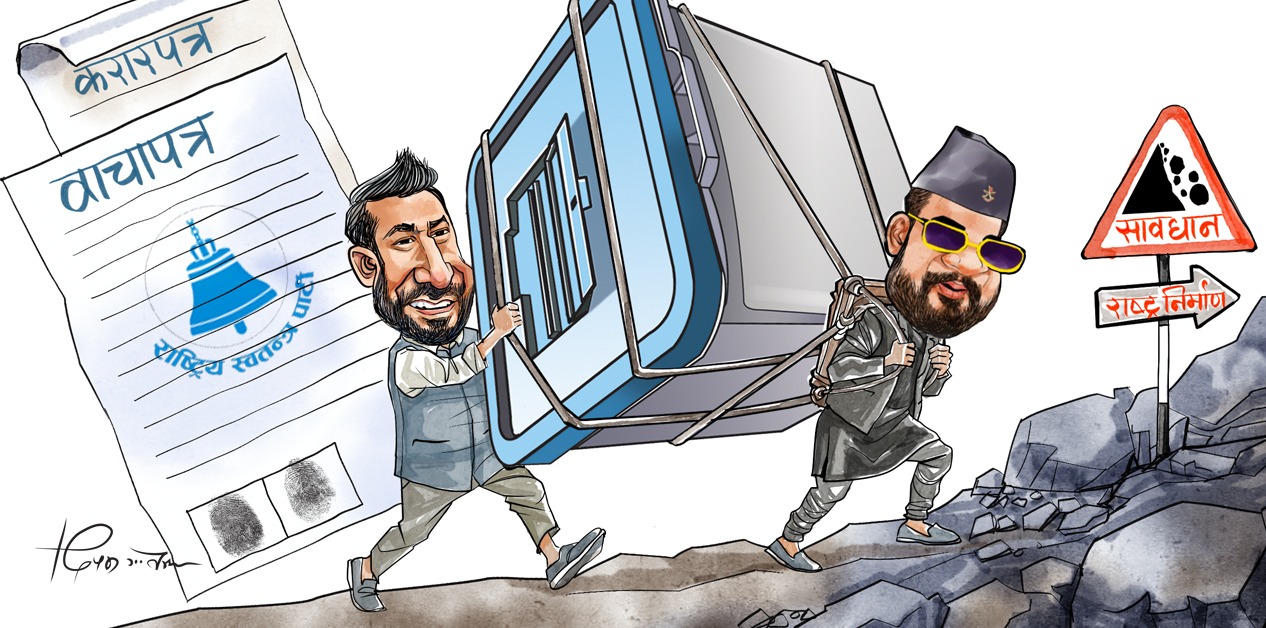
KATHMANDU: The groundwork for forming a government with an overwhelming majority under Rastriya Swatantra Party (RSP) senior leader Balendra Shah (Balen) has already begun. The RSP alone secured 182 seats in the March 5 House of Representatives election. In the election held after last year’s September 8 and 9 Gen Z revolt, voters not only gave RSP candidates a massive mandate but also endorsed the citizen contract the RSP made with the public before the election (on 17 February 2026). This time voters have carried out a rare “vote revolution.” This change in parliamentary politics – long trapped in the vicious cycle of no single party gaining a majority – has ignited new hope in the country. The mandate the RSP received is different for many reasons, and so it is not surprising that it has spread hope among citizens. The electoral pledges the RSP made public have worked to turn voters into optimists amid despair.
Political parties seasoned in the games of power used to issue election manifestos in past elections to attract voters by whatever means. Since manifestos issued by parties and candidates since the 1991 election consistently fell into oblivion after voting ended, voters had stopped believing the electoral promises of parties and the ambitious assurances of candidates. With the credibility graph of parties and leaders having collapsed over the last three decades, after the 2017 election political parties began using new terminology in place of election manifestos. In recent elections, instead of manifestos they have been issuing “pledge documents.” Some parties call them “commitment papers”, others “vow documents.”
In this same context, the RSP, registered on 21 June 2022 and registered with the Election Commission 23 days later on 13 July 2022, had issued a “pledge document” in the 2022 election itself. This time too, the RSP issued its election pledge with a commitment to restore order, bearing photos of Chairperson Rabi Lamichhane and Senior Leader Balen.
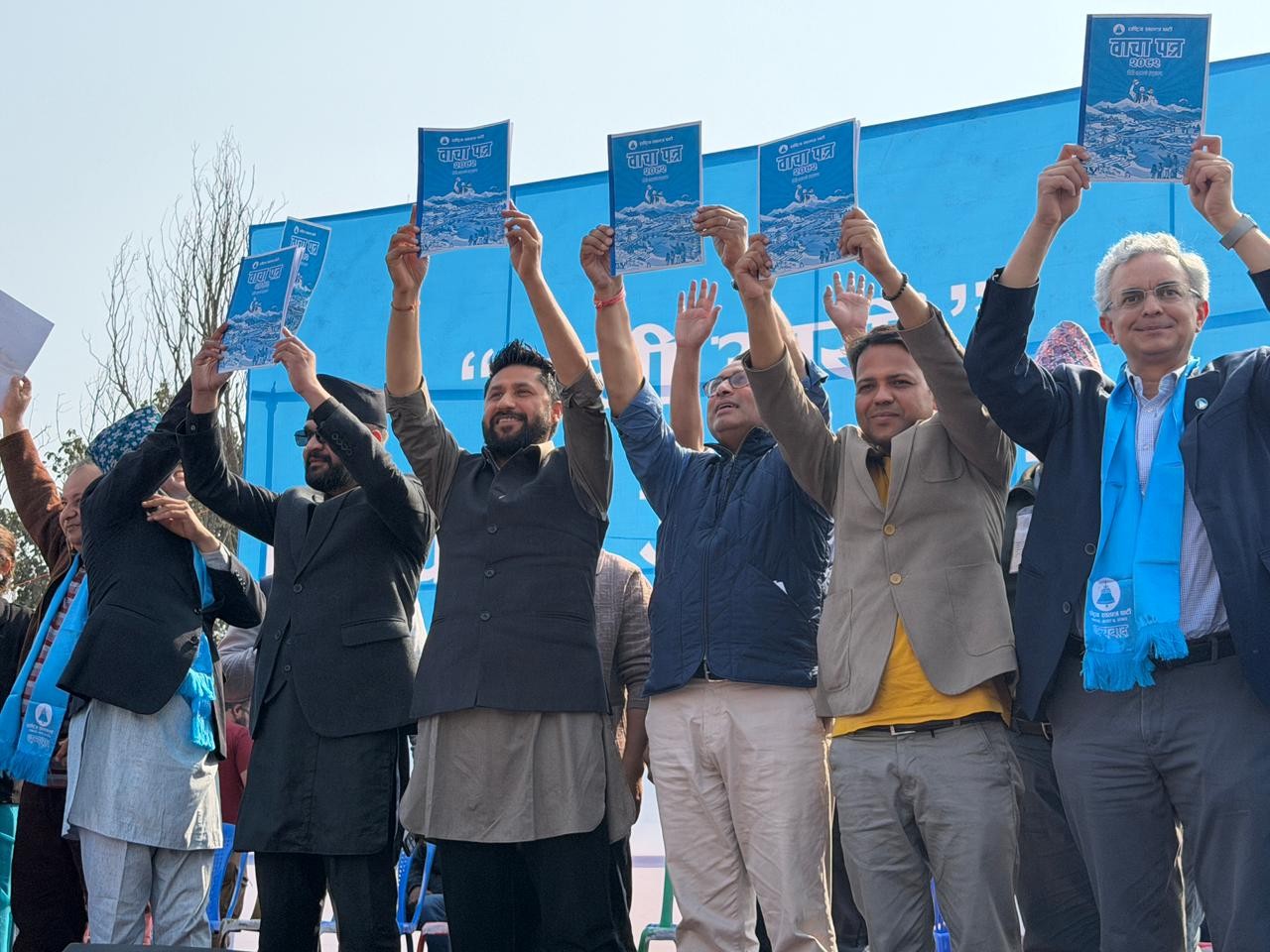
Officials of the Rastriya Swatantra Party unveiling the party’s commitment paper in Surkhet on February 19. Photo: RSP Secretariat.
It is normal for political parties contesting elections to issue manifestos. But a culture has taken root where winning MPs and parties feel no obligation to implement what they promised, and need not be accountable for their pledges. That may be why the RSP not only issued a pledge document in this election but also entered into a symbolic contract with citizens as part of asking for votes. Having gone into the election with both a pledge and a citizen contract, the RSP has secured a majority close to two-thirds. The trial by fire of the Balen government to be formed and the RSP will therefore begin on the very points of the RSP’s citizen contract.
The RSP’s citizen contract is not only more meaningful than the manifestos of the Nepali Congress, the CPN (UML), the Maoists, and other parties that have won power repeatedly, but also more ambitious. Looking at the nation-building points written in it, the citizen contract and pledge could well become the question paper on which voters will test the Balen government. How much of the pre-election commitment to citizens the Balen government and the RSP’s team can implement will be the daily countdown test for Balen as Prime Minister. Because at the end of the citizen contract, the RSP has written: “Except in circumstances beyond our control, we do not distribute promises we cannot fulfill; instead we enter into a contract of debt on your political trust.”
Before the election, opposition parties had dismissed the RSP’s citizen contract in the same old style as mere stuntsmanship. But after voters gave a heavy majority, not only the RSP’s candidates but also its citizen contract and election pledge have been endorsed. Political science professor Dev Raj Dahal says, “How the citizen contract, election pledge, and promises made to the people are incorporated into the Balen government’s policies, programs, and budget is what will test the new government and the RSP.”
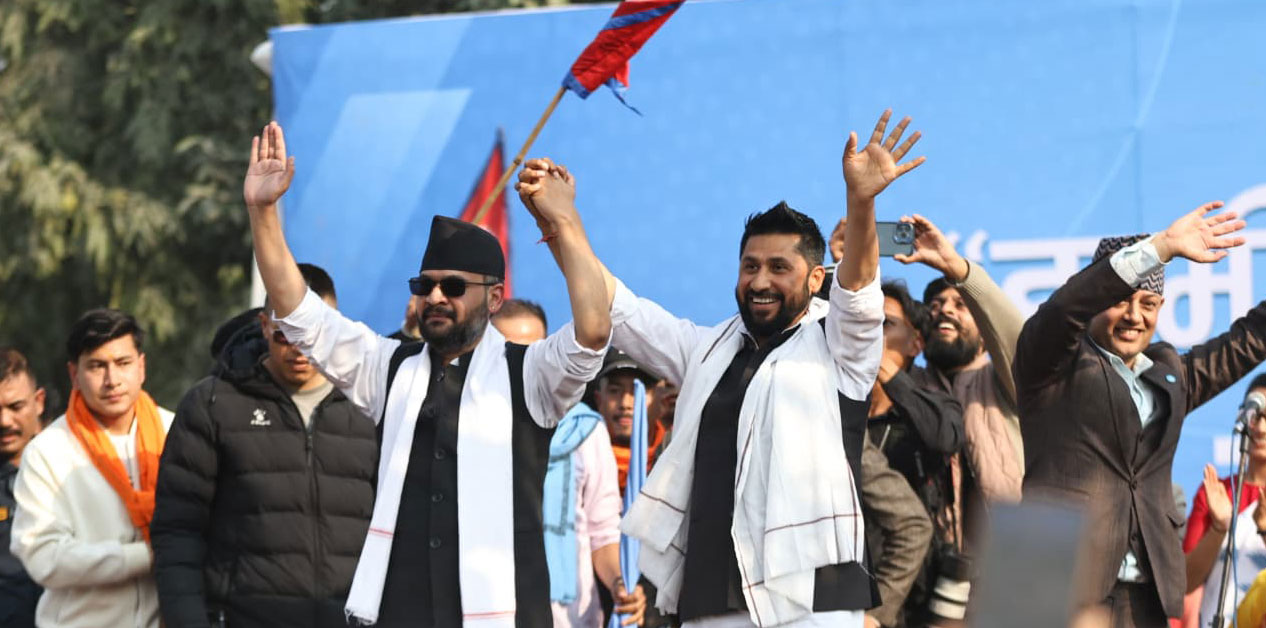
Rabi Lamichhane and Balendra Shah at an election rally held at Tirhutiya Gachhi in Janakpur, on January 20. Photo: Balen’s Secretariat
The essence of the citizen contract
The first point of the RSP’s five-point citizen contract shows an urgency to establish integrity and good governance in the country. It depicts the country’s current state – the partisan exploitation of state machinery, process-based corruption, license raj, and the fact that citizens are forced to rely on middlemen even to receive ordinary services. In the citizen contract, the RSP has pledged to build a credible and ethical state through an anti-corruption grand campaign, with universal digital delivery of government services (online, not in line), and to improve Nepal’s ranking in Transparency International’s corruption index. The same point also mentions ending partisanship and forming a high commission to investigate assets going back to 1990.
The RSP’s election pledge elaborates on this: “We will investigate the assets of peoples who have held important public positions since 1990, transparently and in accordance with legal procedures. We will prepare clear procedures to seize and nationalize assets proven to have been illegally acquired, and implement them effectively.”
The second point of the citizen contract contains a plan for middle-class expansion. To make Nepal a country with a respectable middle income within five years, the pledge is to maintain average economic growth of 7 percent (at constant prices), and within five to seven years raise per capita income to at least USD 3,000 and grow the economy to USD 100 billion (Rs 14.7 trillion). Under this same point, commitments are also expressed to ensure 100-percent insured quality healthcare, fundamental reform of public education, and need-based integrated social security from birth to death. The contract also includes plans for all citizens’ access to financial services including modern banks, cooperatives and microfinance within strict regulation, and an end to usurious interest exploitation.
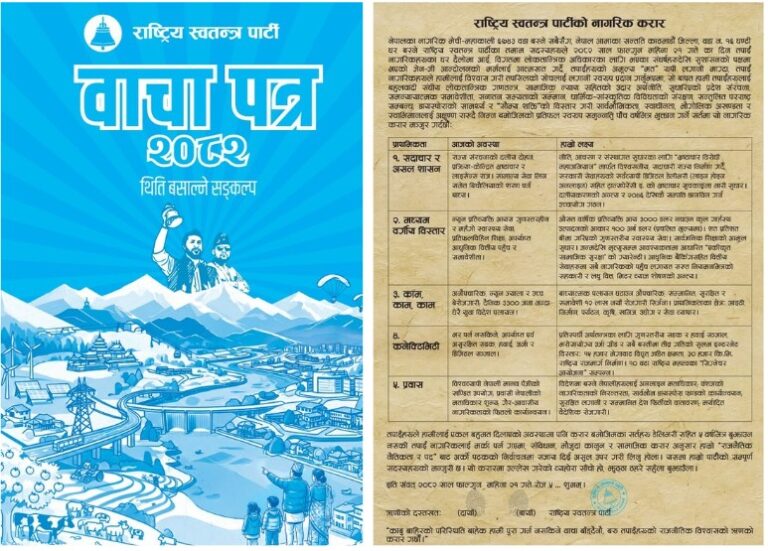
The commitment paper and citizen contract of the Rastriya Swatantra Party.
The third point of the citizen contract is titled “Work, Work, and Work,” and it states: “To reduce forced migration, creation of 1.2 million new formal, dignified, safe, and inclusive jobs. Priority sectors: IT, construction, tourism, agriculture, mining, industry, and service expansion.” The country is gripped by the alarming exodus of young workers driven by devastating unemployment. The promise to create 1.2 million jobs at such a time is an ambitious plan. But if implemented, the economy and the employment sector could take a great leap. Professor Dahal says, “Many things in the citizen contract and pledge are related to the economy. If the government brings back industries sold off in the past and grows the size of the economy, creating jobs is not difficult.”
The fourth point of RSP’s citizen contract is related to connectivity. It mentions expanding quality roads and air networks for a competitive economy, a reliable energy grid, and affordable high-speed internet to all settlements. The same point also includes completing 15,000 megawatts of installed electricity capacity, constructing 30,000 kilometers of national highways, and completing 10 signature projects of national importance.
The final, fifth point of the citizen contract is related to migration. It states: “Online voting rights for Nepalis living abroad, continuity of citizenship based on descent, implementation of a sovereign diaspora fund, an environment for safe investment and dignified return to the country, and regulated foreign employment.”
In the citizen contract itself, the RSP has requested that if the five-point contract is not implemented after the government is formed, it be punished five years later. The end of the contract states: “Even in a situation where you have given us a single majority, if we fail to deliver on the contract’s terms within five years and you citizens suffer hardship, please penalize us through the next election according to the constitution, existing law, and social contract, recover it from our political morality and position. The full membership of our party consents to this. The content stated in this contract is true. If found false, we will accept and pay the price.”
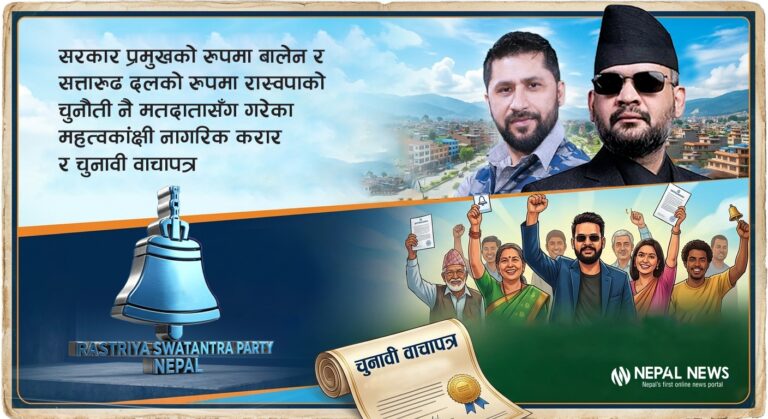
Beyond the citizen contract, the RSP’s 100-point “election pledge” issued before the election contains several important plans. In that pledge, the RSP made public one hundred policy departure points for transformation. The first point mentions making a formal state apology in the government head’s first address for caste-based discrimination, injustice, and exclusion against Dalits. The second point of the pledge commits to implementing the judicial commission’s report on the Gen Z movement. The RSP has also announced the abolition of partisan trade unions within government service and preparing a discussion paper on constitutional amendment proposals within three months. The RSP’s bottom line on constitutional amendment is a directly elected executive, a fully proportional parliament, a provision barring MPs from becoming ministers, non-partisan local government, and a reformed provincial structure.
The story of the “We will do it” list
The urgency to change and build the country did not arise in the RSP only at election time. Shortly after the party’s founding, the RSP published a brief list of things it would indeed do. That list had also attracted a lot of attention at the time. At the bottom of the RSP’s “we will do it” list, marked with chairperson Rabi Lamichhane’s photo and the party’s election symbol of a bell, it says: “When we start development and construction work, we will complete it on time, we will complete it at the specified quality, we will fine those who don’t deliver on a day-count basis, and we will reward those who do it faster.”
Even if the points of the “we will do it” list can be implemented, they could give citizens the experience of real change. The first point of that list is also focused on eradicating corruption. It states: “Corruption will not be tolerated, no one will be spared.” This point commits to opening all old corruption files and bringing suspected leaders, officials, businesspeople, and even their relatives abroad within the scope of investigation. The party has also committed to seizing all movable and immovable assets of corrupt individuals and nationalizing them. The widespread corruption in the country is the primary reason citizens are so furiously angry at old parties and leaders. It has therefore been long overdue to take strict steps through policy and legal reform to build a corruption-free country. If the Balen government can accomplish this, voters’ trust in the RSP could grow further.
Another RSP commitment included in the “we will do it” list is a fast-track court. The RSP has committed to establishing such a court to immediately resolve cases that have been stuck in the courts for a long time. Such a court would instantly settle cases involving sexual minorities, women and children, and rape, and would also immediately resolve cases blocking development construction.
The RSP has emphasized the preservation of religion, culture, and heritage. The “we will do it” list also includes maximum punishment for those who forcibly convert others, promotion of cultural heritage and Sanatan Vedic culture, and a plan to make Nepal a spiritual nation. Points also include converting the Armed Police Force to a border security force for border security, and installing barbed wire along the country’s borders. The point about installing barbed wire along borders does not reflect the RSP’s maturity. No objective study has been done on how much cost and time such plans, made impulsively to build a nationalist image, would require and whether they are feasible.
The RSP had announced it would operate a 24-hour hotline to hear citizens’ complaints, and create a Rapid Action Team so that those in foreign employment could receive services in their respective countries. This announcement made to attract Nepalis abroad is not difficult to implement. With the US and Israel now attacking Iran, the government has already formed a Rapid Action Team under the coordination of Foreign Secretary Amrit Bahadur Rai to rescue Nepalis at risk in the Middle East. The Balen government could later convert that temporary team into a permanent structure.
The RSP’s list also includes declaring laborers and farmers its VVIPs, providing them special identity cards, separate lines in government offices and banks, maximum punishment for those who exploit workers and farmers, and setting up separate desks to hear their complaints. If this point was not included merely to attract the workers’ vote, its implementation would immediately benefit ordinary citizens; the government’s own willingness would be sufficient for it. The plans to widely increase quality staffing in hospitals, end overseas medical treatment at state expense, treat first and have those who can afford it pay afterward with the government covering costs for those who cannot, are as popular as they are difficult to implement.
Intensifying and tightening criminal investigation is mentioned, along with making audio-video recording mandatory in the complaint rooms at every police post.
The RSP has also emphasized that police officers who meet any leader or businessman without prior notice must be asked for explanation, and that victims should be able to register complaints via mobile phones.
Beyond this, keeping the country’s tourist cities open 24 hours, providing a hassle-free “one stop center” for those wishing to open industries, and coordinating all work – drinking water, drainage, electricity, poles, roads – from a single place could turn citizens’ electoral trust in the RSP into lasting trust. In Professor Dahal’s words, the RSP could be blocked from fulfilling its election pledges and symbolic contract with citizens by lack of resources, institutional disorder, and the incompetence of state institutions. He adds, “There is a big difference between writing a manifesto and implementing it. Therefore, to fulfill the promises made to voters, the RSP will need to strengthen state institutions, mobilize financial resources, and adopt a balanced economic and foreign policy. The mandate has come to deliver on spoken words; now is the time to show it through work.”
A new beginning amid dysfunction
Except in 1991 and 1999, no party gaining a parliamentary majority had become the means for the top leaders of old parties to take turns becoming Prime Minister. Citizens had grown weary of the shameful game of switching coalitions with whoever at any time and forming governments in rotation, since no single party had a majority. The tendency of one person becoming Prime Minister up to four times without a majority is rarely seen in democratic countries worldwide. The rapidly shifting multicolored coalitions neither provided policy stability in the country nor succeeded in accelerating service delivery, good governance, and development. In the last decade, an undeclared competition ran between UML Chairperson KP Sharma Oli, the Nepali Congress’s then-president Sher Bahadur Deuba, and Maoist chairperson (now Nepali Communist Party coordinator) Pushpakamala Dahal “Prachanda” to shift coalitions at any time for power. Political science professor Lok Raj Baral says, “Despite getting many chances, old parties and leaders could not do people-centered work, could not make the country corruption-free, the governance style was not improved, and they could not be accountable to the people even after winning elections. Voters gave the answer to that in this election.”
Dysfunction, misgovernance, corruption, and a terrible imbalance in geopolitics were the country’s recent reality. Last year’s Gen Z movement arose precisely on the foundation of misgovernance, corruption, shameful incompetence in service delivery, and the ban on social media.
Given the scale of human and material loss in the Gen Z movement, the degree of reform and change required in the country afterward was not possible without an elected government in place.
But the mandate expressed in the March 5 election has become the primary achievement of the Gen Z movement. The powerful government formed from this mandate could do what has never been done before and bring about a complete transformation of the country. In the agreement on grand unity reached between RSP Chairperson Rabi Lamichhane and senior leader Balendra Shah (Balen) on 28 December 2025, before the election, the second point states: “To be committed to the honest implementation of the roadmap for making Nepal a nation with a respectable middle income within the next ten years, on the foundation of deep policy, institutional, and structural reforms necessary for the national objectives of prosperity and social justice, and of economic and social upliftment and cultured political practice.”
If Rabi and Balen remain faithful to this written agreement they themselves made, change can begin, because this too reflects the same urgency to transform the country.
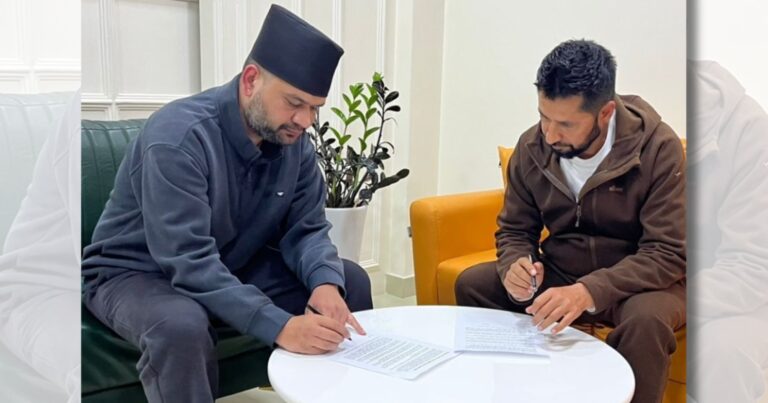
Balen Shah and Rabi Lamichhane during the signing of a seven-point agreement on December 28, 2025. Photo: Balen’s Facebook.
Not only the RSP’s leadership but everyone knows how the country got stuck in the swamp of dysfunction. Now that it is certain the Balen government will be formed on the foundation of the RSP’s majority, all kinds of advice and lists of public expectations toward the government have begun to be made public. Indeed, many people have countless formulas and roadmaps for what must be done to build the country. But even if the RSP, which went to voters declaring a citizen contract, pledge, “we will do it” list, and even announcing its candidate for Prime Minister, turns back only toward its own promises to citizens rather than others’ advice, the auspicious beginning of change in the country is possible. Political analyst Shyam Shrestha says, “Running a government requires more wisdom than forming one, because for the RSP, the risks are as immense as the opportunities. Apply wisdom and there is development; corrupt it and there is destruction.”
The RSP’s website, rspnepal.org, is itself different from old parties. From a transparency standpoint, the party appears distinct from conventional parties. From the leadership’s mobile numbers to lists of what the party will and will not do – all available on the website. Take the RSP’s “What We Will Not Do” list; it says no allowances will be taken for unexcused absences from parliament. It states that those who lose elections will not be brought into parliament or government, no one will hold the same position for more than two terms, no state benefits will be taken after retirement, no fraternal organizations will be formed, shameful politics will not be played for political purposes, opaque donations will not be collected, and Nepal bandhs, road blockades, and similar actions will not be carried out.
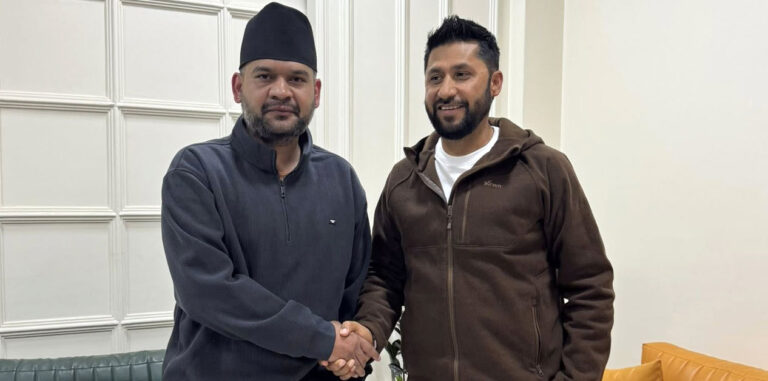
Balen Shah and Rabi Lamichhane after reaching a seven-point agreement on December 28, 2025. Photo: Asim Shah’s Facebook.
Not only that, the RSP has also resolved not to conduct violent movements, not to damage public property, and not to perpetuate the patronage system in appointments by bypassing competition and merit. Commitments have also been expressed not to exploit natural resources and not to misuse state resources and power. Not making unnecessary foreign trips and not spending state funds for treatment abroad are also the RSP’s firm resolves. It is certain that as soon as the government is formed, the test of the RSP’s leadership and the Balen government will begin on the basis of these commitments. Professor Dev Raj Dahal concludes, “How much of the pre-election promises and pledges to citizens are fulfilled is what Balen’s and the RSP’s success or failure depends on.”