Kathmandu
Sunday, July 26, 2026





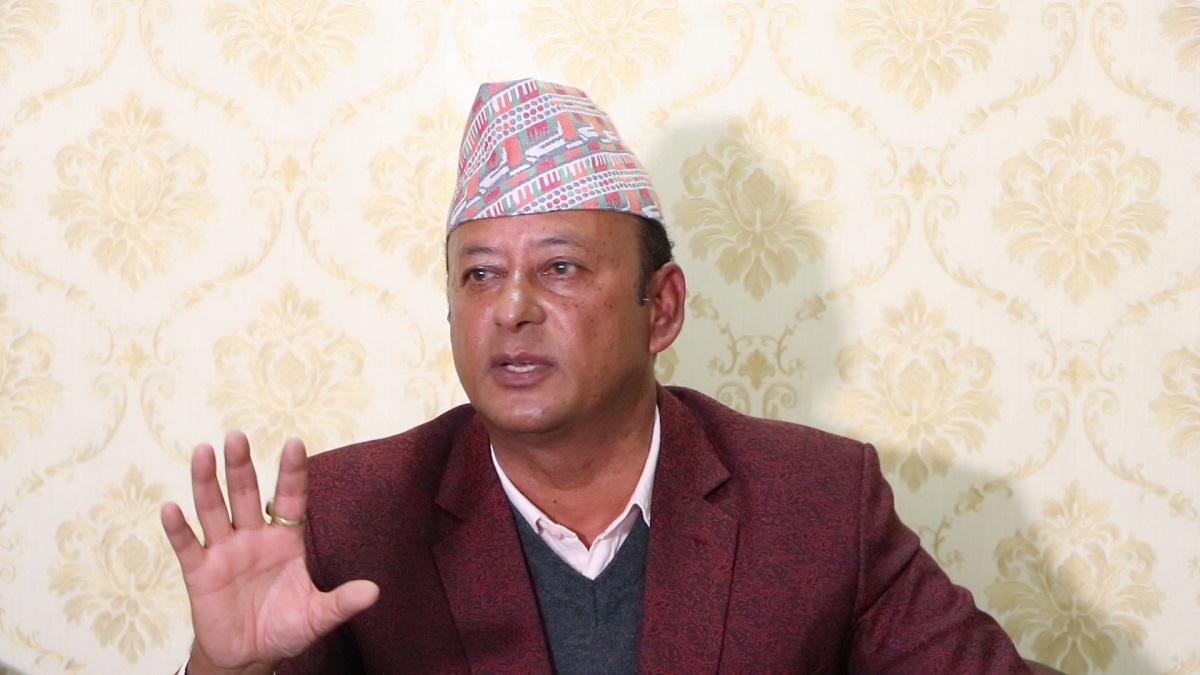
KATHMANDU: The Supreme Court has delivered a sharply critical ruling on the investigation into former minister Deepak Khadka, concluding that three state agencies committed serious procedural lapses that rendered his detention unlawful. In a joint bench led by Acting Chief Justice Sapana Pradhan Malla and Justice Shrikant Poudel, the Court ordered Khadka’s immediate release, citing cumulative legal and procedural violations from the moment of his arrest.
The case originated from a habeas corpus petition filed by Khadka’s wife, Binita Thapa, who argued that her husband had been held in illegal custody. The Court’s analysis lends weight to that claim, portraying an investigation marked less by evidentiary rigor than by institutional overreach and weak adherence to due process.
The investigation itself was triggered in the aftermath of the Gen-Z protests on September 09, 2025, during which a significant amount of foreign currency was reportedly destroyed at Khadka’s residence. Authorities treated this as a possible indicator of illicit wealth, prompting a money laundering probe formally initiated after few months. A joint investigation team was later formed suggesting an attempt to coordinate across agencies. Yet coordination did not translate into procedural coherence.
A central flaw identified by the Supreme Court lies in the issuance of the arrest warrant. Although the Department of Money Laundering Investigation had requested the Central Investigation Bureau to produce Khadka for questioning, the arrest warrant was issued solely by the police, without clear legal grounding from the competent authority. More critically, the warrant failed to specify the circumstances justifying an urgent arrest-such as risk of flight or evidence tampering-conditions that Nepali jurisprudence treats as prerequisites for such extraordinary measures. The Court emphasized that “urgent arrest” is not a discretionary tool for convenience but a narrowly defined legal exception.
The breakdown deepened as the investigation progressed. A report from the police’s Crime Research Section found no adverse criminal record linked to Khadka, effectively weakening the basis for continued detention. Following this, the money laundering department halted its own inquiry and transferred the case, along with its preliminary findings, to the Department of Revenue Investigation for further action. This handover, however, introduced new procedural inconsistencies rather than resolving existing ones.
Despite the apparent pause in the original investigation, the Revenue Investigation Department sought repeated extensions of Khadka’s detention from the Lalitpur District Court. The Supreme Court found that these extensions were granted without presenting Khadka before the adjudicating authority and without adequately informing him-violations that strike at the core of fair trial guarantees. Moreover, court orders authorizing detention failed to articulate concrete reasons or legal grounds, reducing judicial oversight to a formality rather than a substantive check.
The Court also noted that key provisions of the Revenue Leakage (Investigation and Control) Act, 1995 had not been properly invoked. There was no evidence of preliminary investigation or emergency inspection under the Act, nor had Khadka’s statement been recorded, raising further doubts about the legitimacy of the process. Even under the Asset (Money Laundering) Prevention Act, 2008, the Court observed that unresolved questions about the source of assets could be addressed through tax assessment mechanisms rather than custodial investigation, indicating that detention was not a necessary or proportionate measure.
In a notable aside, the bench pointed out that revenue-related offences of this nature may be subject to settlement if the accused agrees to pay dues and penalties, reinforcing the argument that incarceration was excessive. The broader implication is clear: the state opted for coercive enforcement before exhausting less intrusive legal remedies.
Taken together, these failures led the Court to conclude that Khadka’s detention lacked legal validity from multiple angles-defective arrest warrant, improper remand procedures, absence of statutory compliance, and disproportionate use of custody. The ruling underscores a systemic issue within Nepal’s investigative framework, where overlapping jurisdictions and weak procedural discipline can compromise both the integrity of investigations and the rights of the accused.
Accordingly, the Supreme Court ordered Khadka’s immediate release, allowing him to travel abroad only with prior court approval, and directed that any further investigation be conducted outside custody. The decision not only resolves an individual case but also sends a broader institutional signal: in high-profile financial investigations, adherence to due process is not optional but foundational.