Kathmandu
Tuesday, July 28, 2026





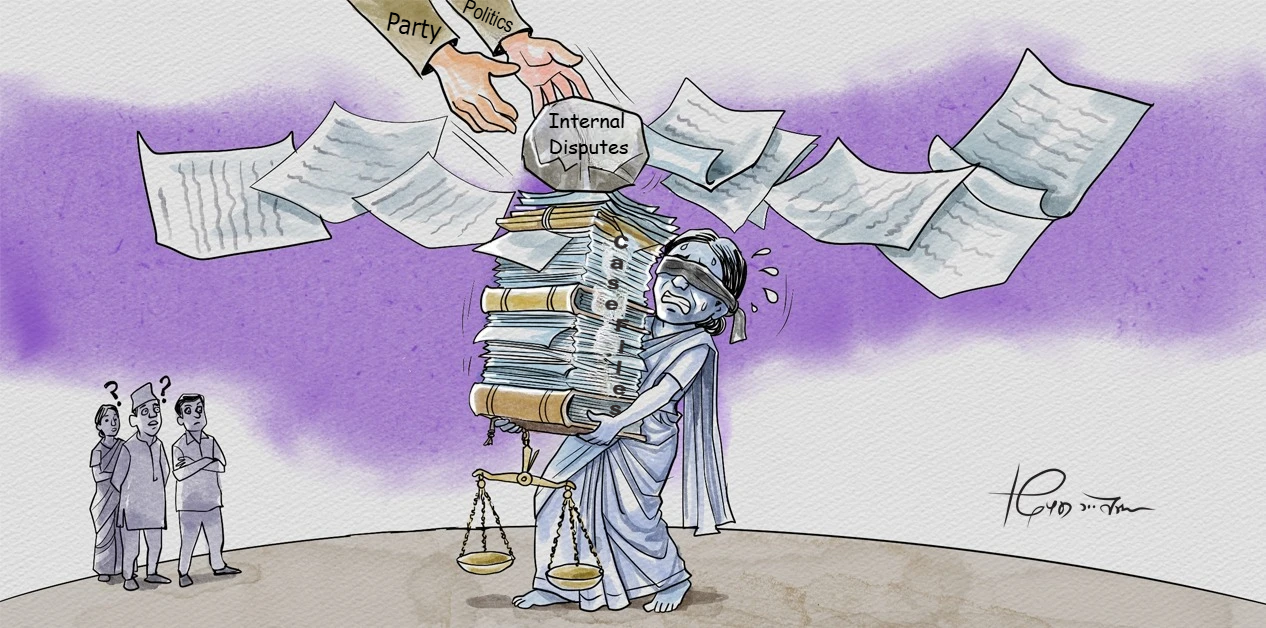
As political parties repeatedly turn to the Supreme Court to settle internal feuds, the line between legal adjudication and political resolution in Nepal grows ever thinner.
KATHMANDU: In the Nepali Congress (NC) legitimacy dispute, the Supreme Court issued a brief ruling on the night of 17 April 2026 recognizing the working committee led by Gagan Kumar Thapa. After the Election Commission recognized the Thapa faction — elected president through a special convention — the Sher Bahadur Deuba faction had gone to court; the Supreme Court dismissed their writ petition and legally settled the NC legitimacy dispute.
The NC legitimacy dispute is not the first time a party’s political quarrel has ended up in court. It is a well-established pattern; whether parties split or suffer internal conflict, running to court is the reflex. From the NCP name dispute in 2020 that unraveled the unity of UML and Maoist Center, to the formation of the CPN (Unified Socialist) after it broke from the UML, matters have reached the Supreme Court. So too have Rastriya Prajatantra Party Nepal’s then-chairman Kamal Thapa’s bid for the cow election symbol, the dispute between husband and wife Resham Chaudhary and Ranjita Shrestha over the Nagarik Unmukti Party leadership, and the split in Upendra Yadav’s Janata Samajwadi Party, parties have repeatedly sought resolution at the Supreme Court’s door.
When conflict breaks out within a political party, leaders tend to hope the knot will be untied somewhere else rather than trying to untie it themselves. The dispute first reaches the Election Commission. Whichever party or leader is unhappy with the commission’s decision then knocks on the Supreme Court’s door.
The Supreme Court has also been settling disputes over government formation in the House of Representatives and provincial assemblies, and disputes involving MPs — all linked to political parties. Whether it is House dissolution cases or coalition disputes in the provinces when the central government changes, they end up at the Supreme Court. Some cases that cannot be decided in time are eventually dismissed as the moment has passed.
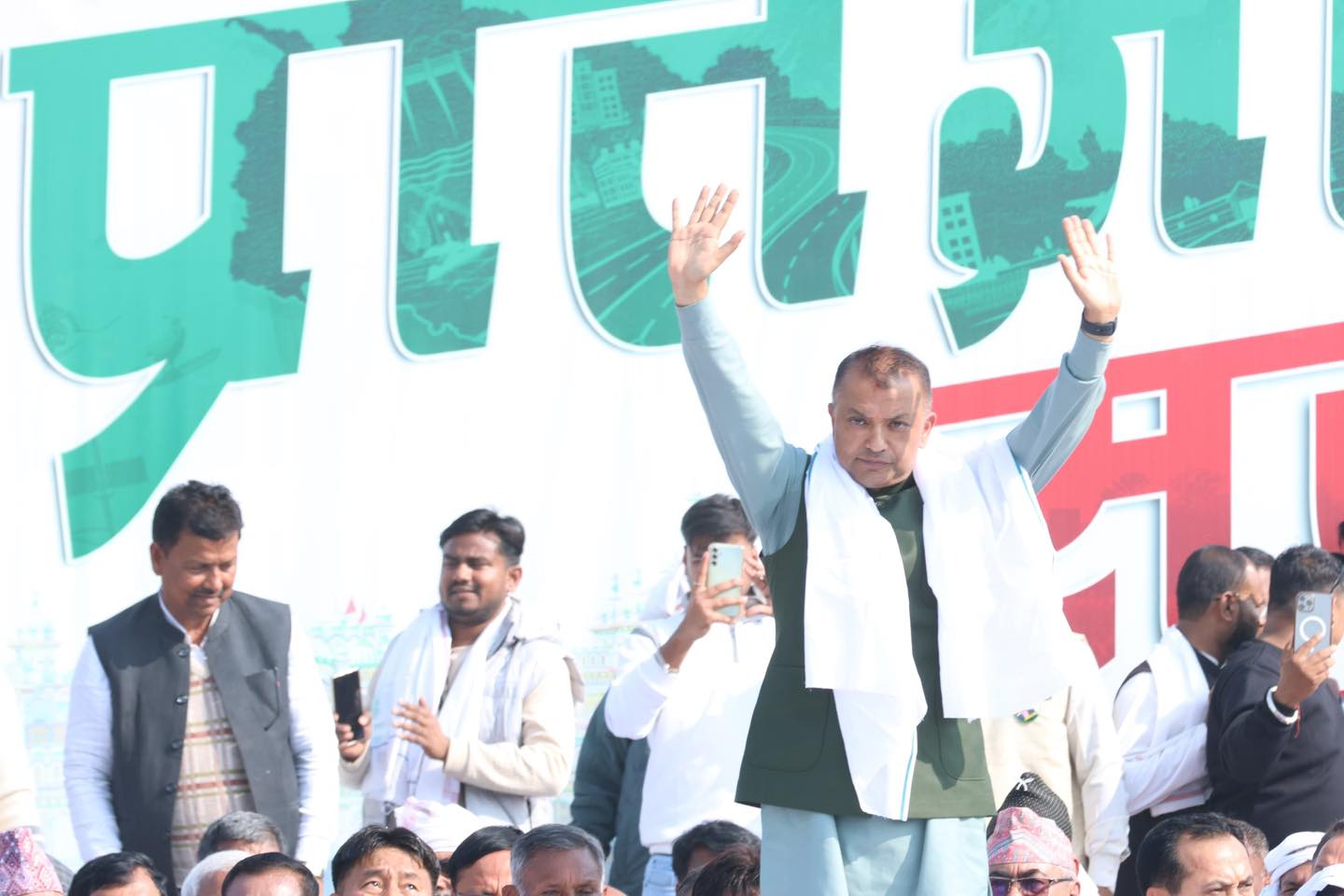
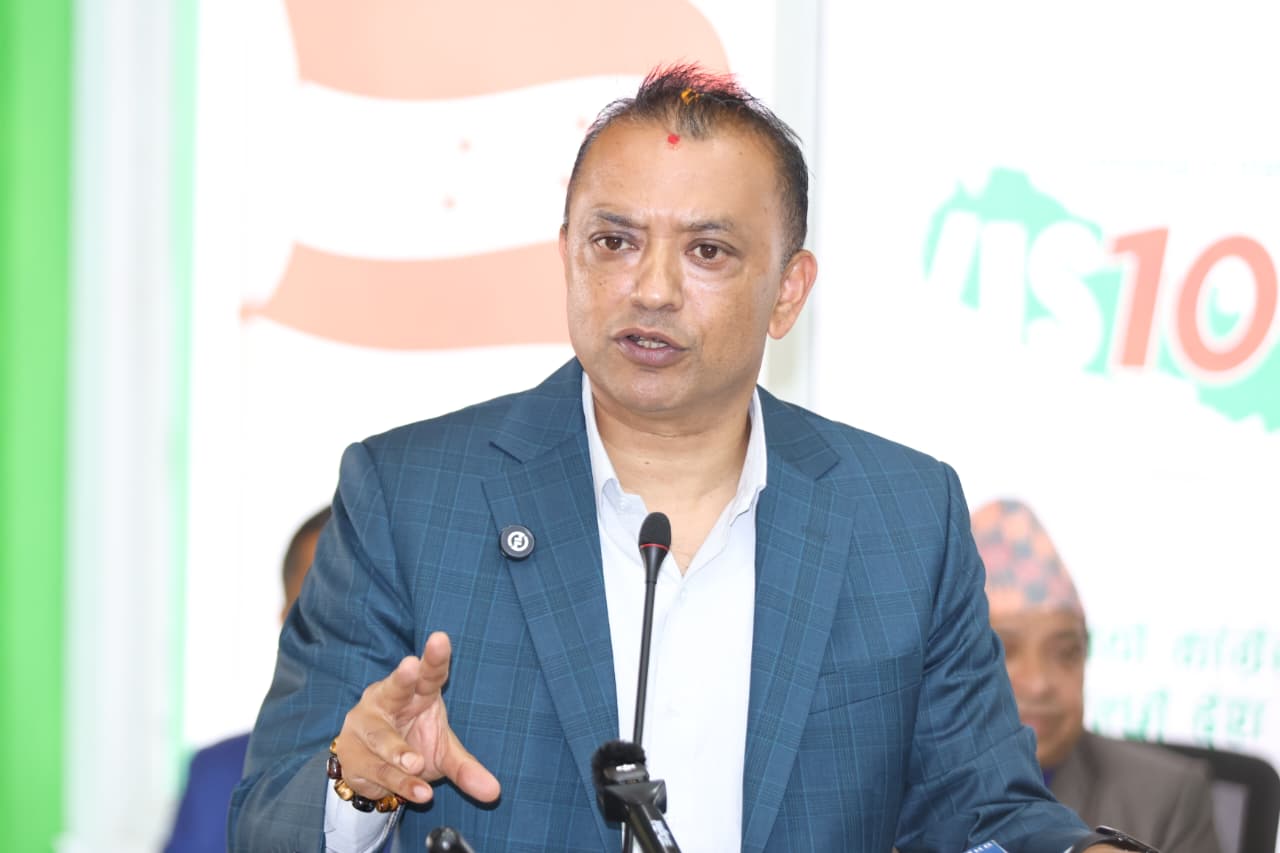
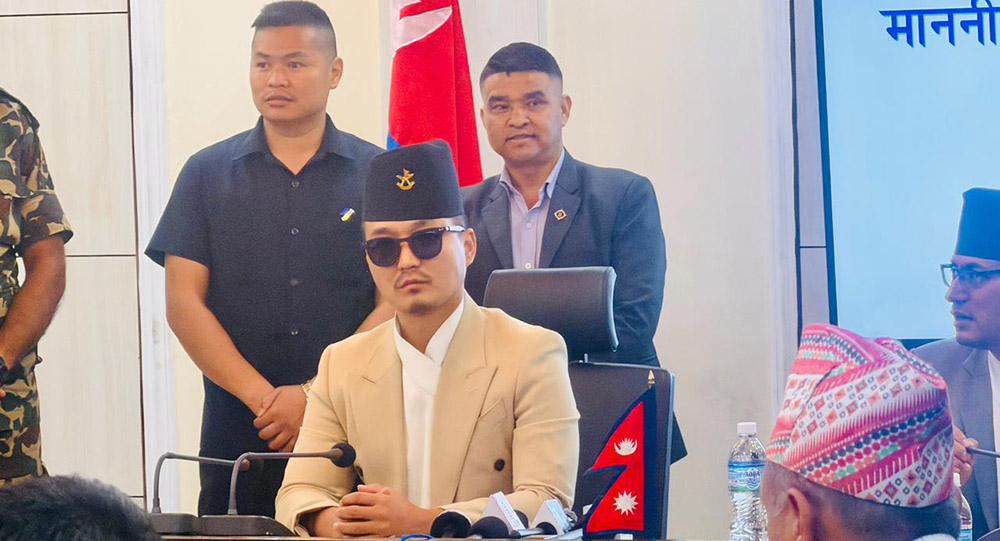
During the election campaign, Janakpur — Gagan Thapa, President of the Nepali Congress. Photo: Nepali Congress Facebook page.
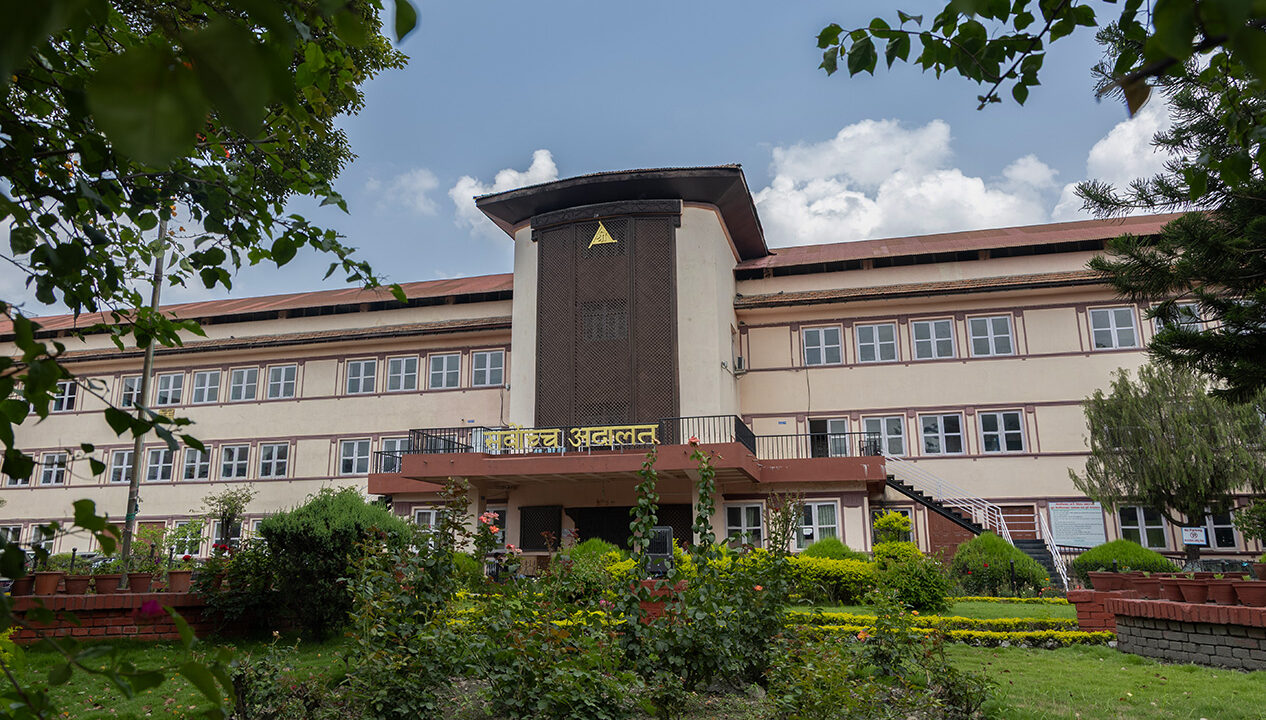
The Supreme Court already carries a heavy caseload, and the arrival of internal party squabbles adds to the pile. When the Supreme Court spends time resolving political cases, the hearings of cases connected to ordinary citizens are pushed back.
Despite having their own statutes and a Political Parties Act, parties have failed to be disciplined internally and have fallen back on the courts. Senior advocate Surya Dhungel says it is not appropriate to bring political matters to a court that deals with constitutional and legal disputes. He comments that parties creating conditions where they must go to court for failing to resolve internal disputes reflects those parties’ own weakness. “You should not have to go to court just because you cannot resolve internal disputes,” he says. “But it appears that in some political matters, when agreement cannot be reached, parties go to court wondering if they can influence the outcome in their favour. And the court also ends up issuing show-cause orders.”
Dhungel says that even when political matters reach court, the court should not go beyond its jurisdiction.
UML Vice-chairman Raghuji Panta also argues that courts should not enter into political matters, saying parties should resolve problems themselves as much as possible and not give the courts space. “Sometimes the court appears to enter political matters too; in some issues the court itself appears willing,” he says.
Panta says that while there is no alternative to the Supreme Court resolving complex constitutional matters, its rulings have sometimes ventured unnecessarily into political territory. He recalls that while the court declared Prime Minister Manmohan Adhikari’s 1994 parliamentary dissolution wrong, when KP Sharma Oli dissolved parliament in December 2020 and May 2021, the court not only reversed it but went so far as to issue a mandamus naming Sher Bahadur Deuba as Prime Minister. “The court has the right to interpret and analyse constitutional matters from various angles. We have all accepted court rulings. But political matters should not be settled by the court,” he says.
Some of the important cases in which political party disputes have reached the courts are discussed below.
The NC legitimacy dispute
The then-president Deuba faction paid no heed to the non-establishment group’s demand for party reorganization and leadership change after the Gen Z movement. By December 2025, the term of the central working committee elected by the NC’s 14th general convention had already expired. The establishment took the position that a convention should be held after the House of Representatives election, while Gagan Thapa and Bishwa Prakash Sharma, who favored a change of leadership, ran a signature campaign for a special convention, arguing that going into the election under the same leadership was unacceptable. As the dispute deepened, the Thapa faction held a special convention in January 2026.
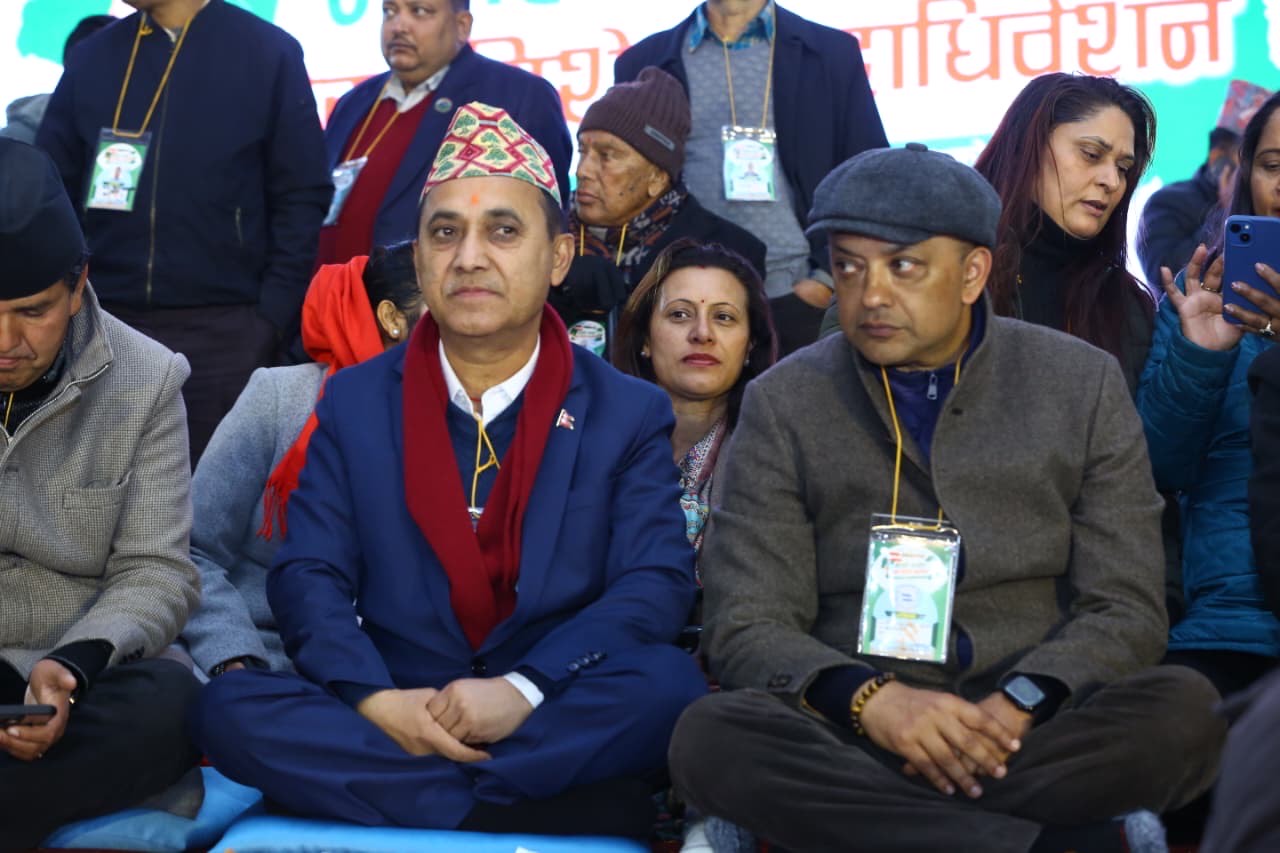
NC special general convention. Photo: Nepal Photo Library.
The special convention elected Thapa as NC president. After the Election Commission recognized the Thapa-led working committee, the dissatisfied Deuba faction went to the Supreme Court on 18 January 2026. The Supreme Court dismissed their writ petition and gave the Thapa faction legal validity. The joint bench of Justices Saranga Subedi and Nripadhwaj Niraula ruled that “the basis for the petition seeking to stop the special convention has ceased to have relevance given that a substantive change has already occurred.” The NC’s three-month legitimacy dispute was legally resolved, but the party’s political dispute has not found a shore; the ruling said nothing about bringing the Deuba faction in. Both sides are in dialogue toward unity.
After the NC legitimacy ruling, UML leader Gokul Baskota said going to court does not resolve problems within a party. On 18 April 2026, he wrote on social media platform X: “Going to court for other disputes is natural. But going to court over political disputes doesn’t produce solutions. NCP came together, fell into dispute, ran to court. Even after the court’s ruling, they didn’t reunite; they shattered like glass hitting the floor. Political unity depends on intent, not law. What will become of the Nepali Congress — rubber or glass?”
The NCP name dispute
UML and CPN (Maoist Center) unified on 17 May 2018 to form the Nepal Communist Party (NCP). When party representatives under the leadership of KP Sharma Oli and Pushpa Kamal Dahal appeared at the Election Commission on 6 June 2018, the commission registered it. But Rishi Kattel, who had already registered a party under the name Nepal Communist Party, filed a petition at the commission claiming the name. The commission ruled that the bracketed “NCP” made the Oli-Dahal party distinct.
Kattel filed a case at the Supreme Court claiming the party name and demanding the commission’s ruling be reversed. On 7 March 2021, the joint bench of Justices Bam Kumar Shrestha and Kumar Regmi ruled that the name Nepal Communist Party belonged to Kattel, restoring UML and Maoist Center to their pre-unity status. The ruling stated: “As they shall continue to exist as separate political parties in their previous form, if the two parties wish to unify they should decide in a manner not contrary to the Political Parties Act and regulations and appear at the Election Commission without delay.”
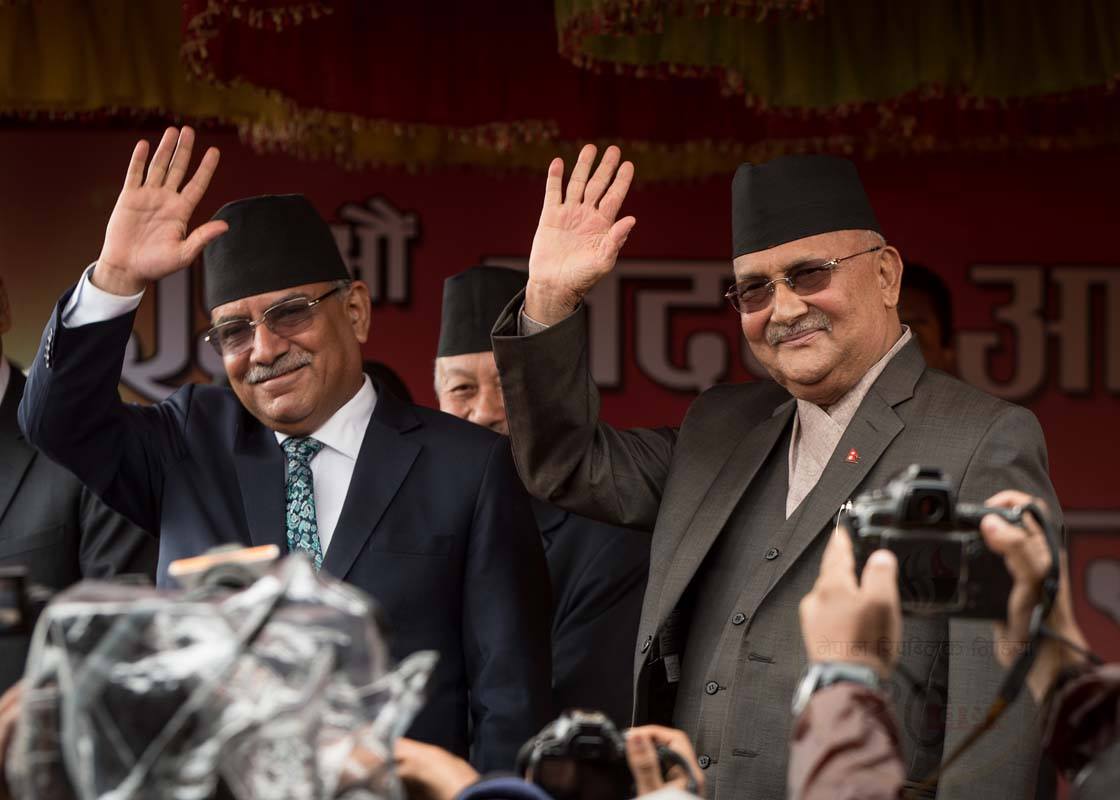
At the unification program of the Communist Party of Nepal (Unified Marxist–Leninist) and the Communist Party of Nepal (Maoist Centre), Khadga Prasad Sharma Oli and Pushpa Kamal Dahal. Photo: UML Secretariat.
But arriving when the dispute between the leaderships had reached its peak, the ruling opened the door for UML and Maoist Center to return to their pre-unity status. Both parties reverted to their former existence. The dissolution of NCP changed the country’s entire political landscape; political instability increased and coalition culture took root.
UML Vice-chairman Panta says political matters fall outside the court’s area of competence and should not be brought there. “When you go to court, one side wins and the other loses. But political matters don’t get resolved just because a court rules on them. The Nepali Congress’s problem, for example, has not been solved even though the court gave a ruling,” he says.
Action against Madhav Kumar Nepal and 13 others
Citing conduct contrary to party discipline, UML decided on 17 August 2021 to take action against and remove 14 MPs including senior leader Madhav Kumar Nepal. A letter was filed at the parliament secretariat to remove them from their seats and a letter of action was also submitted to the Election Commission. But then-Speaker Agni Prasad Sapkota did not remove the MPs as UML’s letter requested.
The next day on 18 August, the Madhav Nepal-Jhala Nath Khanal group split from the UML and registered a new party, CPN (Unified Socialist), at the Election Commission. The UML urged the commission not to recognize a party formed by expelled leaders through authenticated signatures, but the commission registered the party.
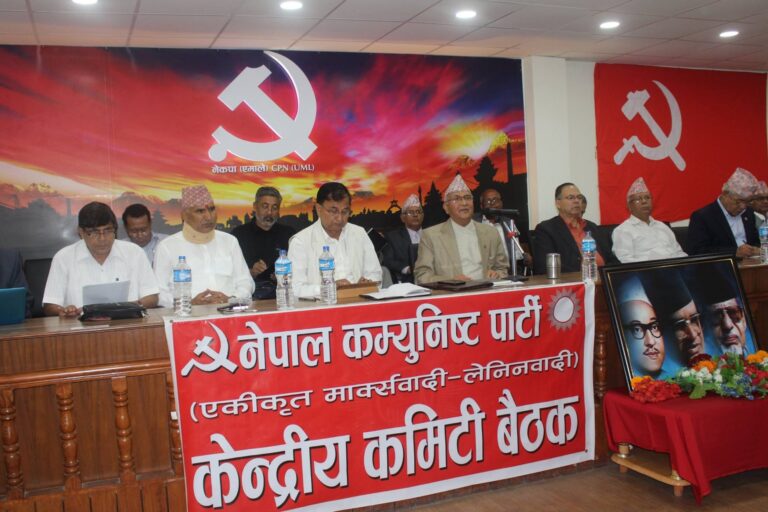
Communist Party of Nepal (Unified Marxist–Leninist) before the split. Photo: UML Facebook page.
UML Chairman Oli filed a writ petition at the Supreme Court on 2 September 2021 seeking cancellation of the Unified Socialist’s registration, alleging that Speaker Sapkota had helped the MPs – whom the party had disciplined – form a new party without removing them from their seats.
Similarly, on 9 August 2021, the UML also took action against Lumbini provincial assembly members Bimala Khatri Wali and Ajay Shahi. There too the Speaker refused to recognise the action against them, and the UML filed a further writ petition at the Supreme Court.
Four years after the writ was filed, after 19 hearings, the Supreme Court dismissed the writ on 5 January 2026. The joint bench of Justices Manoj Kumar Sharma and Sunil Kumar Pokharel dismissed the petition.
The cow election symbol dispute
After being defeated by Rajendra Lingden for the chairmanship at Rastriya Prajatantra Party’s convention in November-December 2001, Kamal Thapa formed the Rastriya Prajatantra Party Nepal. He filed a petition at the Election Commission insisting his party should receive the cow election symbol. The commission ruled on 11 July 2022 that the cow symbol could not be granted. Thapa went to the Supreme Court on 14 July demanding the commission’s decision be overturned.
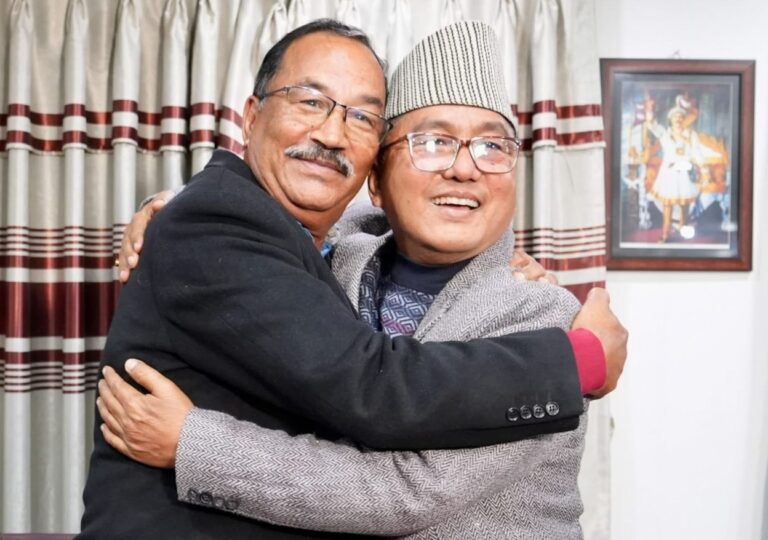
After unification in the Rastriya Prajatantra Party, Kamal Thapa and Rajendra Lingden. Photo: Thapa’s Facebook.
On 6 September 2022, the joint bench of Justices Kumar Regmi and Til Prasad Shrestha dismissed Thapa’s writ petition, ruling: “The commission’s decision not to grant the cow election symbol does not appear arbitrary or in bad faith … the petition is dismissed.” The Election Commission had made a policy decision not to allow any political party to use national symbols as election symbols.
The Nagarik Unmukti Party dispute
The question of the legitimacy of the chairperson of the Nagarik Unmukti Party, founded by Resham Chaudhary, also reached the Supreme Court. After the Election Commission declined to recognize Resham as party chairman on 7 March 2024, he went to the Supreme Court.
After the party’s convention in Tikapur, Kailali on 12 January 2024 unanimously elected Chaudhary as chairman, a petition was filed with the commission on 12 February 2024 requesting that party records be updated accordingly. But the commission ruled he could not be chairman, saying it was contrary to law to hold a convention treating a disqualified person as qualified.
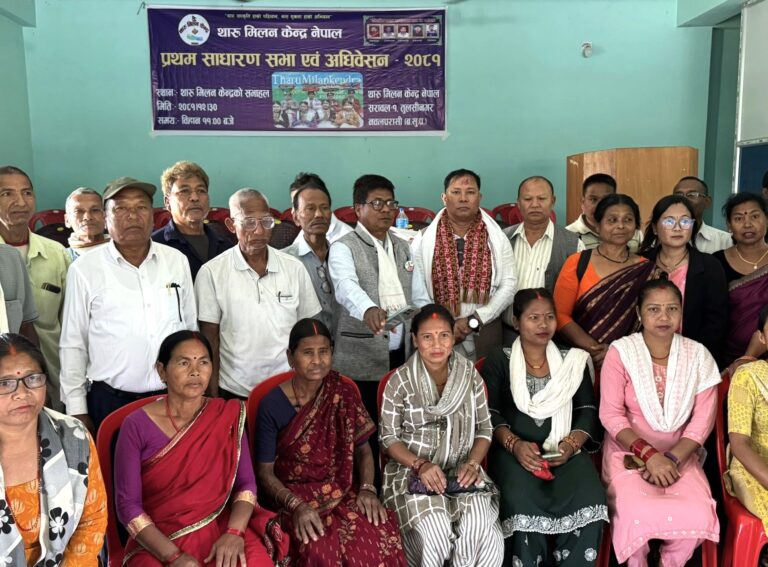
At a program of the Tharu Milan Kendra, Resham Chaudhary, leader of the Nagarik Unmukti Party. Photo: Chaudhary’s Facebook.
Resham is also a person convicted of culpable homicide in connection with the Tikapur incident of 24 August 2015. His candidacy from Tikapur constituency No. 1 in the March 5 2026 election was rejected by the commission.
The case he filed at the Supreme Court on 5 April 2024, demanding the commission’s decision recognizing Ranjita Chaudhary as chairman be reversed and he be recognized instead, remains pending.
The Janata Samajwadi Party Nepal split dispute
Around April/May 2021, the Janata Samajwadi Party Nepal led by Upendra Yadav split. Ashok Rai formed a new Janata Samajwadi Party with seven MPs and registered it at the Election Commission. On 13 May 2024, Yadav went to the Supreme Court demanding cancellation of the new party’s registration and suspension of his party’s MPs, arguing in his writ petition that registering a new party on the basis of authenticated signatures by MPs who had left his party was unlawful.
While Yadav was in the United States, seven MPs under the leadership of Rai, who had been given acting chairman responsibilities, went to the commission and registered a new party. The commission issued the registration certificate on 26 April 2024, with Rai, Nawal Kishore Sah Sudi, Ranju Jha, Birendra Prasad Mahato, Pradeep Yadav, Hasina Khan, and Sushila Shrestha signing the authenticated registration.
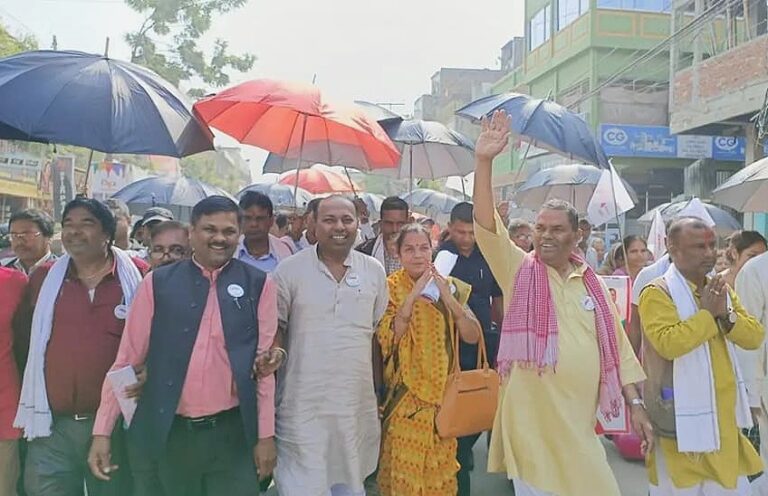
During the election campaign, Upendra Yadav, chairman of the Janata Samajwadi Party, Nepal, and others. Photo: Yadav’s Facebook.
Yadav had demanded the court prevent the seven from participating in any parliamentary activity and from using the party’s name, flag, and seal. The case last came up for hearing on 9 April 2026 and was found not ready for hearing. The case it remains pending at the Supreme Court.
The caseload at the Supreme Court
As political disputes pile up at the Supreme Court alongside everything else, case resolution is slowing. Supreme Court spokesperson and deputy registrar Arjun Prasad Koirala says if politics-related matters can be resolved by parties themselves as much as possible, the court’s caseload will ease somewhat. “It is natural for complex constitutional and legal disputes to come to court. But politics-related matters are better off not coming,” he says.
He says that party cases delay the resolution of ordinary people’s cases, and because party political cases attract public attention, they tend to get priority while other cases lose their turn.
While the Supreme Court argues it is being made to spend time on political cases, party leaders say decisions are not coming in time. UML Vice-chairman Panta comments that the court fails to reach timely conclusions on some cases, noting that the Supreme Court has still not had the courage to rule on the parliamentary dissolution carried out by Sushila Karki’s government on 12 September 2025. “Some party cases and constitutionally connected cases have also not been decided on time. Whatever happens, decisions must be given in a timely manner,” he says.
On the question of why cases are not resolved in time, Supreme Court spokesperson Koirala says turns come slowly as the process is completed. “The caseload is heavy. Cases are heard in chronological order of registration, which is why some cases get late rulings,” he says.
According to data up to 21 April 2026, as many as 27,246 cases remain pending at the Supreme Court. Of these, 264 cases remain unresolved at the constitutional bench. The majority of cases at the constitutional bench involve matters that conflict with the constitution – constitutional complexities combined with political dimensions.