Kathmandu
Saturday, July 18, 2026






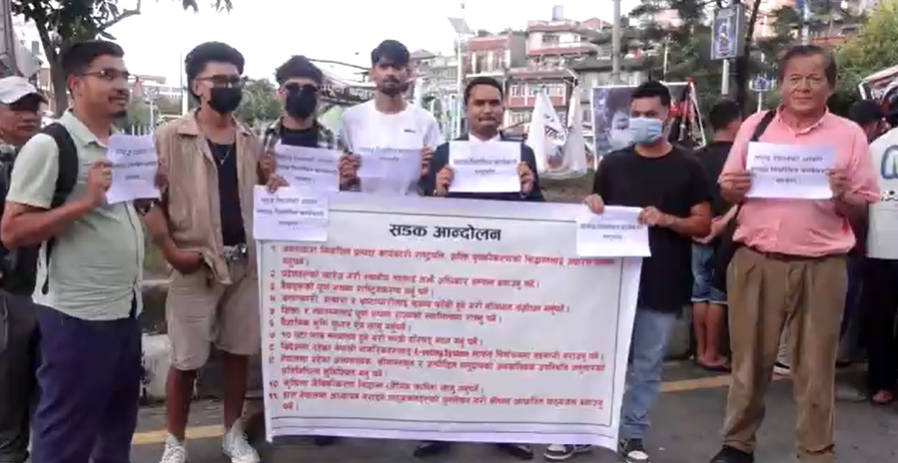
KATHMANDU: Inspector General of the Armed Police Force Nepal, Raju Aryal, has stated that he did not issue any order to open fire during the September 8, 2025 incident, according to his testimony before the Gauri Bahadur Karki-led inquiry commission investigating the violence of September 8–9 during Gen-Z protests. Aryal made the claim in a formal statement after the commission recommended action against him, asserting that no directive to use lethal force was given under his command. Here is the English translation of the statement given by Inspector General (IGP) Raju Aryal to the Karki Commission:
The reporting to the head of the organization regarding the actual situation of any movement is carried out regularly through the Chief of the Department of Operations at the Armed Police Force (APF) Headquarters. Following the chain of command, a sequence of reporting and instructions exists among the serving AIGPs, DIGPs, SSPs, and SPs.
Prior to the protests on September 8, 2025 (Bhadau 23), there had been no reporting from the APF’s information collection system or organizational structure regarding social media platforms like Reddit, Discord, and X, which were being used by the Gen Z generation. Although no concrete prior intelligence was received regarding an attack on the Federal Parliament building, based on analysis following the protests at Tinkune on March 28, the Baneshwor area—where the Federal Parliament is located—had been categorized as a high security-threat zone. Instructions were issued through the Department of Operations to all APF commanders to analyze security threats, maintain alertness, and deploy forces in effective coordination with other security agencies under integrated security plans formed by District Security Committees.
Before the Government of Nepal took the decision to shut down social media, no opinion or advice was sought from the Armed Police Force Nepal regarding the resulting security challenges. During the protests on September 8, while I was at the Ministry of Home Affairs, I received information through the Operations Department that protesters had breached prohibited zones and were advancing toward the Federal Parliament. Evaluating the situation, I issued instructions through the Department Chief for effective and coordinated security arrangements.
While still at the Ministry, I was informed that protesters had broken through security cordons and entered the Parliament premises. At that point, all security chiefs instructed our respective agencies to act effectively and coordination.
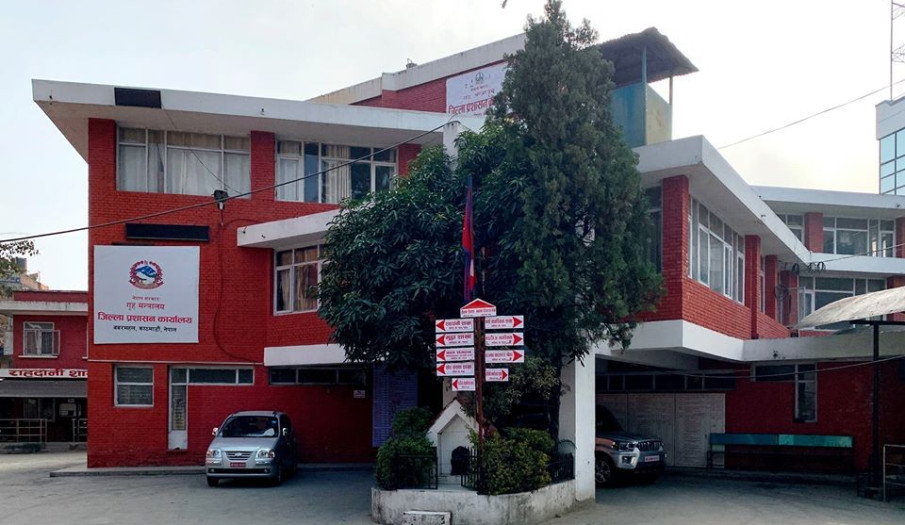
As the situation became abnormal and the District Administration Office, Kathmandu, issued a curfew, I followed the organizational structure to instruct that actions be taken in coordination with the District Security Committee, the Chief District Officer (CDO), and all security agencies in accordance with the Local Administration Act.
Even when protesters were pelting security personnel with stones, manhandling, and attacking them, I instructed subordinate officers to fulfill their responsibilities with restraint but effectiveness. Regarding coordination with the Nepali Army, that was occurring at the level of the Prime Minister, Home Minister, and Home Secretary; I maintained necessary information and coordination within my own capacity.
I did not personally make the decision to fire shots. Security personnel deployed in the field made necessary decisions based on the law, SOPs, and their assessment of the situation. I have received no official reports of lethal shots being fired into the crowd by the APF in a manner that violated international policing or human rights standards, though there are claims of warning shots (blank fire) being fired into the air. All APF personnel deployed at the Parliament premises were aware of the Crowd Control SOPs and a ‘Layered Defense Plan’ was in implementation.
I have clarified that the APF was mobilized under the integrated security plan as per the District Security Committee’s decision, and was deployed to handle the immediate situation rather than as a ‘Dedicated Security Force’ for the Parliament’s protection. Following the incident at the Federal Parliament on September 8, a briefing was held with the Prime Minister. From the second day, discussing potential security challenges across Kathmandu and the country, instructions were given to subordinate units to remain on high alert, deploy necessary troops, protect human rights, adopt the principle of ‘Life over Property’ to prevent further loss of life, and keep contingency plans ready. Instructions were also issued to exercise restraint in the use of force and adhere to the principle of minimum force.
On the morning of September 9 (Bhadau 24), we went to the Prime Minister’s residence in Baluwatar. After briefing him on crowd control, security challenges, and the state of arson, vandalism, and looting in public places, the Prime Minister acknowledged the gravity of the situation and directed us to bring more effectiveness to the coordination between security agencies. I view the physical attacks and killings of security personnel on September 9 as extremely reprehensible and a serious challenge to the state’s security structure.
Regarding the damages, loss of weapons, and looted ammunition during the security management, I can state that a joint coordinated action plan between the APF, Nepal Police, Nepali Army, and District Administration was immediately implemented. The search for and recovery of looted weapons, ammunition, and inmates who escaped from prison is ongoing.
I confirm the fact that after the security briefing at Baluwatar on September 9, I traveled with other security chiefs via a Nepali Army helicopter to the Army Headquarters (Jangi Adda), where we discussed security management and coordination before I returned to the APF Headquarters that evening.
I stated in my testimony that the authority to order the use of ultimate force under the Local Administration Act does not fall within my jurisdiction, and I gave no such order. While no APF personnel died during the unrest on September 8 and 9, several were injured, and personal vehicles, office equipment, and security gear were damaged or looted. Reports show that 10 SLR rifles and 4 gas guns with ammunition were lost from the APF No. 1 Baraha Brigade in Sunsari, and 11 SLRs, 2 gas guns, and 1 SMG with ammunition were lost from the No. 9 Pashupati Brigade in Kathmandu.
A list of security personnel who performed their duties bravely is being prepared for awards on APF Day. For those who shirked responsibility or showed weakness, an internal inquiry committee has been formed; necessary legal or disciplinary action will be taken once the report is submitted.
Despite limited resources and low manpower, APF personnel did not falter in maintaining professionalism under adverse conditions. In conclusion, I emphasize the need for administrative reform, human resource capacity building, regular training, practice of non-lethal methods, and human rights sensitivity to prevent such incidents. To keep security morale high, guarantees of career security, compensation insurance, and social security are necessary. A neutral, professional security mechanism free from political interference is the long-term solution.
Overall, my statement highlights that the security management was a result of operating within legal boundaries under extremely complex and high-pressure conditions, rather than intentional or substandard actions. The focus remained on the principle of “Life over Property” while exercising maximum restraint.