Kathmandu
Saturday, July 18, 2026





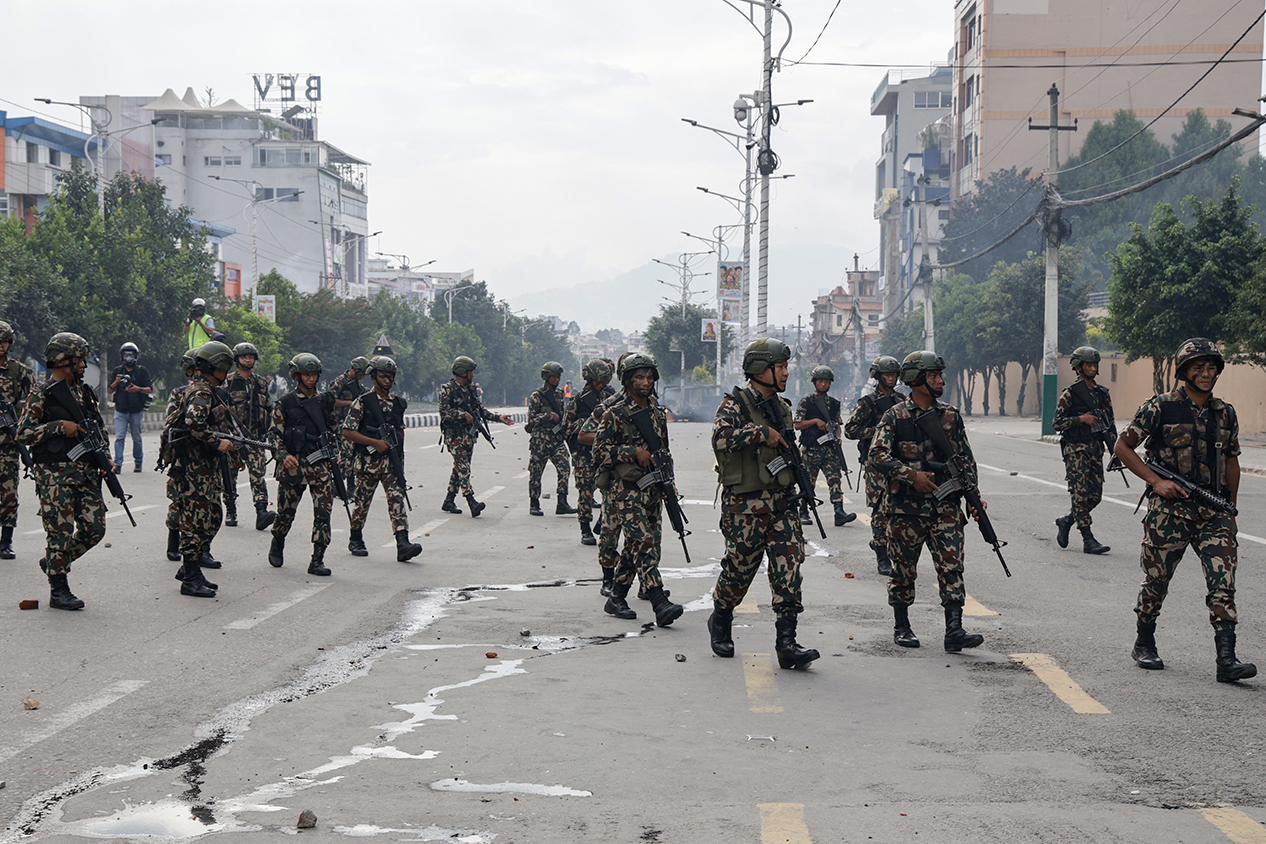
KATHMANDU: The investigative commission led by Gauri Bahadur Karki, tasked with probing the “Gen-Z” incidents of September 8 and 9, 2025 (Bhadau 23-24), has submitted a report that adopts a noticeably lenient stance toward the Nepali Army’s top leadership while recommending severe penalties for other security heads.
While the commission recommended criminal prosecution for then-Inspector General of Nepal Police, Chandra Kuber Khapung, and held Armed Police Force Inspector General Raju Aryal and National Investigation Department Chief Hutraj Thapa responsible for the unrest on September 8, it stopped short of questioning the Army’s high command.
The Nepali Army has faced intense public scrutiny for failing to protect highly sensitive government installations during the nationwide arson, vandalism, and looting that occurred on September 9. Specifically, the military was criticized for allowing rioters to breach the gates of the President’s Residence at Shital Niwas and for failing to exercise the necessary force to maintain order. Despite growing calls for Chief of the Army Staff (CoAS) Ashok Raj Sigdel to take moral responsibility for these lapses, the commission has instead pivoted the blame onto lower-ranking field officers.
The report concludes that the security commanders of Shital Niwas, the Prime Minister’s Residence in Baluwatar, the Central Secretariat at Singha Durbar, and the Federal Parliament building failed to fulfill their duties. Rather than recommending criminal charges like those faced by the police leadership, the commission has suggested disciplinary action under Section 105 of the Army Act, 2063, which pertains to departmental punishments. The officers identified for action include Brigadier General Manoj Baidawar, who was the security commander of Shital Niwas; Lieutenant Colonel Diwakar Khadga at the PM’s Residence; Lieutenant Colonel Ganesh Khadga at Singha Durbar; and Major Santosh Dhungel at the International Convention Center.
According to the report, these officers are liable under the Army Act’s jurisdiction for failing to secure their respective perimeters. The commission has formally recommended that the Government of Nepal ensure these individuals are penalized according to military law, maintaining that as unit commanders, they bear the direct burden of the security failure at those specific sites. Critics, however, point out that by focusing solely on the “chain of command” at the unit level, the commission has effectively shielded the military’s highest leadership from accountability for one of the most significant security breaches in recent history.