Kathmandu
Monday, June 15, 2026





After a crushing election defeat that wiped them out of parliament, Madhesh-centric parties have revived the Federal Democratic Front, yet instead of probing the causes of their collapse, leaders are rallying around Prime Minister-in-waiting Balendra Shah, triggering growing dissent within their own ranks
JANAKPURDHAM: In the three-and-a-half-decade history of parliamentary elections, Madhesh-centric parties were defeated for the first time in this House of Representatives election in Madhesh itself, their very birthplace and base. Not a single Madhesh-centric party could win even one direct seat, and failing to cross the three percent proportional threshold, their presence in parliament became zero.
After suffering a historic defeat in the election, expectations from those parties were that they would review the results, seek the reasons for their defeats, and that party leadership would take moral responsibility and clear the way for party reorganization. But no such sign has been seen. Instead, Madhesh-centric parties have revived the Federal Democratic Front, which was lying dormant after its formation a year ago. Parties that could not go together through unity or coalition during the election are now seen rallying together after facing a bitter defeat.
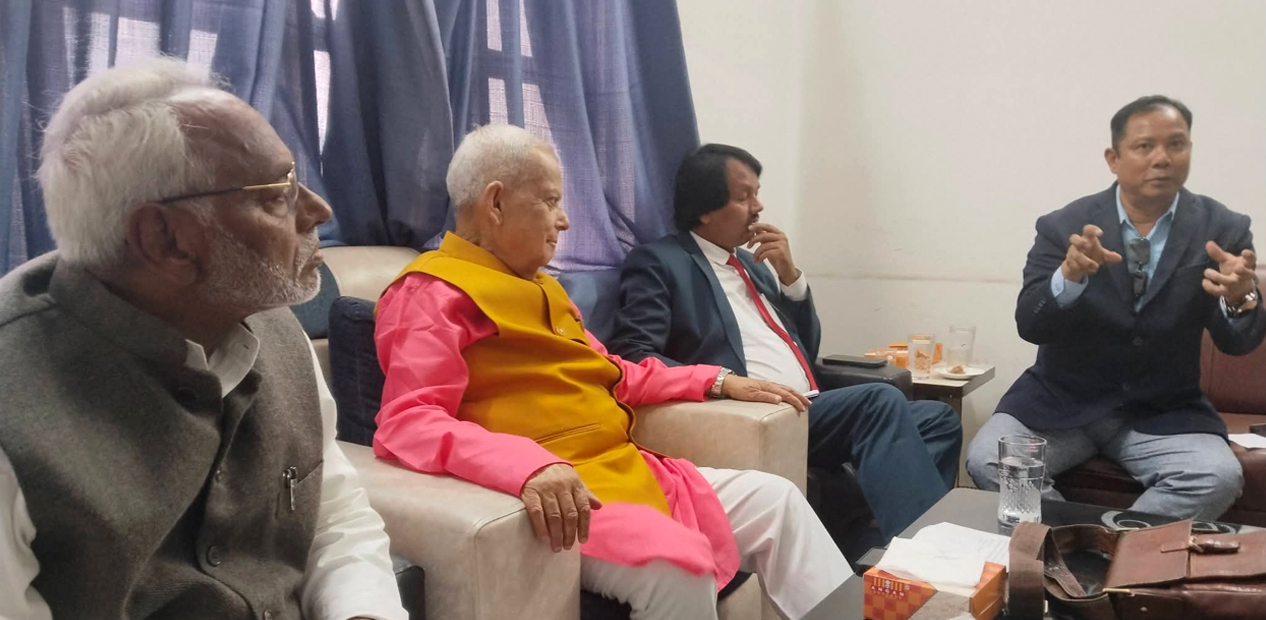
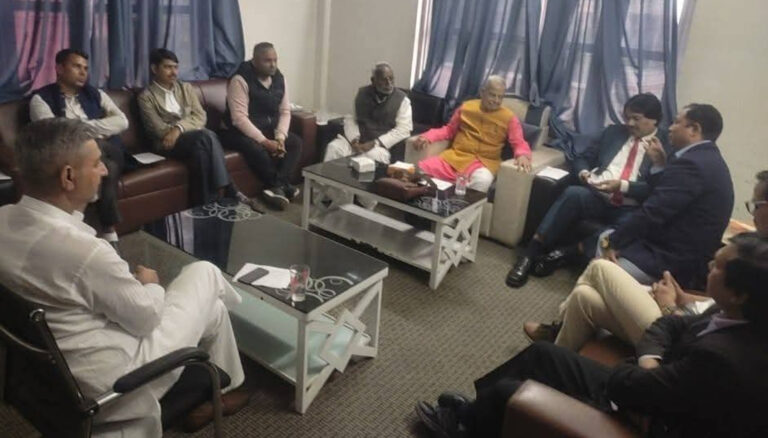
On 3 April 2025, seven Madhesh-centric parties had announced the Front, saying it was to effectively raise Madhesh’s issues. After all results of the House of Representatives election were in, on 13 March 2026, the Front was activated under the initiative of JSP Nepal patron Mahantha Thakur, and a meeting was held.
But the meeting did not deliberate or reflect on why Madhesh’s traditional forces weakened in the election. The meeting instead expressed happiness that RSP senior leader Balendra Shah (Balen) was about to become Prime Minister. The meeting concluded that seeing Balen as Prime Minister was a matter of joy for long-struggling oppressed communities including Madheshis, Tharus, and indigenous nationalities. The meeting also gave advance best wishes and congratulations to Balen on his upcoming appointment as Prime Minister.
The parties affiliated with the Front had agreed to go together in the House of Representatives election right up to the day before candidate registration. But contrary to that, all parties filed candidacies separately. Discussions went as far as withdrawing candidacies filed against Front-affiliated party presidents and creating some form of coalition environment within the Front, but none of it materialized. While this raised questions about the Front’s relevance, the election results pushed Madhesh-centric parties into a state of fighting for their very survival in Madhesh itself.
In the election, the presidents of Front-affiliated parties were defeated, and some could not even save their deposits. Nepal Rastriya Mukti Party President Rajendra Mahato was defeated in Sarlahi-2. He finished fourth in that constituency where RSP candidate Rabin Mahato won.
Janmat Party, which had emerged as a new force in Madhesh in the 2022 House of Representatives and provincial assembly elections, also delivered disappointing results this time. Janmat Party President CK Raut was defeated in Saptari-2. The RSP’s Ramji Yadav won while Raut finished third.
Even after disappointing election results, the Federal Democratic Front meeting focused not on examining the reasons for failure but on supporting and congratulating “Prime Minister-in-waiting” Balen. This has deepened dissatisfaction even within the Front’s own constituent parties.
JSP Nepal Chairman Upendra Yadav was defeated in Saptari-3, where RSP’s Amarkant Chaudhary defeated him. JSP Nepal patron Mahantha Thakur’s daughter Minakshi Thakur was not just defeated in Mahottari-3, she finished fifth.
Madhesh-centric parties also fell behind in proportional votes. In Madhesh Province, JSP Nepal finished fourth. The RSP came first, the Nepali Congress second, and the CPN (UML) third. JSP Nepal received 137,878 votes in Madhesh while Janmat Party got 50,720. Nepal Nagarik Unmukti Party and Rastriya Mukti Party together got only 10,654 votes even while contesting under the same election symbol.
Even aftere disappointing election results, the Federal Democratic Front meeting focused not on examining the reasons for failure but on supporting and congratulating “Prime Minister-in-waiting” Balen. This has deepened dissatisfaction even within the Front’s own constituent parties.
Leaders’ and activists’ dissatisfaction with the Front
Second-generation leaders of the Front-affiliated parties have raised questions about the Front’s relevance. Particularly, leaders aligned with JSP Nepal’s Mahantha Thakur and Upendra Yadav factions have expressed dissatisfaction that instead of seeking the reasons for Madhesh-centric parties’ defeat, the meeting sat expressing joy over who would become the next Prime Minister.
JSP Nepal leader Surendra Jha says that instead of taking responsibility for their own share of mistakes in the defeat and clearing the way forward, sitting and expressing support for making Balen Prime Minister is an attempt to flee from one’s own crimes. “I keep thinking that those who yesterday screamed that Balen is not even Madheshi, what has he ever done for Madhesh, by what face can they today celebrate the news of him becoming Prime Minister,” he says.
“Why could parties not unify before the election, why was there no coalition during the election, why could parties – with few exceptions – not hold conventions, why did splits occur, why familyism and nepotism dominated, who sold proportional seats and why? The answers to these serious questions must be sought.”
He says that with Front constituent parties having filed candidacies separately in the last election and most party chiefs failing to save their deposits, answers to some serious questions must be sought. He says: “Why could parties not unify before the election, why was there no coalition during the election, why could parties – with few exceptions – not hold conventions, why did splits occur, why familyism and nepotism dominated, who sold proportional seats and why? The answers to these serious questions must be sought.”
JSP Nepal leader and former Madhesh Province state minister Suresh Mandal also says a Federal Democratic Front that cannot go together in elections has no relevance. “The Front is a club of selfish people trying to make brothers-in-law, sons and daughters, and wives into MPs. This irrelevant Front should be dissolved immediately,” he says. “Before the election all of them were claiming they would win 100 seats each. Now they are crying. Madhesh has already moved on, Madheshi politics can no longer be handled by people of their caliber.”
Another JSP Nepal leader and former Madhesh minister Shailendra Shah says the Front has become nothing more than a gathering of selfish forces that could not stand together during the election. He says, “When personal interest dominates over principles, ideas, and the people’s issues, such mechanisms cannot win the people’s trust.”