Kathmandu
Sunday, July 12, 2026





Once, entire neighborhoods emptied when Kathmandu clubs took the field. Today, a departmental derby at Dasharath Stadium draws 570 spectators. Yet, nobody at ANFA has a plan to bring the crowds back.

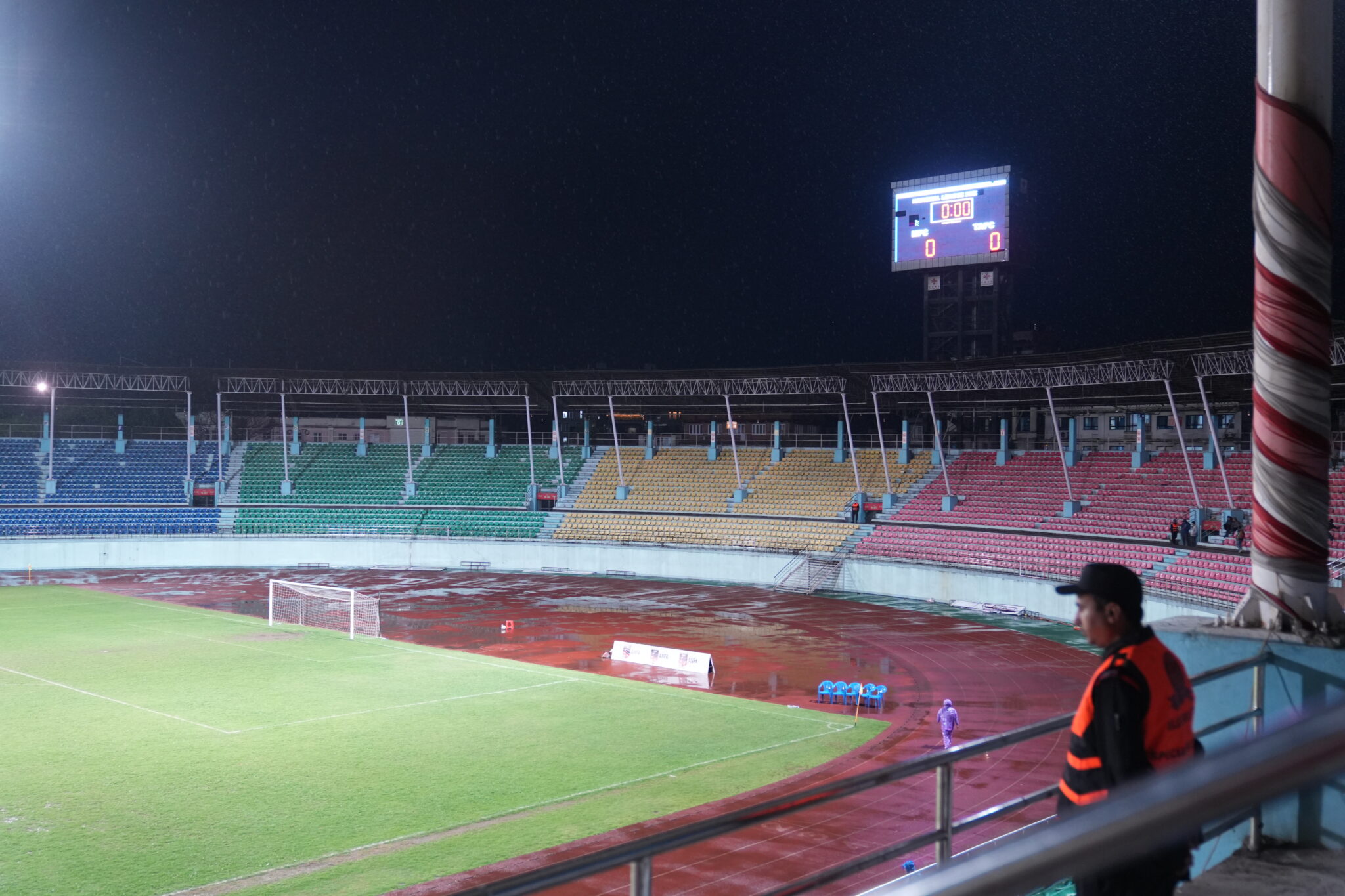
KATHMANDU: A week before the National Football League was suspended, a thrilling departmental derby was played at Dasharath Stadium in Tripureshwar between the Nepali Army’s Tribhuvan Army Club and the Armed Police Force’s APF Club. Yet only 570 spectators bought tickets to watch from the stands. In the match played on 12 March 2026, APF defeated Tribhuvan Army Club 1-0 to collect 25 points from 12 games and consolidate their position in fifth place in the league.
The third edition of the National League was played from 14 January 2026 across two venues – the ANFA Complex at Satdobato and Dasharath Stadium at Tripureshwar. The ANFA Complex has a seating capacity of around 3,500, though security and management constraints limit it to 2,500 spectators. Dasharath Stadium’s capacity stands at approximately 14,500.
The near-negligible attendance at both venues when domestic football is played has become a cause for concern. Setting aside the fixture between Nepal’s most successful club Manang Marsyangdi and Tribhuvan Army Club, this edition of the league disappointed all who care about the game. Even when those two clubs met at the ANFA Complex, only 1,875 spectators were in attendance.
Football is considered Nepal’s most popular sport, played with equal passion in all 77 districts. Yet however much the game is talked about outside, the crowds inside the stadium fall far short of expectations. This is certainly not a good sign for Nepali football.
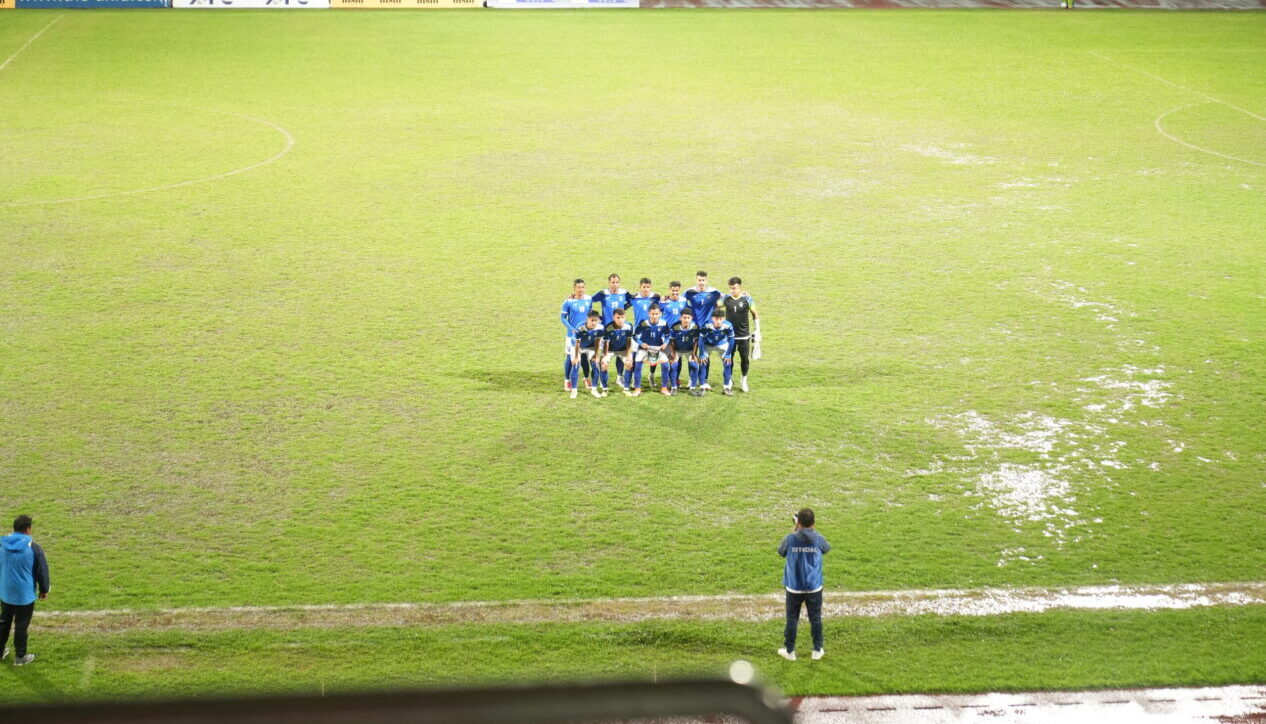
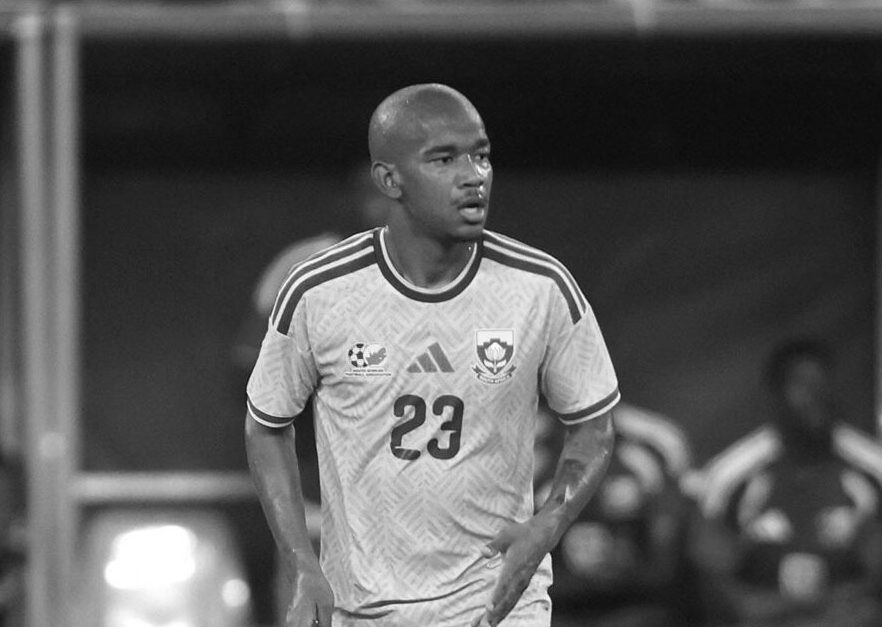
Tribhuvan Army Club players at a photo session.
Football in Nepal began during the reign of Shri Teen Maharaja Juddha Shumsher Rana, though it was not played competitively until 2004 BS (mid-April 1947 to mid-April 1948). After democracy was established in 1951, the sport was formally institutionalized when the Nepal Football Association (NFA) was formed under the leadership of Nar Shamsher Rana, considered the father of Nepali sport.
When the Ram Janaki Cup was organized as a league competition in 1952, crowds paid to watch football inside Singha Durbar. Dasharath Stadium had not yet been built, and all matches were held within the Singha Durbar grounds. Raksha Dal, formed under the leadership of former Gurkha soldiers who had fought on the Nepali Congress military front against Rana rule, won the Ram Janaki Cup three consecutive times (1952, 1953, 1954), claiming permanent possession of the trophy. The rule then was that a club winning a title three times in succession could keep the trophy – the same rule by which Brazil permanently retained the Jules Rimet Cup after winning the World Cup in 1958, 1962, and 1970.
After Raksha Dal won the title three times in Nepal as well, then Inspector General of Police GB Yakthumb took the initiative to commission a new shield in memory of those martyred in the 1951 revolution, which was presented to the football association leadership. Before the Nepal Police organization was formally established in 1955, Raksha Dal carried out police duties, and the shield it provided has been used for the tournament now held under the name Shahid Smarak League (Martyrs Memorial League) since 1954.
So captivated was former Bhutan national player Khare Basnet by the packed crowds at the stadium that he came to Kathmandu to play football himself. But the eclipse that has now fallen over domestic football is steadily weakening the game.
“Oh, the crowds back then – don’t even get me started. When Mahabir Club played, Dilli Bazar would fall silent. When Ranipokhri Corner Team (RCT) had a match, not a single shop in Ason Bazaar would open. When New Road Team (NRT) played, New Road itself came to a standstill,” recalls Achyut Krishna Kharel, the first captain of the Nepal national football team and former Inspector General of Nepal Police. He was the team captain when Mahabir won the league in 2026 BS (mid-April 1969 to mid-April 1970).
Attendance at Nepali football was at its peak in those days. Crowds flocked to the stadium to watch Harka Gurung, Ashok KC, Komal Pande, Achyut Krishna Kharel, and Baburam Pun. When former Indian football captain Shyam Thapa joined a Nepali club in 2032 BS (mid-April 1975 to mid-April 1976), spectators poured in from across the country to watch him play. He spent ten years at Boys Union Club. Fans also bought tickets to see his Boys Union teammates – former Nepal national captain Rupkraj Sharma, striker Ganesh Thapa, Dhirendra Pradhan, YB Ghale, and Man Bahadur Malla. Later, Raju Shakya, Mani Shah, Umesh Pradhan, and Dev Narayan Chaudhary, followed by Hari Khadka, Balgopal Maharjan, and Upendra Man Singh, kept the stadium packed.
“That was a golden era for Nepali football,” says Bodh Bahadur Raut, former chairman of Boys Union Club. So captivated was former Bhutan national player Khare Basnet by the packed crowds at the stadium that he came to Kathmandu to play football himself. But the eclipse that has now fallen over domestic football is steadily weakening the game.
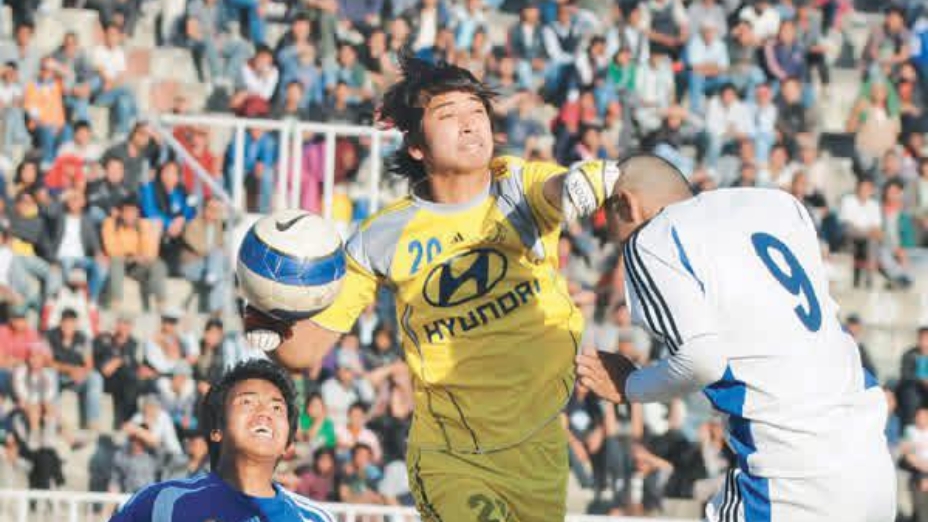
Manang goalkeeper Bishal Shrestha saving the ball against Three Star in the 2010 ‘A’ Division League. Photo: Shrestha’s Facebook
Former national team striker Ganesh Thapa recalls, “In those days football was not seen merely as a game; it was celebrated as a festival. Prestigious knockout tournaments like the Tribhuvan Challenge Shield and the Birthday Cup drove the excitement even higher. Football clubs from Bhutan, Darjeeling, Sikkim, Dehradun, and Guwahati would come to Nepal to take part. That is why spectators felt so deeply connected to the game.”
Kathmandu clubs at that time were run on a community basis, which meant local residents felt connected to them. Those clubs also prioritized local players when developing talent, fostering a sense of ownership among the community. But Thapa believes that political interference in clubs after the political changes of 1990 eroded that bond.
Whether the Nepal Super League (NSL) final run by private organizers or friendly matches played by the national team, all such fixtures draw notable crowds. Yet that same energy is absent from the club football organized by ANFA.
“Because clubs were run on a community basis, local communities would raise donations to sustain them and turn up in large numbers to watch,” he says. “But political interference in clubs in recent times, combined with economic stagnation, has created this situation.” He nonetheless claims that tournaments gained momentum and crowds began returning to the stadium after he took charge of football. He was appointed president of the All Nepal Football Association (ANFA) in 1995. During nearly two decades of unchallenged control as ANFA president, he faced allegations of financial irregularities and was eventually handed a ten-year ban by FIFA.
The role of fan clubs
The central problem of Nepali football today is that the matches are being played but the stands are empty. Previously, Dasharath Stadium’s seats would be packed when football was on. Now they stand bare. Himalayan Manoj, founding president of MMC Forever, the fan club of Manang Marsyangdi Club, has his own reading of the situation. “Even before, significant crowds would come only for Manang, Three Star, and departmental team matches. For other games, the regular supporters at the stadium were usually only around two to three thousand,” he says.
In terms of seats occupied, he prefers to put that figure at 30 percent. “Before, there were two matches a day and spectators would be in the ground from the first game. Now there can be as many as four matches a day. Who has the patience to watch that much football?” he asks.
Clubs once had their own dedicated supporters’ organizations. Fan clubs such as MMC Forever for Manang, White Lion for Machhindra, and We Are Stars for Three Star were well organized. They worked to establish a fan culture among supporters, spreading the word through social media when their team was playing. Practices such as keeping supporters together in a single block and creating a safe environment for women and children won widespread appreciation.
A club’s success depends not on players’ skill alone; it needs the roar of the crowd, the chanting and cheering. And that energy can only come from spectators.
It was the fan clubs that sent hundreds of supporters travelling by bus from Kathmandu to cities like Pokhara and Dharan. “Our network had more than two thousand supporters connected to it. For big matches, the fan club would manage three to four thousand tickets,” says Manoj.
Fan clubs also organized a range of events – honoring former players, meet-and-greet sessions, fan card distributions, calendar publications, and jersey distributions. “Our job is to nurture the relationship between supporters and the club,” Manoj says. But he laments that the absence of regular competition in recent times has disrupted all of that.
Unlike club football, attendance at international matches played by the national team shows no sign of declining. The clearest evidence is the last three editions of the Women’s SAFF Championship involving Nepal – the stadium has been full for Nepal’s matches. Beyond that, whether the NSL final organized by private promoters or friendly internationals, all such matches draw notable crowds. Yet that energy is absent from ANFA-organized club football. “This shows that interest in football has not disappeared, but that clubs have failed to hold on to their supporters. The main reasons are the absence of new star players and the weakening of the bond between clubs and fans,” Manoj adds.
The absence of star players
Since 2013 BS (1956/57), Nepali football had found crowd-pulling players of the caliber of Bimal Gharti Magar, Anjan Bista, and Ayush Ghalan. These players had played a vital role in boosting the popularity of Nepali football and drawing spectators to the stadium, adding excitement to the league. But the situation now looks different. Bimal Gharti Magar has emigrated to Australia. Young players like Ayush Ghalan are absent from the national league. And Anjan Bista, who equaled Hari Khadka and Nirajan Rayamajhi’s record of 13 goals in the national jersey, is struggling to score in the club league.
Meanwhile, newer clubs in the league have adopted certain strategies for branding and drawing spectators. The most recent example is Chitlang FC, which has brought in TikToker and former player Dona Thapa, who is returning to the pitch after about five years. He is playing for Chitlang alongside his brother Aron Thapa.
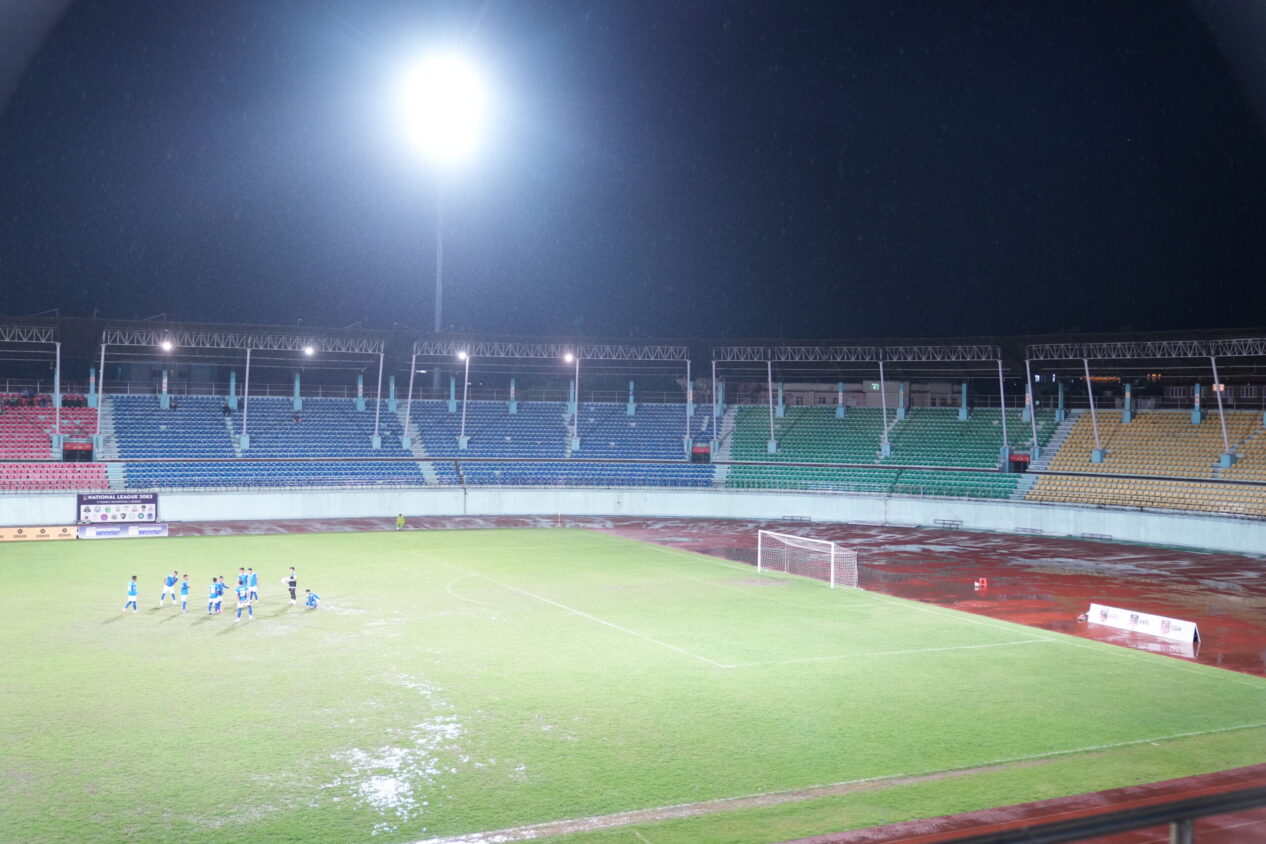
Chitlang head coach Prajjwal Pratap Chhetri claims that the arrival of the two brothers has brought an A Division-like atmosphere to the club. “Even when we played outside the valley, spectators didn’t come. But the moment Dona and Aaron started playing, crowds turned up in numbers like the opening match of the national league,” he says. The figures back his claim. When Chitlang played Army at Dasharath Stadium on 24 January 2026, as many as 4,575 spectators were in attendance – only 450 fewer than the crowd at the national league’s opening match between Machhindra and NRT, for which ANFA had also arranged a concert by singer Sajjan Raj Vaidya.
This demonstrates that the presence of socially prominent players has a direct impact on a club’s brand and spectator appeal. “It has been confirmed that even small or new clubs have the capacity to make the game relevant and competitive,” Chhetri says.
ANFA appears to have no concrete plan to draw back the dwindling crowds. Army Club head coach Balgopal Maharjan suggests that rather than waiting for ANFA to act, clubs themselves must devise strategies to bring spectators back. “In this regard, Army Club is fortunate; supporters have always maintained a deep attachment and enthusiasm,” he says.
As he rightly observes, a club’s success depends not on players’ skill alone; it needs the roar of the crowd, the chanting and cheering. And that energy can only come from spectators. The tragedy is that those very spectators are now disappearing from the stadium.