Kathmandu
Thursday, July 9, 2026






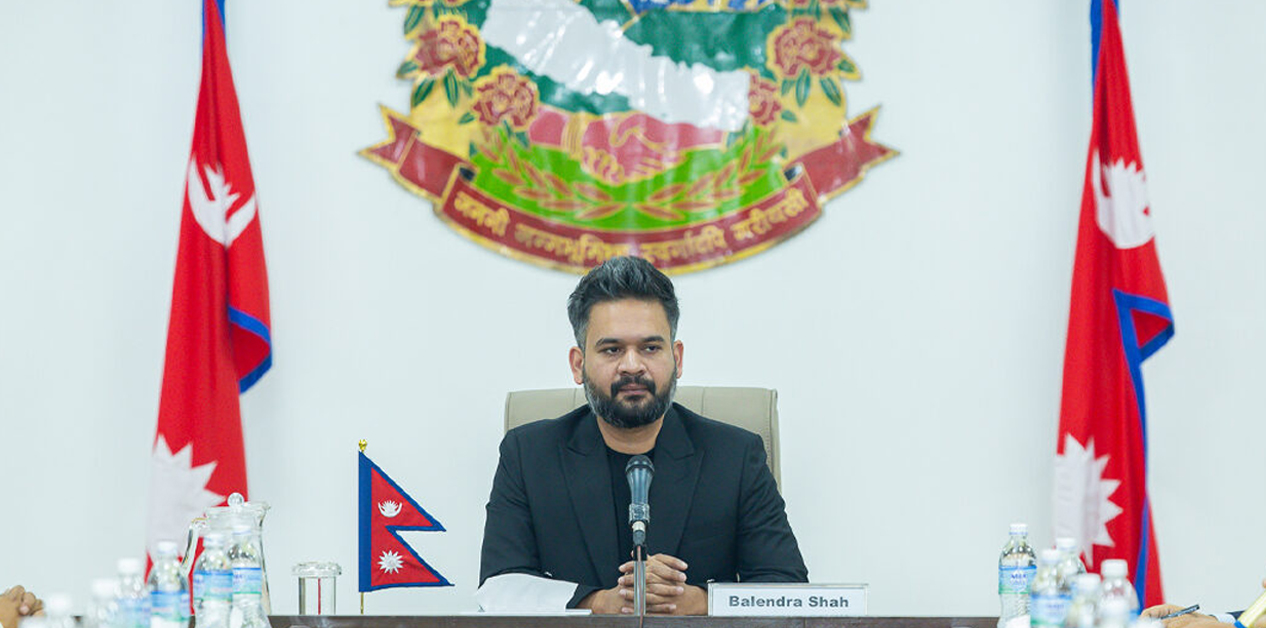
KATHMANDU: The Cabinet has moved to implement the Gauri Bahadur Karki-led commission’s report on last year’s Gen Z protests, sparking both arrests and uproar. In the first Council of Ministers meeting since his appointment, Prime Minister Balendra Shah (Balen) oversaw the detention of former Prime Minister KP Sharma Oli and former Home Minister Ramesh Lekhak, setting the stage for a fierce legal and political battle over accountability and executive authority in Nepal. Here is everything you need to know about this issue:
Why were former Prime Minister KP Sharma Oli and former Home Minister Ramesh Lekhak arrested, and what is the legal basis?
Former Prime Minister KP Sharma Oli and former Home Minister Ramesh Lekhak were arrested in connection with the events of Gen Z protests on September 8, 2025. The arrests followed a Cabinet decision by Prime Minister Balendra Shah’s newly formed government to implement recommendations of the inquiry commission led by former judge Gauri Bahadur Karki.
The commission had recommended criminal investigations against Oli, Lekhak, and former Inspector General of Police (IGP) Chandra Kuber Khapung for offenses related to homicide. However, the Cabinet decided to treat political leaders and security officials differently. As a result, Oli and Lekhak were immediately arrested and taken to the Kathmandu District Police Office, while Khapung and other security officials, including former chief civil officers, will be investigated later based on a study committee formed specifically for security personnel.
Police have issued urgent arrest warrants for Oli and Lekhak under Sections 181 and 182 of the National Penal Code, 2017. Section 181 pertains to causing death through negligence, punishable by three to ten years in prison and a fine of Rs 30,000 to 100,000, while Section 182 deals with causing death through reckless acts, punishable by up to three years in prison and a similar fine. The law allows authorities to keep suspects in custody for up to 25 days during the investigation.
What are the allegations against Oli and Lekhak?
During the Gen Z protests on September 8 and 9, 2025, a total of 76 people were killed. Around 300 individuals were injured in Baneshwor alone, and approximately 25 others were injured across the country. On September 8, 2025, 19 people were killed when gunfire was opened in New Baneshwor. It is in connection with the killing of these 19 individuals that police have arrested Oli and Lekhak under the National Criminal Code.
This marks the first time in the country’s history that individuals who have served as prime minister and home minister have been arrested in connection with homicide charges. Previously, provisions of the criminal code relating to homicide were applied primarily to individual acts of killing. However, their application in the context of a political event such as the Gen Z protests, which some describe as a political uprising, introduces a new legal dimension, potentially serving as a reference point for students of law.
Under the homicide provisions of the National Penal Code, a conviction requires the presence of both act (actus reus) and intent (mens rea), fundamental principles of criminal justice. If a death occurs without intent, the law treats it differently. Similarly, intent alone, without the execution of the act, constitutes a different legal situation.
There are different levels of liability for homicide-related crimes, such as negligence, recklessness, and accident. According to the code, establishing homicide requires direct involvement of the accused in the act. For example, if a son commits murder without the father’s involvement, the father cannot be held criminally liable. While sociologically a parent may bear some indirect responsibility, criminal law requires clear personal participation in the act.
In the case of the September 8, 2025, shooting, the court must determine whether KP Sharma Oli and Ramesh Lekhak explicitly ordered security forces to “shoot and kill” protesters. It must also assess whether they had the intent to cause deaths, whether they directly participated in the act, or whether they acted as accomplices. Only after examining these facts can the court determine their guilt or innocence. Merely holding positions such as Prime Minister or Home Minister may not be sufficient to establish criminal liability for homicide.
For instance, during the tenure of Prime Minister Sushila Karki, numerous road accidents across the country resulted in fatalities. These could be attributed to government negligence, poor infrastructure, delayed rescue efforts, or inadequate medical treatment. However, such circumstances alone would not justify declaring the prime minister or the then home minister as “murderers.” Criminal liability for homicide requires direct involvement in the act of killing.
Meanwhile, questions have also been raised regarding the impartiality of the investigation commission. The Supreme Court had previously questioned the neutrality of Gauri Bahadur Karki, stating that he did not meet the ethical standards required to serve on such a commission. In this context, concerns are being voiced about whether the commission’s recommendations can truly be considered free from bias.
How has the CPN (UML) responded to the arrest of its chair and former Prime Minister KP Sharma Oli?
The CPN (UML) has strongly condemned the arrest of its chair, KP Sharma Oli, and former Home Minister Ramesh Lekhak, describing it as vindictive, biased, and unlawful. Since their detention on Saturday, the party has organized demonstrations and announced plans for nationwide protests, emphasizing both legal and parliamentary avenues to challenge the government’s move. On Tuesday, the party declared a two-week-long protest starting April 11, demanding the immediate release of Oli and highlighting their opposition to the newly formed Balendra Shah administration’s actions. The arrests stem from allegations of negligence and misuse of authority during last year’s Gen Z protests, which resulted in 76 deaths.
What is an ‘urgent arrest warrant,’ and how were Oli and Lekhak arrested under it?
An “urgent arrest warrant” is a special legal provision under Nepal’s National Criminal Procedure Act, 2017, which allows police to arrest a suspect without first obtaining a court-issued warrant but only under specific emergency conditions. This provision is typically used when law enforcement believes there is an immediate risk that the accused may flee, go into hiding, or destroy crucial evidence.
Under normal procedure, police must seek a formal arrest warrant from a court before detaining any individual. However, in urgent cases, the law permits police officers to issue and execute an arrest themselves, provided they can later justify that urgency before the judiciary.
In the case of Oli and Lekhak, police carried out early morning arrests from their private residences based on such urgent warrants, without prior court approval. The arrests were made following a Cabinet decision to implement the recommendations of an investigative commission linked to the deadly Gen Z protests.
What did the district court decide on Oli and Lekhak’s detention?
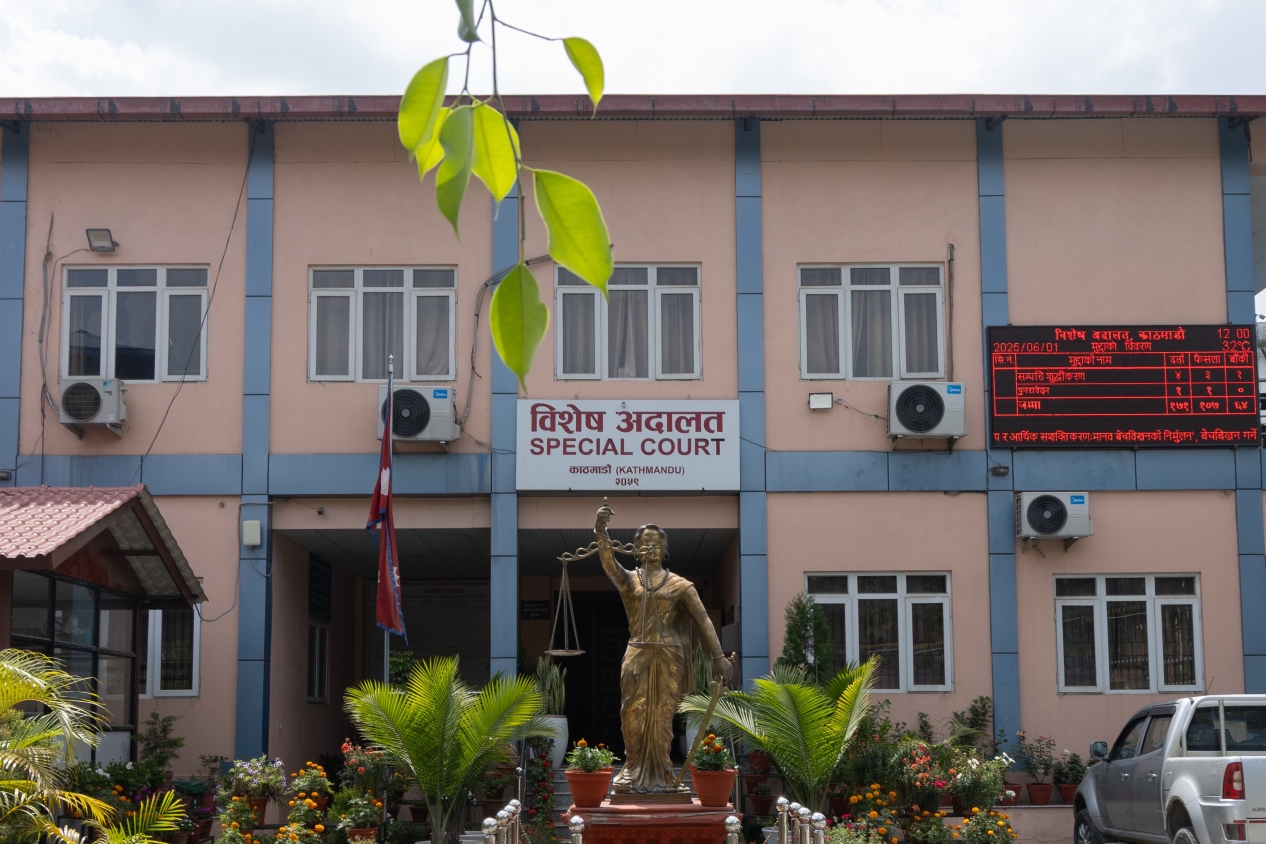
The Kathmandu District Court remanded former Prime Minister KP Sharma Oli and former Home Minister Ramesh Lekhak to five days in police custody for investigation into alleged negligence linked to protester deaths during the September Gen Z protests.
A single bench of Judge Ananda Shrestha issued the order after a hearing on the government’s request. While prosecutors had sought 10 days of remand, the court granted five days under Section 14(6) of the Criminal Procedure Code, 2017, stating that the request for custody appeared justified.
Lekhak was presented physically before the court, while Oli appeared virtually from Tribhuvan University Teaching Hospital due to health concerns. The court also directed authorities to ensure proper medical care for Oli during detention.
The arrests follow a recommendation by a high-level commission led by Gauri Bahadur Karki, which called for legal action against both leaders over their alleged role in the suppression of protests on September 8 and 9, 2025.
What did the Supreme Court decide on the habeas corpus petitions of KP Sharma Oli and Ramesh Lekhak?
The Supreme Court of Nepal addressed habeas corpus petitions filed by the wife on behalf of former Prime Minister KP Sharma Oli and former Home Minister Ramesh Lekhak following their arrests over alleged negligence during the September Gen Z protests, which resulted in multiple deaths. The petitions, filed by the respective spouses of the leaders, sought their immediate release on the grounds that the arrests were unlawful, politically motivated, and violated their fundamental rights.
After reviewing the petitions, two separate single benches, one by Kumar Regmi and another by Megraj Pokhrel of the Supreme Court, refused to grant interim release. Instead, the court issued show-cause notices to the government, directing it to submit a written explanation within three days, detailing the legal basis for the detentions. Alongside the government’s clarification, the court required the submission of the report by the high-level commission chaired by Gauri Bahadur Karki, which had recommended initiating criminal proceedings against both leaders. Once these explanations and the report are presented, the petitions are set to be heard together by a division bench, ensuring coordinated consideration of both cases.
The defense argued that the arrests were premature and procedurally flawed. Senior advocates emphasized that a commission’s report is merely a set of recommendations, not formal evidence, and cannot by itself justify an arrest. They also challenged the government’s use of urgent arrest warrants, pointing out that neither leader posed a risk of fleeing or destroying evidence. Oli, as a former prime minister, is continuously under security protection, making claims of urgency questionable. The defense further highlighted the speed with which the newly formed government reviewed the report and ordered the arrests, suggesting that due process may have been compromised. Health concerns were also raised, particularly regarding Oli, who is undergoing treatment in a hospital, and his lawyers requested that the court consider bail or personal recognizance.
The government, meanwhile, maintains that the arrests were necessary to advance the investigation into negligence charges linked to the deaths of protesters on September 8, 2025. They argue that the law allows urgent arrests when there is an immediate need to bring suspects into the investigative process. Previously, the Kathmandu District Court had remanded both leaders for five days to allow the police to conduct their initial investigation, and an extension of the remand is likely, as the inquiry cannot be completed within the initial period.
Can the government move the prisoners to a different location now?
No. Once a ‘Show Cause’ notice for habeas corpus is issued, Rule 38 creates a legal freeze. The authorities are strictly prohibited from transferring the prisoners from one facility to another without a direct order from the Supreme Court. This prevents the state from “hiding” or shifting prisoners to evade the court’s jurisdiction.
What happens if the government’s response in three days is found lacking?
If the government fails to provide a convincing legal reason for the arrests, Rule 37 of the Supreme Court Rules kicks in. This rule allows the court to release the prisoners if the detention is found to be mala fide (in bad faith) or if mandatory legal procedures were ignored. Even though the Kathmandu District Court previously granted a five-day remand, the Supreme Court has the authority to overturn that if it finds the initial arrest was unconstitutional.
What role does the Gauri Bahadur Karki Commission report play in this?
The government’s case against the two leaders, specifically regarding homicide charges, is reportedly built on findings from the Gauri Bahadur Karki Commission. The Supreme Court has now demanded that the government bring the original investigation files from this commission to the next hearing. By doing this, the court is moving beyond just “paperwork” and is looking to see if the substantive evidence actually justifies keeping two former high-ranking officials behind bars.
What exactly is a Writ of Habeas Corpus in the Nepali context?
At its core, a Writ of Habeas Corpus is the ultimate “emergency brake” for civil liberties. Under Article 133 (3) of the Constitution, it is a fundamental right that protects citizens from unlawful detention by the state. When this writ is filed, the court essentially asks the government: “By what authority are you holding this person?” If the state cannot provide a lawful justification, the court has the power to order the person’s release “on the spot.”
Why didn’t the Court order the immediate production of Oli and Lekhak?
Usually, Rule 34(1) of the Supreme Court Rules suggests that the “person” (the prisoner) should be brought before the judges. However, the court opted for a “Show Cause” order instead. This is likely because of Rule 34(2), which allows the court to skip physical production if there are concerns regarding the prisoner’s health or public peace. Given that KP Sharma Oli is currently hospitalized and his supporters are protesting in the streets, the court likely determined that transporting him would risk public order.
How is the court questioning the ’emergency arrest’ used by the government?
This is the most critical part of Monday’s order. The Balen-led government used Section 9(6) of the Civil Criminal Procedure Code, 2017, to issue a “necessary/emergency arrest warrant.” This allows the police to bypass some standard hurdles if they believe a suspect might flee or destroy evidence. The Supreme Court has now asked the government to prove that such an “emergency” actually existed. The court wants to know: was this a legitimate law enforcement necessity, or was it a procedurally flawed arrest?
Why is the Karki Commission report controversial?
The judicial probe commission led by former Special Court chair Gauri Bahadur Karki to investigate the September Gen-Z protests has come under intense criticism for appearing biased and inconsistent. Formed on September 21, 2025, the commission was tasked with examining both days of the uprising state violence on September 8 and the widespread arson and vandalism on September 9. While it recommended criminal investigations against then Prime Minister KP Sharma Oli, then Home Minister Ramesh Lekhak, and the former Nepal Police chief Chandra Kuber Khapung for negligence leading to deaths, it completely neglected the second day’s distribution and deaths. The commission report made little effort to identify those responsible for the chaos and destruction the following day.
The commission failed to follow up on clear leads. For instance, Satya Raj Joshi, then jailor at Nakkhu prison, stated he was coerced into signing documents allowing the release of Rabi Lamichhane, which triggered mass prisoner unrest. The commission, however, did not investigate these claims further or hold anyone accountable for the resulting prison escapes. Similarly, the report notes delays by the Nepal Army in responding to the initial protest and criticizes tactical decisions, yet recommends punitive action against only a few lower-ranking officers while leaving top leadership largely unaccountable.
The report is also criticized for internal contradictions. While it asserts that security forces used excessive force on September 8, it simultaneously criticizes the police for withdrawing on September 9, 2025, implying they should have confronted protesters more firmly. In another instance, Additional Inspector General of Police Siddhi Bikram Shah is both praised for protecting the police headquarters and recommended for disciplinary action, raising questions about the consistency of the commission report.
The report is more opinion-driven than fact-based or fact-finding. The report is seen as the emotion rather than objectively establishing responsibility. Its findings are completely biased to overlook September 9 incidents and failed to hold relevant authorities accountable. The report neglects a major component of the investigation.
The commission stretched its mandate beyond its core task, offering recommendations on journalism, postal services, and institutional reforms, further fueling controversy. It’s undermining the principles of an independent judiciary and casting unwarranted aspersions on legal professionals.
The report is seen as selectively thorough, internally contradictory, and opinion-heavy, focusing heavily on September 8 while largely overlooking September 9, failing to hold key actors accountable, and expanding into areas beyond its mandate, prompting calls for further independent inquiry and political controversy.
Why is Gauri Bahadur Karki’s impartiality being questioned by the Supreme Court?
The Supreme Court addressed concerns over the impartiality of Gauri Bahadur Karki, chairperson of the commission investigating the Gen-Z protests. Questions arose due to Karki’s public statements on social media and in the press prior to his appointment, where he expressed strong opinions against then Prime Minister KP Sharma Oli and other political leaders. In these remarks, Karki suggested that Oli and other former prime ministers should be barred from traveling abroad, detained for investigation, and held accountable for protest-related deaths.
A writ petition filed by advocate Bipin Dhakal (Case Number: 082-WF-0016 & Decision Date: December 26, 2025) challenged Karki’s eligibility, arguing that these prior statements could compromise his neutrality. While the Supreme Court dismissed the petition, it acknowledged that Karki’s past remarks could reasonably raise doubts in the mind of a prudent observer about his impartiality. The court, however, clarified that the commission is not a judicial or quasi-judicial body but is tasked with collecting facts and submitting a report to the government. Removing an executive-appointed official solely on the basis of perceived bias would contravene principles of separation of powers and judicial restraint.
The Supreme Court emphasized that Karki meets all legal qualifications for the post, and there was no evidence suggesting he lacked competence. Importantly, the court described the decision to accept responsibility for the commission’s work, despite prior public opinions, as a matter of personal ethics, placing the moral discretion on Karki himself. In other words, the court left it to Karki to determine whether he could continue in the role without compromising ethical standards.
Although the writ petition was rejected, the ruling issued a broader directive to the government, instructing that future appointments to probe commissions investigating matters of public importance must be made in ways that do not raise questions about the appointees’ neutrality. The Supreme Court highlighted the need to safeguard public trust, maintain institutional credibility, and ensure impartiality in such investigations.
The Supreme Court recognized that while Karki’s prior statements could generate perceptions of bias, they did not legally disqualify him from leading the commission. The matter of his ethical responsibility remains with him, but the verdict also reinforces that future appointments must prioritize impartiality and public confidence to uphold the integrity of investigative bodies in Nepal.
Why was the impartiality of the Gauri Bahadur Karki Inquiry Commission challenged in the Supreme Court?
The core of the dispute centers on Gauri Bahadur Karki, the chairman of an investigation commission formed under the Inquiry Commission Act, 1969. Before his appointment, Karki had been extremely vocal on social media regarding the very events he was later tasked to investigate (the ‘Gen Z’ protests of September 8 and 9, 2025).
The petitioner argued that Karki’s public statements created a ‘reasonable apprehension of bias.’ Specifically, Karki had posted that top political leaders like KP Oli, Sher Bahadur Deuba, and Pushpa Kamal Dahal should be barred from traveling abroad, detained for investigation, and kept in jail rather than hospitals. He even went as far as suggesting that KP Oli held “full responsibility” for deaths during the protests. The petitioner argued these weren’t just opinions; they were “predetermined conclusions” that made a fair investigation impossible.
What is the ‘reasonable person standard,’ and how did the court apply it?
The court relied on the doctrine of bias, which ensures fairness in judicial, quasi-judicial, and administrative proceedings. Under the “reasonable person standard,” the court doesn’t ask if the official is actually biased (which is hard to prove) but whether a “reasonable, informed, and fair-minded person” would suspect a lack of impartiality based on the circumstances.
In this case, the Court observed that Karki’s statements were “deterministic and pre-planned in nature.” Since he had already publicly declared who was guilty and what their punishment should be, the Court admitted that a reasonable person would indeed have doubts about the commission’s neutrality. The court explicitly rejected the government’s argument that “natural justice” doesn’t apply to inquiry commissions, stating that even though they aren’t courts, they must maintain the highest standards of integrity to be credible.
If the court found ‘apprehension of bias,’ why wasn’t Karki removed?
This is the most nuanced part of the ruling. Despite acknowledging the doubt over Karki’s neutrality, the Court declined to issue an order to remove him. The Court essentially ruled that while Karki’s comments were problematic, whether he should continue was a matter of “personal morality and conscience” rather than a legal disqualification. The three justices of the Supreme Court cited two major legal hurdles:
How did Gauri Bahadur Karki defend his ‘Gen Z’ social media posts?
Former high court judge Gauri Bahadur Karki mounted a defense centered on the distinction between his identity as a private, ‘conscious citizen’ and his professional role as the chairman of the commission. He argued that his social media activity on September 9 was an exercise of his fundamental right to express concern over national stability and corruption during the peak of the Gen Z protest. According to his statement to the Supreme Court, his calls to prevent political leaders from fleeing the country or to investigate their assets were motivated by a decades-long commitment to social justice and the rule of law, rather than a specific bias against the individuals mentioned. He maintained that these personal views held prior to his appointment did not overlap with his official duties, asserting that a conflict of interest can only be established if his conduct after taking the oath failed to meet the standards of the Inquiry Commission Act. By framing his past statements as the reflections of a responsible citizen reacting to a national crisis, he contended that his current professional integrity remained intact and that the petition against him was rooted in a misunderstanding of his dual roles.