Kathmandu
Thursday, July 9, 2026





Critics say Supreme Court Registrar Man Bahadur Karki's nomination as Chief Election Commissioner rewards judicial loyalty over institutional independence, exposing how political bargaining continues to shape constitutional appointments.
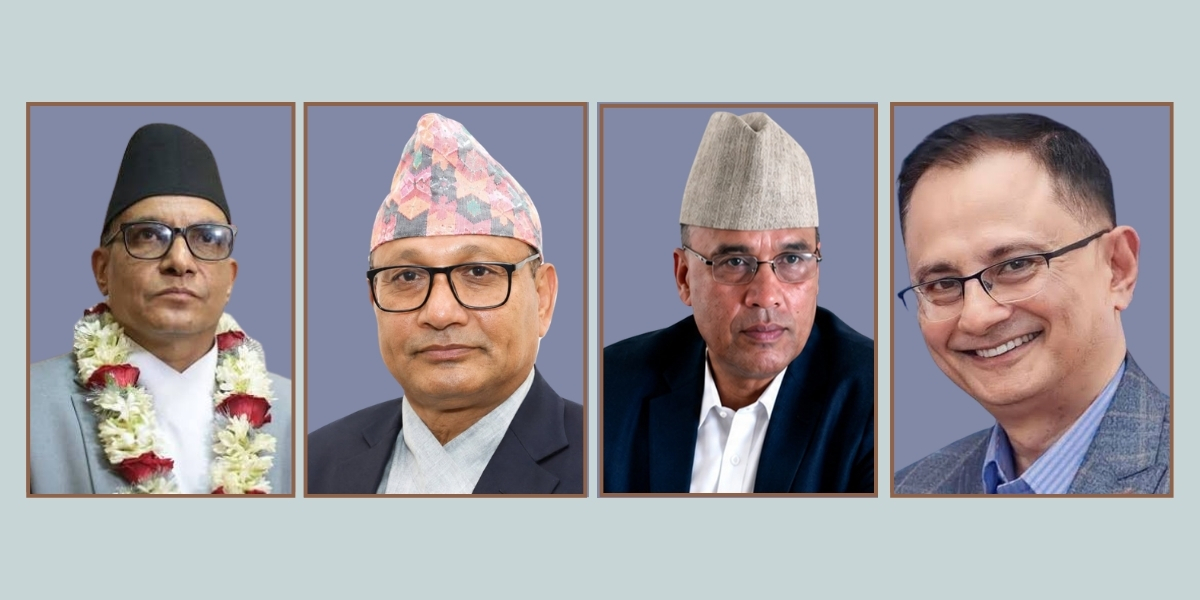
KATHMANDU: On July 3, the Constitutional Council recommended the incumbent Registrar of the Supreme Court, Man Bahadur Karki, for the position of Chief Election Commissioner. The Council brought Karki’s name forward to fill the position of Chief Election Commissioner, which had been vacant for 14 months.
Alongside Karki, former Deputy Inspector General of Police Rajiv Subba and former Election Commission employee Guru Prasad Wagle have been recommended as commissioners of the commission. Wagle is a former Deputy Attorney General of the commission and has been active in the legal profession following his retirement.
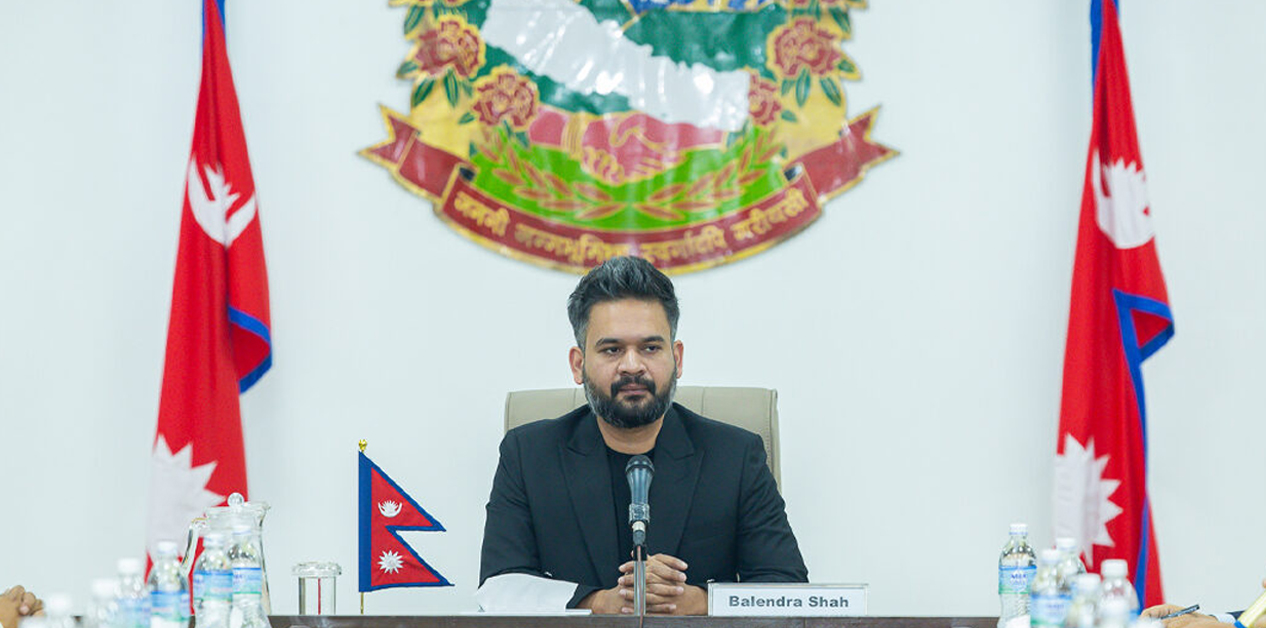
There are widespread rumors that the three individuals were recommended under the “quotas” of different power centers for the constitutional appointments. According to discussions within the judicial sector, Karki was recommended from the quota of Chief Justice Manoj Kumar Sharma, Subba from Prime Minister Balendra Shah, and Wagle from the Rashtriya Swatantra Party Chairman Rabi Lamichhane. Legal practitioners have viewed this as a sign that the practice of power-sharing in constitutional bodies seen during the eras of the Nepali Congress, CPN (UML), and CPN (Maoist Centre) is now being repeated under different power centers within the new political parties.
Compared to Subba and Wagle, there is significantly more discussion surrounding Karki, who was recommended as the Chief Election Commissioner. A resident of Itahara, Morang, Karki entered the judicial service through careers as a legal practitioner and a government attorney. He was promoted to the position of Registrar of the Supreme Court on July 27. Prior to that, he served as the Registrar of the Patan High Court.
Due to the 58-year age limit, Karki was scheduled to retire on August 2. However, before heading into retirement, he has been recommended as the Chief Election Commissioner. At the time of his recommendation, he was still holding the incumbent position of Registrar of the Supreme Court. He had not resigned from his post prior to the recommendation.
There are rumors in the judicial sector that Chief Justice Sharma strongly pushed to make Karki the Chief Election Commissioner. In the past, the relationship between Sharma and Karki at the Supreme Court was not widely discussed. However, after Sharma was recommended as Chief Justice, their relationship and proximity suddenly came into the spotlight.
According to legal practitioners, Karki appeared to act as a “helper” when the Constitutional Council paved the way to make Sharma the Chief Justice by bypassing the most senior justice. Individuals within the judicial sector claim that Sharma became the Chief Justice in accordance with the wishes of Prime Minister Balendra Shah. Therefore, the discussion that Karki did a “favor” for both Sharma and the government is an open secret within judicial circles. Senior advocates state that to repay that favor, Sharma insisted on Karki’s name within his quota, and the members of the Constitutional Council, including the Prime Minister, agreed to it.
Within judicial circles, Chief Justice Sharma is being discussed as the successor to former Chief Justice Cholendra Shumsher Rana. During Rana’s tenure, the distance between the judiciary and the executive weakened, and accusations were made that attempts were made to influence constitutional appointments and even the Council of Ministers. Accusations had publicly surfaced against Rana for seeking a share in the Council of Ministers from the then-Prime Minister Sher Bahadur Deuba.
Legal practitioners state that during Sharma’s tenure as well, accusations of seeking proximity to the government and influence over constitutional appointments signal a repetition of that very same style. A senior advocate remarks, “It’s not that this isn’t known. He has started doing exactly what Cholendra used to do.”
The relationship between Karki and Chief Justice Sharma suddenly came under discussion after May 6. On that day, the Constitutional Council recommended Sharma, who was fourth in seniority, as Chief Justice, bypassing the most senior justice and Acting Chief Justice Sapana Pradhan Malla.
The tradition of appointing the most senior justice of the Supreme Court as Chief Justice, which began during the Panchayat era, had continued into the republican system. According to legal experts, because bypassing seniority increases the risk of arbitrariness, visible judicial deviation, and the growing influence of power centers, the practice previously had been to appoint the most senior justice as Chief Justice.
However, this convention was broken this time around. Legal practitioners allege that the then-Registrar of the Supreme Court, Karki, played a supportive role in that.
On the very day Sharma was recommended as Chief Justice, Senior Advocate Dinesh Tripathi, Advocate Prem Raj Silwal, and Gita Thapa arrived at the Supreme Court with a petition. As the Registrar of the case registration branch, Karki possessed the authority to either register or reject that petition.
However, Karki did not register the petition immediately. According to legal practitioners, such urgent petitions of public importance must be registered immediately by the Registrar and presented before the bench for a hearing. However, that petition was kept entangled in the rejection process for 10 days.
The petition was moved forward only on May 20, after the parliamentary hearing concluded on May 19 and Sharma assumed office. A single bench of the Supreme Court forwarded the petition to the Constitutional Bench. The Constitutional Bench is led by the Chief Justice himself. Consequently, when the petition reached a stage where its utility had expired, the Constitutional Bench, including Chief Justice Sharma himself, upheld the rejection order on June 24.
Senior Advocate Tripathi accuses Karki of shutting the initial door to justice by refusing to register the petition. “The recommendation of the Chief Justice, crushing established norms, was ‘judge shopping’ (an improper effort to steer a case to a favorable judge or bench) carried out with the malicious intent of taking control of the court and capturing the state,” Tripathi says. “By saying today, tomorrow, day after tomorrow, he moved the petition forward only after its utility had ended. No amount of opposition to the injustice and unseemly work he did would be enough.”
According to Tripathi, the Registrar’s job is to immediately register an incoming petition and send it for a hearing, not to block it. “He exercised the authority used by judges himself. He is merely an employee,” Tripathi says. “He violated the right to justice and the right to seek a constitutional test.”
Article 284 of the Constitution of Nepal contains provisions regarding the Constitutional Council. The Council is granted the authority to recommend appointments for the Chief Justice and heads and officials of constitutional bodies. To be appointed to a constitutional post, criteria such as specific educational qualifications, experience, and age, as well as high moral character, integrity, and social reputation are specified. Depending on the relevant field, a specific amount of experience in areas like law, administration, accounting, or research is expected.
The Registrar of the Supreme Court is a position equivalent to a secretary in the civil service; legally, Karki does not appear unqualified. However, the episode of blocking the registration of the petition regarding the Chief Justice’s appointment, the rejection of petitions of public interest, and the subsequent political developments have raised questions regarding his impartiality.
Furthermore, legal practitioners say that accusations of personal proximity, political consensus, and the influence of power centers in the appointment process risk weakening public trust in an institution like the Election Commission.
Senior Advocate Tripathi claims that Karki lacks a high moral character. “How can an individual accused of bringing the judicial system to a state of non-functioning possess a high moral character?” Tripathi questions.
He argues that an individual recommended in this manner cannot play a neutral role in the Election Commission. “The Election Commission is the body that makes the final decision on whether the soul of democracy survives in an election or not,” Tripathi says. “Two elections are approaching. Karki cannot maintain the fairness and sanctity of elections. Unethical work to control the ballot could take place.”
Legal practitioners have also viewed Karki in connection with the Gen Z protest. On September 7, an attempt was made to register a petition at the Supreme Court against the decision of the government led by KP Sharma Oli to shut down social media platforms. Karki was in charge as Registrar when the Supreme Court administration refused to register the petition and rejected it. Tripathi himself was the petitioner.
According to Tripathi, if the petition had been registered that same day and reached the bench immediately for a hearing, a situation could have arisen where the court could have initially intervened in the government’s decision. That could have provided an opportunity to address the growing dissatisfaction and tension to some extent. However, because the petition was not registered, an immediate judicial test from the court could not take place.
The following day, September 8, the Gen Z protest turned violent. On September 9, arson and vandalism took place across the country against government and private structures, including the Supreme Court, the main administrative hub Singha Durbar, and the Office of the President.
Tripathi, known as a legal practitioner who frequently files petitions in court on matters of public interest and importance, says, “Such a person cannot be considered to have a moral character.”
Karki, however, has denied the allegations leveled against him. “I was recommended by the Constitutional Council, not by the Chief Justice,” Karki says. “Therefore, it is inappropriate for you to ask such a thing, and I cannot comment on it either.” Karki did not provide a reaction regarding the allegation of rejecting public interest petitions while at the Supreme Court.
Individuals active in the judicial sector say that Karki’s recommendation shows no significant difference in behavior between the old and new political forces.
“This is something I have been saying from before; constitutional bodies have been turned into a club for administrators and former administrators,” says Senior Advocate Tikaram Bhattarai. “A 20-year experience is required for the Public Service Commission. Former employees or qualified incumbent individuals are sought there. Apart from that, anyone can enter other constitutional bodies. The parties of yesterday used to look for employees, and the new party that emerged promising to deliver good governance in the country did the exact same thing.”
The Civil Service Bill, 2025 is currently under consideration in the House of Representatives. In that bill, a provision for a ‘cooling period’ was proposed, stating that an individual in the civil service cannot be appointed to another position for two years after retiring from their post.
The provision for a cooling period was proposed due to the risk that when an employee is directly appointed to a government or constitutional post while still in service, they might not be able to deliver an independent decision against the appointer, or they might play a role that benefits the appointer. Debates regarding a cooling period have also been ongoing for the capacity enhancement and impartiality of constitutional commissions.
Legal practitioners comment that at a time when efforts were being made to ensure the impartiality of appointments by placing reformative provisions in the law, the government’s recommendation of an incumbent Registrar as Chief Election Commissioner has shattered the very spirit of the cooling period.
“Although a cooling period has been included in the Civil Service Bill, the Act has not yet been enacted, so it cannot be called legally binding right now,” says Senior Advocate Bhattarai. “However, it can certainly be said to run contrary to the spirit of the provision present in the proposed Act.”