Kathmandu
Wednesday, June 17, 2026






KATHMANDU: In politics, revolutions rarely arrive with ballots; they tend to emerge from ruptures. Yet in Nepal, the latest upheaval has taken a distinctly democratic form. The rise of Balendra Shah-a young, unconventional figure propelled by public frustration and anger-marks not just a shift of leadership but a reordering of political expectations. For the first time in decades, the electorate has decisively broken with the habitual triad of establishment parties and entrusted power to a movement that promised something deceptively simple: that the state should work.
This is, by any measure, an extraordinary moment. But extraordinary moments carry extraordinary risks. The government now in place inherits not a blank slate, but a system layered with inefficiencies, vested interests, and structural constraints. It also inherits something far more volatile: hope.
A mandate unlike any other
Electoral landslides on March 05 often conceal as much as they reveal. They suggest unity where there may be fragmentation, clarity where there may be ambiguity. In this case, however, the scale of the victory achieved by the Rastriya Swatantra Party (RSP) signals a more profound shift. It is not merely that voters chose a new party; they rejected an old political compact.
For years, Nepal’s post-republican politics has been defined by instability—frequent changes of government, coalition bargaining, and policy drift. The electorate has tolerated this with a mixture of resignation and pragmatism. But tolerance has limits. The convergence of corruption scandals, economic stagnation, and administrative dysfunction has eroded patience.
The “Gen-Z movement” on September 08-09, 2025 that preceded the election crystallized this dissatisfaction into a coherent demand. It was not ideological in the traditional sense; it did not seek to redefine the state so much as to make it function. Its slogans were less about grand visions and more about everyday frustrations: delayed services, opaque processes, and unaccountable officials.
The RSP’s manifesto tapped into this sentiment with precision. By foregrounding integrity, digital governance, and administrative efficiency, it aligned itself with a public that no longer believed in incremental reform. It promised rupture.
Yet rupture, once achieved, must give way to reconstruction. And reconstruction is invariably slower, messier, and more complex.
The tyranny of expectations
The central paradox of the Balen government is that its greatest asset-its overwhelming mandate-is also its greatest vulnerability. High expectations create a compressed timeline for delivery. Voters who have waited years for change are unlikely to wait patiently for gradual reform.
This dynamic is particularly acute in Nepal, where public opinion can shift rapidly. Governments have risen and fallen not only on the basis of performance, but on perception. A sense that promises are not being fulfilled-even if reforms are underway-can quickly translate into disillusionment.
Political scientists often speak of the “expectation gap”-the distance between what citizens hope for and what governments can realistically deliver. In Nepal today, that gap is wide. Many voters believe that corruption can be eradicated swiftly, that jobs can be created at scale, and that governance can be transformed within a few years.
These expectations are not entirely unreasonable; they reflect genuine needs. But they are also shaped by a belief in the transformative power of political will. The reality, as any seasoned administrator knows, is more complicated.
A state that resists its masters
Nepal’s administrative system is not designed for rapid transformation. It is procedural, hierarchical, and risk-averse. Decisions move through layers of approval; accountability is diffuse. This structure has evolved over decades, shaped by political compromises and institutional inertia.
Reforming such a system requires more than directives from the top. It demands changes in incentives, culture, and capacity. Civil servants must be persuaded—or compelled—to adopt new ways of working. Digital systems must be integrated into existing processes. Oversight mechanisms must be strengthened.
These are not quick fixes. They are long-term projects that require sustained attention and political commitment. There is also the question of resistance. Bureaucracies, by their nature, resist change. Not always out of malice, but often out of caution. New initiatives can be perceived as disruptive, particularly if they threaten established practices or informal networks.
For the Balen administration, the challenge will be to navigate this resistance without provoking paralysis. Too much confrontation risks alienating the very machinery needed to implement reform; too little risks co-optation.
The economy: fragile foundations
If governance is the arena in which the government will be judged, the economy is the terrain on which it must operate. Here, the constraints are particularly stark.
Nepal’s economic model is heavily reliant on remittances. Millions of citizens work abroad, primarily in Gulf countries and Malaysia, sending money home that sustains consumption and stabilizes the currency. This model has provided resilience, but it has also masked structural weaknesses.
Domestic job creation has lagged far behind labor supply. Each year, hundreds of thousands of youths enter the workforce, while only a fraction find employment at home. The result is a cycle of migration that is both an economic necessity and a social cost.
The new government has pledged to break this cycle by shifting toward a production- and export-oriented economy. This is an ambitious goal-and a necessary one. But it requires deep structural reforms: improving the investment climate, developing infrastructure, enhancing skills, and ensuring policy consistency.
These reforms take time. They also require resources, which are limited.
Even the very powerful stable government, NEPSE enters the uneasy footing. A regulatory sweep targeting prominent market players has collided with thinning liquidity and weakening technical, leaving sentiment brittle despite a late rebound.
The removal-or restraint-of “big hands” has cut both ways: easing selling pressure, perhaps, but injecting enough fear to keep buyers on the sidelines. Turnover is falling, participation is thinning, and whispers of leveraged stress are beginning to drift from brokerages to banks.
Technically, the index hovers near a decisive threshold. Failure to hold risks a slide back toward lower support; strength, for now, looks tentative rather than convincing. The result is a market caught between discipline and doubt-where reform may be necessary, but confidence remains the scarcer commodity.
Complicating matters further is the global context. Rising tensions in the Middle East-driven by conflicts involving Israel, the United States, and Iran-pose immediate risks. Disruptions to labor markets could affect Nepali workers abroad. Energy price shocks could drive inflation at home. For a government already under pressure to deliver, such external shocks could prove destabilizing.
Migration: a double-edged sword
Migration has long been Nepal’s economic safety valve. It has reduced unemployment, increased household incomes, and supported macroeconomic stability. But it is also a source of vulnerability.
The global environment for migration is becoming less favorable. Anti-immigration sentiments are rising in many countries. Labour markets are tightening. Opportunities that once seemed abundant may become scarce.
For Nepal, this presents a dual challenge. On one hand, it must continue to support citizens working abroad, ensuring their safety and rights. On the other, it must prepare for the possibility that fewer opportunities will be available.
A large-scale return of migrant workers would strain the domestic economy. Job opportunities would need to be created quickly. Social support systems would come under pressure. Informal sectors could become overcrowded.
There are also risks of exploitation. As formal pathways shrink, informal and illegal channels may expand, increasing the danger of human trafficking. Managing these dynamics will require proactive policy, not reactive measures.
Anti-corruption: symbolism and substance
Few issues resonate as strongly with Nepali voters as corruption. It is seen not merely as a moral failing, but as a systemic problem that undermines development and erodes trust.
The Balen government has signaled its intent to tackle corruption head-on. Proposals to investigate the assets of public officials and to strengthen accountability mechanisms are central to its agenda.
These measures carry symbolic weight. They signal a break from the past, a willingness to confront entrenched interests. But symbolism must be matched by substance.
Investigations must be credible, transparent, and impartial. They must avoid the perception of being politically motivated. Legal process must be followed, even when they are slow.
There is also the risk of backlash. Anti-corruption campaigns often threaten powerful actors who may resist through political or institutional means. Success in this areas will depend not only on intent, but on execution.
Nepal has already seen its share of political upheavals, but nothing quite like this. Hours after taking office, Balendra Shah acted decisively: former Prime Minister KP Sharma Oli and ex-Home Minister Ramesh Lekhak were arrested, accused of inflaming the September 08, 2025 protests and failing to contain the fallout.
The move eschews the usual political courtesies of a government transition. Yet the speed raises questions: were proper procedures followed, or is this a display of power masquerading as justice?
Balen’s style-swift, uncompromising, and sometimes confrontational-worked in municipal politics, but governing a federal state is more complex. In Nepal, legitimacy hinges as much on due process as on results. Bold action excites the electorate; overreach risks alienating it.
Social policy: equity under pressure
Beyond governance and the economy lies the question of social justice. Nepal remains a country of significant inequalities-geographic, economic and social.
The new government has pledged to address these disparities through reforms in healthcare, education, and land policy. Expanding access to quality healthcare, reducing out-of-pocket expenses, and improving public education are all laudable goals.
But these sectors are resource-intensive. They require sustained investment, institutional capacity, and policy coherence.
Land reform, in particular, is fraught with complexity. Issues of ownership, tenure, and usage intersect with politics and law. Efforts to resolve these issues can generate both support and opposition. Balancing equity with feasibility will be a delicate task.
Internal cohesion: the hidden variable
While much attention is focused on external challenges, internal dynamics within the ruling party may prove equally decisive. The RSP is a relatively new formation, bringing together individuals with diverse backgrounds and experience.
This diversity is a strength, but also a potential source of tension. Differences over policy, leadership, and priorities may emerge, particularly as the realities of governance set in.
The relationship between key figures-especially between Balendra Shah and Rabi Lamichhane-will be critical. Coordination at the top can set the tone for the entire administration. Nepal’s political history offers cautionary tales of majority governments undone by internal rivalry. Avoiding such outcomes will require discipline, dialogue and a common sense of purpose.
Foreign policy: between giants
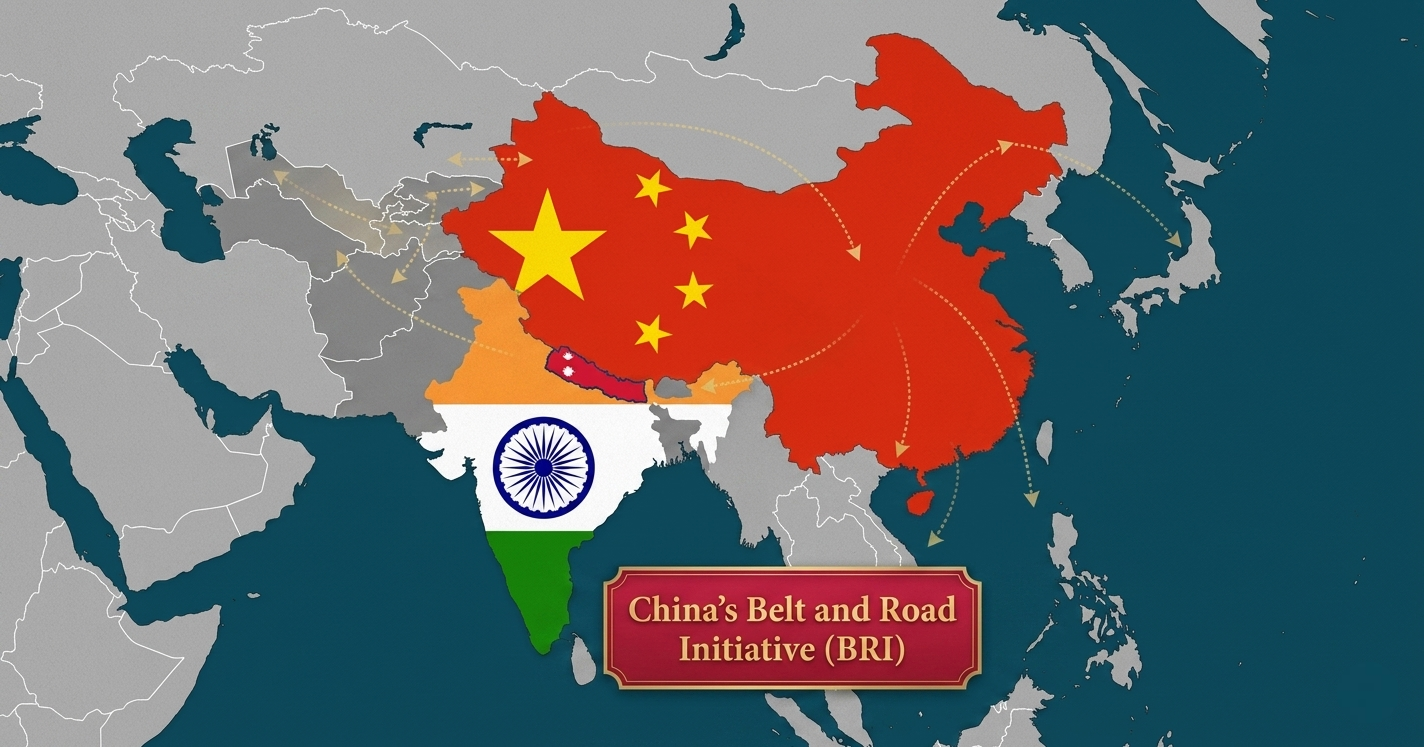
Nepal’s geopolitical position has always required careful navigation. Sandwiched between India and China, it must balance competing interests while safeguarding its own sovereignty.
The new government’s “Nepal First” approach emphasizes pragmatism and independence. In principle, this is uncontroversial. In practice, it is complex.
Trade, infrastructure, and investment are all influenced by relations with neighbors. Decisions in one domain can have repercussions in another.
Global dynamics add further complexity. Relations with the United States, particularly in the context of regional security and economic cooperation, must also be managed. Diplomacy, in this context, is less about grand gestures and more about careful calibration.
Leadership: style and substance
Leadership style will play a vital role in shaping the government’s trajectory. As mayor of Kathmandu, Balen Shah cultivated an image of decisiveness and action. He spoke less, did more.
At the national level, however, the demands are different. Governance requires not only action, but communication. Accountability to house of representative, engagement with media, and responsiveness to criticism are essential.
There have been criticisms of his past reluctance to engage with traditional media. As prime minister, such distance may prove costly. Transparency is not merely a democratic virtue; it is a political necessity.
The long view
It is tempting to view the Balen government in binary terms: success or failure, transformation or disappointment. But political reality is rarely so neat.
Reform is incremental. Progress is often uneven. Success may lie not in dramatic change, but in steady improvement. If the government can enhance service delivery, maintain macroeconomic stability, and build credible institutions, it will have achieved more than many of its predecessors. Conversely, if it succumbs to internal division, policy inconsistency, or external shocks, it risks reinforcing the very cynicism it sought to overcome.
A narrow window
Nepal’s political landscape has been reshaped by a surge of public demand for change. The rise of Balendra Shah embodies that demand. But demand alone does not guarantee delivery.
In under 48 hours, Balendra Shah’s new administration has attempted what few governments in Nepal have dared: recast electoral mandate as a 100-point “citizen contract.”
This is not a manifesto of intent but a mechanism of delivery-where hospital beds, file approvals and business permits become the daily metrics of state legitimacy. In shifting from the politics of grievance to the politics of output, the government is wagering that administrative speed can restore public trust faster than rhetoric ever could.
The blueprint borrows liberally: enforcement-first discipline from Singapore, digital integration from Estonia, and anti-corruption resolve reminiscent of Hong Kong. The ambition is coherence-linking health, bureaucracy and accountability into a single, measurable system.
Yet the risks are equally systemic. Bureaucratic resistance, digital illiteracy and political pushback could slow momentum; overreach could erode legitimacy as quickly as inaction once did. Early gains will need to be both visible and irreversible.
The wager, then, is stark: that governance, once made fast, transparent and routine, can outlast the enthusiasm that created it. The promise is not transformation, but something more durable-the normalization of delivery.
The government now faces a narrow window in which to convert hope into results. It must act quickly enough to maintain momentum, yet carefully enough to avoid missteps. It must balance ambition with realism, innovation with institutional continuity.
Above all, it must recognize that its legitimacy rests not on its mandate, but on its performance. In a country where public has grown accustomed to disappointment, even modest success could be transformative. But failure, in this context, would carry a heavier cost: the erosion of belief in the possibility of change itself. The stakes, in short, could hardly be higher.