Kathmandu
Monday, July 13, 2026





The Balen government is being criticized by some quarters for accepting a total loan of USD 185 million from lenders including multilateral institutions like the World Bank and the Asian Development Bank. The effect is clear: Nepal’s foreign debt has climbed by roughly USD 185 million in a matter of weeks, raising uncomfortable questions for leaders like Rabi Lamichhane, the chairman of the ruling RSP and Prime Minister Balendra Shah, both of whom once spoke loudly against dependence on external borrowing.

KATHMANDU: Some six years ago – before all the political meetings, before becoming the mayor of Kathmandu and then the Prime Minister of Nepal – Balen Shah raised a very pertinent question in his politically charged rap song Balidan. That question was “Kasle tirne saat samundra paari deshko saat udhari?” which translates to “who would repay the national debt owed from across the seven seas?”
Today, his lyrics have become more meaningful than ever, albeit ironically. For Balendra Shah himself has become Prime Minister of Nepal, and within a week and a few days of his tenure, his government has accepted several foreign loans from different lenders, including multilateral lenders like the World Bank and the Asian Development Bank. Altogether, the sum of these latest foreign loans has increased the nation’s external debt burden by about USD 185 million (around Rs 27.5 billion).
Here, the arithmetic is straightforward. The politics, less so. To say the least, this is a classic case of moving from “outsider critique to governing reality!”
PM Balen did not progress within the established system of political parties. Both his message and that of Rabi Lamichhane, the chairman of the ruling Rastriya Swatantra Party (RSP), were based on criticism of the established political system, where each government borrowed money from abroad, delivered poor or mixed results and left the problem for their successors to face.
While still being a TV journalist, RSP Chair Lamichhane constantly criticized the ease with which the government was obtaining loans from abroad, often doing so from moral grounds. Shah’s “revolutionary” music conveyed the same concerns about government policy and priorities, which later became more apparent when he entered politics.
That is why, at the current moment, the RSP government must be feeling somewhat awkward. Political analysts and commentators are already saying, “A government associated with reformist rhetoric now finds itself navigating the same terrain it once criticized.”
Foreign loans in Nepal are not a recent phenomenon. Some twenty years back, the level of the country’s total debt was much lower (USD 4.4 billion than it is today (more than USD 10 billion), considering the relatively narrower development perspective at that time and limited international lending facility. In the meantime, the number has been growing gradually mainly because Nepal has undertaken infrastructural development, reconstruction after the war and earthquakes, reorganization, and adaptation to climate change.
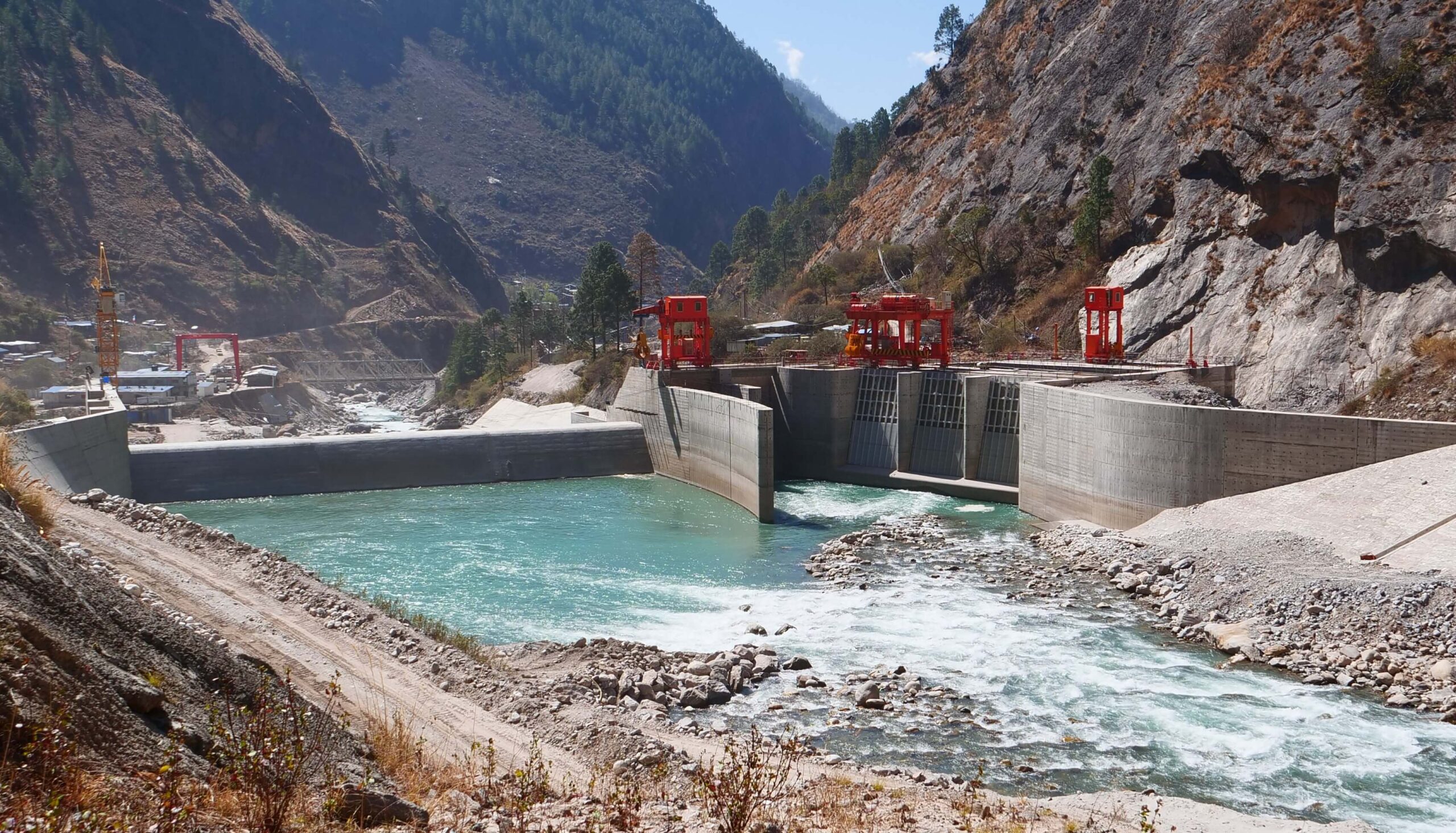
In fact, there are many sectors that rely on foreign loans, namely road construction, hydroelectric power production, digitization, urban development, and environmental management. All the recently sanctioned loans are project-based; they were discussed over a period of years, and offer concessional terms with low interest and lengthy repayment duration.
The government perspective on finance, however, is not new. Foreign borrowing continues to be one of the most practical options available for funding significant economic development. It can be argued that the case for such borrowings is necessary for the Nepali government. The country lacks sufficient internal resources, even though there has been progress in generating revenues for development in recent years. Capital outlays have been consistently underfunded, and investments from the private sector will not suffice to cover the deficit. Concessional loans, therefore, are considered “rather inexpensive sources of finance.”
According to the officials, these funds are necessary for expansion of infrastructure, which would take decades otherwise; development of institutions, especially financial and political; and programs related to climate and environment, which are becoming crucial but expensive.

RSP Chairman Rabi Lamichhane (left) and Prime minister Balendra Shah (right)
The timing is equally important here. The loans which are now being institutionalized were negotiated under earlier governments. The process of negotiation, planning, and approval usually takes several years to complete. So, in reality, the current government has inherited commitments already in motion. In other words, the present Balen government has merely carried forward the same practice because of its structural requirements.
For the critics, on the other hand, there is a more serious matter involved. It does not just boil down to “a few individual loans” but to the problem of sustainability of a whole system. In Nepal, the execution of projects is quite slow and not always rewarding for its proponents. In this situation, the accumulation of foreign debt, even if it is concessional lending, raises the question of sustainability, besides such loans being vulnerable to abuse.
More to the point, there is the question of political integrity. Given that the most important players in the government and the party running it – who viewed borrowing as a sign of mismanagement – continue to employ the same tactics. So, naturally, questions were bound to arise. The lyrics from Balidan are once again relevant in this context, as much as they have anything to do with expectations of Balen’s reign.
What may not be a problem per se is the new rhetoric surrounding loans. In fact, what used to be seen as a problem now requires an explanation and justification for its necessity.
In many respects, the current dilemma represents an ongoing conflict that has been a constant factor in Nepal’s development. Nepal requires foreign investments because it does not have enough internal sources of funding. External loans make up for the shortage but increase dependence as well. Every new project is a step toward progress, while every loan becomes a burden for the future.
The current situation is exceptional because it contrasts sharply with the promises of the previous period in which the old politicians operated. In the case of Balen and Lamichhane, the contradiction between the old rhetoric and the current reality is evident.
If a compromise between rhetoric and reality is to be achieved, it requires transparency and discussions. Since foreign loans are essentially public promises, they are also subject to considerations of long-term consequences. However, in Nepal, the borrowing process seems to have remained technocratic without any substantial discussion.
In light of the sensitive issue, along with the expectation of the present leadership, the need for change is evident.
The discussion of foreign loans in Parliament, well before they are accepted, could have multiple benefits. Such discussions and deliberations would explain the reasons behind each loan, help make the proper use of money, and generate public trust through dialogue. Therefore, parliamentary deliberations before accepting any major foreign loan has become a must.
Such a process would not eliminate controversy, but it would anchor decisions in a more transparent framework. One that aligns more closely with the reformist ethos that brought the current government to power.
The question remains…
As of the latest available official data in early 2026, Nepal’s total public debt, including both domestic and foreign loans, has reached roughly Rs 2.85 trillion to Rs 2.87 trillion, which is equivalent to about 47 % of the country’s gross domestic product (GDP). This includes the central government’s outstanding liabilities owed both within the country and abroad.
Of the total public debt, external loan exceeds Rs 1.5 trillion. Today, every child in Nepal, as soon as they are born, inherits an individual debt of over Rs 100,000. This is a grave situation, as the per capita loan liability has been steadily rising.
Ultimately, the question raised by PM Balen in Balidan remains unanswered, or better, unasked, not in terms of guilt, but in terms of challenge. Who pays for the country’s debts? As always, the answer is that the people do, through taxes and economic policy. Yet there are other questions, more pressing ones, regarding how these debts can be justified.
In the case of the Balen-led administration, such an explanation not only involves handling debt but also justifying it. It might even change the course of the discussion it helped spark before.
Until then, the irony remains: a question once asked in verse now echoes in the corridors of power.