Kathmandu
Saturday, July 18, 2026





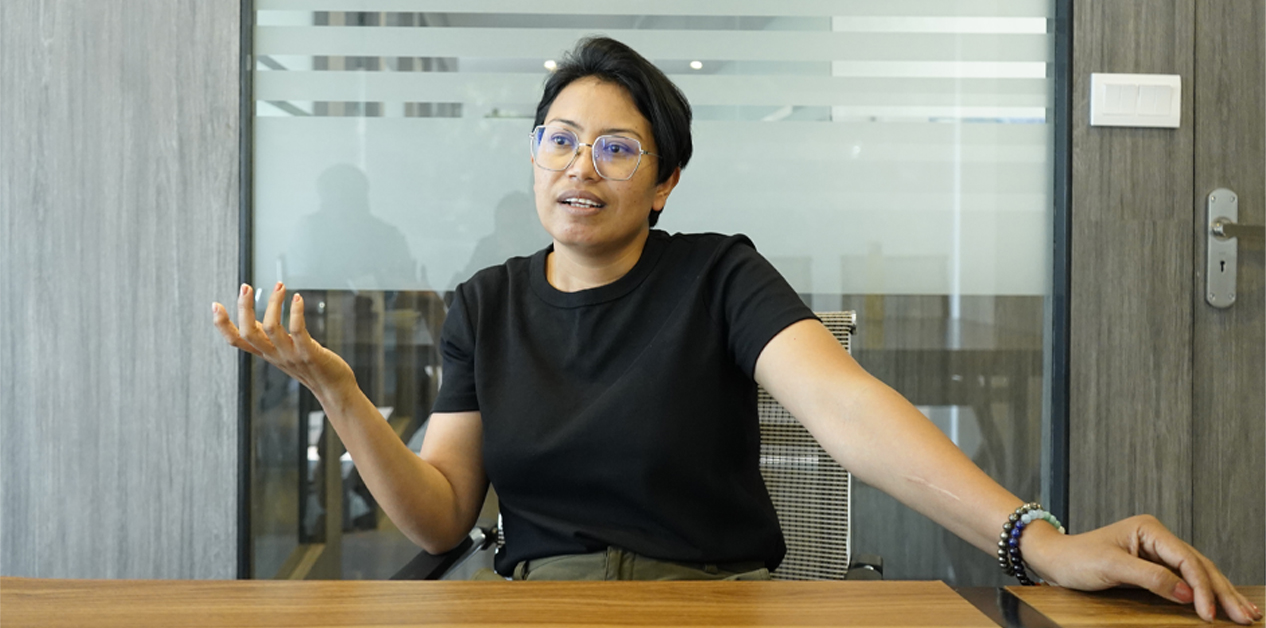
Shanta Nepali, who has produced and directed television programs such as Jatko Prashna and Caste Conversation, has had her documentaries selected for international festivals. Her documentary Climbing Temperature, on the impact of climate change on indigenous communities, was selected for Canada’s Banff Mountain Film Festival 2022.
Having come to filmmaking through print journalism, radio, and television, Shanta wants to tell the world the stories of women, Dalits, and marginalized communities. She has established the Shanta Foundation to support filmmakers from marginalized communities and runs Women in Film Nepal to encourage women. Nepal News’s Gopal Dahal spoke with filmmaker Shanta. Excerpts:
Your documentaries keep coming one after another. What have you been working on lately?
I am currently working with my own production house foundation, as well as on two documentaries of my own. What the Land Remembers has just been completed and we have released its poster. It focuses on the Tharu community’s food and their relationship with nature.
You consistently take up issues of women, Dalits, and the marginalized. What is film to you?
For me, film is a medium for saying what I want to say. I feel I can say things more easily through films. Whatever I see and experience around me is what I put into film. When I go deeper in telling stories, the issues of marginalized communities come in – issues of Dalits and women.
Some people know me as a Dalit filmmaker, an indigenous filmmaker, a women’s filmmaker. But that is not quite it. In reality, as a filmmaker I make the films that feel natural to me.
Several films by women directors have been released this year. Has women’s participation in the field increased?
Women’s participation in writing, directing, and producing has increased recently. Their presence in technical roles has also grown. We now have access to the digital space, and film schools and colleges have opened. Even without attending college, it has become easier to learn by watching online; that too has contributed to the growing number of women filmmakers.
How well are women’s issues being taken up in film?
The subjects are coming through, but who is telling those stories matters.
It is not that women’s stories must be told only by women, but how the narrative is being developed matters. Recent films do tend to be women-centered, but there is a difference in how that is handled and who is doing the telling.
How have women’s stories been told?
Most women’s stories are still being told by men. It is not that men should not tell them, but surely, I can tell what I have lived better than someone who has only observed it from the outside.
Others can tell the same story, but the central question is whether the person telling it is the right one for that story. Who can do justice to it, and when someone else tells it, how those whose story it is are involved. These things matter.
What has changed in how women’s issues are taken up in film?
Not much. Women’s stories were being told by men before and men still dominate. What has changed somewhat is how men view women’s stories. But the way narratives are designed has not changed significantly. Some more sensitive filmmakers have emerged, looking at the work of directors like Nabin Subba and Deepak Rauniyar, there is a real difference between earlier and now; they are in the process of updating themselves. But the work of fundamentally transforming the storytelling has not happened. The stories of women, Dalits, and marginalized communities have largely not come through.
What kind of stories need to come – and have not yet?
Dalit stories are being told by someone else, women’s stories by someone else. Priority should be given to letting those whose stories they are tell them. But right now, others are doing the telling. Indigenous communities’ stories are only just beginning to come from within those communities themselves. Beyond that, everyone is telling other people’s stories. That is not how the real stories come out.
When I say this, some people have accused me of saying only you can tell your own story and others are not allowed. They call me radical but I am not trying to be radical. Just because something is art does not mean you can tell a story you cannot do justice to.
We have such enormous diversity here, and so many stories within it have yet to come out. Only when people are able to tell their own stories will many of those stories emerge. We are working with exactly that understanding.