Kathmandu
Saturday, July 18, 2026





A Kathmandu price shock leads to Tikapur, where bananas are transformed into wine, momos, pickles, and a full culinary ecosystem built on agro-tourism and branding

KATHMANDU: A routine purchase in Kathmandu last week turned into an unexpected reminder of how food, policy, and innovation are increasingly intertwined in Nepal’s everyday life. At a local fruit shop, a dozen bananas cost Rs 300, or Rs 25 per piece, a price that immediately felt unusual.
Before the question “Why so expensive?” could fully land, the shopkeeper answered it himself. Imports from India had slowed, he said, and Nepal’s own production was not enough to meet demand.
Behind that short explanation lay a deeper policy shift. Restrictions on banana imports, introduced to protect domestic plantations from the fungal threat Tropical Race 4 (TR-4), had tightened supply in the market. The result was visible at the consumer level: fewer imported bananas, higher reliance on local produce, and rising prices.
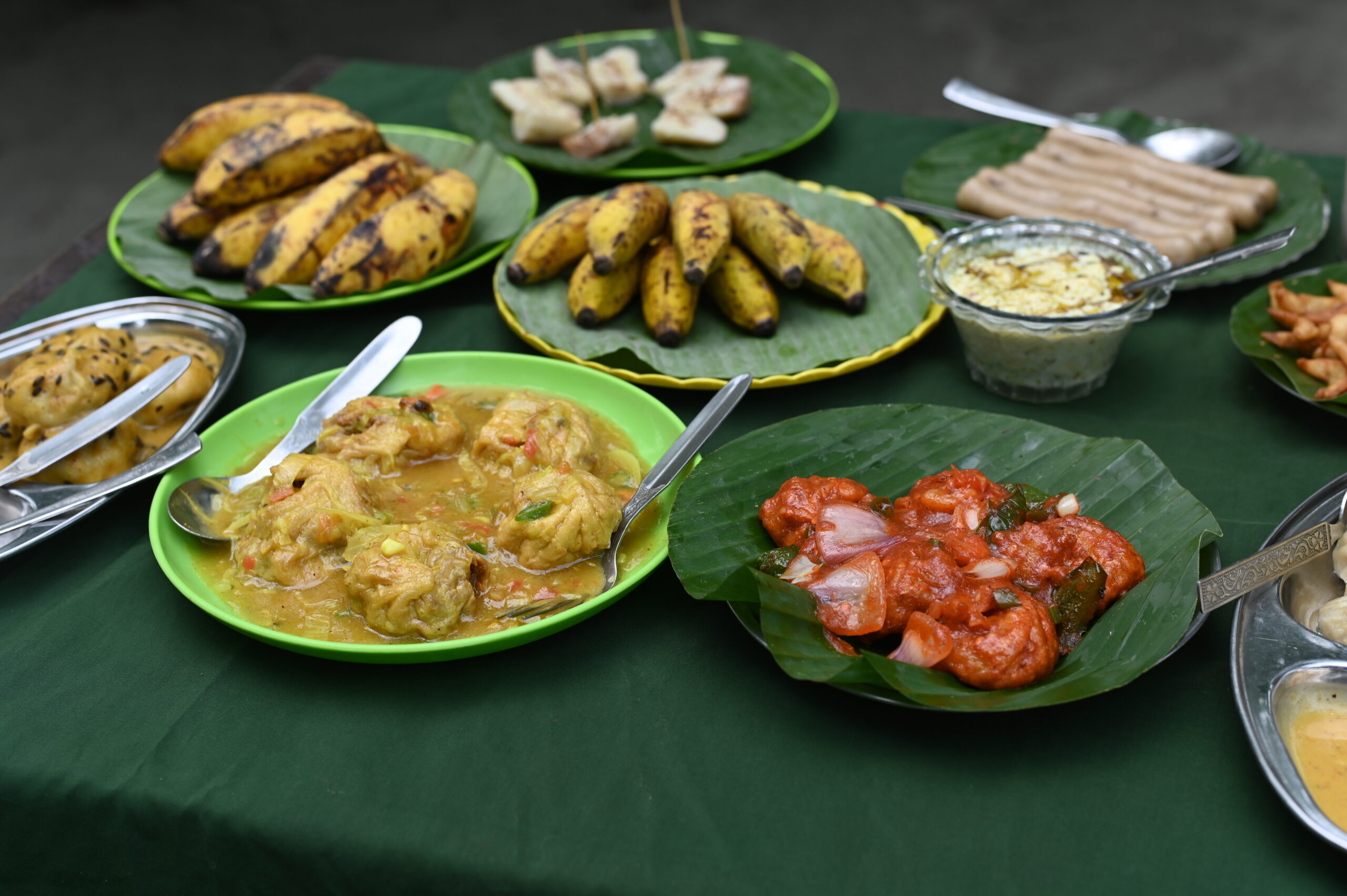
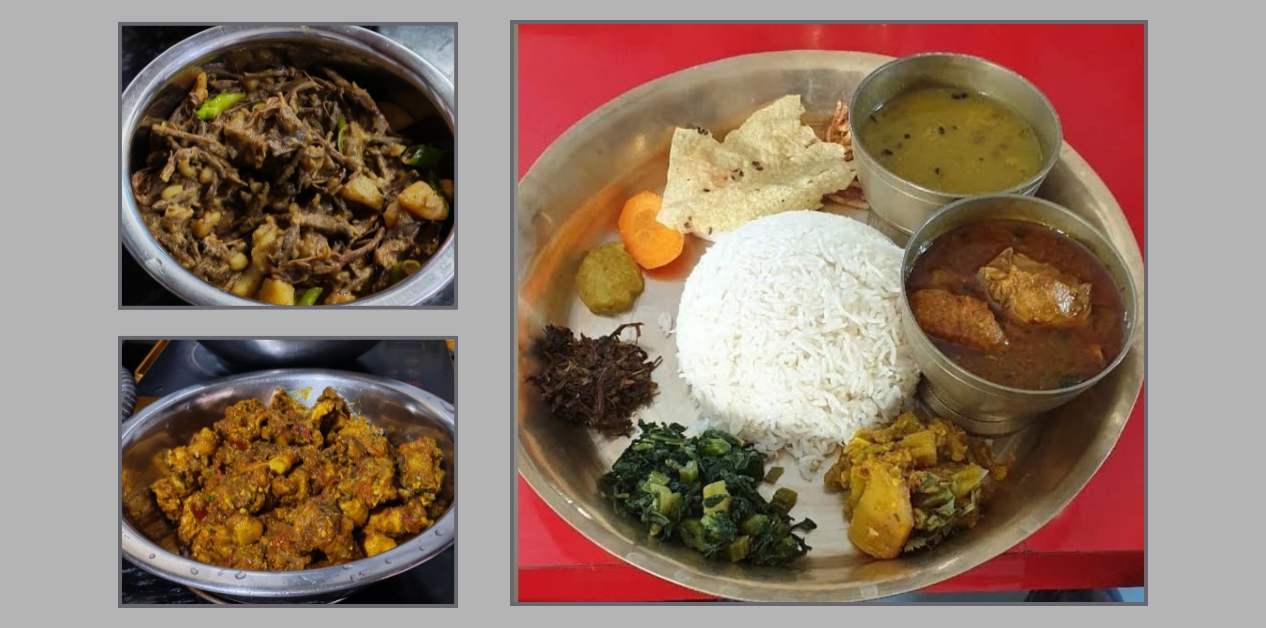
A full table of dishes where every item is made from bananas
Walking away with the fruit in hand, the price lingered in thought. But so did something else, a memory from far away in Tikapur, Kailali, where bananas are not just fruit but an entire culinary identity.
A place where everything becomes banana
That memory leads to Kalu Hamal’s Banana Restaurant in Manikapur, Tikapur, a place where bananas are not a dish but the foundation of the entire menu.
Everything there, as remembered from a previous visit, follows a single idea: snacks are banana, meals are banana, and even drinks are banana. Chips, pakoras, momos, salads, pickles, wine, and even brandy all emerge from the same ingredient.
At the center of this experiment is Kalu Hamal, a graduate in agricultural science from the Rampur Agriculture Campus, Chitwan, around the early 1980s. Born into a wealthy landlord family, he once considered a conventional career in agriculture services. But the idea of a government salary, he felt, was not enough to sustain life. He instead moved toward business, choosing an unconventional path built entirely around agriculture and tourism.
Idea behind the ‘Banana Experiment’
During a visit linked to a youth skills project, along with journalist Yogesh Rawal, the journey into Kaluu’s world began as part of Key Informant Interviews (KII) in Tikapur. Researchers were speaking with experienced local figures about skills, opportunities, and youth migration.
What began as research quickly turned into a meal and a conversation.
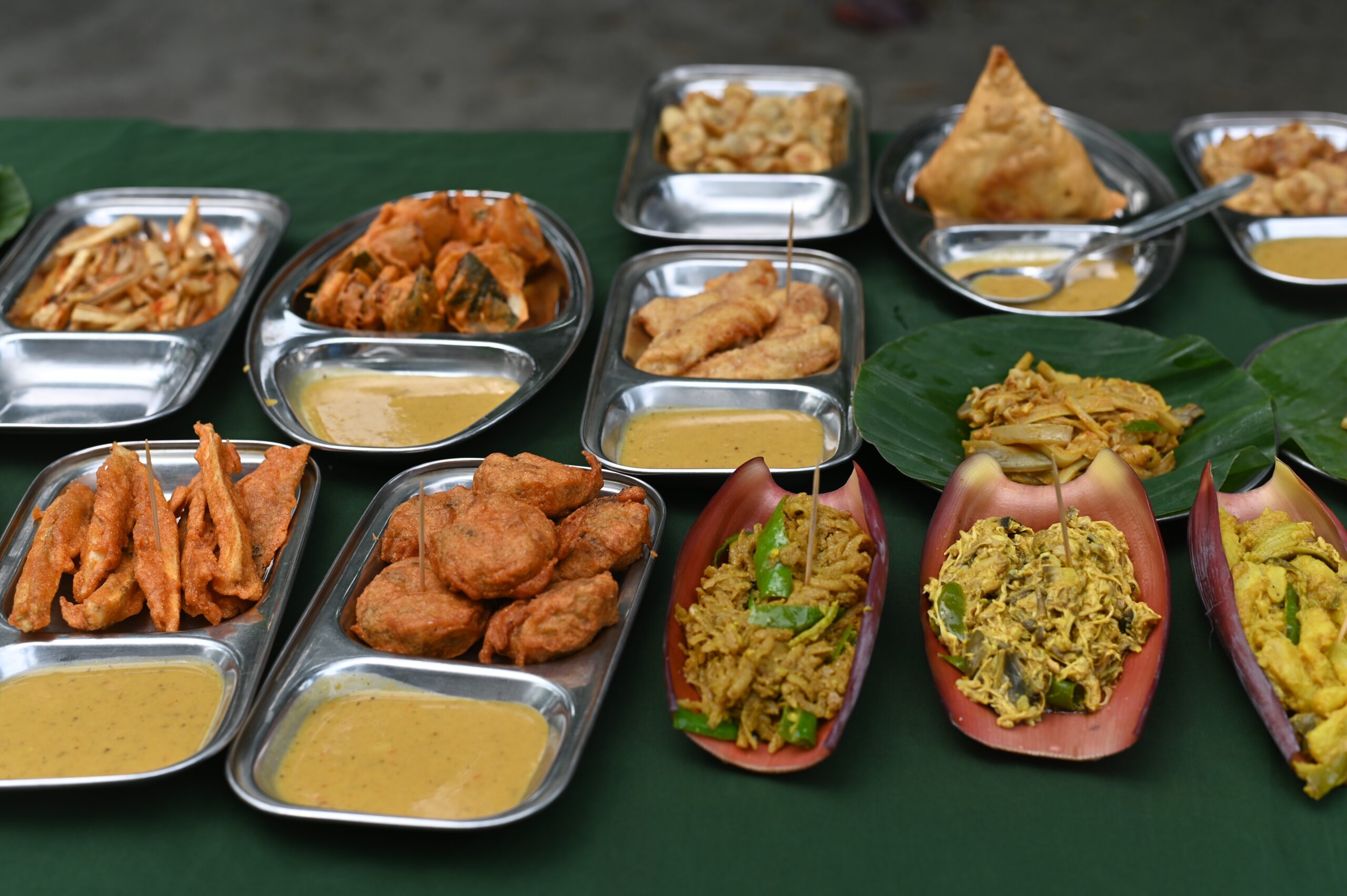
A full table of dishes where every item is made from bananas
At Banana Restaurant, discussions moved between ideas of skill development, youth migration, and the future of rural employment. Hamal’s core concept was clear: agriculture must connect with tourism.
In his view, Nepal’s strongest export to its two large neighbors is not goods but experience. If farmers are integrated into tourism, rural income rises, and young people have a reason to stay. He often expressed that he was willing to teach anyone interested in opening a similar banana-based enterprise, free of cost, and that several people had already learned from him.
Meal that redefined a fruit
The food arrived slowly, each dish reinforcing the same theme.
It began with banana chips. Thin slices of raw banana, fried until crisp, lightly spiced, and served hot. In many Nepali households, similar chips are associated with mourning rituals, where they are eaten during the period of mourning by Brahmin-Chhetri families. There, they are prepared without salt, sometimes flavored through burnt ginger for aroma. Even fried in ghee, they carry that cultural memory. At the restaurant, however, the chips were transformed into an appetizer, crunchy and unexpectedly refined, seasoned with carefully balanced spices.
Then came banana pakoras, made by coating raw banana slices in chickpea flour and deep frying them. Hot, crisp, and deeply comforting, they marked a shift from curiosity to indulgence. Alongside them came banana wine, setting the tone for what was to follow.
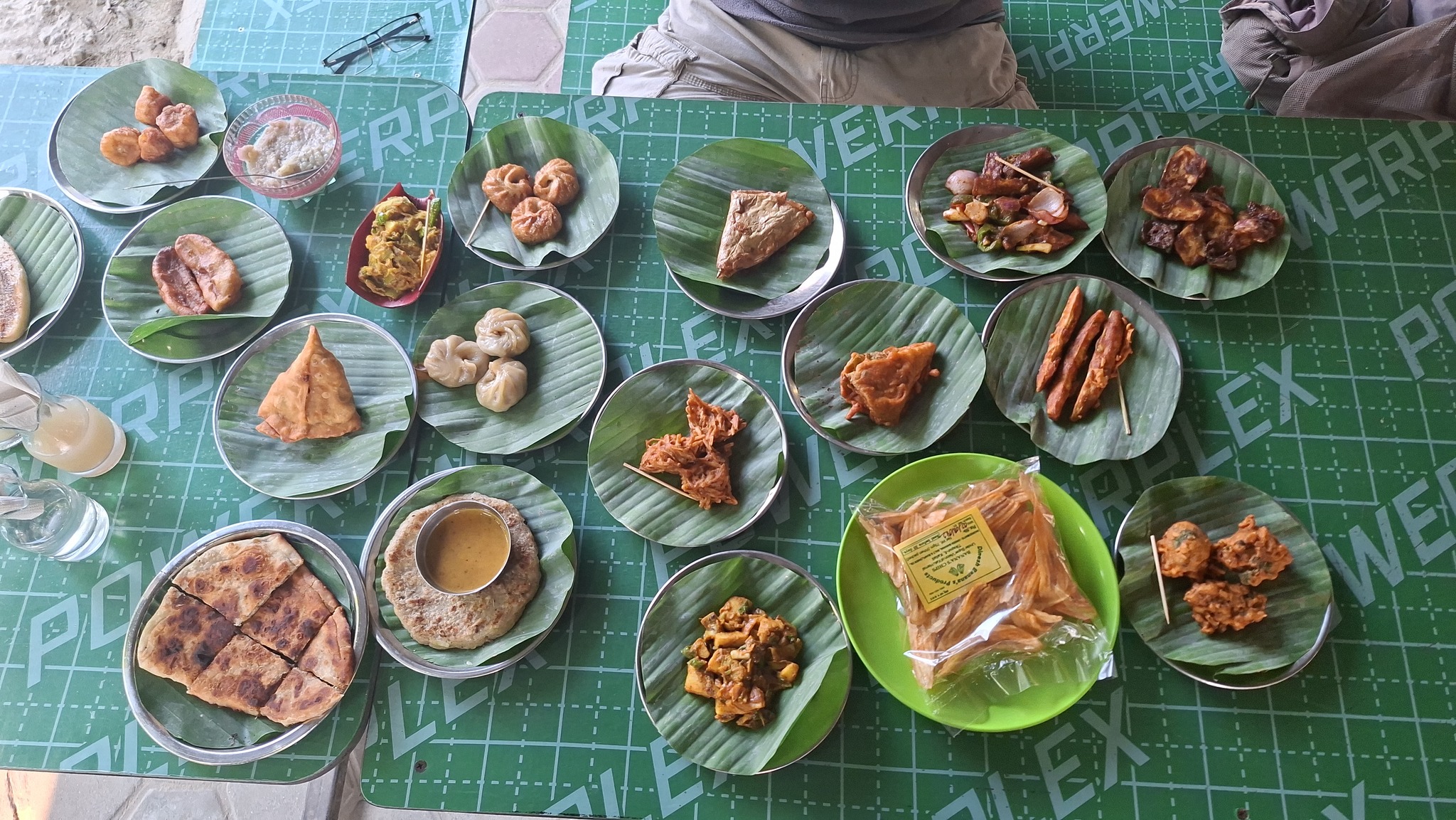
A full table of dishes where every item is made from bananas
The next course was banana momos. The raw banana was peeled, grated into a filling, and mixed with onion, coriander, green chili, salt, cumin-coriander powder, turmeric, oil, garam masala, soy sauce, and crushed ginger-garlic. The mixture was wrapped in dough, shaped, and steamed.
The result was familiar in structure but unfamiliar in taste. Unlike traditional vegetable momos in Kathmandu, where cabbage dominates, here a mild aroma of raw banana subtly emerged. Even the accompanying chutney, as later learned, was banana-based. The same momos were later served fried, adding another layer of texture.
From there, the table expanded into what felt like a full banana universe: banana tikia, chukouni, paratha, samosa, salad, kheer, pickle, and more dishes than could be immediately named or counted. Each plate reinforced the same idea, that one ingredient could carry an entire cuisine.
Watching this unfold, Kalu Hamal observed with a quiet smile.
Banana blossom and traditional roots
Among the more familiar offerings was banana blossom pickle, a traditional preparation valued for digestion but known for its labor-intensive process.
The blossom must first be cleaned, stripped, and cut into small pieces. It is then boiled with salt and turmeric before being drained and cooled. Separately, tomatoes are boiled and mashed into a paste.
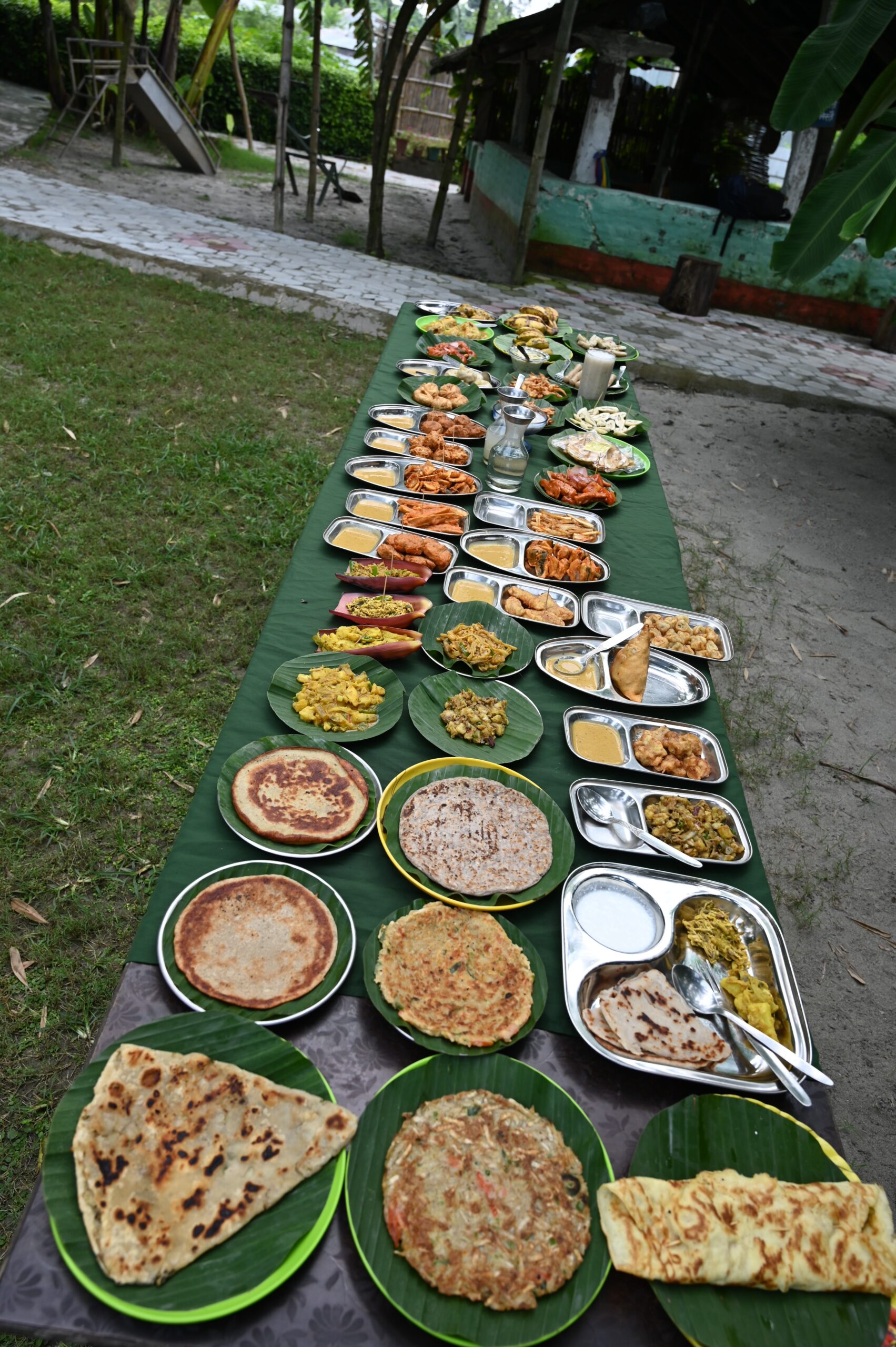
A full table of dishes where every item is made from bananas
Mustard oil is heated in a pan, followed by fenugreek and cumin seeds until they darken slightly. Ginger, garlic, and green chilies are added and fried. The boiled blossom, tomato paste, salt, turmeric, coriander powder, timur, and lemon juice are then mixed thoroughly. The result is a tangy, spiced pickle rooted in traditional Nepali kitchens.
Brandy, branding, and a final idea
As the evening deepened and the table filled with food and conversation, Kalu Hamal introduced another element of his experiment.
Rather than serving imported alcohol, he said, they produce their own. Then came the question: would we like to try banana brandy?
Without much response, the drink arrived. It was served in 60 ml portions. On tasting, it carried a strong banana aroma with a surprisingly intense finish, reinforcing the theme of full-circle production from fruit to alcohol.
By the end of the evening, the appetite for both food and drink had faded, but the idea remained sharp.
On the way out, carrying a packet of chips, one thought echoed clearly: an economy built only on repetition loses meaning. But when products are shaped according to geography, culture, and creativity, they become something more than food.
As Kalu Hamal had said, too many bananas everywhere would make things dull. The real work is in branding, in teaching people to turn what they grow into identity. Only then can rural life hold both youth and farmers in place.
And in that sense, the banana was never just a fruit.
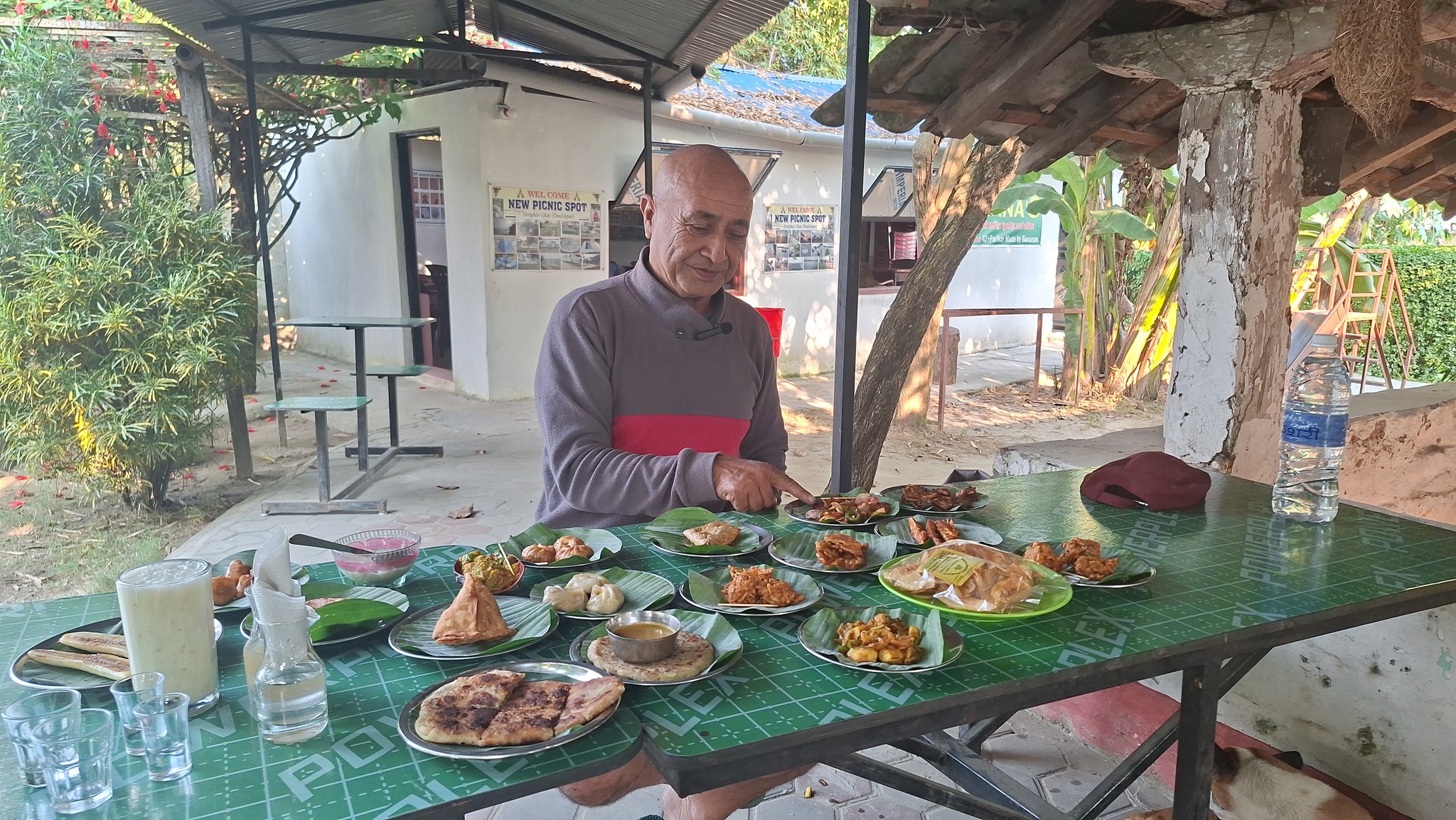
Owner Kalu Hamal describing the banana dishes