Kathmandu
Wednesday, June 24, 2026





Citizens deprived of the constitutional right to use mother tongues in administrative work as the provincial government fails to pass the Language Act.
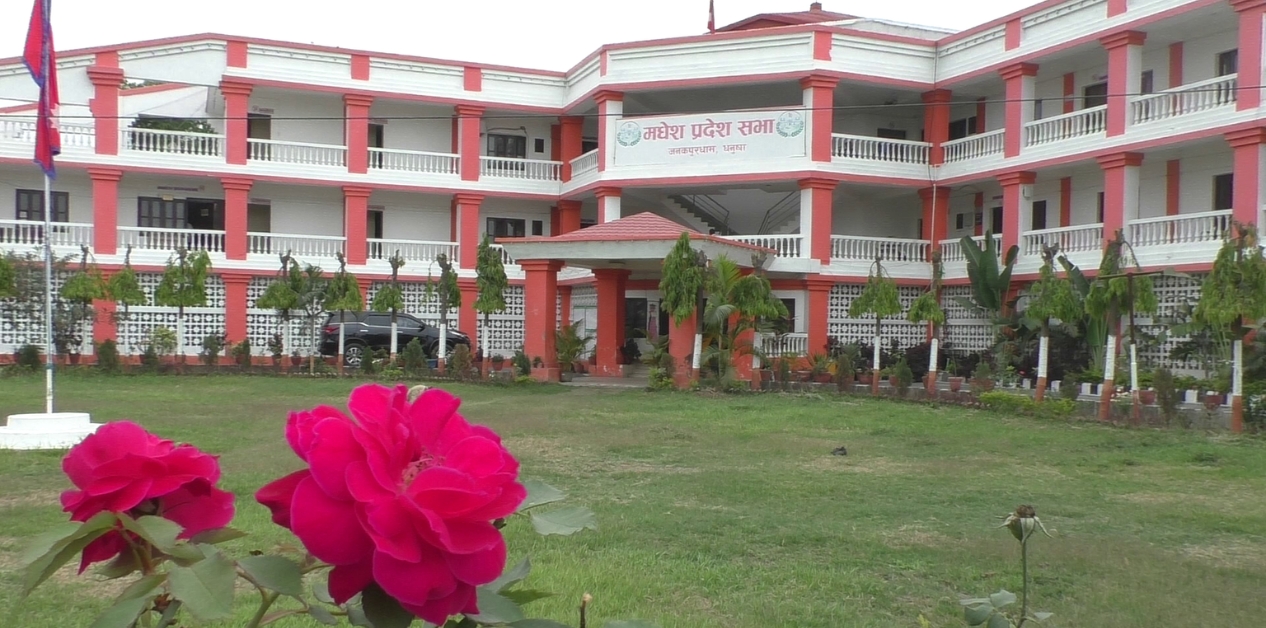
KATHMANDU: Chief Minister of Madhesh Province, Krishna Prasad Yadav, took the oath of office and secrecy in his mother tongue, Bajjika, on December 5, 2025. On the same occasion, Finance Minister Mahesh Yadav, and on December 22, 2025, Speaker Ram Ashish Yadav took their oaths in their mother tongue, Maithili.
Although the culture of representatives taking oaths in their own languages has begun, the citizens of Madhes have not been able to use their mother tongues in administrative work. Due to the provincial government’s inability to create an act determining the language of official business, citizens are deprived of enjoying the constitutional right to use mother tongues other than Nepali.
Service seekers complain that it is ironic that the working language has not been finalized even as the term of the second provincial government formed after the country moved into a federal structure is nearing its end.
Article 7, Sub-clause 2 of the Constitution clearly provides that a province may, in addition to the Nepali language, determine one or more other national languages spoken by the majority of the population within that province as the language of official government business in accordance with provincial law.
In this regard, the High Court of Janakpur issued a directive order to the Provincial Assembly on February 18, 2026. The bench of Acting Chief Justice Tek Narayan Kunwar and Justice Shyam Kumar Bhattarai issued the directive order in the name of the defendants to make necessary legal arrangements in harmony with the right to language and culture mentioned in Article 32 of the Constitution.
Rukshana Kapali, a resident of Lalitpur Metropolitan City-16, had filed a case at the Janakpurdham High Court demanding the designation of the official working language of Madhesh Province. She had sought a writ of mandamus, naming the Provincial Assembly Secretariat, the Office of the Chief Minister and Council of Ministers, the Ministry of Home, Communication and Law, and the Ministry of Education and Culture as defendants.
In the order given by the court regarding the demand, it is mentioned that the constitutional provision regarding linguistic rights is not just a policy declaration but an enforceable fundamental right.
The order mentions that according to the principles of linguistic justice and inclusive governance, it is the state’s responsibility to ensure the identity, respect, and participation of various linguistic communities in a multilingual society.
Furthermore, the court held that it is necessary to include linguistic diversity in the state structure to ensure actual equality rather than limiting the concept of equality to mere formality.
Disputed bill
To determine the language of official government business, the Minister for Education and Culture, Rani Kumari Sharma Tiwari, presented the ‘Bill Made to Arrange for the Language of Official Government Business, 2025’ in the Madhesh Provincial Assembly on January 23, 2025. The bill was criticized for ignoring the recommendations of the Language Commission and giving space to five languages haphazardly.
After both the ruling and opposition parties protested in unison, a situation was created where the then Chief Minister Satish Kumar Singh and Minister Tiwari themselves were in the minority. Due to the protests, the bill was withdrawn the day after it was registered. In the parliament, the Janamat Party had put forward the issue of the ‘Madhes language,’ while MPs speaking other languages like Tharu and Urdu stood firm on including their own mother tongues, making the bill further controversial.
Opposition parties allege that the bill became controversial due to Education Minister Tiwari’s ‘vested interest’ and the disregard for the Language Commission’s recommendations. Since then, the government has not made any concrete efforts toward determining the language.
On September 6, 2021, the Language Commission recommended Maithili, Bhojpuri, and Bajjika as languages for official government business in Madhes Province, in addition to Nepali.
According to the National Census 2021, the share of Maithili speakers in Madhes Province is 41.73 percent. Similarly, Bhojpuri is spoken by 18.81 percent and Bajjika by 18.44 percent of citizens. However, contrary to the commission’s recommendation, the dispute escalated after Minister Tiwari brought a bill including Hindi and English as working languages. Seeing that the government itself would fall into crisis following strong opposition from her own party and the opposition, the bill was withdrawn within 24 hours of registration.
Jibanath Chaudhary, Chairman of the Maithili Development Fund, says that although the Language Commission’s recommendations are universally accepted in every field, confusion has been created due to the ‘stubbornness’ of the Madhes government. He says, “Linguistic identity was one of the main issues of the Madhes movement. However, due to a lack of political willpower, administrative work could not start in our own languages long after the formation of the provincial government.”
Education Minister Tiwari, however, claims that she registered the bill specifically to determine the language. She argues that it was wrong to create a dispute as soon as it was presented, given that there was a path to correct weaknesses through discussions in thematic committees or the Provincial Assembly. she says she will now move forward in a new way in consultation with all parties. Chief Minister of Madhesh, Krishna Prasad Yadav, also informed that the bill will be prepared in a new way after discussing it with all parties.
Rajkumar Lekhi, former minister of Madhesh Province and member of the Provincial Assembly, mentioned that language is a link for emotional unity and warned that if there are weaknesses in this, an explosive situation could arise. In Madhesh, service seekers are still forced to rely on middlemen because they cannot understand government documents in Nepali. Lekhi emphasizes that all parties must be aware of such a serious issue.
Language situation in Madhes
According to the 2021 National Census, the mother tongues spoken in Nepal basically fall under the Indo-European, Tibeto-Burman, Austro-Asiatic, and Dravidian families. According to the census, 46 languages of the Indo-European family are spoken in Nepal, of which 27 are spoken in Madhes Province. Similarly, 72 languages under the Tibeto-Burman family are spoken in Nepal, of which 29 languages are spoken in Madhesh Province. One language each from the Austro-Asiatic and Dravidian families is spoken in Madhes Province.