Kathmandu
Wednesday, June 10, 2026





From the Andean highlands to Nepali kitchens: How a "satanic fruit" became a national staple

KATHMANDU: Bolivia is a landlocked country in South America, just like us. Surrounded by Brazil, Paraguay, Chile, Argentina, and Peru, Bolivia’s administrative capital, La Paz, feels exactly like Kathmandu—hills on all sides with a valley in the middle. Our hills aren’t yet overgrown with houses and remain green; however, there, the hills seem completely blanketed by homes.
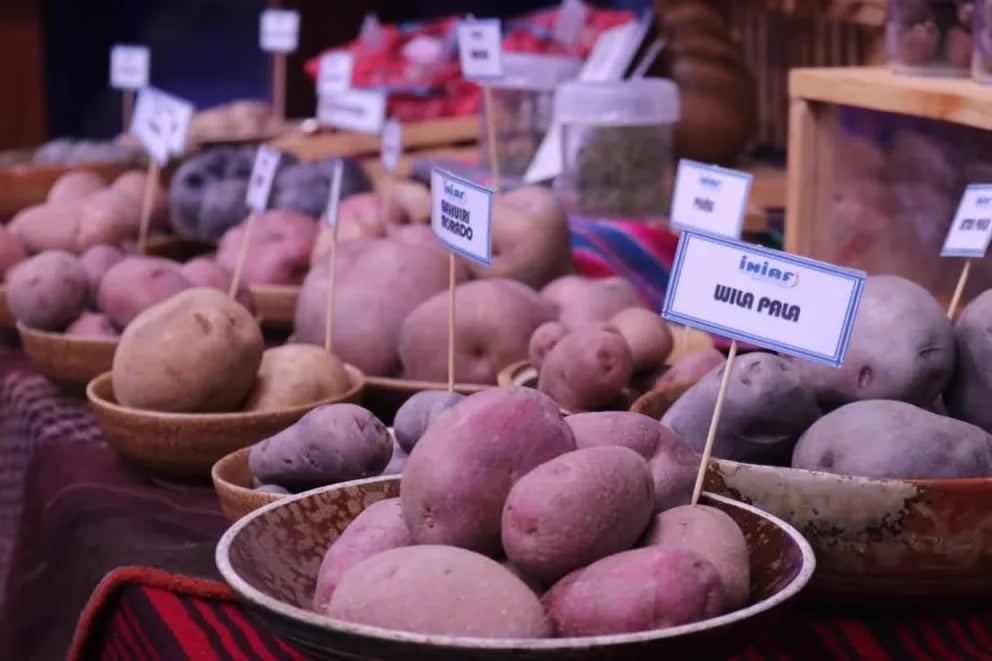
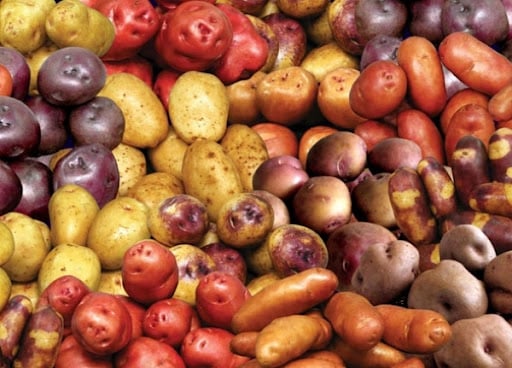
Walking through the alleys of La Paz, observing houses built during the Spanish colonial era, felt like peering at old buildings in the alleys of Jyatha on the way to Asan’s vegetable market. It was there that we two Nepalis—this writer and journalist friend Raghu Mainali—stood stunned, and that too, because of potatoes. Not just one kind, but a staggering variety: white, red, blue, purple, mixed red-and-white, yellow, brown, and countless other colors. There were long potatoes, round ones, oblong ones, lumpy ones, some looking like sweet potatoes, and others shaped like carrots. We hadn’t even imagined such a vast diversity. Our local journalist friend, who was helping us navigate a city where only Spanish and indigenous languages are spoken, said, “This is a market where 40 to 45 varieties of potatoes are regularly available.”
And why wouldn’t it be? The potato, scientifically known as Solanum tuberosum, is believed to have originated in the Andes Mountains of South America, specifically in present-day Bolivia and Peru. From there, the potato spread across the world. It was brought to the western coast of India, particularly Surat in Gujarat and Goa, by Portuguese traders in the early 17th century for trade.
British expansion
In the 18th century, the British East India Company spread its commercial cultivation throughout India. According to a report by Robert E. Rhoades, a renowned anthropologist and agricultural scientist who came to Nepal as a Peace Corps volunteer, potatoes have been grown as a food crop in Nepal for almost as long as they have been in Europe. At the same time Antoine-Augustin Parmentier was trying to convince the French that potatoes were fit for human consumption, Colonel Kirkpatrick visited Nepal in 1793. He mentioned that potato seeds were imported annually from Patna for use in the Kathmandu Valley. Kirkpatrick noted, somewhat dismissively, that “they couldn’t even prepare potato seeds and had to bring them from Patna every year.” At that time, following a peace treaty after the war with China, Nepal was aggressively advancing westward under the leadership of Bahadur Shah.
Before Parmentier’s work, when potatoes first reached Europe in the 16th century, people called them the “Devil’s fruit.” Clergymen argued that there was no mention of potatoes in the Bible, saying, “Anything God made for man to eat must be discussed in the scriptures.” Crops like wheat and barley grow toward the sky (heavenward) and were thus considered holy, but because potatoes grow underground (toward the underworld or darkness), they were linked to hell or Satan and deemed impure. Furthermore, because of the potato’s bumpy exterior, there was a superstition that eating them caused leprosy. Parmentier, who survived on potatoes while imprisoned in Prussia (modern-day Russia and northern Poland), used various psychological tactics to make the potato—then limited to pig feed—acceptable for humans. He had the Queen wear potato flowers in her hair and stationed armed guards to “protect” potato fields to pique public interest.
Although potatoes from Peru and Bolivia reached Nepal via India, not all varieties survived that long journey. In Bolivia, I had wanted to taste the blue, purple, and mixed red-white varieties I hadn’t seen before. However, due to a busy schedule and the constraints of being a guest, I couldn’t taste those various types.
Fueled by that lingering craving, a few days after returning to Nepal, I went to a local tavern in Sifal, Kathmandu, to eat Aalu-Chiura (beaten rice with potato). A friend took me there, calling it a place for “local” potatoes. A large brass basin was filled with boiled, sliced potatoes. However, I didn’t see a pan for frying them anywhere. While I was wondering how they’d be cooked, the owner sprinkled salt, turmeric, cumin, coriander powder, and a generous amount of red chili powder over the potatoes. Meanwhile, in a small pan, she heated mustard oil thoroughly. She tempered it with fenugreek seeds and dried red chilies. Then, she poured the sizzling oil over the spices on the potatoes and began mixing. In an instant, the white boiled potato pieces turned an enticing red. The owner said, “You’re a bit early. Eat something else for a while; let the spices soak into the potatoes.” Sure enough, 15 to 20 minutes later, the potatoes served with beaten rice were tangy, juicy, and delicious. My palate was satisfied. Nowadays, this is known as Bhatti Aalu (tavern potatoes).
It’s not just Bhatti Aalu ; spicy potatoes cooked in a red chili paste are equally popular in Kathmandu’s snack shops. In fact, the potato has become an integral part of Nepali cuisine—from Aalu Chop (potato croquette) to the potato pickles ( Aalu ko Achaar ) made in every home, or the watery potato curry made to eat with Sel Roti (Nepali Rice Doughnut) and Puri (deep fried flatbread). Cauliflower and potato, onion and potato, cabbage and potato—and if nothing else is available, just potato. For anyone raised in the Terai or a Madhesi environment, their first love is Aalu Bhujuri (potato stir-fry). And the glory of Madhesi Aalu Chokha ( spiced potato mash) is in a league of its own.
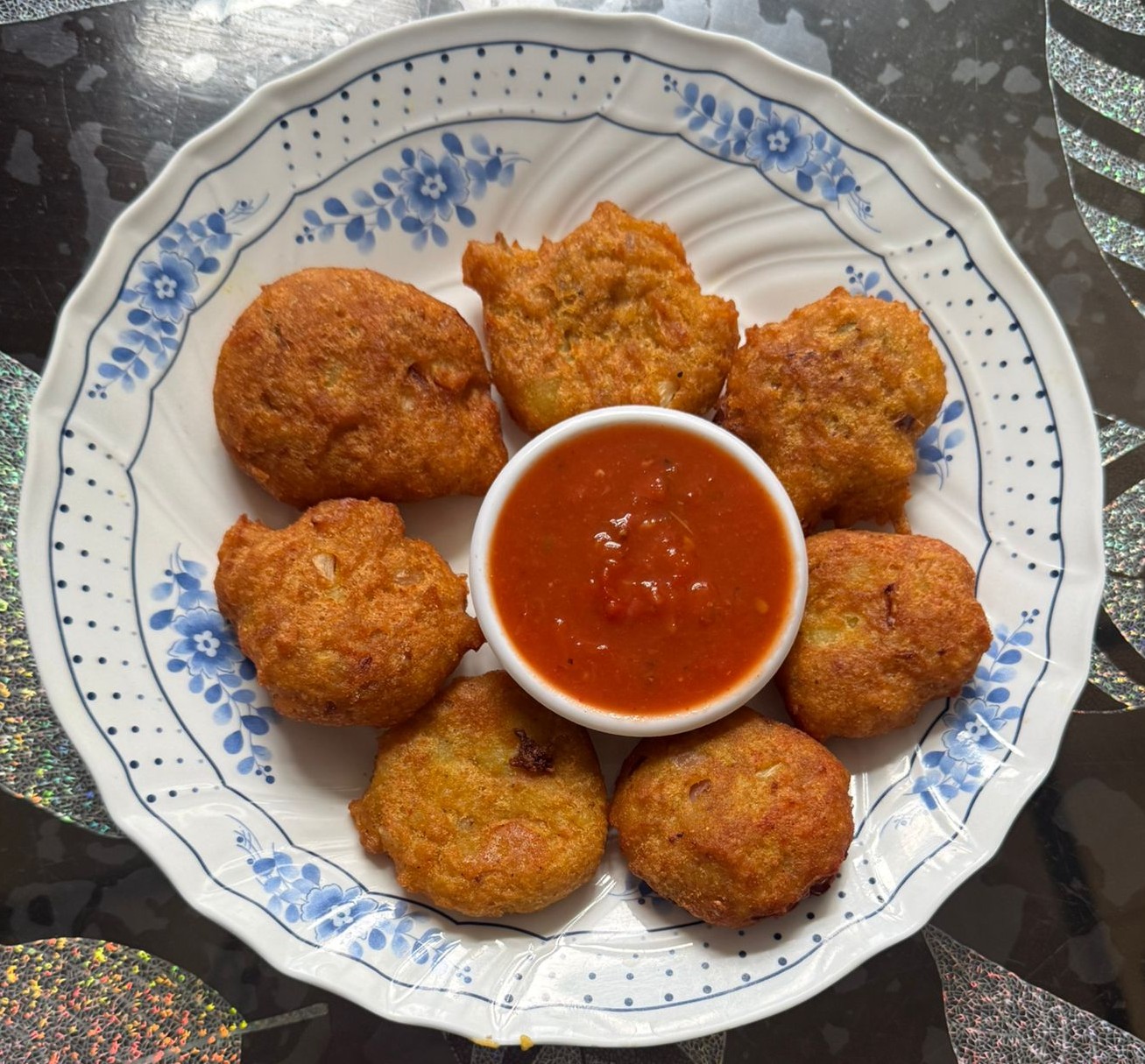
Today, even Indians are enamored with Nepali potato dishes. On trending Indian reels, our traditional Aalu ko Achar , made with cucumber, green onions, and boiled potatoes, has reached the peak of fame. As soon as it gets a bit warm, the Nepali Chukauni (yogurt-based potato salad), served as smoothly as it appears on Indian reels, starts trending. Every household in Baglung, Gulmi, and Palpa might have its own way of making Chukauni , but from an outsider’s perspective, this dish made of boiled potatoes, creamy yogurt, and a few spices feels soothing from the mouth all the way to the gut.
In the restaurants of Nepal’s tourism sector, the best-selling potato dish is likely Mustang Aalu (potato from Mustang). Deep-fried to a crisp and tossed with red chili, timur (Szechuan pepper), and a few other spices, every piece of Mustang Aalu is guaranteed to entertain the tongue. But one wonders—under the name of Mustang Aalu , how many potatoes actually come from Mustang?
In the high Himalayas, the Sherpa community has its own delicious potato dish: Rildok (smashed potato soup). If you overlook the hard labor required to make it, it is perhaps the tastiest of all Nepali potato dishes. Even in the biting cold, the unique taste and nutrients of Rildok make it easier to survive in the mountain regions.
The connection between the Sherpa community and potatoes is believed to have started 177 years ago. It was only two years after the Kot Massacre in Nepal. From October to December 1848, the British naturalist Sir Joseph Dalton Hooker reached Taplejung and Sikkim to study the ecosystem of eastern Nepal. He is credited with planting potatoes in the eastern corner of Nepal (Taplejung) and the then-independent country of Sikkim (now in India). Naturalist and anthropologist Brian H. Hodgson, who was studying alongside Hooker, is a famous figure in Nepali history; he later served as the British envoy in Kathmandu. In a report on potato production in eastern Nepal, agricultural scientist Robert E. Rhoades quotes Christoph von Fürer-Haimendorf, author of the 1964 book The Sherpas of Nepal: Buddhist Highlanders : “The potato probably only became established as a significant crop in the early 19th century. Anthropologist Haimendorf (1964) notes that the arrival of the potato in the Sherpa Khumbu region in the 19th century helped population growth and served as the necessary agricultural surplus for the development of an extensive Buddhist civilization in northern Nepal.”
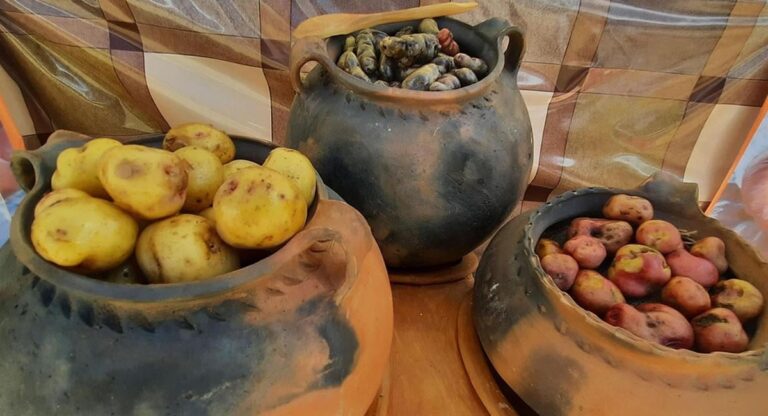
The potato has become so deeply integrated into our society that if you call it an alien species, you might just get scolded. In Sudurpashchim Nepal, small potatoes have already been branded as “Tharu Aalu.” There are constant news reports about local municipalities making efforts to save this “indigenous” variety from extinction. Moving closer, the fame and trade of potatoes from the Tara Khola region of Baglung are significant. Let’s not even start on the potatoes from Mude, Dolakha; and in Hemja, Kaski, there is even a festival to promote “indigenous” potatoes. It was during the Rana period that the potato spread across Nepal and became the national vegetable. Per capita potato consumption in Nepal is 75 kilograms, the highest in Asia. About 90% of the potatoes consumed by Nepalis are produced within Nepal, with only 10 to 12% being imported.
Perhaps the potato also fell in love with Nepal’s diverse climate and ecosystem; it became Tharu Aalu in the Terai and Lekali Aalu in the high mountains. Today, it has become a vital crop for Nepal. Because of its adaptability and ease of cultivation, the potato became a true friend to the Nepali farmer. More than just a crop, the potato has become the foundation of food security. In a nation of complex geography spanning from the plains of the Terai to the high Himalayas, the potato has become a reliable source of livelihood.
Whether it’s the Aalu Chop of Malekhu or the delicious local “pressed” potatoes of Pokhara, experimentation with potatoes continues in Nepal. New dishes are constantly being created, enriching the Nepali kitchen. Perhaps the relationship between the potato and Nepalis is best captured in the song by Basanta Thapa and Khima Roka Magar: “Potatoes from Tara Khola are sweet / Let’s laugh, play, and be merry / For who knows how long this life will last?”