Kathmandu
Saturday, July 25, 2026





Prime Minister Balendra Shah’s hint at seeking the UK’s role in the border dispute with India has sparked a new debate on sovereignty, diplomacy, and political maturity.
KATHMANDU: It has not been long since a new generation of leadership emerged in Nepali politics. Dissatisfaction with traditional parties, expectations of good governance, and a desire for change created an environment to establish alternative leadership. Against this backdrop, Balendra Shah (Balen) is among the few figures who have risen to the center of national politics. His actions, statements, and even his silences frequently become subjects of national debate.
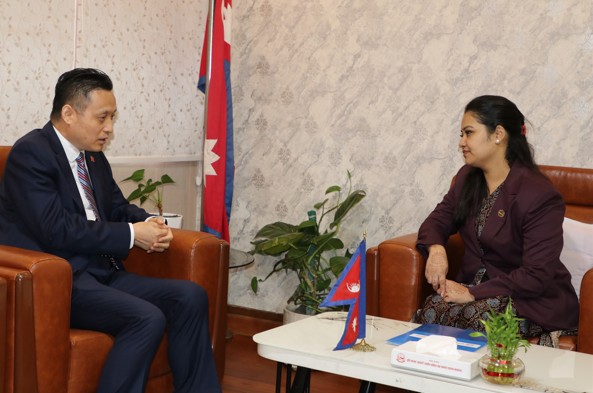
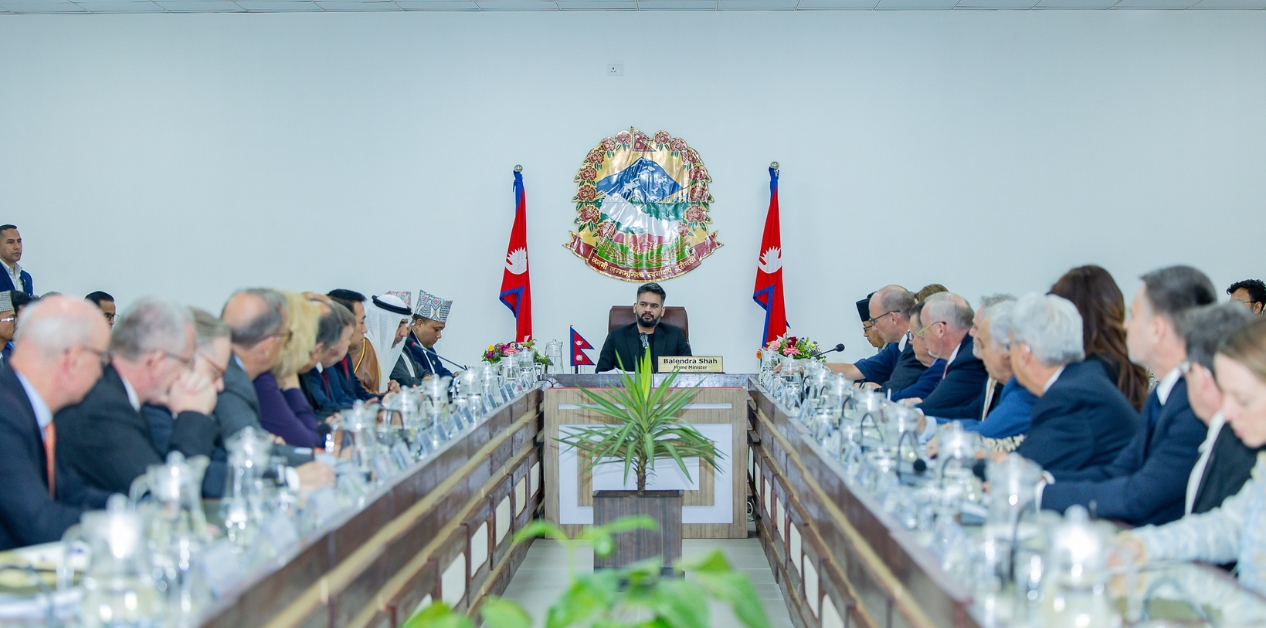
Prime Minister Shah has already held a collective meeting with foreign diplomats stationed in Nepal. In a democratic system, it is not unusual for a head of government or a people’s representative to engage in dialogue with representatives of various countries. Rather, in the current era of global interdependence, such dialogue should be viewed positively. These meetings can be highly beneficial for Nepal’s development, investment, technology transfer, and international cooperation. Therefore, Prime Minister Shah’s step of holding a collective meeting with foreign diplomats can be understood as a standard and necessary political-diplomatic practice.
On the other hand, news emerged that Prime Minister Shah did not meet directly with ministers and assistant secretaries from India and the United States, opting instead for telephone conversations. This can be interpreted from various angles. In diplomacy, there is no compulsion to make every meeting public. Some dialogues remain confidential, and details of others are intentionally withheld. Thus, it is unwise to arrive at conclusions based solely on public information. Nevertheless, it is natural for the public to seek to understand the leadership’s international acceptability and the state of these relationships.
The public held another expectation from Prime Minister Shah regarding the parliament. Many hoped he would formally address the nation through the parliament. Had that happened, it would have sent a positive message that Nepal’s democratic system is progressing through institutional processes. However, he did not prioritize it.
Supporters interpreted his style as a tendency to value action over unnecessary speeches. Indeed, the sentiment that actions should speak louder than words is growing stronger in Nepali society. Consequently, many citizens viewed it as a message of ‘speak less, work more.’ Yet, in a democracy, the balance between silence and accountability is equally vital.
Parliament is not merely a venue for speeches; it serves as a bridge between the public’s questions and the government’s answers. People’s representatives sought to voice the public’s curiosity through a question-and-answer session with the Prime Minister. However, there was a sense that this process was not given adequate importance for a long time. An incident where the Prime Minister stood up and left midway while the President was reading out his own government’s policies and programs also drew significant attention. Followers labeled it as a busy schedule, a distinct working style, or a paradigm shift, whereas critics viewed it as apathy toward parliamentary decorum.
In this context, the Prime Minister participated in the parliamentary question-and-answer session without adequate preparation. During the session, his response to a question regarding the Nepal-India border dispute ignited a major controversy. According to him, he had received information that Nepal might have encroached on land in some places, just as India had. He then stated that resolving the border dispute would only be possible through trilateral talks involving Nepal, India, and the United Kingdom.
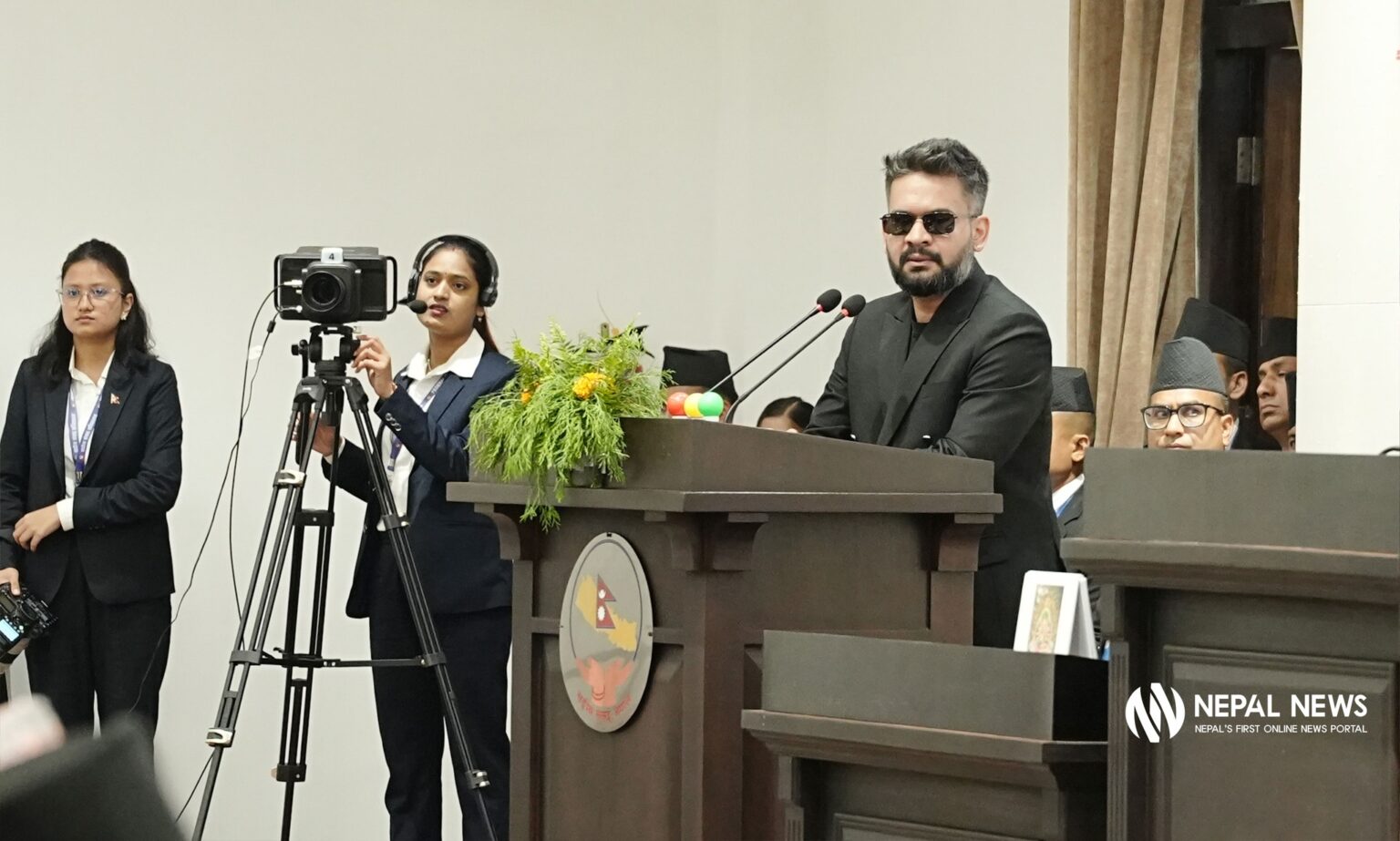
Prime Minister Balendra Shah answering questions from lawmakers in parliament on May 31.
His statement has raised critical questions. The Nepal-India border dispute is a bilateral matter between two sovereign nations. Debates naturally arise over whether the involvement of the United Kingdom is necessary or appropriate for an issue that is meant to be resolved through history, treaties, maps, and diplomatic negotiations. This is particularly sensitive because India has historically rejected third-party mediation or participation.
Meanwhile, Ravi Lamichhane, chairman of the ruling coalition partner Rastriya Swatantra Party (RSP), received a grand welcome during his visit to India upon a special invitation. Adequate information regarding the concrete achievements or the agenda of the visit has not been made public. This ambiguity has fueled various speculations.
Against this backdrop, discussions have also begun regarding the relationship between Prime Minister Shah and India. Some analysts, alongside domestic and foreign media outlets, have speculated that India might be looking to project Ravi Lamichhane as an alternative to Balen. The fact that the government spokesperson expressed a lack of interest regarding the ruling party chairman’s visit to India has only raised further questions.
However, viewing diplomatic relations purely through an individual-centric lens is risky. Any nation prioritizes its national interest over individuals. While one might speculate that countries like India, the United States, China, or others frame their strategies around a single individual when dealing with Nepal, proving it is difficult. Since diplomatic relations operate on the basis of long-term national interests, individuals will inevitably come and go.
Yet, another intriguing question has surfaced: If India truly backs Ravi Lamichhane as a future leader, how will Shah react? Will he take the path once taken by KP Sharma Oli regarding his stance on India? This cannot be answered right now. However, looking at his political style, there is always a possibility of him making emotional and abrupt decisions. As the metropolitan mayor, he made some courageous decisions, though he was also accused of executing certain moves without sufficient preparation. Arresting former prime ministers and ministers in a rush immediately upon becoming Prime Minister without thorough investigation, and attempting to clear squatter settlements without proper groundwork, have been interpreted by some as signs of a retaliatory political culture.
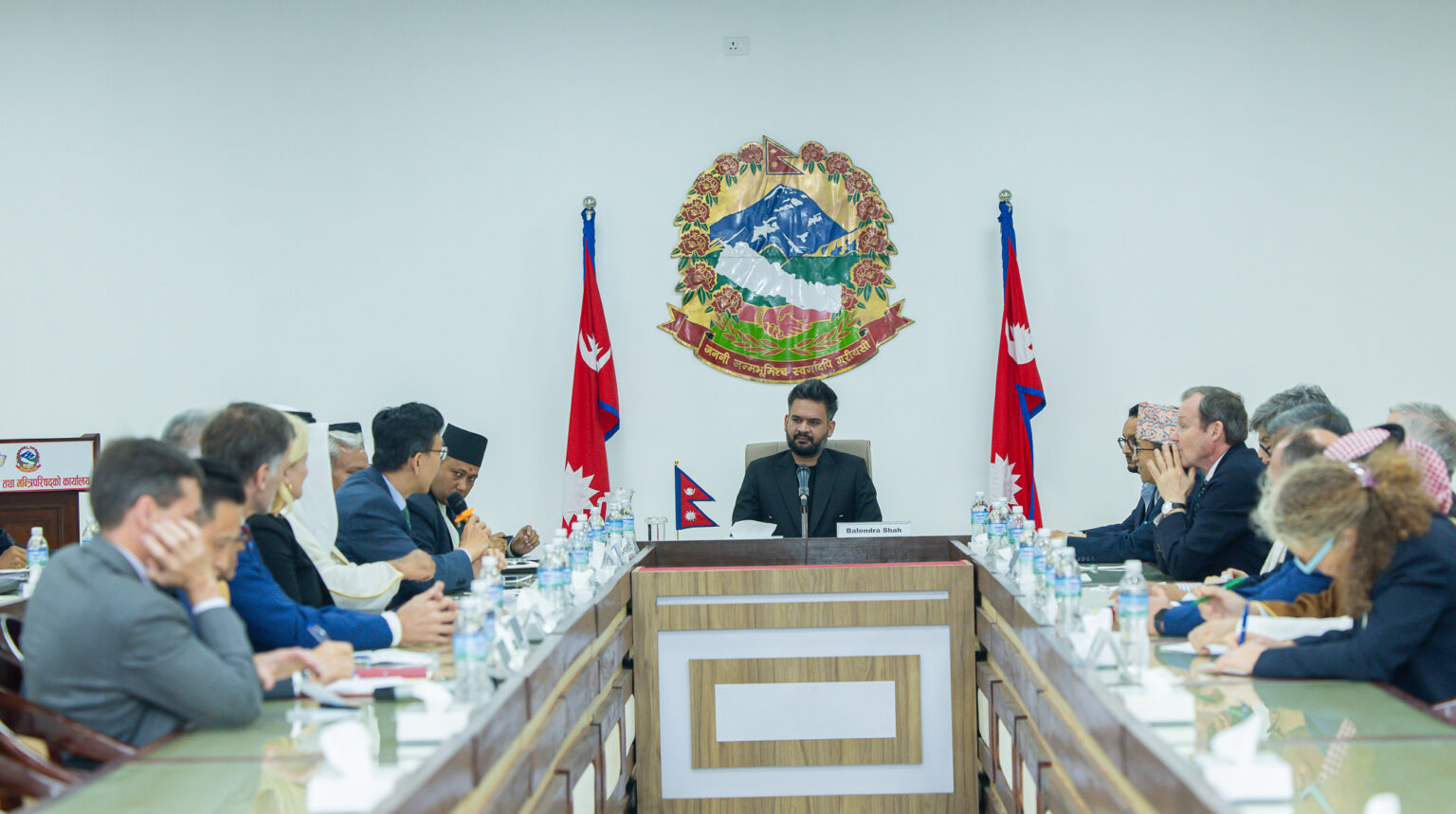
Prime Minister Balendra Shah during a meeting with ambassadors and heads of various diplomatic missions in Nepal on April 18, 2026. Photo Source: Prime Minister’s Secretariat
The public expects maturity, patience, and institutional thinking from their leadership. Nation-building is far more complex than popular slogans. Long-term results are achieved only through drafting laws, implementing them impartially, strengthening institutions, and maintaining policy consistency. Decisions made simply to garner immediate applause might bring short-lived popularity, but they fail to lay the foundation for nation-building.
If relations between Balen and India sour in the future, the border could once again become the epicenter of potential disputes. Specifically, the issue of the ‘pointed map’ involving Kalapani, Lipulekh, and Limpiyadhura could be aggressively revived. As hinted by the Prime Minister in parliament, an attempt could be made to initiate multilateral dialogue involving the United Kingdom. However, that would require the UK’s consent.
More importantly, given India’s consistent rejection of third-party involvement, the success of such an initiative appears highly unlikely. If the United Kingdom decides to remain neutral in the border dispute between Nepal and India, Nepal will be left with two choices: first, to seek assistance from other nations, and second, to restart its own diplomatic efforts with India. Under these circumstances, Nepal would appear vulnerable in both scenarios.
Sometime ago, news surfaced that the Prime Minister’s chief political advisor, Kumar Byanjankar, had met with the British Ambassador. However, the substance of that meeting was not disclosed. Such events naturally arouse curiosity. Yet, in diplomacy, facts matter more than speculation. Until facts emerge, mere guesswork cannot protect the national interest.
Nepal has experienced international involvement in the past. The arrival of the United Nations Mission in Nepal (UNMIN) for army integration and monitoring during the Maoist peace process serves as an example. Following that, several provisions included in the Interim Constitution remained a subject of debate for a long time. This experience offers a lesson: external involvement may not always be useful, and even if it is deemed necessary, a broad national consensus is mandatory regarding its scope, objectives, and impact.
Ideological differences do not pose the greatest challenge to Nepal. In a democracy, a divergence of ideas is considered natural. The real cause for concern is that the country is appearing divided even on fundamental issues such as national sovereignty, national interest, and diplomatic direction. It is crucial to develop a civic consciousness that places the nation at the center, rising above debates over whether a leader is a hero or a villain.
Building a country is not a project meant for a single individual. Throughout Nepal’s history, leaders born in different eras have contributed according to their times. Some founded Nepal, some laid the foundation of democracy, some played a role in drafting the constitution, some concluded the peace process, and others strengthened local governance. Everyone has weaknesses, but a tendency to completely dismiss past contributions only polarizes society further.
Nepal is a nation that has consistently championed a non-aligned foreign policy. Therefore, it is neither right for us to stand against anyone nor to blindly support anyone. Nepal’s diplomatic direction must be steered wherever its national interest is secure.
Thus, the question is not about Prime Minister Shah, Ravi, Oli, or any other leader. The question is about Nepal. If the country remains intact, political competition, debates, and criticism will endure. But if the nation itself weakens, the significance of any leadership fades away. Therefore, future debates must rise above personality cults or personal animosities. The focus must shift entirely toward national prosperity, good governance, economic development, poverty alleviation, and improving the citizens’ standard of living.
Nepal has already witnessed numerous political changes. The tradition of citizens fighting endlessly in the name of political transformation must come to an end. Both actions and rhetoric must focus on development, prosperity, and public welfare. Only when this consciousness matures will Nepal be able to safeguard its sovereignty and chart a course toward a stable and prosperous future.