Kathmandu
Friday, June 26, 2026





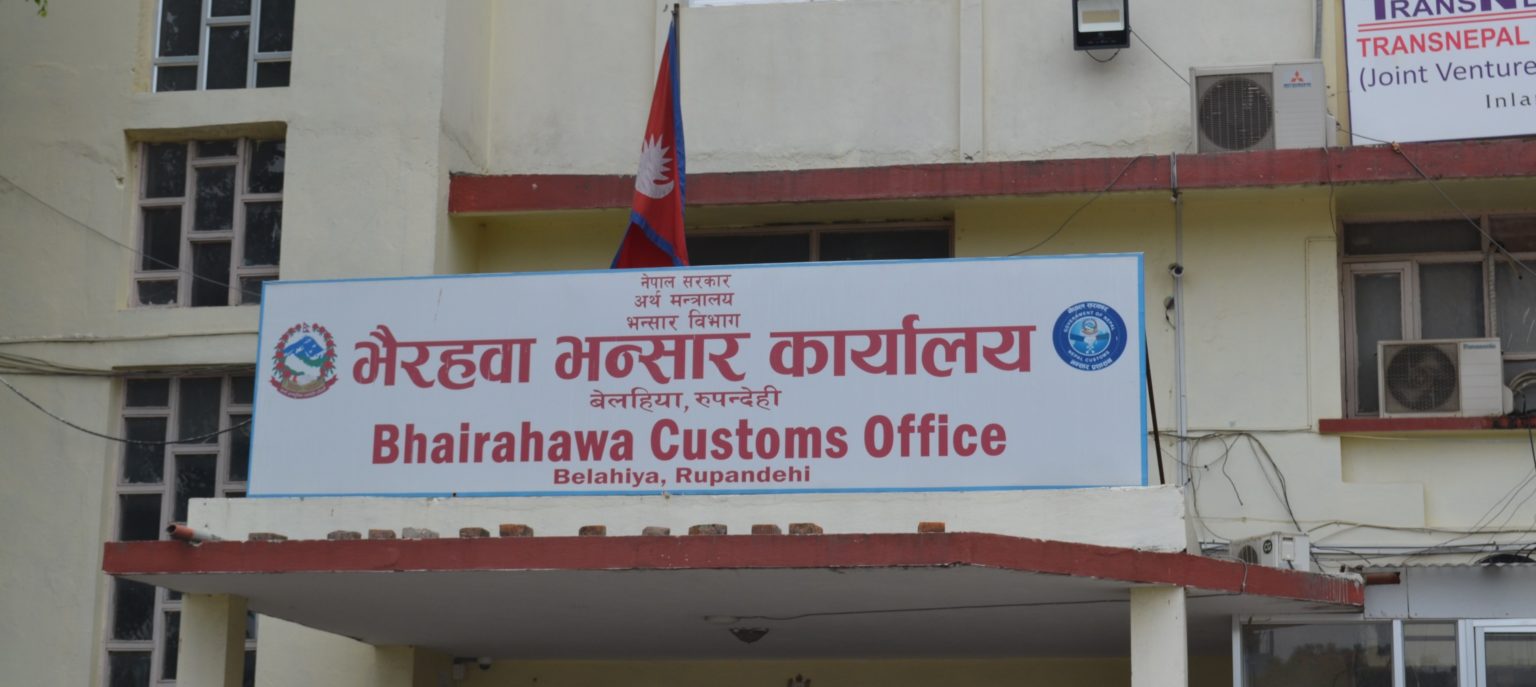
BHAIRAHAWA: The Department of Customs has resumed and simplified the clearance process for imported foreign goods that were previously halted due to the absence of Maximum Retail Price (MRP) labels.
According to the Bhairahawa Customs Office, the import system at the Bhairahawa checkpoint, which had been disrupted for the past few days, is now gradually returning to normal.
Imports had been stopped due to a rule requiring MRP to be mandatorily mentioned at the customs point. However, following a new decision by the department, the process has now been reactivated.The Department of Customs has introduced a provision allowing immediate import clearance if importers submit a written self-declaration stating that they will affix labels cont
aining details such as MRP, brand, and expiry date before the goods are sold in the market.
After this decision, the release of previously halted goods has resumed. Chief of Bhairahawa Customs Office, Harihar Paudel, said that import procedures resumed after receiving facilitation instructions from the department.
According to him, goods are being released after importers provide written commitments and self-declarations at the customs office.
An information officer at the customs office said importers had been demanding permission to affix MRP and related labels at their own warehouses, and the current facilitation has been made based on that demand.
Following a letter from the Ministry of Industry, Commerce and Supplies dated April 13, and after the Department of Commerce issued a 15-day notice, imports of goods without MRP labels began to be stopped at customs from April 27. This had disrupted import operations at Bhairahawa.
Importers had protested the sudden implementation of the rule, arguing that goods already ordered from abroad could not be labeled immediately and that affixing labels at the customs point was practically difficult for many items.
Due to this, a large number of cargo trucks and goods were stuck at customs and along transit routes. Madhav Prasad Panthi, president of the Nepal Customs Agents Association, Siddharthanagar, said that more than 900 cargo trucks were held up at the Bhairahawa border due to the MRP requirement.
Business groups say the rule requiring MRP, brand, and expiry date labeling could also affect other major border points such as Biratnagar, Birgunj, Tatopani, and Kerung, which handle significant imports from China and third countries.
Bhairahawa is considered a key entry point for industrial raw materials and daily commercial imports from India.