Kathmandu
Thursday, July 9, 2026





Despite annual monsoon preparedness plans and disaster management frameworks, Nepal continues to suffer heavy losses due to weak implementation and coordination failures.
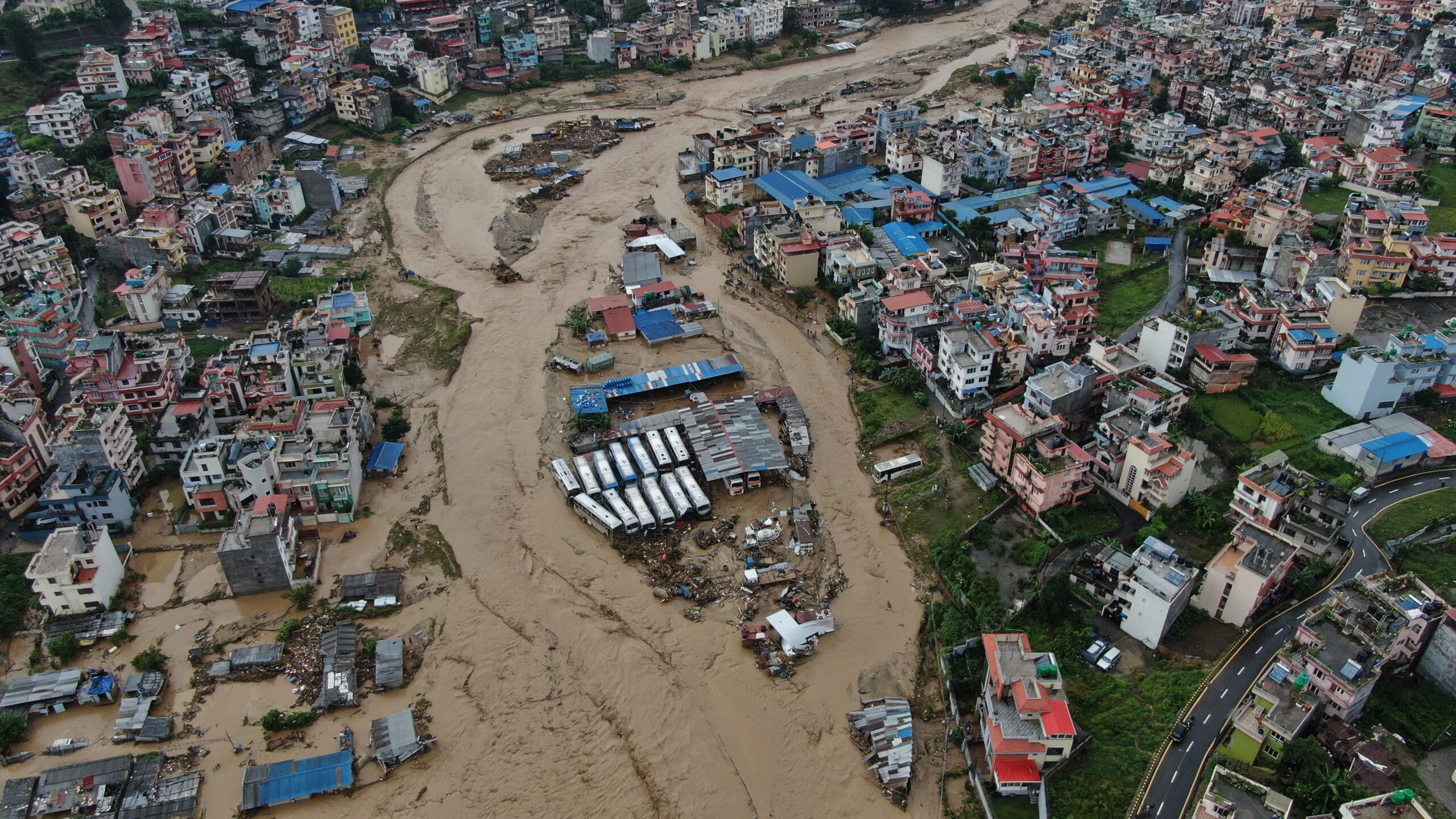
KATHMANDU: On the night of September 27, 2024, following a night of heavy torrential rain, the rivers and streams within the Kathmandu Valley swelled the next morning. Houses and huts near the Nakkhu River in Sugam Tol, Lalitpur Metropolitan City-25, were submerged. Among them, four members of a family were trapped in a hut, waiting four hours for rescue. While getting drenched in the pouring rain on the roof of the flooded hut, the videos and “live” scenes of their pleas for rescue became widely shared on social media.
However, the government could not rescue the family of Raju Sah from Rautahat, who had been crying out for help to save their lives since 5:00 AM. While people sitting on the banks stood as witnesses to the terrifying incident, the Nakkhu River swept them away along with the hut at around 9:00 AM.
The Sah family ran a grill factory and a scrap yard by partitioning a zinc-sheet hut near the Nakkhu River. On that day, Raju, his 6-year-old daughter Meghana, his 22-year-old brother Raj, and his four-year-old niece Sertu were in the factory.
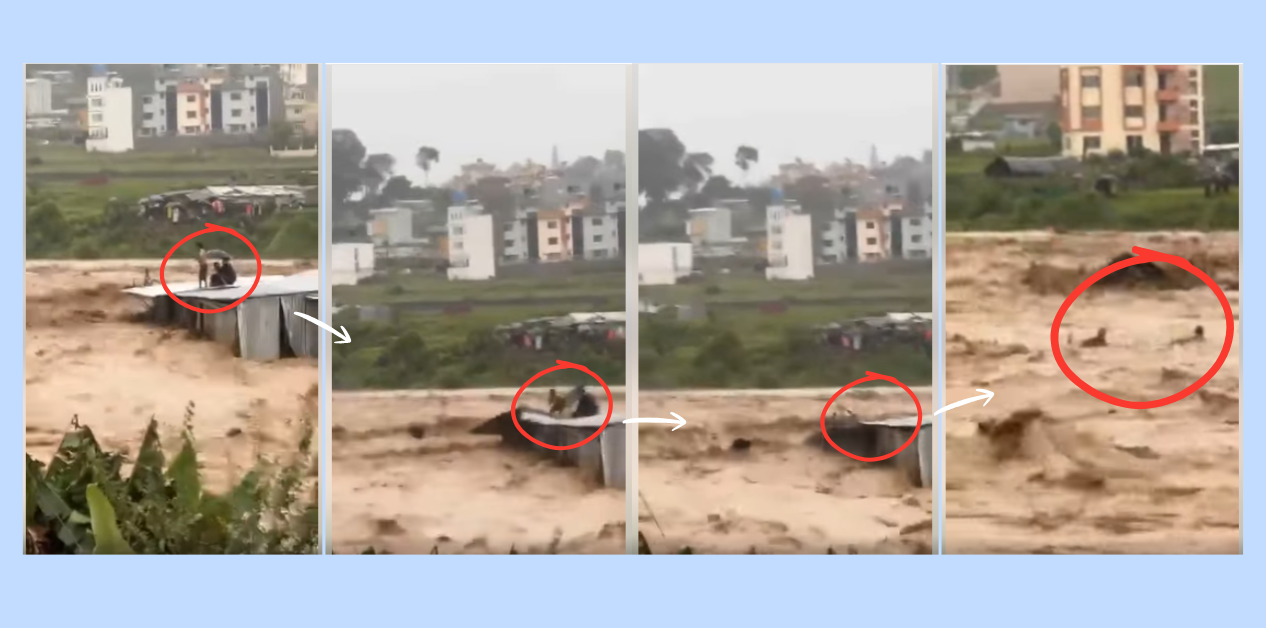
The family of Raju Sah, who were swept away with their hut in the Nakkhu River flood. They had pleaded for rescue for four hours. Photo Source: Drishti News’ Facebook Post
It is not that a team from the Armed Police Force did not reach the site at around 7:00 AM after local residents repeatedly contacted the police while they were trapped in the flood. However, they did not have rescue equipment with them. When the rescue effort made by the police—asking local residents for vegetable crates and ropes—failed, four people including Sah were plunged into the flood.
In a situation where the government had already given up, fortunately, 33-year-old Chanik Lal Tamang of Temal Rural Municipality-9, Kavre, was 300 meters below the hut. Playing with the risk of the flood, he successfully rescued Raj and Megahna. Raju was also rescued by locals. However, Raj’s daughter Sertu went missing.
On the same day, the then-Home Minister Ramesh Lekhak covered up the government’s weakness by stating that those trapped in the Nakkhu flood could not be rescued due to “low visibility.” Giving his reaction to journalists after a meeting of the Monsoon Command Post, he said, “While efforts were being made by the Armed Police Force and Nepal Police to rescue from the ground, they could not be saved; due to low visibility, a helicopter could not be flown for the rescue.”
The government was severely criticized for that incident. Comments were also made calling it a “government that has lost its visibility.” Because the government did not make its mechanisms effective in disaster risk reduction, many died, and many were injured and went missing.
From June 10 to October 12, 2024, 250 people died and 18 went missing in Bagmati Province alone due to monsoon-related disasters. During that period, there was 1,691.3 mm of rain, which was 116% more than average. This is the highest in the 77-year history since rainfall measurement began in Nepal. In that year, 495 people died across the country due to monsoon-related disasters.
Similarly, 66 went missing, 522 were injured, and 10,823 families were affected, as mentioned in the Monsoon 2024 Situation Report of the National Disaster Risk Reduction and Management Authority (NDRRMA) under the Ministry of Home Affairs. The Authority has been considering floods, landslides, heavy rain, and lightning as monsoon-related disasters.
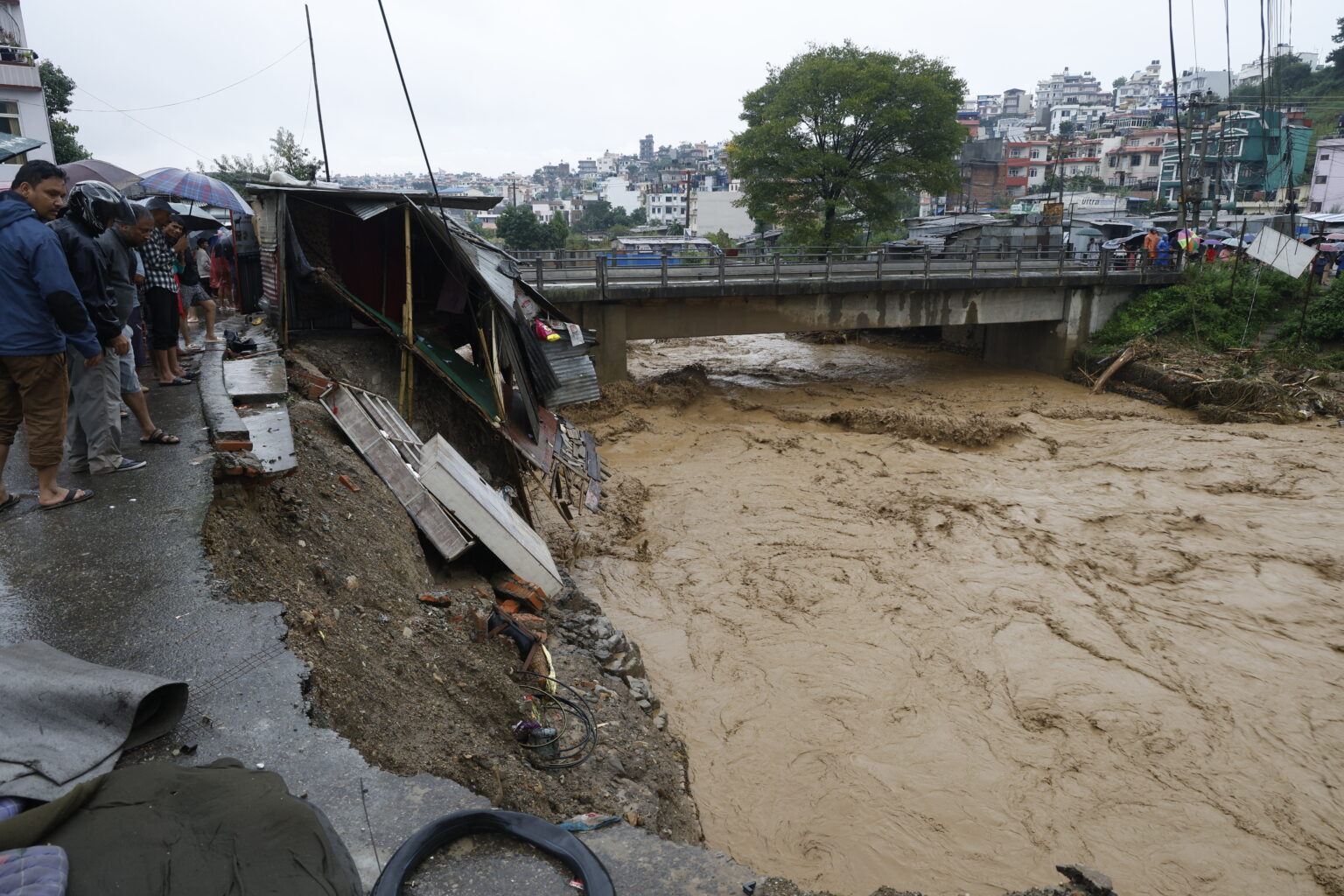
The road and motorable bridge swept away by the flood in Nakkhu River, Lalitpur, after heavy rain on September 28, 2024. Photo: Gopen Rai
In fact, the loss did not occur because the government lacked a monsoon preparedness plan. Every year, the Authority prepares a National Monsoon Preparedness and Response Action Plan. In the year 2024, a 244-page action plan was also made.
It mentioned that about 412,000 households could be affected by disasters throughout that year’s monsoon, and by assessing the impact on crops and physical structures, everyone from the federal government to provincial and local governments, district disaster management committees, and security agencies would be kept in a state of readiness to minimize the loss of life and property.
The government claimed that 29,540 personnel, including the three security agencies and their engineers, air services, and medical teams, along with training and resources for search and rescue, were kept in a ready state.
However, the government became helpless in the rescue work at the Nakkhu River in Lalitpur, which falls within a distance of seven km from the country’s main administrative center, Singha Durbar. The reason: the action plan was made on paper, but it was not implemented in practice. This is the fate of every year. An action plan is made. It is not implemented. Only after disaster incidents and losses occur do the presence and activity of the government mechanism finally appear in tasks like search, distribution of relief materials, and treatment of the injured.
After the incidents showing government weakness in disaster preparedness occurred in Kathmandu in 2024, it was expected that the government would learn a lesson the following year and become serious about preventing loss. However, the sad news of disasters did not stop in 2025 either.
To prevent the recurrence of the Nakkhu River incident during the monsoon-related disasters of 2025, the then-government deployed preparedness and response. The then-government, formed after the Gen Z protestst, had made the police and administration active even before the Dashain festival of 2025, saying they would protect against loss due to disasters like floods and landslides.
Since October 3, 2025, the Armed Police Force had been patrolling and using megaphones in various places in Kathmandu, alerting people to stay safe as flooding could occur on the riverbanks. It also informed people to call the Armed Police Force’s toll-free number 1114 if immediate rescue was needed.
On the other hand, the Meteorological Forecasting Division of the Department of Hydrology and Meteorology had predicted heavy to very heavy rain from October 3 to October 6, 2025. By issuing weather bulletins on September 30 and October 1, 2025, warnings were given to adopt special alertness as flash floods could occur in rivers after the rain.
Since there was slightly less rain (1,375.4 mm) than average during the monsoon period, there were fewer monsoon-related disaster incidents in 2025 compared to the previous year, and the loss was also less.
That year, while 1,454 monsoon-related incidents occurred, 140 people died. 30 went missing, 300 were injured, and 5,995 families were affected. However, as the monsoon neared its end, 39 people died in Ilam alone due to landslides and floods caused by the heavy rain that fell from October 4 to October 6, 2025.
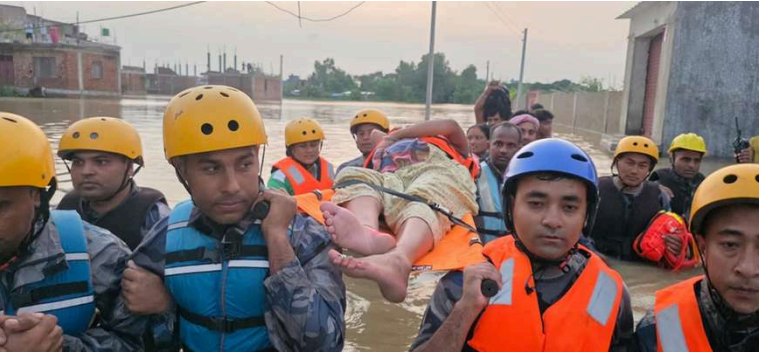
An Armed Police Force team rescuing a pregnant woman affected by inundation after continuous rain on October 5, 2025, in Sakhuwa Prasauni Rural Municipality-3 of Parsa. Photo Source: NDRRMA Monsoon Review Report]
This year as well, the Authority is engaged in making the National Monsoon Preparedness and Response Action Plan. According to the Authority’s spokesperson Shanti Mahat, the draft of the action plan has been completed.
The Authority has a schedule to finalize and implement the action plan once the Department of Hydrology and Meteorology releases this year’s monsoon forecast. The department released the monsoon forecast this year on May 8. Mahat says, “In addition to basing it on the weather forecast, we will bring the action plan within June (Jestha) by including suggestions from ministries related to disaster management and stakeholders.”
The government brings the National Monsoon Preparedness and Response Action Plan every year with the objective of minimizing the loss of life and property caused by disasters. According to the Authority, all types of preparations made to identify monsoon-related disaster risks by analyzing past disaster incidents and impacts to reduce loss are called preparedness.
Similarly, the work related to search, rescue, and relief carried out immediately as soon as disaster incidents occur is called response. In the action plan, the work responsibilities of ministries, departments, security agencies, and stakeholders related to disaster management are assigned to reduce the loss caused by monsoon-related disasters. However, the government is always failing to work according to the action plan.
Where is the problem?
To make disaster management effective, the government has established mechanisms from the center to the local level in accordance with the Disaster Risk Reduction and Management Act, 2017. According to the Act, there is a National Disaster Risk Reduction and Management Council chaired by the Prime Minister at the center, an Executive Committee chaired by the Home Minister, a Provincial Disaster Management Council and Executive Committee in all seven provinces, District Disaster Management Committees in all 77 districts, and Local Disaster Management Committees in all local levels.
All these structures are targeted toward search, rescue, relief, and rehabilitation after a disaster occurs. However, there is always a lack of the sophisticated equipment needed for immediate search and rescue after a disaster, says Mahat, the spokesperson for the Authority. “We do not have the sophisticated equipment needed for search and rescue, and there is a lack of budget even for their procurement,” she says, “Because of that, simply making policies, rules, and action plans does not mean losses won’t occur.”
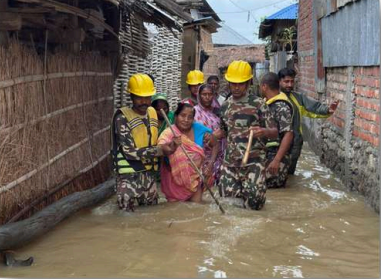
A Nepal Army team rescuing flood victims in Saptari in October 2025. Photo Source: NDRRMA Monsoon Review Report
When preparedness work that can be done with small amounts of money to stop or minimize loss from disasters is not carried out, large amounts of money are spent on post-disaster rescue and relief distribution. This, on one hand, leads to human and physical loss, and on the other, adds a burden to the state treasury.
Studies have pointed out that losses have to be borne because disaster management in Nepal is weak. For example, when large areas in the Western Terai are inundated after it rains in June-July every year, many people are displaced. Some die. The government and non-governmental agencies already know about the seasonal conditions and risk areas related to this around May-June. However, because these agencies do not adopt preparedness and mitigation precautions to save those affected, the residents of Western Terai are always inundated, as mentioned by the Government of Nepal’s Joint Secretary Pradeep Kumar Koirala in a research article.
In the article titled ‘Challenges and Solutions seen in the Effectiveness of Disaster Management’ published in the Administration Journal released by the Ministry of Federal Affairs and General Administration in June 2023, he wrote, ‘Foreign disaster experts do not even consider our inundation problem a disaster; a disaster is said to be something that comes unexpectedly without prior knowledge and beyond one’s capacity. We already know about the inundation that occurs in the western region of Nepal; if this can be addressed through our preparedness, how is it a disaster? This seems to be only the incompetence of the government sector’s management.’
The conclusion of the study is that due to policy and institutional problems in disaster preparedness and mitigation, those affected are forced to face disasters every year.
Similarly, Associate Professor Lal Bahadur Oli of the Central Department of Geography, Tribhuvan University, pointed out in his research article that disaster management has become challenging due to weaknesses in policy and law implementation, lack of resources, lack of technical expertise, lack of coordination, and low awareness of risk.
He mentioned this topic in the article ‘Disaster Management in Nepal: Disaster Status, Policy and Legal Practices’ published in the Surkhet Journal (Volume 4, Number 1: November 2025) printed by Surkhet Multiple Campus, Birendranagar.
According to Section 22 of the Disaster Risk Reduction and Management Act, 2017, the government has arranged for a separate Disaster Management Fund at the central level for disaster management, and according to Section 23, a Disaster Management Fund in each province, district, and local level.
For the operation of the fund, the Disaster Management Fund Operation Procedure, 2022, has been brought. However, the fund is more focused on expenses for post-disaster search, rescue, and relief purposes. According to the procedure, a minimum balance of Rs 500 million must remain in the Central Disaster Management Fund, Rs 2.5 million in Terai districts, Rs 2 million in hill districts, and Rs 1.5 million in mountain districts. In the Provincial Disaster Fund, the amount must be as prescribed by the province, and in the Local Disaster Fund, as prescribed by the local level.
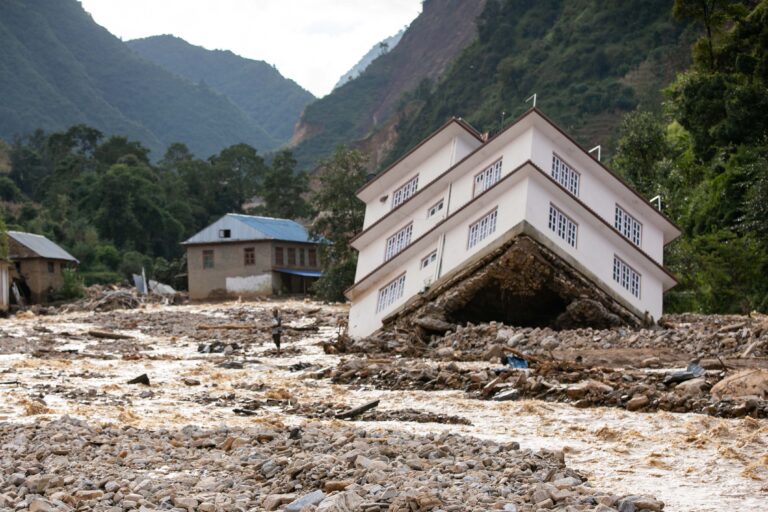
Flood in Kavre’s Roshi River. Photo: Nepal Photo Library
The NDRRMA spokesperson Mahat says, “The fund’s budget can be spent on rescue, relief, rehabilitation, and recovery after an incident has occurred, but it cannot be used to purchase the equipment needed for rescue.” she says that discussions are ongoing with the Ministry of Home Affairs and the Ministry of Finance to manage an adequate budget for disaster risk reduction. “It’s not that a budget doesn’t come for mitigation at all, but because it comes in small amounts, it is insufficient. Initiatives are being taken to increase the budget,” she says.
In 2018, the government brought a plan to identify settlements at high risk of disasters like floods and landslides and relocate them to safe places. According to the Procedure for Relocation of Vulnerable Settlement and Integrated Settlement Development , it was announced that the government would provide grant money to beneficiaries for a house-sized plot and house construction as prescribed by the local level according to the government’s settlement development standards. Provisions have been made to provide Rs 500,000 in mountain regions, Rs 400,000 in rural hill areas, and Rs 350,000 in urban hill and Terai regions to construct one house.
However, Mahat, the Authority’s spokesperson, says that those affected by disasters have not accepted this plan because a livelihood cannot be sustained just by having a house built in a safe place. “There is an arrangement where each family wanting to move from risky places gets about 6 aana (approximately 190 square meters) of land. But because just that much land is not enough and matters of farming and livelihood are also connected, it hasn’t been possible to relocate because those affected themselves do not want to go to another place,” she says.
Multi-hazard risk
Due to complex topography, weak geological positioning, seasonal variations, environmental pollution, and climate change, Nepal is among the most sensitive countries in the world from a multi-hazard perspective. Nepal is tormented every year by earthquakes, floods, landslides, soil erosion, inundation, lightning, drought, snowfall, hailstorms, avalanches, glacial lake outburst floods, excessive rain, lack of rain, storms, cold waves, heatwaves, and forest fires.
According to the National Disaster Risk Reduction and Management Authority, disaster risk and sensitivity are still on the rise in Nepal due to population growth, poverty, unplanned urbanization, and risk-insensitive development activities. As stated in the Authority’s publication covering the period up to January 14, 2026 of fiscal year 2025/26, disaster-related incidents cause Nepal to suffer an estimated annual loss of around 2.5 percent of its Gross Domestic Product (GDP).
Similarly, an average of 1.7 people per 100,000 population die annually due to disasters. 17.1 households per 1,000 households are affected by disasters.
According to the Authority’s publication covering the period up to April 12 of fiscal year 2024/25, Nepal is ranked 11th globally in earthquake risk, 30th in flood and landslide risk, 4th in climate change vulnerability, and 20th among countries most exposed to multiple hazards. When the government, which has records of so many disaster risks, does not pay attention to mitigation, risks are added to the community.
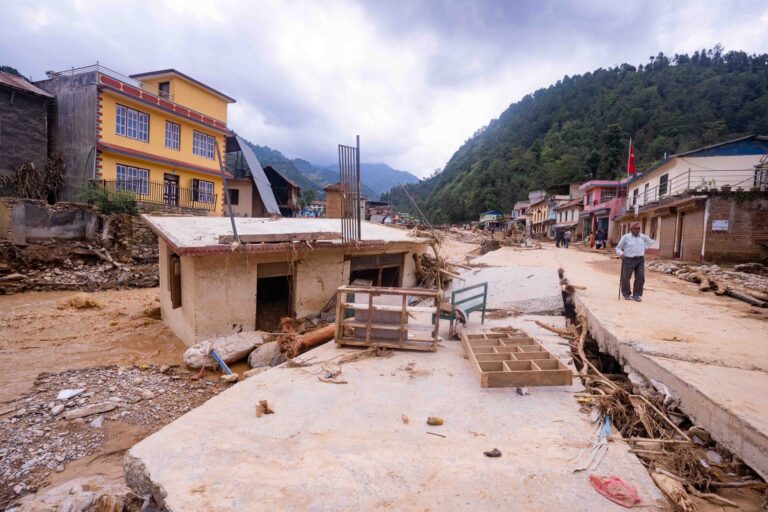
Damage caused by the flood in Roshi River. Photo: Nepal Photo Library
Disaster risk reduction and management researcher Dinanath Bhandari says that losses can only be reduced if the acts, laws, policies, directives, procedures, and action plans related to disaster risk reduction made by the government are implemented in practice. “In particular, we must move out of the old pattern of distributing relief after disaster incidents. We must work on measures to reduce risk before loss occurs,” he says.
According to him, one should be sensitive to issues such as identifying disaster risk and implementing proper land-use policy, developing settlements in safe places, and not living in areas prone to landslides or on riverbanks.
32.5 billion loss in a decade
The price of the loss of life and property caused by disaster incidents in Nepal is high. In the last decade, more than 46,316 incidents of fire, earthquake, flood, landslide, lightning, heavy rain, forest fire, epidemic, avalanche, snowfall, cold wave, and storm caused physical infrastructure and livestock losses equivalent to Rs 32.50 billion. According to the details on the Ministry of Home Affairs’ disaster portal, a total of 4,549 people lost their lives across the country in disaster incidents from 2016 to 2025. 14,718 people were injured. 79,402 families were affected. 52,228 private houses were destroyed.
Since 2021, however, monsoon-related disasters like floods, landslides, inundation, and heavy rain have started causing more damage.
In addition to human loss, billions in losses occur annually in public physical infrastructure such as schools, health institutions, roads, and hydropower, as well as in agricultural crops and livestock.
The preliminary assessment of loss and damage for the monsoon period from June 10 to October 12, 2024, by the Authority showed that floods, landslides, and inundation caused more than Rs 46.68 billion and 4.3 million in losses. There was a loss of Rs 38.92 billion and 3.4 million in physical infrastructure like roads, bridges, and hydropower; Rs 5.88 billion and 2.8 million in agriculture and livestock; Rs 70.02 million in education; Rs 21.7 million in health; and Rs 1.35 billion in irrigation.
Similarly, during the 2025 monsoon period, physical damage occurred in 27 schools across the country (including those at risk), 36 hydropower projects (3 total loss and 33 partial loss), 9 concrete bridges, 3 iron/bailey bridges, 4 suspension bridges, and 13 wooden bridges. Due to problems and disasters created by climate change, people are being forced to leave their ancestral homes and migrate. According to the National Census 2021, 61,029 people said they had to migrate due to natural disaster-related causes in the last decade.
Collaboration in Disaster Management
As disaster risk has been increasing rapidly in recent years, the Authority has concluded that its management is not possible through the government’s solo effort alone. As stated in the Authority’s publication covering the period up to January 14, 2026, the participation, collaboration, and coordination of the private sector, civil society, non-governmental and international organizations, media, academic institutions, and local communities are essential.
Authority spokesperson Mahat says that the community and citizens must also be alert to stay safe from disasters. She says, “We have told people not to travel during the flood and landslide season. We tell those on riverbanks and in risky settlements to go to safe places. But in some cases, there is a habit of being stubborn; this habit needs to be improved.”
Similarly, Associate Professor Oli of the Central Department of Geography, Tribhuvan University, says that disaster management, which deeply affects physical structures, houses, economic conditions, social life, and development infrastructure along with human loss, needs to be more organized, scientific, and community-based. ‘Disaster impacts cannot be reduced without long-term strategy, preparedness, risk reduction, and awareness-raising programs,’ he wrote in the article published in the Surkhet Journal, ‘Preparedness should be expanded to schools, communities, and local levels.’
If preparedness is effective, human loss can be reduced. For example, although the highest rainfall of 624 mm in 24 hours was measured at the Dodhara station in Kanchanpur on July 8, 2024, great human loss in that area was prevented due to preparedness and early action.
The ‘Detailed Evaluation Report of Loss Caused by Extreme Rainfall in Kanchanpur District’ released by the Authority on May 31, 2025, mentions that 5 people died and 2 were injured in Kanchanpur district from the rain on July 7 and 8, 2024. This was despite 1,109 houses being completely destroyed at that time. 30,463 hectares of cultivable land were damaged.
Authority spokesperson Mahat says they are striving to reduce disaster-related loss despite the limitation of resources. She says, “There is no such thing as zero loss from disasters anywhere in the world, but we are making efforts to make the loss less.”