Kathmandu
Sunday, July 12, 2026





After a Turkish Airlines aircraft caught fire while landing in Kathmandu today (May 11), attention has once again turned to Nepal’s long history of deadly aviation accidents, difficult terrain, unpredictable weather and persistent safety concerns
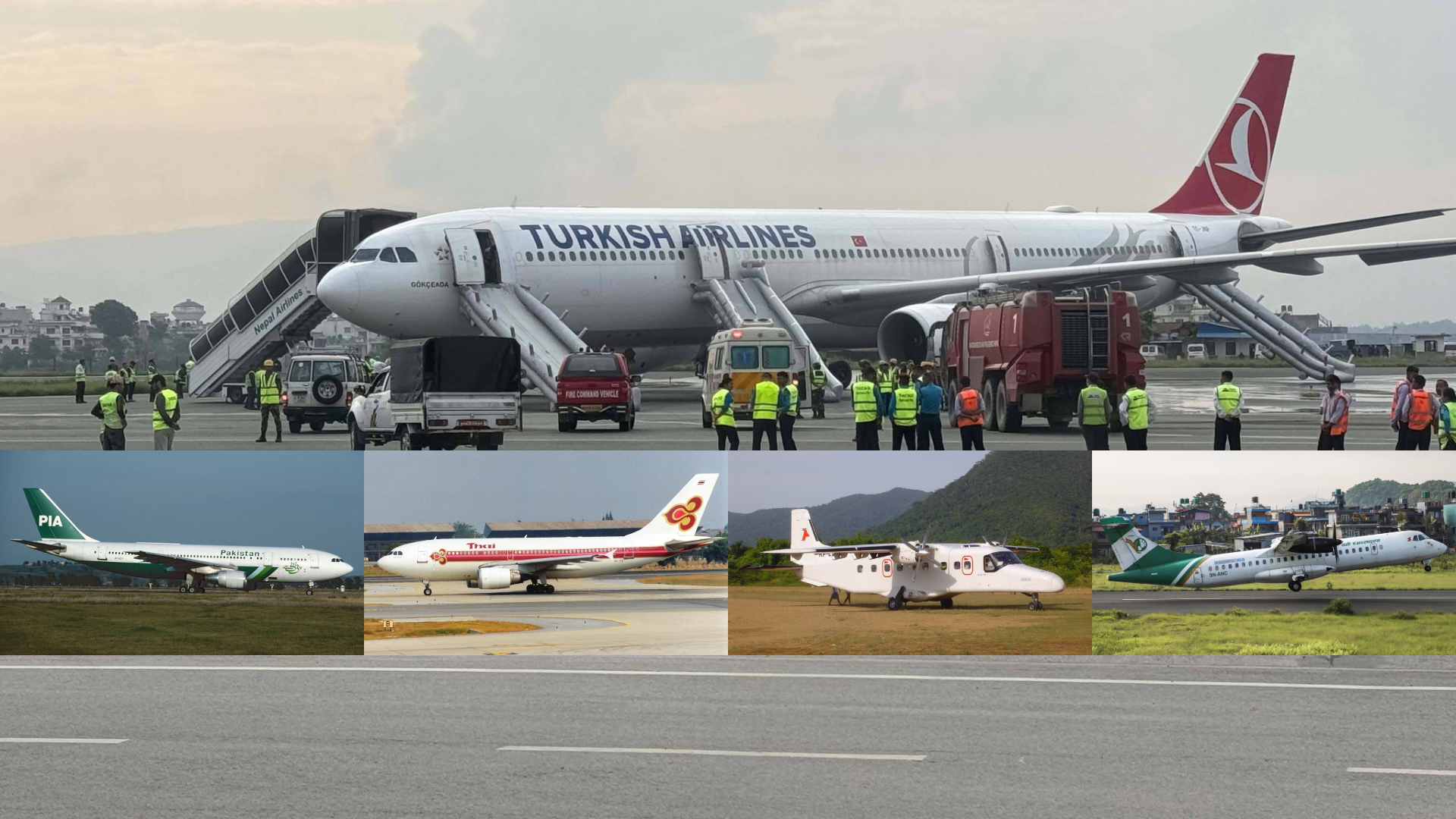
KATHMANDU: A Turkish Airlines aircraft experienced a fire on its landing gear wheel while touching down at Tribhuvan International Airport on May 11 (Monday) morning, triggering an emergency response and drawing renewed attention to Nepal’s aviation safety record. The incident occurred around 6:45 am during the landing of the Istanbul–Kathmandu flight (TK726), when flames were seen coming from one of the aircraft’s wheels during the landing roll.
Firefighters quickly responded and extinguished the blaze within minutes. All passengers were safely evacuated through emergency exits, and officials confirmed no injuries among passengers or crew.
Preliminary indications suggest the issue may be linked to the landing gear or braking system, though the exact cause has not been confirmed. Airport operations were disrupted for about an hour and a half due to the emergency response, while the Civil Aviation Authority and technical teams have launched an investigation into the incident.
The latest incident comes against the backdrop of Nepal’s long and troubled aviation history. A sky hemmed in by the world’s highest mountains, rapidly changing weather conditions, and a regulatory system that has remained on the European Union’s aviation safety blacklist for more than a decade have made Nepal one of the most difficult places in the world for air travel.
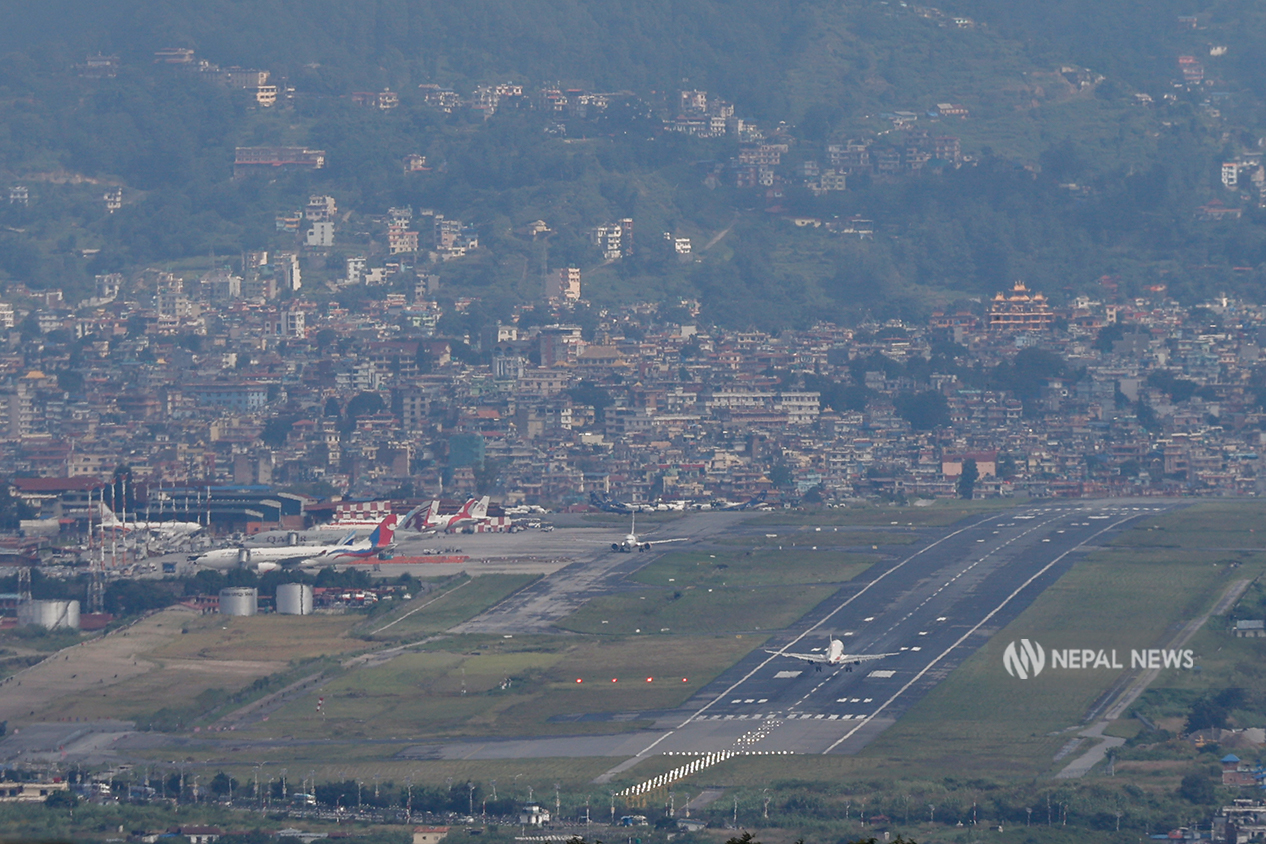
Aerial view of Tribhuvan International Airport. File photo
From the twin aviation disasters of 1992, when two wide-body jets crashed into Himalayan terrain within 59 days of each other and killed 280 people, to the 2023 Pokhara crash that claimed 72 lives after a pilot reportedly moved the wrong lever at a critical moment, Nepal has repeatedly witnessed deadly air accidents. The tragedies have involved passengers and crew from multiple countries, including Pakistan, Thailand, Bangladesh, India, and Nepal.
International investigators from countries such as Canada, France, Britain, and Singapore have traveled to remote Himalayan crash sites over the years to determine the causes of the disasters. Investigations have repeatedly pointed to a deadly combination of mountainous terrain, sudden weather changes, human error, aging equipment, and regulatory weaknesses within Nepal’s aviation system.
This Nepal News explainer delves into Nepal’s deadliest aviation crashes in history, examining major air disasters, their causes, investigations and the recurring safety challenges in the country’s aviation sector.
What is the single deadliest aviation disaster in Nepal’s history, and what caused it?
The deadliest crash ever to take place on Nepali soil happened on September 28, 1992, when Pakistan International Airlines Flight 268 flew an Airbus A300 into the side of the Mahabharat Range while descending toward Kathmandu’s Tribhuvan International Airport. All 167 people aboard were killed.
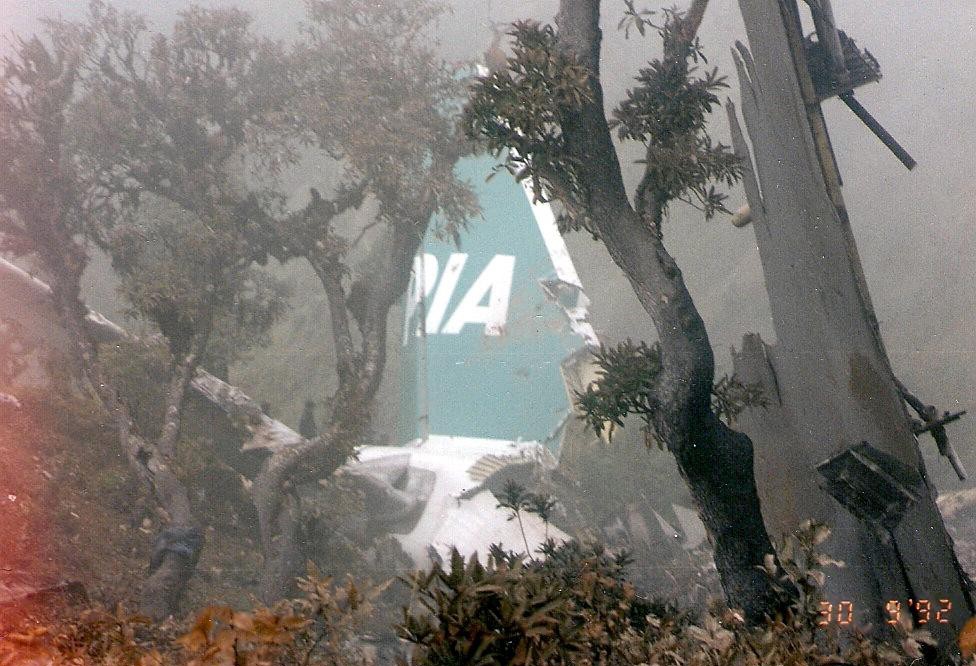
Pakistan International Airlines (PIA) Flight 268, an Airbus A300, crashed on Nepali soil on September 28, 1992. Photo courtesy: Wikimedia
The aircraft had departed Karachi that morning and was cleared for what was known as the Sierra approach into runway 02, a demanding multi-step procedure that required pilots to descend in seven defined stages to navigate the mountains south of the valley.
The investigation, led by Britain’s Air Accident Investigation Branch with assistance from Canada’s Transportation Safety Board, found that the flight crew began their descent one step too early. By the time the co-pilot reported their altitude as 11,500 feet to air traffic control, the plane was actually at 10,500 feet, and the gap between their actual position and where they should have been widened on every step from there.
At the Sierra reporting point, they were 1,300 feet below their cleared altitude. The plane hit the mountain at roughly 7,300 feet. The terrain warning system did not activate in time because of the steepness of the slope, and Kathmandu had no radar, so controllers had no way to cross-check the crew’s position reports.
The approach charts provided to PIA pilots were also found to be unclear and contributed to confusion. The crash happened just 59 days after Thai Airways Flight 311 had struck a mountain north of the same airport, which meant that by the end of 1992 Nepal had suffered 280 fatalities from two approach accidents into the same airport in the same year.
What happened when Thai Airways Flight 311 crashed in Nepal in 1992?
On July 31, 1992, a Thai Airways Airbus A310-304 flying from Bangkok struck a mountain in Langtang National Park, roughly 37 kilometers north of Kathmandu, and killed all 113 people on board. The disaster was the first hull loss and first fatal crash in the history of the Airbus A310 type.
The aircraft had been cleared for the Sierra approach into runway 20 and was descending in monsoon conditions with heavy clouds and no radar assistance from Kathmandu’s control tower. During the approach the crew encountered a problem with the trailing flaps, which stuck temporarily and prompted the captain to request a diversion to Calcutta because the steep final descent profile required full flaps. Twenty-one seconds later the flaps corrected themselves, but instead of continuing straight in, the captain decided to go around.
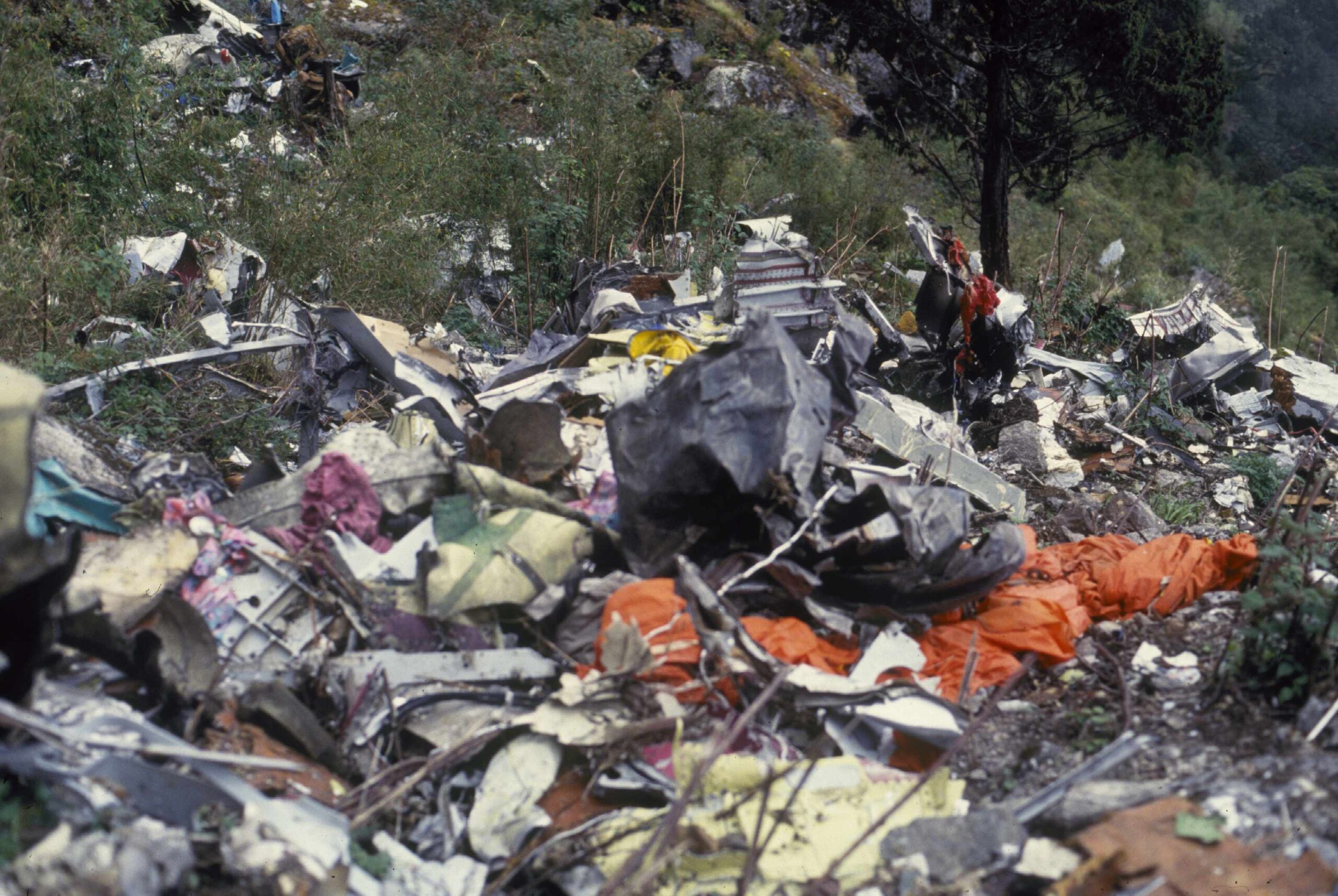
Crash site of Thai Airways Flight 311. Photo courtesy: Wekimedia
The conversation between the captain and air traffic control then deteriorated badly. The captain asked four times for permission to turn left; receiving no clear answer, he turned right and began climbing to 18,000 feet. The controller, not fully understanding what the crew was doing, cleared them down to 11,500 feet, an altitude that was safe only to the south of the airport.
The aircraft completed a 360-degree turn, overflew the airport northbound, and flew directly into a steep rock face at 11,500 feet. Nepal’s investigation attributed the disaster to the captain’s loss of situational awareness, the air traffic controller’s poor English and inexperience, the first officer’s failure to challenge the captain’s decisions, and Thai Airways’ failure to provide simulator training for the complex Kathmandu approach. The wreckage is still visible in Langtang National Park.
What brought down the US-Bangla Airlines flight in Kathmandu in 2018?
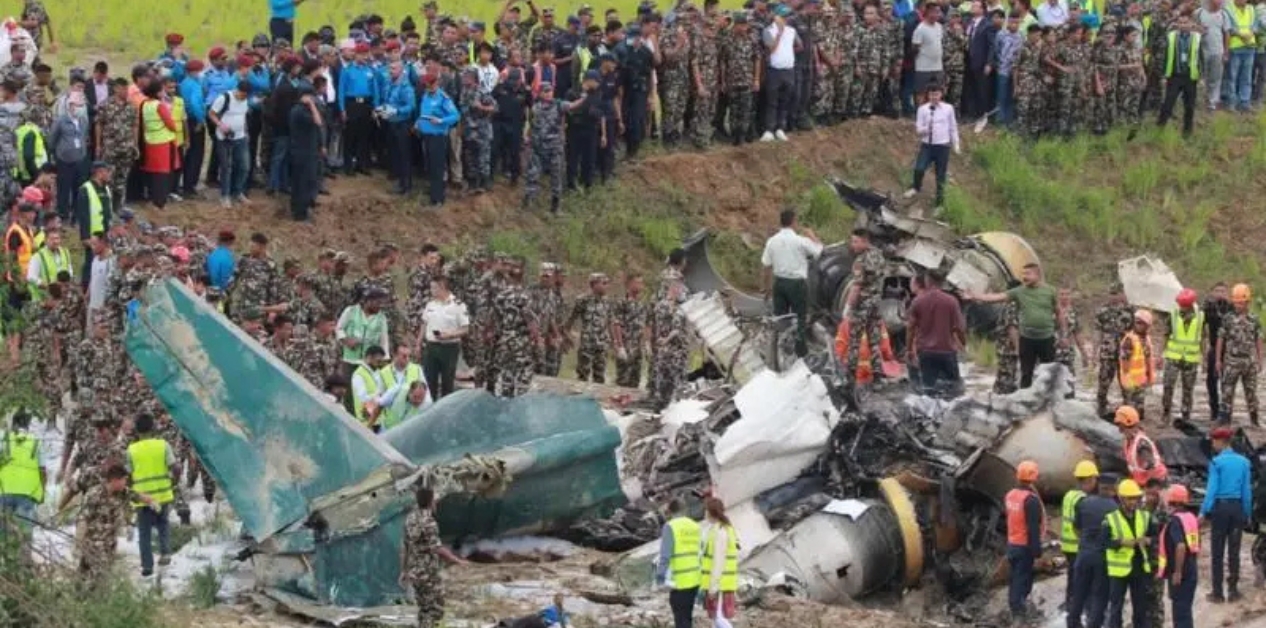
On March 12, 2018, a Bombardier Q400 operated by the Bangladeshi carrier US-Bangla Airlines crashed on landing at Tribhuvan International Airport, killing 51 of the 71 people aboard. The aircraft had flown from Dhaka with 67 passengers and a crew of four.
The Nepali investigation commission found that the captain, Abid Sultan, was in a state of severe mental stress even before the aircraft left Dhaka. Cockpit voice recorder data showed that he had been agitated, argumentative, and emotionally unstable throughout much of the flight, which the commission concluded was linked to personal and professional pressures he was under at the time.
On approach to Kathmandu, he became disoriented, confused about which runway he had been cleared for, and failed to maintain a stable approach path. The aircraft touched down some 1,700 meters along the runway and immediately veered off, crashing into a grassy area adjacent to the airport and bursting into flames.
US-Bangla Airlines disputed the Nepali findings and argued that the air traffic controllers had not done enough to assist the crew once it was clear they were disoriented. Bangladesh’s representative on the investigation panel shared that view, saying controllers could have provided more navigational help. Nevertheless, the final report, released in January 2019, laid primary responsibility on the flight crew.
The crash remains the deadliest accident involving any Bangladeshi airline and the worst accident involving a Bombardier Dash 8 Q400 anywhere in the world. In 2025, the Kathmandu District Court ordered US-Bangla Airlines to pay compensation of roughly 2.74 million US dollars each to the families of 17 victims.
How did the Yeti Airlines crash in Pokhara in 2023 happen, and why was it so significant?
On January 15, 2023, an ATR 72-500 operated by Yeti Airlines departed Kathmandu on what should have been a routine 26-minute hop to Pokhara. It was carrying 68 passengers and four crew, including nationals from five Indian, four Russian, two South Korean, one Irish, one Australian, one French, and one Argentinian passports. The plane did not make it.
During the final approach to Pokhara International Airport, which had only opened two weeks earlier on January 1, a catastrophic error occurred in the cockpit. The captain, who was acting as the instructor pilot monitoring the approach, accidentally moved both condition levers to the feather position instead of extending the flaps to 30 degrees.
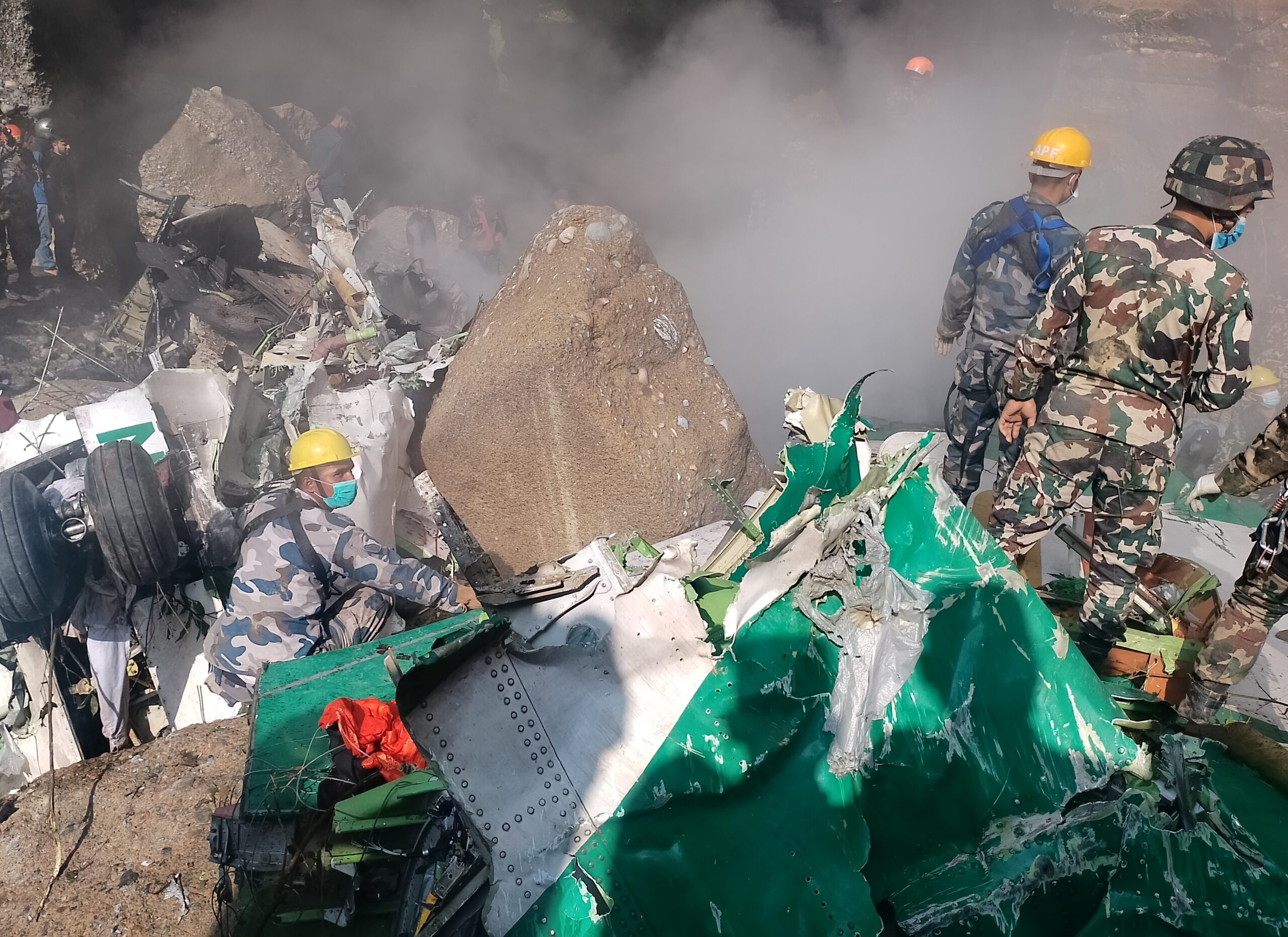
Yeti Airlines crash in Pokhara in 2023. File photo
Feathering the propellers on an ATR 72 shuts off thrust to both engines simultaneously. Within seconds the aircraft had no usable engine power and was too low and too slow to recover. It rolled steeply to the left and plunged into the gorge of the Seti River.
All 72 people on board were killed. The crash was Nepal’s deadliest aviation disaster since the PIA accident of 1992. The investigation found multiple contributing factors beyond the lever error itself: the new Pokhara airport did not yet have its instrument landing system certified and was operating under visual flight rules only, the pilots had not received specific simulator training for visual approaches at the new facility, and basic cockpit discipline during the approach was poor.
The aviation regulator, the Civil Aviation Authority of Nepal, was also criticized for having approved operations at the airport without ensuring that all required approach procedures were in place.
What happened in the Tara Air crash in the Mustang district in 2022?
On May 29, 2022, a Tara Air Twin Otter carrying 22 people vanished about 12 minutes after leaving Pokhara for Jomsom in the Mustang district. The aircraft, a DHC-6-300 registered as 9N-AET, was flying along a route well known for its difficult mountain weather. The investigation commission found that the captain had actually been hesitant about departing because of poor weather conditions and had expressed his discomfort about other pilots flying visual routes in such conditions.
Despite that, he pressed ahead, apparently feeling pressured by the two Summit Air flights that had just departed ahead of him and by a full cabin of waiting passengers. During the flight the crew encountered thickening clouds and flew increasingly off the planned route, trying to find clear air. The terrain awareness and warning system was inhibited, so it failed to provide warnings as the aircraft closed on the mountains.
The plane struck a slope of Sanusare Mountain in Mustang at an altitude of about 4,050 meters. All 22 people aboard were killed. Four of the passengers were Indian nationals and two were German citizens. The wreckage was not found until roughly 20 hours after the aircraft disappeared, when local farmers spotted it.
The accident was Tara Air’s second deadly crash on the same Pokhara-Jomsom route; it had lost all 23 people aboard Flight 193 on the same sector in 2016.
What caused the Tara Air Flight 193 disaster in 2016?
Tara Air Flight 193 disappeared on the morning of February 24, 2016, just eight minutes after lifting off from Pokhara Airport bound for Jomsom. The aircraft, a DHC-6-400 Twin Otter registered as 9N-AHH, was carrying 20 passengers and three crew members. The wreckage was found later that day in the Myagdi district, near the village of Dana, at an altitude of roughly 10,700 feet. There were no survivors.
The investigation found that the pilots, flying under visual flight rules, entered clouds and lost situational awareness. As they tried to navigate through the murky terrain, the ground proximity warning system sounded repeatedly, but the captain had become desensitized to it over repeated flights in that mountainous corridor and disregarded it.
The aircraft hit a mountainside at about 10,700 feet and came to rest slightly higher, at around 10,982 feet. The final report concluded that the crew had made repeated decisions to fly into clouds during a visual flight and had deviated from the normal track, ultimately losing spatial awareness and hitting terrain.
Poor weather, inadequate adherence to visual flight rules, and a normalization of flying through dangerous conditions on a route the pilots knew well were all identified as factors. Among those aboard were Nepali and foreign passengers, including infants.
What killed everyone on board the Sita Air flight from Kathmandu to Lukla in 2012?
On September 28, 2012, a Sita Air Dornier 228 carrying 16 passengers and three crew members crashed shortly after taking off from Tribhuvan International Airport in Kathmandu, bound for Lukla, the mountain gateway to the Everest region. All 19 people on board were killed.
The aircraft plunged into a river very close to the airport, barely airborne and already failing. Most of the passengers were tourists from various countries, making it one of the incidents to draw particular international attention. Preliminary reports from the authorities pointed to pilot error as the probable cause.
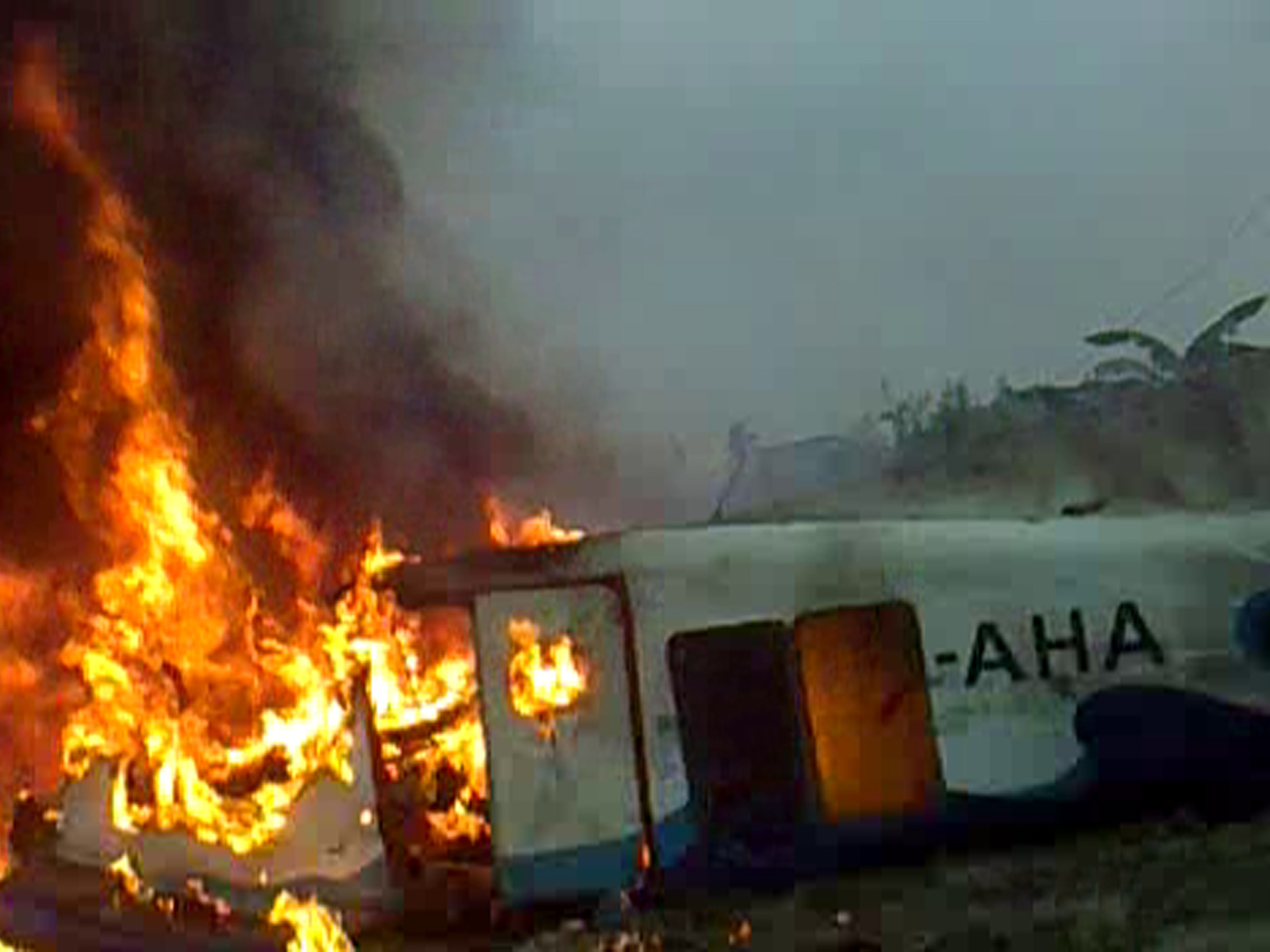
Wreckage of Sita Air Flight on September 28, 2012. File photo
The accident raised sharp questions about the early morning departure conditions at Tribhuvan, where traffic congestion and pressure to get flights away before the weather deteriorated could push crews to take off in marginal conditions.
Lukla, the destination, is considered one of the most treacherous airports in the world, with a very short, sloping runway perched on a hillside, and the flights to reach it are inherently high-risk.
The Sita Air crash was part of a terrible period for Nepali aviation around that time, coming the same year as the Agni Air Dornier crash near Jomsom and less than a year after the Buddha Air Beechcraft disaster that killed 19.
What happened in the Buddha Air crash of 2011?
On September 25, 2011, a Beechcraft 1900D aircraft operated by Buddha Air crashed in the Lalitpur district within the Kathmandu valley while on a sightseeing flight around Mount Everest. All 19 people aboard were killed, including 16 passengers and three crew members.
Among the passengers were ten Indian nationals who had booked the scenic mountain flight, a popular offering for visitors who want views of Everest and the Himalayan chain without attempting any trek. The aircraft was supposed to return to Tribhuvan International Airport after the loop.
The investigation attributed the crash to a combination of pilot fatigue and poor visibility. The findings pointed to the crew becoming disoriented in conditions where the surrounding terrain blended into overcast skies, creating conditions where spatial awareness became dangerously compromised.
Mountain sightseeing flights over Nepal carry inherent risk because they operate at low altitudes close to terrain that can be obscured by cloud, and they attract passengers who are often unfamiliar with the conditions.
The crash prompted calls for tighter regulation of such sightseeing operations, particularly regarding weather minimums and the fatigue management of crews conducting multiple circuits.
What happened in the 2019 Taplejung helicopter crash that killed then Tourism Minister Rabindra Adhikari?
On February 27, 2019, an Air Dynasty helicopter carrying then Tourism and Civil Aviation Minister Rabindra Adhikari crashed soon after taking off from the Pathibhara Devi Temple area in Taplejung, killing all seven people on board. Among those killed were tourism entrepreneur Ang Tshering Sherpa, senior officials of the Civil Aviation Authority of Nepal, a Nepal Army officer, then Prime Minister KP Sharma Oli’s aide, and pilot Captain Prabhakar KC.
Preliminary reports indicated that the helicopter lost control after entering thick clouds and severe weather before striking a cliff known as Sisne Bhir. Authorities said the area was experiencing heavy snowfall, strong winds, and low visibility at the time. The team had traveled to eastern Nepal to inspect a proposed airstrip site in the Tehrathum district.
The accident became one of Nepal’s deadliest aviation disasters involving high-profile figures and intensified concerns about air safety in the country’s mountainous terrain.
On February 28, 2019, the government formed an investigation committee to probe the crash. Four months later, the committee’s preliminary findings cited several contributing factors, including poor weather conditions, violations of operating procedures, imbalance in weight distribution, and the pilot’s limited experience.
The Aircraft Accident Investigation Commission later concluded that adverse weather around Pathibhara had created instrument meteorological conditions (IMC), reducing visibility and causing the pilot to lose situational awareness and control of the helicopter.
Investigators described the crash as a Controlled Flight Into Terrain (CFIT) accident.
What caused the Agni Air crash in 2010 and what did investigators find?
On August 24, 2010, Agni Air Flight 101, a Dornier 228 registered 9N-AHE, crashed into a hillside near the town of Shikharpur in the Narayani region, roughly 80 kilometers south of Kathmandu, about 20 minutes after taking off from the capital bound for Lukla. All 14 people on board were killed, including 8 Nepali citizens and 6 foreigners, among them four American women, one British national, and one Japanese national.
Witnesses at the crash site said they heard no engine noise in the moments before impact, and the force of the crash created a crater roughly three meters deep and scattered wreckage across an area about 100 meters in diameter. The black box recorders were recovered by early September and sent to India for analysis.
The investigation panel determined that the accident was caused by the pilot’s loss of spatial orientation, which came about because the aircraft’s attitude indicator had failed. Without a functioning attitude indicator, the pilot could not reliably determine whether the aircraft was level, climbing, or banking, especially in low-visibility conditions below 500 meters.
This kind of disorientation is rapidly fatal. The accident highlighted the vulnerability of older, less well-equipped regional aircraft to single instrument failures in the demanding Himalayan flying environment.
What was the Everest Air Dornier crash of 1993 and how many died?
On July 31, 1993, a Dornier aircraft operated by Everest Air, one of the private airlines that had just entered the Nepali market following the liberalization of domestic aviation in 1992, crashed near the Chule Ghopte hill, killing all 19 people on board. The dead included 16 passengers and three crew members.
This crash occurred during a period when Nepal was seeing a rapid expansion of aviation operators, all vying for routes in a mountainous environment that demanded exceptional skill and equipment.
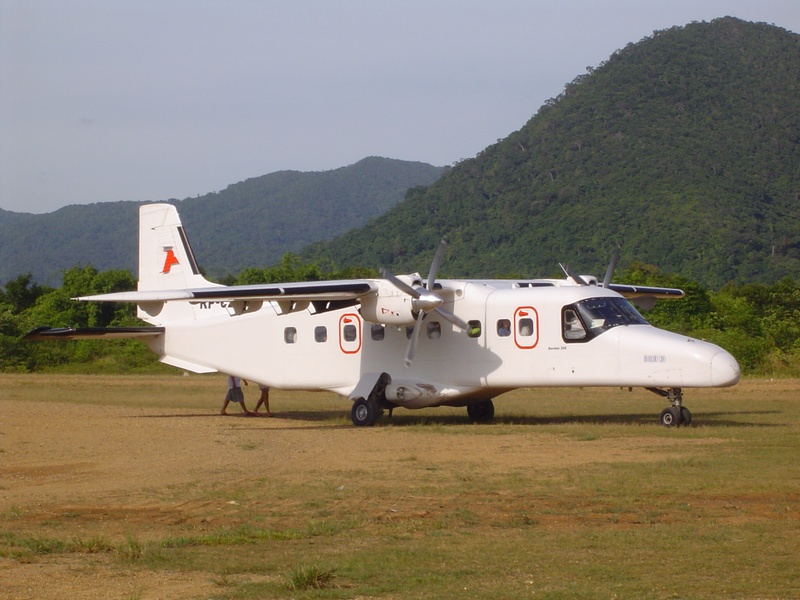
Dornier 228 similar to the one involved
The liberalization of 1992 had opened the market to carriers that sometimes lacked the depth of experience or safety culture of older operators. Everest Air was among the new entrants. The Chule Ghopte crash was a reminder that the terrain around the Kathmandu Valley and the approaches to remote mountain airstrips were unforgiving to any lapse in navigation or weather judgment.
The investigation pointed to controlled flight into terrain, the pattern of accidents where a functioning aircraft is flown into the ground because the crew does not realize how close they are to it. This type of accident has been repeated again and again in Nepal across multiple decades and multiple operators, suggesting the issue runs far deeper than any individual crew’s failure.
Why does Nepal have such a poor aviation safety record compared to other countries?
Several compounding factors have made Nepal’s skies consistently dangerous over decades.
The terrain is the most obvious starting point: the country is home to eight of the world’s fourteen highest mountains, and most of its airports are built on short, sloping strips in narrow valleys surrounded by peaks that rise to extreme altitudes. Weather across this terrain changes rapidly and unpredictably. Monsoon seasons bring dense cloud, rain, and low visibility that can descend with almost no warning.
Most smaller airports in Nepal lack instrument landing systems and full radar coverage, which means pilots approaching in cloud often have only their own instruments and voice communication with control towers to guide them.
The Civil Aviation Authority of Nepal, the country’s aviation regulator, has for years been criticized for performing a dual role as both service provider and safety regulator, a conflict of interest that global watchdogs, including the International Civil Aviation Organization, have repeatedly flagged.
The European Union banned all Nepali airlines from its airspace in December 2013 because of serious safety concerns, and as of early 2026 that ban remains in place.
Outdated aircraft, insufficient pilot training, inadequate simulator access for complex mountain routes, and competitive commercial pressure to fly in conditions that should ground aircraft have all contributed to the death toll.
Nepal has recorded more than 108 air crashes over seven decades, with the total fatality count approaching and exceeding 960.
What reforms have been suggested to fix Nepal’s aviation safety problems?
Aviation safety experts, the International Civil Aviation Organisation, and the European Union have consistently called for one central reform above all others: separating the Civil Aviation Authority of Nepal into two distinct bodies, one that provides airport and air navigation services and one that independently regulates safety.
At present the same organization does both, which creates a situation where the regulator is overseeing itself, an obvious weakness.
Beyond that structural change, investigators and analysts have called for mandatory simulator training for all pilots flying complex mountain routes, including the Pokhara and Jomsom corridors and the approach to Kathmandu. They have called for modern terrain awareness and warning systems to be maintained in functioning condition and never inhibited during flight, better weather forecasting infrastructure at mountain airports, stricter fatigue management rules for crews flying multiple sectors a day, and stronger enforcement of minimum weather requirements so that commercial pressure cannot push pilots to depart in conditions that should keep them on the ground.
Nepal’s parliament has repeatedly considered bills to split the civil aviation authority, but as of the time of writing these reforms had not been fully enacted.
ICAO removed a significant safety concern flag it had placed on Nepal in 2017, recognizing some progress, but the EU maintained its ban through its December 2024 air safety list update.
What were the circumstances of the Indian Airlines crashes in Nepal in the 1950s, and what was the first international crash on Nepali soil?
Nepal’s first recorded aviation fatality occurred on August 30, 1955, in Simara in the Bara district, where two crew members of a Kaliga Air plane were killed in what was logged as the country’s inaugural air crash.
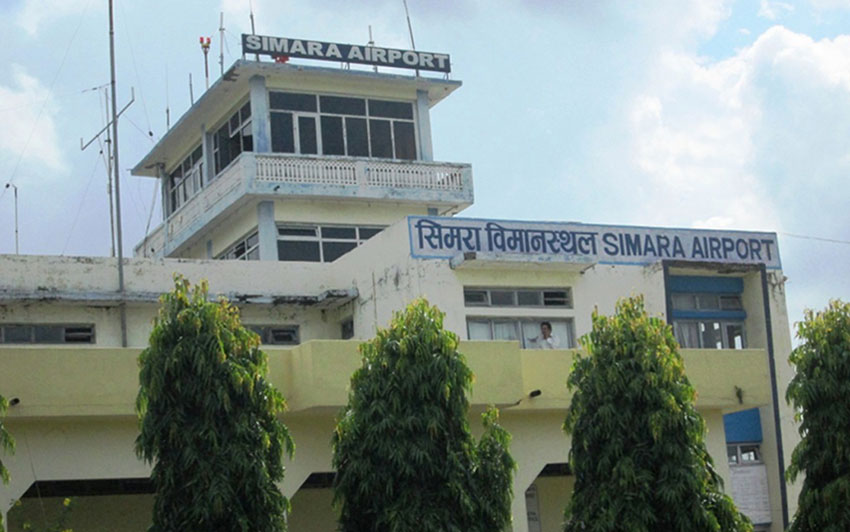
Simara Airport in the Bara district. File photo
Shortly after that, two Indian Airlines aircraft went down on Nepali territory in 1956 and 1958, killing a combined total of 34 passengers. These early disasters happened in the infancy of commercial aviation in Nepal, when the country barely had functioning airstrips and the entire concept of civil aviation regulation was in its earliest stages.
The then Royal Nepal Airlines Corporation had only been founded in 1958, and international flights to Kathmandu were just beginning to open up routes from India and the region. The airports were minimal, radar was nonexistent, and there were virtually no formalized approach procedures for the challenging mountain terrain.
Indian Airlines, which operated regional routes connecting Indian cities to Kathmandu, was among the first international carriers to regularly serve Nepal, and the two mid-1950s crashes in Nepali airspace represented some of the earliest evidence that the combination of high terrain, rudimentary infrastructure, and limited pilot guidance was already creating dangerous conditions that would take decades to properly address.
What role did Tribhuvan International Airport’s lack of radar play in the 1992 crashes and does that problem still exist?
The absence of radar at Tribhuvan International Airport was directly cited as a contributing factor in both the Thai Airways crash of July 1992 and the PIA crash of September 1992. In both cases, pilots were navigating complex approaches in poor visibility with no independent means of verification.
Air traffic controllers had to rely entirely on what crews told them about their own positions and altitudes. When the PIA crew descended one step too early and the first officer misreported their altitude to the controller, there was no radar return to contradict the misinformation. The controller had no way of knowing the aircraft was 1,000 feet below where it should have been.
When the Thai Airways captain and controller lost track of each other during the botched missed approach, the controller cleared the aircraft to an altitude that was safe only to the south of the airport, not realizing the plane was heading north.
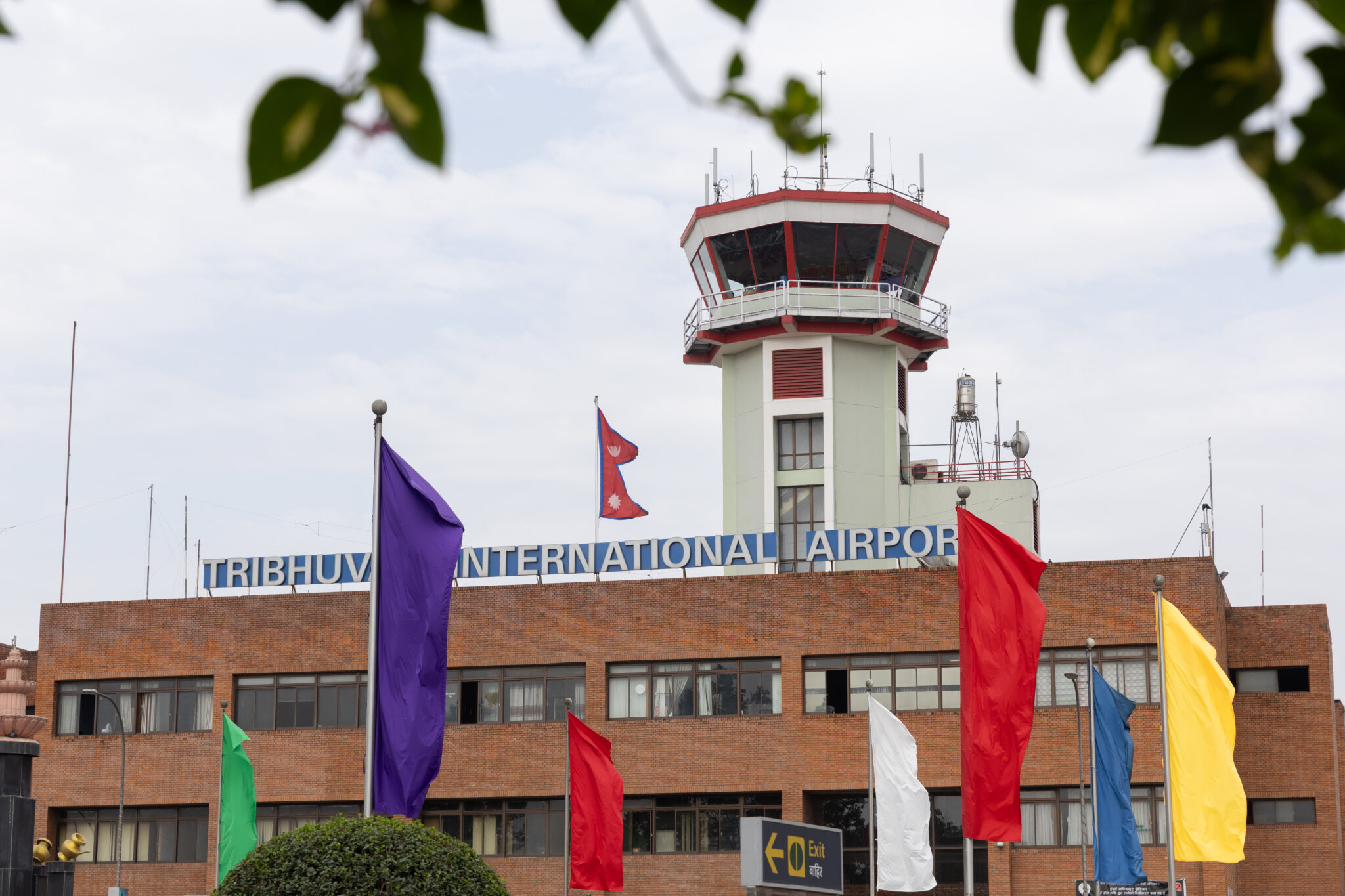
Tribhuvan International Airport. Photo: Bikram Rai
The International Civil Aviation Organization made repeated recommendations after 1992 to improve navigational aids and approach procedures at Kathmandu. Tribhuvan International Airport has since seen upgrades to its approach systems, and the airport now has an instrument landing system on runway 02.
However, the broader problem of limited radar coverage and aging navigation infrastructure at remote Nepali airports outside Kathmandu persisted well into the 2010s and beyond, contributing to crashes on routes like Pokhara-Jomsom, where the level of navigational support available to crews remained far below what modern aviation standards recommend.
What does the Yeti Airlines/Tara Air safety record tell us about deeper problems in Nepali aviation regulation?
Between 2004 and 2023, Yeti Airlines and its subsidiary Tara Air, between them, experienced at least seven fatal accidents. Tara Air alone had deadly crashes in 2010, 2016, and 2022, and the parent company had the Pokhara catastrophe in 2023.
Each investigation found its own specific cause: a crew descending unwisely into terrain in 2010, repeated entries into cloud during a visual flight in 2016, pressure to fly in marginal weather with a TAWS system inhibited in 2022, and a catastrophic lever confusion during approach in 2023.
What ties them together is a pattern of inadequate training for the specific demands of mountain routes, poor cockpit discipline, insufficient oversight from the regulator, and a commercial environment where the pressure to keep aircraft moving could override good safety judgement.
The Pokhara crash of 2023 also exposed a failure at the regulatory level: the Civil Aviation Authority of Nepal had approved operations at the new Pokhara International Airport before its instrument landing system had been certified, which meant aircraft were landing visually at a brand new airport with no specific approach procedures approved for all its runways. The final investigation report criticized both the airline and the regulator.
Aviation experts noted that many of the safety recommendations made after earlier crashes had still not been implemented. Globally, aviation systems improve through rigorous action on investigation findings. In Nepal, the gap between recommendation and implementation has, in too many cases, cost lives.
What was the Tara Air crash of December 2010 and how did it fit the broader pattern?
On December 15, 2010, a Tara Air DHC-6-300 Twin Otter crashed en route from Khotang’s Lamidanda to Kathmandu, going down in the Okhaldhunga area with 22 people aboard. All 22 were killed, including three crew members.
The investigation found that the crew made the decision to descend without properly accounting for the terrain below them, a judgment failure that the report characterized as an unwise decision taken without sufficient regard for the harsh mountain topography along that route.
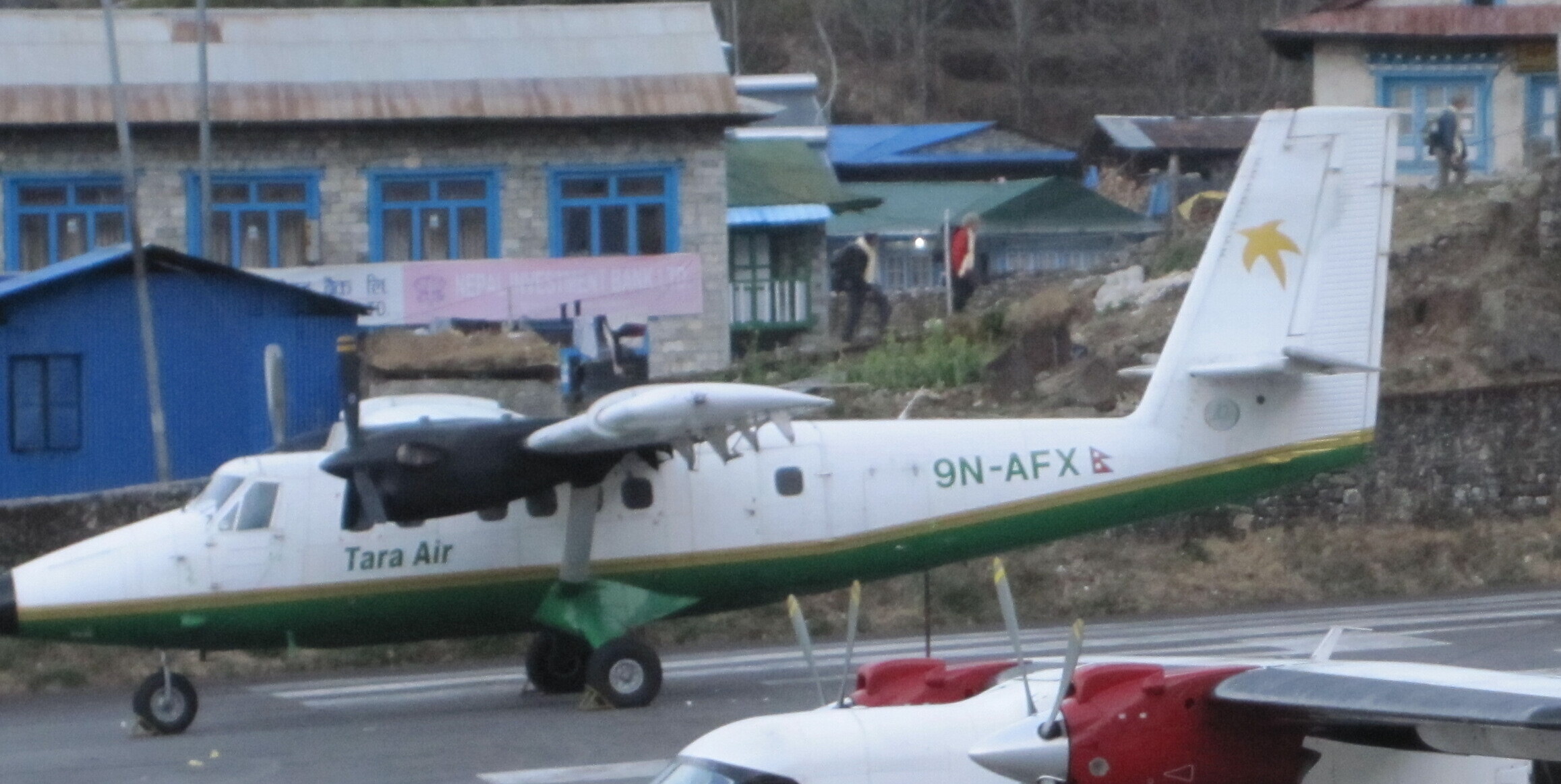
9N-AFX, the aircraft involved in the accident, seen in April 2010
This accident sits within a very specific pattern in Nepali aviation: crews flying routes they know well, sometimes too well, where familiarity breeds a form of overconfidence that leads them to continue when caution should make them stop.
The Pokhara-Jomsom-Mustang corridor and the approaches from Kathmandu to mountain airstrips like Lukla have claimed multiple aircraft in this way. Experienced crews with many hours on these routes have, more than once, proceeded into deteriorating conditions in the belief that they knew the terrain well enough to manage. The terrain disagreed.
The 2010 Tara crash was an early marker in what would become a grim sequence of deadly accidents on and near that same airline in the years that followed, pointing toward systemic training and safety culture problems that no individual crash could fully expose on its own.
Is it accurate to say Nepal’s aviation disasters have been caused mainly by weather, or is human error a bigger factor?
Weather is frequently cited as a triggering condition in Nepali aviation accidents, but a thorough reading of the investigation reports tells a more complicated story where human error is nearly always at the center. The 1992 PIA crash happened in overcast but not extraordinary conditions. The crew descended too early because of a navigation error, not because the weather itself was impossible to manage.
The Thai Airways crash of the same year involved monsoon clouds, but the accident chain was driven by miscommunication between the captain and an inexperienced controller and the captain’s own decision-making about how to conduct the missed approach.
The Buddha Air crash of 2011 involved poor visibility, but pilot fatigue was the driver. The US-Bangla crash of 2018 happened in conditions that other aircraft handled without incident that same day; the problem was pilot disorientation rooted in mental stress.
The Yeti Airlines Pokhara crash of 2023 took place in clear weather. Weather in Nepal is genuinely extreme and unpredictable, and it regularly creates the conditions in which errors become fatal.
But investigation after investigation has found that crews and systems could and should have managed those weather conditions and that the accidents resulted from failures of training, procedure, equipment, oversight, and judgment. Weather is, in most of these cases, the stage on which human failure plays out, not the villain in itself.