Kathmandu
Wednesday, July 22, 2026





Driven by education, ambition, and the pull of opportunity, Nepalis have quietly become one of the most consequential immigrant communities in America, sending home over a billion dollars a year while navigating a rapidly shifting immigration landscape under the most hostile political climate in decades

KATHMANDU: Nepal is a landlocked country roughly the size of Arkansas, sandwiched between India and China, with no seaport, limited heavy industry, and a political history defined by upheaval.
In the span of a single generation, it went from an absolute monarchy through a decade-long Maoist insurgency that killed nearly 17,000 people, and eventually into a fragile federal democratic republic that continues to struggle with corruption, instability, and a chronic inability to create enough jobs for its educated young population. What Nepal has never lacked is people with ambition. And increasingly, those people are heading to America.
The Nepali community in the United States has transformed over the past two decades from a small, refugee-anchored population into one of the fastest-growing South Asian diaspora groups in the country. They are students, nurses, software engineers, restaurant owners, academics, and politicians. They are raising American-born children, building temples, organizing politically, and sending money home at rates that dwarf what any Nepali worker in Qatar or Malaysia typically manages.
Their story is one of extraordinary determination meeting an immigration system that has become, under the current political climate, increasingly unwelcoming. Understanding who they are, where they came from, and what they face today requires stepping back and looking at the full picture.
How many Nepalis currently live in the United States, and where are they concentrated?
The honest answer is that no single number commands universal agreement, and the variation reflects genuine methodological differences rather than sloppy data. The most widely cited figure comes from a landmark December 2024 report by Nepal’s Institute for Integrated Development Studies, which estimated the Nepali diaspora population in the US at somewhere between 185,000 and 215,000 people, drawing on 2023 projections built on the 2020 US Census.
The 2020 Census itself counted roughly 208,000. Wikipedia’s diaspora tracking, which uses a broader definition that includes second-generation community members, puts the number closer to 264,000.
What matters more than the precise figure is the direction of travel. The community has grown at a pace that consistently surprises outside observers. More than two-thirds of all Nepalis currently in the US arrived after 2010, meaning this is an overwhelmingly recent migration wave, still in the process of establishing itself, still figuring out where it fits in the American social landscape.
Geographically, the community is scattered but concentrated in particular corridors. Texas, particularly the Dallas-Fort Worth area, has become the unlikely capital of Nepali America, combining affordable housing, a strong job market, and a critical mass of established community members that draws new arrivals.
Virginia, Maryland, California, New York, Ohio, Pennsylvania, Massachusetts, and Colorado all have substantial populations. At the city level, Richmond, Baltimore, the San Francisco Bay Area, New York City, Pittsburgh, Akron, Atlanta, and Chicago all have recognizable Nepali neighborhoods, temples, and community institutions.
Why do Nepalis choose America over other destinations?
This is worth examining carefully because the obvious answer, money, is only part of the story. The majority of Nepalis who go abroad for work go to Gulf countries like Qatar, Saudi Arabia, and the UAE, or to Malaysia. Those destinations are cheaper to reach, faster to access, and require far fewer qualifications. Yet they also offer lower wages, harsher working conditions, and virtually no path to permanent residency.
America is harder to get to in every sense. The visa process is demanding, the upfront cost of a university education is enormous, and the immigration system is a labyrinth. But for the Nepalis who choose this path, the calculation is long-term. A recent major study found that better educational opportunities drove the decision for nearly six in ten Nepali migrants to the US.
Career advancement mattered to four in ten, and a better quality of life was a factor for more than a third. Economic considerations, including the simple absence of decent jobs in Nepal, drove roughly a quarter, and Nepal’s persistently chaotic political environment was a deciding factor for another quarter.
These motivations are interconnected. Nepal has produced a generation of educated young people for whom the domestic economy offers limited prospects. The country has run through more than two dozen governments since 1990.
Governance is fragile, corruption is pervasive, and the meritocratic promise of education routinely goes unfulfilled at home. America, for all its complications, offers a system where hard work and credentials actually tend to produce results. For people who have invested years in their education, that reliability is itself a form of wealth.
What is the socioeconomic profile of Nepali Americans?
The community defies easy categorization because it contains real economic diversity. At one end are refugee families, primarily Nepali-speaking Bhutanese, who were resettled through federal programs in cities like Akron, Pittsburgh, Columbus, and Burlington, and who entered the American workforce through whatever was immediately available: caregiving, food processing, hotels, and cleaning services.
At the other end are H-1B visa holders working as software engineers in Silicon Valley, doctors in major hospital systems, and finance professionals in New York.
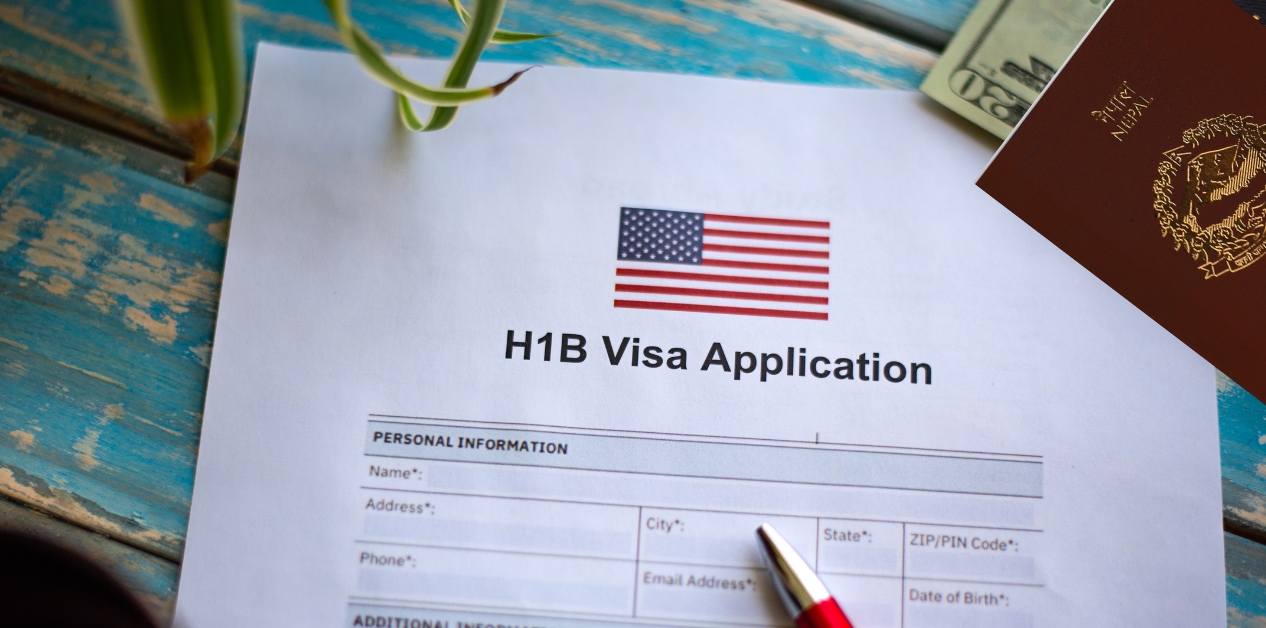
The average age at which Nepalis arrived in the US has been around 24, meaning the community came largely during its most productive working years. The post-2010 wave skews heavily toward students and skilled workers, and this has pushed the community’s educational and income profile upward over time. Among those who came through the student visa pipeline and stayed, professional employment in technology, healthcare, engineering, and academia is common.
That said, the community also contains a substantial working class. Small business ownership, particularly convenience stores, Nepali and Indian restaurants, taxi and rideshare driving, and travel agencies, is a meaningful part of the economic landscape.
And a significant number of Nepalis work in jobs well below their qualification level, either because their credentials were not recognized, their English was a barrier initially, or because they arrived without a clear professional pathway and took what they could get.
The economic divide within the community is growing. A Nepali engineer on an H-1B in Texas lives an entirely different life from a Nepali refugee working a night shift in a warehouse in Ohio. Both are Nepali American. Their experiences of the country, and of their own community, have very little overlap.
How much money do Nepalis in the United States send home, and what does that money mean for Nepal?
The remittance story is where the Nepali American community’s economic importance becomes unmistakable. In 2023, Nepal received roughly 11 billion dollars in remittances from its diaspora worldwide, a figure that amounted to about 26.6 percent of the entire national economy. That share exceeds foreign aid and foreign direct investment combined. Remittances are not a supplement to Nepal’s economy. They are its primary engine.
The United States accounts for roughly 1.28 billion dollars of that annual total, a striking figure given that far more Nepalis work in the Gulf. The explanation is wages. A Nepali professional in the US earns dramatically more than a Nepali laborer in Qatar, and the average annual remittance per person from the US, at around 8,600 dollars, significantly outpaces what Nepalis in any other destination country typically send back. Each American-based Nepali, on average, sends nearly three times what a Gulf-based Nepali worker sends.
This money pays for school fees, hospital visits, home construction, wedding expenses, and in many families, the basic cost of daily life for parents and siblings who have no other income. Nearly six in ten Nepali Americans send money home regularly. For Nepal’s economy, the continuation of that flow is not optional. It is existential. When US immigration policy threatens the legal status of Nepali workers in America, the consequences do not stay in America. They reverberate directly into rural households across 77 districts of Nepal.
What types of visas do Nepalis typically use to come to the United States?
The pathways are multiple, and each carries its own logic, limitations, and vulnerabilities.
The F-1 student visa is currently the most common entry route for Nepalis. It allows enrollment in accredited American universities, permits limited on-campus work, and opens the door to post-graduation employment through the Optional Practical Training program.
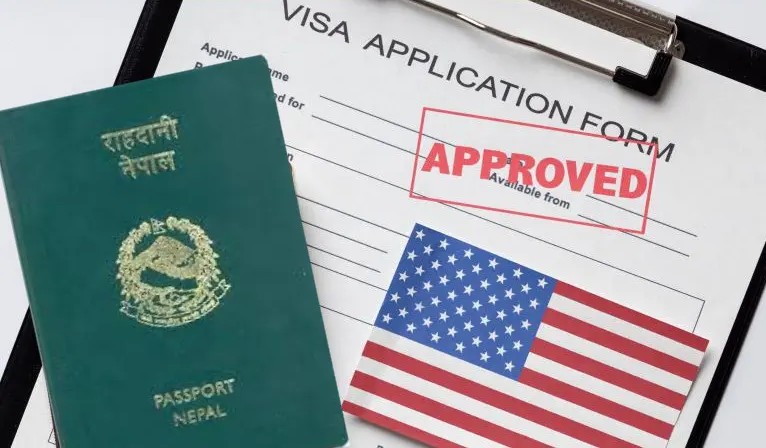
For STEM graduates, OPT can be extended to three years, creating a window to transition to longer-term work status.
The H-1B is the primary skilled worker visa, available to employer-sponsored professionals in specialty occupations. It is awarded through an annual lottery and has become intensely competitive. Nepali technology workers, doctors, engineers, and academics rely on this pathway, and the uncertainty of the lottery creates chronic anxiety even for highly qualified candidates with firm job offers.
The Diversity Visa lottery, universally known as the green card lottery, has historically been one of the most significant pathways for Nepalis. The program allocates 55,000 immigrant visas annually to nationals from countries with low immigration rates to the US.
Nepal has consistently ranked among the top participants globally. Between 1995 and 2024, over 56,000 Nepalis received green cards through this program alone, accounting for more than a quarter of all Nepali green card recipients in the country.
Temporary Protected Status was a humanitarian designation extended to Nepalis following the 2015 earthquake, providing protection from deportation for those already in the US. That designation has now been terminated. Family-based immigration, refugee resettlement for Bhutanese Nepalis, and tourist visas round out the major categories, though the tourist visa route has become an increasingly contentious one as suspicions about overstaying grow.
What has happened to the Diversity Visa lottery for Nepalis under the Trump administration?
The DV lottery has gone from being a lifeline to a source of acute distress for thousands of Nepali families in the span of a few months. In December 2025, the Department of Homeland Security suspended the entire diversity visa issuance process following a high-profile shooting at a university, where the suspect had entered the country on a diversity visa. Then-DHS Secretary Kristi Noem ordered the pause at President Trump’s direction, and the freeze has remained in place since.
Nepal had nearly 4,000 DV-2026 selectees. These are people who entered the lottery, were randomly chosen among millions of applicants, gathered their documents, paid their fees, and sat through consular interviews. They completed the process in good faith. They are now in indefinite limbo. Interviews and document submissions continue, but no actual visas are being printed or stamped. The fiscal year deadline of September 30, 2026 is approaching, and if the freeze holds until then, those visa numbers simply expire. There is no provision for rollover or compensation.
Immigrants from 72 countries, including Nepalis among them, filed a federal lawsuit in early 2026 demanding that processing resume before the deadline. The case names President Trump, then-DHS Secretary Noem, Secretary of State Rubio, and other senior officials. Courts have mandated processing in similar historical cases, but the outcome remains uncertain. For Nepal’s lottery winners, the clock is running.
How bad has the F-1 student visa refusal rate become for Nepali applicants?
The numbers are alarming. In fiscal year 2025, the US consulate in Kathmandu rejected 81 percent of Nepali F-1 student visa applications, up sharply from 59 percent the year before. To put that plainly: eight out of ten young Nepalis who applied for a student visa to study in America were turned away. Nepal now has one of the highest student visa refusal rates in all of South Asia, which itself has some of the highest rates in the world.
The paradox is that American universities were simultaneously experiencing record enrollment from Nepal. Nepal was the sixth fastest-growing source country for US higher education, with a 48 percent increase in Nepali student enrollment in 2024-25. Universities were recruiting actively, spots were being filled, tuition dollars were flowing. And yet the consulate was turning away the majority of aspiring applicants.
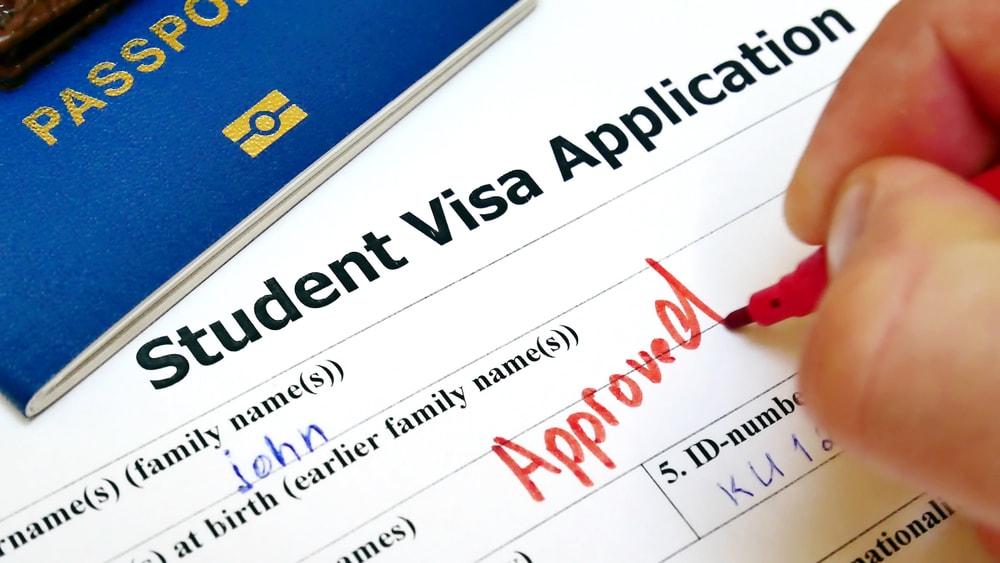
The legal basis for most rejections is a provision in US immigration law that presumes every visa applicant intends to stay permanently in the United States unless they can prove otherwise. For Nepali applicants, demonstrating strong enough “ties” to Nepal to convince a consular officer they will return is structurally difficult.
Nepal has limited formal employment, high graduate unemployment, and few assets or institutional commitments that a 22-year-old can plausibly point to as reasons for coming home. The system essentially asks young people to prove they would willingly return to a country they are trying to leave precisely because it lacks opportunities. The logic is circular, and the consequences are landing most heavily on those with the least resources.
What is the current state of deportations of Nepali nationals from the United States?
The pace of deportations has accelerated dramatically since January 2025. In the entire four-year period from 2021 to 2024, a total of 140 Nepalis were deported from the US. In the first ten months of Trump’s second term alone, that figure reached 306, with May 2025 recording the single highest monthly total. An estimated 3,500 Nepalis remain on ICE’s active deportation list.
The people being deported are not a monolithic group. Some entered without documentation. Some arrived legally on visas that expired years ago and built lives in the meantime. Some had received Temporary Protected Status after the 2015 earthquake and had been living and working legally for a decade before that protection was stripped away.
Some have American-born children who are US citizens. Several deportation flights have carried individuals with removal orders they did not fully understand, in some cases because they had navigated immigration court without legal representation.
The community response has been fear, and not just among those directly at risk. People with perfectly valid legal status are reporting anxiety, avoiding certain public spaces, and reaching out to immigration lawyers in large numbers. The fear has a chilling effect on civic participation, on reporting crime to police, and on community organizing. A community that was beginning to find its political voice is now, in many cities, going quiet.
What happened to Temporary Protected Status for Nepali nationals, and what does its termination mean in practice?
TPS was extended to Nepali nationals in the aftermath of the April 2015 earthquake, which killed nearly 9,000 people, injured hundreds of thousands more, and caused catastrophic damage to housing and infrastructure across the country. The humanitarian logic was straightforward: forcing people to return to a disaster zone served no one. TPS allowed its holders to live and work legally in the US while conditions in Nepal were assessed.
For thousands of Nepalis, TPS renewal became a long-term way of life. They raised children here, started small businesses, embedded themselves in communities, and paid taxes. The US government periodically renewed the designation as conditions in Nepal, while improved, were still deemed insufficient for safe mass return. Many TPS holders had no other immigration status to fall back on. TPS was their entire legal foundation.
The Trump administration terminated the Nepal TPS designation, with the protection officially expiring on August 5, 2025. An estimated 8,000 Nepalis had been living under TPS. Of those, around 2,000 had existing deportation orders that TPS had been holding at bay.
With the designation gone, those individuals became immediately removable. Another 1,500 Nepalis without TPS but with older removal orders are also now at heightened risk. The legal safety net that had allowed thousands of families to build stable lives was pulled away with a Federal Register notice.
What forms of racism and discrimination do Nepali Americans encounter in daily life?
Nepali Americans occupy an unusual position in American racial politics. They are classified broadly as Asian or South Asian, fitting imperfectly into a category that is itself poorly understood by most Americans. They are distinct enough from Indian, Chinese, or Korean Americans that mainstream American culture has almost no existing framework for them.
That invisibility can take many forms, from being assumed to be Indian or Tibetan, to being spoken to slowly and loudly because of an assumption that English must be a struggle, to more serious forms of workplace marginalization.
Research published in 2024 found that Nepali immigrants have experienced what researchers described as taboos at work, coming from American colleagues, supervisors, and senior employees. Women in the community face compounded discrimination, with studies finding that anti-Nepali bias in workplaces tends to be more pronounced toward women than toward men.
As part of the broader South Asian immigrant community, Nepalis also experience the racial dynamics that fall on anyone who is visibly brown in post-September 11 America. The conflation of brown skin with terrorism, with foreignness, with not belonging, is a pattern that South Asian advocacy groups have documented extensively.
For Nepali Americans who are Muslim, there is an additional layer of Islamophobia. For those who wear traditional clothing or observably practice Hinduism or Buddhism, there is othering of a different kind. And in the current political climate, where anti-immigrant rhetoric has moved from the fringe to the executive branch, the ambient hostility has intensified.
Does caste discrimination from Nepal persist within the American community?
It does, and it is one of the more painful internal divisions within the Nepali American community. Nepal’s caste system is ancient and deeply embedded in social practice, even though it was formally declared unconstitutional in 1951. Legislation did not eliminate the attitudes, and those attitudes traveled to America with the people who held them.
Research conducted in the San Francisco Bay Area found documented evidence of caste-based discrimination among Nepalis living there. Dalit Nepalis, those from the communities historically relegated to the bottom of the caste hierarchy, reported that the discrimination they experienced in Nepal did not disappear when they crossed an ocean. They encountered it in the US wherever a significant Nepali community existed.
Community gatherings, temples, social networks, and the informal job referral chains that are so crucial for new immigrants can all reproduce caste hierarchies. A Dalit Nepali may be excluded from community events, passed over for a job lead, or treated with condescension by higher-caste neighbors, replicating dynamics they hoped to leave behind.
This is an evolving conversation within the community. Younger, American-educated Nepali Americans are increasingly vocal in naming and challenging caste discrimination. Advocacy organizations have begun explicitly addressing it. But the social reality is that for many Dalit Nepalis in America, the community that should be their primary source of support is also a source of exclusion.
Who are some of the most notable Nepali Americans?
The community has produced standout figures across a wide range of fields.
Prabal Gurung is probably the most internationally recognized. Born to Nepali parents in Singapore and raised in Kathmandu, he built a fashion empire in New York City after training at Parsons School of Design. He launched his label in 2009 and has dressed Michelle Obama, Kate Middleton, and a roster of global celebrities. He serves as vice chairman of the Council of Fashion Designers of America. His memoir came out in May 2025. He has used his prominence consistently to advocate for immigrants, for LGBTQ rights, and for the Nepali community.
Parag Pathak is a professor of economics at MIT and one of the foremost researchers on market design in the country. His work on school choice and student assignment mechanisms has shaped public education policy in Boston, New York, and other major American cities.
Harry Bhandari became the first Nepali American elected to a state legislature in the US when he took office as a Maryland House of Delegates member in 2019. His milestone opened a conversation about political representation that the community continues to build on.
Kiran Chhetry brought a Nepali face to American primetime television, working as an anchor and correspondent at Fox News and CNN and reaching audiences of millions.
Lujendra Ojha, while a graduate student at the University of Arizona, was part of the research team that produced some of the most compelling evidence for the existence of liquid water on Mars, one of the more remarkable scientific contributions from any immigrant community.
What kinds of work do most Nepali Americans actually do?
The occupational landscape of the community reflects its layered history. The earlier arrivals, particularly those who came through the DV lottery in the late 1990s and early 2000s, and the Bhutanese refugee communities resettled through federal programs, entered the workforce through whatever was accessible.
Hotels, convenience stores, food service, home health aides, taxi and rideshare driving, and warehouse work were common first jobs and, for many, permanent careers. These sectors still employ a significant portion of the community.
The wave of arrivals after 2010, heavily weighted toward university students and skilled professionals, has carved out a different occupational profile. Information technology and software development employ a large number of Nepali Americans, particularly in hubs like Dallas, the Bay Area, Seattle, and New York.
Healthcare is another major sector: Nepali doctors, nurses, physical therapists, and medical researchers work across the country, often in underserved areas where healthcare systems actively recruit internationally trained professionals.
Academia has a meaningful Nepali presence, particularly in economics, engineering, public health, and the social sciences. Finance, accounting, and consulting employ growing numbers of younger Nepali professionals. And small business ownership remains a defining thread through the community’s economic identity, from the Nepali restaurant in a midwestern city to the travel agency serving the diaspora market, to the accountant who started a firm serving the community’s tax needs.
What are the main organizations and institutions serving the Nepali American community?
The community has built a dense network of civic organizations over the past three decades, ranging from informal cultural associations to professionally run advocacy groups.
The Non-Resident Nepali Association operates globally and has active US chapters in major cities. It is the closest thing the diaspora has to a formal representative body, maintaining ties with the Nepali government, organizing cultural events, and increasingly engaging in policy advocacy. The Federation of Nepalese Associations in North America brings together dozens of regional groups under a national umbrella.
At the local level, organizations are often organized around ethnicity, region of origin, or religion. Tamang, Gurung, Newari, Rai, Limbu, and Sherpa community associations all exist in cities with large enough populations. These groups serve as social anchors, employment networks, and cultural preservation institutions simultaneously.
Hindu temples have been established in the Washington DC suburbs, the Dallas area, Houston, New York, and other cities. They serve not just as religious spaces but as community centers where people gather for festivals, life events, and regular social contact.
Media has been an underappreciated force in community cohesion. Nepali-language radio shows, YouTube channels, Facebook groups with tens of thousands of members, and news websites that cover both Nepal and the diaspora keep the community connected across distance.
A Nepali in Dallas and one in Pittsburgh can share the same Facebook group, read the same online newspaper, and feel part of a coherent community despite never having met.
How does the proposed remittance tax affect Nepali Americans?
In May 2025, the US House of Representatives passed a bill by a single vote that would impose a 3.5 percent tax on remittances sent from the US to foreign countries by non-citizens. The tax would apply to green card holders, H-1B workers, students on OPT, TPS holders, and anyone else in the US on a non-citizen status. American citizens would be exempt entirely. At the time of writing, the bill has not yet passed the Senate.
The numbers are significant. The Nepali community in the US sends roughly 1.28 billion dollars home annually. A 3.5 percent tax on that flow would extract roughly 44 to 45 million dollars per year from those transfers. For an individual sending 500 dollars a month to support parents in Nepal, the tax adds about 210 dollars per year in additional cost. That is money that would otherwise have gone toward medicine, school fees, or food for a family back home.
The deeper concern is behavioral. Higher transaction costs push people toward informal transfer channels, the hawala networks and hand-delivery systems that exist outside the formal banking system. Those channels carry their own risks, including loss, fraud, and no paper trail.
The tax is framed as revenue generation, but its practical effect on poor and working-class immigrant families is to make their most important financial obligation more expensive, while leaving wealthier, naturalized citizens completely untouched.
How has the broader immigration crackdown under Trump affected daily life in Nepali American communities?
The crackdown has produced something that does not show up in deportation statistics but is perhaps more consequential: widespread, persistent fear among people who have done nothing wrong. When a government signals that it is actively seeking to remove immigrants, the entire community, including those with valid legal status, adjusts its behavior.
People with pending cases or uncertain status are avoiding government offices, hospitals where they fear their information might be shared, and community events where ICE enforcement has occurred elsewhere. Parents are researching their options, including whether to send children to Nepal temporarily. Small business owners are asking lawyers whether a routine traffic stop could trigger immigration consequences. None of these are irrational fears. They are rational responses to a hostile environment.
Within the first three months of Trump’s second term, over 500 Nepali immigrants were issued formal notices to appear in immigration court, initiating removal proceedings. Those notices landed on families who had in many cases been in the US for a decade or more.
The combination of TPS termination, DV lottery suspension, and accelerated deportation has created a compound crisis with no clear resolution in sight. Community leaders describe the current period as the most difficult the Nepali American community has faced since its formation.
Who are the Nepali-speaking Bhutanese refugees and how does their experience differ from other Nepali Americans?
The Lhotshampa, or Nepali-speaking people of Bhutan, are a distinct and often overlooked part of the larger Nepali American story. In the early 1990s, the Bhutanese government implemented discriminatory policies targeting its ethnic Nepali minority, stripping them of citizenship and forcing over 100,000 people from the country. Most ended up in refugee camps in southeastern Nepal, where they lived for years, in some cases decades, before being resettled in third countries.
The United States accepted the largest share of these refugees, and they settled in cities chosen by resettlement agencies: Akron, Columbus, Pittsburgh, Burlington, Denver, Salt Lake City, and others. Their experience of America differs fundamentally from that of economic migrants or students. They arrived through a government-managed program, received initial resettlement assistance, and faced much steeper initial barriers including limited English, limited formal education in some cases, and significant trauma from years of displacement.
The current enforcement environment has hit this community with particular severity. Green card holders and even legal permanent residents from this community have been detained by ICE, in some cases based on older criminal records or removal orders they did not fully understand.
The immigration system’s complexity is especially punishing for people who navigated it without lawyers, in a language not their own, after years of living in a refugee camp. The community has organized rapidly in response, with local leaders working with elected officials to demand answers and, in some cases, to push back against what they characterize as due process violations.
How do Nepali Americans maintain their cultural identity across generations?
Strongly, and with considerable creativity. Research consistently shows that Nepali Americans maintain their ethnic identity, cultural practices, and community ties at rates higher than many other immigrant groups. Assimilation is happening, but it is happening alongside retention rather than replacing it.
The major Hindu festivals, particularly Dashain and Tihar, are observed with genuine enthusiasm in cities with significant Nepali populations. Gatherings for these festivals can draw hundreds or thousands of people, with traditional rituals maintained across generations.
Food remains one of the most powerful cultural anchors: momos, dal bhat, gundruk, chatamari, and sel roti are all staples of Nepali American home cooking and increasingly available in restaurants. Nepali language schools have been established in several cities, with parents determined that their American-raised children should be able to communicate with grandparents in Nepal.
Social media has transformed cultural maintenance in ways that were impossible for earlier immigrant generations. Facebook groups for Nepalis in specific cities serve as real-time community bulletin boards, job markets, and social spaces. YouTube channels in Nepali attract millions of views, keeping diaspora communities plugged into cultural conversations happening in Kathmandu. Second-generation Nepali Americans navigate a dual identity with increasing sophistication, drawing on both their American upbringing and their family heritage without necessarily experiencing them as contradictory.
The question of identity is less fraught for many of them than it was for their parents, partly because they never had to choose between countries in the same existential way.
What are the specific visa and work authorization challenges facing Nepali graduates of American universities?
The path from student to long-term legal worker in America has become narrower and more precarious in a short period of time. The standard route involves completing a degree on an F-1 visa, then applying for Optional Practical Training to work in one’s field. STEM graduates get up to three years of OPT. During that window, the goal is to secure employer sponsorship for an H-1B visa, which is the primary route to longer-term work authorization.

Each step in this chain now carries significant uncertainty. The Trump administration has signaled its intent to restrict or eliminate OPT entirely, arguing that the program takes jobs from American workers. Legislation targeting OPT has been introduced in Congress, and proposed regulatory changes would sharply curtail the program. For a Nepali student who spent four years earning an engineering degree and 200,000 dollars in tuition, the prospect of losing the right to work in the US immediately after graduation represents a catastrophic return on investment.
The H-1B lottery is its own gauntlet. Demand for H-1B visas consistently runs at three to four times the annual cap, meaning qualified workers with firm job offers in hand regularly fail to be selected through the lottery for multiple consecutive years. During those years, they must survive on OPT extensions, which have their own restrictions, or find alternative visa categories.
For workers from countries with employer-based green card backlogs, the wait for permanent residency can stretch for decades. Nepali nationals do not face the same country-based backlog as Indian nationals, but the systemic uncertainty of the H-1B lottery creates multi-year limbo for many.
What does the future hold for the Nepali diaspora in America?
The community stands at a genuine crossroads, facing pressures from multiple directions simultaneously. The F-1 refusal rate is at its highest ever recorded. The DV lottery, which brought tens of thousands of Nepalis into the country over three decades, is currently frozen and faces an uncertain future. TPS has been terminated. Deportations are running at many times their historical pace. A remittance tax is moving through Congress. OPT is under legislative attack. The compound effect of these overlapping policy changes would, if they all hold, significantly reduce the flow of Nepalis into America and make it harder for those already here to stay.
Some in the community are already recalibrating. Canada, Australia, the United Kingdom, and European countries are increasingly being discussed as alternative destinations for Nepali students and professionals. The calculation has changed for some families who might have aimed exclusively at America a few years ago. Destination diversification is a real trend.
And yet the community that is already here is deepening its roots in ways that are hard to reverse. There are now tens of thousands of Nepali Americans who were born in this country, educated entirely within it, and have no other home in any meaningful sense. Their relationship to Nepal is real but mediated by generational distance. Their relationship to America is complete and unconditional. For them, the political battles over immigration policy are not abstract. They are fights over the fate of their parents, their neighbors, their community, and ultimately their own sense of belonging.
The Nepali government declared what it called the Decade of the Diaspora, recognizing that the community abroad is not just a source of remittances but a reservoir of skills, networks, and institutional knowledge that Nepal needs if it is ever going to break its cycle of dependency.
Whether America continues to be the destination that attracts the most ambitious of that generation, or whether a hostile policy environment pushes them elsewhere, will have consequences not just for Nepali Americans but for Nepal itself, for decades to come.