Kathmandu
Tuesday, June 16, 2026





Despite concerns in Beijing over Nepal’s shifting political landscape and rising Western engagement, China has assured continued cooperation during Foreign Minister Shisir Khanal’s meeting with his counterpart Wang Yi.
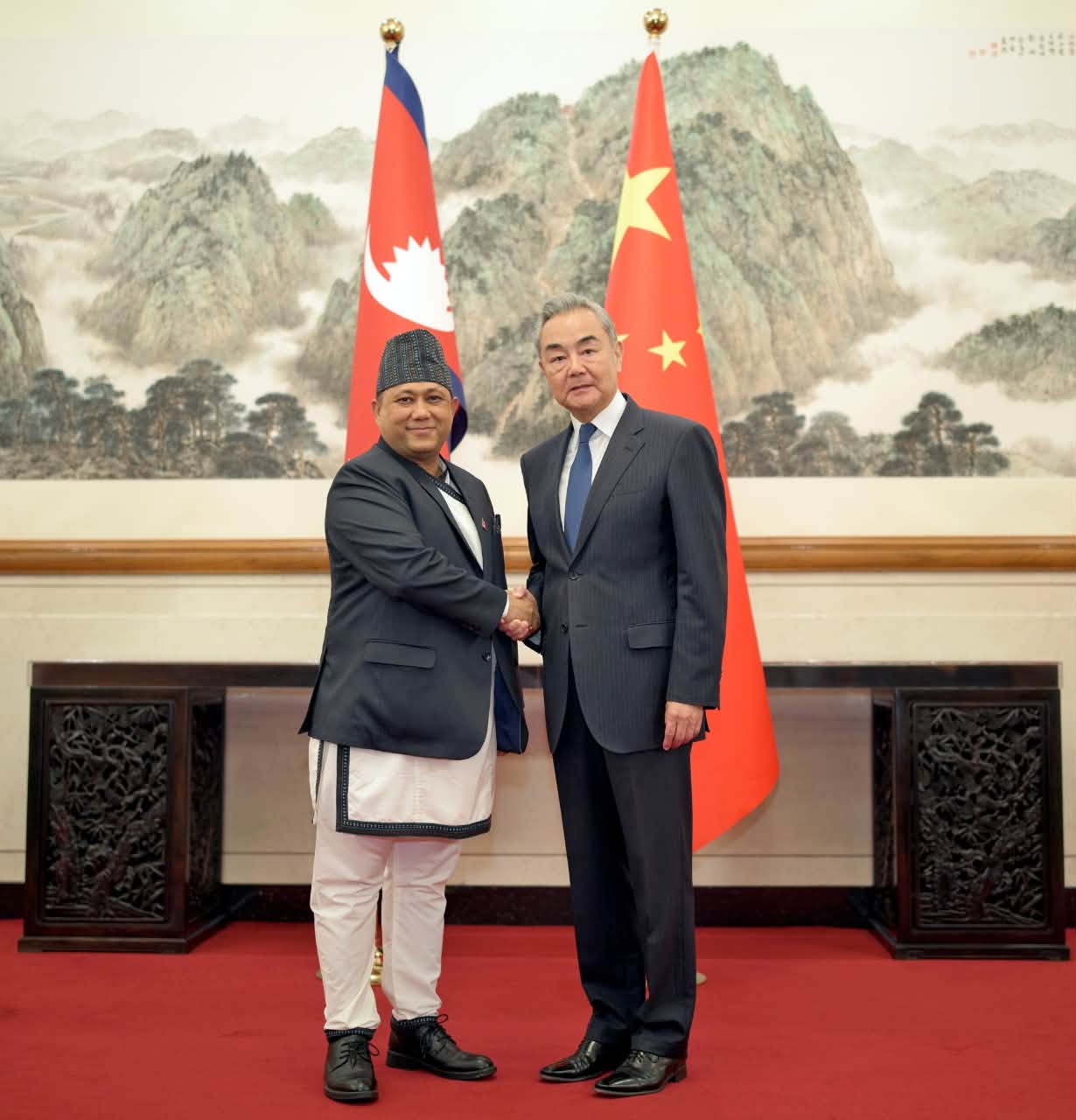
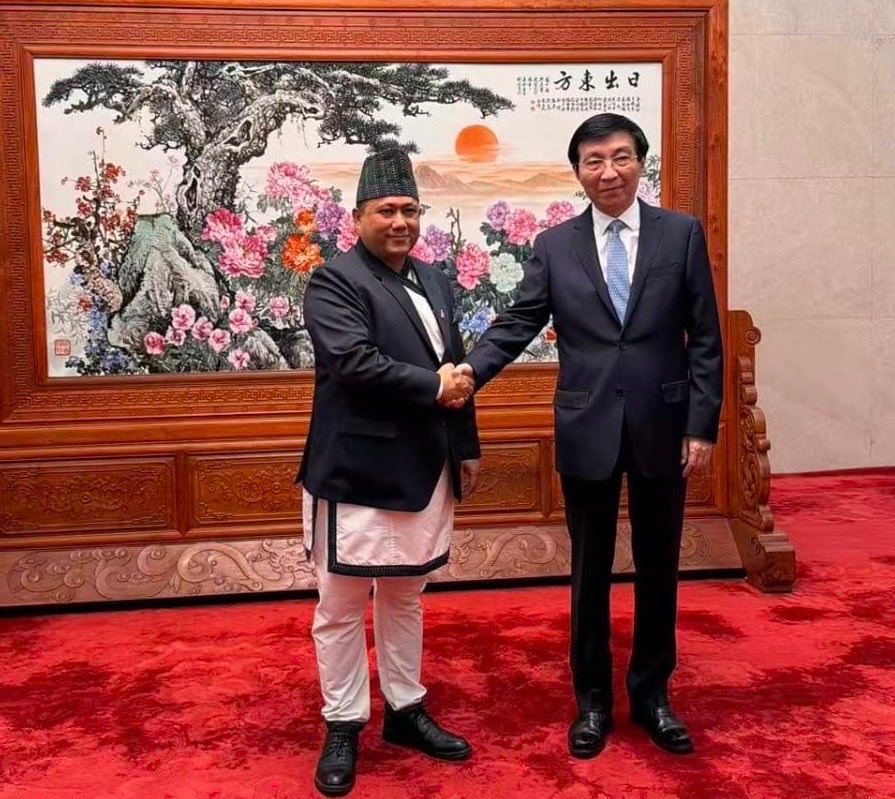
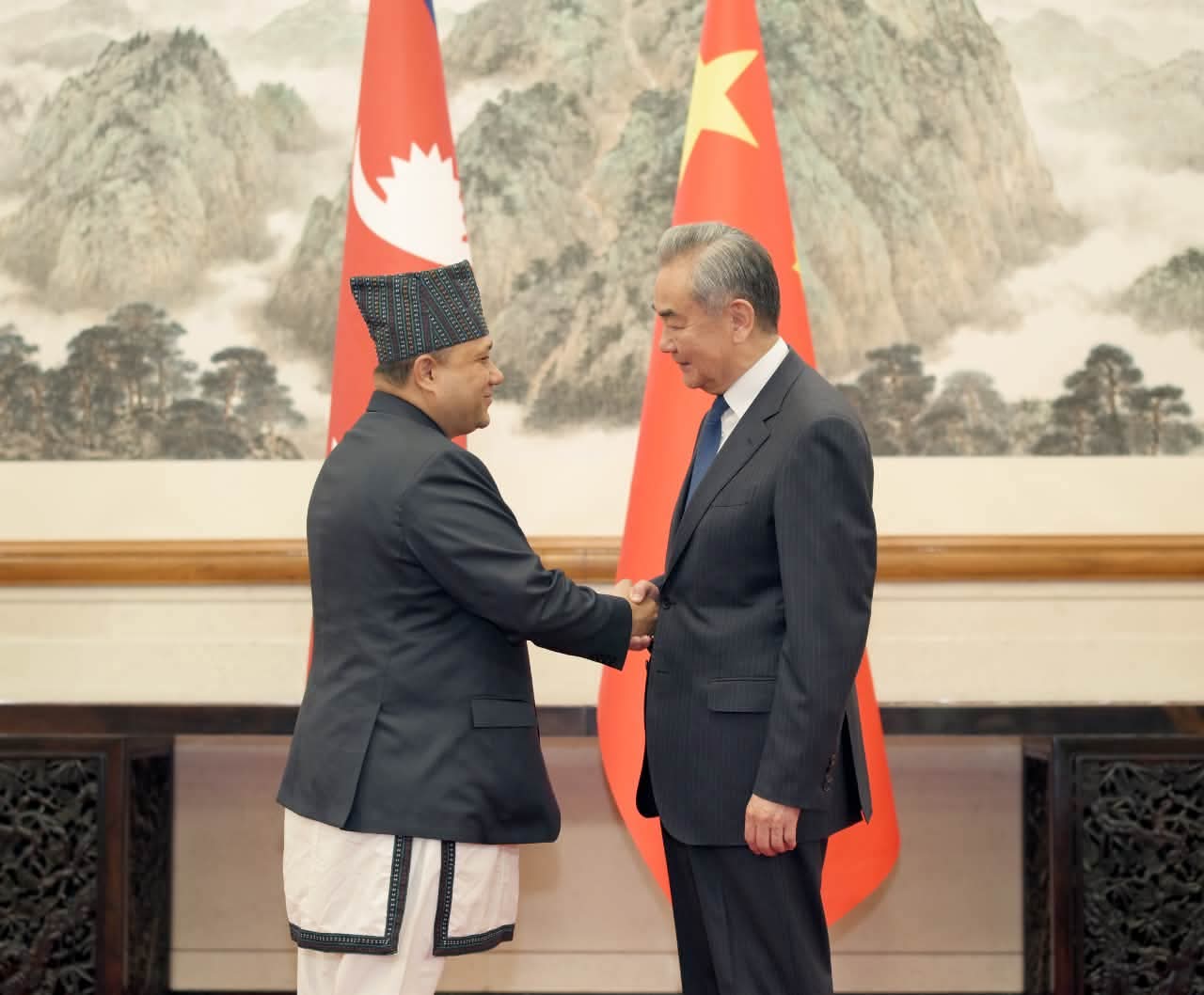
KATHMANDU: During his four-day visit to China, Foreign Minister Shisir Khanal held a meeting with his Chinese counterpart Wang Yi on the evening of June 15, 2026. The views expressed by Chinese Foreign Minister Wang during the meeting indicate that despite China’s suspicions toward Nepal’s new government, Beijing still desires cooperation.
Foreign Minister Wang relied on a Chinese proverb to express concern over the growing influence of Western countries in Nepal. According to the Chinese Ministry of Foreign Affairs, Minister Wang told his Nepali counterpart, “A close neighbor is more helpful than a distant relative.” The Chinese use this proverb to emphasize building good relations with neighboring nations. “China’s concerns regarding the expansion of Western influence in Nepal and the obstacles facing Chinese investments are quite evident,” says Tanka Karki, former Ambassador to China.
Following last year’s Gen Z protest, the parliamentary elections sidelined political parties that had been in power for a long time, bringing the Rastriya Swatantra Party – RSP to the center stage. Analysts frequently note that Beijing was startled by this shift, viewing those who reached power as Western-backed forces. The Chinese have not been entirely confident about the newly emerged RSP and Prime Minister Balendra Shah. Various questions were raised regarding the role of the ‘Tibetan Original Bloodline’ (TOB) during the protests that occurred in September 2025. Similarly, allegations have consistently been made that the RSP enjoys the backing of Western powers.
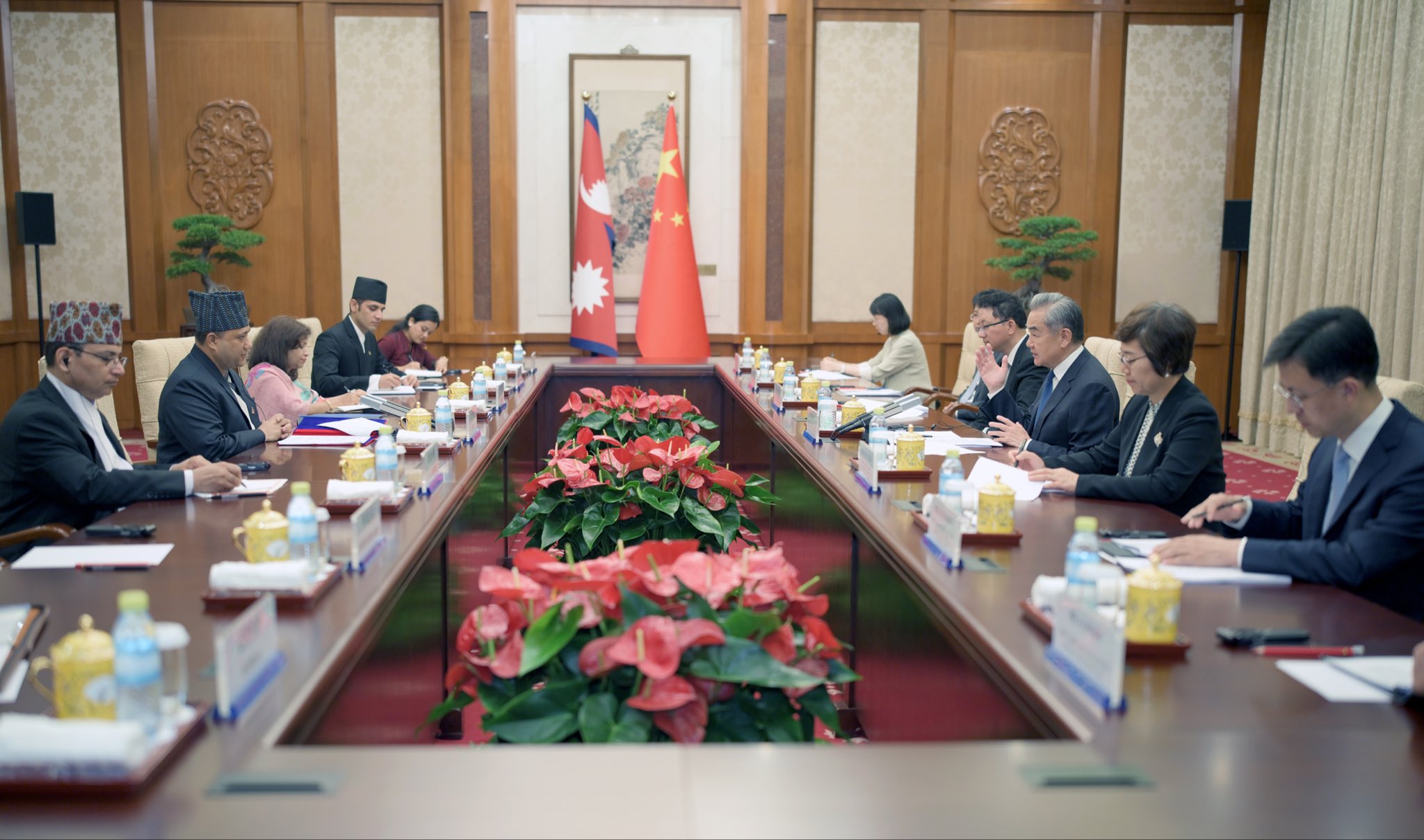
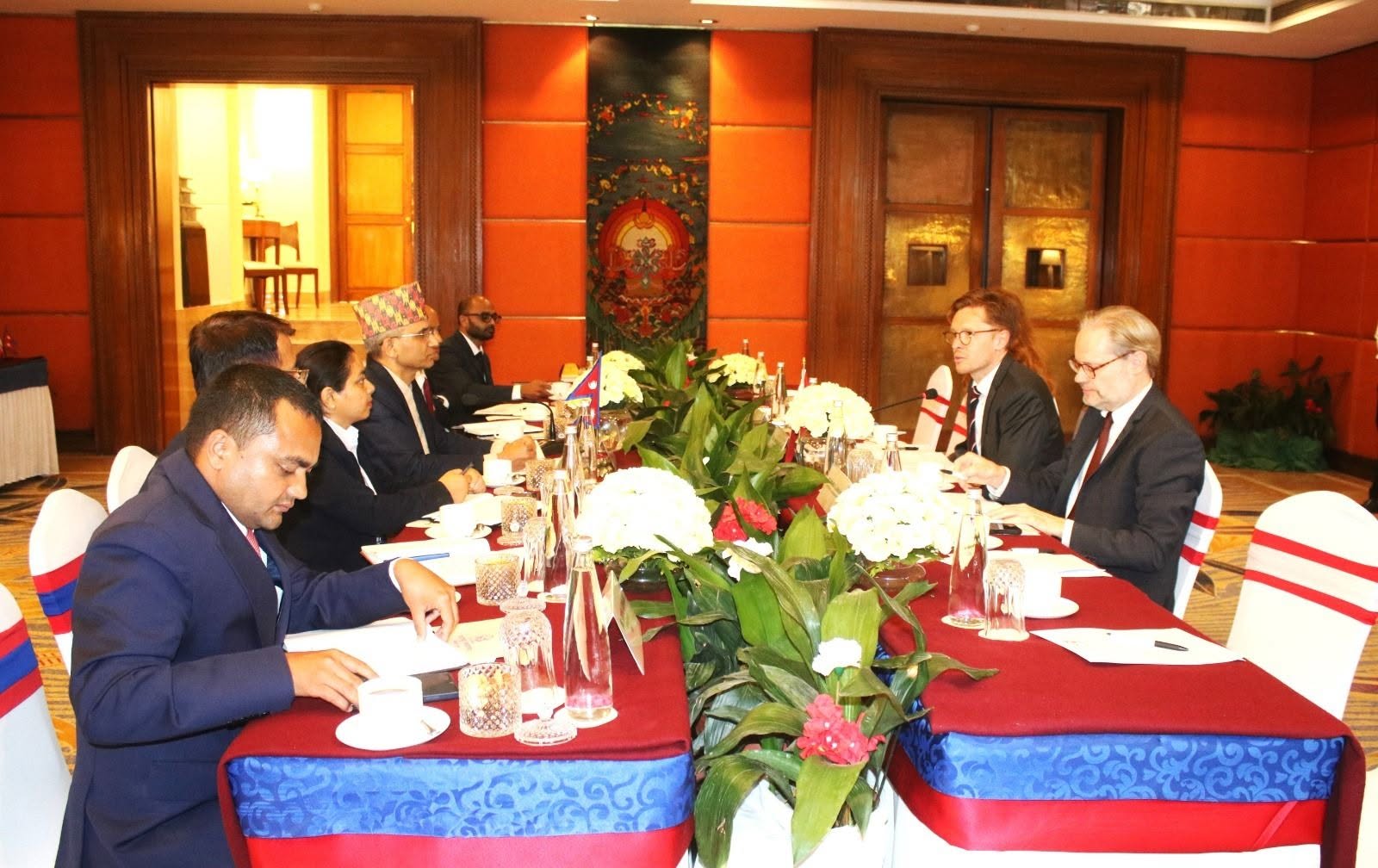
Delegation-level talks between Nepalese and Chinese officials in Beijing on June 15, 2026.
The Chinese have expressed concern over the enthusiasm shown by the Tibetan government toward the administration led by Sushila Karki, which was formed after the Gen Z protest, as well as the current government led by Balendra Shah following the electoral mandate. Both the Karki and Shah governments received congratulations from the Tibetan spiritual leader, the Dalai Lama, and Penpa Tsering, the head of the Tibetan government-in-exile. They themselves actively publicized these congratulations. Reports also emerged that during the formation of the interim electoral government, an attempt to appoint Tashi Lhamjom (Sherpa) from Humla as a minister was halted at the last minute after China objected, citing her involvement in Free Tibet activities.
Furthermore, reports suggest the Chinese side has been rattled by successive visits of senior US officials to Nepal following the formation of the new RSP-led government. Additionally, the organization ‘Hami Nepal’, led by Home Minister Sudhan Gurung, had collaborated with an exiled Tibetan student organization on various programs.
It is also said that potential cooperation between the US and Nepal in the fields of Information Technology and Artificial Intelligence (AI) has added to Beijing’s anxieties. The US Under Secretary for Public Diplomacy, Sarah B. Rogers, during her visit to Nepal, met with Minister for Information and Communications Bikram Timilsina on June 1, 2026, to propose cooperation on IT and telecommunications work. Prior to that, in the first week of May, the US Special Envoy for South and Central Asia, Sergio Gor, unveiled the ‘Alta X Gen 2’ cargo drone during a visit to the Everest Base Camp.
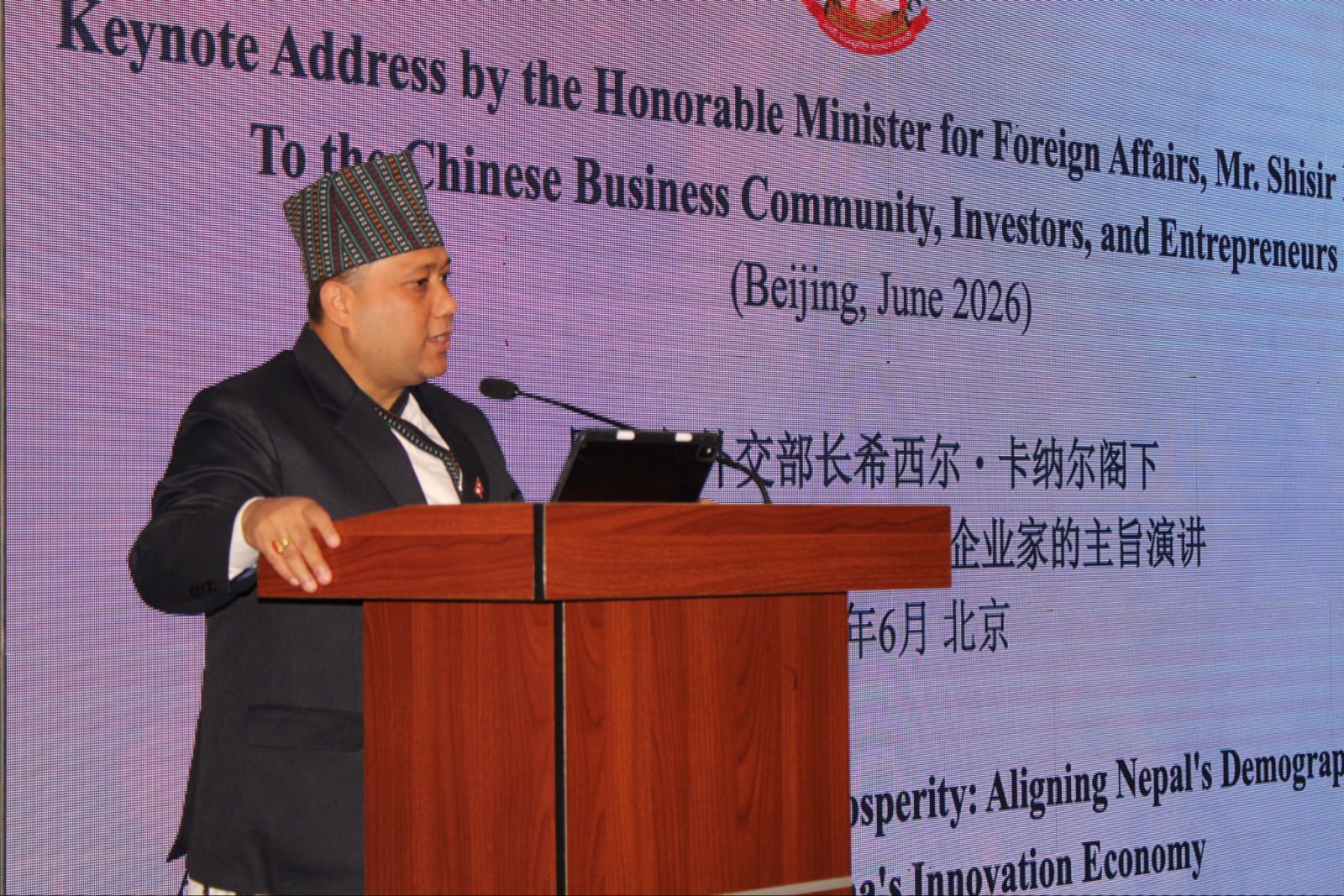
During his visit to China, Foreign Minister Khanal attempted to reassure Beijing by reiterating Nepal’s long-standing commitments, including the assurance that Nepali territory would not be allowed to be used for anti-China activities.
“Minister Khanal stated that issues concerning Taiwan and Tibet are internal matters of China,” reads a statement posted on the Chinese Ministry of Foreign Affairs website regarding the visit. “He clarified that Nepal stands firm on the One China Policy, supports China’s complete reunification, and will not allow any force to use Nepali land to cause harm to China.”
Foreign Minister Khanal clarified to the Chinese side that the new government has been adopting a people-centric and non-aligned foreign policy.
This is Foreign Minister Khanal’s first visit to China since the formation of the new government led by the RSP on March 27, 2026. Khanal arrived in Beijing on June 14, 2026, a week after his visit to India.
Saroj Gautam, a researcher in Nepal Studies at China’s Eastern University of Technology, notes that the Chinese look at practical implementation rather than just verbal commitments. “The Chinese place more trust in mature and experienced political figures,” he says. “In China, there is a tradition where political leadership emerges through a gradual process of promotion seasoned by extensive experience.”
During the meeting with Foreign Minister Khanal, Chinese Foreign Minister Wang stated that changes in Nepal’s internal governance would not hinder cooperation.
In last year’s House of Representatives elections, the RSP secured nearly a two-thirds majority. The older political parties that historically maintained ties with China suffered a severe defeat in the elections.
“Wang stated that since the establishment of diplomatic relations, no matter how the international situation or Nepal’s internal conditions changed, both countries have always adhered to the Five Principles of Peaceful Coexistence and maintained the sustainable development of bilateral relations,” the details provided by the Chinese Foreign Ministry mentioned.
Geopolitical analyst Trailokya Raj Aryal states that China’s policy toward Nepal has not changed, nor does it have any major strategic interests. “There has been no fundamental difference in the relationship between Nepal and China since 1955 AD up to the present,” he says. “They do not have any major strategic interest with Nepal. Their primary concern is that Nepal remains committed to the One China Policy. Aside from this, they have much bigger issues to deal with elsewhere than Nepal.”
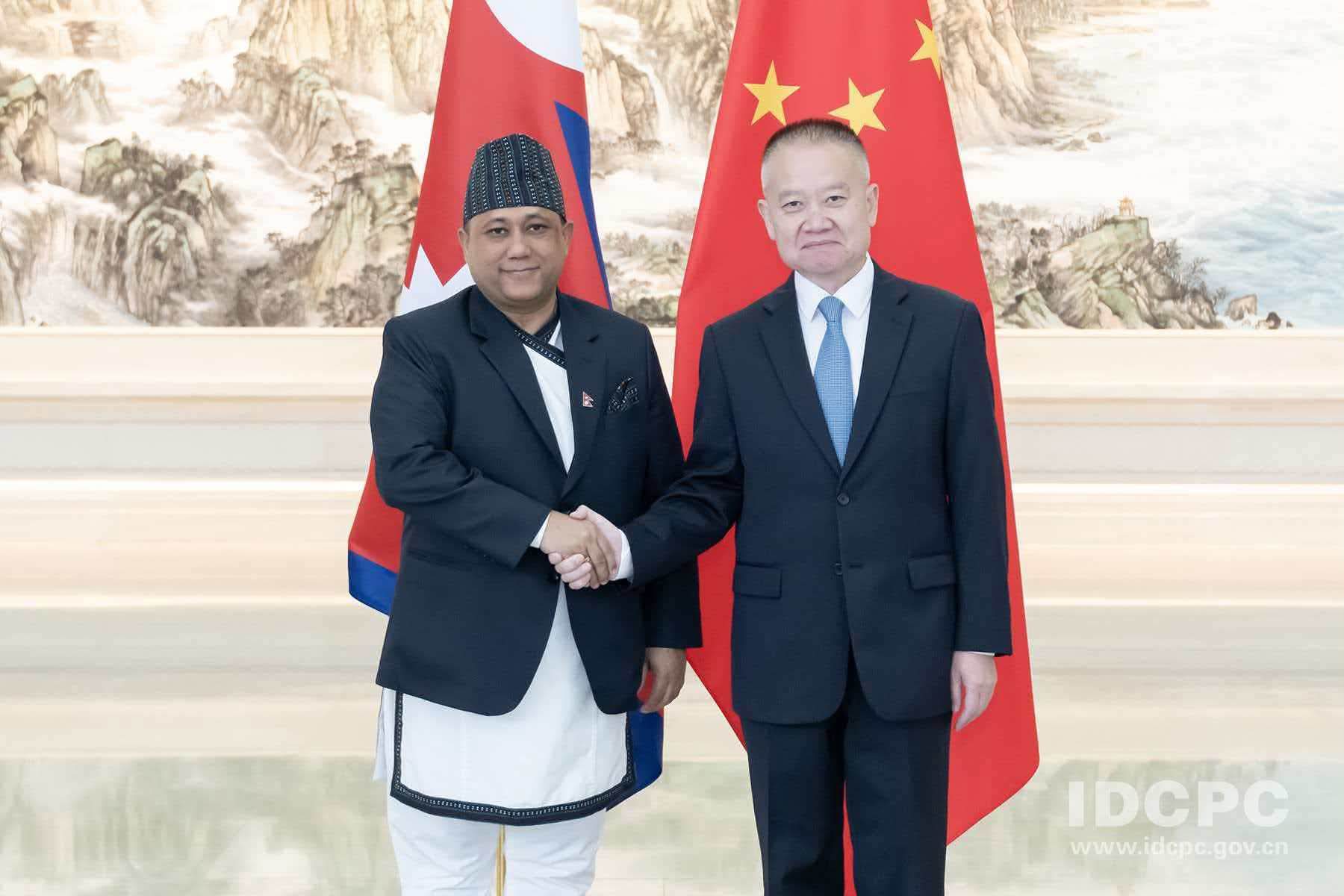
During the visit on Monday, Foreign Minister Khanal held a meeting with Liu Haixing, the head of the International Department of the Central Committee of the Communist Party of China (IDCPC).