Kathmandu
Thursday, June 18, 2026





Chinese Foreign Minister Wang Yi’s remark that ‘a good neighbor is better than a distant relative’ offered a rare glimpse into Beijing’s growing unease over America’s expanding engagement in Nepal
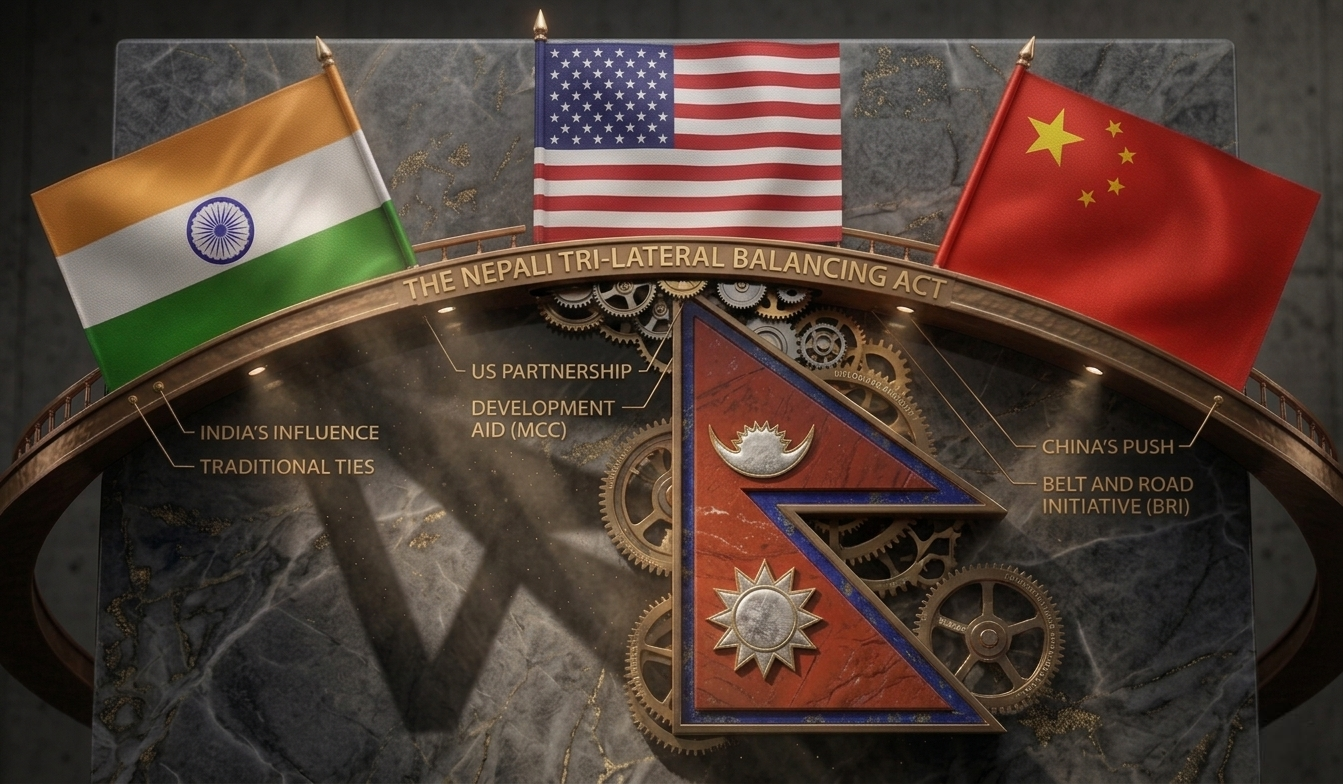
KATHMANDU: It is rare for China to frame neighbourhood relations in terms that hint at concern. Yet Chinese Foreign Minister Wang Yi’s remarks to Nepal’s Foreign Minister Shisir Khanal suggest a subtle but discernible tightening of Beijing’s attention toward Kathmandu.
Following his meeting with Nepal’s Foreign Minister Shisir Khanal, Chinese Foreign Minister Wang Yi signalled continuity in Beijing’s neighbourhood diplomacy while subtly underscoring China’s sensitivities over external influence in Nepal.
According to a statement issued by China’s Foreign Ministry, Wang quoted the saying, “A good neighbor is better than a distant relative,” adding that China would remain a “trustworthy neighbor and partner” in Nepal’s pursuit of development, prosperity and modernization.
The phrasing, while diplomatic, reflects a familiar strategic subtext: Beijing’s increasing attentiveness to Nepal’s evolving external engagements, particularly its expanding engagement with the United States.
China’s concern is not only symbolic. It is rooted in broader geopolitical calculations involving perceived strategic containment, growing U.S. diplomatic activity in South Asia, and the proximity of Nepal to the Tibetan Autonomous Region. From Beijing’s perspective, even limited American engagement in Nepal is viewed through the prism of regional security sensitivity and influence management along its southwestern frontier.
Nepal’s location between China and India already places it at the centre of competing regional interests. The gradual expansion of U.S. development assistance, diplomatic outreach, and institutional engagement has added a third layer to this strategic equation, complicating Beijing’s long-standing preference for a tightly managed neighbourhood environment.
At the same time, Wang reiterated China’s readiness to advance “high-quality Belt and Road cooperation” and support Nepal’s transformation from a landlocked state into a “land-linked” economy. He also reaffirmed that China’s Nepal policy is directed toward all Nepali people and remains a consistent priority in Beijing’s neighbourhood diplomacy.
Taken together, the remarks highlight a dual-track message: reassurance of long-term economic partnership, alongside quiet signalling that China is closely watching Nepal’s shifting external alignments.
Nepal’s China test
Foreign Minister Shisir Khanal’s four-day visit to China was about far more than diplomatic protocol. It was Beijing’s first substantive opportunity to assess Nepal’s new political order following the September 2025 Gen Z uprising and the rise of the Rastriya Swatantra Party-led government. For Kathmandu, it was a chance to reassure an increasingly anxious neighbor while preserving room to maneuver in an era of intensifying geopolitical competition.

Youth gathered in New Baneshwar during the Gen Z movement. Photo: Bikram Rai / Nepal News.
The clearest signal emerged from Khanal’s meeting with Chinese Foreign Minister Wang Yi. According to China’s official readout, Wang remarked that “distant relatives are not as useful as close neighbors.”
Diplomatic language is rarely accidental. The message was unmistakable. Although the United States was never mentioned by name, Wang’s reference reflected Beijing’s growing unease over expanding American engagement in Nepal. China increasingly views South Asia through the lens of strategic competition with Washington. In that context, Nepal is no longer merely a Himalayan neighbor; it is part of a wider geopolitical chessboard.
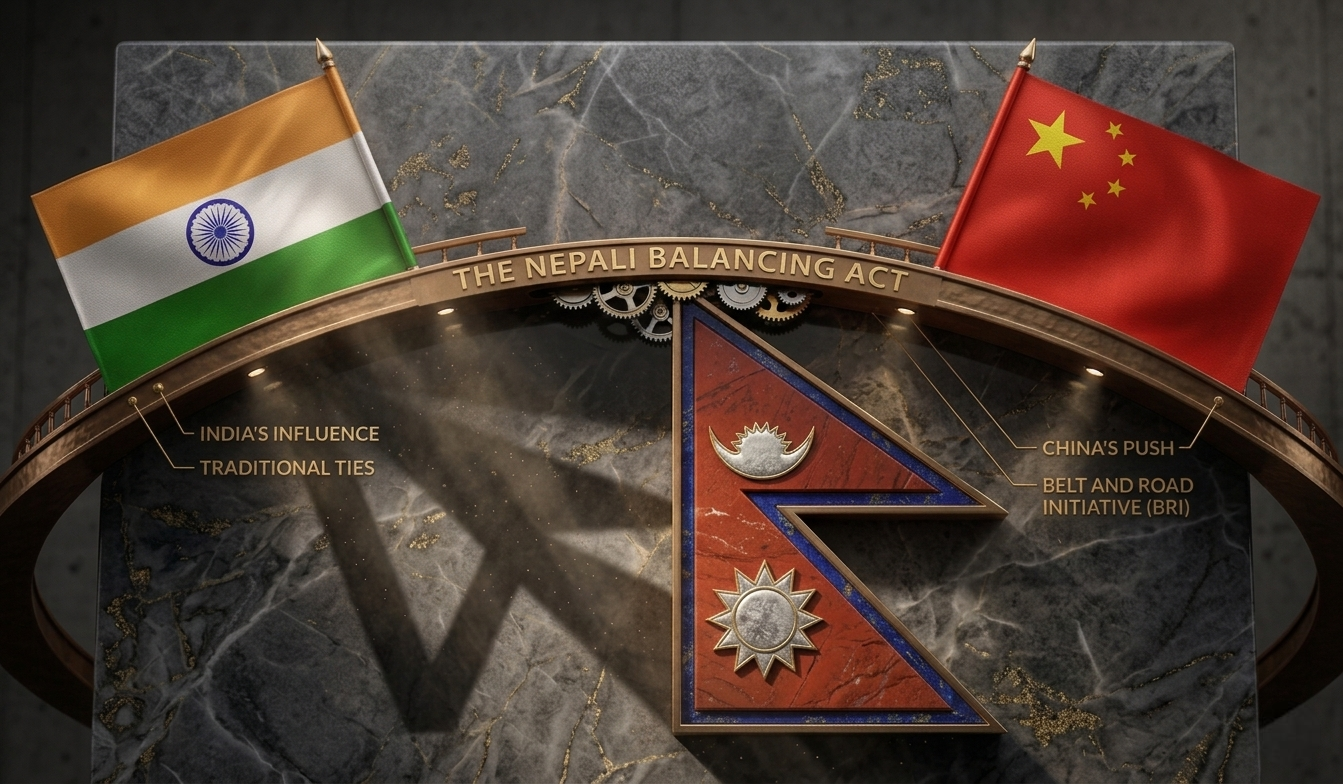
Kathmandu, however, has little interest in choosing sides. Nepal’s foreign policy has traditionally rested on strategic balance—maintaining productive relations with China, India and the United States simultaneously. Yet preserving that equilibrium is becoming increasingly difficult as competition between major powers deepens.
The challenge for Nepal is no longer diplomatic neutrality alone. It is economic pragmatism. The country requires investment, technology, infrastructure financing and market access from multiple partners. Any perception that Kathmandu is drifting too far into one geopolitical camp risks reducing its strategic flexibility and bargaining power.
This explains why Khanal’s central message in Beijing was continuity.
Chinese officials appear keen to understand the priorities of Nepal’s new leadership. For decades, Beijing dealt with familiar political actors—the monarchy, the Nepali Congress and various communist parties. The emergence of a new political force has introduced uncertainty into China’s Nepal calculus.
Khanal therefore sought to reassure Beijing that political change in Kathmandu would not translate into strategic change. He reaffirmed Nepal’s commitment to the “One China Principle” and reiterated that Nepali territory would not be used against Chinese interests.
In return, Wang repeated China’s standard pledge to support Nepal’s sovereignty, territorial integrity and political independence. This exchange remains the foundation of the bilateral relationship: Nepal addresses China’s security concerns; China supports Nepal’s statehood and stability.
Yet beneath the diplomatic reassurance lies a more important reality: the biggest problem in Nepal-China relations is no longer political trust. It is economic delivery.
The visit produced discussions on infrastructure, energy, connectivity, trade, investment, technology transfer, tourism and cross-border cooperation. These themes have appeared in virtually every high-level Nepal-China meeting for more than a decade.
The problem is implementation. China and Nepal today suffer from what might be called an “agreement surplus and execution deficit.” The two countries have signed dozens of memorandums, frameworks and cooperation agreements, but relatively few have translated into completed projects or measurable economic outcomes.
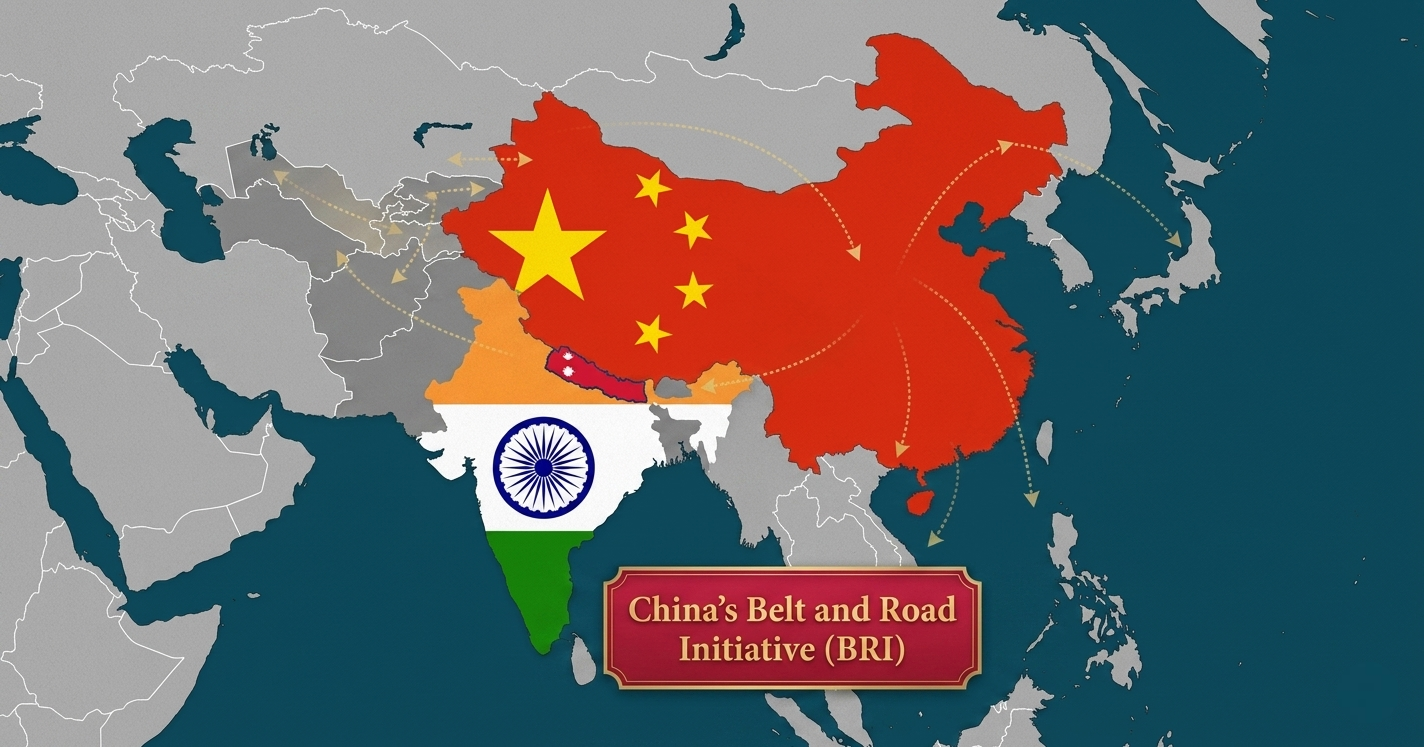
The Belt and Road Initiative (BRI) illustrates the problem.
Nepal joined the BRI in 2017. Nearly a decade later, not a single flagship BRI project has been completed. Even after the signing of the implementation framework in 2024 and the selection of priority projects, progress remains sluggish.
This raises uncomfortable questions for both governments.
Is the bottleneck Nepal’s bureaucracy, which has long struggled with project execution? Is it China’s declining appetite for overseas infrastructure lending amid domestic economic pressures? Or is geopolitical competition creating hesitation around major Chinese investments in Nepal?
The answer is likely a combination of all three.
Whatever the cause, the result is clear: political enthusiasm has consistently outpaced economic delivery.
This reality was indirectly acknowledged by Wang himself. While encouraging Chinese companies to invest in Nepal, he emphasized the need for a “fair, transparent and predictable” business environment. Such remarks are rarely included in diplomatic statements without purpose.
The subtext is significant. Chinese investors, like Western, Indian and domestic investors, remain concerned about policy uncertainty, bureaucratic delays, regulatory inconsistency and weak contract enforcement. For all the discussion about attracting foreign capital, Nepal continues to struggle with the fundamentals required to retain it.
That may be the most consequential takeaway from the visit.
The future of Nepal-China relations will not be determined by diplomatic slogans such as “strategic partnership” or “land-linked connectivity.” It will be determined by whether projects are completed, investments protected and economic opportunities realized.
Beijing’s long-standing vision of transforming Nepal from a landlocked country into a land-linked one remains attractive. So too does Kathmandu’s ambition to position itself as an economic bridge between China and India. But bridges are built with infrastructure, logistics networks and investment flows—not political declarations.
In that sense, Khanal’s visit exposed both the strength and weakness of the Nepal-China relationship.
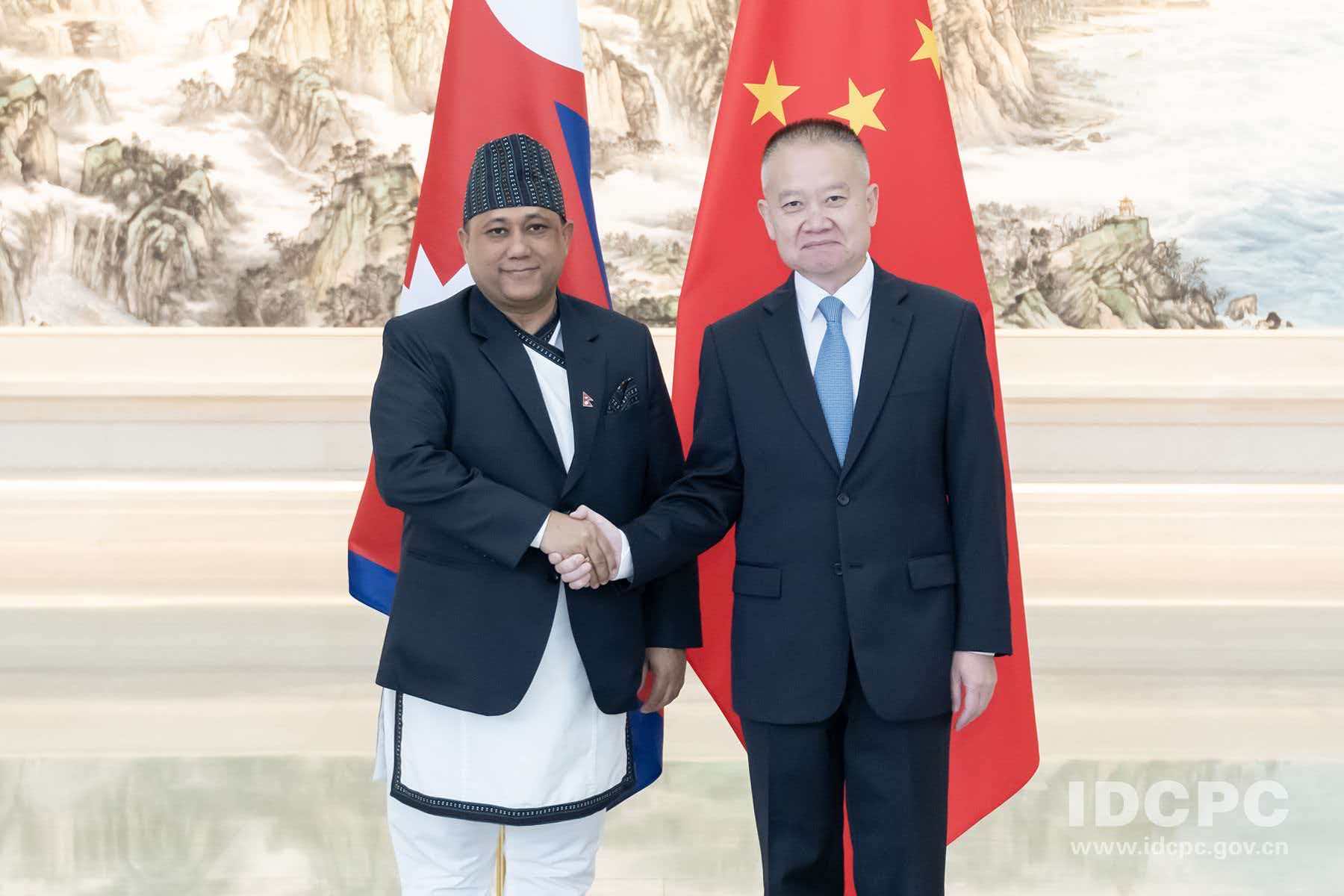
Foreign Minister Shisir Khanal met Liu Haixing, Minister of the International Department of the CPC Central Committee of the People’s Republic of China, in Beijing on June 15. Photo: Minister Khanal’s X account
The strength is strategic stability. Despite political changes in Kathmandu, both sides continue to share broadly compatible interests and a desire for constructive engagement.
The weakness is execution. Years after landmark agreements were signed, the economic foundations of the relationship remain underdeveloped.
China left the visit seeking reassurance. Nepal returned seeking investment and development opportunities. Both obtained the diplomatic messages they wanted.
Whether either side achieves the economic results it needs remains a far more difficult question.
Nepal reassures China
Nepal’s latest reaffirmation of the “One China” policy during Foreign Minister Shisir Khanal’s visit to Beijing was, on the surface, routine diplomacy. Kathmandu has long recognised Tibet and Taiwan as integral parts of China and has repeatedly pledged that Nepali territory will not be used for activities hostile to its northern neighbour.
Yet the language emerging from high-level diplomatic talks suggests something more significant than a customary restatement of policy. Beneath the diplomatic niceties lies a deeper geopolitical reality: China is increasingly concerned about the strategic direction of Nepal, while Kathmandu is struggling to preserve its traditional balancing act amid intensifying great-power competition.
Meeting his Chinese counterpart Wang Yi, Khanal reiterated Nepal’s support for China’s “complete reunification” and pledged that no force would be allowed to use Nepali soil against Chinese interests. Beijing welcomed the assurance. Such statements are hardly new. What is notable is the context in which they were made.
For China, Nepal occupies a uniquely sensitive position. The Himalayan state sits along Tibet’s southern frontier, making stability in Nepal inseparable from Beijing’s sensitive security calculations. Chinese concerns have historically centred on Tibetan political activism in Nepal, but the scope of those anxieties has expanded. Increasingly, Beijing sees Nepal not merely as a buffer state but as a geopolitical arena where external powers-particularly the United States and its allies-are seeking deep influence.
Chinese officials are reported to have raised concerns during the talks over expanding Western engagement in Nepal, including U.S.-backed initiatives such as the Millennium Challenge Corporation (MCC), while noting that Nepal has already withdrawn from the State Partnership Program (SPP). Beijing has long viewed these projects through a strategic lens. Chinese policymakers fear that seemingly economic or developmental partnerships could gradually strengthen Western influence in a region that Beijing considers part of its immediate strategic neighbourhood.
Wang Yi’s remark that “distant relatives are not as good as close neighbours” appeared to encapsulate that concern. The phrase was less a diplomatic proverb than a subtle reminder of geopolitical realities: geography, from Beijing’s perspective, should dictate Nepal’s strategic priorities.
Kathmandu’s response was equally revealing. Khanal reportedly reassured Chinese leaders that Nepal was not tilting towards the West and remained committed to its long-standing non-aligned foreign policy. Such assurances reflect a familiar challenge for successive Nepali governments. Nepal depends heavily on India economically, increasingly on China for infrastructure and investment, and continues to seek development assistance from Western partners. Maintaining productive relations with all three has become both a necessity and an increasingly delicate exercise.
The visit also highlighted China’s continued effort to anchor Nepal more firmly within its regional connectivity ambitions. Discussions covered the Belt and Road Initiative, proposed economic corridors, cross-border infrastructure, and the long-delayed Trans-Himalayan railway. While these projects are frequently presented as engines of economic transformation, their strategic value is equally apparent. Improved connectivity would deepen Nepal’s economic integration with China and potentially reduce Kathmandu’s historical dependence on southern trade routes through India.
Yet the relationship carries costs. Nepal’s commitment to the One China Principle has increasingly translated into stringent restrictions on the activities of Tibetans living within its borders. Over the past decade, security measures targeting Tibetan political expression have intensified. Peaceful demonstrations are routinely curtailed, cultural events are closely monitored, and public displays associated with the Dalai Lama remain highly sensitive. Critics argue that Kathmandu’s security cooperation with Beijing has come at the expense of civil liberties and refugee protections.
This tension reflects a broader dilemma facing smaller states situated between competing powers. Economic assistance and political support often arrive with expectations. For Nepal, the challenge is not choosing between China, India, or the West, but preserving sufficient strategic autonomy to engage all of them without becoming overly dependent on any single partner.
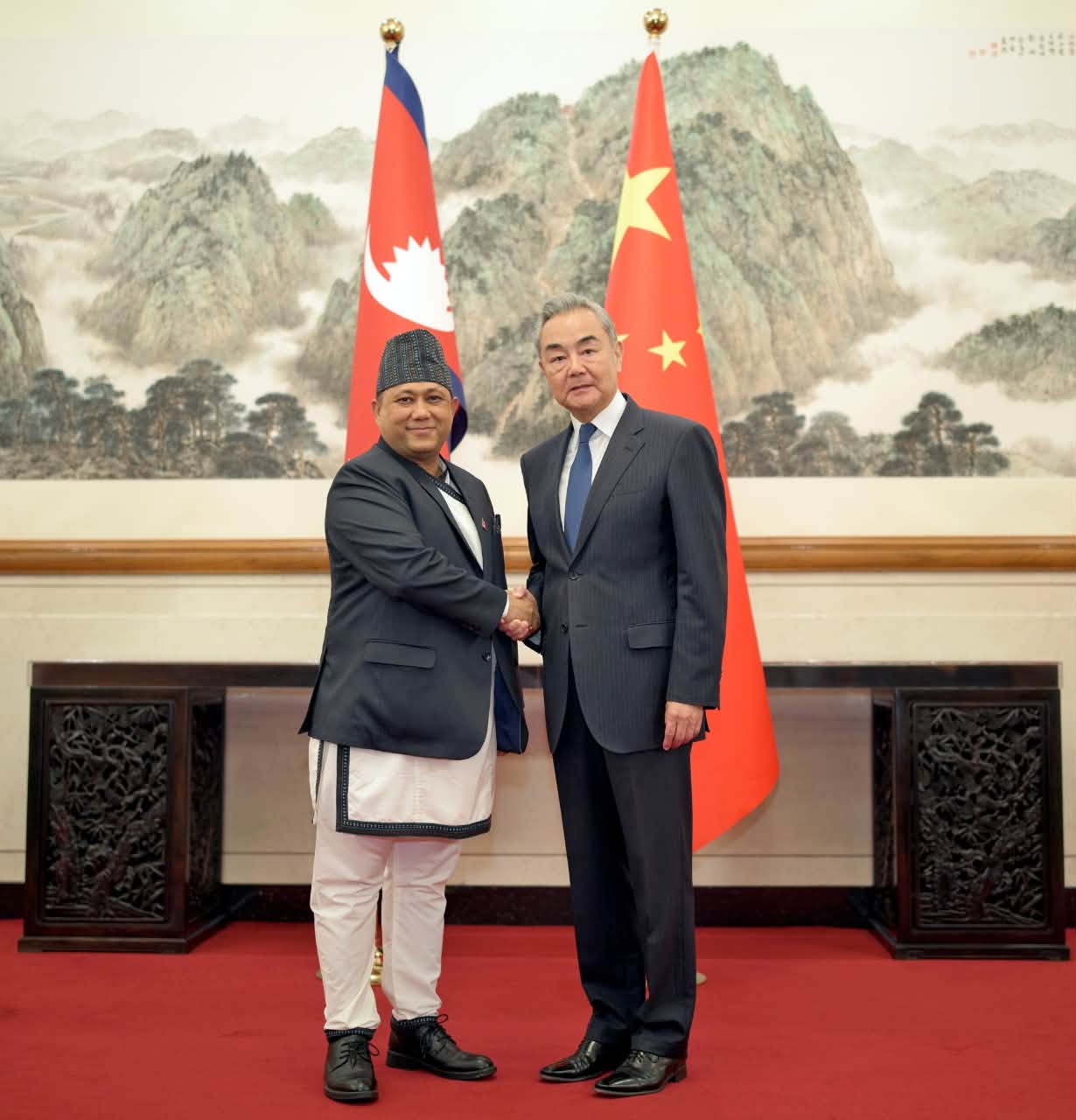
Foreign Minister Shisir Khanal and Chinese Foreign Minister Wang Yi in Beijing on June 15, 2026. All photos: Foreign Minister Khanal’s X account.
The significance of Khanal’s Beijing visit therefore lies not in Nepal’s reiteration of the One China principle-something every Nepali government has done for decades-but in what that reiteration reveals. China’s repeated requests for reassurance suggest growing unease about its strategic environment. Nepal’s repeated assurances, meanwhile, underline the increasingly difficult task of navigating an era in which even development projects, infrastructure investments, and diplomatic partnerships are viewed through the prism of geopolitical competition.
For Kathmandu, neutrality remains the stated objective. Whether neutrality becomes easier or harder to sustain as rivalry between China and the West deepens is likely to define Nepal’s foreign policy far more than any single diplomatic visit.
U.S.–China rivalry in Nepal
Nepal is increasingly emerging as a geopolitical hinge between two competing powers-the United States and the People’s Republic of China-where traditional diplomacy is now intertwined with hydropolitics, infrastructure competition, and strategic influence. While the rivalry is often framed in terms of aid and investment, its deeper structure lies in control over connectivity, energy systems, and transboundary water flows that link the Himalayas to South Asia’s most sensitive river basins.
At the centre of this competition is hydropolitics: the study of how water resources shape international power relations. In the Himalayan context, it is no longer a peripheral concern. As Brahma Chellaney has argued, water is becoming Asia’s “new strategic frontier,” while recent scholarship on “hydro-imperialism” highlights how infrastructure on transboundary rivers can function as an instrument of state power. China’s dam-building activities on the Tibetan Plateau, which feed major river systems such as the Koshi, Gandaki, and Karnali, have intensified concerns in both Nepal and India about downstream vulnerability and potential strategic leverage.
Although Beijing frames these projects as domestic development, their geographic implications extend beyond national borders. In extreme scenarios of geopolitical tension, control over upstream water systems could acquire coercive significance, affecting agriculture, hydropower generation, and water security across the Himalayan and Gangetic plains. This does not imply imminent conflict, but it embeds water infrastructure within a broader strategic sensitivity that shapes regional calculations.
Nepal’s response to this structural condition has been twofold. On one hand, it has sought to monetise its hydrological position through hydropower development and cross-border electricity trade, particularly with India. On the other, it has become increasingly exposed to external influence as competing powers seek access to infrastructure corridors, energy markets, and digital systems.
Hydropower has therefore become both an economic opportunity and a strategic asset. Nepal’s expanding generation capacity allows it to export electricity to India, creating a mutually beneficial arrangement: Nepal earns revenue, while India addresses rising energy demand. Yet this system remains indirectly dependent on upstream water flows originating in Tibet, reinforcing Nepal’s structural sensitivity to developments beyond its control.
Against this hydrological and geographic backdrop, Nepal has also become a site of intensifying U.S.–China competition.

Over the past two decades, Nepal has shifted from a peripheral aid recipient to a strategic engagement zone. Prior to 2017, U.S. involvement was largely confined to soft-power instruments through USAID, focusing on governance, education, and civil society. China’s role remained limited and cautious, anchored in diplomatic recognition of the One China policy and selective infrastructure engagement.
This equilibrium shifted after Nepal formally joined China’s Belt and Road Initiative (BRI) in 2017. Chinese engagement expanded rapidly into highways, border infrastructure, hydropower, and digital networks, financed largely through Chinese state-backed lending. At the same time, concerns emerged about debt exposure and long-term dependency, particularly in comparison to China’s broader infrastructure footprint in South Asia.
U.S. influence declined during the Trump’s first term as development assistance slowed and implementation of the Millennium Challenge Corporation (MCC) compact faced domestic political resistance in Nepal. This created space for deeper Chinese institutional and technological penetration, particularly in connectivity and telecom infrastructure.
The dynamic shifted again under the Biden administration, culminating in Nepal’s 2022 ratification of the MCC agreement worth $500 million. The project-focused on transmission lines and road upgrades-signalled renewed U.S. strategic attention, particularly in linking Nepal’s electricity grid with India. However, its ratification also exposed deep ideological divisions within Nepal’s domestic politics.
These external engagements have not remained neutral in Nepal’s internal political system. Instead, they have reinforced existing ideological cleavages. Leftist parties have generally favoured closer alignment with China and viewed BRI as an alternative development pathway, while centrist and liberal forces have leaned toward Western partnerships, including MCC. As a result, external infrastructure financing has become embedded within domestic political contestation.
The MCC debate illustrated this clearly. At that time various parties framed it as a sovereignty issue, arguing that provisions appeared to supersede domestic law. Supporters viewed it as critical infrastructure investment. The controversy was amplified by competing narratives circulating in media ecosystems aligned with different geopolitical orientations. Ultimately, parliamentary ratification in 2022 did not resolve the debate but institutionalised Nepal’s exposure to competing external narratives.
More recently, Nepal has witnessed near-simultaneous diplomatic engagements by Washington and Beijing, reflecting a sharpening of rivalry at the operational level. U.S. officials have focused on development cooperation and institutional partnerships, while Chinese diplomats have raised concerns about Nepal’s engagement with American initiatives such as MCC, the State Partnership Program, and digital infrastructure projects.
These interactions illustrate a broader pattern: Nepal is increasingly treated not merely as a recipient of aid, but as a strategic node in competing regional architectures.
Within this context, hydropolitics adds a deeper layer of vulnerability and opportunity. China’s upstream control over Tibetan river systems introduces structural asymmetries in water security, while Nepal’s hydropower potential offers it limited but meaningful leverage as an energy exporter to India. This triangular relationship-water from China, energy trade with India, and infrastructure finance from both China and the United States-places Nepal at a uniquely exposed intersection of regional power flows.
The broader implication is that Nepal’s foreign policy autonomy is increasingly shaped by external structural pressures rather than purely domestic preferences. Yet it would be inaccurate to view Nepal as passive. Its strategic location between Asia’s two largest powers, combined with its emerging role in South Asian energy integration, gives it a form of conditional agency-one that depends heavily on political coherence and institutional capacity.
Ultimately, China-U.S. rivalry in Nepal does not simply influence foreign policy; it reshapes domestic political alignment, development priorities, and infrastructure trajectories. Hydropolitics intensifies this effect by embedding geopolitics into the physical geography of rivers, dams, and energy systems.
Nepal’s challenge is therefore not choosing between powers, but managing structural dependence across multiple domains simultaneously. Its success will depend less on diplomatic balancing rhetoric and more on whether it can convert external competition into tangible developmental outcomes without losing policy autonomy in the process.
The Tibetan refugee question
The dispute over Tibetan refugees in Nepal is no longer merely a humanitarian question. It sits at the intersection of great-power competition, sovereignty, and the increasingly sensitive geopolitics of the Himalayas.
For years, the United States has maintained a sustained interest in the welfare and legal status of Tibetan refugees in Nepal. Driven by a combination of human-rights advocacy, strategic concern, agencies engagement legacy, congressional legislation on Tibet, and lobbying by the Tibetan diaspora, Washington has repeatedly raised concerns about refugee protection, documentation, and freedom of movement. Since 2022, American engagement on the issue has become noticeably more focused, with renewed attention on the legal status and verification of Tibetan refugees residing in Nepal.
Beijing views these efforts through a fundamentally different lens. China regards Tibet as a core national interest and remains deeply suspicious of any foreign involvement in Tibetan affairs. Chinese officials have consistently warned Kathmandu against undertaking any refugee verification or documentation exercise that could, in Beijing’s view, create a distinct political identity for Tibetans in Nepal. Chinese authorities have long argued that they already possess records of their citizens and have opposed any process led by Nepal or international organisations that could alter the current status quo.
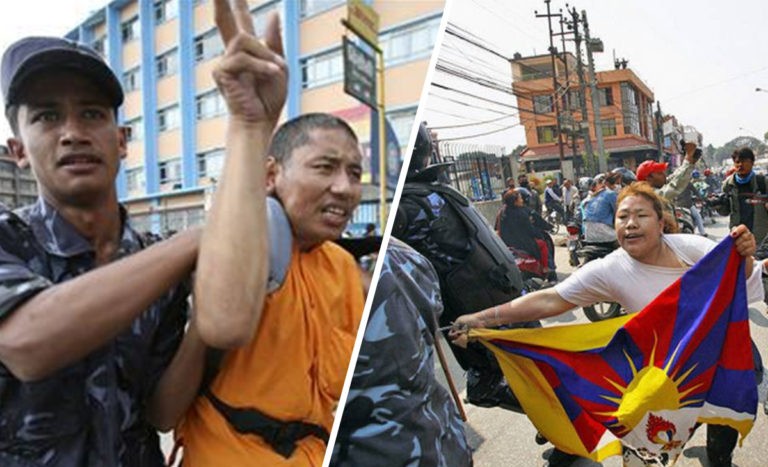
Nepal Police arrest Tibetan refugee demonstrators in Kathmandu prior to President Xi’s visit to Nepal last year. The government has banned protests of Tibetan refugees in recent times. File photo
The result is a familiar geopolitical squeeze. Nepal finds itself caught between an American emphasis on rights protection and a Chinese insistence on security and sovereignty concerns.
The refugee documentation issue illustrates the dilemma. Nepal stopped issuing refugee identity cards to Tibetan refugees in 1995. Periodic efforts by sections of the state bureaucracy, often encouraged by Western governments and international agencies, have sought to revive or expand documentation mechanisms. Yet such initiatives have repeatedly encountered resistance from Beijing, which fears that formal recognition could strengthen political activism linked to Tibet.
The demographic picture itself remains uncertain. While international agencies have often cited figures of around 20,000 Tibetan refugees in Nepal, more recent government and community estimates suggest the population may have declined to roughly 12,000. Home Ministry records indicate that the majority reside in Kathmandu Valley, particularly in Boudha, Swayambhu, Jawalakhel, Jorpati and Pharping, with smaller communities spread across districts such as Kaski, Solukhumbu and Baglung. Officials have also noted a decline in the number of refugees renewing identification documents, reflecting both demographic change and growing uncertainty over their long-term status.
Behind the statistics lies a broader strategic contest. For Washington, Tibetan refugee rights have become part of a wider strategic focused effort to uphold their concern, democratic values and human-rights standards across the Himalayan region. For Beijing, any American engagement with Tibetan communities is viewed through the prism of national security and territorial integrity.
Nepal, meanwhile, has little appetite for becoming an arena of confrontation. Its official commitment to the One-China policy remains unchanged, yet it also faces pressure from Western partners and international organisations to uphold refugee protections. The challenge for Kathmandu is that neither side views the issue as purely administrative. What appears to be a question of documentation is, in reality, a proxy struggle over influence, legitimacy and strategic space.
As rivalry between China and the United States intensifies across Asia, the Tibetan refugee question may emerge as another fault line where Nepal’s balancing act is tested. The risk for Kathmandu is not simply diplomatic pressure from competing powers. It is the possibility that a humanitarian issue becomes increasingly entangled in the broader geopolitical contest shaping the future of the Himalayan region.
The digital battlefield
The infrastructure competition between major powers in Nepal is conventionally narrated through roads, hydropower projects, and cross-border rail corridors — visible, politically legible, and amenable to the kind of ceremonial diplomacy that all external actors have historically favoured. The contest that will most durably shape Nepal’s strategic autonomy, however, is unfolding in a domain that receives substantially less public attention: digital infrastructure.
Chinese technology companies have spent roughly fifteen years embedding themselves within Nepal’s telecommunications architecture at every level — from physical towers and transmission equipment to the core network systems that route, authenticate, and record the country’s communications traffic. This penetration was not achieved through coercion. It was achieved through competitive pricing, bundled service arrangements, and a Nepali procurement culture that consistently prioritised cost over strategic risk assessment. The result is a national communications system whose most sensitive components are maintained by firms whose ultimate accountability runs to the Chinese state rather than to Nepali law or Nepali regulators.
The 5G question crystallises the stakes in ways that earlier network generations did not, because next-generation infrastructure carries fundamentally different capabilities. A 5G architecture built on a Chinese equipment base does not merely transmit data faster. It enables machine-to-machine communications, integrates with urban surveillance systems, underpins digital payment infrastructure, and forms the operational backbone of the smart city and e-governance ambitions that Nepal’s planners have been articulating with growing enthusiasm. A vendor with architectural access to these systems possesses leverage that no contractual arrangement can fully neutralise after the fact.

Nepal Telecom
Nepal Telecom has signalled a preference for a standalone 5G architecture that would require fresh competitive bidding rather than a direct rollover of existing supplier relationships. Whether that preference survives the procurement process — with all the political pressures, budgetary constraints, and lobbying that accompany major government contracts in Nepal — remains genuinely uncertain. What is already clear is that the 5G decision will be read in Washington, New Delhi, and Beijing not as a technical procurement outcome but as a geopolitical signal about where Nepal’s new government places its strategic priorities when diplomatic language must give way to contractual commitment.
The broader regulatory problem is equally serious. Nepal’s telecommunications authority lacks the independent technical capacity to audit complex network architectures, assess vendor compliance with security requirements, or enforce contractual obligations against technically sophisticated counterparties. This institutional gap means that the country’s ability to manage its digital infrastructure relationships depends substantially on the goodwill of the vendors whose conduct it is supposed to oversee — a structural vulnerability that no government has yet prioritised addressing with the seriousness it demands.
The Trump withdrawal and its selective consequences
Washington’s reconfiguration of foreign assistance under the second Trump administration created genuine disruption in Nepal, but the picture is more layered than a straightforward narrative of American retreat allows. The effective dismantling of USAID programming — affecting health, education, agriculture, and governance projects across multiple government ministries — represented a real withdrawal of institutional presence built over decades. The loss was abrupt and carried cascading consequences for sectors where American funding had become structurally embedded in government delivery systems.
The MCC compact, however, followed a different trajectory. The $747 million infrastructure programme — co-funded by the United States and Nepal governments — was granted an official exemption from the Trump administration’s foreign aid freeze and has continued full implementation. Substations are being built. Transmission lines are progressing.
The project that generated years of bruising domestic controversy, forced an unprecedented twelve-point interpretive declaration through parliament, and became the single most contested piece of American engagement in Nepal’s recent political history is, despite everything, the one that survived the Trump review intact.
This creates an irony that neither the programme’s most vocal opponents nor its most ardent defenders fully anticipated. The MCC compact — attacked from the left as a strategic penetration instrument dressed as development assistance, and defended by centrists as transformational infrastructure investment — is now advancing in a political environment where the USAID architecture that once gave American engagement its institutional depth has largely collapsed. American presence in Nepal has narrowed dramatically, but its most consequential material expression remains active on the ground.
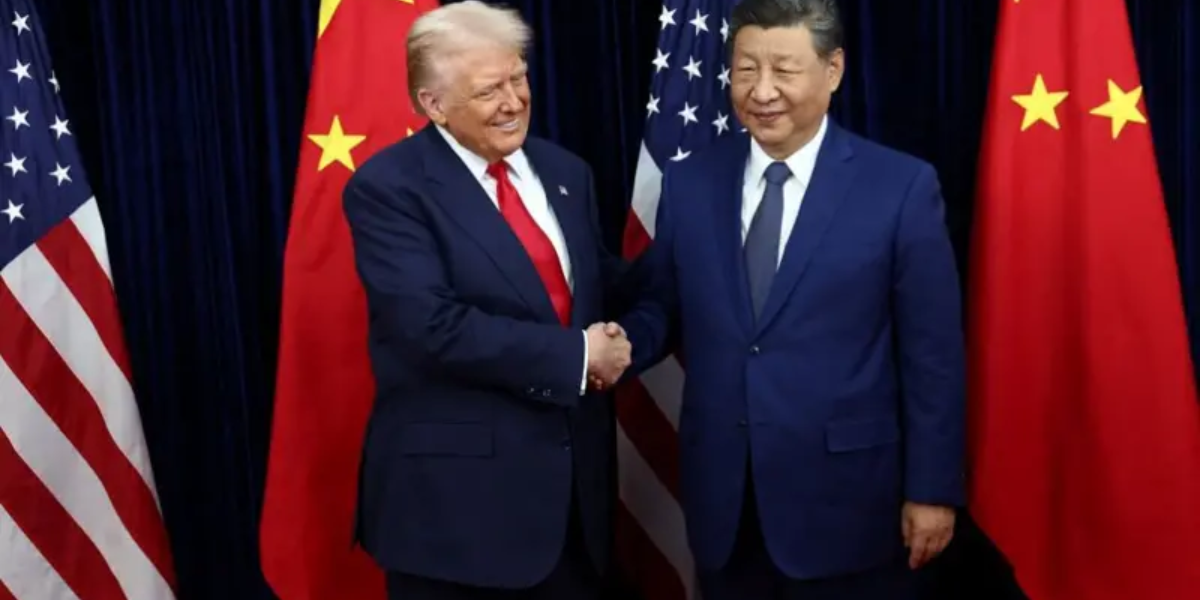
The political consequences of the USAID withdrawal are nonetheless significant and durable. Nepali officials who built working relationships with American development agencies over many years now operate without those counterpart institutions. Civil society organisations dependent on American funding for governance, transparency, and rights-related work have been forced to scale back or close.
The soft architecture of American engagement — the training programmes, institutional exchanges, and professional networks that create durable alignment between countries at a level below formal diplomacy — has contracted in ways that a single exempted infrastructure compact cannot replace.
China was positioned to capitalise on this partial vacuum, but its ability to do so is constrained by a problem that diplomatic success cannot resolve. Chinese state-linked lenders and construction companies have grown considerably more cautious about overseas commitments since the mid-2010s, when a series of high-profile debt sustainability controversies across Africa, South Asia, and Southeast Asia generated reputational damage and financial losses that Beijing was not prepared to absorb indefinitely.
The scale of ambition that characterised early BRI promotion — the railways, the ports, the transformative connectivity narratives — has given way to a more measured posture in which project selection is more conservative and financing terms are more carefully structured. The appetite for large, politically complicated, slowly executing infrastructure projects in Nepal is not what it was when the BRI framework was first extended to Kathmandu in 2017.
This produces a third scenario that neither the competition narrative nor the partnership narrative anticipates: selective disengagement, in which both major external actors are more rhetorically present than operationally committed, and Nepal is left navigating a geopolitical contest whose participants are less willing to pay the costs of sustained engagement than their diplomatic language consistently suggests.
The India factor: The unspoken anchor
Any analysis of Nepal’s position in the China-United States rivalry that treats India as a secondary or derivative variable fundamentally misreads the structural conditions of the relationship. India is not a third competitor in a two-way race. It is the foundational condition within which the entire competition takes place, because Nepal’s economic survival, its physical connectivity with the outside world, and much of its cultural continuity rest on arrangements with New Delhi that predate and will outlast any Chinese or American strategic interest in the country.
The open border between Nepal and India is not a diplomatic convenience that either side can choose to revoke without catastrophic disruption. It is the mechanism through which roughly three to four million Nepali workers access Indian labour markets, through which Nepal’s petroleum imports and essential goods flow, and through which the familial and cultural ties binding the two societies operate on a daily basis. No Chinese investment in cross-border infrastructure and no American development programme alters this basic arithmetic. Nepal’s economic metabolism runs, in a very literal sense, through India.
New Delhi’s strategic posture toward Nepal is correspondingly different from either Washington’s or Beijing’s. India does not need to compete for Nepal’s attention through aid packages or infrastructure offers in the way that the other two powers do. It occupies the relationship at its foundation. What India seeks is not alignment but assurance — the confidence that Nepal’s external engagements with China and the United States will not produce security configurations or infrastructure arrangements that could be operationalised against Indian interests along its northern frontier.
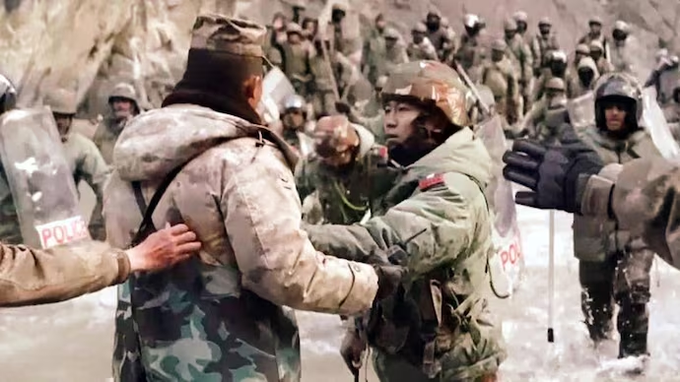
2020 Galwan Clash. Photo courtesy: Reddit
The 2020 Galwan Valley clash between Indian and Chinese forces fundamentally recalibrated how New Delhi assesses Chinese infrastructure activity in Nepal. What had previously been managed as economically competitive but strategically tolerable became, after Galwan, a matter with direct military planning implications.
Indian strategic analysts began evaluating Chinese road and communications projects in Nepal’s northern districts through a lens that had previously been reserved for Chinese activities in the formally disputed territories along the Himalayan frontier. The question shifted from whether Chinese projects in Nepal were economically viable to whether they enhanced Chinese logistical options in scenarios that Indian planners would prefer to foreclose.
This shift has made India’s Nepal engagement more assertive and more security-conscious than at any previous point in the post-1990 period. It has also made New Delhi less tolerant of ambiguity in Kathmandu’s external relationships — and more attentive to signals, however subtle, about the direction in which Nepal’s new political leadership intends to lean.
The new political generation and its unresolved geopolitics
The September 2025 political transition that brought the RSP to power introduced a variable that none of the major external actors had fully prepared for. Beijing had spent decades cultivating relationships with the leadership structures of Nepal’s established parties through high-level visits, party-to-party exchanges, scholarship programmes, and the patient accumulation of personal relationships that Chinese diplomacy deploys with considerable consistency and skill.
Washington had built its own networks through different means — civil society engagement, institutional partnerships, professional connections accumulated through American universities and governance training programmes. Both sets of relationships were oriented toward a political class whose worldview had been shaped by the ideological battles of the 1990s and the decade-long Maoist conflict that followed.
The generation that drove the September 2025 uprising and subsequently organised itself into governing power carries a fundamentally different formation history. Its leaders did not come of age in the communist-versus-liberal ideological framework that has structured Nepali political alignments since multiparty democracy was restored.
Their political education was received through social media, urban civic activism, and a shared rejection of the corruption and institutional decay they associated with all established parties regardless of their external alignments. The traditional shorthand through which Beijing and Washington have read Nepali political signals does not map cleanly onto this formation.
For China, this represents a genuine intelligence deficit in the strategic sense. Chinese diplomatic practice is highly effective at working within established party hierarchies, cultivating individual leaders over long time horizons, and embedding influence through structured institutional relationships.
It is considerably less adapted to engaging political formations whose internal decision-making is more diffuse, whose ideological commitments are less fixed in traditional left-right terms, and whose relationship to the Chinese development model is shaped more by global digital discourse than by the curated bilateral exchanges that Beijing has historically used to build durable influence.
For Washington, the new government presents a different but parallel challenge. The RSP leadership is not hostile to American engagement. Having watched the MCC saga from outside the governing mainstream — observing what political alignment with American priorities cost the parties that championed it, and noting how abruptly Washington reconfigured its commitments when domestic priorities shifted — the new political generation approaches external partnerships with a transactional pragmatism that demands results over credentials.
Nepali Army in the China-U.S. strategic triangle
Since 2006, China’s underlying strategic concern in Nepal has remained consistent, even if rarely stated in public diplomacy: the durability and depth of Nepal-U.S. military ties.Beijing has invested steadily in cultivating influence within Nepal’s political and bureaucratic class and has expanded engagement with the Nepali Army. Yet it has struggled to match the institutional depth of the United States, whose relationship with Nepal’s security establishment is anchored in decades of grants, training, crisis cooperation, and operational familiarity.
For many within the Nepali Army, ties with the United States are viewed less as alignment and more as support and professional infrastructure-training pipelines, disaster-response systems, and international exposure that are difficult to replace.
Beijing’s reading of Nepal’s recent political turbulence has grown increasingly security-focused, shaped less by public diplomacy and more by closed-door assessments among trusted interlocutors in Kathmandu.
Within Chinese strategic circles, a quiet but firm narrative has made rounds as told by their trusted allies to Nepal News that Nepal’s security establishment-particularly the Nepali Army-played a decisive, if indirect, role in shaping the balance of authority during the Gen Z protests and the broader political destabilisation that followed. This interpretation is not publicly articulated, but it has surfaced in diplomatic conversations and internal briefings their trusted partners in Nepal.
At the core of Beijing’s concern is perception rather than proof: that Nepal’s military neutrality is gradually thinning, and that the Army’s institutional proximity to Western security frameworks-especially long-standing ties with the United States-is creating space for external strategic influence in moments of domestic crisis.
Chinese analysts have increasingly framed this through the lens of “colour revolution” theory, interpreting political mobilisation and elite transitions as potentially externally enabled rather than purely domestic in origin.
The presence of individuals linked to “Tibetan Original Blood” bikers during episodes of anti-government street mobilization during Gen Z protest on September 08, 2025 has further sharpened Chinese sensitivity, reinforcing long-held suspicions in Beijing’s security establishment about trans-border political activation.In this reading, disparate events are often connected into a single strategic narrative-linking civil unrest, diaspora activism, and Western security engagement into one continuum of influence.
Against this backdrop, Nepal’s political leadership has continued its delicate external balancing. High-profile engagements with China, including symbolic participation in major state events, have been interpreted by Beijing as reaffirmations of alignment. Yet they have not fully resolved underlying anxieties about Nepal’s internal security architecture and its evolving relationship with Western military institutions.
The fall of KP Sharma Oli’s political position amid mass protests has been viewed in China through a comparative regional lens, drawing parallels with leadership collapses in South Asia where street movements rapidly reshaped governing structures. In this interpretation, state institutions-particularly security forces-are assessed not only for action, but for restraint, timing, and perceived alignment.
For Beijing, the central question is no longer simply diplomatic positioning, but institutional orientation: where Nepal’s security apparatus ultimately anchors itself when political pressure peaks.
For Kathmandu, the challenge remains preserving strategic ambiguity in an environment where every crisis is increasingly read through the prism of great-power competition.
In that narrow space between perception and reality, Nepal’s army has become not just a domestic institution, but a geopolitical signal—interpreted differently in Beijing, Washington, and Kathmandu itself.
This asymmetry has long shaped China’s quiet discomfort in locker rooms. While Beijing has repeatedly signaled concern about Nepal’s security cooperation with Washington, it has generally avoided open confrontation, preferring influence through political channels. That approach reached a visible peak during the controversy surrounding the State Partnership Program (SPP), which Kathmandu ultimately declined in 2022 after intense China-backed media campaigns, domestic debate and diplomatic pressure from multiple directions.
The episode underscored how Nepal’s security partnerships are no longer purely bilateral technical matters, but embedded in broader geopolitical competition.
For China, the core sensitivity is not any single program, but the institutional proximity between the Nepali Army and the United States Army-built through decades of training exchanges, counterinsurgency cooperation during the Maoist conflict, and sustained engagement after 2006.For Washington, Nepal has remained a steady but low-profile security partner focused on grants, peacekeeping, disaster response, and humanitarian assistance, reinforced through military education and limited equipment support.
China’s concern, therefore, is structural rather than episodic: that Nepal’s most powerful institution retains deeper operational familiarity with the United States than with any other external partner. Nepali Army, in turn, has treated this relationship as functional rather than ideological-balancing sovereignty narratives with practical dependence on funding, external training, equipment, and crisis support.
The result is a quiet strategic triangle. China seeks to reduce Western military footprint and symbolic influence in Nepal. The United States sustains a long-horizon, capability-based partnership. Nepal’s army, positioned between the two, continues to prioritize institutional utility over geopolitical alignment.
In this balance, what matters most is not declared policy, but accumulated practice-and in that domain, the United States still holds a structural advantage that Beijing has found difficult to displace.
The sovereignty gap: Between rhetoric and structural reality
Nepal’s political establishment speaks the language of sovereignty with genuine conviction and considerable fluency. The word appears in parliamentary debates, diplomatic communiqués, party manifestos, and public declarations with a frequency that might suggest it describes a robustly defended condition. The reality is structurally more complicated, and the gap between the rhetoric and the condition it purports to describe is where Nepal’s geopolitical vulnerabilities are most honestly located.
Nepal’s sovereignty is intact in the formal sense — its territory is not occupied, its government emerges from elections, and its diplomatic relationships are conducted on terms of nominal sovereign equality. But sovereignty in the meaningful operational sense — the capacity to make consequential decisions about the country’s development trajectory without being structurally conditioned by external actors — is a considerably more contested condition.
The constraints are not military or political in the traditional sense. They operate through economic dependency, accumulated debt exposure, infrastructure design choices, and the compounding weight of agreements that individually appear reasonable but collectively narrow the options available to any given government.
A country that imports all its petroleum through one neighbour, relies on that same neighbour for its primary export market, hosts the telecommunications infrastructure of a second power at the network core level, builds its power transmission capacity with the funding of a third partner, and depends on labour remittances flowing through a fourth channel is not positioned to make unconditioned strategic choices — regardless of what its foreign policy doctrine declares.
The honest reckoning that Nepal’s political establishment has not yet conducted publicly is this: genuine strategic autonomy is not achieved by saying yes to everyone simultaneously. It is built through developing domestic institutional capacity, economic resilience, and diplomatic skill sufficient to absorb the cost of occasionally saying no — and to bear the consequences of doing so without capitulating at the first sign of external pressure. That requires a quality of governance, a consistency of political leadership, and a depth of institutional competence that Nepal has found genuinely difficult to sustain across successive administrations.
Until that foundation exists, the declarations of balance, non-alignment, and strategic independence that issue from Kathmandu with each new government will remain less a description of Nepal’s actual condition than an aspiration toward it — a statement of intent in a country whose geopolitical circumstances demand far more than intent, and whose most important decisions in the years ahead will be shaped as much by what it builds, what it signs, and what it refuses, as by anything its diplomats say in Beijing, Washington, or New Delhi.