Kathmandu
Sunday, June 21, 2026





The first general convention is an opportunity for the RSP to build a well-structured organization and clarify its ideological foundation, federalism, and stance on the economy.
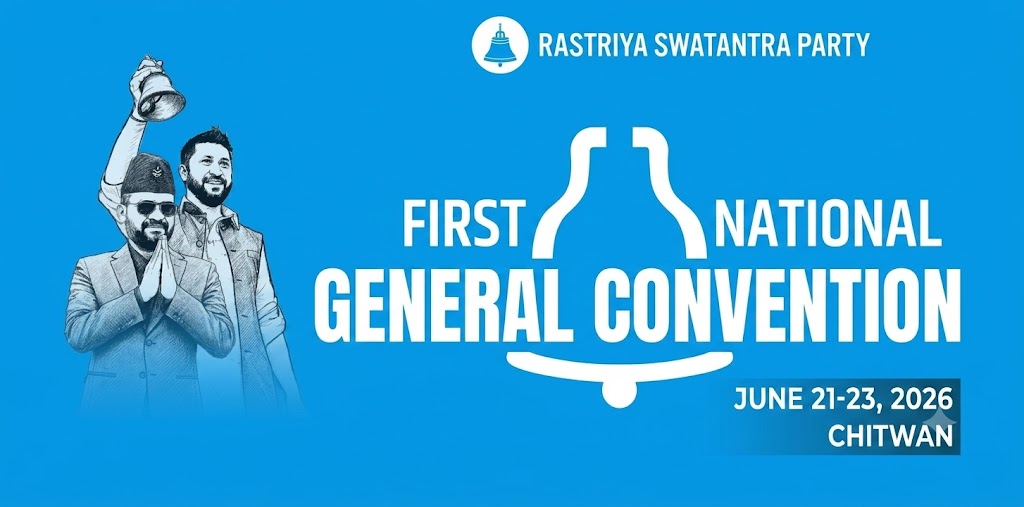
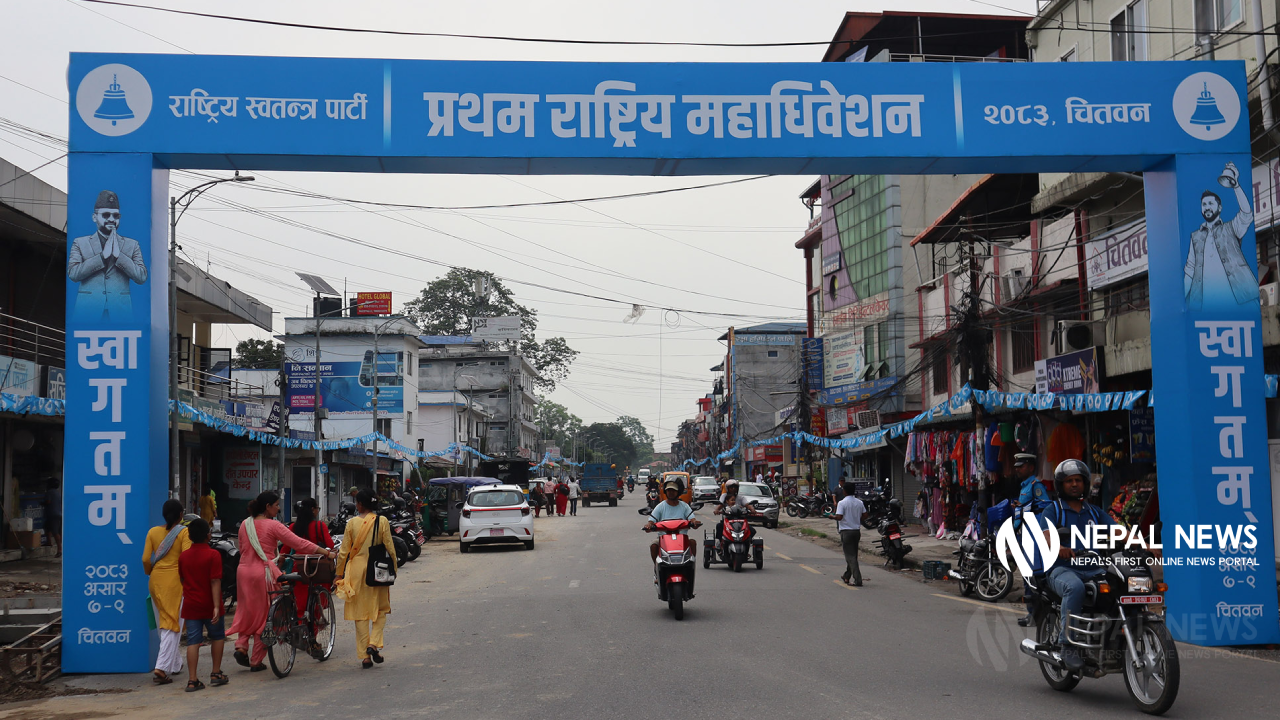
CHITWAN: The first general convention of the largest party in the House of Representatives, the Rastriya Swatantra Party (RSP), is being held in Chitwan from today, June 21 to 23, 2026. The convention of a party running the government with nearly a two-thirds majority is naturally a matter of great interest. Moreover, because it hasn’t appeared clear on issues like federalism, republicanism, inclusiveness, and secularism, there is widespread public curiosity about what path this first general convention will map out.
The RSP’s first general convention will be historic and important not just for the party, but for the entire country. This is because voters, especially the younger generation who were dissatisfied and angered by the old parties, brought the RSP to power with expectations of good governance and change. In the parliamentary elections held in the altered landscape following the Gen Z protest, the RSP secured nearly a two-thirds majority amid an outpouring of high expectations for a new political force. Therefore, the RSP faces the challenge of formulating party policies that address the voice of the younger generation. Along with this, this general convention carries the responsibility of drafting new policies to guide the country toward a new era.
On June 21, 2022, former media person Rabi Lamichhane announced the RSP with a 21-member central committee. In the House of Representatives elections held five months after the party’s formation, the RSP fielded candidates in 131 constituencies, winning 7 direct seats and 13 proportional representation seats to become the fourth largest party in parliament. Less than four years after its formation, the RSP won 182 seats in the 275-member House of Representatives to become the largest party in parliament and form a majority government on its own, yet it lacks a political organization capable of sustaining the status it has attained. This is because the party’s current central structure was not formed through a general convention. The general convention being held four years into the party’s establishment is leading the party onto the path of legality.
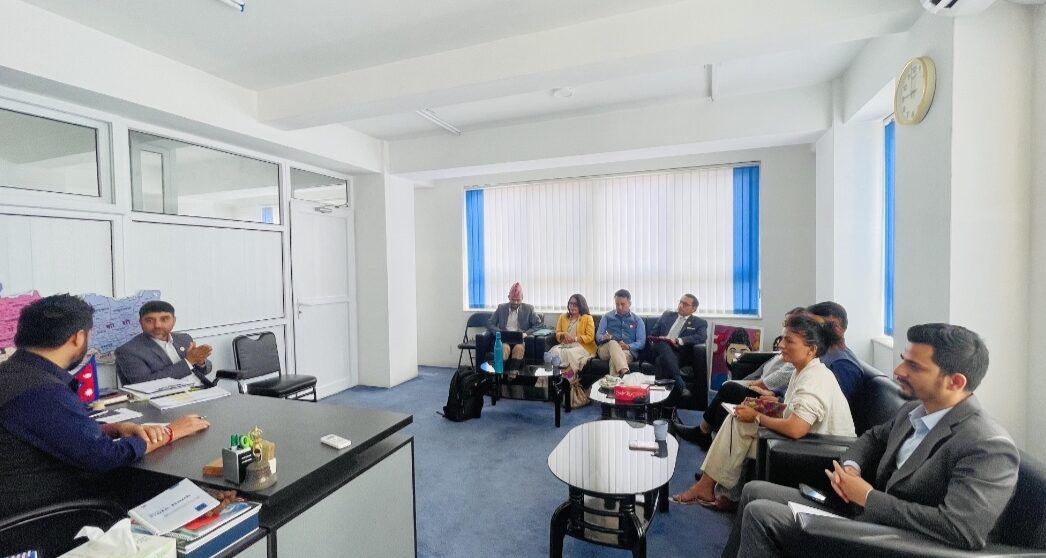
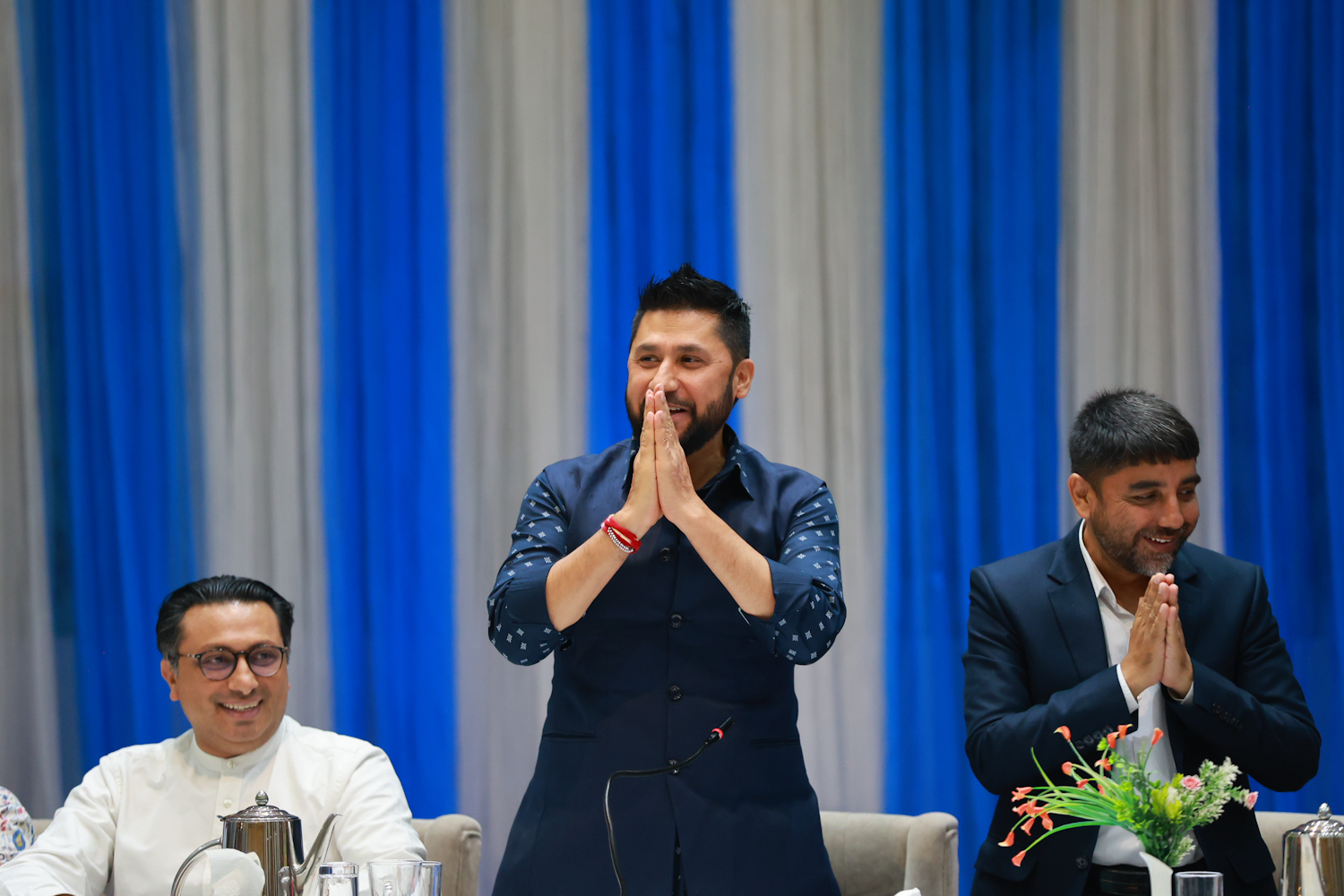
The RSP secretariat meeting held to discuss the general convention. All photo sources: RSP Secretariat.
Although the RSP Constitution of 2022 mandates a party general convention every five years, the first general convention is taking place in just four years. Words like federalism, republicanism, and secularism are absent from the RSP constitution. The RSP did not field candidates in the 2022 provincial assembly elections. At that time, party leaders expressed that the provincial structure increased the burden on the state and should be abolished.
For reasons like this, the RSP is still portrayed as an anti-federalist, anti-republican, and anti-secular party. During a mass assembly in Janakpur during the last House of Representatives elections, RSP senior leader and current Prime Minister Balendra Shah had expressed that federalism should be further strengthened. Aside from that, the RSP has not publicly debated or discussed this issue.
The RSP has prioritized issues like the rule of law, good governance, transparency, and the separation of powers from the very beginning. However, incidents of the Prime Minister’s Office exerting pressure on constitutional bodies are currently coming to light.
Similarly, the RSP had formally apologized to the Dalit community from within the parliament itself for the centuries of untouchability and injustice they faced. However, representation of the Dalit community in the current secretariat is zero. The government has ruthlessly demolished huts and evicted landless squatters residing along various riverbanks and public lands in Kathmandu. The poor and Dalit communities dominate those evicted. In such a scenario, questions have been raised regarding what kind of policy the general convention will shape for the party.
Analyst Jiban Chhetri states that so far, the RSP has acted based on convenience rather than policy and principles. He says, “It remains to be seen what it will do in a difficult situation.”
Republicanism gaining entry
The RSP has faced accusations of being ideologically ambiguous. Therefore, this general convention also presents the challenge of clarifying the party’s ideological perspective and political philosophy. For that, the general convention will also have to amend the party constitution. A constitution amendment committee has been formed under the coordination of the party’s Joint General Secretary Bipin Kumar Acharya.
According to the party’s current constitution, its principles and ideals include the rule of law, a liberal economy with social justice, equitable and egalitarian inclusiveness, a fully democratic state system based on pluralism, a welfare state with good governance and transparency, meritocracy, capability, and diligence, zero tolerance against corruption, directly participatory, proportional, and inclusive democracy, and individual freedom and human rights. The constitution amendment committee has proposed replacing “fully democratic state system based on pluralism” in this section with “fully democratic republic based on pluralism.” If this proposal is passed, the word ‘republic’ will enter the RSP constitution for the first time.
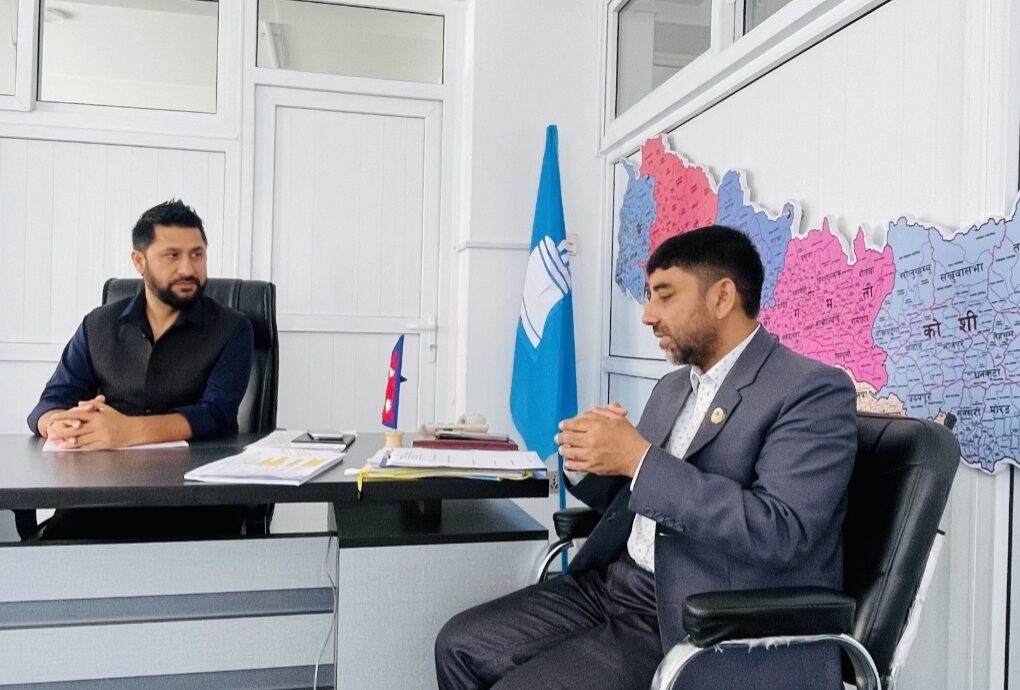
The RSP secretariat meeting.
The current constitution mentions developing a socialism-oriented independent and prosperous economy. The Constitution of Nepal itself declares the state as ‘socialism-oriented’. The RSP’s constitution amendment committee has also proposed moving forward on the basis of constitutional socialism.
The constitution states that all forms of discrimination, exploitation, and injustice based on religion, culture, values, customs, traditions, practices, or any other basis will be ended, a civilized and egalitarian society will be built, and the fundamental values of Nepali land will be protected and promoted. However, there is no clear provision regarding religious matters in the constitution. Now, during the amendment process, a proposal has been made to promote coexistence and mutual respect based on Nepal’s history, Sanatan civilization, and religious-cultural diversity. Analyst Chhetri says, “The RSP’s stance on issues like federalism, inclusiveness, and secularism is still not clear. It is vital for the general convention to clarify these matters.”
The RSP constitution, framed in 2022, was amended for the third time on September 16, 2024. It is being amended for the fourth time during this general convention. This amendment will modify everything from political ideology to organizational structure. The preamble of the RSP constitution mentions a commitment to improving citizens’ living standards to fulfill the goals of good governance, development, and prosperity as envisioned by the constitution. The proposals put forward for this amendment also reflect an effort to align it with the national constitution.
Political Science Professor Krishna Prasad Pokharel explains that by accepting constitutional socialism, the RSP implies adopting the system mandated by the constitution—federalism, republicanism, inclusiveness, secularism, and a socialism-oriented system. He says, “For the RSP, this general convention is a platform to build a political organization capable of sustaining the status given by voters, and to clarify its ideological foundation, federalism, and outlook on the economy.”
Central Committee expanding
The party constitution provides for a total of a 129-member central committee. For this, the general convention will elect one Chairman and 99 central members, with a mandatory requirement of five members from each of the seven provinces to ensure an inclusive election. Likewise, the constitution stipulates that the Chairman will nominate 22 members, and the Chairmans of the seven provinces will serve as ex-officio members.
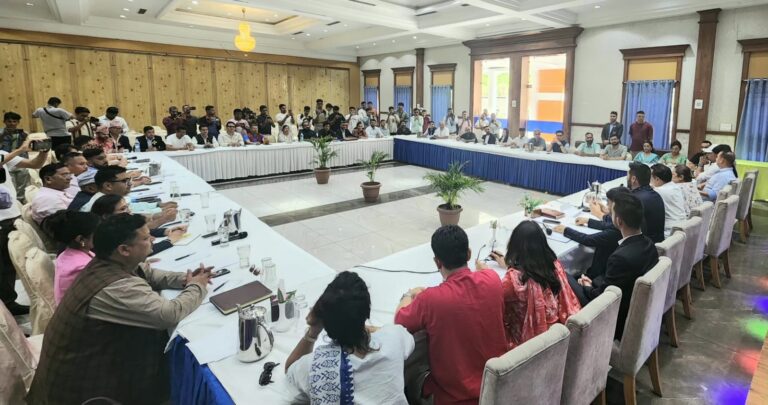
The central committee meeting of the Rastriya Swatantra Party held in Chitwan for the general convention.
The constitution amendment committee had proposed making the central committee 136-membered, including the Chairman. The committee’s proposal included the Chairman, 99 members elected from the general convention, 29 nominated by the Chairman, and 7 ex-officio provincial Chairmans as central members. However, the party secretariat meeting held on June 18, 2026 decided to make the party’s central committee 151-membered, bringing the total to 158 members with the inclusion of the 7 provincial Chairmans as ex-officio members.
A provision for a senior leader has been proposed in the constitution. Although Balendra Shah has been placed as a senior leader until now, that provision was not in the constitution.
Although the constitution amendment committee had proposed 16 office bearers, the secretariat meeting decided on a total of 19 office bearers: one Chairman, one Senior Leader, three Vice Chairmans (including one woman), two General Secretaries, five Joint General Secretaries (including one woman), one Spokesperson, three Joint Spokespersons (including one woman), one Treasurer, and two Joint Treasurers (including one woman). It was decided that the Chairman can nominate one Vice Chairman, one General Secretary, two Joint General Secretaries, one Spokesperson, three Joint Spokespersons, one Treasurer, and two Joint Treasurers. While the constitution committee had arranged for 6 out of 16 office bearers to be nominated by the Chairman, the secretariat meeting increased the total to 19 by allowing the Chairman to nominate 11 members.
The general convention will form a 33-member secretariat, where the Chairman, Vice Chair, General Secretaries, Joint General Secretaries, Treasurer, and Spokesperson will automatically be secretariat members. Similarly, the number of members nominated by the Chairman to the central committee will be 51. Previously, the arrangement was to nominate 29 members.
The party claims that the number of members nominated by the chairman has been increased to make the central committee inclusive. Before the elections, Balendra Shah’s group, a group from the Bibeksheel Sajha Party, a group of Tharuhat and Tharuwan activists, and some members of the Ujyaalo Nepal Party had integrated into the RSP. If they cannot be accommodated, there is a challenge of growing dissatisfaction. It is in such situations that factions are born. It is said that the number of nominations by the Chairman has been increased to accommodate those coming from various parties and groups if they fail to secure a place in the central committee through the general convention.
In any case, the RSP has been accused of not being sensitive to inclusiveness. The RSP’s current central committee is not inclusive. Constitution Amendment Committee member Prakash Chandra Pariyar says, “The previous committee did not come through a general convention; now, after the general convention, the RSP will become inclusive, as such arrangements have been made in the constitution itself.”
Rs 4 million expenses for the General Convention
The RSP estimates that around Rs 40 million will be spent on the general convention being held from June 21 to 23. According to the party’s General Secretary Kabindra Burlakoti, the convention expenses will be covered by registration fees collected from convention delegates and contributions received from party members and well-wishers. Around Rs 20 million have been collected from approximately 4,000 delegates alone.
The party has decided not to allow members who haven’t paid their levies to enter the general convention. It is estimated that 2,500 to 3,000 delegates will participate in the convention.
Similarly, over 170 delegates from more than 38 countries will participate. Presidents and representatives of other political parties have been invited to the inauguration.
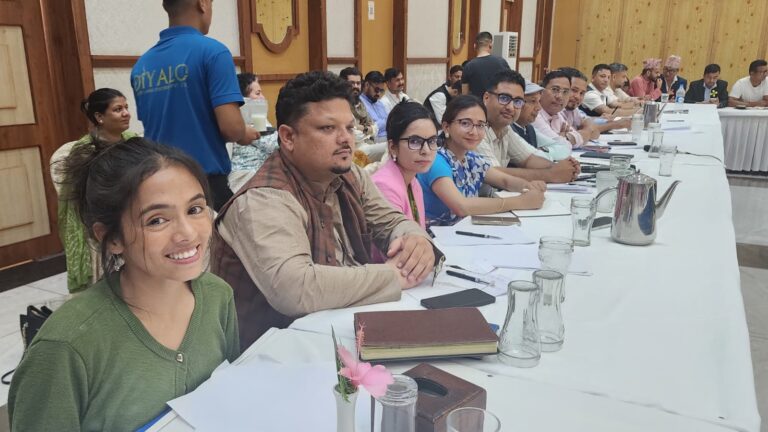
The central committee meeting of the Rastriya Swatantra Party.
Electronic voting will be conducted at the general convention. Party General Secretary Burlakoti informed that preparations are underway to use electronic voting machines for the voting. The party had already announced last Wednesday the dissolution of the central committee, turning it into the general convention organizing committee.
Candidacy fees for the general convention have been set at Rs 51,000 to run for Chairman, Rs 41,000 for office bearers, and Rs 21,000 for central members.
RSP’s moment of truth
So far, no one has emerged to challenge Rabi Lamichhane for the position of Chairman. However, there are many aspirants for other office bearer positions. Although there have been suspicions of factions forming around Chairman Lamichhane and Senior Leader Shah within the party, Shah has not shown any desire to be active in the party so far. There was talk before the election that an agreement had been made for Senior Leader Shah to run the government and Chairman Lamichhane to run the party. Therefore, a factional competition like in other parties is not apparent in this general convention.
The RSP consists of people ranging from those with diverse political backgrounds to those who have just stepped into politics. There is a predominance of individuals with Nepali Congress, CPN-UML, and CPN-Maoist Center backgrounds even among RSP parliamentarians. In the words of political scientist Prof. Pokharel, the RSP is currently scattered like Boondi (tiny fried gram flour balls); bringing it together to shape it into a Laddu (sweet ball) is the major challenge of this general convention.
There are three tiers of government in the country. Among them, it is only in the federal government that the RSP holds nearly a two-thirds majority. Aside from that, the RSP is non-existent in provincial and local governments. Even in the federal parliament, its participation in the National Assembly is zero. Because it neglected the provinces in the past, the lack of RSP representation from provincial assemblies to the National Assembly makes it difficult to enact laws according to the party’s policies. It can be inferred that learning from this, the RSP has turned toward reviewing its policies.
In the 1959 elections, the Nepali Congress won a two-thirds majority. After that, in 2017, the Nepal Communist Party (NCP), formed by the merger of the UML and Maoists, secured nearly a two-thirds majority. After that, it is the RSP that has secured a near two-thirds majority. However, history shows that parties receiving such a massive mandate have not stayed united for long. There are examples of parties splitting in the days following their arrival in power with a comfortable majority.
Political scientist Prof. Pokharel wishes that the RSP does not have to face such an unfortunate circumstance. He says, “Looking at the RSP’s activities so far, it appears to be focused on uniting rather than dividing. Whether it can move forward by looking at the past history of other political parties and learning from their mistakes—this is the moment of truth for the RSP.”