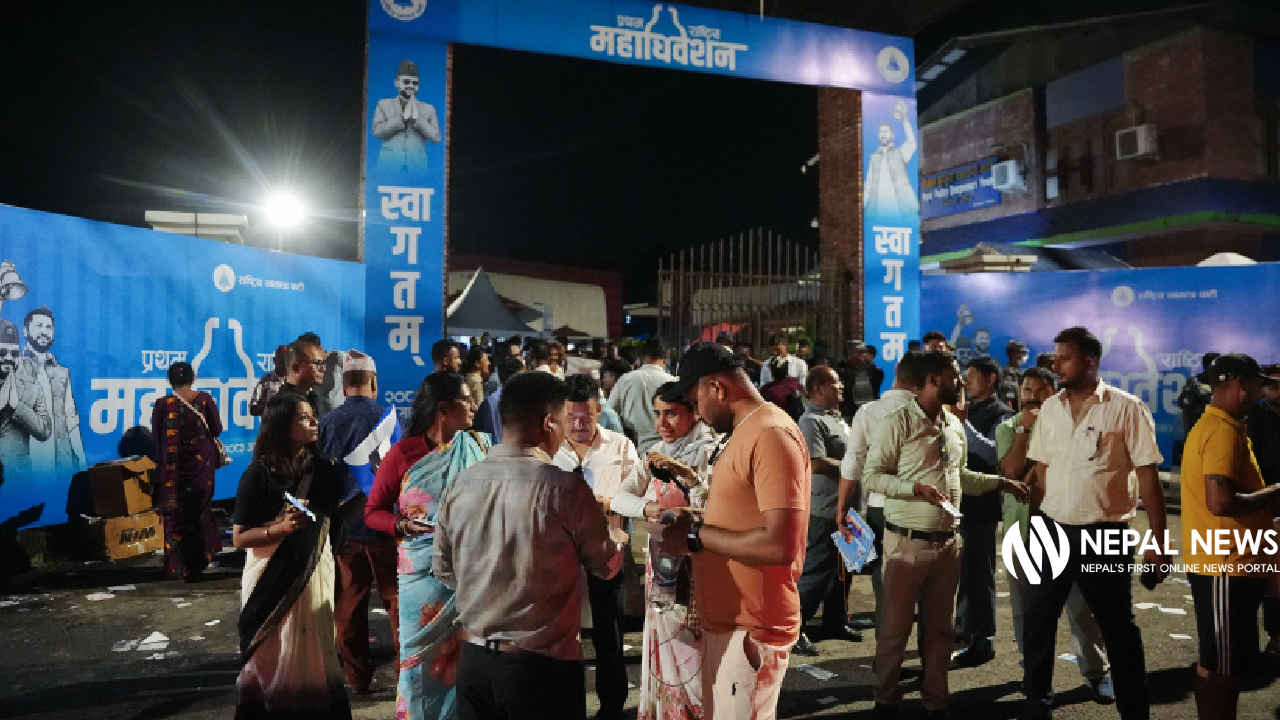
Kathmandu
Wednesday, June 24, 2026





From abandoning constitutional socialism and embracing social democracy to defending its record in government and proposing constitutional reforms, Rabi Lamichhane’s convention report offers the clearest picture yet of where RSP wants to take Nepal.
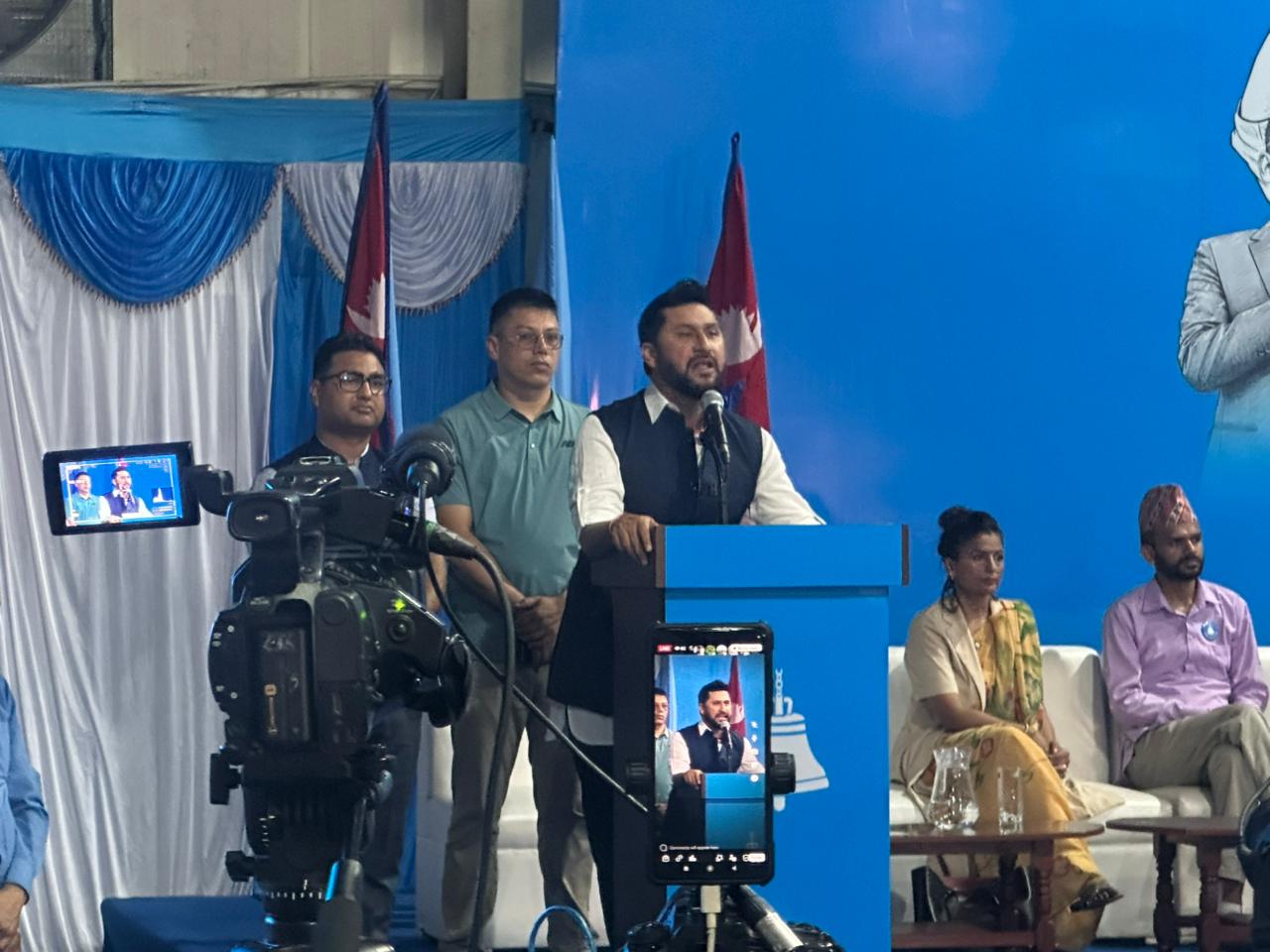
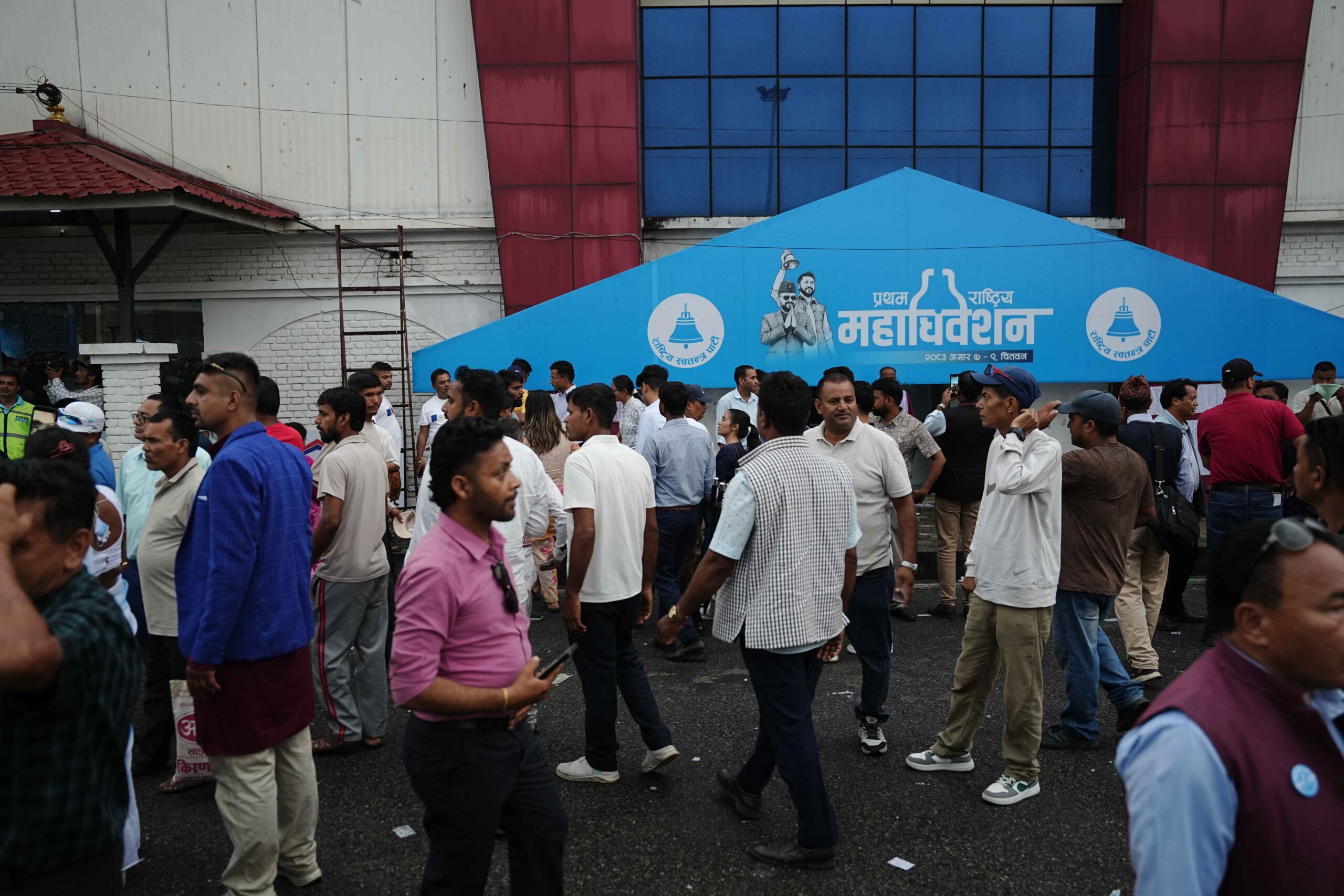
KATHAMNDU: At Rastriya Swatantra Party’s first general convention in Chitwan, Chairman Rabi Lamichhane presented a political report during the party’s closed session on June 23.
The document repositions RSP’s core ideology, defends its record in government, recounts what it describes as a coordinated state campaign against its leadership, offers its own reading of the Gen Z uprising, lists the current RSP-led government’s achievements, and sets out positions on constitutional amendment, foreign policy, and internal party reform.
What is the central announcement in this report?
The report’s most consequential move is RSP’s formal abandonment of “constitutional socialism” as its guiding principle. After convention deliberation, the party has adopted social democracy as its core political ideology, and Lamichhane states this will now be written into every party document going forward.
He presents this as a direct response to years of criticism that RSP lacks ideological clarity, insisting the party never intended to be ideologically vague but deliberately avoided slotting itself into conventional left-right categories.
He frames RSP’s approach as practical and adaptive rather than doctrinal, arguing that governance, economic policy, and social structure should be shaped by context and necessity rather than imported wholesale from any single existing ideological tradition, whether socialist, liberal, or conservative in origin.
Why did RSP abandon “constitutional socialism”?
The report traces constitutional socialism back to the party’s founding manifesto and its reaffirmation at the Jaleshwar meeting, but acknowledges it was never developed into a fully defined ideological framework beyond being accepted as a guiding principle.
Lamichhane lists the unresolved questions that prompted the rethink: whether constitutionalism means simply operating within the constitution or requires its own distinct policy architecture; whether socialism can actually be reached merely because the word is written into the constitution; and how a document requiring amendment roughly every five to ten years can simultaneously function as a fixed ideological anchor.
Weighing these questions, the convention concluded that a nation’s constitution and a party’s ideology are fundamentally separate things, and that treating the constitution itself as an “ism” was conceptually flawed, which led directly to the adoption of social democracy in its place.
What exactly was constitutional socialism as RSP originally defined it?
According to the report, RSP’s founding manifesto described constitutional socialism as establishing the society envisioned by Nepal’s constitution through the rule of law.
The preamble passed at the Jaleshwar meeting elaborated this further, describing it as a commitment to run the state according to national policies and programs that specify socialism’s core goals within the constitution, pursued through peaceful means, with particular emphasis on the just distribution, access, and use of opportunities to address structural discrimination based on gender, caste, class, and region.
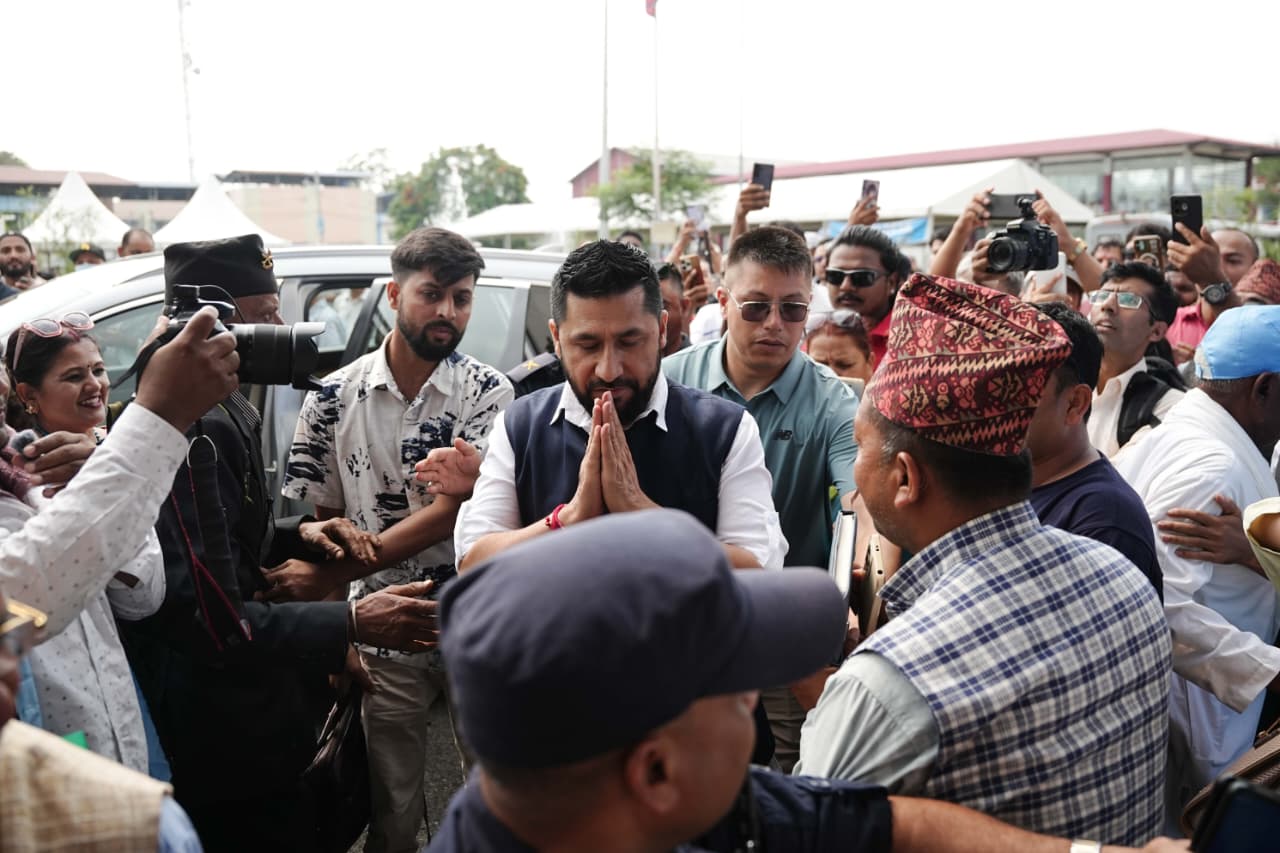
Photo: Nepal Photo Library
The report is explicit that despite this language, none of RSP’s prior documents had actually spelled out constitutional socialism as a concrete, operational ideology; it remained an accepted principle rather than a developed doctrine, which is precisely the gap this convention sought to resolve by replacing it.
What are the five pillars underpinning RSP’s new social democracy?
The report names five pillars meant to give practical shape to social democracy: a competitive liberal economy, the rule of law and institutionalized order, citizen-centric accountable government, a just welfare state, and an equitable and inclusive society. These are presented not as competing priorities but as mutually reinforcing components of a single political philosophy.
The party states its underlying goal is not simply winning elections or holding office, but changing the fundamental character of the state, restoring citizens’ trust in democratic institutions, and building a capable, prosperous, and just Nepal for future generations.
Each pillar is given detailed treatment in the report, covering specific commitments ranging from market competition, labor protections, and entrepreneurship to judicial independence, transparency mechanisms, social security guarantees, and the empowerment of historically marginalized groups within Nepali society.
What does the “competitive liberal economy” pillar actually propose?
This pillar holds that national prosperity is generated by citizens’ creativity, labor, capital, knowledge, and entrepreneurship rather than by the state itself, with the state’s proper role limited to setting fair rules, ensuring competition, and opening doors of opportunity while citizens and the private sector carry out trade and production.
The report specifies that pricing, production, and distribution should be determined by market forces to enhance efficiency and innovation, while taxes, subsidies, and social security programs correct resulting inequalities.
It commits to protecting private ownership and entrepreneurship while preventing monopolies, cartels, and market abuse through legal and institutional regulation.
It also promises a minimum wage, safe working conditions, and a focus on economic stability through inflation control and employment growth, alongside state-private collaboration on development projects centered on improving quality of life rather than growth statistics alone.
What does the “rule of law” pillar commit to?
This pillar argues that nations advance through the stability of institutions rather than the goodwill of individuals, and that societies with weak institutions inevitably breed corruption, chaos, and public frustration.
The report states that justice, administration, security agencies, and constitutional bodies must be able to function above political influence, describing the rule of law not merely as a legal concept but as the moral foundation of a civilized society.
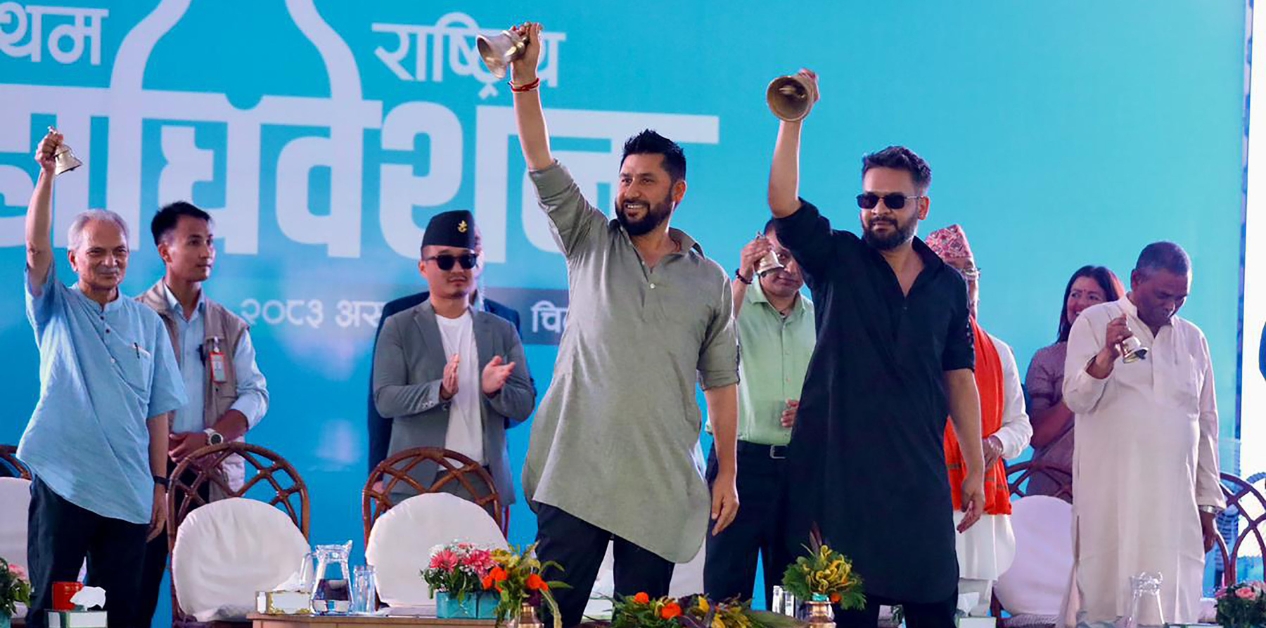
Chairman Rabi Lamichhane, Senior Leader Balendra Shah, and other leaders inaugurating the first general convention of the Rastriya Swatantra Party by ringing the bell. Photo: RSS
It commits to guaranteeing fundamental and human rights with legal remedies when they are violated, and insists that no one, from the highest official to an ordinary citizen, stands above the law.
The report explicitly rejects selective investigation or prosecution, asserting that equal crimes deserve equal punishment regardless of party, caste, religion, gender, or social standing, and that the judiciary must remain independent, impartial, and free from any shadow of external pressure or interference.
What does “citizen-centric accountable government” mean in this report?
This pillar holds that democracy is not exhausted by the act of voting but requires continuous public oversight and participation between elections as well.
The report insists that every public expenditure, policy, and government decision must be transparent and open for citizens to view, understand, and evaluate, supported by digital governance, open information, and performance measurement built into ordinary political culture. It frames citizens not as mere taxpayers but as the true owners of the state.
Specific commitments include providing realistic answers to grassroots grievances, maintaining accessible mechanisms for hearing public complaints, guaranteeing citizens’ right to access information, and respecting constructive criticism from media, opposition parties, and civil society.
It further states that officials who abuse their positions must be held responsible and punished under law, and that elections must be conducted fairly, on schedule, and free of rigging.
What does the “just welfare state” pillar say?
The report rejects both unregulated market commercialism and a fully state-controlled economy, insisting instead that economic freedom must be paired with guarantees of social security and equal opportunity.
It argues that a child’s future should never be determined by birthplace, caste, gender, or family income, and that education, health, security, and a minimum dignified standard of living are rights belonging to every citizen, not acts of charity or mercy.

Rabi Lamichhane, Chairman of the Rastriya Swatantra Party
The state’s role, the report says, should be to make citizens capable rather than dependent, linking welfare directly to production, skills, employment, and self-reliance.
Specific commitments listed include unemployment benefits, old-age pensions, free or subsidized healthcare and education, and a minimum wage, with priority given to protecting vulnerable, impoverished, and at-risk groups, all to be financed through a balanced tax system requiring transparent governance and sustainable management of resources.
What does the “equitable and inclusive society” pillar propose?
This pillar frames Nepal’s diversity of identities as a foundation for shared prosperity rather than a basis for division, explicitly opposing both special privilege for any single community and exclusion of any community from opportunity.
The report states its goal is genuine empowerment rather than symbolic representation, specifically naming women, Dalits, Janajatis, Madheshis, Tharus, Muslims, persons with disabilities, and other historically marginalized communities as groups whose voices deserve equal weight.
It commits to ensuring just participation for different castes, genders, regions, and communities across all levels and organs of the state, alongside equal access to education, health, employment, and political participation.
The report also pledges to protect all languages, cultures, religions, and traditions, while keeping the governance system open, accountable, and citizen-oriented, with the law applied impartially and equally to every citizen regardless of background.
How does the report characterize the Gen Z uprising?
The report describes the Gen Z rebellion of September 8 and 9, 2025 as far more than ordinary political dissatisfaction, calling it an explosion of public anger that had accumulated for years from inequality, corruption, impunity, and mistrust in the state.
It identifies the then Oli government’s ban on social media as the immediate trigger point, with public anger escalating sharply following the killing of youth during protests on September 8.
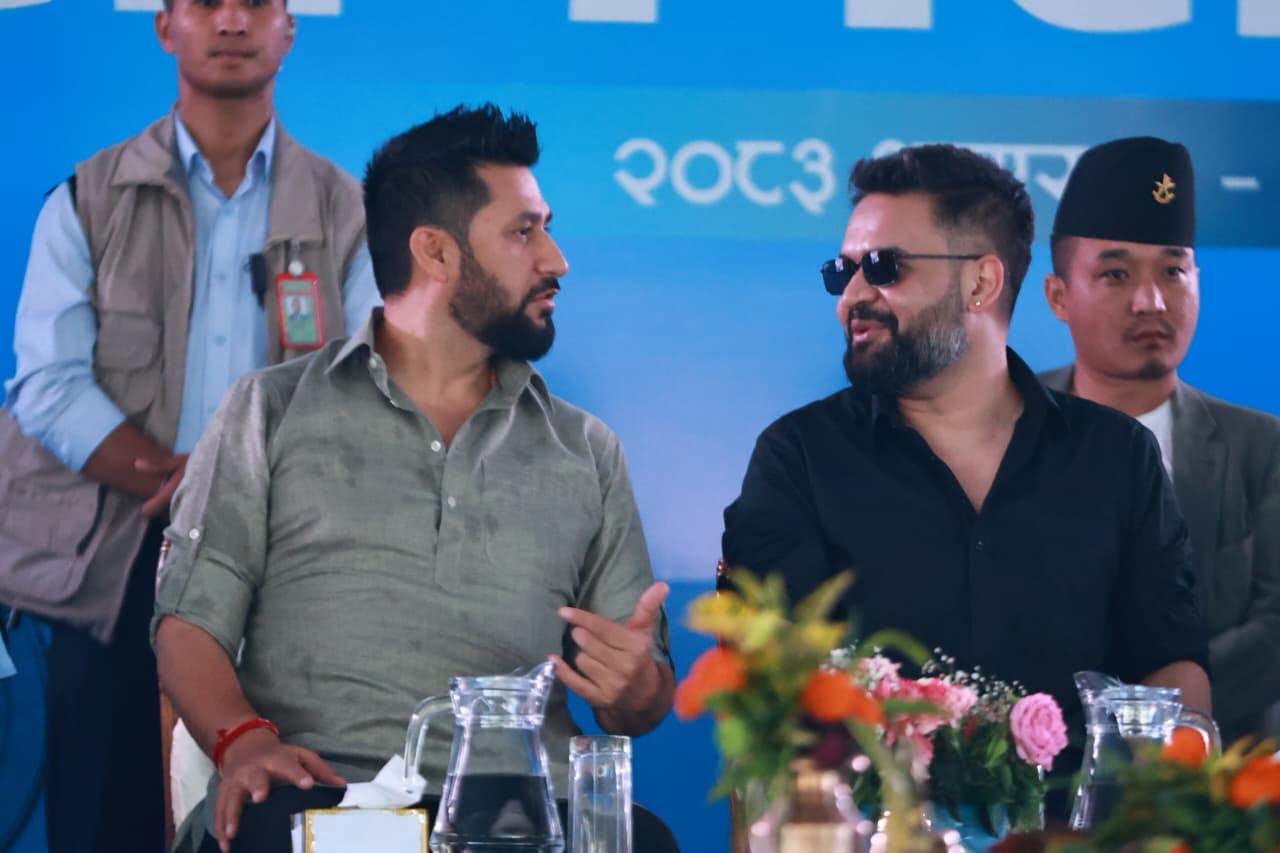
Rastriya Swatantra Party chairman Rabi Lamichhane and Prime Minister Balen Shah
The report situates this within decades of governance failure, structural corruption, unemployment, limited opportunity, and a widening gap between a digitally connected, globally aware youth generation and a political establishment it views as indifferent.
It states that the ruling coalition’s near two-thirds parliamentary majority produced arrogance rather than responsiveness, and that this ultimately culminated in the rulers fleeing by helicopter, parliament’s dissolution, and the formation of an interim government under Sushila Karki to conduct fresh elections.
How does the report portray traditional political parties?
The report consistently criticizes Nepal’s traditional parties for corruption, instability, opportunism, and a pattern it calls leader-driven rule, which it says was itself manipulated by political middlemen operating behind the scenes.
It claims these parties initially dismissed RSP’s prospects entirely, with the old establishment compared to an unmovable mountain and influential intellectuals, media figures, and celebrities refusing to take the new party seriously even as ordinary citizens showed clear appetite for change.
The report further accuses the CPN (UML) and Nepali Congress coalition, formed in July 2024, of weaponizing state institutions against RSP through fabricated and expanding allegations, misusing all three branches of government against the party.

It argues this backlash intensified specifically because RSP’s anti-corruption efforts, particularly its investigation into the Bhutanese refugee scam, threatened entrenched interests strongly enough that the two largest parties united overnight in response.
What does the report say about RSP’s rise “from zero to Singha Durbar”?
The report recounts that most RSP founders came from media, business, and civil society rather than career politics, initially trying to pressure the state for reform from the outside before concluding that genuine transformation required entering the system directly. It cites Balendra Shah’s mayoral victory in Kathmandu as proof that the public was ready to break from traditional parties despite elite skepticism.
Within five months of its founding, RSP became the fourth-largest party in the country with nearly 1.2 million votes, after which it joined Pushpa Kamal Dahal’s government holding four ministries.
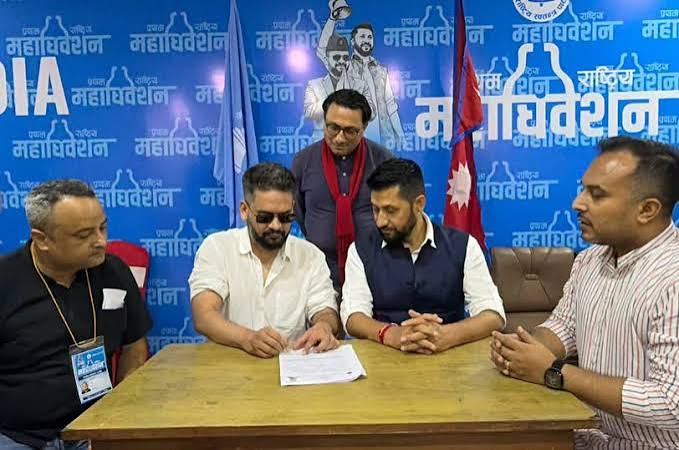
The report claims the party then faced institutional retaliation intended to weaken it, including efforts that rendered Lamichhane stateless, but that subsequent by-elections, rather than diminishing RSP, strengthened it to 21 seats, prompting the party to rejoin government and continue pushing governance reforms.
What does the report say about the legal cases and alleged “conspiracy” against Lamichhane?
The report alleges that once the UML-Congress coalition formed government, a coordinated campaign deployed cooperative fraud, organized crime, and money laundering allegations against RSP and against Lamichhane personally, despite contrary findings from a parliamentary special inquiry committee.
It claims additional cases were layered on progressively, jail transfers happened without warning overnight, and at one point Lamichhane was asked for his “last wish,” which the report presents as evidence of the campaign’s severity.
It frames this as the combined misuse of the legislature, executive, and judiciary, describing the process as selective justice and calling it the largest organized political crime carried out against the party.
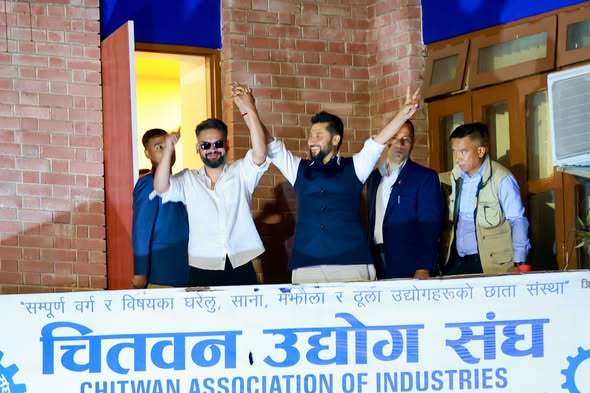
Photo: Nepal Photo Library
The report notes that more than four million citizens signed in solidarity against what it calls this political vendetta, and observes that most figures involved in orchestrating the campaign subsequently failed to win re-election to the current parliament.
What achievements does the report credit to the current RSP-led government?
The report credits the government led by senior leader Balendra Shah with several concrete initiatives: administrative and digital reforms intended to make public service delivery faster, more direct, and less burdened by middlemen; advancing prosecution of individuals implicated in incidents during the Gen Z movement; and forming a high-level commission to investigate the assets of former and current high-ranking officials.
It also lists a task force gathering public input for constitutional amendment, revocation of controversial past political appointments in favor of merit-based hiring, a process to repay small depositors affected by cooperative fraud, implementation of commission reports aimed at protecting public land from encroachment, legal action against politically connected middlemen, preparatory work on rehabilitating unmanaged settlers through land-ownership certificates, and renewed momentum on development projects that had previously stalled for years.
What does the report propose regarding constitutional amendment?
The report states that when Nepal’s constitution was written in 2015, the door was deliberately left open for review after a decade, and that this natural review phase has now arrived. It calls for open, honest, and responsible debate on the constitution’s achievements, shortcomings, and the reforms citizens desire.
The party lists distinct positions it has held since its founding: support for a directly elected executive with stable leadership and clearly defined responsibilities; replacement of the current, costly electoral system with a fully proportional system guaranteeing representation for all communities; transformation of the National Assembly into a non-partisan assembly of experts chaired by the Vice President; and restructuring of provincial assemblies and provincial governments.
The report frames the constitution as a shared national document rather than any single party’s manifesto, insisting that amendment be guided by long-term national need, citizen experience, and broad consensus rather than narrow political interest.
Does the report call for scrapping provinces or reducing the number of local levels?
The report does not call for abolishing the provincial structure altogether, and it makes no mention whatsoever of reducing the number of local government levels.
What it explicitly states is support for “restructuring the provincial assemblies and provincial governments,” presented alongside its preference for a directly elected executive, a fully proportional electoral system, and conversion of the National Assembly into a non-partisan expert body chaired by the Vice President.
The report offers no further detail on what such provincial restructuring would concretely involve, whether that means altering boundaries, powers, numbers, or internal composition.
There is no language anywhere in the document addressing the size, number, or structure of local levels, so any claim suggesting RSP seeks to scrap provinces or cut local units would go beyond what this report actually states.
What is RSP’s stated foreign policy approach?
The report describes foreign policy as a strategic tool for advancing national sovereignty, economic prosperity, citizen interests, and international standing, prioritizing what it calls “Development Diplomacy” over traditional power-centered diplomacy.
It commits to the UN Charter, the principles of Panchsheel, and the spirit of the Non-Aligned Movement, while adapting to a changing global order.
On Nepal’s position between India and China, the report frames this geography as an opportunity rather than a vulnerability, envisioning Nepal as a “vibrant bridge” linking South Asia and the Himalayan region rather than a passive arena for competing spheres of influence.
It commits to balanced, stable, and practical relations with both neighbors, resolving border management and historical treaty matters through facts, evidence, and institutional dialogue rather than emotional debate, while explicitly citing Lamichhane’s own visit to India and the foreign minister’s visits to India and China as demonstrations of this approach already in motion.
What internal organizational problems does the report acknowledge?
The report candidly admits that RSP remains in a transitional phase, still converting itself from a political movement into a fully institutionalized political party despite its parliamentary success.
It identifies factionalism framed around “new” versus “old” members, groupism, personal ambition, and person-centered thinking as ongoing threats to organizational unity and internal trust. It describes complaints that group protectionism discourages qualified and committed members, that some seek special privileges based on early involvement, and that capable newcomers are sometimes blocked out of fear they might challenge existing influence.
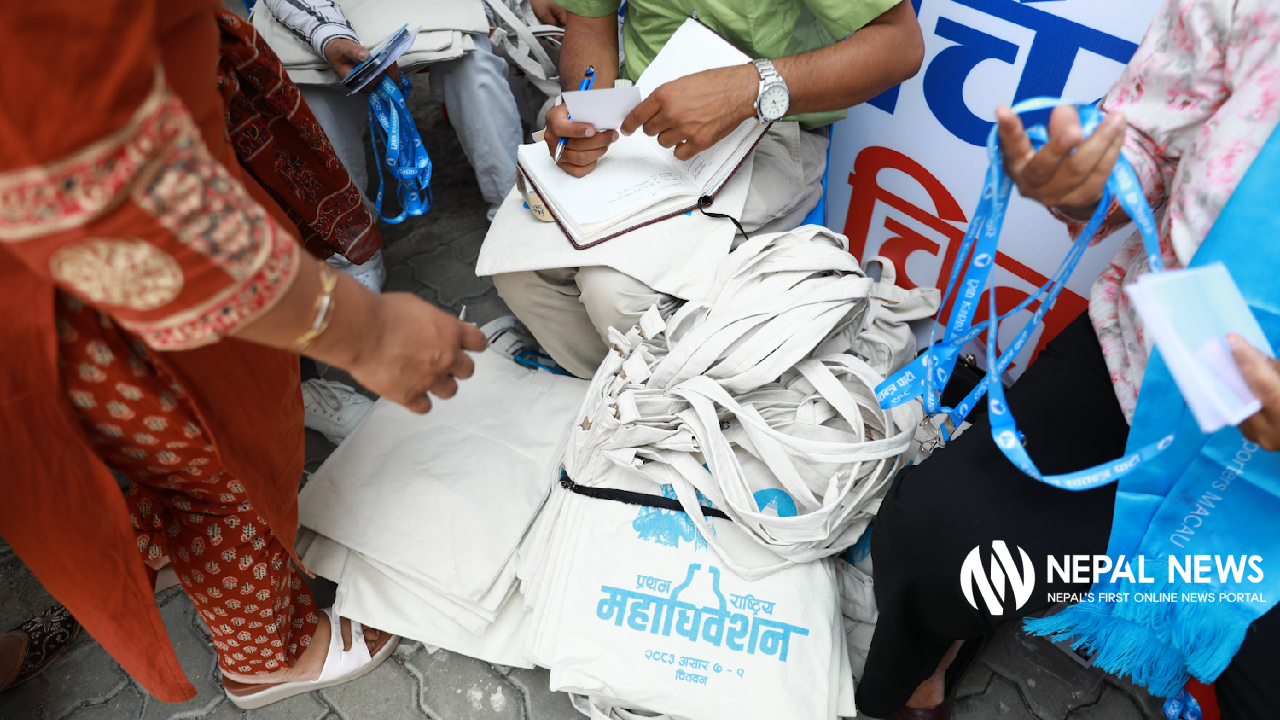
The report also flags risks of growing frustration and passivity among members due to insufficient contact, dialogue, and capacity development, along with concern that the organization may be becoming dependent on individuals rather than durable systems.
It calls for ending factional references entirely after this convention, replacing them with open, competitive, transparent, merit-based leadership selection going forward.
What does the report say about linking party membership to production and the Leadership Academy?
The report states that RSP wants its members defined not by political access or personal influence but by their contribution to production, enterprise, innovation, and self-reliance, explicitly aiming to end what it calls a culture of sycophancy within the party.
It proposes evaluating members’ entrepreneurial and productive contributions alongside their political organizing work, while offering facilitation such as skill development, training, counseling, collective enterprise opportunities, market access, and connections with investors.
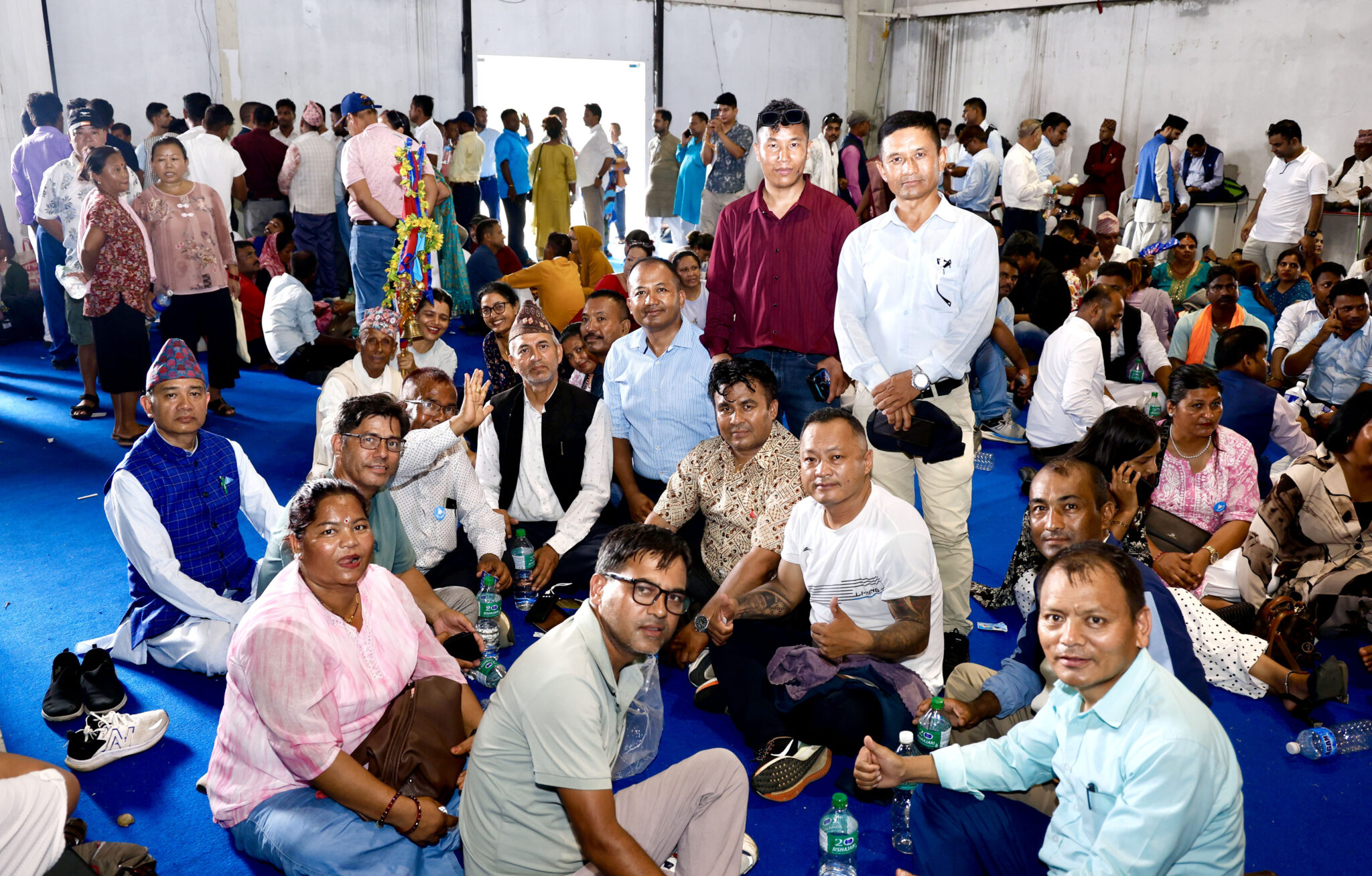
Photo: Pradeep Raj Wanta/RSS
Separately, the report describes the Leadership Academy, a policy adopted as early as the Jaleshwar meeting in November 2023, designed to build leadership capacity in good governance, public administration, policy formulation, economics, and law through structured training, regular evaluation, and research-based study involving experts and experienced administrators.
The report memorably describes it as an institution “to read less and learn more,” and also as an “Unlearning Academy” meant to help members discard harmful political habits absorbed from Nepal’s past political culture.
How does the report conclude regarding the party’s future direction?
Lamichhane closes the report by insisting RSP must prove itself a durable, institutional, transformative political force rather than a vehicle of fleeting popularity, as critics have claimed, stating that the mandate the party received is only the initial foundation of a much longer journey rather than a final achievement.
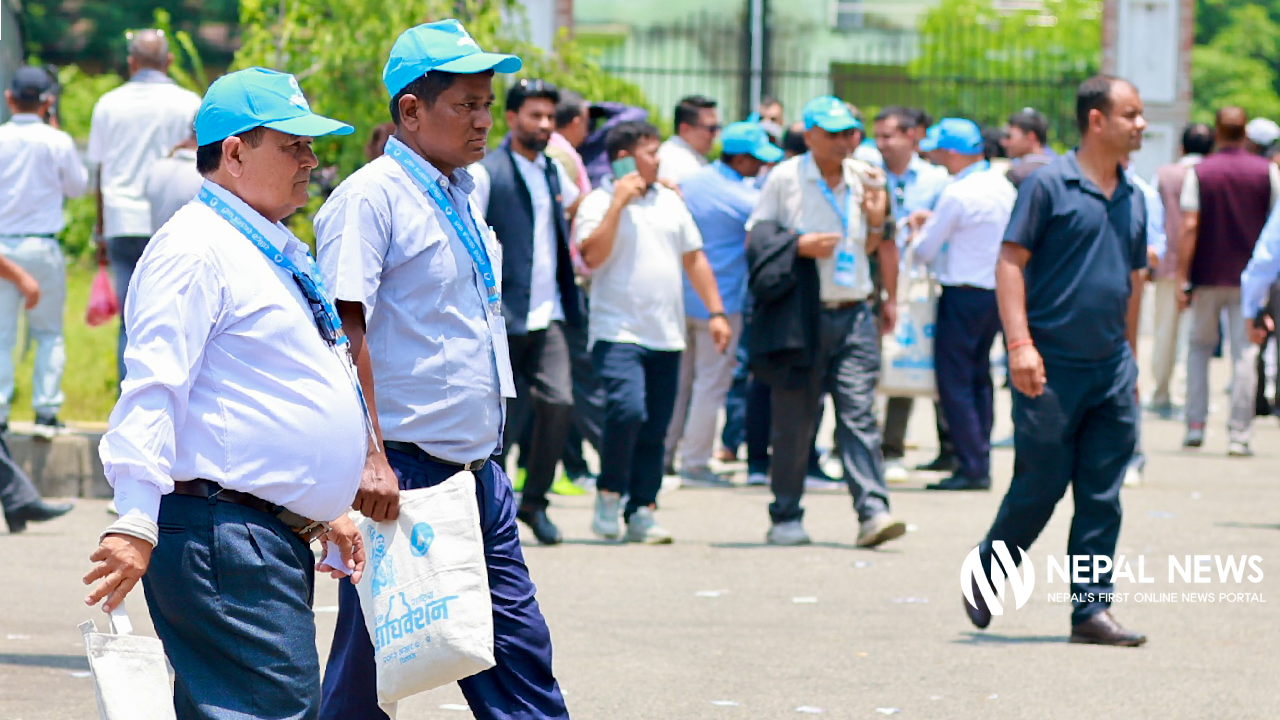
He calls for cultivating a culture that places system above individual, collective identity above personal ego, and shared purpose above self-interest, framing ongoing criticism and condemnation as natural byproducts of the party’s growing strength rather than reasons for discouragement or panic.
He expresses gratitude to party leaders, workers, well-wishers at home and abroad, and all who participated in the party’s campaigns, crediting their efforts with RSP’s transformation from a new alternative force into an established mainline political force.
The report closes by inviting open discussion, suggestions, and constructive criticism from convention representatives regarding his own decisions and conduct as chairman, ending with the party’s slogan, “Hail the Bell.”