Kathmandu
Saturday, June 27, 2026





The party's first general convention formalized its organization but also concentrated power around its top leadership, raising questions over internal democracy and leadership succession.
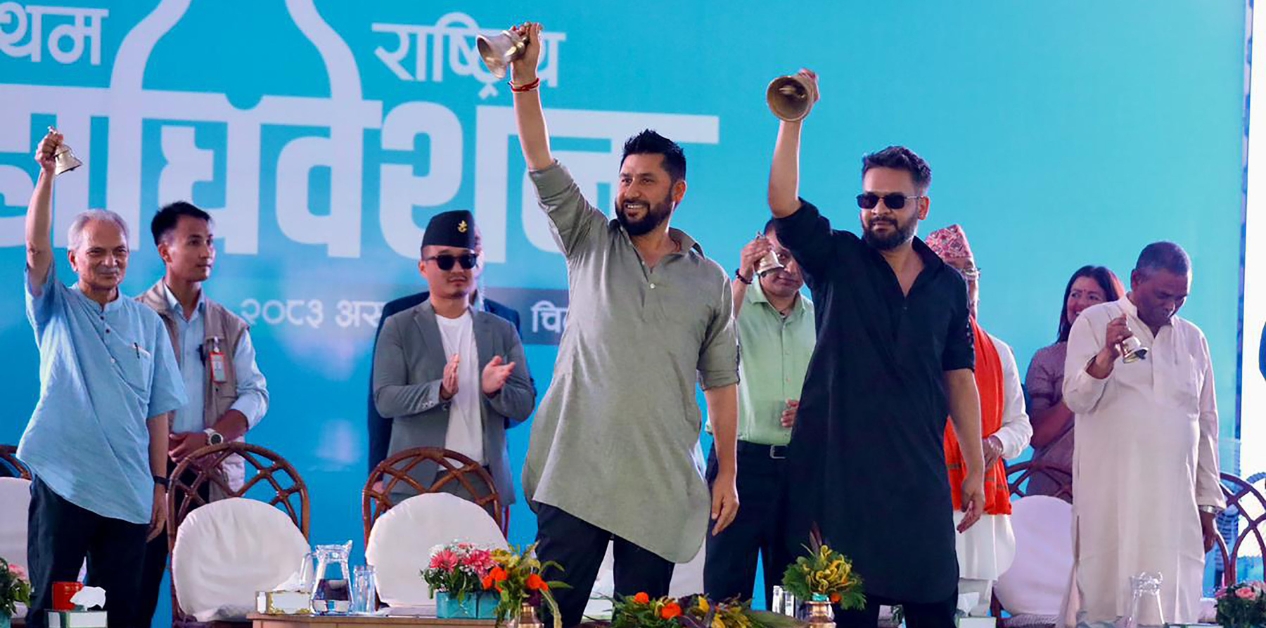
KATHMANDU: As political sociologist Robert Michels observed nearly a century ago, “It is organisation that gives birth to the domination of the elected over the electors, of the mandataries over the mandators, of the delegates over the delegators. Who says organisation, says oligarchy.” The Rastriya Swatantra Party’s first general convention, concluded on June 26 offers a contemporary illustration of how democratic organizational structures can accommodate oligarchic decision-making in practice.
The organizational outcomes
The convention produced three principal results. Rabi Lamichhane was elected unopposed as party chairman. Swarnim Wagle was elected unopposed as vice-chair. Prime Minister Balendra Shah retained his ceremonial designation as senior leader. Bipin Kumar Acharya, a core team member from the party’s 2022 founding and a close associate of Lamichhane, was elected general secretary with 673 votes.
These outcomes had substantial foreground preparation. Before the vote on general secretary, multiple candidates including established party figures withdrew their candidacies in support of Acharya. This pre-vote consolidation of support around a leadership-favored candidate transformed the voting process from a contested election into a ratification exercise. When competing candidates voluntarily withdraw before balloting, it indicates organizational signals from above have established hierarchical preference rather than genuine membership deliberation.
The office-bearer structure reflected two distinct methods of selection. Some positions are yet to be filled and will be appointed directly by party chair Rabi Lamichhane at a later stage. The remaining positions were decided through elections, but the party establishment openly backed preferred candidates in an effort to install loyalists in key roles. Ahead of the voting, Lamichhane held a series of closed-door meetings with senior leaders to build consensus around his trusted lieutenants. Among the biggest beneficiaries of the establishment’s backing was Bipin Acharya, widely regarded as one of Lamichhane’s closest confidants, who secured the position of general secretary.
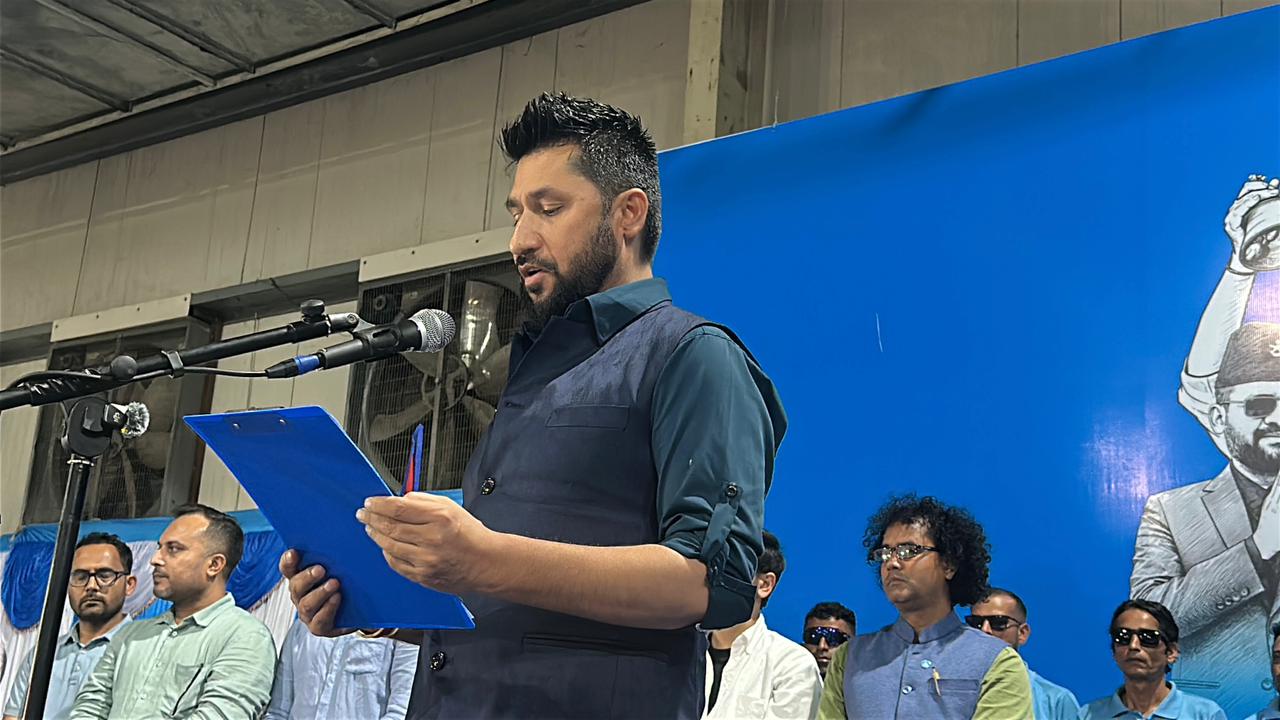
Newly elected RSP chairman Rabi Lamichhane.
The convention extended beyond its scheduled three-day timeline by three additional days. This extension reflected the difficulty party leadership faced in negotiating acceptable compromises on multiple office bearer positions. The extended timeline itself communicates something about the process. If internal democratic procedures worked cleanly, with broad participation driving outcomes, extension would be unlikely. Prolonged conventions typically indicate leadership is managing competition and negotiating factional balance rather than facilitating transparent delegate decision-making.
Democratic form and hierarchical substance
The RSP retained institutional structures that superficially conform to democratic party organization. It conducted delegate assemblies. It permitted voting on office bearer positions. It published candidate lists. It maintained written procedures and published voting totals. These forms satisfy minimal democratic criteria. Yet the convention’s actual operations reveal gaps between form and substance.
Delegate participation in voting proved limited. Of the 4211 registered delegates, approximately one-third participated in key voting procedures on office bearers. A participation rate of roughly 33 percent indicates either that two-thirds of delegates abstained by choice or that party organization did not effectively mobilize participation. Either circumstance suggests weak connection between membership and the formal voting procedures. In mass-based political parties with genuine internal democracy, much higher participation rates in leadership selection are standard practice.
The party chairman’s unopposed election raises questions about what opposition within the party would have meant. While unopposed elections occur in many parties when factional consensus exists, they also preclude membership choice when alternatives might be viable. With Lamichhane commanding substantial personal popularity and controlling party organizational machinery, differing voice was implicitly discouraged. An unopposed election does not necessarily indicate democratic limitation. But paired with other organizational features, it suggests leadership position was deemed unchallengeable regardless of actual membership sentiment.
The party’s central committee expansion to 158 members incorporated 51 directly nominated positions filled by party leadership without electoral input. This represents roughly 32 percent of the central committee being appointed rather than elected. While nomination mechanisms serve legitimate functions in party organization, allowing leadership to directly appoint one-third of an organization’s senior governing body concentrates significant unilateral authority in a single individual or small group.
The ideological repositioning and governance questions
The party chairman’s political report announced adoption of social democracy as the party’s foundational ideological framework. This represented a shift from earlier party documents referencing constitutional socialism. The distinction carries implications.Social democracy as a political ideology emphasizes state intervention within capitalist market systems to provide welfare services, support basic education and healthcare, and regulate economic activity to prevent exploitation. It accepts private property and business enterprise while arguing for redistributive taxation and government provision of public goods. Democratic socialism, by contrast, typically involves more fundamental questioning of capitalist property relations and greater emphasis on state ownership or control of productive assets.
Nepal’s 2015 constitution declares the state itself to be socialist. This creates potential tension when a ruling party adopts social democratic rather than socialist ideology. Lamichhane’s argument that a political party’s doctrine need not align with constitutional framework reflects pragmatic recognition that governance requires flexibility beyond constitutional language.
However, the political report also included governance reform proposals: direct election of executives and abolition of provincial assemblies in favor of councils composed of local government representatives. These structural reforms carry implications for how power flows in federal systems. The proposals reiterate long-standing RSP positions from its founding. Yet their specific presentation at the convention appears designed to position the party as committed to systematic institutional change rather than marginal governance adjustment.
The relationship between the party’s stated ideological framework and these governance proposals remains underdeveloped. The political report announces positions but provides limited analysis of how social democratic economic management would function within the proposed federal structure or how governance changes would advance social democratic principles.
Party structure and leadership succession
The convention created formal organizational mechanisms while leaving leadership succession unaddressed. The party maintains no specified procedures for transitioning to new leadership when Lamichhane eventually departs from active politics. The organizational structures created through the convention would serve Lamichhane’s tenure. How they would function with alternative leadership remains unclear.
In many political parties emerging from individual personalities’ political movements, succession represents an acute vulnerability. When party organization centers on a single figure’s decision-making authority and personal relationships, the death or withdrawal of that figure creates institutional crisis. The party’s formal structures may persist, but the decision-making practices that make them functional depend on an individual’s presence.
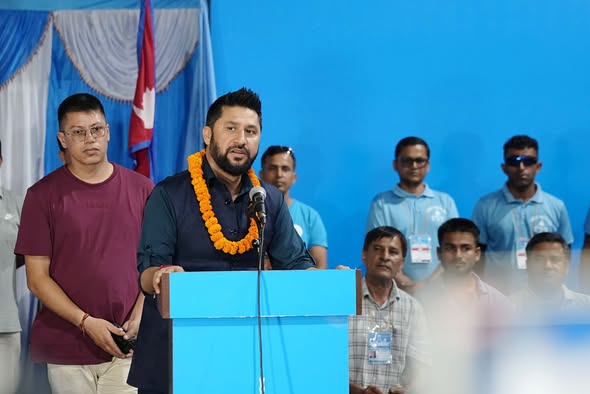
RSP chairman Rabi Lamichhane. Photo: Nepal Photo Library
The RSP has four years of operating experience prior to this convention. It has three months of governing experience. The timeframe for testing whether organizational structures can outlive the individual around whom they coalesced remains limited. The convention created procedures that function with Lamichhane’s continued leadership. Whether those procedures can guide the party through a transition to different leadership is unexamined.
Lip service to inclusive representation
The convention outcomes did not address representation of historically marginalized groups in Nepali politics. Dalits, Madhesi populations, and indigenous Janajati communities occupy distinct positions in Nepal’s political economy and social structures. Constitutional recognition of these communities as requiring proportional representation exists alongside political tradition of concentrated power in upper-caste, urban-based political leadership.
The RSP’s central leadership, as constituted through the convention, does not include office bearers from these communities in positions of significant authority. The law minister, Sobita Gautam, was elected as women’s vice-chair, addressing gender representation at a formal level. No comparable positioning occurred for caste, ethnic, or regional representation.

Law minister, Sobita Gautam, elected as RSP women’s vice-chair.
This pattern reflects broader tendencies in the RSP. The party swept to electoral dominance partly through mobilization of youth, urban voters, and voters dissatisfied with traditional political machinery. These constituencies encompass diverse social backgrounds. Yet the party’s governance and organizational appointments have concentrated authority among a narrower social base. The gap between constituencies and power-holding structure creates potential vulnerabilities if mobilized constituencies come to perceive unequal benefit distribution or excluded voice in decision-making.
Organizational parallels in electoral dominance
When political parties achieve decisive electoral majorities under charismatic leadership, organizational consolidation frequently follows. The mechanisms differ, but the tendency operates consistently across political systems. The dominant party’s leadership, having secured substantial mandate through elections, typically moves to rationalize internal organization in ways that prevent factional fragmentation and ensure legislative cohesion.
India’s Bharatiya Janata Party under Prime Minister Narendra Modi experienced comparable consolidation. After achieving decisive electoral majorities in 2014 and 2019, the party moved to concentrate decision-making authority within Modi’s office. The party’s internal election procedures for selecting leadership were progressively restricted. The party’s federal structure, which traditionally permitted significant state-level autonomy, was reorganized to enhance central authority. These changes occurred through formal statute amendment and procedural adjustment. Their effect was to centralize organizational authority while maintaining democratic procedural appearance.
Turkiye’s Justice and Development Party under Recep Tayyip Erdogan similarly concentrated authority as electoral dominance extended over multiple election cycles. The party’s internal organizational procedures were amended to prevent contested elections for party leadership. Opposition factions within the party faced subtle but clear signals that challenging the leader was organizationally incompatible with remaining in good standing.
Venezuela’s consolidation of multiple pro-Chavez parties into a single United Socialist Party represented more overt organizational centralization. The mechanism differed from India or Turkiye, yet the effect was comparable: reduction of organized internal competition and concentration of authority in leadership’s hands through party reorganization.
The common pattern across these cases is that electoral dominance generates pressure toward organizational consolidation. Party leaders, having secured overwhelming parliamentary majorities, face reduced electoral constraint. The internal party becomes more significant as an arena for managing authority and preventing factional conflict that might eventually threaten electoral position. Organizational changes that reduce internal democracy often appear justified as efficiency measures or as preventing factional disruption that could harm electoral prospects.
The RSP’s convention reflects this pattern in incipient form. The party has achieved unprecedented electoral dominance for a new political party. It commands 182 of 275 parliamentary seats. It holds the prime ministership. It faces no immediate electoral threat. Under these conditions, the party leadership’s investment in organizational consolidation and reduction of internal contestation is strategically rational even if it narrows internal democratic procedures.
Governance and organizational capacity
The convention created formal structures without establishing clear answer to foundational questions about how the party will function as both a governing organization and a political party. In parliamentary systems, ruling parties must operate simultaneously as government organizations and political parties. The separation between these functions affects organizational capacity.
The RSP under Prime Minister Shah has governed for three months when the convention occurred. The party’s actual experience operating government machinery was limited. The convention addressed party organization without substantively addressing how party structure supports governmental function.
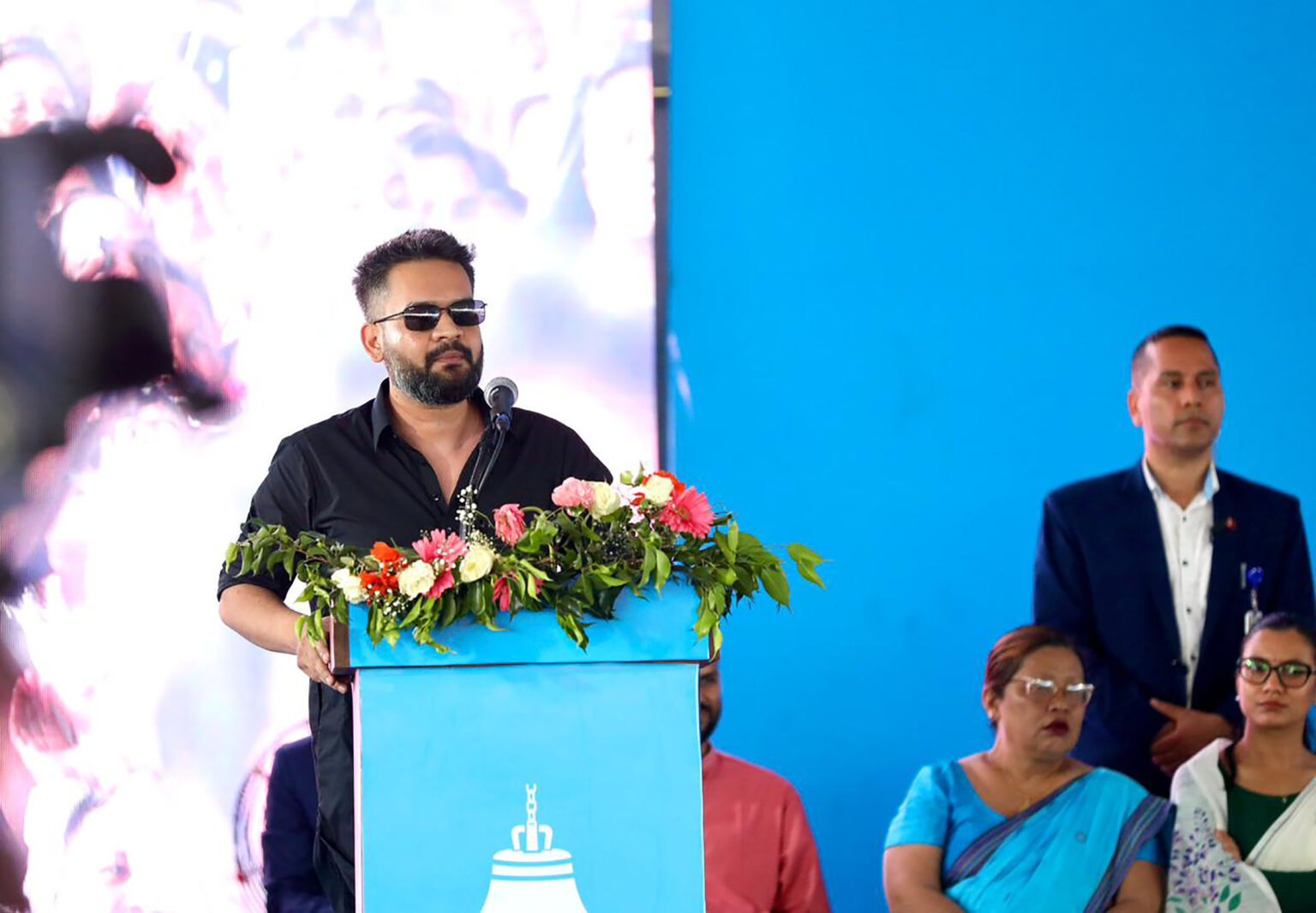
Senior Leader of the party and Prime Minister Balendra Shah addressing the inauguration ceremony. Photo: Pradeep Raj Wanta/RSS
The party’s central committee composition includes members with substantial parliamentary experience alongside members with administrative experience and members whose primary asset is factional loyalty to Lamichhane or Shah. The mix is necessary for any large party. Yet the convention did not explicitly address how this mixed composition would contribute to specific governance functions.
The party holds overwhelming parliamentary majority. In such circumstances, party discipline becomes less critical for legislative function. Opposition parties cannot threaten government viability through parliamentary challenge. The party can afford significant internal disagreement on legislative matters. Yet the party has moved toward tighter organizational control. This suggests that organizational consolidation is driven by leadership preference rather than legislative necessity.
Legitimacy and long-term viability
The convention’s legitimacy rests on several foundations. The party held elections among delegates. It followed published procedures. It conducted voting according to written regulations. By formal standards, the convention satisfied democratic organizational requirements.
Yet the legitimacy question extends beyond procedural compliance to substantive input into outcomes. When roughly one-third of delegates participate in voting on leadership, whether the reported outcomes genuinely reflect membership preferences is open to question. When candidates withdraw before voting in response to apparent leadership signals, whether the voting process reflects genuine choice is debatable. When multiple hours are spent in backstage negotiation before formal voting occurs, whether the voting process substantively determines outcomes is questionable.
The gap between procedural legitimacy and substantive legitimacy reflects the Michelsian tension. Democratic procedures create the form of membership control. Yet organizational hierarchies and leadership authority can structure procedures in ways that produce predetermined outcomes while maintaining appearance of democratic selection.
This gap becomes consequential when party faces challenges. If organizational legitimacy is weak, the organization becomes vulnerable when external pressures increase or when the leader’s authority is questioned. If organizational legitimacy rests on substantive membership input, the organization can sustain challenges better because broader membership investment in outcomes exists.
The RSP has significant legitimacy advantages currently. Electoral victory is recent. Party leader possesses substantial personal popularity. Government is functioning without major crisis. Under current conditions, the gap between procedural and substantive legitimacy does not threaten organizational survival. The question is what occurs when conditions change.
Structural contradictions in the party’s positioning
The party’s founding positioning emphasized anti-corruption, anti-establishment change, and alternative political practice compared to traditional parties. The party promised meritocratic governance, transparency, and departure from patronage-based politics. These commitments generated electoral appeal, particularly among constituencies dissatisfied with traditional political machinery.
The convention’s organizational outcomes operate in some tension with these founding positions. The party’s actual decision-making proved to involve substantial backstage negotiation and leadership direction of outcomes. The party’s office bearer composition concentrated authority among a small group with close connection to Lamichhane. The party created mechanisms for leadership-directed appointments to major governing positions.
This is not unique to the RSP. Virtually all major political parties operate with some gap between anti-establishment rhetoric and actual organizational practice. The particular tension for the RSP is that its electoral appeal rested substantially on promise of different organizational practice than traditional parties offered.
As the party matures and governance challenges arise, this gap may become more politically significant. If the party’s supporters came to perceive that organizational practices diverge substantially from initial promises, support could fragment. The party’s particular vulnerability is that it has not yet established deep institutional roots or genuine mass membership. The party’s support is concentrated among constituencies mobilized through recent electoral success and dissatisfaction with alternatives rather than constituencies with decades of organizational investment in the party.
The convention’s place in party development
The convention represented necessary institutionalization. Any party achieving governmental power must establish formal structures, define roles, and create mechanisms for making decisions. The RSP could not function indefinitely on the basis of personal relationships between Lamichhane and Shah. The convention moved the party from that ad-hoc phase toward institutional structure.
The convention simultaneously created an organizational form that appears designed to prevent the very internal contestation that might generate alternative leadership or organizational challenges to Lamichhane’s authority. The party’s structures facilitate orderly decision-making and prevent factional conflict. They simultaneously restrict the possibility of genuine internal competition for party leadership or substantive challenge to established direction.
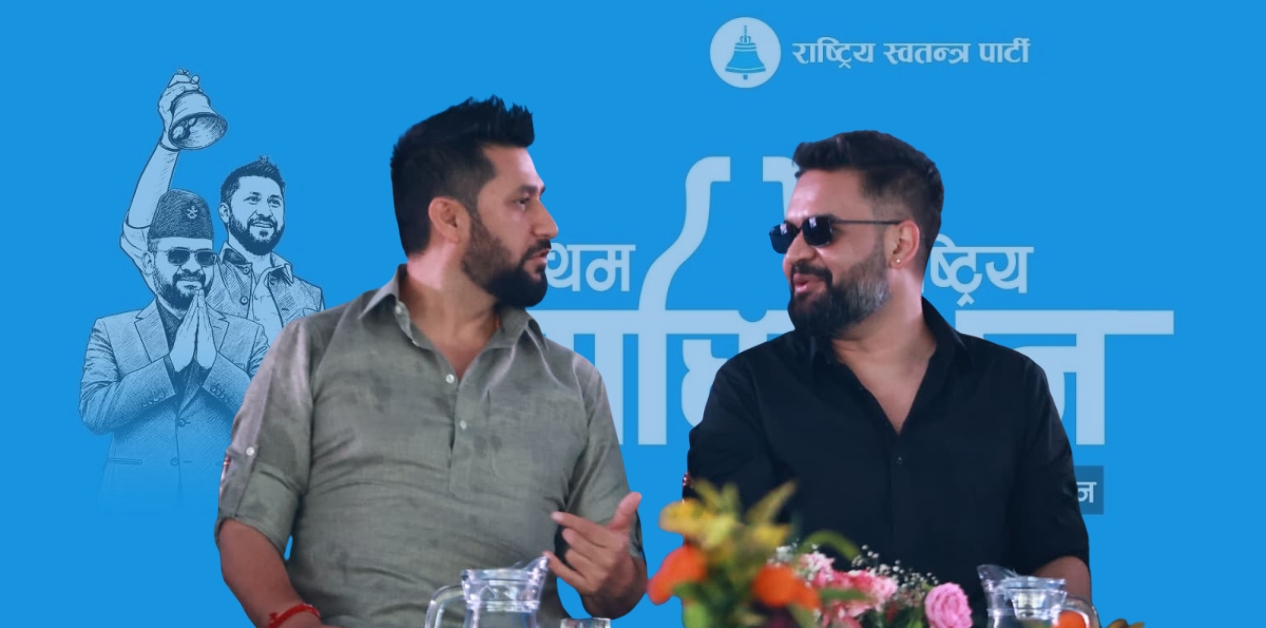
RSP Chairman Rabi Lamichhane and Prime Minister and RSP Senior Leader Balendra Shah participating in the General Convention of the Rastriya Swatantra Party. Photo: Nepal Photo Library
This represents a typical phase in party development. New parties emerging from individual leaders’ movements face pressure to institutionalize. The institutionalization that occurs often takes a form that prioritizes the leader’s continuity and control. Over time, if such parties achieve long-term governmental success, organizational pressure accumulates for more genuinely democratic procedures. Alternatively, if parties face declining electoral circumstances or leadership failure, internal structures designed to prevent challenge become recognized as weaknesses rather than strengths.
Social democracy rhetoric versus eviction-driven practice
The party’s announced commitment to social democracy emphasizes welfare provision, protection of vulnerable populations, and state responsibility for basic needs. Yet the RSP government’s actual governance on land and settlement issues reveals sharp contradiction.
The party pledged in its election manifesto to resolve landless settlers problems within one thousand days through dedicated institutional mechanisms. Instead, the government launched eviction drives in Kathmandu Valley and other locations, displacing thousands to temporary holding centers with inadequate food, shelter, and services. Landless populations, predominantly composed of historically marginalized Dalit communities, experienced forced removal without guaranteed alternative housing arrangements. Civil society organizations documented that evictions proceeded without prior adequate rehabilitation planning, contradicting constitutional provisions guaranteeing housing rights. The government’s defense emphasizing monsoon safety and prevention of politicization does not address why relocation mechanisms were not established before displacement began.
This gap between social democracy’s theoretical commitments and actual implementation raises questions about whether rhetorical ideology endorsed by the general convention translates into substantive policy protecting economically vulnerable constituencies.
Future trajectory
The RSP’s first general convention illustrates Michels’ insight that organization itself generates hierarchical structures even within organizations that declare democratic commitment. The convention created formal democratic procedures while establishing organizational practices that concentrate decision-making authority.
This outcome is neither unique to the RSP nor surprising given the party’s recent formation and Lamichhane’s dominant position. It reflects organizational pressures that arise when successful electoral movements move to create institutional structures. The particular form it takes depends on the movement’s ideological commitments and the leader’s preferences.
The RSP’s form reflects Lamichhane’s apparent preference for hierarchical organizational control combined with maintained democratic procedures.
The longer-term significance depends on whether the party’s institutional structures prove capable of sustaining governance quality, preventing factional fragmentation, and managing eventual leadership transition. Success on these dimensions would suggest that the particular organizational form the RSP adopted served functional purposes despite democratic limitations.
Failure would suggest that restricting internal competition created vulnerability that undermined the party’s long-term viability.
What the convention revealed about the party’s actual character proves more interesting than what it formally established. The party operates with organizational practices more closed and hierarchical than its public positioning suggests.
Whether supporters who mobilized behind the party’s anti-establishment rhetoric recognize and accept this reality as party matures will significantly affect the party’s future trajectory.