Kathmandu
Tuesday, June 30, 2026





Driven by its population of rare wild water buffaloes, migratory birds, and rich wetland heritage, the reserve is rapidly developing into the premier wildlife tourism destination for travelers across Eastern region of the country
SUNSARI: Kiran Sunuwar of Jhumka in Ward 1 of Ramdhuni Municipality of the district fulfilled a long-awaited family plan on June 21 of this month by visiting the Koshi Tappu Wildlife Reserve alongside his wife, Harimaya, and daughters, Prashna and Prerna. Local residents like the Sunuwar family often live in close proximity to the reserve but rarely find the opportunity to explore its grounds firsthand.
The greenery, open sky, the chirping of birds, and the herd of Asiatic wild water buffalo (Bubalus arnee), locally known as the Arna, inside the reserve captivated the Sunuwar family. The daughters became excited upon seeing elephants, wild water buffaloes, and birds right before their eyes. “One has had the desire to come to Koshi Tappu for a long time,” says Sunuwar. “It felt very delightful arriving here. The heart becomes completely overjoyed when seeing the chirping of birds and the herd of wild water buffaloes.”
Not only the Sunuwar family, but also lately the bustle of residents of Eastern Nepal, students, employees, and nature lovers has begun to increase in Koshi Tappu. This reserve, which at one time used to fall more under the choice of foreign researchers and bird lovers, is now becoming an easy and attractive destination for internal tourists as well. The family of Maiya Khadka, who came from Pichra in Biratnagar Metropolitan City-11, Morang District, was also spotted in Koshi Tappu on June 23, also this month. After observing wildlife throughout the day, they stayed overnight at a nearby homestay.
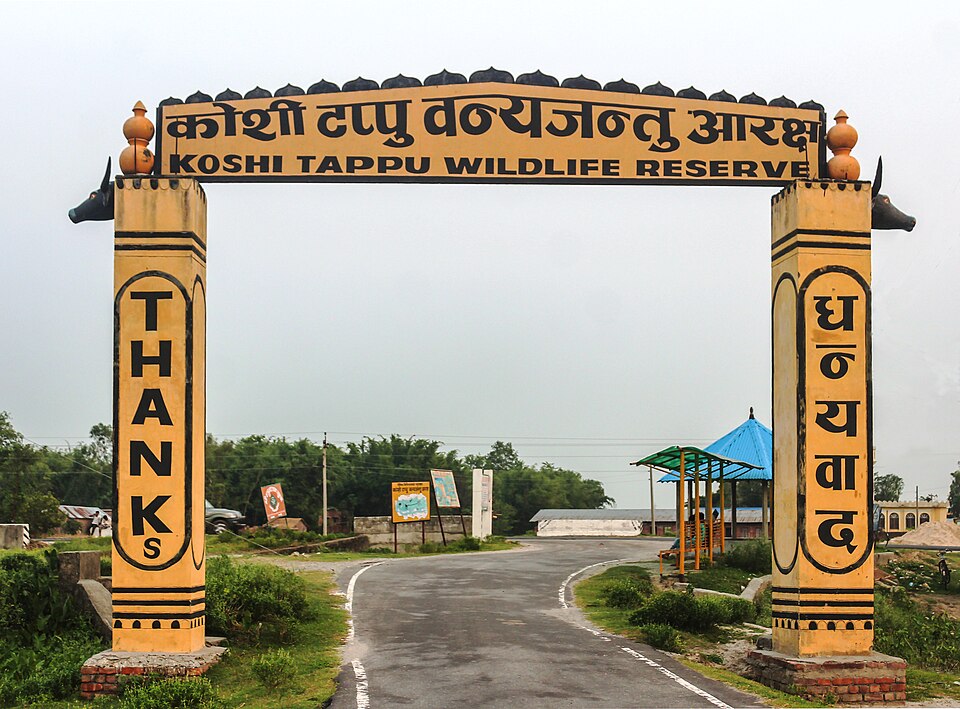
Koshi Tappu Wildlife Reserve entry gate. Photo credit: Drishtanta Bidari
On June 26, Shankar Kharel also arrived at Koshi Tappu from Biratnagar itself along with his wife and children. Having come for a Friday familial outing, many internal tourists like him have begun choosing the reserve as a nearby wildlife destination. The reserve, which was established in 1976, is spread across Sunsari, Saptari, and some parts of Udayapur.
Increasing internal tourists
According to the data of the reserve office, the attraction of internal tourists in Koshi Tappu is increasing. In the fiscal year 2024/25, at least 11,603 tourists visited the reserve. Among them, 11,214 were Nepalis, some 87 were from SAARC countries, and 302 were other foreign tourists.
The reserve collected more than Rs 25 million in revenue from tourist arrivals, as stated by Conservation Officer Bhupendra Prasad Yadav.
According to the data, more than 95 percent of those visiting the reserve are internal tourists. This is an indication that Koshi Tappu is now becoming not just an area for limited bird lovers or researchers but also a destination for Nepali tourists going to travel with their families.
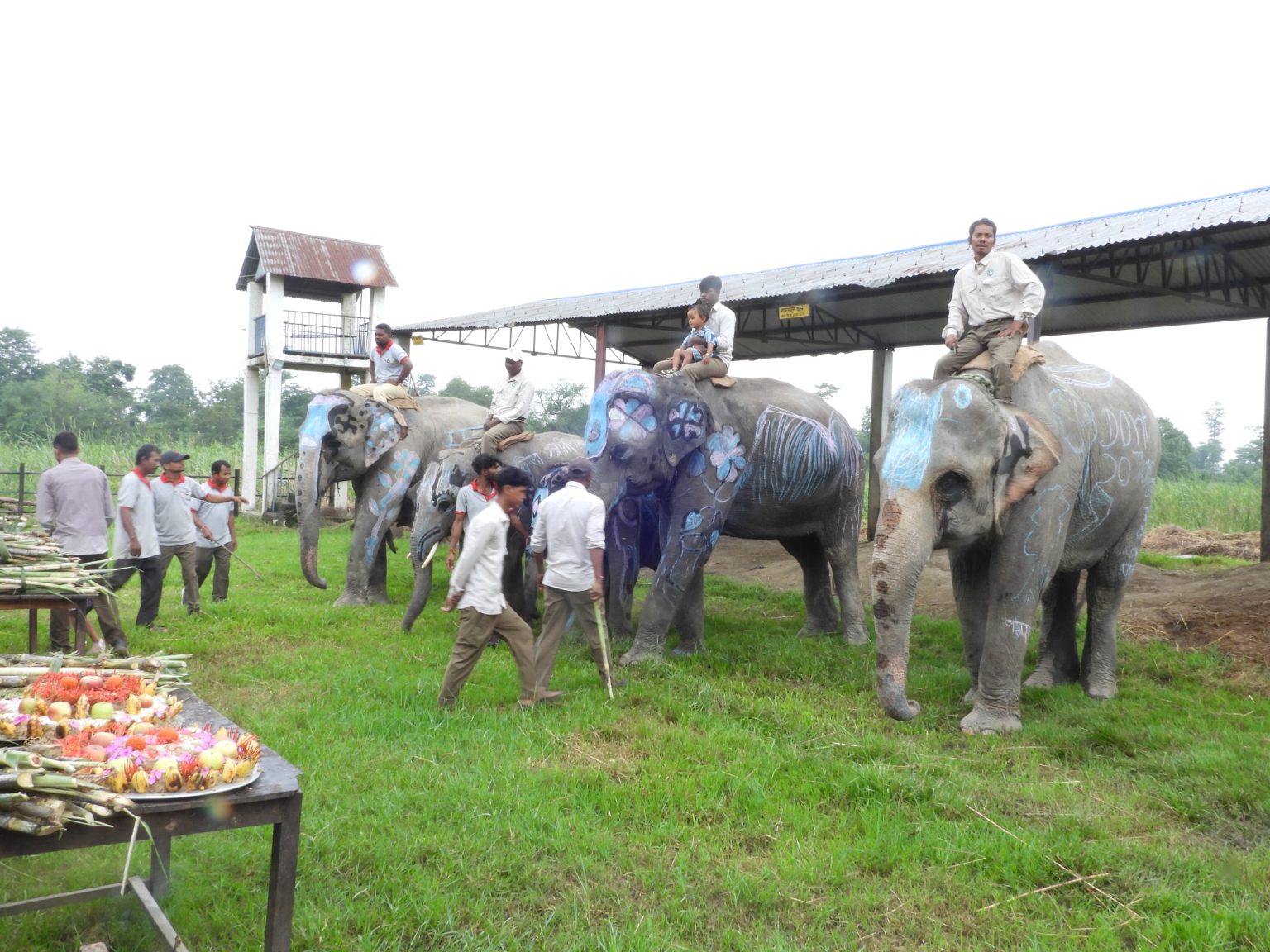
Elephants of Koshi Tappu
According to Yadav, the number of tourists begins to increase after winter starts. “The number of tourists appeared the highest in the months of late winter until April,” he says, “From December 16, 2025, to January 14, 2026, alone, at least 1,457 people had come. From February 14 to April 13, this number crossed 1,600.”
The second home for birds
In winter, the attraction of Koshi Tappu increases even more. The guest birds coming to evade the cold from regions like Siberia, Russia, and Tajikistan make the wetlands, grasslands, and water bodies of the reserve lively. For tourists keeping an interest in birdwatching, Koshi Tappu is an important destination in Nepal itself.
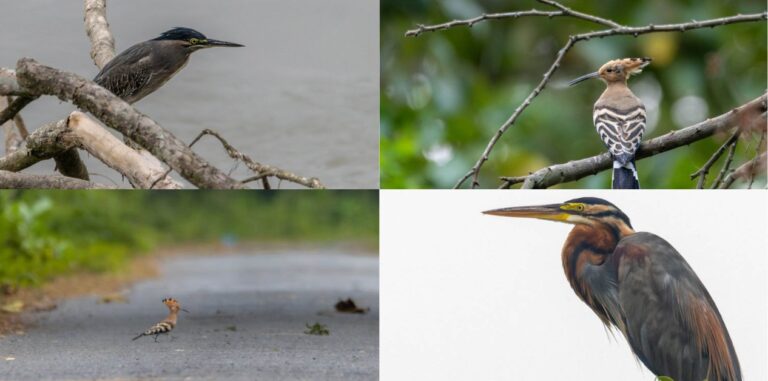
Various species of birds found in Koshi Tappu
According to locals, although tourists keeping a specific interest in “bird watching” do not come in large numbers, those who do come arrive taking a long time. They spend hours peering at the activities of birds. This has made Koshi Tappu not just a destination for ordinary travel, but also an important site for tourists with special interests.
Bird researcher Deven Kharel sees the possibility of an international-level bird observation center being built in Koshi Tappu. According to him, the reserve is not just a symbol of biodiversity but an important area linking study, research, and nature tourism. He says, “If local public participation in conservation and the continuity of scientific study can be maintained, this possibility can turn into reality.”
According to the President of the Koshi Bird Society and bird expert Chakra Timsina, among the 903 species of birds found in Nepal, at least 538 species are found in Koshi Tappu itself. Because of birds like the swamp francolin, which is considered rare in the world, international-level bird lovers come here, he states.
However, the investment of the state in the conservation of birds and wetlands is still not adequate, according to Timsina. The wetland area gradually drying up, human interference increasing, and not enough attention reaching the conservation of bird habitats are the main challenges, he states. “All three tiers of government appear a bit indifferent toward bird and wildlife conservation,” Timsina says, “Investment must be increased in the work of designating protected areas for birds and saving habitats.”
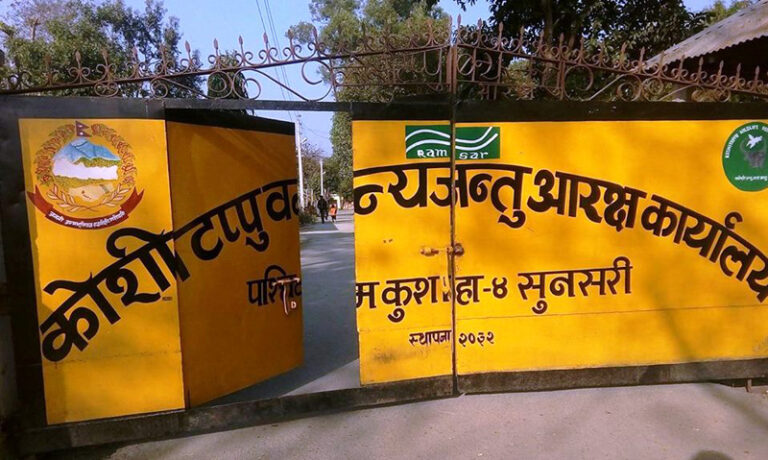
Koshi Tappu Wildlife Reserve Office. Photo: Social Media
According to him, not only Koshi Tappu but also the nearby Barju Lake is also an area carrying great potential for birds. If a tourism circuit can be made by linking both these areas, additional internal and external tourists can be attracted to Koshi Province, as per his understanding. Timsina says, “For that, the local, provincial, and federal governments must invest to save the habitat of wildlife.”
The capital of wild water buffaloes
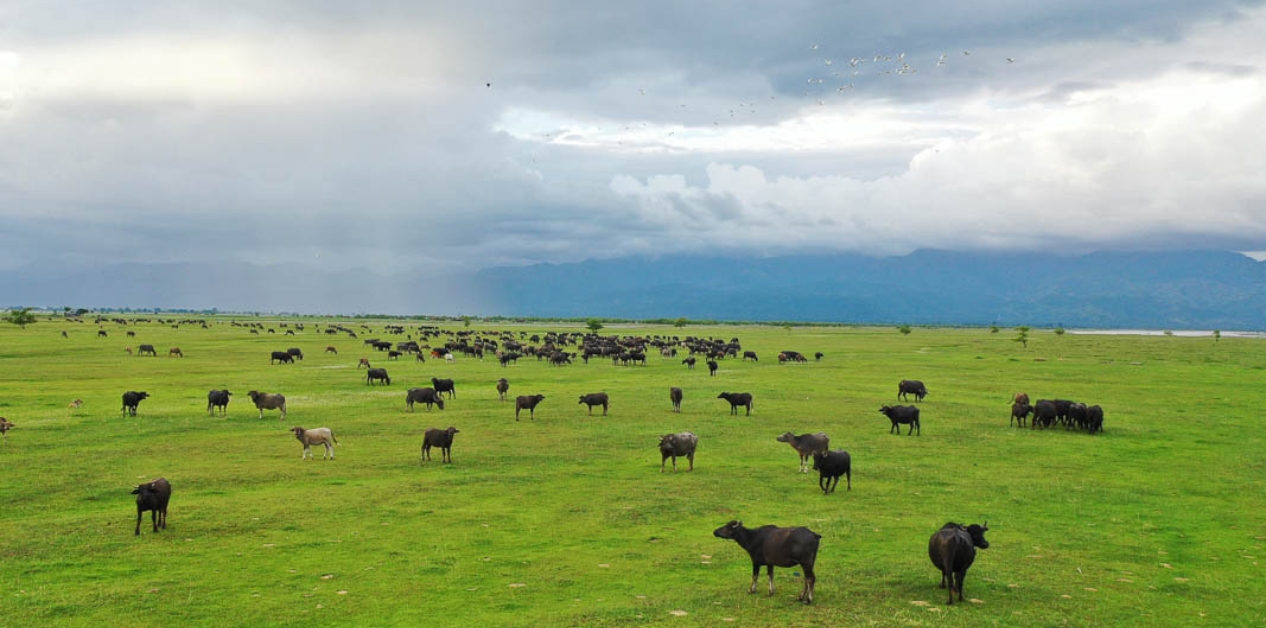
Another big identity of Koshi Tappu is the wild water buffalo (Arna). The islands and wetland areas created by the Sapta Koshi River are considered important habitats for wildlife.
This is the only protected area in Nepal where indigenous wild water buffaloes, meaning wild buffaloes, are found. Therefore, Koshi Tappu is known as the “capital of wild water buffaloes.”
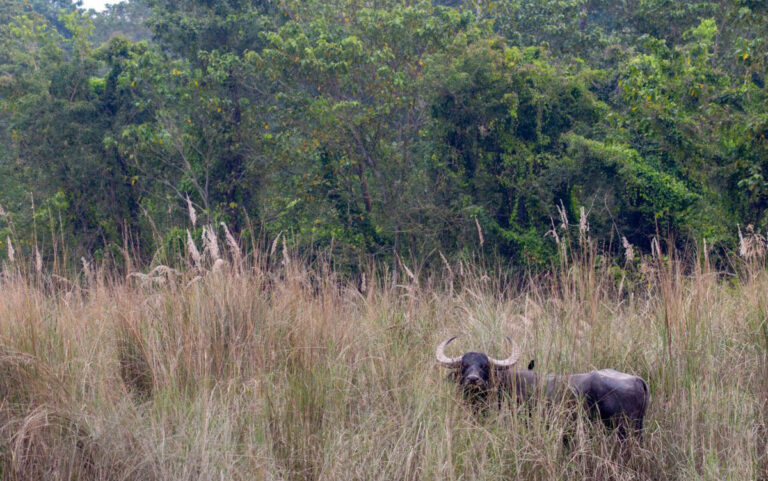
Wild water buffaloes (Arna) seen inside the Koshi Tappu Wildlife Reserve. Photo credit: Drishtanta Bidari
According to the Department of National Parks and Wildlife Conservation, the main objective of establishing the reserve is to protect and increase the number of wild water buffaloes, which are considered extremely rare in the world. “View points” have been built in various places of the reserve for wild water buffalo observation.
According to the Wild Water Buffalo Census of 2021, there were 498 wild water buffaloes in Koshi Tappu. Among them, there were 221 adult males, 162 adult females, 48 sub-adults, 35 calves of two years, and 32 calves of one year. Because of grasslands, adequate water, and wetland areas, Koshi Tappu is considered an appropriate habitat for wild water buffaloes.
Not only wild water buffaloes but also deer and blue bulls, officially known as the Nilgai (Boselaphus tragocamelus), the largest antelope in Asia, wild boars, pythons, crocodiles, dolphins, and other wildlife are also found in the reserve. However, the main identities of Koshi Tappu are indeed birds and wild water buffaloes. If these two identities can be branded in an organized manner, the reserve can be made a major wildlife tourism destination of Eastern Nepal, as per the statement of stakeholders.
Assistant Professor Ram Chandra Adhikari of Zoology at the Degree Campus in Biratnagar states that Koshi Province is extremely wealthy from the perspective of wildlife tourism. However, adequate study has still not been able to take place regarding the specific wildlife here, their habitats, and tourism potential, as per his statement. “The government must first invest in the identification and research of rare wildlife here,” Adhikari says, “If that can happen, tourists from around the world can be attracted.”
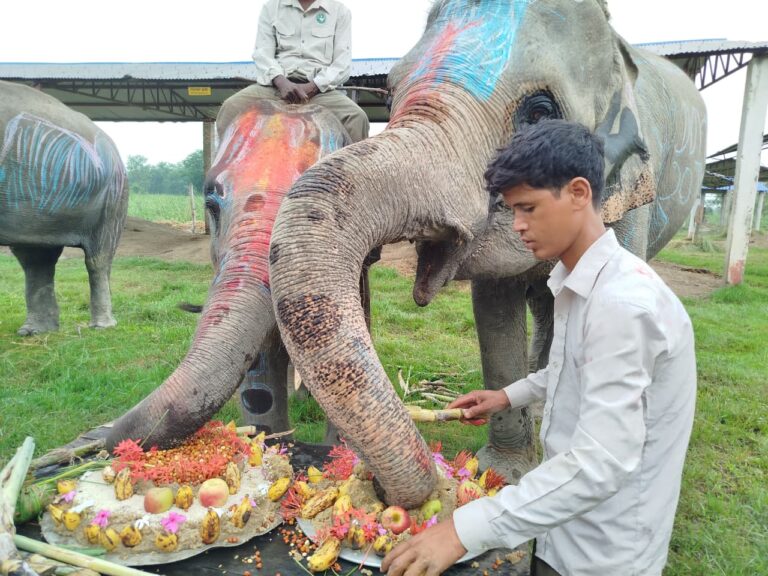
Feeding elephants inside the Koshi Tappu Wildlife Reserve during World Elephant Day. Photo: Social Media
According to him, the wildlife tourism of Koshi Province is not limited to Koshi Tappu alone. “From the high hilly region of Ilam to the Sagarmatha National Park, red pandas are found. Similarly, wild water buffaloes, which are found nowhere else in Nepal, are found only in Koshi Tappu,” he says, “These specific wild animals are indeed the main bases of tourism in Koshi Province.”
The potential of the Indian market
Seeing the strong possibility of linking Koshi Tappu with Indian tourists, the provincial government has started entry facilitation for Indian tourists from the Nepal-India border area of Bhantabari in Koshi Rural Municipality-8, Sunsari.
Lately, to attract Indian tourists, an arrangement has also been made by the provincial government to give stickers to their vehicles.
In the view of tourism entrepreneur Punya Prasad Bhattarai, Koshi Tappu is an area that can become a hub for wildlife tourism. According to him, Koshi Tappu can become the nearest excellent destination for tourists from the neighboring Indian state of Bihar. “Bihar does not have big forests and parks,” Bhattarai says, “Therefore, for tourists from Bihar, Koshi Tappu is the nearest and best destination. We must be able to go forward by branding birds and wild water buffaloes.”
However, despite the potential, the publicity and infrastructure are weak, as per his statement. “We have not been able to market such a rare heritage at all,” he says, “Activities like organized jungle safaris, boating, and nature trekking must now be added to Koshi Tappu, not just bird watching.”
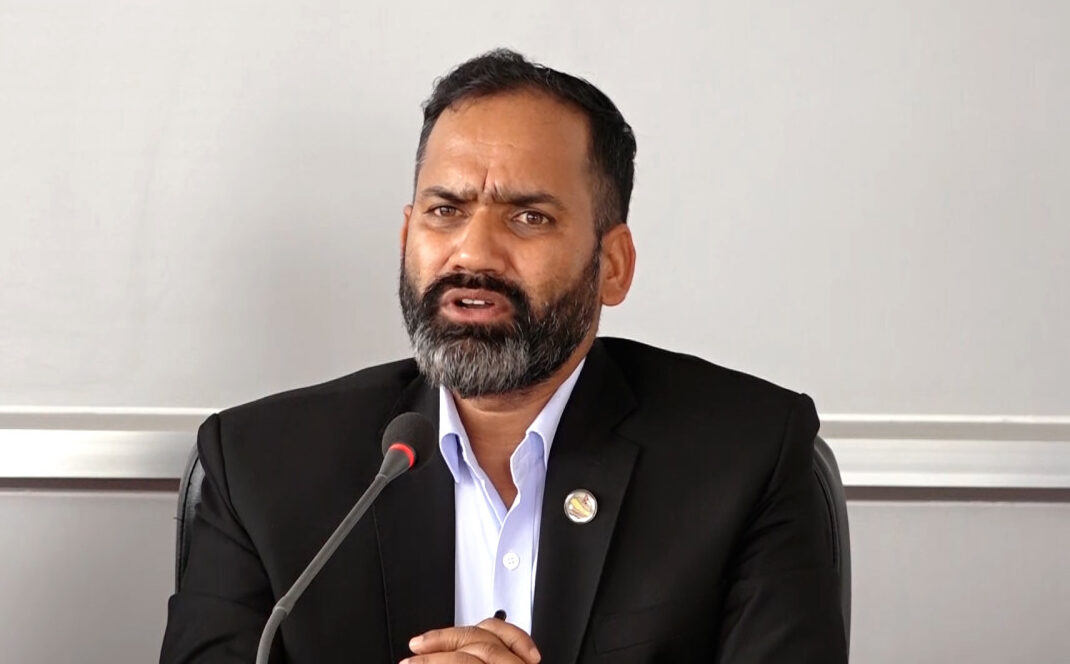
The government is continuously running promotional programs like “Koshi-Bihar” and “Koshi-Bengal” targeting Indian tourists, states the Minister for Tourism, Forests, and Environment of Koshi Province, Bhim Parajuli. He claims that the programs have sent a positive message to tourists in the bordering Indian areas.

Minister for Tourism, Forests, and Environment of Koshi Province, Bhim Parajuli
According to him, preparations are also underway to establish an information center in coordination with the federal government. Similarly, initiatives are underway for the establishment of an office of the Tourism Board, and a commitment has also been received from the federal government, as per his statement. He says, “The arrival of Indian tourists in Koshi Province is positive. To make this even more organized, the ministry is doing additional homework.”
Easy access and need for further development
Reaching Koshi Tappu is not difficult. Means of transportation are easily found to reach the reserve, which is located around 50 kilometers north-west from Biratnagar and around 40 kilometers west-south from Dharan.
The reserve area is reached after heading about two kilometers north from Jamunaha, which is near Laukahi on the East-West Highway. One can also go to Koshi Tappu through Jhumka, which falls between Itahari and Inaruwa, and from Dharan via Chatara.
The reserve has designated an entry fee of Rs 100 per person for Nepalis, Rs 750 for citizens of SAARC countries, and Rs 1,500 for other foreigners. A fee of Rs 300 per day applies when entering with a vehicle. The reserve, however, does not give entry permission to large vehicles. When going with a motorcycle, horns are completely prohibited.
Upon reaching the reserve area, observation of wildlife, greenery, and the wetland area of Koshi can be done from view towers built in various places.
Spread over an area of 175 square kilometers, Koshi Tappu is the first area in Nepal itself to be listed on the Ramsar list (a specific wetland area that has received international importance) in the year 1987. The wetland system filled with ponds, lakes, swamps, pools, and reservoirs has made Koshi Tappu a home for wild water buffaloes, birds, gharials, marsh crocodiles, snakes, turtles, crabs, and various species of fish.
With the increasing bustle of internal tourists, the specific identities of birds and wild water buffaloes, proximity to the Indian market, and the use of local homestays, a good potential for wildlife tourism has appeared in Koshi Tappu. For that, attention must be paid to infrastructure construction, as seen by Maiya Khadka, who arrived from Biratnagar to travel the reserve.
Since the corona pandemic, elephant safaris are closed in Koshi Tappu. There is no option of jeep safaris. If such services were available, Khadka thinks the reserve could attract both internal and external tourists even more. Her emphasis is that the state must bring a special plan to turn Koshi Tappu into a conservation-friendly, organized wildlife tourism that gives benefits to the local community.
“There is no jeep safari here. Therefore, traveling is somewhat difficult. Because of this too, Koshi Tappu does not have the attraction like in Chitwan National Park,” she says, “If elephant safaris could be made even more organized, a line of tourists would probably form here. The state must still pay attention to the development of such a beautiful place.”