Kathmandu
Tuesday, July 14, 2026





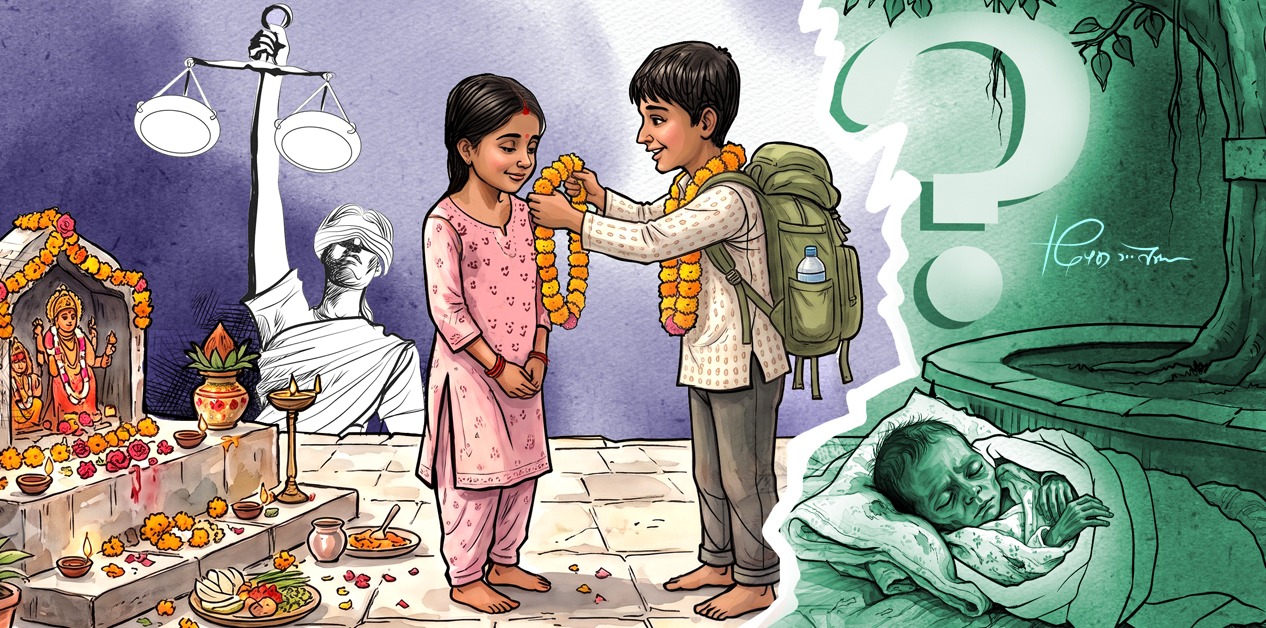
The Gen Z protest helped reshape Nepal's political landscape on promises of employment and opportunity. But 10 months later, unemployment remains entrenched, foreign migration continues unabated, and recent self-immolations have laid bare the growing despair among the generation that demanded change.
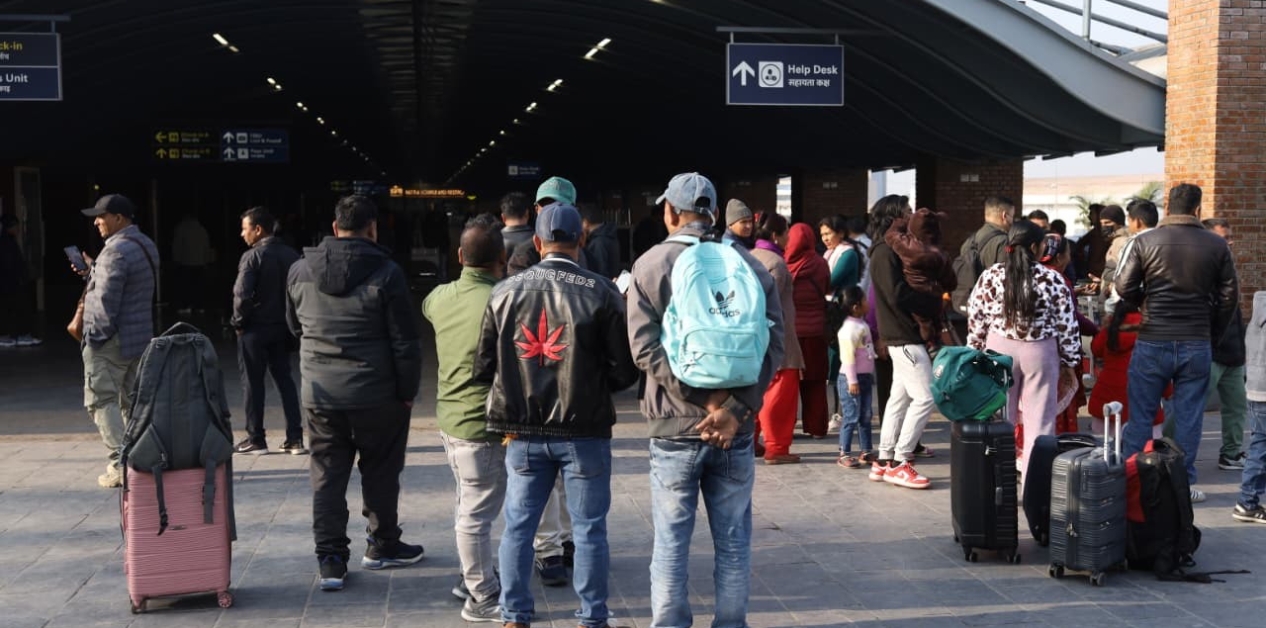
KATHMANDU: The Gen Z protest took place from September 8–9, 2025 to end corruption, political anomalies, and unemployment in the country. According to Rakshya Bam, a leader of the Gen Z protest, one among the thousands of youth participating in that movement was 25-year-old Ganesh Nepali from Soru Rural Municipality-1, Mugu. Exactly ten months after participating in the movement with the hope of bringing change to the country, and five days after the new government completed 100 days, Ganesh ended his own life by self-immolation on July 9.
On the strength of the Gen Z protest, old parties were displaced, and a government with a near two-thirds majority of the Rastriya Swatantra Party (RSP) was formed. However, even though change arrived due to the contributions of youth like Ganesh Nepali, it brought no significant difference to their lives for the time being. It failed to instill hope.
Tasked with the responsibility of taking care of his wife and three-year-old daughter, Ganesh was preparing for the civil service examinations with the intent of securing a job in Nepal, while also trying to go to Dubai for foreign employment. To run his family, he carried passengers on a motorcycle through a ride-sharing app.
During this routine, when he reached the Department of Passports in Tripureshwar, Kathmandu with a passenger on July 9, the Kathmandu Metropolitan City Police locked the wheel of his motorcycle. Nine days prior to this, the metropolitan police had similarly locked his wheel and fined him one thousand rupees. This time, he had a prolonged dispute with the municipal police. Following that, Ganesh poured petrol over his body and set himself on fire.
On the day after this tragic incident, July 10, 35-year-old Bibek Mandal of Godaita Municipality-10, Sarlahi also set fire to his own body. Those who knew him stated that unemployment was the primary reason for his despair towards life.

Deceased Ganesh Nepali and Bibek Mandal, who committed self-immolation.
According to his family and locals, Bibek, who held a master’s degree in science, had been unemployed recently. He had worked as a contract teacher for three years at Shree Secondary School in Gaushala Municipality-1, Mahottari, but had been out of a job since last July. According to his father, Upendra Mandal, Bibek used to apply for jobs in various places. Even though he passed the written exams with good marks, he was failed in the interviews. Worried about his inability to improve his financial condition, he had been under stress for some time. He set fire to his body on July 10 and passed away during treatment in Kathmandu.
These two recent incidents show that even educated youth are not easily finding employment in the country. Unemployment has fueled despair among them. Because of this, incidents are occurring where individuals take their own lives in a fit of impulse instead of finding alternative employment options.
According to Prof. Dr. Dhan Ratna Shakya, Head of the Department of Psychiatry at the B.P. Koirala Institute of Health Sciences, there are social, psychological, and biological factors that drive people to deep despair and self-harm. Among the social factors, financial reasons are prominent. He says, “Any cause can make a person despairing and lead them down the path of suicide. Among them, unemployment, not earning as expected, and facing failure when trying to achieve something can be the reasons. Once a person loses hope in life, they can harm themselves.”
Equally high numbers going for foreign employment
The RSP, which is running the government, has assured since its inception that it will create employment within the country and end the situation where citizens must leave for foreign employment.
Before the parliamentary by-elections held in Chitwan on April 23, 2023, RSP Chairman Rabi Lamichhane declared during an election speech that within 100 days of his victory, he would bring back at least 100 Nepalis working abroad and provide them with jobs. However, on the night of the 99th day after his victory, an advertisement was released on social media claiming to provide employment in various private companies. There are no records anywhere showing how many actually received employment through that.
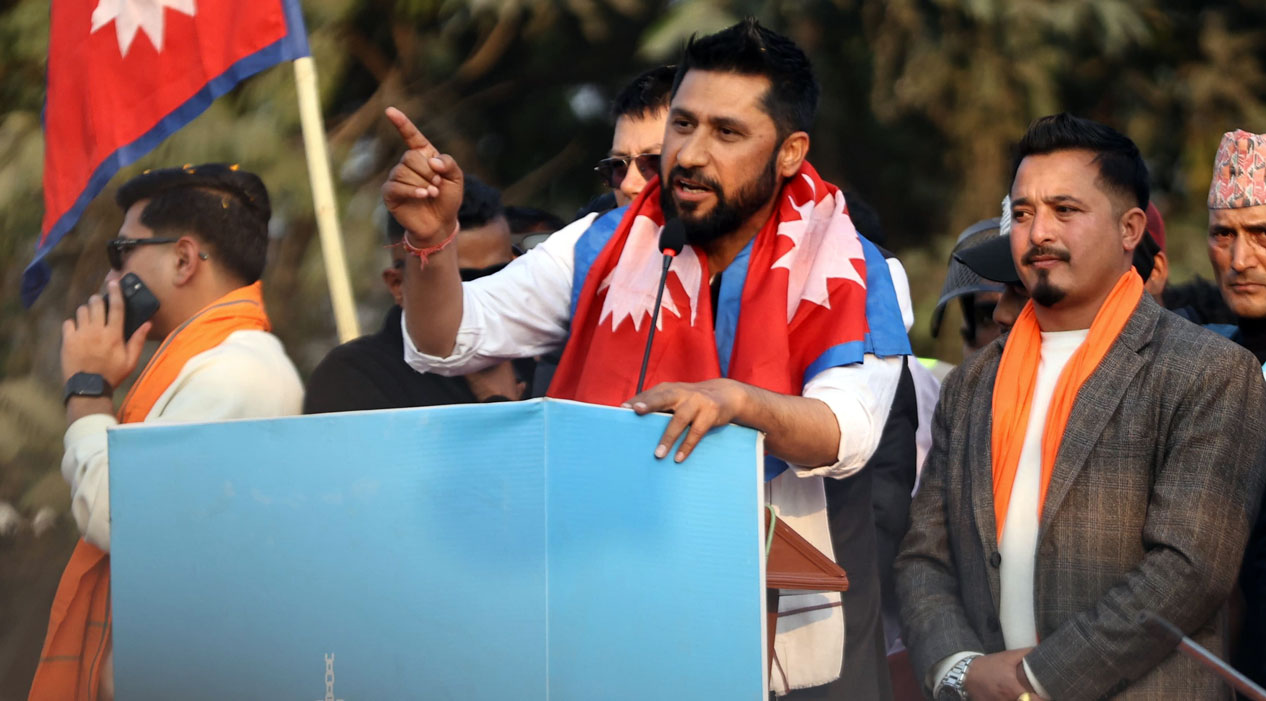
RSP Chairman Rabi Lamichhane. File Photo
The RSP, which has raised the issues of the pain and suffering of Nepalis in foreign employment from the beginning, has consistently proclaimed it will create an environment for youth to stay back by generating jobs domestically, and return those who are abroad. Yet, even after its near two-thirds majority government crossed 100 days, it does not seem to have generated hope among citizens.
There are no easy employment opportunities in the country. To go abroad to earn, money is required upfront. Children of wealthy families spend millions of rupees to go to America, Europe, or Australia under the pretext of studying. Among those who leave for studies, the number of those who genuinely go to study is very low, while the primary objective for most remains earning money.
Youth from ordinary financial backgrounds take out loans to go to Gulf countries and Malaysia. By the time they pay off the moneylender’s debt and cover household expenses, their productive years come to an end. Those unable to go abroad are forced to live in despair within the country.
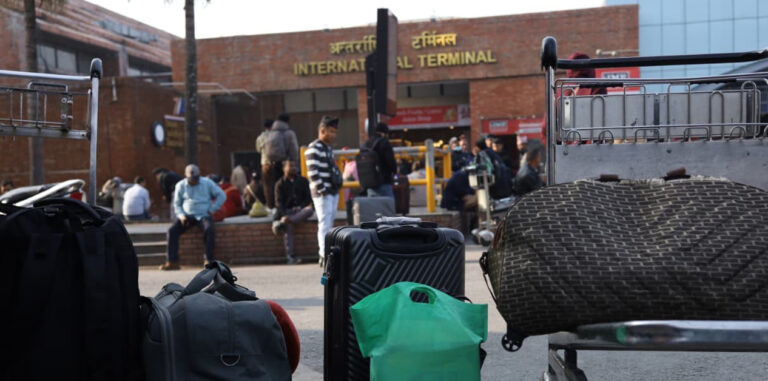
Tribhuvan International Airport.
Data from the Department of Foreign Employment over the past year shows that Nepali youth are leaving for foreign employment in the same proportion as before the Gen Z protest. In other words, even after the parliamentary elections following the movement and the formation of the new government, youth see no reason to stay back or search for possibilities in the country.
According to the department’s data, in July/August 2025, before the Gen Z protest, the number of individuals taking labor approvals was 68,110. Among them, 44,466 were taking new labor approvals, while the rest were those returning from foreign employment to renew their permits. In the preceding month of June/July, out of 78,880 individuals who took labor approvals, 53,646 were new applicants. Similarly, in May/June, out of a total of 74,467 who took labor approvals, 46,714 were new.
In the month of August/September, when the Gen Z protest took place, 67,972 individuals took labor approvals. Out of those, the number of new labor approvals was 45,732. Following the movement, labor approval work came to a complete standstill in September/October. In the subsequent month of October/November, 73,094 individuals took labor approvals. That is to say, the total number of individuals taking labor approvals before and after the Gen Z protest was roughly equal. However, new labor approvals dropped to 22,514. In November/December, 65,705 took labor approvals, with 29,618 being new applicants. Similarly, in December/January, 62,559 individuals took labor approvals, with 31,750 being new.
This data shows that previously, most of those seeking permission for foreign employment were new applicants, but after the Gen Z protest, new applicants decreased while the rate of those returning to go back abroad increased.
On March 5, 2026, the House of Representatives elections were held in the country. In that month, the number of individuals taking approvals for foreign employment decreased slightly. In March, a total of 52,944 individuals took labor approvals. More than half of them, i.e., 28,383, were new.
In the month of March/April following the election, the number rose slightly to 61,819 individuals taking labor approvals, though only about one-third, 20,545, were new. On March 27, a government was formed under the leadership of Balendra Shah. Although the government assured the creation of jobs within the country, little hope was seen among citizens, and the flow towards foreign employment did not recede. In April/May 2026, the number increased compared to the previous month, with 74,429 taking labor approvals. More than half of them, 41,324, were new. In May/June, 61,072 individuals took labor approvals, with roughly half, 31,701, being new.
This data of Nepalis obtaining permits for foreign employment showed that citizens did not buy into the assurances given by the RSP and the government regarding job creation and the establishment of a favorable environment in the country. Compared to the month before the Gen Z protest, the number of individuals taking labor approvals increased two months after the formation of the RSP government. Furthermore, whereas previously fewer returning workers and more new applicants used to go abroad, now new and old applicants are leaving in equal measure.
This data only reflects those who obtain legal permits for foreign employment. It does not include data on those who travel to various countries through illegal channels, those who go on visit visas to work, and those who go to India for employment.
In the commitment paper published by the RSP around the election on March 5, 2026, it was mentioned that since hundreds of thousands of Nepali students go abroad for higher education, professors and researchers of Nepali origin would be brought back to the country. However, the number of students going to countries like Australia, Japan, Canada, and the UK on student visas remains around one hundred thousand annually. Most of them work while studying.
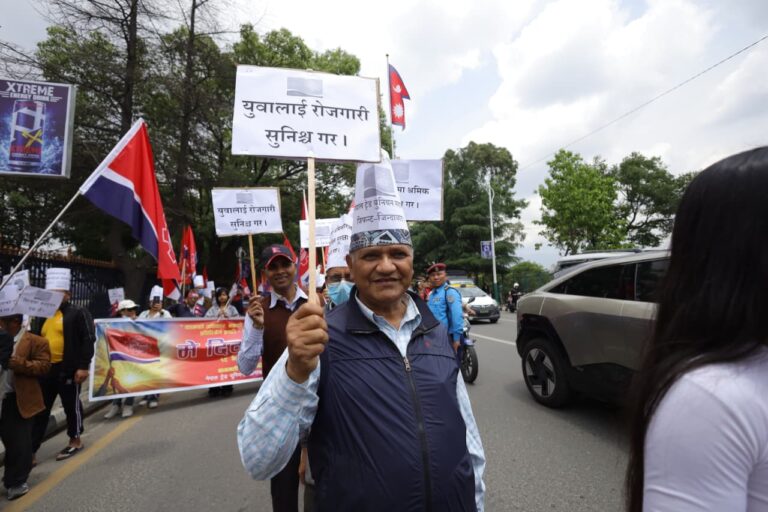
A rally organized by the General Federation of Nepalese Trade Unions (GEFONT) in Kathmandu on May 1, 2026, demanding the government secure jobs for youth.
Records from educational consultancies reveal that the number of students leaving in this manner is increasing compared to the past. The number of students currently preparing to go abroad for studies stands around 150,000 in the market. This also indicates that the new generation has little hope of studying and finding employment within the country. Gen-Z activist Rakshya Bam states that the RSP government has failed to inspire the new generation to do something within the country. She says, “The government has failed to generate hope of a better environment for the very generation that brought them to power through the movement. Instead, the government’s activities are increasing despair among the new generation.”
What is the government doing to create jobs?
A report published by the International Labor Organization (ILO) in January 2026 stated that due to mismatches between the labor market, skills, and employment in Nepal, there is a major problem of unemployment for youth, women, and marginalized groups. The report pointed out the need for comprehensive reforms in public employment services. However, the government has not paid attention to this.
According to the details made public by the Ministry of Labour and Employment on May 7, workshops and interactions have been held in various places in partnership with provinces, local levels, cooperatives, and private and non-governmental sectors to expand the domestic labor market. Similarly, the ministry’s statement mentions that coordination and facilitation have been undertaken to provide skill-oriented training and employment opportunities to the families of martyrs, the injured, and their dependents from the Gen Z protest.
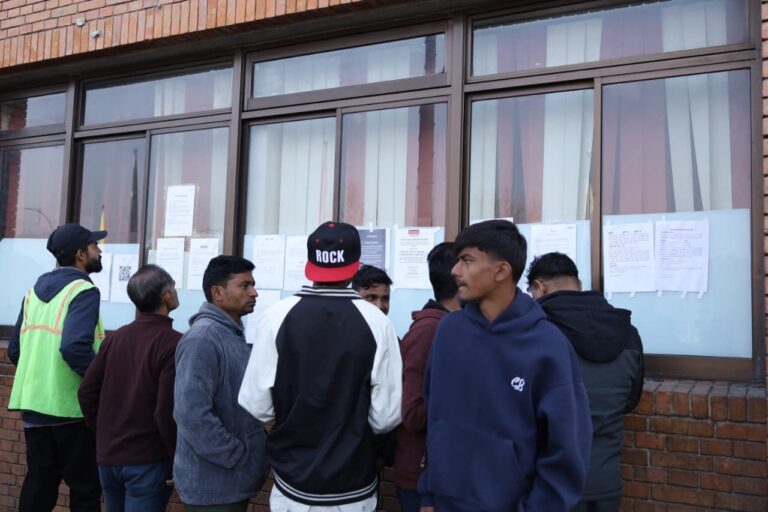
Youth heading for foreign employment looking at a notice put up at Tribhuvan International Airport.
Remittance contributes about 25 percent to Nepal’s Gross Domestic Product. According to news published in Reuters on February 26, youth unemployment in Nepal is the highest in South and Southeast Asia. According to World Bank data, Nepal’s unemployment rate stands at 20.6 percent. Around 1,500 individuals leave Nepal daily for foreign employment. Under such circumstances, it is not easy to retain them in Nepal.
On April 12, the government studied the manifestos of six nationally recognized parties and prepared an 18-point national commitment. Point number 7 of the commitment mentions that employment will be created within the country. It states, ‘Making employment a permanent foundation rather than temporary relief, 1.5 million jobs will be created in five years.’
The same point mentions that programs will be run to link the skills and capital of migrant workers returning from foreign employment to the country’s development. No matter what is written in speeches and manifestos, the government has failed to create jobs and generate hope that something can be done within the country. Prof. Dhan Ratna Shakya says, “The government is the guardian of the citizens; the government itself must be able to inspire hope in the citizens.”
According to the spokesperson of the Ministry of Labor and Employment, Joint Secretary Pitambar Ghimire, the government is introducing various programs to create opportunities for the youth generation within the country by increasing internal employment. The government has declared the decade 2026–2035 as the ‘Internal Employment Decade’. Joint Secretary Ghimire states that discussions are underway to bring forth the Internal Employment Policy and the Internal Employment Act for that purpose. He says, “Employment has been provided to around 15,000 people through local bodies, but to create employment on a large scale, infrastructure must be prepared first. The government is working toward that.”