Kathmandu
Friday, July 17, 2026





A controversial move by the health ministry to hand over medical equipment from Biratnagar-based Shailaja Acharya Hospital to three outside healthcare centers draws severe backlash from local donors who accuse the government of betraying public trust and undermining community-led healthcare initiatives
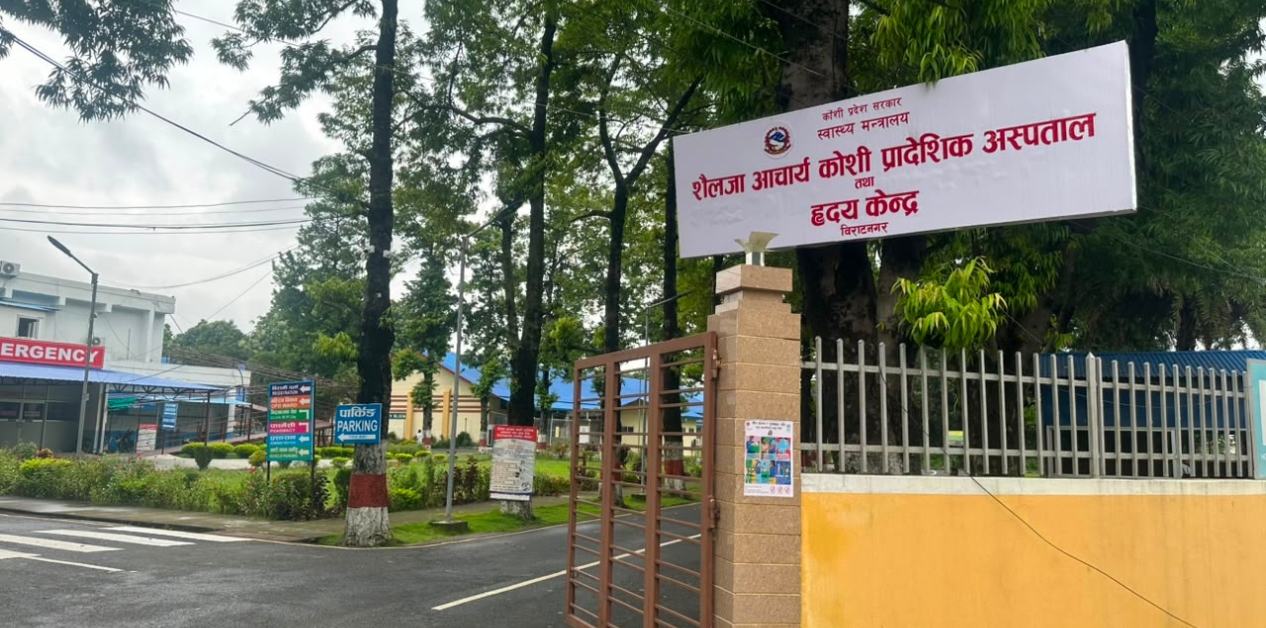
BIRATNAGAR: When the Covid pandemic was becoming terrifying, industrialists, entrepreneurs, and the general public of Biratnagar reached the markets and collected donations. Through ‘Citizen Care Center,’ an organization of local residents active in social service, they raised around Rs 30 million and helped establish the then Covid Hospital for the treatment of infected people.
Later, that same hospital was developed as the Shailaja Acharya Cardiac Center Koshi Provincial Hospital. The Swiss government also assisted in constructing a 96-bed capacity modern building, an oxygen plant, and a water treatment center for it.
The province government has now started sending the expensive health equipment of that very hospital, built from citizen donations and the assistance of donor agencies, to other hospitals. The Ministry of Health of Koshi Province decided to give seven ventilators from Shailaja Acharya Hospital to three other hospitals.
However, donors who raised assistance for the hospital construction and office bearers of the Citizen Care Center are dissatisfied, saying that no consultation was held with them regarding the equipment distribution. Bhim Ghimire, Vice President of the Citizen Care Center, accuses the ministry’s decision to send the hospital’s equipment elsewhere without any discussion with stakeholders of insulting the donors.
“We built the structure by wandering around the markets and knocking on the doors of industrialists,” Ghimire says, “It is highly objectionable that the government is distributing equipment in an arbitrary manner without even basic consultation with us.”
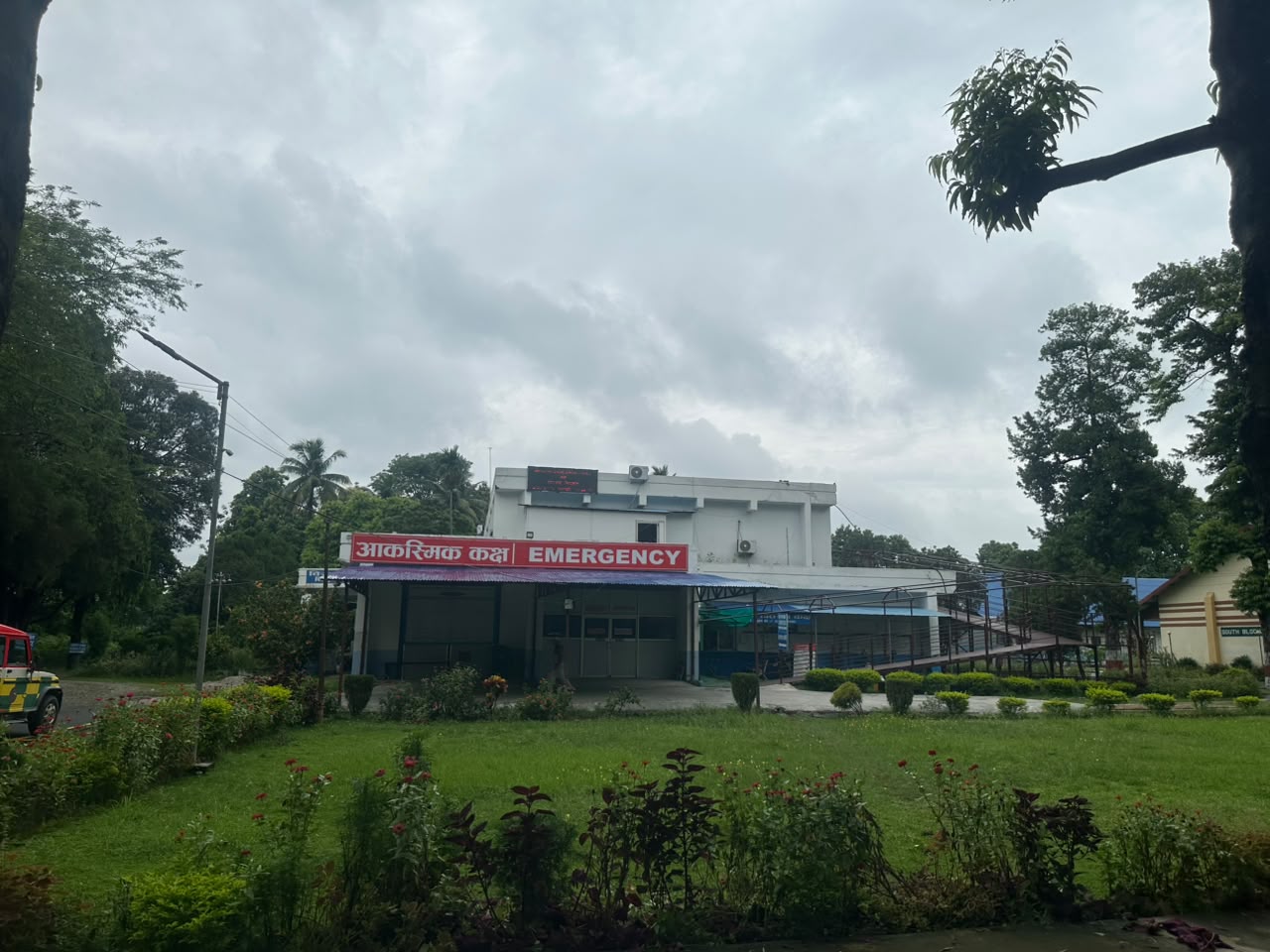
Shailaja Acharya Hospital’s emergency room remains operational for only 12 hours a day
Pointing out that the inability to use the equipment at the hospital is a managerial weakness, he said the government should focus on manpower and service expansion.
“Sending equipment to another place saying it could not be operated is like demolishing a house to distribute snacks,” he added, “Saying that the goods are about to get damaged in the hospital is just an excuse. The hospital should have been run at full capacity by managing manpower.”
Ghimire says that such behavior by the government weakens the trust of citizens who voluntarily assist during disasters. “Tomorrow, if another disaster strikes, why would donors who have seen such behavior from the government help?” he questions.
Decision to distribute seven ventilators
The Ministry of Health has decided to provide three ventilators to the Provincial Hospital located in Bhadrapur of Jhapa, two to the Purbanchal University Teaching Hospital of Morang, and two to the Katari Hospital of Udayapur from Shailaja Acharya Hospital.
There were initially 35 ventilators in the hospital. Among those, Purbanchal University has taken two, and Bhadrapur Hospital has taken one out of the three decided to be given to it. Katari Hospital is yet to take two, and Bhadrapur is yet to take an additional two.
Currently, there are 32 ventilators in Shailaja Acharya Hospital. After the ministry’s decision is fully implemented, 28 will remain there. It has also been decided to provide five syringe pumps and five infusion pumps along with the ventilators to Bhadrapur Hospital.
Donors and stakeholders associated with the hospital have stated that a detailed evaluation of where, on what basis, and through what process the equipment is being sent has not been conducted. Although it is not clear whether there is a legal requirement to consult with donors, they demand that stakeholders must be informed about long-term decisions related to an institution established through public support.
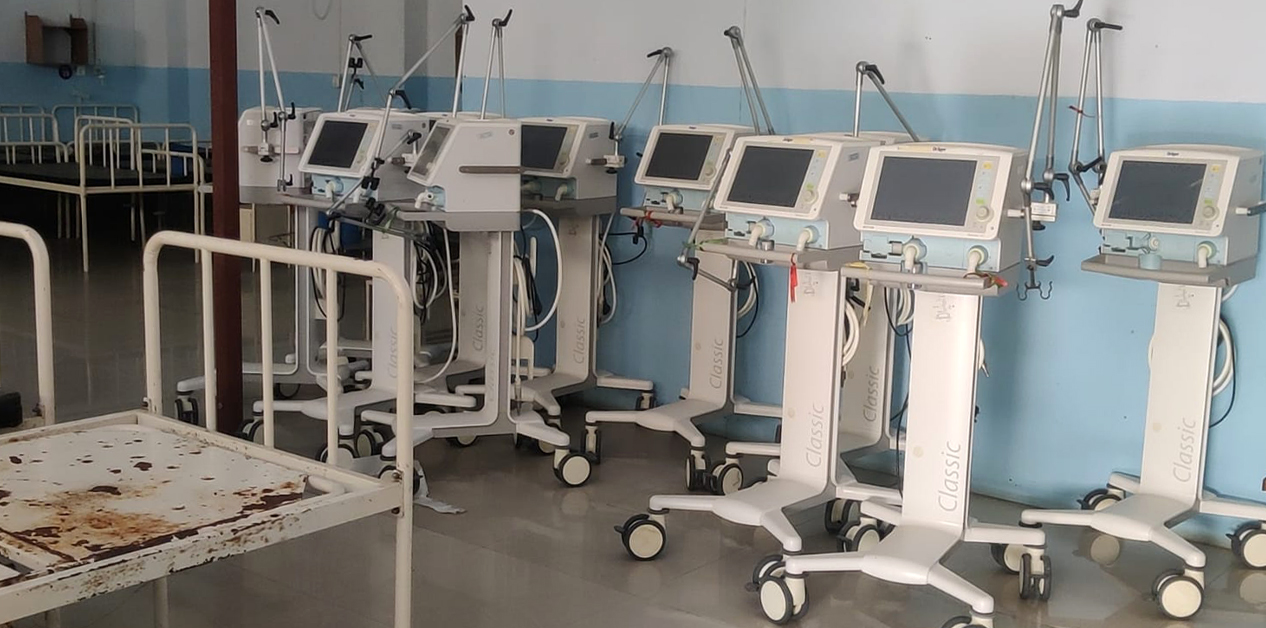
Ventilators at Shailaja Acharya Hospital, prepared for transfer to other medical facilities following a controversial ministerial-level decision
Decision on the very day of application registration
The Purbanchal University Teaching Hospital, located in Sundarharaicha of Morang, which is under the federal government, had registered a letter at the Ministry of Health of Koshi Province on June 26, 2026, requesting two ventilators.
Within a few hours of the letter being registered, Health Minister Man Bahadur Limbu approved the demand through a ministerial-level decision. On the same day, the equipment was picked up from Shailaja Acharya Hospital and delivered to the university’s hospital.
The letter written by the ministry to the university states, ‘According to the application registered in this ministry on the date June 26, 2026, by the Purbanchal University Teaching Hospital, a ministerial-level decision has been made to provide two units of ventilator machines to fulfill the necessary infrastructure for operating the MBBS program.‘
Dr Baibhav Mallik, Medical Superintendent of Shailaja Acharya Hospital, says that the equipment was sent to the respective hospital following the ministry’s decision.
Ventilators unused in Bhadrapur
At the Provincial Hospital in Bhadrapur, which is to receive additional ventilators through the decision of Minister Limbu, 14 ventilators received during the Covid pandemic are still unused.
According to the records of the Provincial Health Supply Center, that equipment is piled up at the hospital. A detailed technical report on whether or not the old equipment can be operated after repair has not been made public.
Dr Sanjay Kumar Gupta, Medical Superintendent of Bhadrapur Hospital, on the other hand, says that the old equipment is in a non-operational condition. “Our biomedical engineers have stated that those pieces of equipment do not work,” he says, “Since ventilators are necessary in the ICU and NICU, we requested them from the ministry. This demand has been there for years.”
The ministry has not provided clear information on whether or not an independent technical evaluation has been conducted regarding the condition of the equipment previously present in Bhadrapur, the possibility of repair, and the necessity of new equipment.
Shortage in Shailaja
Shailaja Acharya Hospital itself, from where the equipment was sent elsewhere, has not been able to operate at full capacity due to a shortage of manpower.
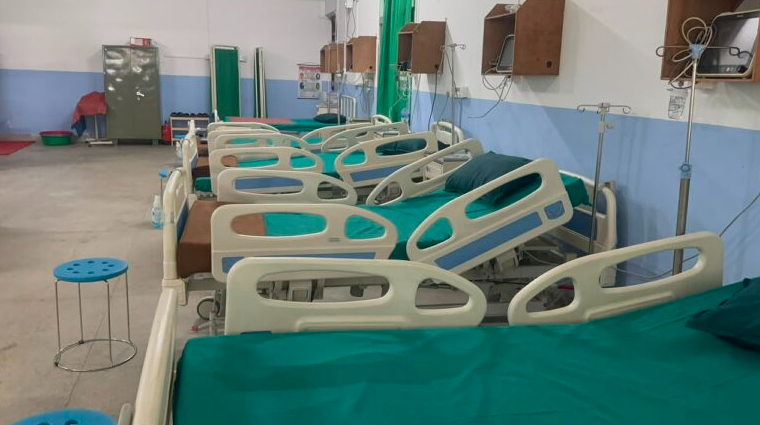
Beds in the emergency room
There is a sanction of 42 personnel in the 50-bed hospital. However, emergency services do not operate twenty-four hours a day. The emergency service of the hospital, which was established for the treatment of heart patients, operates only 12 hours daily, and the outpatient service operates for only five hours.
The emergency service remains closed during the night. Stakeholders say that the lack of manpower, management, and service operation are the main reasons why the equipment in the hospital has remained unused for a long time. Donors have demanded that the hospital should be run at full capacity by managing the necessary doctors, technicians, and health workers rather than sending the equipment elsewhere.
Claim of sending to bring into use
Dr Ramhari Regmi, Chief of the Hospital Development Division of the Koshi Province Ministry of Health, says that the equipment, which had been unused for a long time at Shailaja Acharya Hospital, was sent to other hospitals based on need.
“There is a risk of equipment getting damaged when kept piled up for a long time,” Regmi says, “We sent them with the objective that they be used in necessary hospitals rather than going to waste.”
According to him, preparation is underway to run the MBBS program at Purbanchal University from this academic session. He says that since it was necessary to meet the standards of the Medical Education Commission, two ventilators were provided according to a ministerial-level decision and instructions from the Office of the Chief Minister and Council of Ministers.
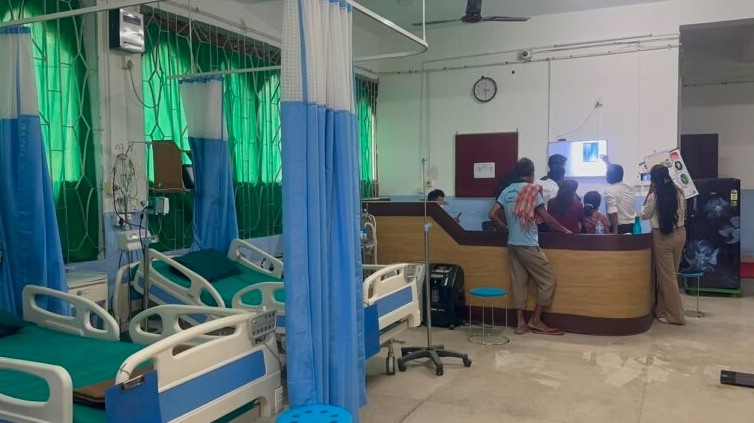
Emergency ward
Regmi says that since most of the old ventilators in Bhadrapur Hospital were damaged, additional equipment was sent to prevent services from being affected. He claims that ventilators are necessary at Katari Hospital for the treatment of snakebite patients.
“The ministry did not have the budget to purchase new equipment immediately,” Regmi says, “Therefore, utilizing the available resources to the maximum, the decision was made to give two ventilators to the snakebite treatment center of Katari.”
Dr Yadu Chandra Ghimire, the then Health Secretary of the ministry, also claims that the equipment was sent to other hospitals to prevent them from going to waste. “There was a risk of the machines getting damaged when remaining unused for a long time at Shailaja Acharya Hospital,” he says, “They were sent to other hospitals with the objective that they be utilized so that the citizens of Koshi Province themselves receive service.”
Minister knows nothing
Health Minister Man Bahadur Limbu also says that the unused equipment was provided to the hospitals in need. “It seems the equipment was about to get damaged after being piled up for years,” he says, “We gave them to the hospitals that needed them.”
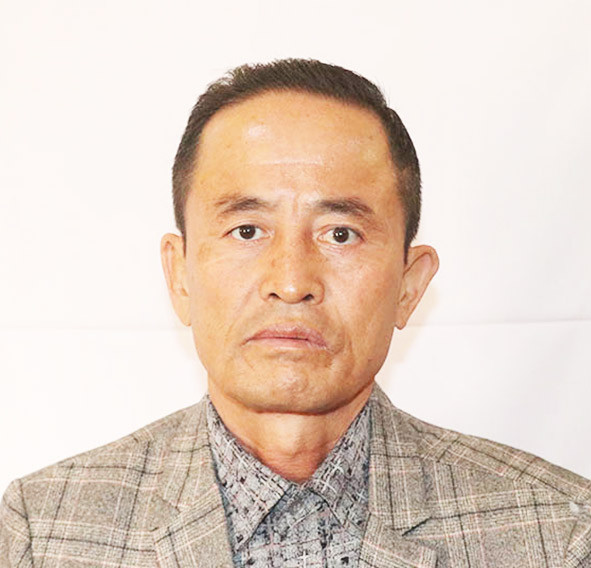
Health Minister Man Bahadur Limbu
However, the letter written to provide equipment to Purbanchal University clearly mentions a ministerial-level decision. When asked about the reason for doing administrative-nature work through a ministerial-level decision, Minister Limbu replies that he does not have information about it. He says, “Well, I do not know through which level of decision it was given.” Donors are not satisfied with the ministry’s response that the objective is to bring the equipment into use.
They demand that the ministry must give a clear answer regarding the decision process, the long-term plan of the hospital, and manpower management. Citizen Care Center Vice President Ghimire says, “The question is not only where the equipment is used. The big question is how the government protects the assistance given by citizens out of trust. The government must give a clear answer to this.”