Kathmandu
Saturday, July 18, 2026





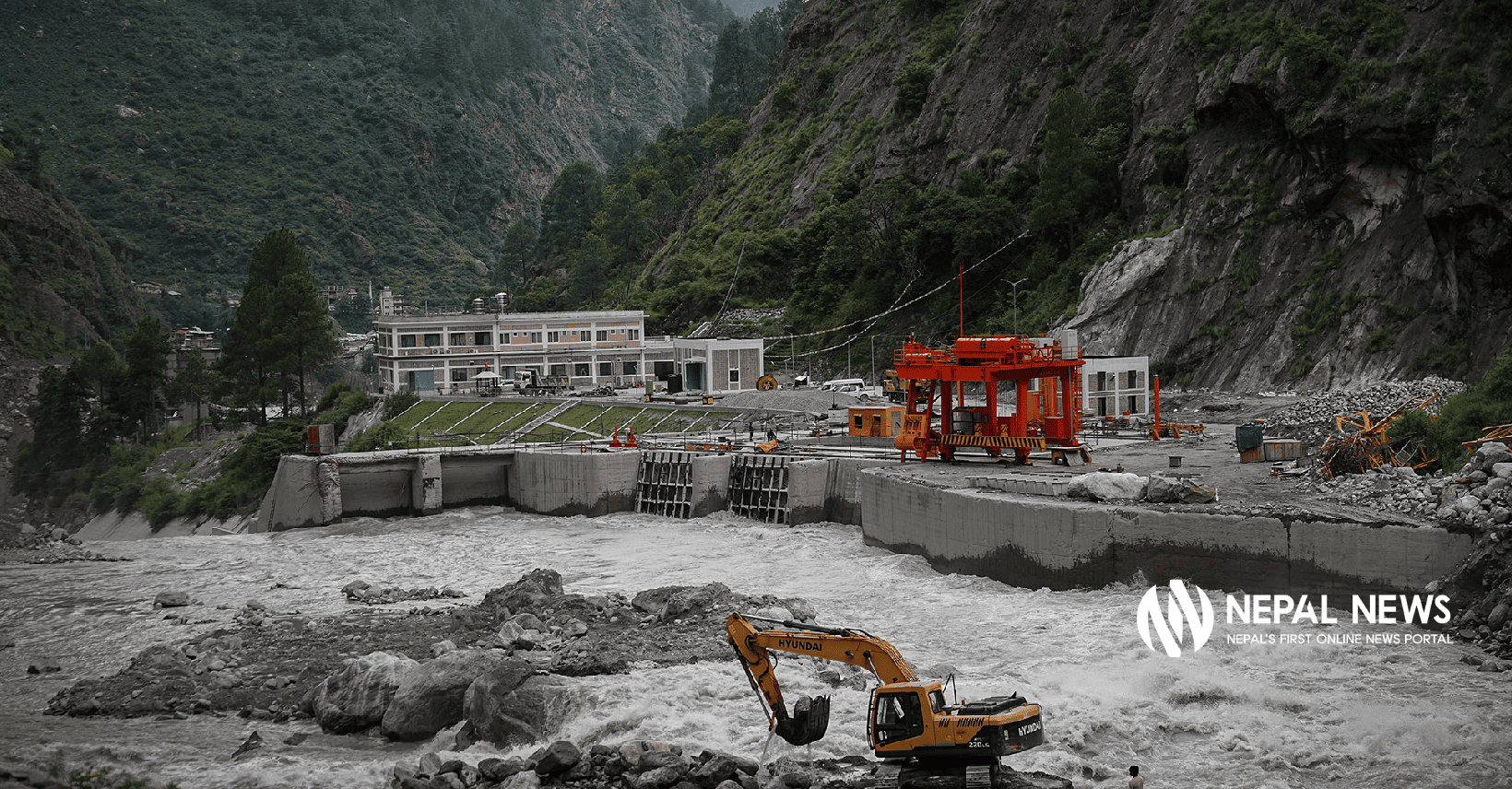
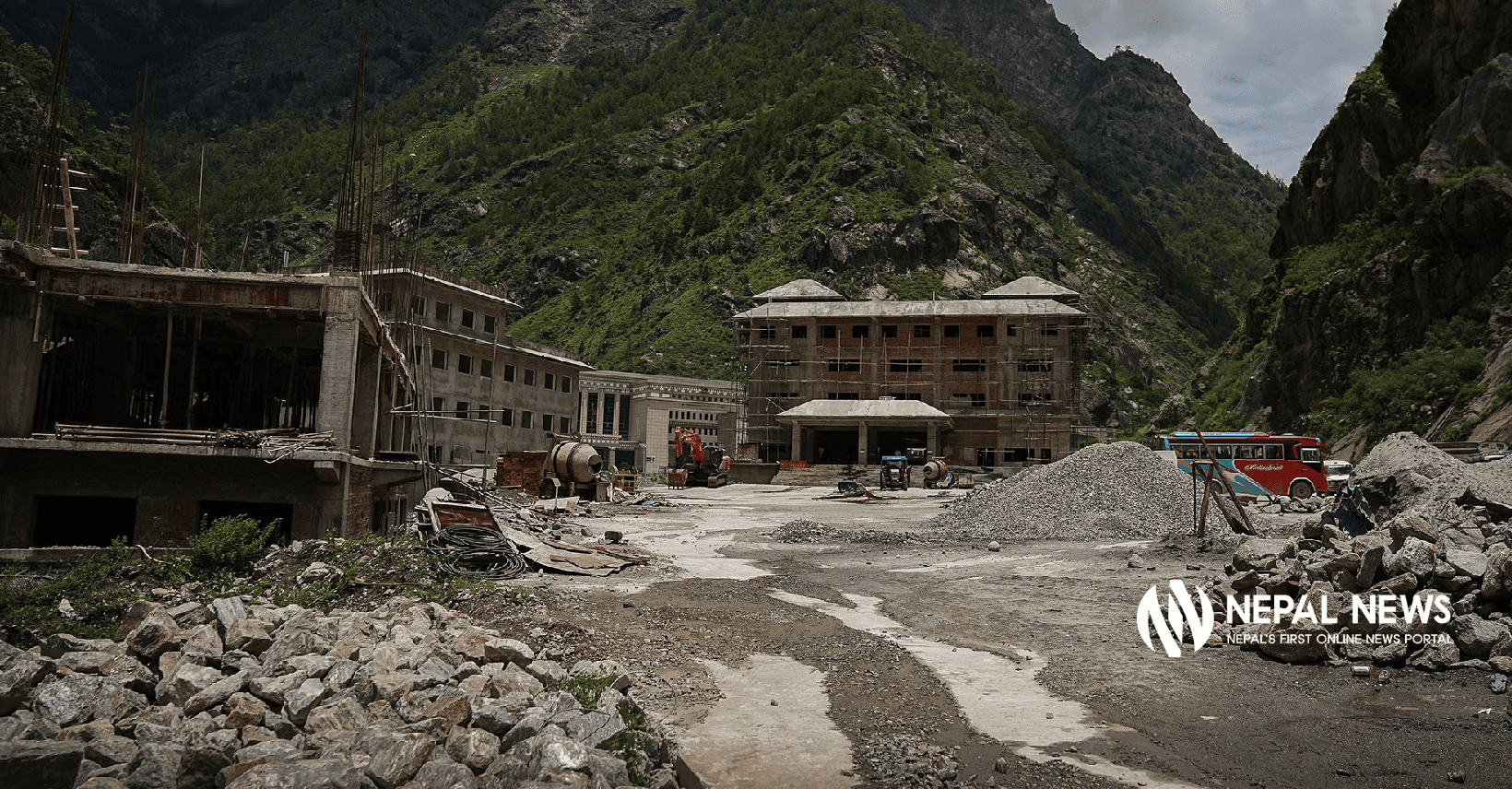
RASUWA: While trading activities at the Timure Customs Office have returned to their regular rhythm a year after being severely disrupted for six months by the Lhende Khola flash floods, construction of the adjoining dry port—being built with a Chinese investment of over Rs 2.25 billion—remains completely stranded.
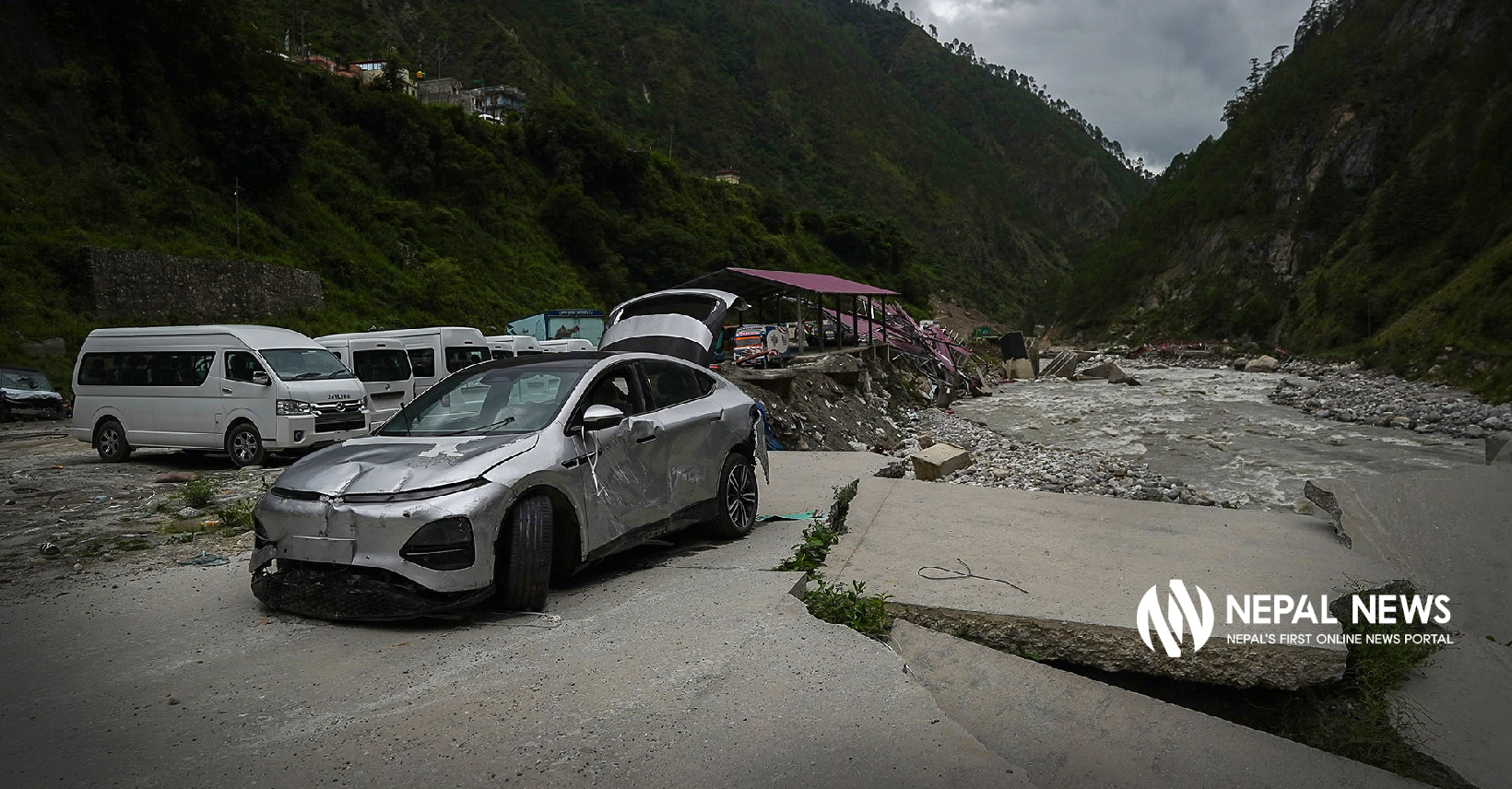
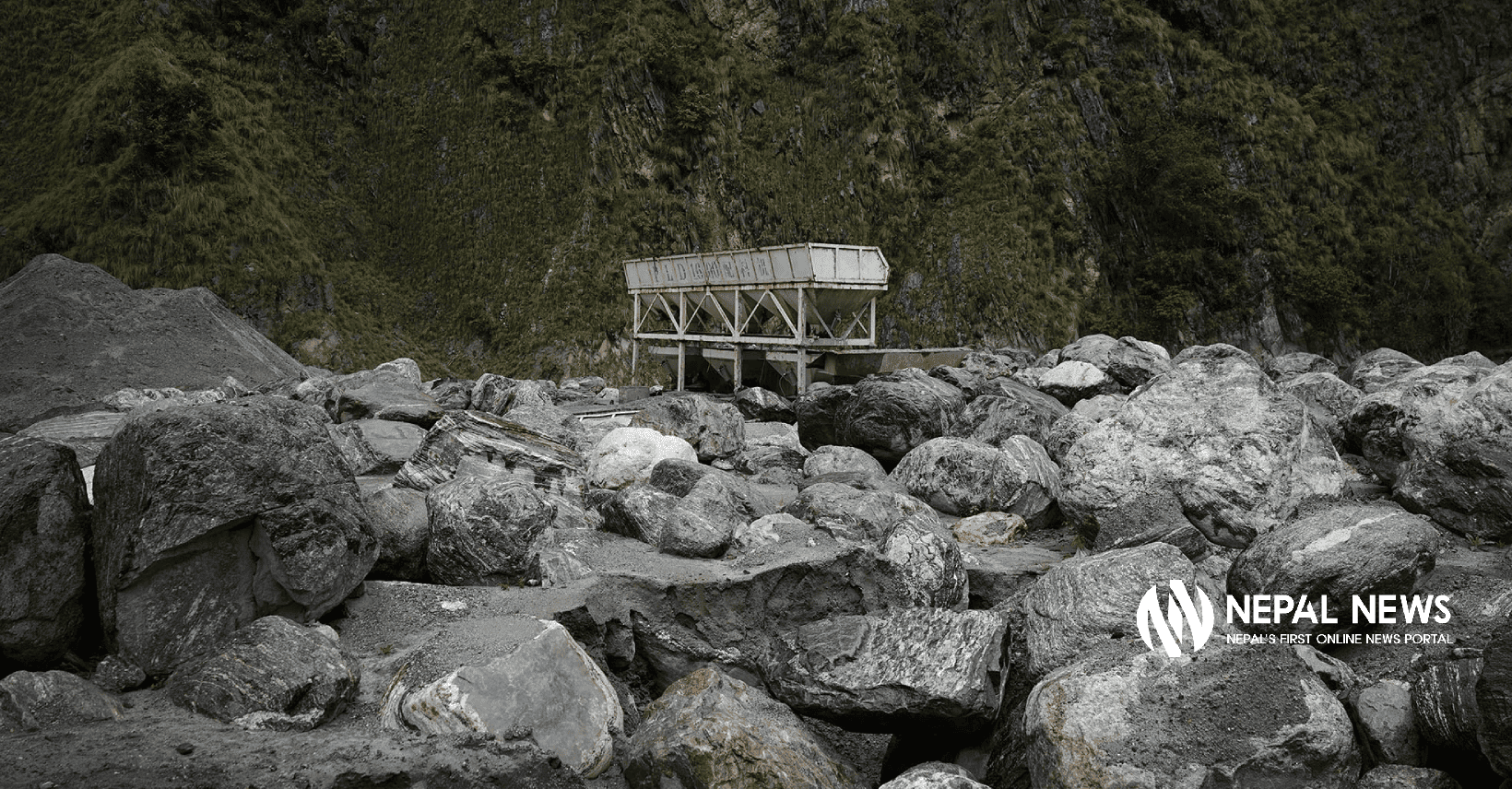
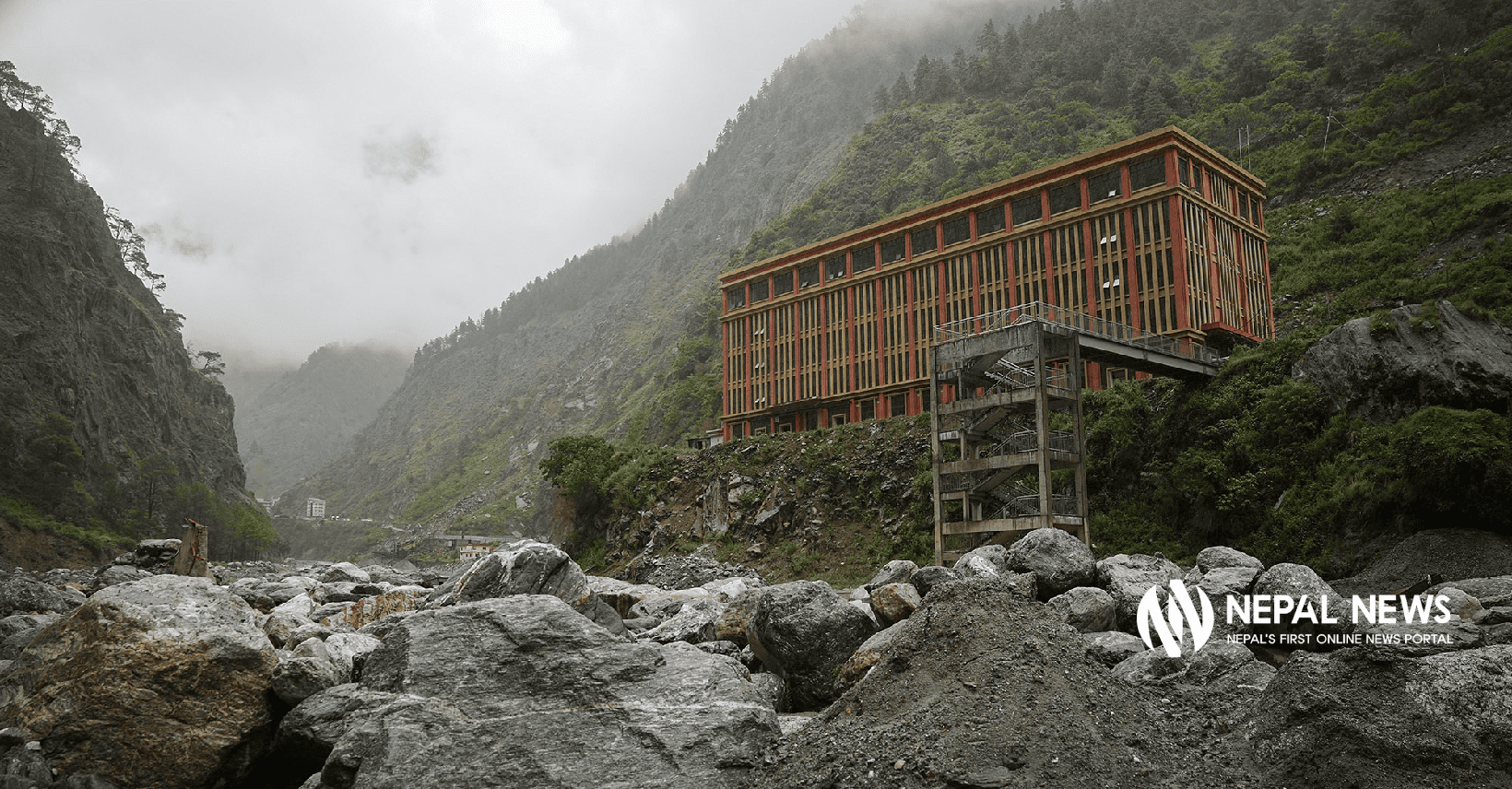
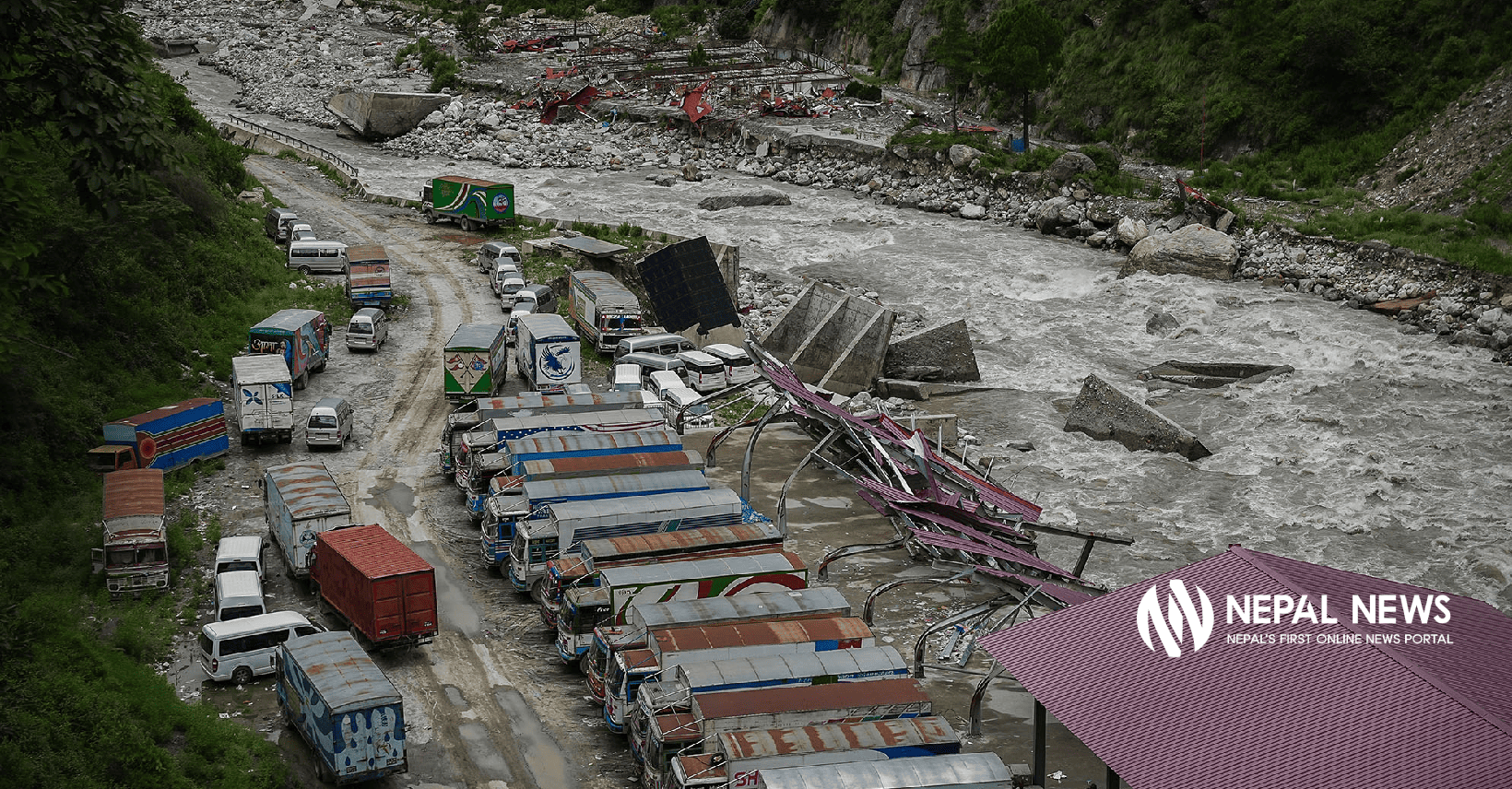
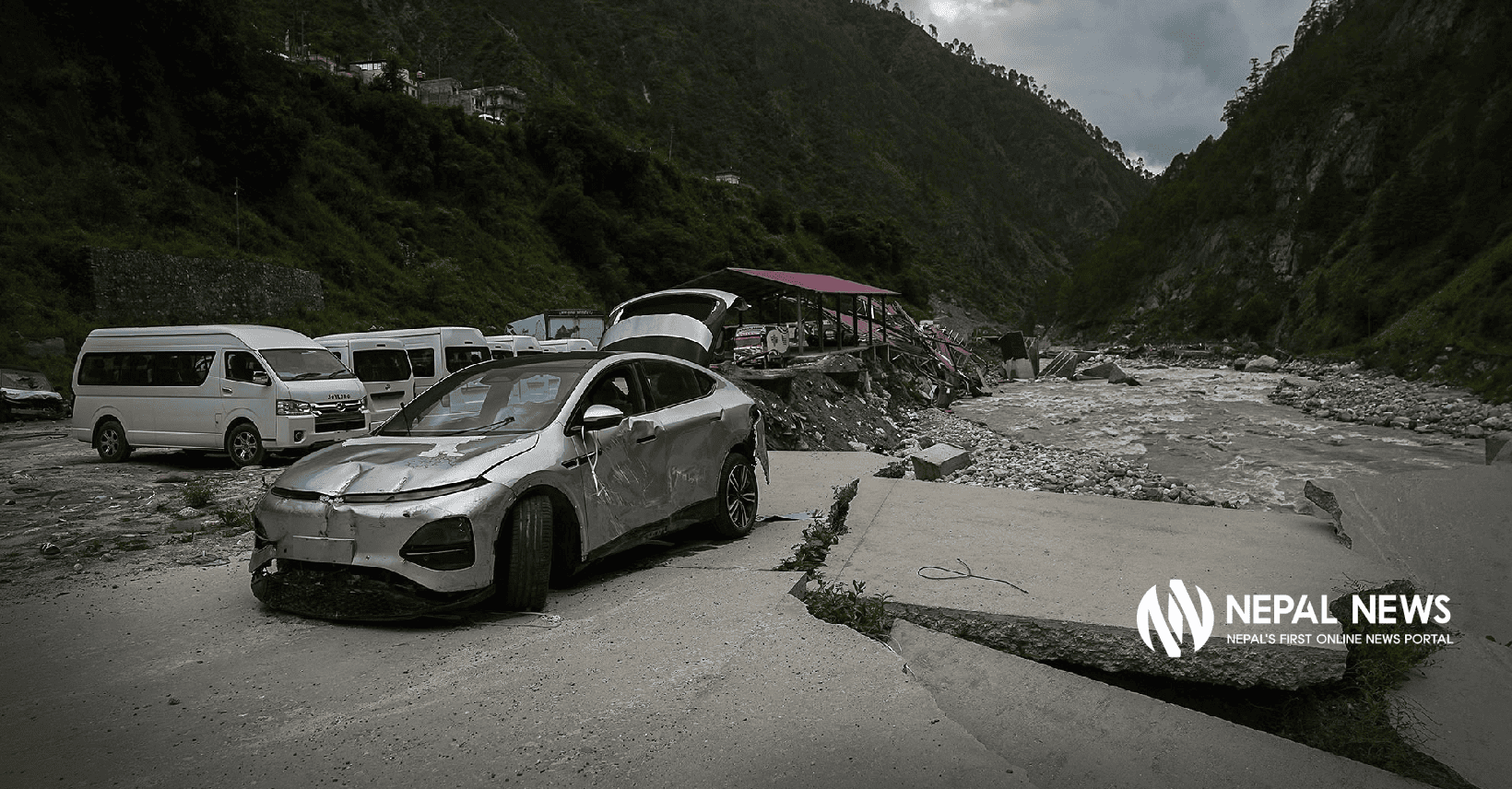
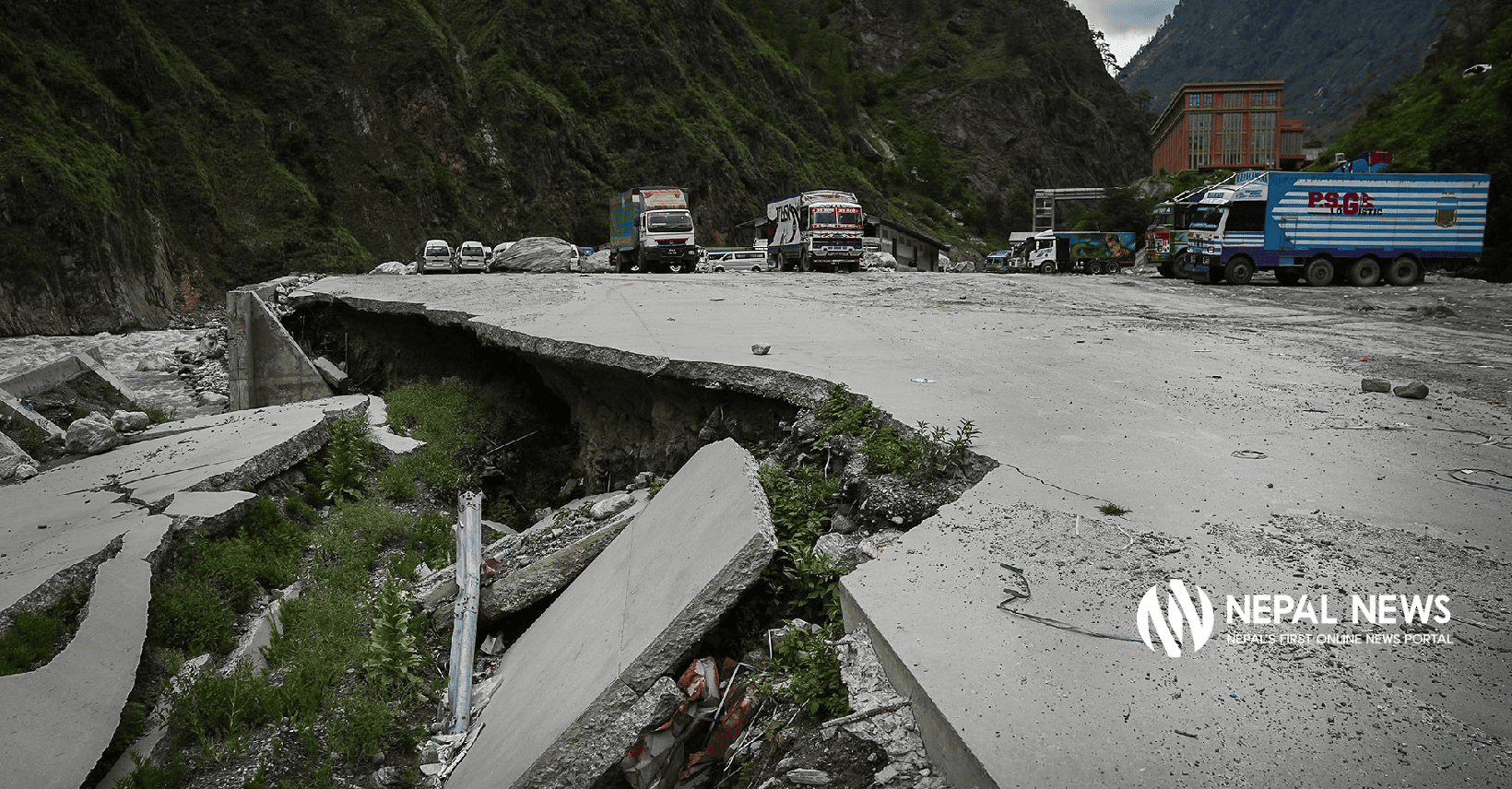
Nearly 80 percent of the construction had been completed before the disaster, but the floods heavily damaged the warehouses, embankments, and parking facilities, leaving only the administrative building unscathed. Following the incident, the Chinese construction company has not returned to the site, and the Government of Nepal has initiated no efforts to resume the port’s construction.
Although deeply connected to customs operations, the dry port project is not overseen by the customs office itself; rather, it falls under the responsibility of the Nepal Intermodal Transport Development Committee.
According to Yubak Dangol, the technical director of the committee, no discussions have taken place regarding how to move forward with the port since the disaster occurred.
“Construction stopped immediately after the incident. There have been no discussions or decisions on how to restart it,” Dangol said, adding that no budget has been allocated for the yard and port restoration.
The government currently has two options to revive the project: either coordinate with Beijing to bring the Chinese company back to the site, or take over construction independently if China declines to proceed. The project originally commenced in December 2019 with a Chinese government investment of Rs 2.16 billion.
Initially slated for completion within 30 months, its progress was severely hindered by the COVID-19 pandemic before the floods halted it entirely.
Following the disaster, the construction company’s project manager, Yang Li, met with Ashish Gajurel, the then-executive director of the Nepal Intermodal Transport Development Committee. Manager Li advised that the current location was unsafe for a dry port and recommended searching for an alternative site. Since Nepal has failed to propose a new location and China remains reluctant to build at the current spot, the Chinese company has refrained from returning.
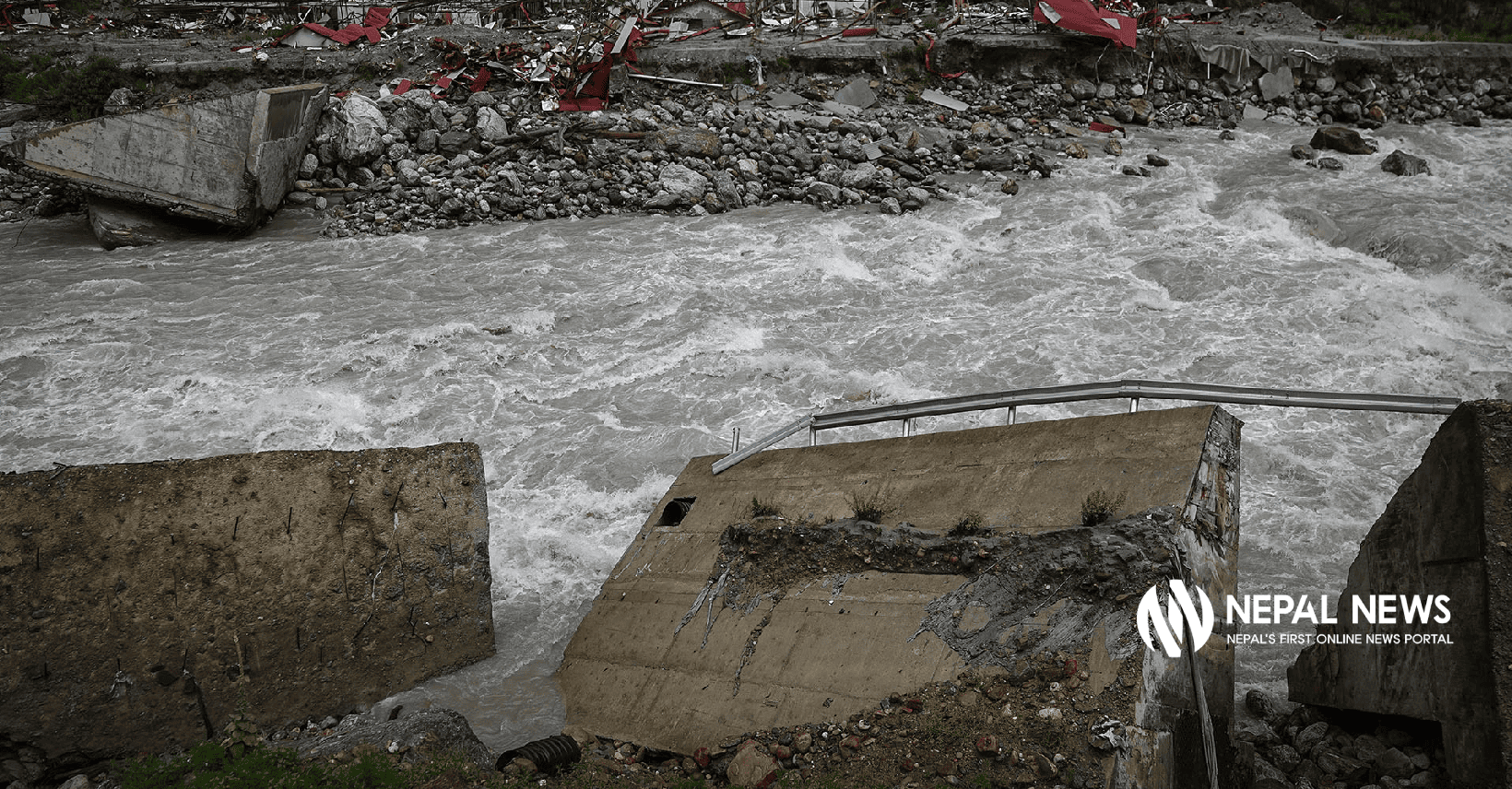
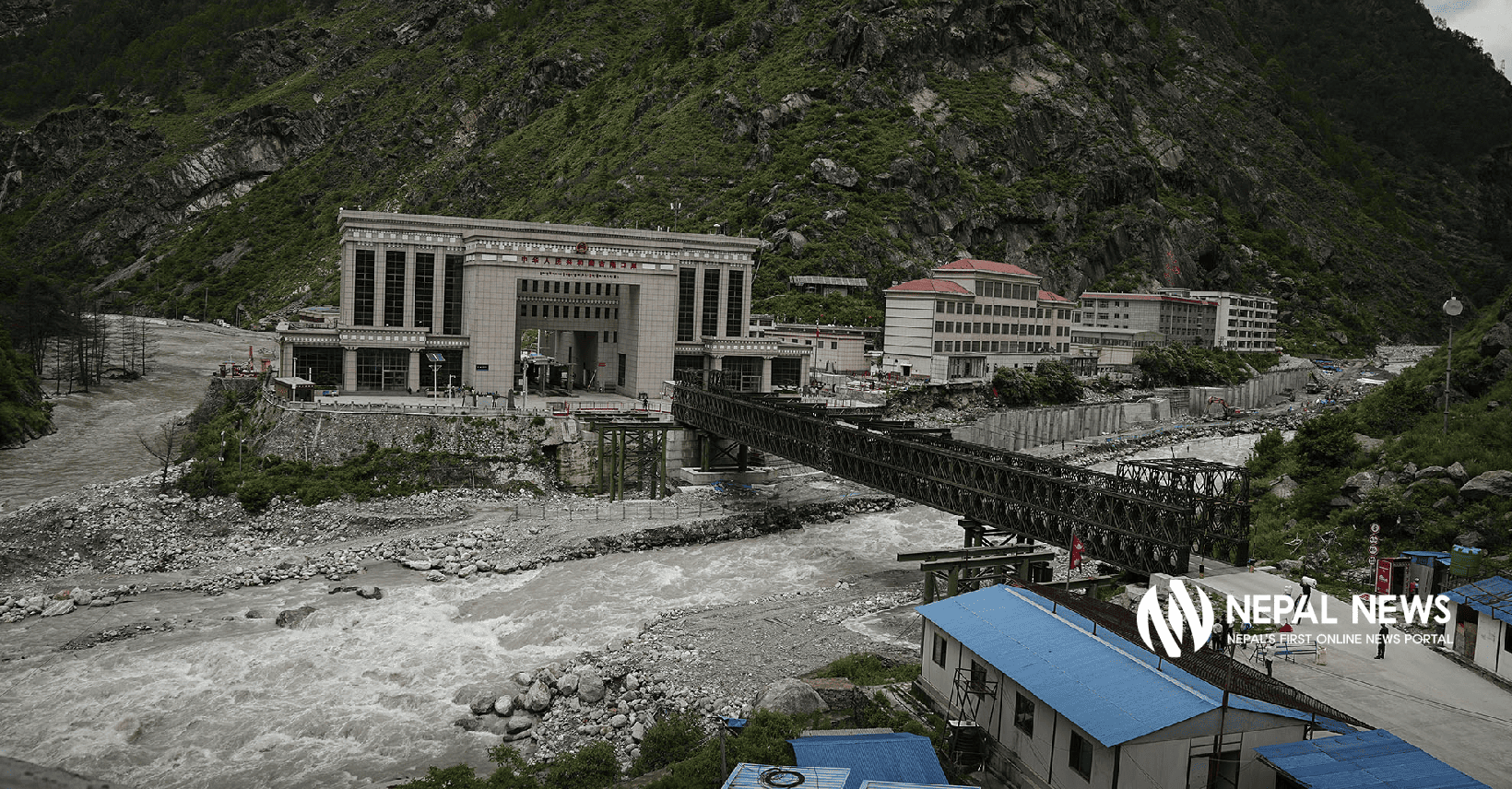
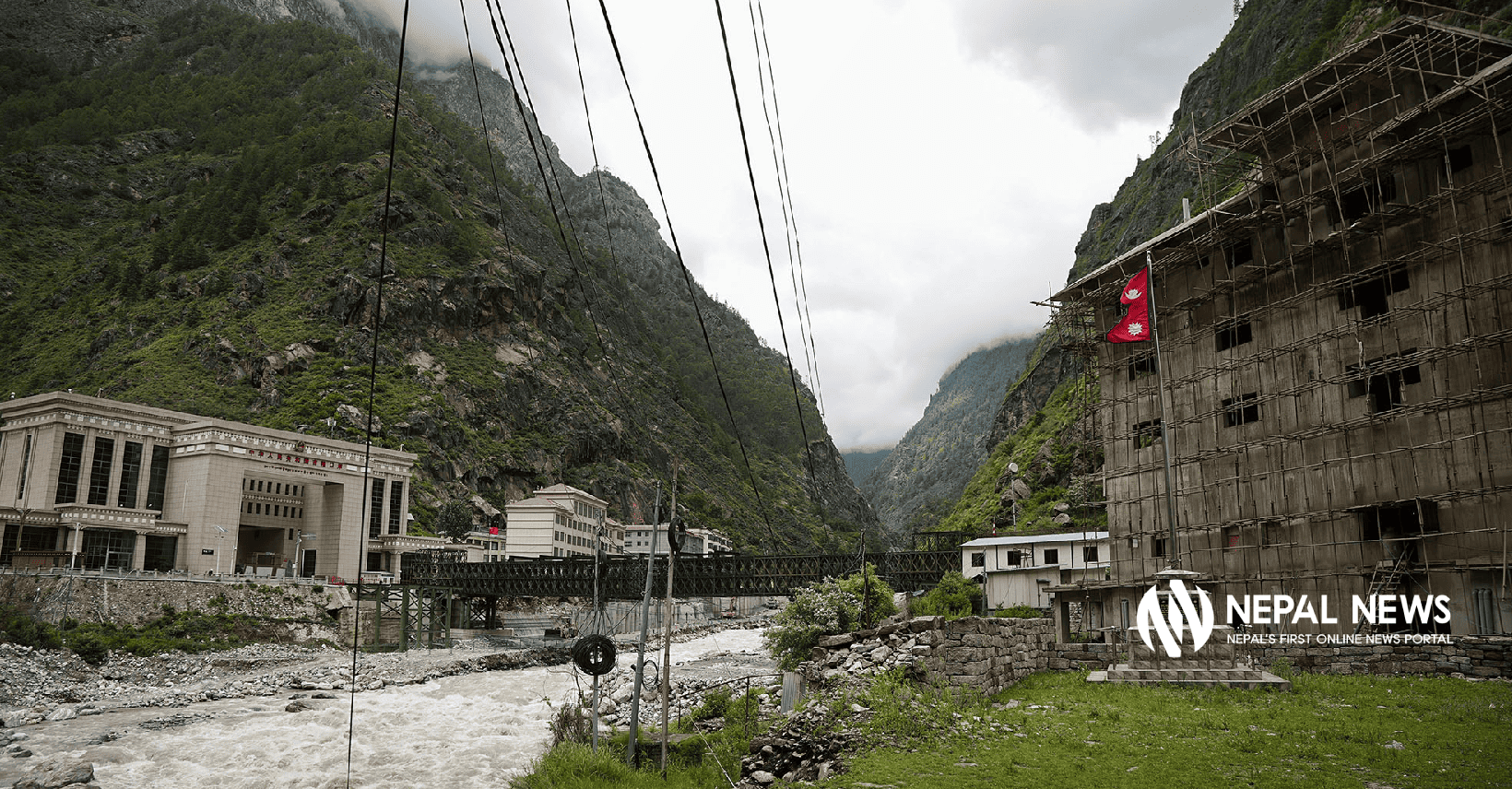
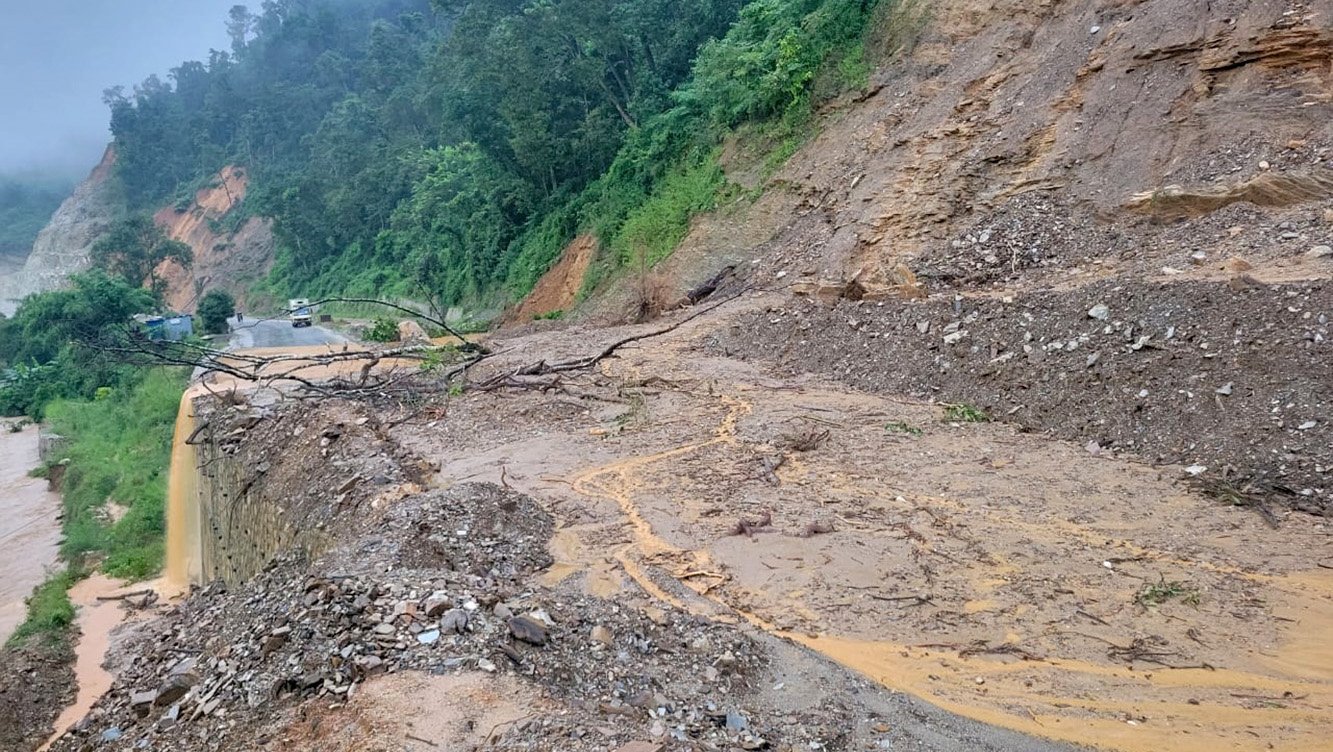
The devastating floods on July 8, 2025, swept away the crucial Miteri Bridge at the border. While cross-border trade and movement currently rely on a temporary Bailey bridge installed by China, the terminal yard and the under-construction dry port located 2.5 kilometers below in Timure have failed to recover.
Customs clearances are currently being conducted under the makeshift sheds that survived the flood.
Prem Subedi, an officer at the Rasuwa Customs Office, confirmed that the dry port—which has been under construction for seven years—remains completely stalled, forcing officials to work out of the damaged yard.
At the border, three small and large buildings—including an integrated customs building and two facilities for security forces—are currently under construction.
As the flood did not cause major structural damage to the border area outside of the bridge, these buildings survived. Officer Subedi shared that one of the new buildings will house the customs passenger branch, a food testing center, quarantine facilities, and a laboratory.
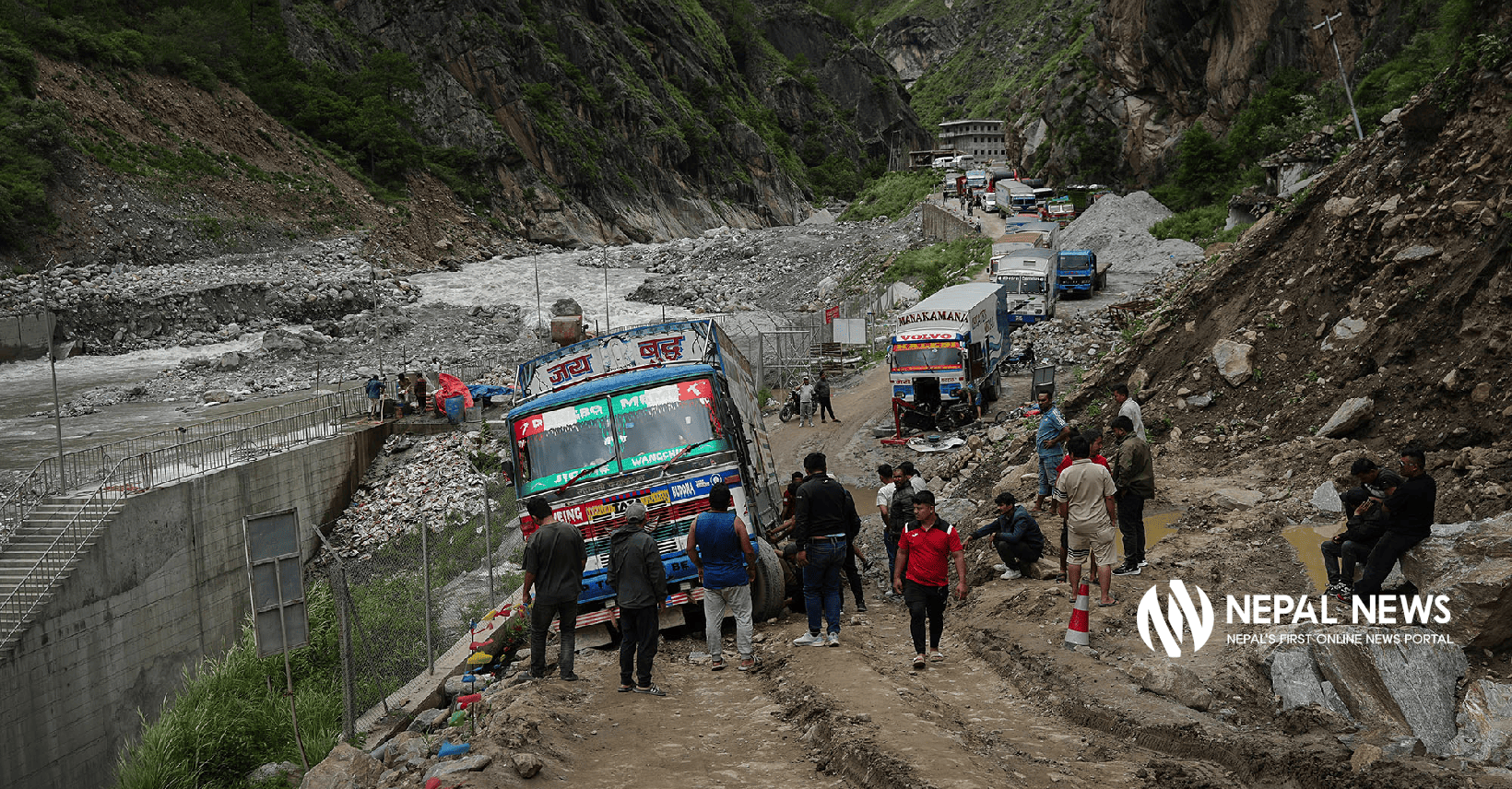
However, Subedi noted that freight transportation and cargo inspection have been significantly hampered both before and after the floods. “Before the flood, we had the permanent concrete Miteri Bridge. Since it was destroyed, we have been using a temporary iron bridge, which cannot support multiple heavy cargo containers simultaneously,” he explained.
He further highlighted the security risks faced by traders regarding their imports and exports post-flood. “Previously, we had a massive indoor space, allowing us to inspect goods even during rainfall while keeping the cargo secure. After the flood, we lost that space, and there are no warehouses left,” Subedi said. “Traders now have to wait out in the open, constantly worried that their goods might go missing.” He added that because customs operations require an expansive area and no alternative sites are available nearby, they are forced to inspect cargo directly amidst the flood debris.
According to the preliminary post-disaster report, the floods inflicted a staggering total loss of Rs 66.28 billion across customs infrastructure, vehicles awaiting clearance, hydropower projects, and road networks. The physical damage to the dry port infrastructure alone was valued at Rs 912 million.
Furthermore, losses from goods, vehicles, containers, and equipment stationed inside the customs office and yard amounted to approximately Rs 705.1 million.
The disaster also caused extensive physical damage to the Miteri Bridge, the customs yard, the Galchhi–Trishuli–Mailung–Syafrubesi–Rasuwagadhi road section, the Rasuwagadhi Hydropower Company, the Timure EV Charging Center, the Langtang Bhotekoshi Hydropower Project, Chilime Hydropower Company, Upper Trishuli ‘A’ Hydropower Project, Trishuli Three ‘B’ Hub Station, Upper Trishuli-1 Hydropower Project, the Rasuwa Distribution Center of the Nepal Electricity Authority, and the Gosaikunda and Uttargaya hydropower projects.
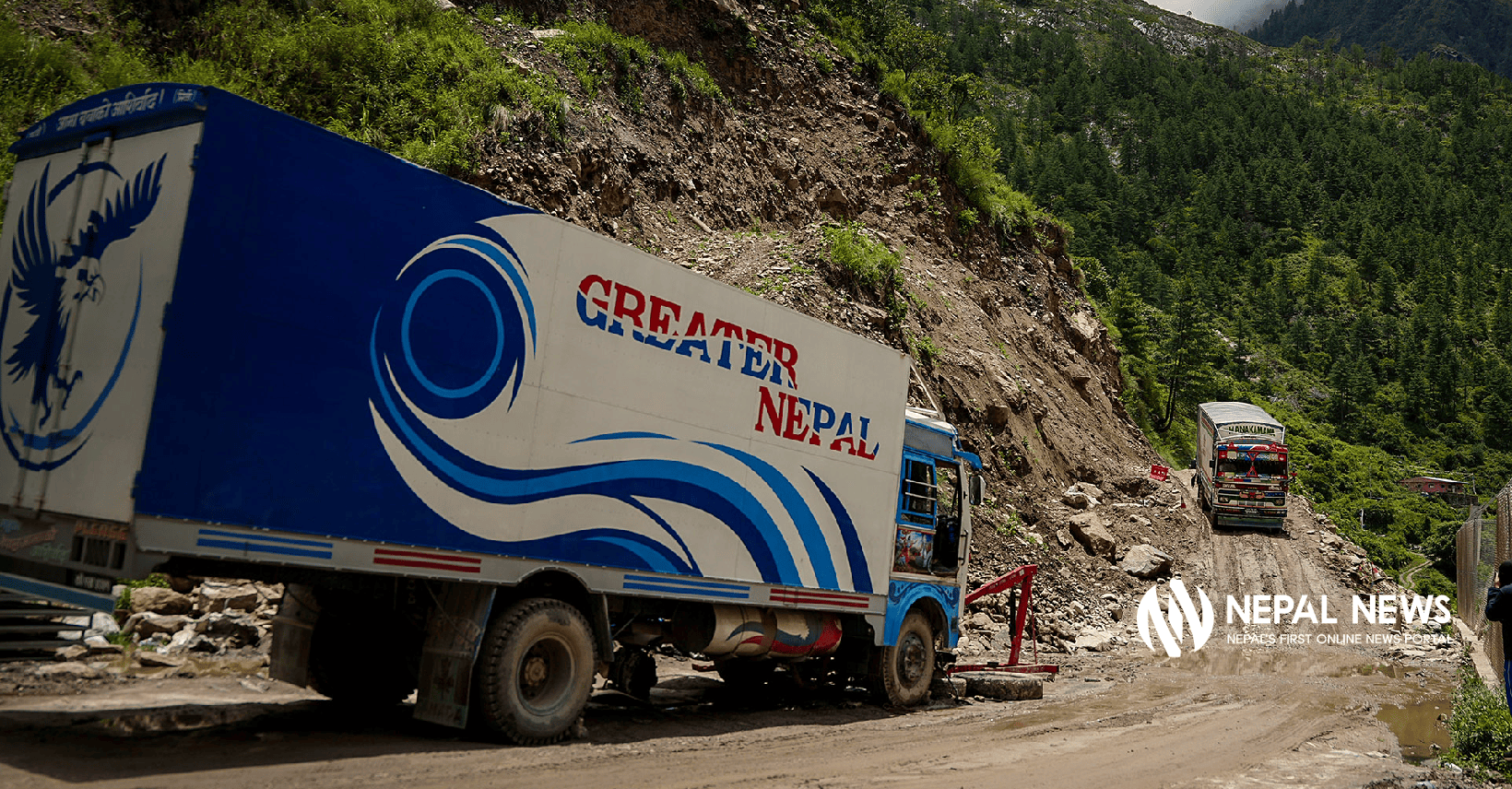
Although the hydropower companies have since restored their operations, the damages caused by erosion to the customs yard, the under-construction dry port, and the Syabrubesi–Rasuwagadhi road section remain completely unaddressed to this day.
All Photos: Prakash Chandra Timilsena / Nepal Photo Library