Kathmandu
Thursday, July 23, 2026





For many LGBTQI+ people, discrimination, insecure housing, and poverty begin long before floods or heatwaves arrive, leaving them with fewer resources and less access to protection when disasters strike.
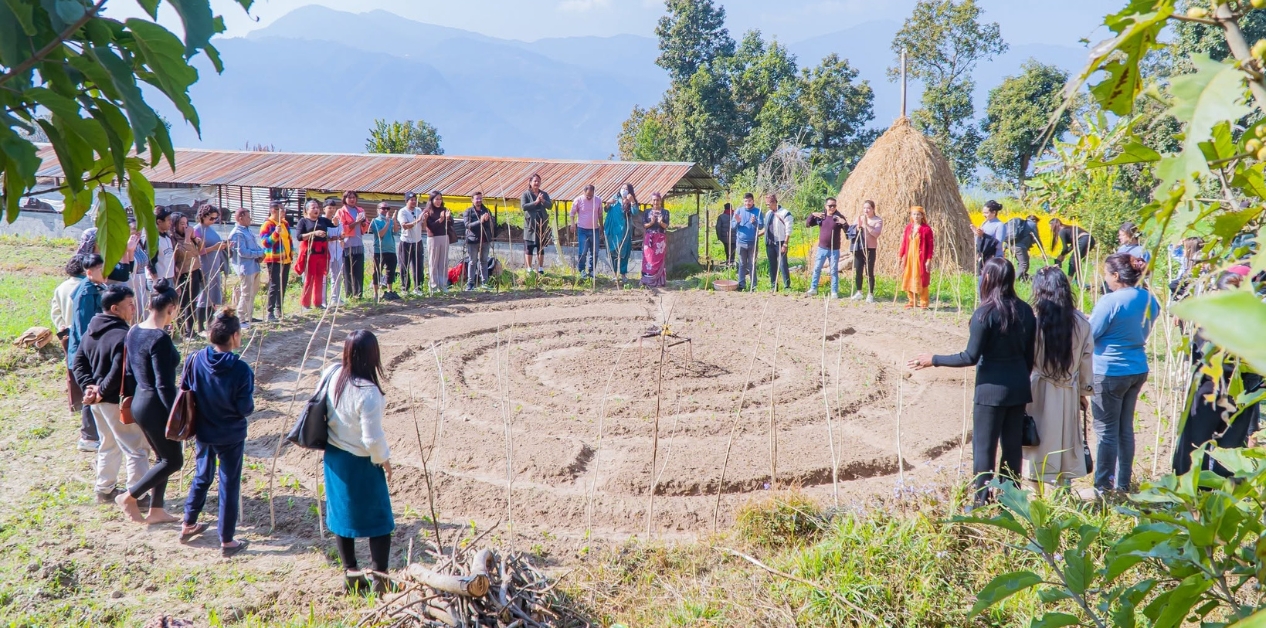
KATHMANDU: With the arrival of the monsoon season, 36-year-old Kajal Chaudhary of Kailali feels a growing sense of anxiety. She constantly fears that flooding will once again damage her mud house built on low-lying unregistered public land near a river.
Last year, heavy rains sparked floods that washed away her farmland. Although her house survived that time, she feels this year’s monsoon will not be easy.
During heavy rainfall, water collects in her courtyard. “The yard turns into a muddy mess, and stagnant water brings swarms of mosquitoes,” says Kajal, who identifies as a transgender woman. “When it rains heavily, I’m terrified that floodwaters will rush in again and destroy my home.”
Her house features mud walls and a mud roof. Living on unregistered public land without land ownership certificates, she lacks the financial means to move to safer housing. “The government collected a photocopy of my citizenship certificate last year, promising to issue land ownership papers, but no progress has been made since,” she explains.
Troubles in rain and drought alike
The fear of floodwaters entering her home is not Kajal’s only struggle during the monsoon. Rain halts construction projects, drastically reducing her daily earnings from manual labor.
She works all day carrying gravel, sand, and bricks. Returning home after a long day, she often finds her firewood drenched by rain. When damp wood fails to catch fire, she occasionally goes to bed having eaten only beaten rice and dry snacks. “After working hard all day, the firewood needed to cook meals is completely soaked,” she says. “When the fire won’t light, I just eat whatever is available and go to sleep.”
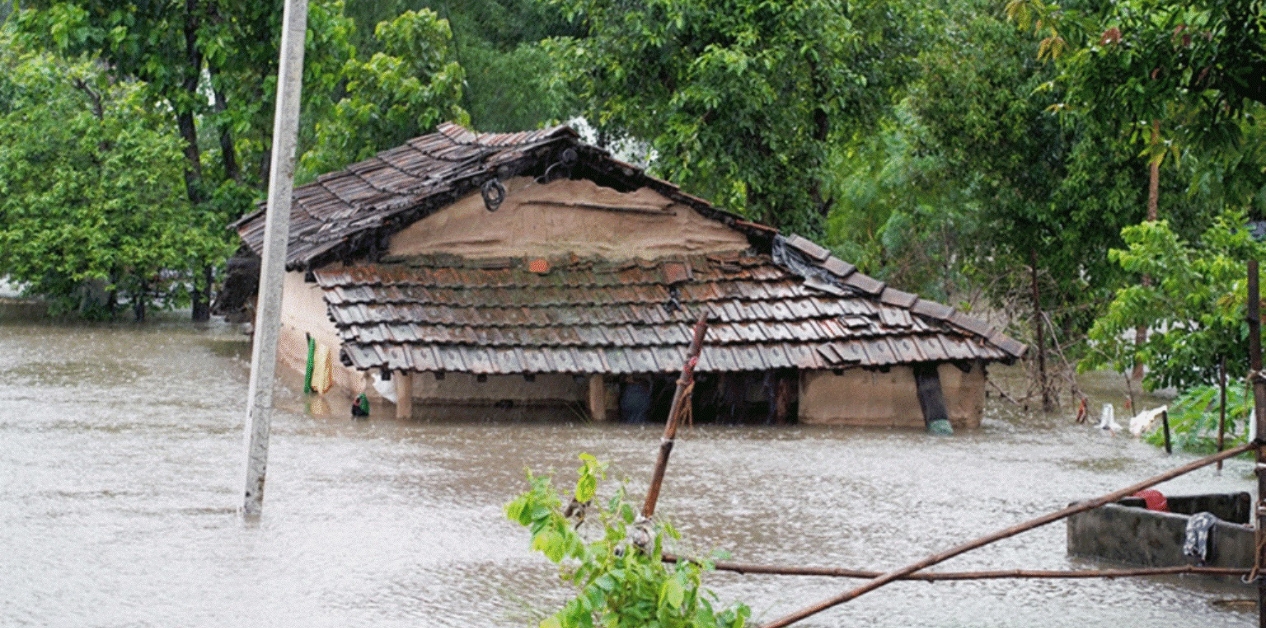
Inundation in Kanchanpur of Sudurpashchim Province. Photo courtesy: Shivraj Bhatta
Her sleeping arrangement is equally inadequate, forcing her to sleep on straw at times. She notes that stagnant water around the house and overgrown bushes increase the risk of venomous snakes.
When it does not rain, intense heat makes her daily routine even harder. During extreme heat, she can only work at construction sites between 3:00 PM and 7:00 PM. She also cultivates a small patch of land, but extended dry spells have caused her paddy seedlings to wither. She lacks sufficient seeds to replant them. “I don’t have paddy seeds left and cannot afford to replant,” she says. “Sometimes I feel completely frustrated—rain brings problems, and lack of rain brings problems too.”
One house, separate Kitchens
Kajal’s family consists of 13 members. Although everyone lives under the same roof, her kitchen is separate. She shares that her family treats her differently because of her gender identity.
Due to financial constraints, she could not complete her school education. After identifying as a transgender woman at age 20, she faced additional social and familial challenges.
At one point, she earned a living through dancing, and later tried goat farming. However, lacking financial and technical support, she could not sustain the business. “If someone had provided financial support for goat farming, I wouldn’t have to do this manual labor today,” she says.
Without construction work, she cannot meet her daily expenses. If she finds no work, her income stops entirely. Even when she secures work, receiving timely wages remains a major issue. She recounts working for over a week without getting paid. “The employer doesn’t care about our hunger; they only care about the work,” she says. “Who will understand our plight? The state has paid no attention to us so far.”
Added hardships in winter
Besides fearing floods in the monsoon, winter cold brings equal misery to Kajal.
Lacking necessary gloves and boots at construction sites, she mixes cement, sand, and water into mortar with her bare hands and feet. The harsh cement and sand burn her skin, leaving her hands and feet raw and red. “In winter, the skin on my hands burns,” she says. “No matter how much it burns, I have no alternative. My life revolves around these bricks and sand.”
Wet sand becomes heavier in winter, making it much harder to carry. Moreover, there is no provision for warm food or snacks at the workplace.
Leaving early in the morning for work, she carries her lunch from home. Lacking proper food containers, the food she packs in a steel bowl turns cold by midday. “To satisfy my hunger, I have to eat whatever is there,” she says. “Sometimes, just looking at the cold food makes me lose my appetite.”
Last winter, lacking a dry shelter to store firewood, she frequently had to burn damp wood. The freezing cold numbed her hands while smoke from the wet wood burned her eyes, making morning cooking an arduous task.
Forced to dance in thin sarees despite the cold
For 65-year-old transgender woman Bisana Chaudhary in Sudurpashchim, summer, winter, and monsoon seasons bring distinct hardships.
She relates that members of the sexual and gender minority community from India took her along at a young age. As she grew up within that community, she began understanding her gender identity.
Currently, she leads a group of 12 transgender women traveling across various districts in Sudurpashchim to perform traditional dances and offer blessings at homes where newborn babies are welcomed.
To appear attractive while dancing, they typically wear thin sarees or lehengas. Bisana explains that dancing in such attire during winter is excruciatingly difficult. “We need to look presentable while dancing; if we don’t wear a saree or lehenga, people won’t give us money,” she says. “It’s extremely hard in the winter, especially as old age sets in and joint pain worsens.”
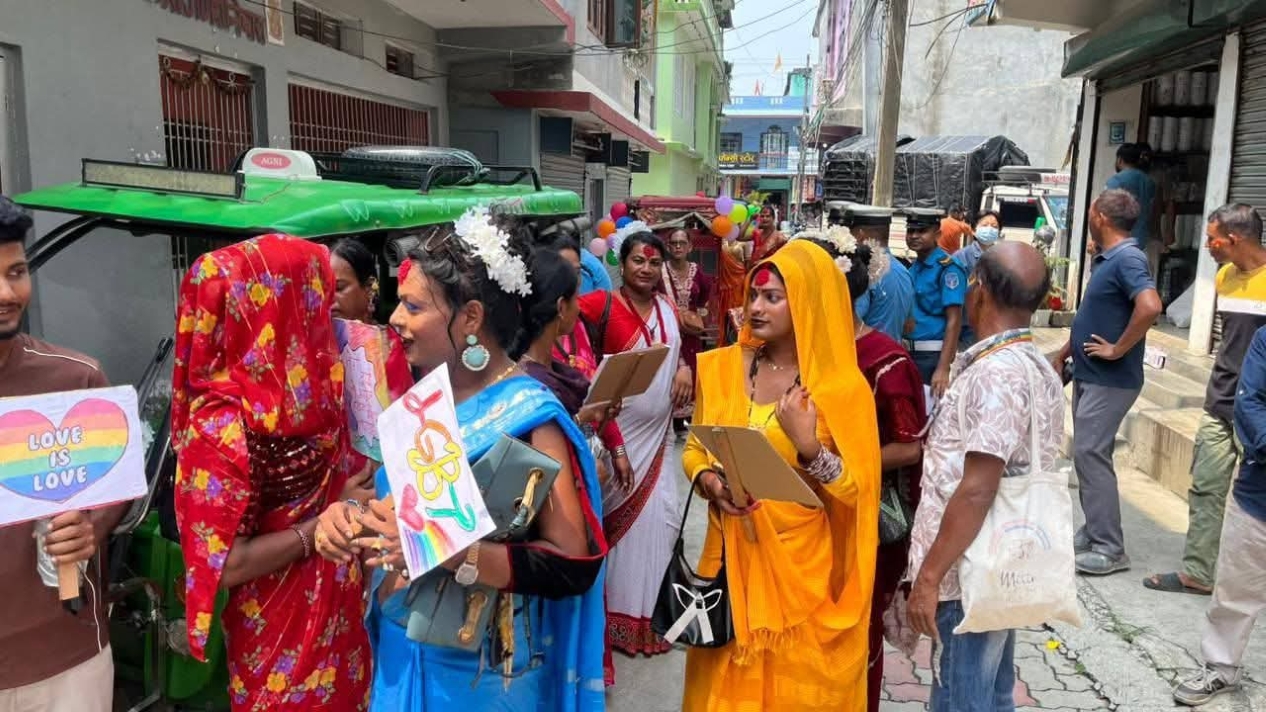
When visiting villages for work, local residents often require her group to stay in cattle sheds. They cook their meals there and sleep on straw. “In return for blessings, people give us rice and vegetables, which we cook and eat right in the cattle shed,” she says. “The straw pricks us while sleeping, and sometimes venomous snakes slither in.”
She notes that cattle sheds become freezing cold in winter and suffocatingly hot during summer. The harsh winter cold causes stomach aches, nausea, and severe joint pain. “Nobody helps us,” she says. “If we work, we eat; if we don’t, we stay hungry.”
Even during summer and monsoon seasons, they are forced to stay in cattle sheds or other unsafe shelters during their work trips.
Vulnerable even before disasters strike
Birkharaj Chaudhary, who provides counseling and health awareness to transgender individuals across various districts in Sudurpashchim, emphasizes that the housing and livelihood conditions of transgender people outside Kathmandu remain extremely fragile.
“The situation for transgender individuals living outside Kathmandu is severe,” he says. “Many lack a home of their own, and when they try to rent a room, property owners deny them shelter solely due to their identity.”
He adds that exclusion by families and society due to gender identity severely restricts their access to education, employment, housing, and government services. This deepens their economic vulnerability and diminishes their ability to cope with hazards like floods, extreme cold, and heatwaves.
According to Binita Nepali, a climate change researcher, the impacts of disasters and extreme weather do not affect everyone equally. Historically marginalized and socially excluded communities bear a disproportionate burden.
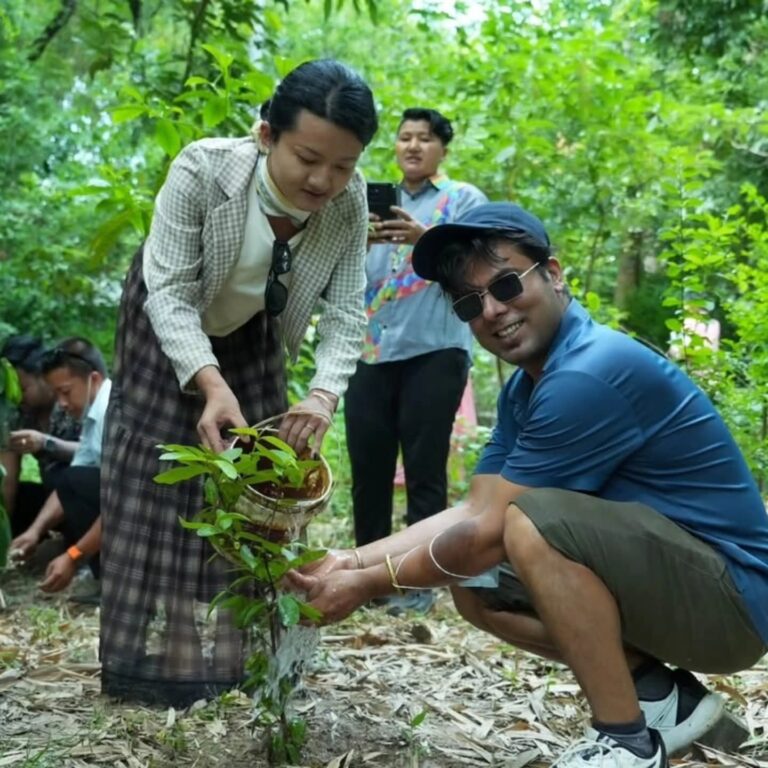
Tree planting organized by Mitini Nepal and Ranibari Community Forest User Group on June 26, 2026, in Ranibari, Kathmandu, on the occasion of Pride Month. Photo: Mitini Nepal Facebook Page
Because many individuals in sexual and gender minority communities are alienated from their families and society due to their identity, they often reside in unsafe, highly vulnerable areas well before a disaster hits, notes Nepali. “They lack financial resources, have weak social networks, and lack family support,” she says. “When floods, landslides, or extreme cold strike, they are often left out of state relief distribution.”
When relief mechanisms rely on local power structures and informal social ties, marginalized individuals face a heightened risk of exclusion. Fearing further discrimination or humiliation when asking for help, many endure severe hardships in silence. “They fear experiencing deeper discrimination if they go to claim relief,” she says. “Creating an equitable and safe environment for everyone is a fundamental duty of the state.”
One identity on official ID, another in daily life
A significant portion of the sexual and gender minority community lacks citizenship certificates or identity documents reflecting their self-identified gender.
Nepali points out that when individuals who present socially as women hold citizenship documents listing male names and legal markers, they face persistent questioning and discrimination at banks, hospitals, relief centers, and government offices.
Discrepancies in official records complicate opening bank accounts, seeking medical care, applying for jobs, or obtaining government assistance. Out of fear of facing prejudice at healthcare facilities, many refrain from seeking care or speaking openly about their health issues.
“Without identity documents that reflect who they are, they are forced to prove their existence at every service point,” says Nepali. “Compounded by poverty and social stigma, their risk exposure escalates further.”
During extreme heatwaves, financially secure individuals rely on fans, air-conditioned rooms, or sturdy housing. However, daily wage earners have no such luxury. “Impoverished individuals cannot even afford to buy a basic fan,” she says. “Air conditioning is entirely out of reach.”
Relying on hard physical labor to secure two basic meals a day—often without fair or timely compensation—drastically erodes their capacity to withstand extreme weather and natural disasters, Nepali explains.
Invisible in data and statistics
Nepal lacks comprehensive research and disaggregated data on how climate change and natural disasters specifically impact sexual and gender minorities.
Neither the government nor specialized organizations maintain systematic records regarding how many individuals from this community are affected by floods, landslides, heatwaves, or cold waves.
While government policy documents on climate change and disaster management frequently mention gender and social inclusion, it remains unclear to what extent the specific needs of sexual and gender minorities are integrated.
A report published in 2021 by ICIMOD, UN Women, and the United Nations Environment Programme highlighted significant gaps in Nepal’s gender-responsive climate policies and their implementation. The report concluded that policy-level understanding regarding climate risks faced by marginalized communities remains narrow.
Nepali notes that climate and gender discourses in Nepal generally reduce gender issues to women’s concerns alone, failing to maintain separate data for sexual and gender minorities.
A report by the Williams Institute at the UCLA School of Law indicates that climate change intensifies existing patterns of violence, discrimination, and exclusion experienced by LGBTQI+ individuals.
According to that report, only 8.2 percent of state parties to the Paris Agreement explicitly mention the LGBTQI+ community in their Nationally Determined Contributions (NDCs).
The report confirms that individuals excluded from families and communities due to their identity—who also lack secure housing and steady incomes—are placed at far greater risk during climate-induced disasters.
Scattered initiatives, policy gaps
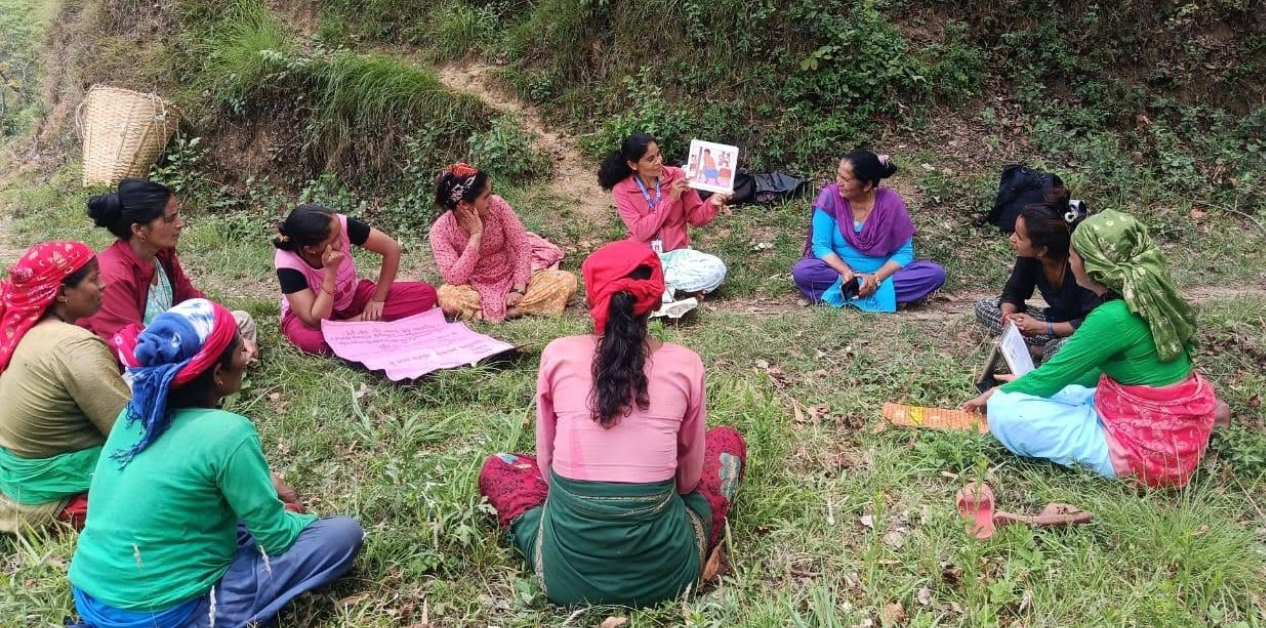
Mitini Nepal, an organization working for sexual and gender minorities, recently conducted tree planting drives and environmental awareness programs.
Sarita Ruchal, an official at the organization, explains that these drives aim to build community awareness about flood risks, landslide hazards, and environmental preservation.
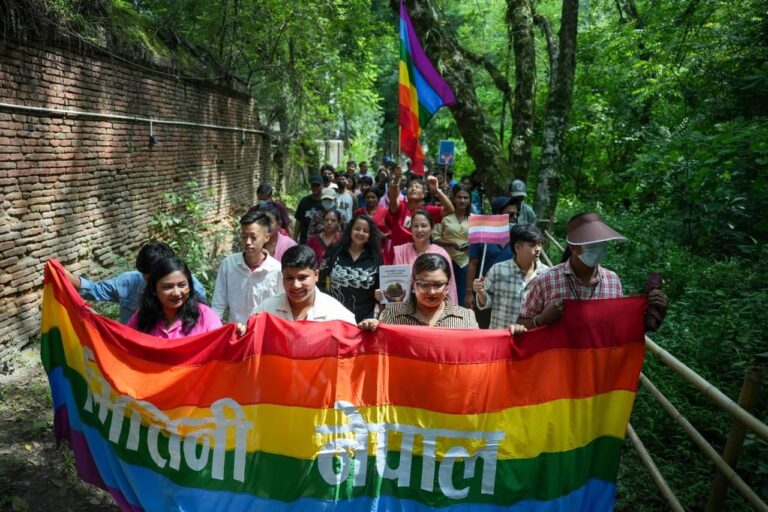
Parade organized by Mitini Nepal in Ranibari, Kathmandu. Photo source: Mitini Nepal Facebook Page
“Planting trees is essential to reduce flood and landslide risks while keeping our environment clean and green,” she says.
However, isolated activities like tree planting cannot resolve systemic issues surrounding housing insecurity, fragile livelihoods, healthcare access, relief equity, and legal recognition.
Climate policies, disaster preparedness plans, relief distribution mechanisms, housing schemes, and health programs still lack explicit provisions for the specific needs of sexual and gender minorities. Furthermore, representation and direct lived experiences of this community remain largely absent during policy formulation.
Nepali emphasizes that individuals belonging to Dalit, Indigenous, or other marginalized groups within the community face compound layers of discrimination based on caste, class, and gender identity. “Marginalized individuals in this community face double or multiple layers of discrimination,” she states. “Therefore, disaster and climate policies must explicitly prioritize them.”
She urges the government to systematically include sexual and gender minorities when formulating climate policies and disaster management programs. Her recommendations include creating inclusive relief distribution channels, improving access to safe housing, providing gender-affirming identification documents, and ensuring community representation in local governance processes.