Kathmandu
Monday, July 27, 2026





The deadly Sunsari clash is the latest in a string of communal flashpoints across the Terai, raising questions about organised mobilisation, cross-border influence and a state that often responds only after violence erupts
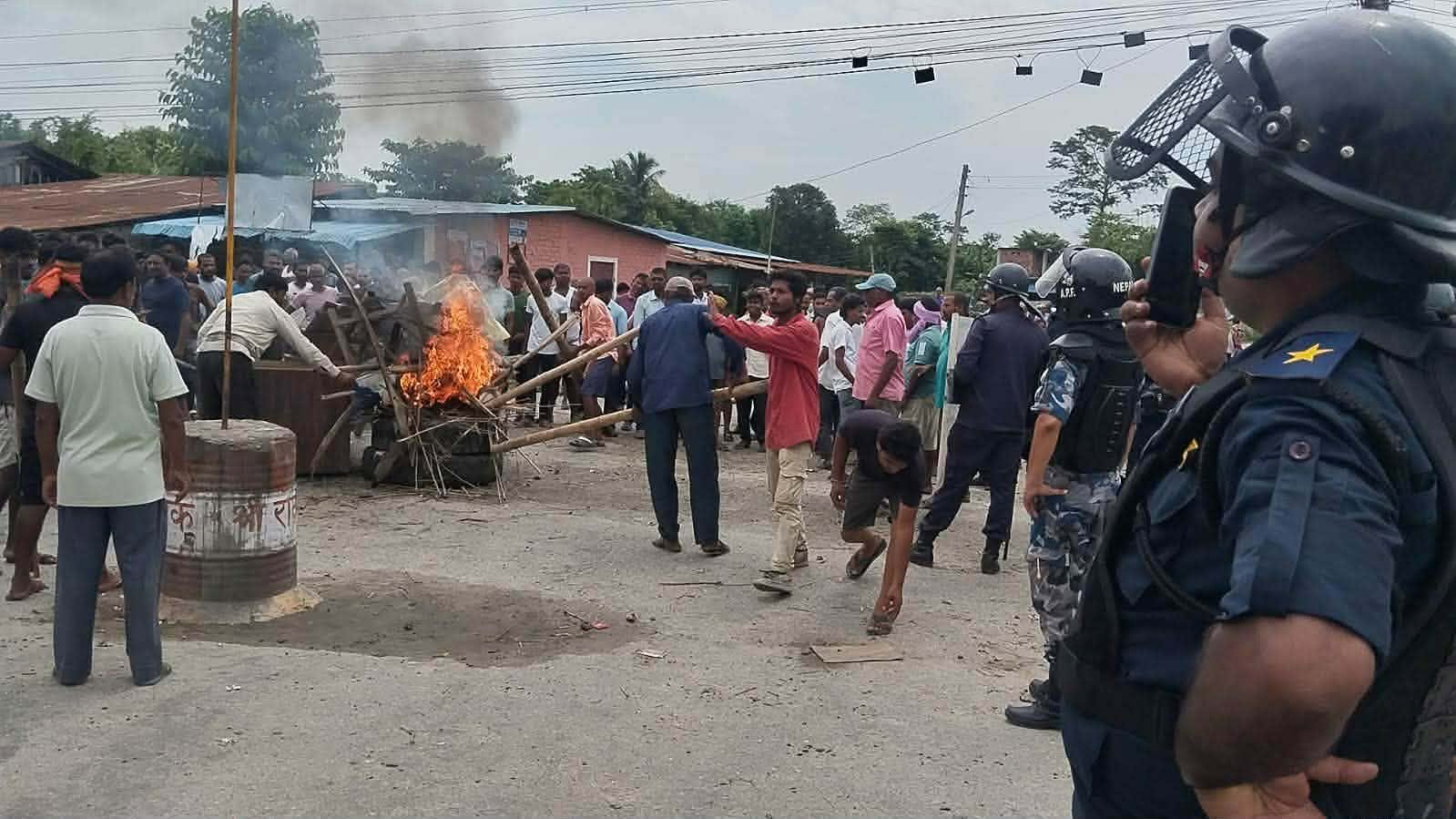
KATHMANDU: Late on the night of July 26, a dispute over a loud DJ system playing outside a temple in Kaptanganj, Ward 3 of Dewanganj Rural Municipality in Sunsari, spiralled into stone pelting after an earlier row over a Muslim community flag on a nearby electricity pole being replaced with a Hindu flag. Police fired warning shots, then live rounds, killing 24 year old Om Prakash Mehta and injuring roughly two dozen people.
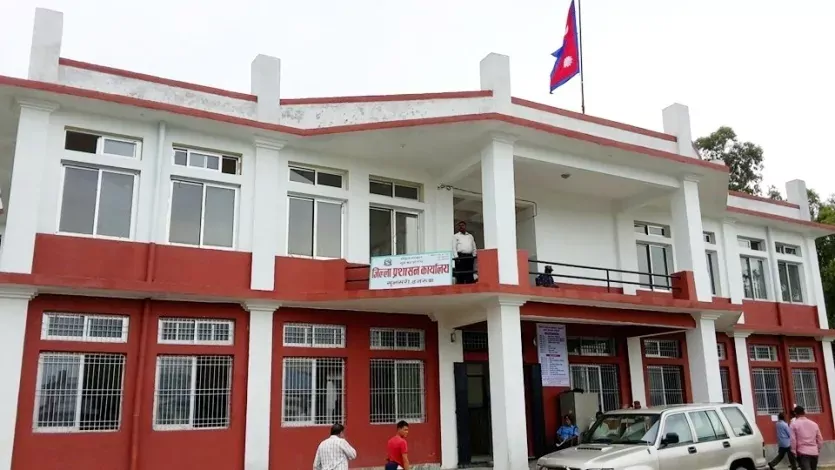
Sunsari’s administration has since imposed curfews and prohibitory orders across five market areas. The episode sits inside a much longer, troubling run of similar flashpoints across the Nepal-India border belt, from Birgunj to Dhanusha to Sarlahi, and inside a wider argument over how organised religious assertiveness on both sides of that border is reshaping a region that used to absorb this kind of friction without bloodshed.
What exactly happened in Kaptanganj on Sunday night?
Around ten thirty at night, an argument broke out in Kaptanganj over a loudspeaker system playing devotional and popular music at high volume near a local temple. According to the District Police Office in Sunsari, the dispute was already primed by an earlier flashpoint that day, when a flag belonging to the Muslim community, mounted on an electricity pole in the locality, was taken down and replaced with a Hindu flag, a type of incident that has repeatedly triggered friction in other Terai towns where flags and banners are used to informally mark territory along religious lines.
What started as shouting between a handful of young men from each side turned into stone throwing within minutes. A local police post attempted to calm the crowd first, and when that failed, the Nepal Police fired three rounds and the Armed Police Force fired seven rounds to disperse the mob, according to the district police spokesperson. It has not been established whose bullet caused the fatality. Reinforcements arrived from across Koshi Province as the crowd kept growing faster than the small local post could contain it.
Who died and how many people were hurt?
The man killed was Om Prakash Mehta, 24, a resident of Kaptanganj in Ward 3 of Dewanganj Rural Municipality, who died after being hit by gunfire during the police action to disperse the crowd. Different reports put the number of injured at somewhere between sixteen and twenty four, a range that is not unusual in the first day of reporting on such a fast-moving incident.
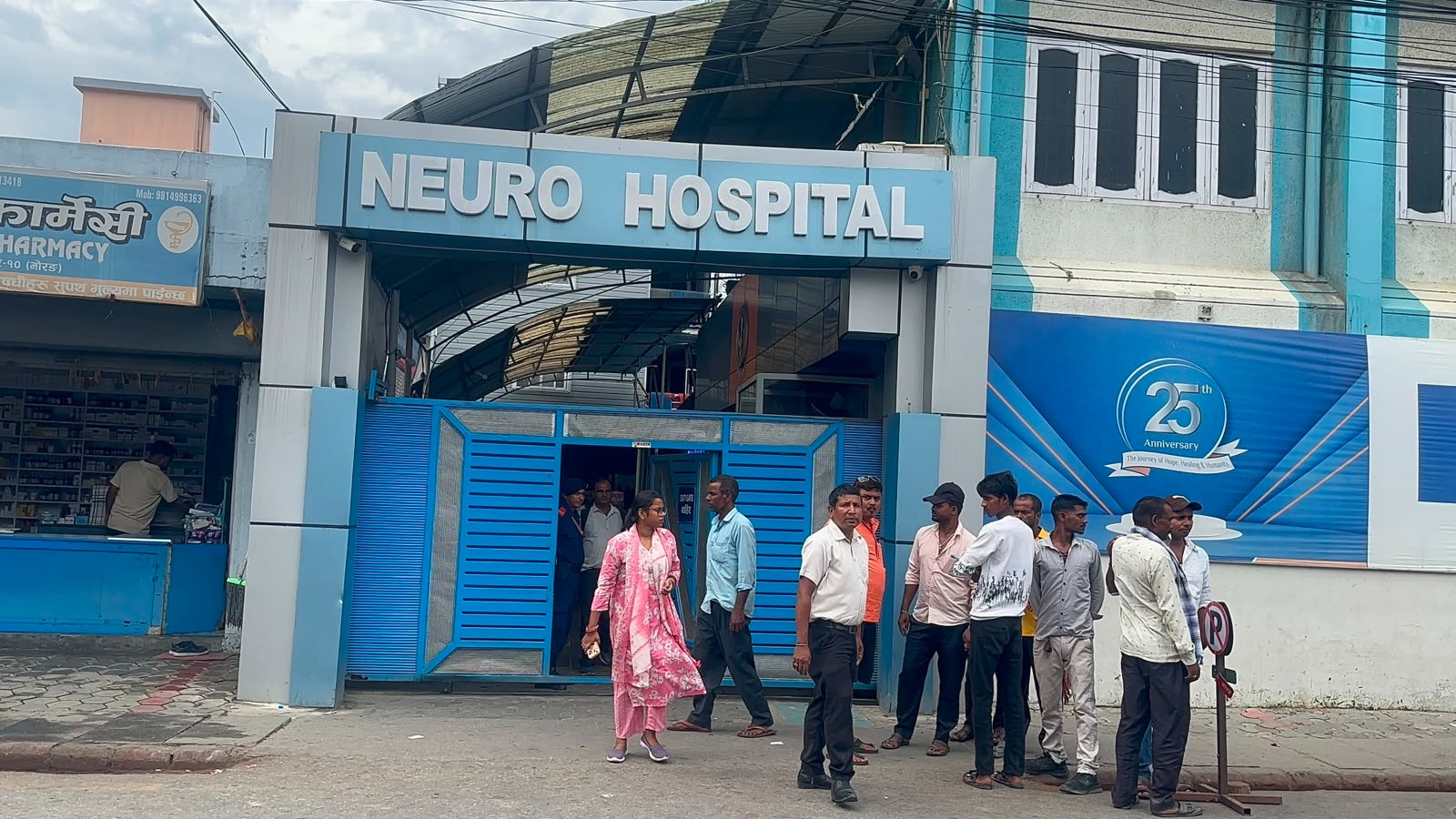
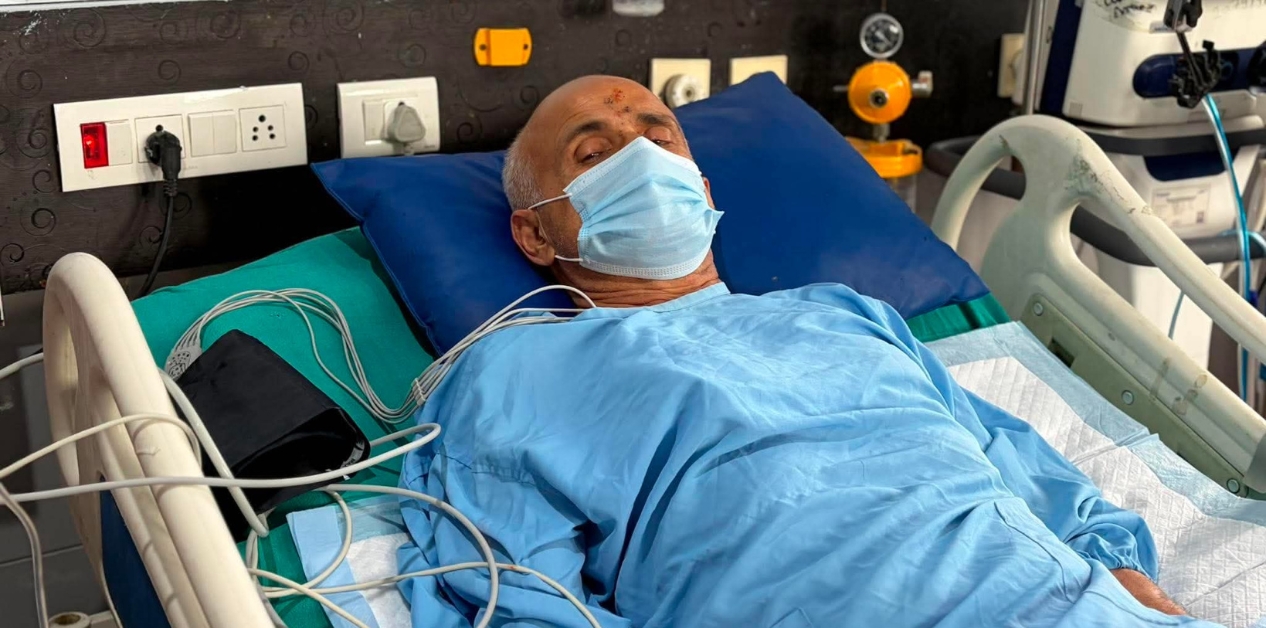
Nine injured by gunfire were taken to the Neuro Hospital in Biratnagar for treatment
Nepal Police confirmed ten of its own personnel were hurt, including Inspector Rakesh Rai, alongside five Armed Police Force personnel. Nine civilians from the local area were also injured and taken to hospitals in Biratnagar and Sunsari, with several suffering bullet wounds.
The precise breakdown between civilian and security injuries has varied slightly across different police updates as the toll was revised through Monday, which again is typical for the first twenty four hours after a clash of this scale.
Where is Kaptanganj and what does the area look like demographically?
Kaptanganj sits inside Dewanganj Rural Municipality, a small local unit in Sunsari district only a few kilometres from the Indian border in Bihar, close enough that residents cross over routinely for shopping and family visits.
Dewanganj’s population is a mix of communities, with the Kushwaha caste forming the largest single group, followed by Yadav and Muslim residents, alongside smaller numbers of other groups. Muslims make up a meaningful share of Kaptanganj itself, living alongside Hindu neighbours who share the same market, the same schools, and, in ordinary times, the same festivals.
That daily closeness is exactly why a dispute over a flag or a sound system can turn into a security crisis within an hour, since there is no real physical distance between the two communities for tempers to cool inside.
What is the latest status of the Sunsari district situation, and why was the Nepali Army mobilized today?
The overall atmosphere across Sunsari remains tense but under tight control following widespread unrest in Dewanganj Rural Municipality. To curb violence after a fatal police shooting on Sunday night, the local administration initially enforced an indefinite curfew across five sensitive locations. However, agitation quickly spread toward Inaruwa and surrounding regions on Monday morning as angry crowds took to the streets, setting fire to property, burning tires, and vandalizing shops.
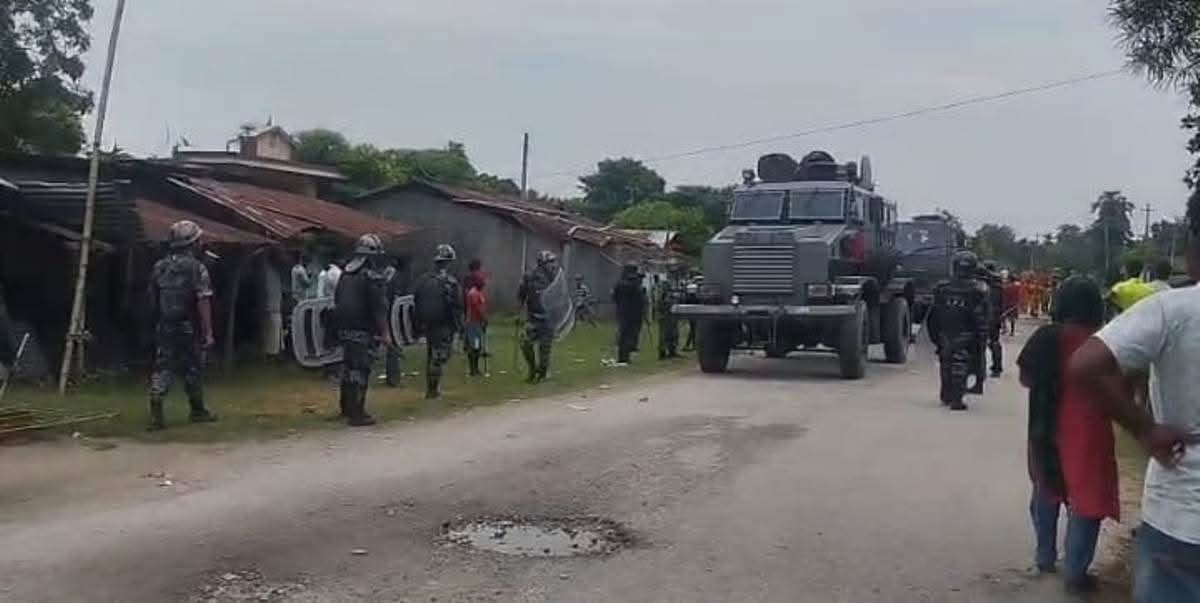
Army deployed after curfew violation
As police forces struggled to contain the mob defying curfew restrictions, the local authority mobilized armed units of the Nepali Army alongside armored vehicles. Their presence on the ground helped regain order and suppress active rioting.
What stance have Rastriya Swatantra Party MP Lal Bikram Thapa and RPP Chief Whip Khusbu Oli taken regarding the unrest?
Political leaders have voiced severe criticism over how law enforcement handled the escalation. Rastriya Swatantra Party lawmaker Lal Bikram Thapa inspected the scene in Kaptanganj and openly questioned the proportional use of force, arguing that security personnel fired lethal rounds directly at civilians instead of exhausting mandatory non-lethal crowd-control options.
Meanwhile, Rastriya Prajatantra Party Chief Whip Khusbu Oli focused her criticism on top administrative lapses, highlighting how a localized argument spiraled into fatal shootings and multi-area curfews.
She stressed that the tragedy exposes critical gaps in early intelligence gathering and warned that leadership vacancies across sensitive border security posts severely compromised field coordination during the crisis.
When is the Central Security Committee meeting, and what administrative actions have been initiated?
In response to the deteriorating public safety in Sunsari, Home Minister Sudhan Gurung called an emergency meeting of the Central Security Committee at 5:00 PM on Monday in Kathmandu. Attended by security chiefs and ministry officials, the session will focus on evaluating local intelligence lapses, reviewing the command structure in border areas, and establishing measures to prevent further sectarian friction.
In tandem with this high-level security meeting, the Ministry of Home Affairs officially formed a five-member investigation committee headed by Joint Secretary Bhupendra Thapa. Tasked with delivering a formal report within seven days, the panel will thoroughly examine the fatal shooting, review operational decisions, and determine official accountability.
What is the broader historical backdrop of communal and ethnic violence in the Terai?
The region’s history of large scale violence predates the current run of religious flashpoints and has roots that are ethnic and political rather than religious. The Gaur massacre of March 2007 killed twenty six people, mostly Maoist-linked cadres, during clashes with Madhesi activists in Rautahat. Kapilvastu district saw days of rioting later that year between Madhesi and hill-origin Pahadi communities that killed around eighteen people and burned hundreds of homes, with a documented spillover in which Muslim shops and mosques in neighbouring districts were also looted once the violence began.
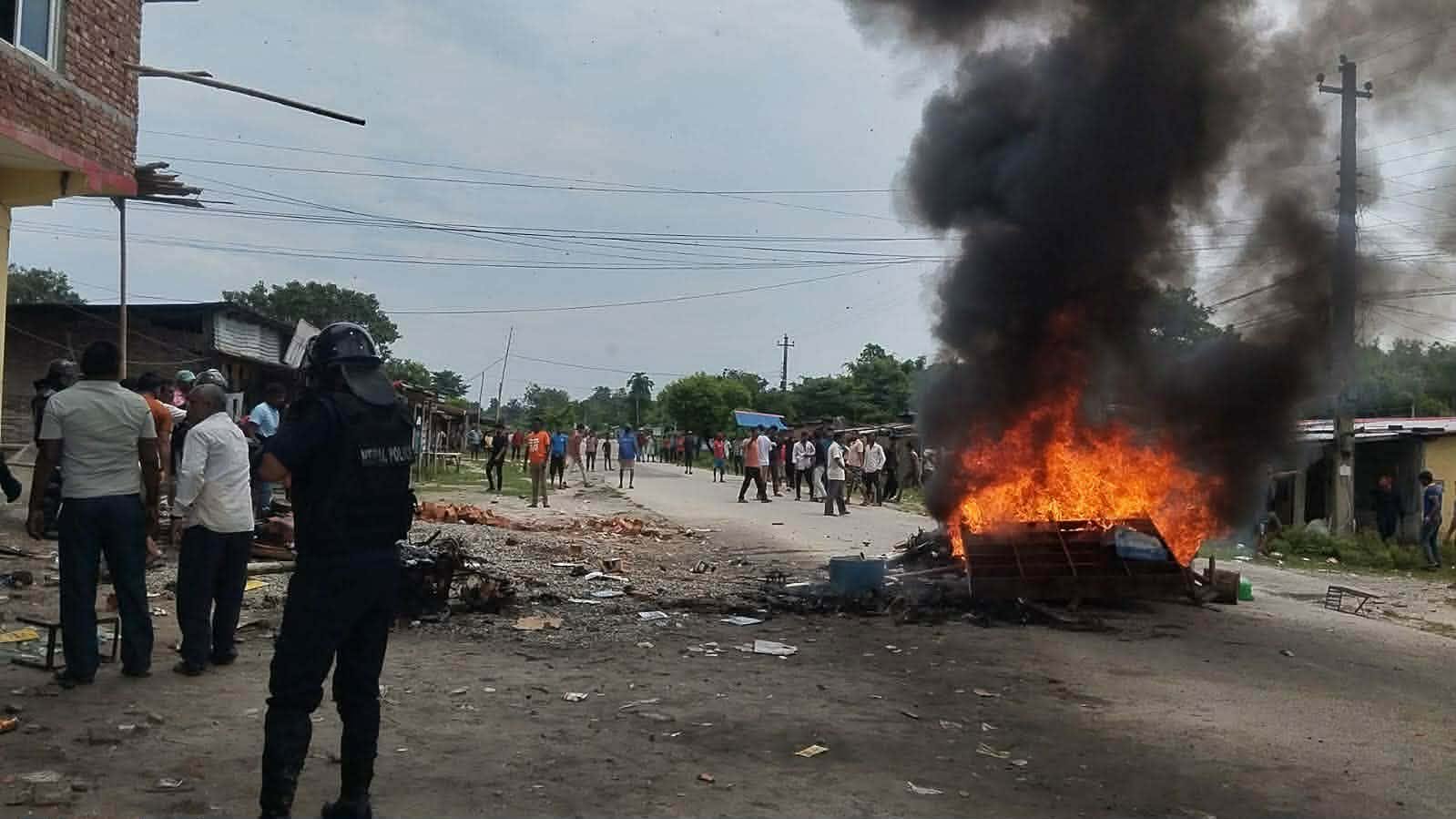
Protesters violating curfew
The Tikapur violence of August 2015 killed eight people, including seven police officers and a toddler, during protests linked to Tharu indigenous rights and opposition to the new constitution. None of these were religious disputes, but together they show a region where large crowds and slow or heavy-handed policing have repeatedly turned into lethal confrontation, a structural vulnerability now compounding the newer religious tension rather than existing separately from it.
How big is Nepal’s Muslim population and where do most Muslims live?
According to the 2021 census, Muslims make up just over five percent of Nepal’s national population, up from around four and a half percent a decade earlier. That national figure conceals a much sharper regional concentration. In Madhesh Province, Muslims make up roughly thirteen percent of the population, and in Lumbini Province the share is around seven percent, both well above the national average, while the Terai districts along the Koshi and Madhesh belt where recent clashes have occurred, Sunsari, Dhanusha, Rautahat, Parsa and Sarlahi among them, all sit inside this higher-concentration corridor.
Many Nepali Muslim families in this belt have generations-old cross-border kinship, trade and marriage ties into Bihar and Uttar Pradesh, and it is precisely this concentration along an open, lightly policed international border that makes these towns unusually exposed to whatever social and political currents are moving on either side of that line.
Nepal calls itself a secular republic. What does that mean in practice?
Nepal’s 2015 constitution declares the country secular, ending its history as the world’s only formally Hindu kingdom, but it defines secularism in an unusual way, as the protection of religion and culture handed down since ancient times, a phrasing minority faith leaders argue quietly keeps Hindu tradition as the state’s unmarked cultural default.
In practice, several long-documented patterns bear this reading out: municipal development funds skewed toward temples over other community needs, authorities looking away when Hindu neighbors encroach on Muslim graveyard land, and a Kathmandu cemetery trust that for years blocked Christian burials near the Pashupatinath temple while permitting burials there for people of indigenous faiths seen as closer to the Hindu mainstream.
None of this amounts to organised state persecution, but it describes a governance culture where Hindu identity remains the assumed backdrop of public life and minority religious needs are treated as requests for exception rather than as equal entitlements.
Is there an organised political and social movement pushing to reverse secularism, and who is involved?
Yes, and it now operates on two tracks, one electoral and one grassroots. The Rastriya Prajatantra Party has campaigned for years to restore Nepal as a Hindu state alongside the monarchy, and its most recent manifesto explicitly commits to a Hindu nation grounded in Vedic Sanatan tradition. A recent constitutional review task force reportedly saw a referendum proposal touching on secularism itself generate enough controversy that several opposition parties withdrew from the process.
Below that formal party politics, police and district officials in Dhanusha and Parsa have publicly named a cluster of organisations active in mobilising Hindu residents in these border towns, including the Hindu Swayamsevak Sangh, the Vishwa Hindu Parishad, Bajrang Dal, the Hindu Rajya Swabhiman Abhiyan, and locally formed groups that describe themselves using military language, such as the Hindu Samrat Sena, the Janaki Sena and the Laxman Sena.
Police has stated that members of at least one of these groups travel in from outside the district to organise and mobilise local residents around flashpoints, a claim these organisations themselves dispute, describing their work instead as community service and religious welfare activity carried out in coordination with security agencies.
What role do Indian Hindu nationalist trends, and specifically organised Hindutva politics, play in this?
This deserves a direct answer rather than a vague one. Several strands of the public record point the same direction. Birgunj’s mayor has publicly acknowledged travelling to Maharashtra, India, with a delegation of local ward chairs to meet Mohan Bhagwat, the head of India’s Rashtriya Swayamsevak Sangh, the ideological parent organisation of India’s ruling party and of Hindutva politics more broadly, and local civil society figures date a visible rise in organised Hindu religious rallies in Birgunj to the period following that visit.
Observers claim a deliberate campaign in which a religious procession in Malangwa was organised specifically to pass through a sensitive stretch after an earlier loudspeaker dispute, and alleges this mirrored a tactic already used in neighbouring Indian states, where mosque loudspeakers broadcasting the call to prayer were answered with even louder devotional music from nearby temples, organised and sometimes materially supported by activists linked to India’s ruling party apparatus.
But, Hindu organisational figures in Birgunj reject any suggestion that their processions are deliberately provocative or externally directed, arguing instead that Muslim objections to constitutionally protected Hindu festivals are what has hardened over the same period.
What is verifiable and less disputed is that the scale, amplification and organisational confidence of Hindu religious processions in this border corridor has risen markedly over the past decade, in a manner that closely tracks the same shift in adjoining Bihar and Uttar Pradesh, and that named, RSS-linked organisations such as the Vishwa Hindu Parishad and Bajrang Dal now maintain an active presence in these Nepali border towns.
How has Nepali media covered these communal flashpoints?
Coverage swings between two unhelpful extremes, according to Nepali journalists and analysts who have examined the pattern closely. In the first hours after a clash, reporting is fast but thin, dominated by casualty counts and curfew notices, while unverified videos, doctored clips and short-form reels edited to favour one community’s narrative spread faster on social media than any fact-checked account can catch up with.
One prominent Nepali analyst writing about repeated unrest in Birgunj has argued that the city’s tension is never really sudden, that it builds quietly for years through language, organisational activity and accumulated grievance, and that journalists’ failure to ask why these flashpoints keep recurring in the same towns, rather than only reporting each fresh episode as a standalone shock, leaves the public without any real defence against the next viral rumour.
He has also pointed out that identity politics has begun infecting the press itself, noting the emergence of journalist associations organised along religious lines in some Terai districts, a development that would have been unthinkable in Nepali newsrooms a decade ago and that threatens to further narrow the space for evenhanded reporting.
What has accountability looked like after past incidents?
Thin, slow, and often symbolic rather than substantive. In the Sakhuwamadhan mosque vandalism case, roughly ninety people were alleged to have taken part in the attack, yet only nine local men were formally charged, and a district court released all of them on bail of fifteen thousand rupees each within about three weeks.
The two young men whose TikTok video was blamed for triggering the unrest were also charged, under the criminal code provision covering harm to religious sentiment, and released on similar bail terms. Investigative commissions after much larger past incidents, going back to Kapilvastu in 2007, have often had their findings shelved or left unpublished for years.
This pattern breeds a shared, corrosive sense in both communities that the state responds to the visible aftermath of a clash, curfews, arrests, bail orders, without ever seriously pursuing who organises or funds the underlying provocations, whichever side they come from.
What is daily life like for religious minorities in these flashpoint towns?
Away from moments of open violence, most Hindu and Muslim families in these border towns continue to live, trade and study side by side, and many describe real, older bonds of friendship that survive even painful episodes. But Muslim residents describe a specific, sharpened fear that lingers well past the point when curfews are lifted.
In Sakhuwamadhan, the vandalisation of a neighbourhood mosque left residents unable to sleep properly for days, while the looting of a shop during the Hanuman Jayanti clash in Birgunj was followed by intimidation on the way home, including demands to chant a Hindu religious slogan.
Such incidents can leave families afraid to leave children unattended even months later. These are not claims that every Muslim family in the Terai lives in daily fear, but they describe a real and recurring texture of insecurity that returns after each fresh incident in this belt.
What do officials and analysts say about the risk of further escalation?
The warnings have grown more specific rather than less over the past year. Nepal’s Home Ministry has reportedly flagged rising religious and political extremism in the Terai as a leading security concern, with intelligence agencies said to be monitoring the organisational activity of groups on both sides of the divide.
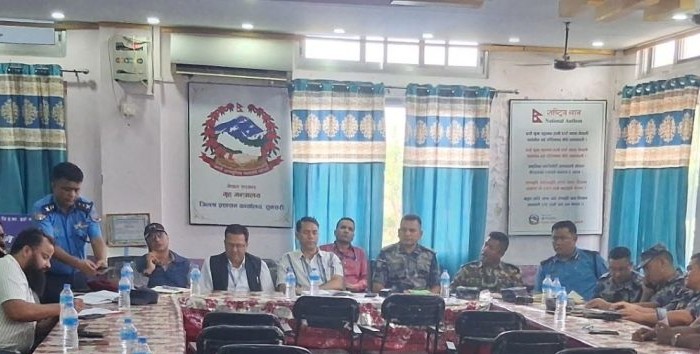
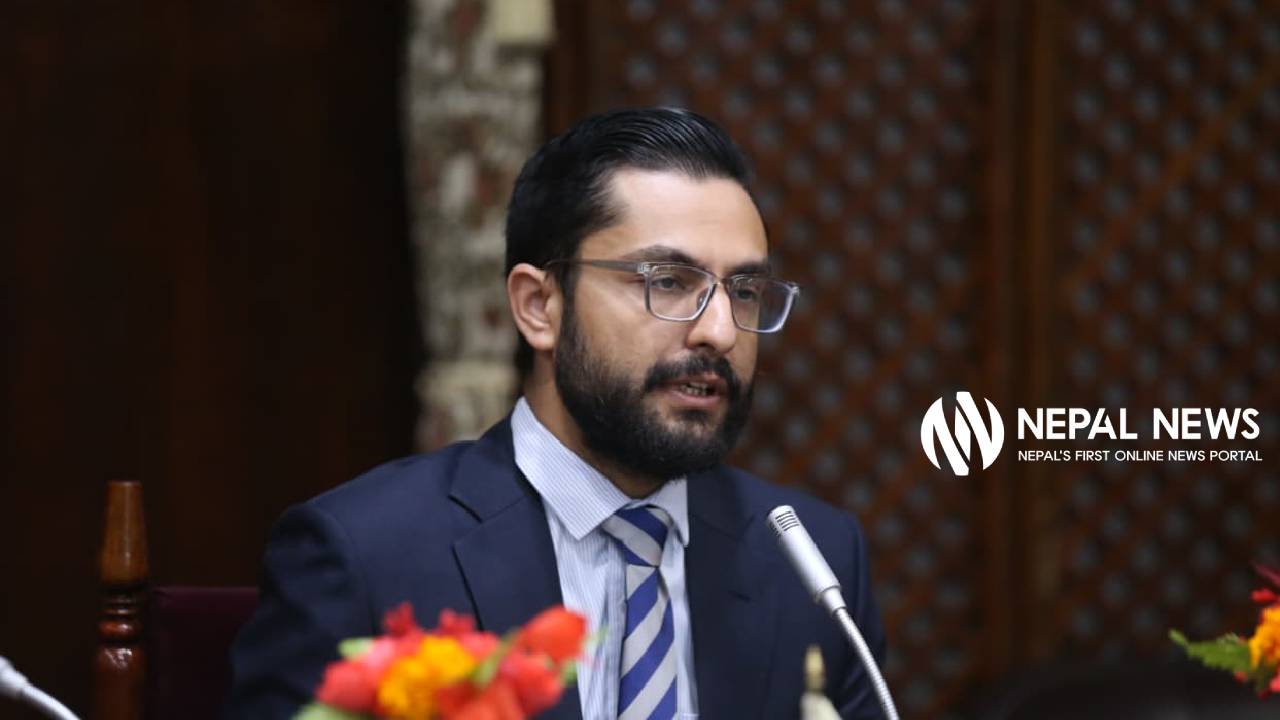
In the presence of the chief district officer, political parties, security agencies, people’s representatives, and stakeholders in the Sunsari district have expressed a shared commitment to a fair investigation
Hindu-Muslim polarisation is beginning to shape local vote-bank calculations for future elections, with organisations on either side positioning themselves as blocs whose support can be traded for seats, a dynamic that, if it takes hold, would give political actors a direct incentive to keep tension simmering rather than resolve it.
Layered on top of a police recorded tally of at least twenty seven clashes in a single four month stretch last year, these warnings point toward an accelerating rather than a stabilising trend.
What would it actually take to break this cycle?
Several concrete steps recur across nearly every account of these incidents, Nepali and international alike. Standing, permanently staffed inter-faith dialogue mechanisms at the municipal level, of the kind Birgunj eventually formed with two representatives each from the Hindu and Muslim communities, need to become the norm rather than a one-off response to a specific crisis, and they need to keep meeting once media attention has moved on.
Procession routes, timing and sound limits near mosques and temples need to be negotiated and clearly enforced well ahead of predictable festival dates, with a single accountable organising committee for each event rather than the loose, uncommanded crowds that have repeatedly proven impossible to control once tension rises.
Police need consistent de-escalation protocols that do not move from tear gas to live fire within the same hour, and prosecutions need to follow through past the bail hearing stage so that both communities see genuine consequences rather than a revolving door of arrest and release.
Media houses need to invest in the slower, harder work of explaining why these flashpoints recur in the same handful of towns, rather than treating each one as an isolated shock, and need to resist the pull toward religiously organised professional associations that would further entrench division inside the press itself.
Political parties across the spectrum, including those actively campaigning to reopen the secularism question and local leaders tempted to treat religious blocs as vote banks, would need to accept that durable peace between neighbouring communities is worth more to Nepal’s stability than any short-term gain available from keeping the temperature high.