Kathmandu
Friday, July 24, 2026





No priority given to tackling challenges directly linked to citizens' daily lives
KATHMANDU: The Rs 2.124 trillion budget introduced by the government for the upcoming fiscal year 2026/27 is larger in size compared to previous years. However, it fails to prioritize tackling the challenges directly linked to the daily lives of common citizens. In the budget presented by Finance Minister Dr. Swarnim Wagle during a joint session of the Federal Parliament on May 29, burning issues such as climate change, disasters, mental health, migration, and clean energy have not received adequate attention.
Several matters concerning climate, disasters, and mental health—which were originally included in the government’s Policies and Programs presented by President Ramchandra Paudel in the Federal Parliament on May 11 —have been cut from the budget statement.
Budgets from previous governments also failed to allocate sufficient funds to these pressing issues tied to ordinary citizens, resulting in very little actual work in these areas. However, the Rastriya Swatantra Party (RSP)—which entered the political arena criticizing the working style of old parties and promising a different approach—has also shown a lack of priority for these sensitive issues in this government’s budget.
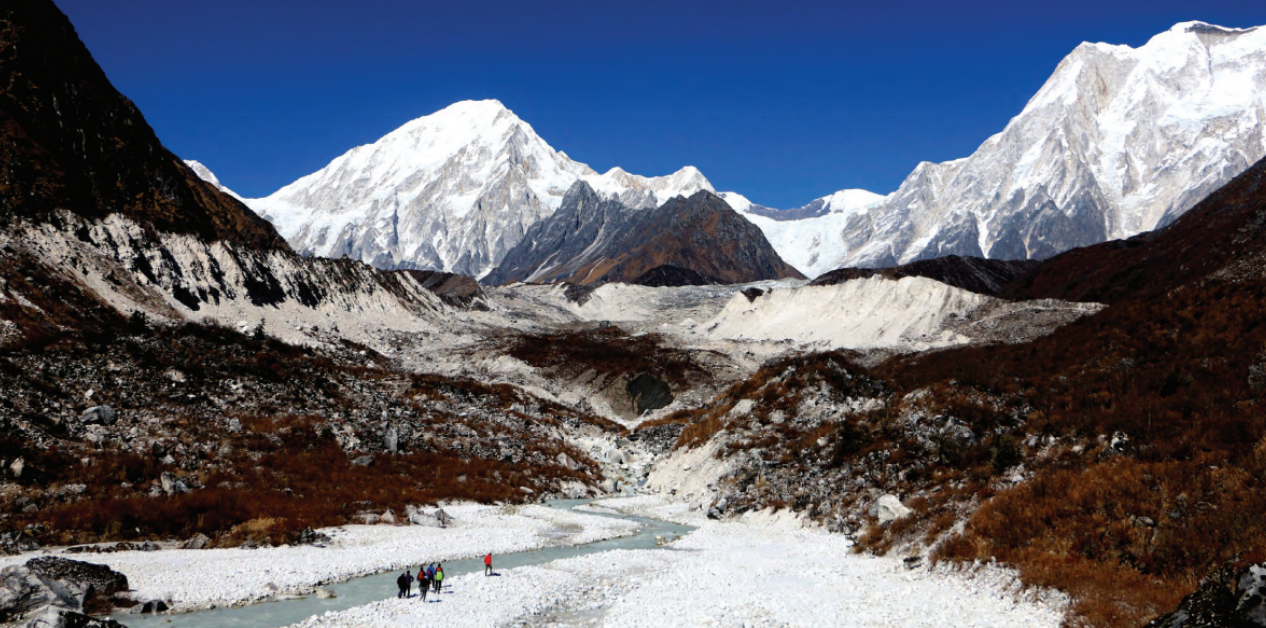
Due to global warming, climate risks are escalating. These include the melting of Himalayan snow, sudden floods caused by glacial lake outbursts, landslides causing massive loss of life and property in downstream coastal areas, and shifting rainfall patterns disrupting agricultural yields. Extreme or abnormal weather systems have increased the frequency and impact of disasters such as heavy rainfall, floods, landslides, lightning, droughts, cold waves, and heatwaves. In Nepal, these disasters cause immense human casualties and destroy physical infrastructure, agricultural production, and livestock, leading to losses worth billions of rupees every year.
Experts have repeatedly suggested that the government must bring forward actionable programs to manage and mitigate extreme weather events. However, this year’s budget has missed critical issues, including the melting Himalayas, drying glaciers, and the overall adverse impact on the environment. Climate expert Ngamindra Dahal says, “It is not that we need a separate budget to address climate impacts; it is an interdisciplinary matter. If the implementation capacity of interdisciplinary agencies is inadequate, it will not bring about real change.”
Although the government mentioned constructing climate-resilient structures at highly risky locations along highways, it has not guaranteed a budget for it. The Policies and Programs stated that priority would be given to underground groundwater recharge, rainwater harvesting, reservoir-based projects, and the protection of water sources to mitigate the impacts of climate change. The budget statement, however, has limited this to water source conservation, pond construction, and embankment building in the Terai and Chure regions. An allocation of Rs 1 billion has been set aside for this purpose.
Overall, for the upcoming fiscal year, the budget under Sustainable Development Goal 13 (SDG 13) for climate change adaptation has been shrunk to Rs 10.75 billion (0.51% of the total budget). For the current fiscal year 2025/26, an amount of Rs 13.25 billion (0.67% of the total budget) had been allocated under this heading.
Regarding disaster risk, though it has been stated that housing reconstruction for the earthquake victims of Jajarkot and Rukum West will be expedited, the budget has not been specified. To control forest fires, the government mentioned adopting technology to exchange real-time information using drones and satellites. Air quality expert Bhupendra Das argues that information sharing alone cannot control forest fires.
“Early warnings can help residents around forest areas move to safe locations and save lives, but to stop a forest fire, you actually have to extinguish the fire,” he says. “Extinguishing forest fires requires firefighting helicopters or the adoption of other technologies. It would have been better if the government had emphasized this.”

An allocation of Rs 3.17 billion has been made to immediately clear highway obstructions caused by landslides to ensure smooth traffic movement. However, programs and budgets aimed at mitigating monsoonal and other disaster-related events are missing. In contrast, the Policies and Programs stated that a preparedness-oriented disaster management policy would be adopted, institutionalizing risk mapping, early warning systems, and disaster safety drills, alongside developing a disaster early-warning system. These elements do not appear to have made it into the budget statement.
Disaster risk reduction and management researcher Dinabandhu Bhandari remarks, “The budget for disaster mitigation is primarily funneled through the National Disaster Risk Reduction and Management Authority and its parent ministry, the Ministry of Home Affairs, but the Home Ministry’s budget itself has been slashed. Disaster mitigation allocations may have decreased as well.”
True to Bhandari’s observation, the Ministry of Home Affairs’ budget for the upcoming fiscal year has been cut by nearly half compared to the current fiscal year, standing at Rs 108.32 billion. In 2025/26, the Home Ministry’s budget was Rs 208.62 billion. However, until last year, the Ministry of Home Affairs managed social security allowances, which drew a larger budget. This year, that responsibility has shifted to the Ministry of Women, Children, Gender and Sexual Minorities, and Social Security, which accounts for the apparent drop in the Home Ministry’s allocation.
According to the ‘State of Global Air 2025’ report, air pollution causes more than 41,000 deaths annually in Nepal. The report concludes that air pollution is not only the leading cause of death among Nepalis but is also responsible for increasing disabilities. The World Bank has also noted that air pollution has become the number one health risk factor in Nepal. Despite this, the budget has given little importance to the critical issue of air pollution. Although the Policies and Programs stated that bilateral and regional cooperation would be strengthened to mitigate air pollution and control transboundary pollution, this was not incorporated into the budget. Regarding air pollution, the budget limits itself to upgrading air quality monitoring stations in major cities and the Central Environmental Laboratory.
The government has failed to bring forward a concrete program regarding the utilization of Rs 27 billion collected from petroleum consumers under the pollution control fee heading over the past 18 years. Instead, it has included a provision to collect an integrated green tax, continuing the taxes previously levied under that heading.
Air quality expert Das states that the budget remains silent on improving air quality. “We need to monitor air quality, but just sitting around after monitoring is not enough; solutions should have been proposed,” he says.
The government has adopted a policy to impose a 5 percent Value Added Tax (VAT) on families consuming more than 50 units of electricity per month. Das explains that this provision will add to the risk of air pollution, as it encourages the use of firewood and gas for cooking and pushes people toward petroleum vehicles instead of electric vehicles. He adds, “This seems to present an obstacle to fulfilling Nepal’s international commitment to reach net-zero greenhouse gas emissions by 2045.”
The budget statement announces a concessional loan facility to replace traditional boilers in industrial establishments with electric boilers, and has allocated Rs 220 million to convert 100 industries to electric or bio-briquette-based boilers. Air quality expert Das points out that since petroleum-based vehicles are the primary cause of air pollution in the Kathmandu Valley, effective regulations for them were also left out of the budget.
The challenge of mental health problems is growing by the day. In its Policies and Programs, the government stated it would establish mental health as an integral part of public health and implement the National Mental Health Policy. Although a total budget of Rs 101.95 billion has been allocated to the health sector for the upcoming fiscal year, no specific amount has been set aside under the mental health heading. Dr. Basudev Karki, Senior Consultant Psychiatrist at the Mental Hospital in Lagankhel, Lalitpur, comments, “Since provincial governments also allocate budgets for mental health in their own ways, it might not have been explicitly detailed in the federal government’s budget. However, because comprehensive improvements are needed in mental health, the central government’s contribution is equally vital.” In contrast, the current FY 2025/26 budget included plans to address mental health problems through psychosocial counseling and awareness programs, as well as expanding the capacity of the Mental Hospital in Lagankhel.
In the budget, the government has allocated Rs 800 million to provide reliable irrigation facilities through lift irrigation systems in arable river flats (tars) of the hilly and mountainous regions. This is expected to extend irrigation facilities to an additional 22.3 square kilometer of land in the coming year. While the budget appears to offer relief to residents of hilly and mountainous areas who face displacement due to droughts drying up water sources, it lacks a concrete program to control monkeys, which are destroying crops and causing distress to farmers.
The government has introduced a clear program regarding forest-based green enterprises. Moving forests and natural resources beyond a limited scope of conservation, the government aims to promote sustainable timber production, forest-based industries, the processing of herbs and non-timber forest products, and green entrepreneurship. “To enhance the competitiveness of the domestic timber industry, we will review the sales price of raw timber collected during development and construction projects,” Finance Minister Wagle stated. “We will completely transform the permit system for cutting, collecting, transporting, and distributing forest products into a digital and one-door system to eliminate procedural hassles.”
The budget also aims to further facilitate community forest user groups in production, processing, branding, and running enterprises, and will amend the Environment Protection Act 2019 and the Forest Act 2019 to resolve inconsistencies between environmental protection and infrastructure development. Although previous governments had included these matters in their budgets, ambiguities remained. Climate expert Dahal states that utilizing forests while preserving the ecosystem will bring genuine benefits.
New initiatives
Through the budget, the government has introduced a new tax policy for the first time, levying a new fee at customs points for electric vehicle battery management and the construction of charging stations. It has also adopted a policy to widen the scope of inclusive education by operating residential model schools for children with autism and making government websites and software disability-friendly.
Disability rights activist Sagar Prasai praises this policy, noting its explicit inclusion in the budget. “Previously, a few municipalities and agencies had started practicing advocacy-based, disability-friendly website operations, but this is the first time it has appeared in the budget to cover the entire country collectively,” he says.
Similarly, the budget introduces a program to operate residential schools for students from the Chepang community in Chitwan. It also announces learning opportunities under the Open University for youth engaged in foreign employment. For the first time, the government is set to bring gig workers from the informal labor market into the ambit of formal labor and social security.