Kathmandu
Friday, July 24, 2026





Regulations published in the Nepal Gazette introduce provisions for eligible prisoners to live temporarily with their spouse, move to open prisons after serving two-thirds of their sentence, and access education, healthcare, banking and communication services.
KATHMANDU: The government has implemented a provision allowing prisoners who meet specific conditions to stay in separate quarters with their spouse inside jail, and allowing well-behaved prisoners who have served two-thirds of their sentence to be transferred to an open prison.
The Prison Regulations, 2026, published in the Nepal Gazette on July 16, implemented provisions allowing spouses to stay together for a specified duration based on a doctor’s recommendation to protect prisoners’ reproductive rights. The regulations came into force immediately upon publication in the Gazette.
To qualify for an open prison, a prisoner must have served at least two-thirds of their sentence and demonstrated good behavior during incarceration. Upon recommendation from the prison administration and the department, the relevant district court can issue an order to transfer the prisoner to an open prison.
The regulations have also added facilities for prisoners including health insurance, education, virtual communication, participation in funeral rites, bank accounts, and enterprise operations, among others.
Provision for spouses to stay together
Rule 26 of the regulations provides for spouses to stay together for a specified duration. If a prisoner requests this facility, the prison administrator must arrange separate quarters for the husband and wife based on a doctor’s recommendation.
For this purpose, the marriage must be legally registered. A female prisoner can request this facility if she will reach 40 years of age by the time of her release. In the case of a male prisoner, his wife must reach 40 years of age by the time of his release. Prisoners with two or more children will not receive this facility. Prisoners with no children or only one child can request this facility.
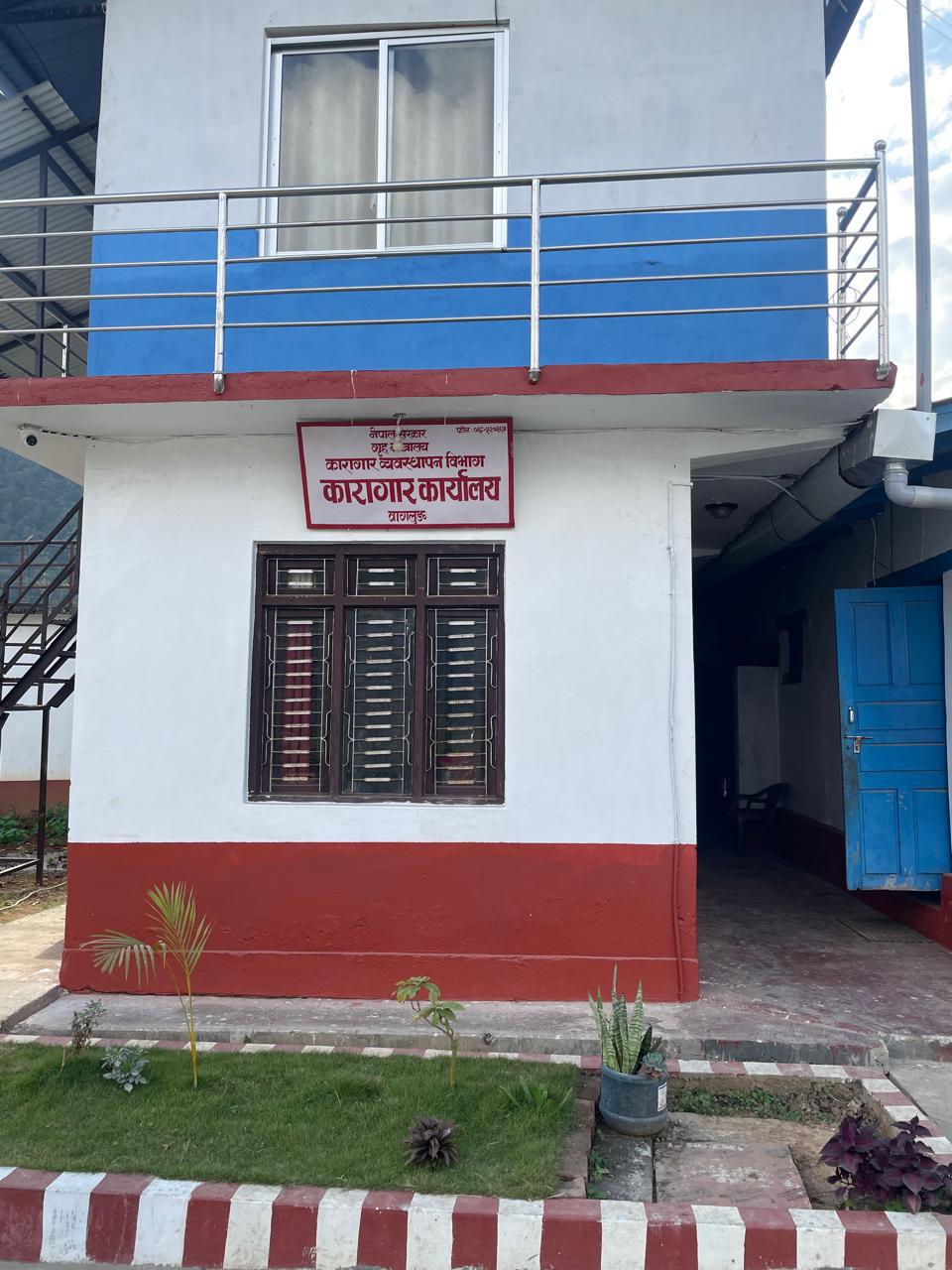
Baglung Prison Office. Photos: Department of Prison Management Website
Chomendra Neupane, spokesperson for the Department of Prison Management, stated that the new provision was introduced based on a 2010 Supreme Court order regarding the protection of prisoners’ reproductive rights. According to him, separate quarters for spouses will be constructed in new prison infrastructure. In older prisons, quarters will be arranged based on available space.
Currently, Doti Prison has constructed separate quarters where spouses can stay together. Neupane mentioned that if applications requesting this facility are received from other prisons, necessary arrangements will be made. According to him, no application requesting this facility has been received from any prison so far.
Open prison by court order
Prisoners who have served at least two-thirds of their sentence and exhibited good behavior while in prison can apply to stay in an open prison. The regulations state that the government can designate any building or location as an open prison as needed.
Eligible prisoners must submit an application to the respective prison office. The prison administrator will investigate the application and, if deemed appropriate, forward it to the Department of Prison Management. The department will proceed based on the capacity of the open prison and the recommendation of the Central Open Prison Management Committee.
Thereafter, the prison administrator must send a recommendation to the concerned district court, including details regarding the reason and circumstances of the offense, the prisoner’s conduct, age, and the work they wish to pursue. If the district court judge issues an order to place the prisoner in an open prison, the prisoner can be sent to the designated open area.
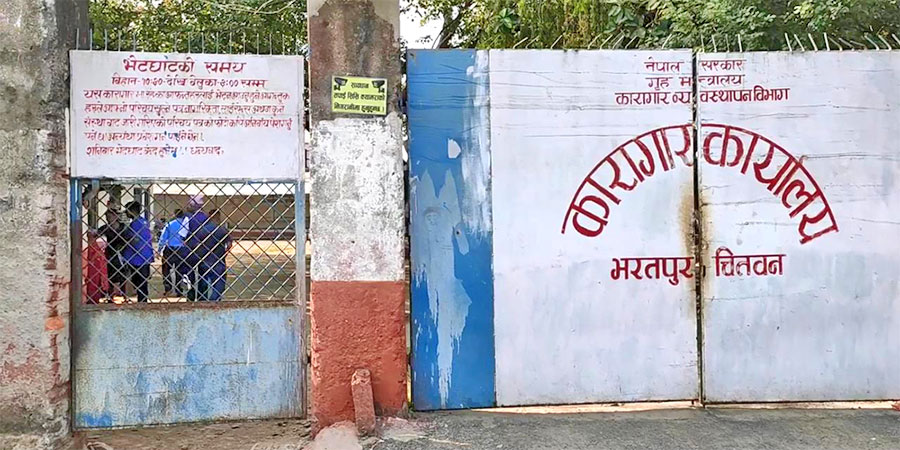
Chitwan Prison Office.
However, recommendations to send prisoners to open prisons cannot be made for those who escaped from prison and were rearrested, those without good conduct during incarceration, or those certified by a government doctor as not being mentally sound.
Prisoners in open prisons can be deployed to work through agreements with relevant agencies or institutions. Assigned prisoners will receive remuneration not less than the minimum wage fixed by the government. Prisoners must only perform the work permitted to them. They must leave the open prison at the scheduled time and return within the specified period.
They will not be allowed to reside anywhere other than the designated location. Permanent residence in the open prison for individuals other than family members will not be permitted. If the specified conditions are not met, the prisoner will be sent back to prison. Such prisoners must serve the remaining sentence in prison and will not be allowed to go to an open prison again for the same sentence.
Neupane mentioned that preparations for necessary physical infrastructure, security arrangements, and operational procedures for open prisons are still pending. “Once the government designates a building or location as an open prison, the process will begin,” he said. “Prisoners who meet the conditions can go out and work for a specified period. They can also be assigned to work on government projects and brought back in the evening.”
Allow to participate in funeral rites
If a prisoner’s mother, father, husband, wife, son, or daughter passes away, provisions have been made for the prisoner to participate in the funeral rites.
If the funeral site is within 10 kilometers of the prison location, the prison administrator must obtain permission from the Chief District Officer to arrange transportation to bring and return the prisoner under necessary security.
If the funeral site is beyond 10 kilometers but within a distance reachable for a round trip within one day, the Chief District Officer may grant permission based on a security analysis. If the prisoner must perform the mourning rituals themselves, the prison administration must arrange for it inside the prison.
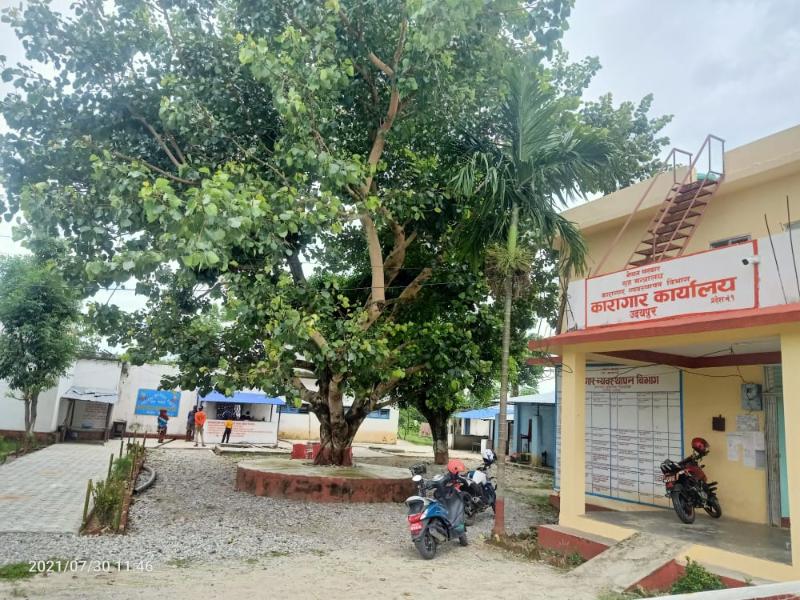
Udayapur Prison Office.
Similarly, prisons with up to 100 prisoners must arrange for primary education. Prisons with 101 to 500 prisoners must arrange for secondary education, and prisons with more than 500 prisoners must arrange for secondary, open, technical, vocational, or distance education. Teachers may be selected from among eligible prisoners in coordination with the local government.
In cases where a school is not operational inside the prison, arrangements for education, examinations, and grade promotion must be made in coordination with the local government. For prisoners studying or self-studying to take exams, the concerned university or examination board is required to designate an examination center inside the prison.
The prison office must arrange a library for the prisoners’ studies.
Communication facilities
Prisoners who cannot be visited or who have not met with their families for more than three months will be allowed to communicate via virtual media for up to 15 minutes at most once every three months. Statements, depositions, and witness examinations may also be conducted through virtual media in accordance with prevailing laws.
Prisoners may use telephones permitted by the prison administrator for collective use, approved newspapers and books, and permitted televisions.
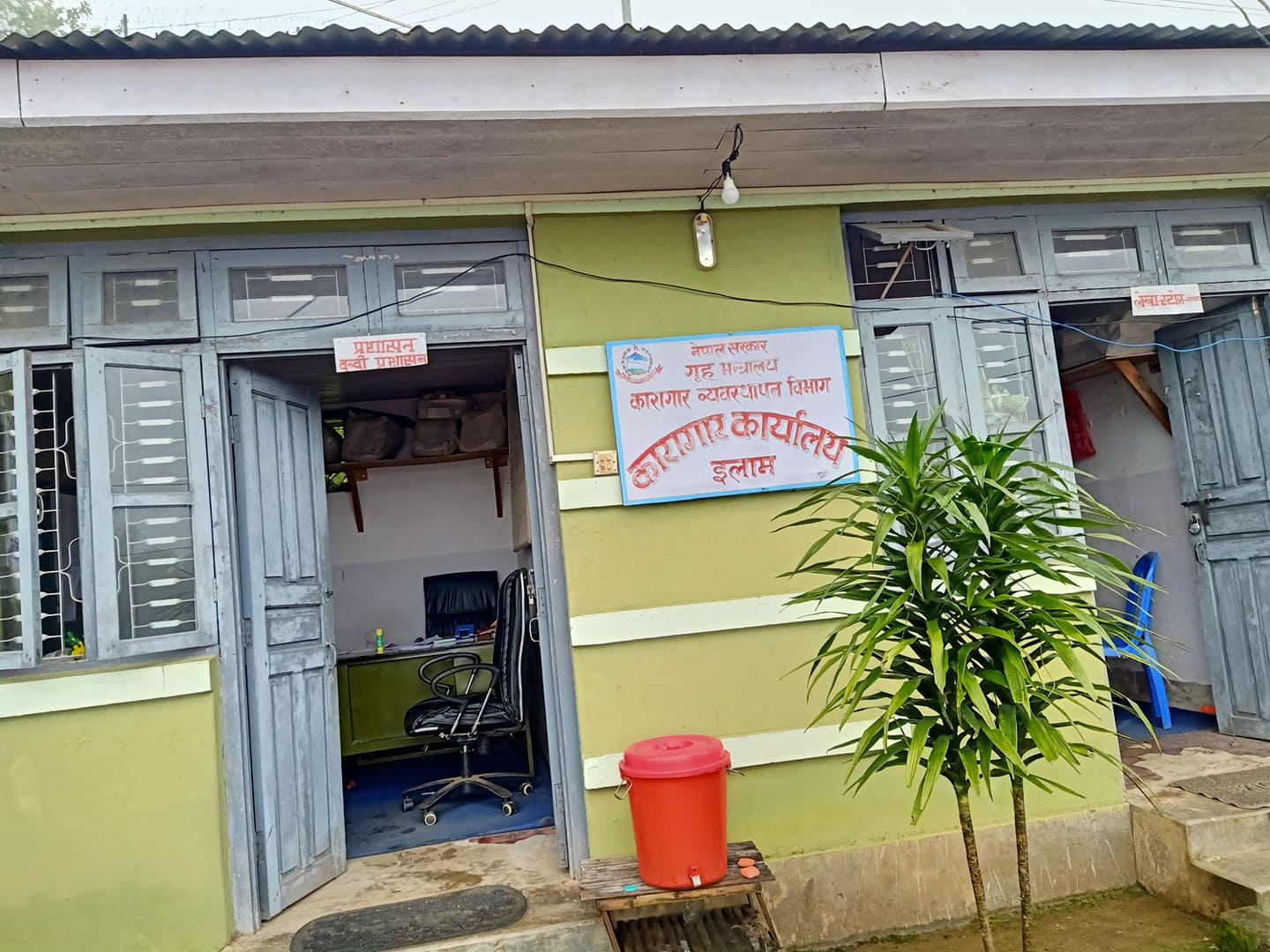
Ilam prison office.
Provisions have been made allowing the government to enroll prisoners staying for more than one year into the health insurance program. Prisons with up to 500 prisoners must operate a health post staffed by at least a Health Assistant or equivalent health worker.
Prisons with more than 500 prisoners are required to operate a 10-bed hospital staffed by at least three health workers. Telemedicine services may also be arranged to provide specialist services to prisoners.
Enterprise inside prisons
The regulations allow for the operation of enterprise centers and factories inside prisons.
Bank accounts can be opened at financial institutions to deposit funds saved by prisoners, sent by relatives, earned from working in enterprises or factories, or received from the prison office.
Except for earnings from enterprises or factories, funds received from relatives exceeding Rs 10,000 per month cannot be deposited into the account.
Prisoners can withdraw funds from the account after submitting an application stating the reason. The prison office must maintain monthly accounting and records for each prisoner. Spokesperson Neupane stated that this will help systematically record funds available to prisoners and maintain transparency in prison administration.
The regulations provide a one-time festival expense allowance of Rs 500 per year for prisoners. Prisoners will also be provided with 700 grams of coarse rice or flour daily, or its cash equivalent, along with Rs 80.
Daily consumable goods and services required by prisoners inside the prison can be made available at subsidized rates. According to the regulations, price lists of available goods and services must be displayed prominently for all prisoners to see. These goods and services cannot be more expensive than prevailing market prices. To provide goods and services at subsidized rates, the department may sign agreements with public bodies to operate counters or shops of such bodies inside the prison.