Kathmandu
Friday, July 24, 2026





Amnesty International, Human Rights Watch and the International Commission of Jurist warn that pressure on senior judges and a rewritten Constitutional Council law are pushing Nepal's courts toward political capture
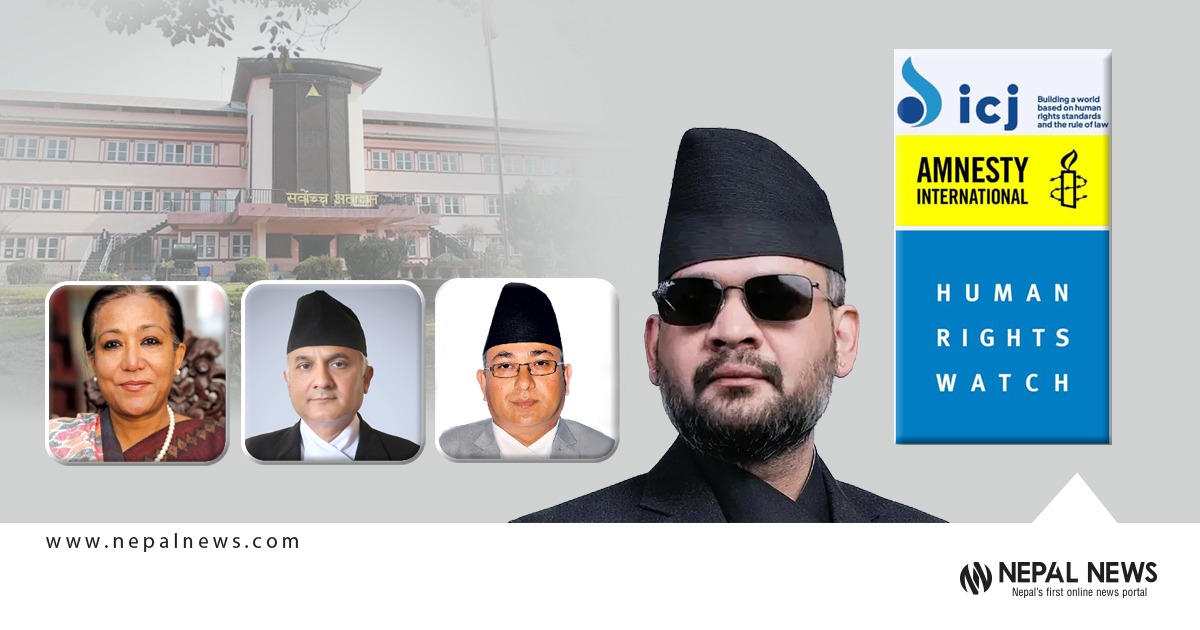
KATHMANDU: Nepal’s judiciary is facing its most serious credibility crisis in years. Three international human rights organisations issued a joint statement on July 24 warning that the government of Prime Minister Balendra (Balen) Shah has taken steps that threaten the independence of the Supreme Court, from an executive ordinance that reshaped how top judicial appointments are decided to reported pressure on senior justices to resign under threat of impeachment.
The controversy traces back to May, when justice Manoj Kumar Sharma was elevated to chief justice ahead of three seniors, including then acting chief justice Sapana Pradhan Malla, breaking a seven-decade convention and triggering a still unresolved standoff between the bench, the bar and the executive.
What exactly did Amnesty International, Human Rights Watch and the ICJ say in their statement today?
The three organisations jointly declared that recent conduct by Nepal’s government represents a serious threat to judicial independence and warrants urgent international attention. Their central claim is that political pressure has been applied on sitting Supreme Court justices to resign, with impeachment held over their heads as a consequence if they refuse. They tied this to an earlier executive move, the amendment of the Constitutional Council Act through an ordinance rather than through parliament, which they said was improperly issued in May and violated the country’s constitutional process.
The statement named three justices, Sapana Pradhan Malla, Kumar Regmi and Hari Phuyal, as the targets of this pressure, and said the groups were not aware of any publicly disclosed allegations against them that would meet Nepal’s constitutional threshold for impeachment. They framed the combination of the ordinance and the pressure campaign as part of a broader pattern that risks converting Nepal’s courts into an instrument of the ruling party rather than a check on it, and urged the government to reverse course before any further damage is done to institutional credibility.
What did the ordinance to the Constitutional Council Act actually change, and why does it matter so much?
Under the original law, the six-member Constitutional Council, which recommends appointments to the chief justice and other constitutional posts, required five members present to form a quorum and needed consensus to make decisions, falling back to a majority of the full membership only if consensus failed twice.
The ordinance issued in May lowered the quorum to four members, including the chair, and allowed decisions to be made by a simple majority of those present rather than the full council. In practical terms, this means three members, one of them the prime minister who chairs the body, can now push through a recommendation even when the other members present are opposed or absent altogether.
Since political appointees already hold a majority of seats on the council, critics argue the change effectively lets the executive dictate outcomes without needing broader consensus from the judiciary, parliament’s opposition benches or civil society representatives who traditionally acted as a check on unilateral decisions.
Who is Manoj Kumar Sharma, and how did his appointment as chief justice become so contentious?
Manoj Kumar Sharma, born in Birgunj in 1970, built his career through Nepal Law Campus, a law degree from the University of Pune in India, and a doctorate in labour law from Tribhuvan University before joining the bench as an additional judge at the Appellate Courts and later the Supreme Court in 2019. He ranked fourth in seniority among sitting Supreme Court justices when the Constitutional Council, chaired by Prime Minister Shah, recommended him for the top job in May, ahead of Sapana Pradhan Malla, Kumar Regmi and Hari Phuyal, all of whom were senior to him.
This broke a long unwritten convention under which the most senior sitting justice is elevated to chief justice, a norm that had underpinned judicial succession in Nepal for decades. Two council members, the National Assembly chair and the opposition leader, registered dissent at the meeting.
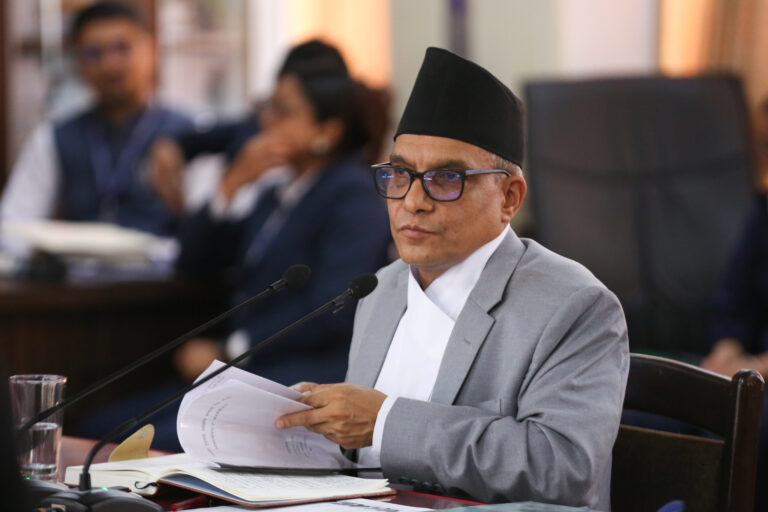
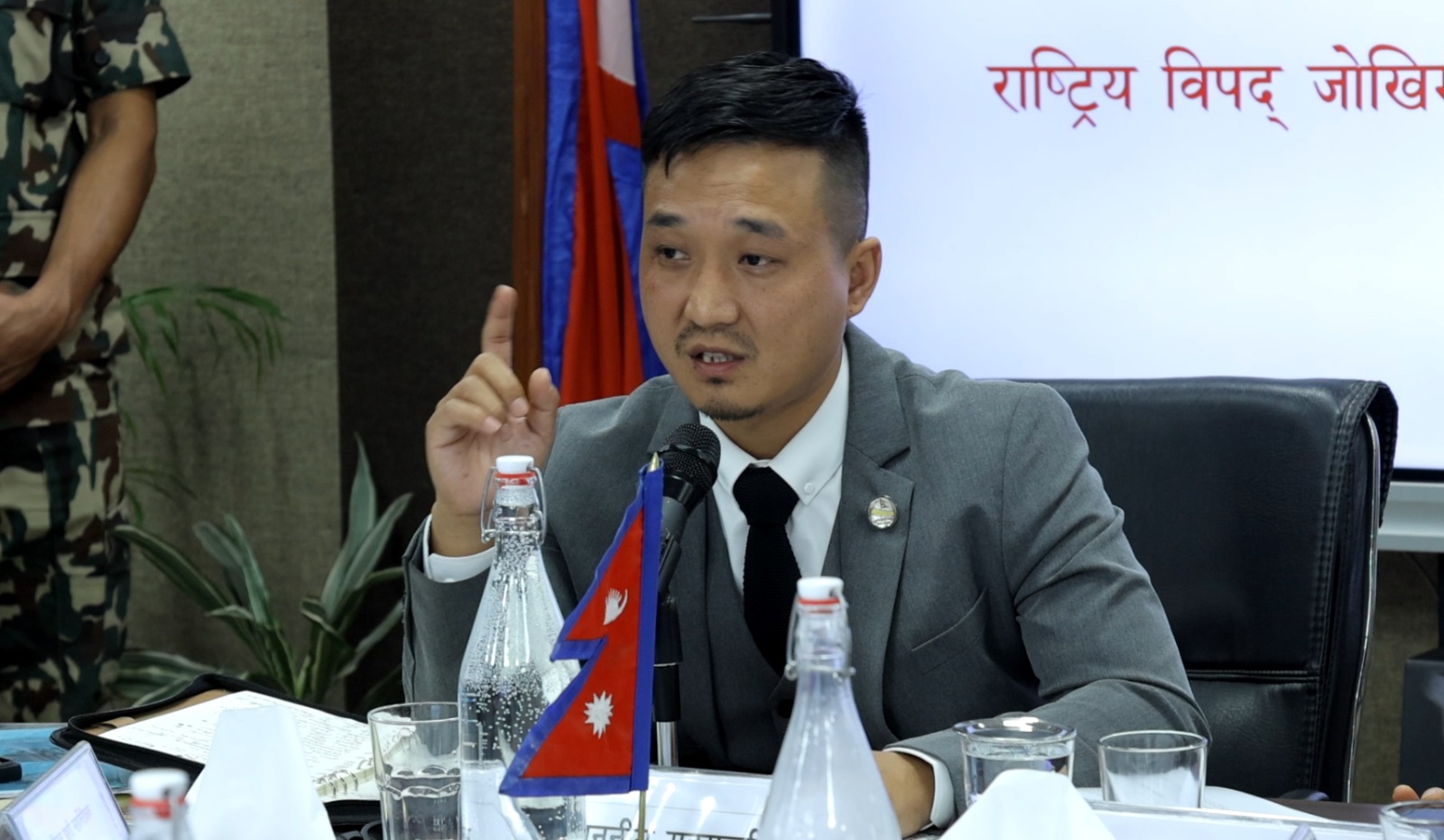
Chief Justice Manoj Kumar Sharma. Photo: Nepal Photo Library
The Parliamentary Hearing Committee nonetheless endorsed him swiftly, and he was sworn in the same day, prompting accusations that the process had been fast tracked to avoid scrutiny of complaints filed against his nomination.
What happened with Sapana Pradhan Malla after Sharma was sworn in, and why did she go on leave?
Sapana Pradhan Malla had been serving as acting chief justice since March, after the retirement of Prakash Man Singh Raut, and as the senior most justice on the bench she was widely expected to be elevated permanently. When the Constitutional Council instead picked Sharma, she was reportedly deeply unhappy with being passed over despite her seniority.
On the day Sharma took his oath and reported to the Supreme Court, senior justices Kumar Regmi and Hari Phuyal welcomed him with a bouquet, but Malla was conspicuously absent from the ceremony, having applied for twenty days of leave that the court administration confirmed. Her absence was widely read as a quiet protest against the manner of Sharma’s elevation rather than a routine personal matter.

Sapana Pradhan Malla. File photo
Before stepping back, she had already used her authority as acting chief justice to order the court administration to register a writ petition challenging the council’s recommendation, a directive that administration officials initially resisted implementing, deepening the sense of an institution at odds with itself.
What is the impeachment threat against Malla, Regmi and Phuyal specifically about?
According to the joint statement from the three rights organisations, credible reports have emerged that the three senior justices bypassed for the chief justice post have since faced pressure to resign from the bench altogether, with the implicit or explicit threat that impeachment proceedings would be initiated against them if they did not comply voluntarily.
The organisations were careful to note that they were not aware of any publicly stated allegations against the three that would satisfy the constitutional grounds required to justify impeachment, which in Nepal generally requires proof of incapacity, serious misconduct, or violation of the constitution, not simply a political disagreement over seniority or appointment outcomes.
The absence of any such disclosed grounds is what makes the reported pressure alarming to the watchdogs, since it suggests the mechanism of impeachment is being wielded, or at least threatened, as a tool to remove judges whose continued presence on the bench is politically inconvenient rather than legally justified, which would represent a direct assault on the security of judicial tenure.
Why does automatic suspension upon initiation of impeachment make this threat so consequential?
Under Nepal’s constitutional framework, the moment impeachment proceedings are formally registered against a sitting judge in parliament, that judge is automatically suspended from all judicial functions pending parliament’s final determination of the charges. This is not a minor procedural detail.
It means that simply filing a motion, even one that may ultimately fail or be withdrawn, is enough to sideline a judge indefinitely while the process runs its course, with no requirement that the underlying allegations first be substantiated.
If motions were filed against all three of Malla, Regmi and Phuyal simultaneously, the Supreme Court would lose three of its most senior sitting justices at once, which the rights groups warned could severely disrupt the functioning of the court at a moment when it is hearing multiple high stakes constitutional cases challenging the government’s own decisions, including disputes connected to the legality of the Constitutional Council ordinance itself and other executive actions currently pending before the bench.
What is the current status of the writ petition challenging Sharma’s appointment?
The Supreme Court has now resolved the core challenge in favor of the appointment. Following Acting Chief Justice Sapana Pradhan Malla’s earlier directive, the court administration had initially refused to register a writ petition filed by advocate Geeta Thapa and others contesting the Constitutional Council’s recommendation of Manoj Kumar Sharma. After protests and partial registration, the matter reached the Constitutional Bench.
On June 24, 2026, the Constitutional Bench—comprising Chief Justice Manoj Kumar Sharma himself along with Justices Kumar Regmi, Binod Sharma, Abdul Aziz Musalman, and Mahesh Sharma Paudel—upheld the court administration’s earlier rejection/order of non-registration decision. This effectively dismissed the petition on procedural and substantive grounds, validating the Constitutional Council’s recommendation and Sharma’s appointment as Chief Justice.
Multiple related writs had been filed challenging both the May 2026 ordinance amending the Constitutional Council Act and the bypassing of senior justices without transparent criteria.
While this key ruling provides legal closure on the direct challenge to Sharma’s elevation, broader debates over the ordinance’s validity and judicial independence continue in legal and political circles.
The decision has been criticized by some as involving a conflict of interest (with the sitting CJ on the bench), but it stands as the current judicial determination, leaving Sharma’s tenure on firmer legal footing months into his term. No further immediate annulment is expected from this route.
How did the Nepal Bar Association and the wider legal community react to all of this?
The legal fraternity’s response was swift and pointed. The Nepal Bar Association held emergency executive committee meetings, issued a multi point statement describing the court administration’s initial refusal to register petitions as an obstruction of justice, and staged a public lantern protest outside its offices to draw attention to what it called irregular conduct within the judiciary’s own administrative machinery.
Senior advocates took the unusual step of publicly criticising remarks made by lawmakers from the ruling Rastriya Swatantra Party regarding a matter that was, at the time, sub judice, arguing that political commentary on pending litigation further compromised the appearance of judicial independence.

Nepal Bar Association
Beyond formal statements, senior figures within the bar association also raised concerns about a broader erosion of institutional norms, pointing out that disputes over case registration, unusual administrative delays and open friction between the acting chief justice and court staff were symptomatic of a judiciary under strain, not an isolated dispute over one appointment.
Sharma is currently on an official visit to India while Malla has resumed as acting chief justice. What is the significance of this?
Chief Justice Sharma departed for India on July 23 at the invitation of his Indian counterpart, Chief Justice Surya Kant, for a visit that includes bilateral talks and an appearance at the Supreme Court of India aimed at strengthening judicial cooperation between the two countries, with his return to Nepal expected around July 27.
During his absence, Sapana Pradhan Malla has resumed the role of acting chief justice, the same position she held before Sharma’s controversial elevation past her in seniority. The optics of this arrangement have not gone unnoticed in Kathmandu’s legal circles. The same justice whose seniority was set aside in May, and who is now reportedly among those facing pressure to resign under threat of impeachment, is once again the person constitutionally entrusted with running the Supreme Court in the chief justice’s absence, a reminder that despite the political manoeuvring around her position, her formal standing as the senior most sitting justice on the court has not actually changed.
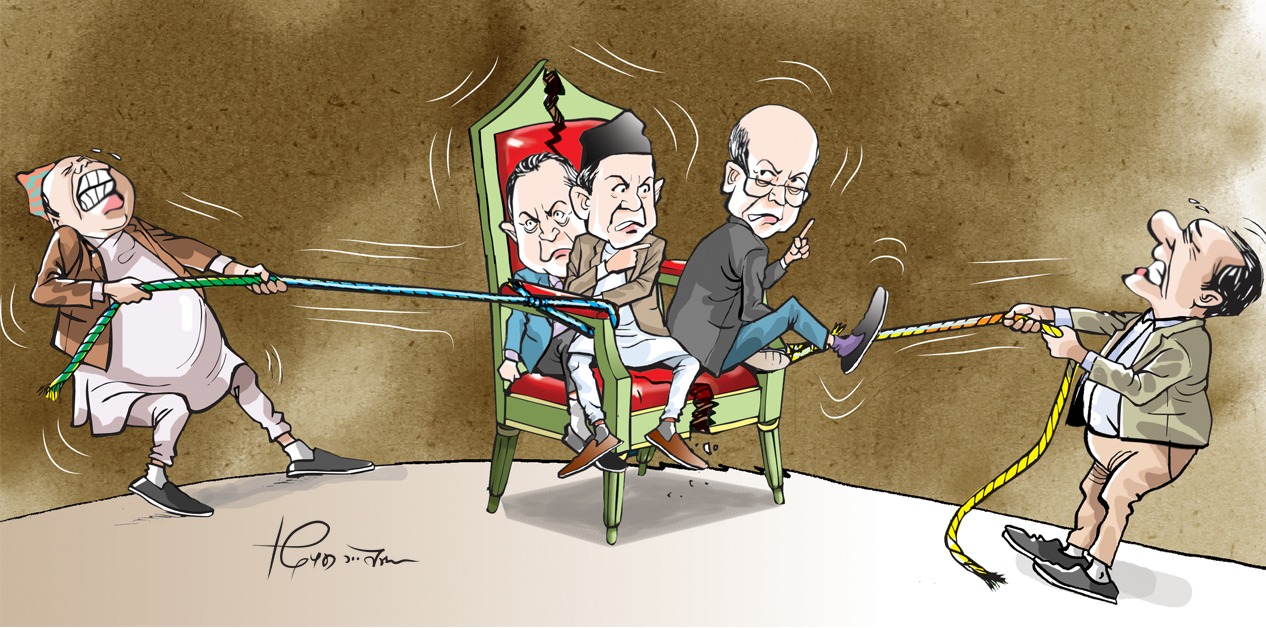
Is this the first time Nepal has seen a tug of war between the judiciary and the executive over constitutional appointments?
No, and this is part of what makes the current episode so alarming to observers. The most direct precedent came from 2020 and 2021, when the government of then prime minister KP Sharma Oli used similar ordinances to lower the Constitutional Council’s quorum and pushed through fifty two appointments to constitutional bodies without parliamentary hearings, sidestepping the same checks that are at issue today.
That dispute dragged through the courts for four years before the Supreme Court’s Constitutional Bench delivered a divided verdict in mid 2025 that ultimately validated most of those appointments, with dissenting justices siding with petitioners on the earliest batch.
The reuse of the same ordinance mechanism by a different government just a year later suggests to many legal commentators that the tool has become a normalised feature of Nepali governance regardless of which party or leader is in power, rather than a one off constitutional emergency measure, which is precisely the pattern the rights groups say needs to be broken through open parliamentary reform.
Has the Balen Shah government or any official responded publicly to the criticism from the international rights groups?
As of this report, there has been no detailed, on the record rebuttal from the Prime Minister’s office or the Constitutional Council specifically addressing the July 24 joint statement from Amnesty International, Human Rights Watch and the ICJ.
Government representatives have previously defended the ordinance route in general terms as a necessary measure to fill a constitutional vacancy that had persisted for weeks after the retirement of the previous chief justice, and defenders of Sharma’s nomination have pointed to his stated reform agenda, including a nineteen point action plan on case backlogs and digitisation, as justification for prioritising his profile over strict seniority.
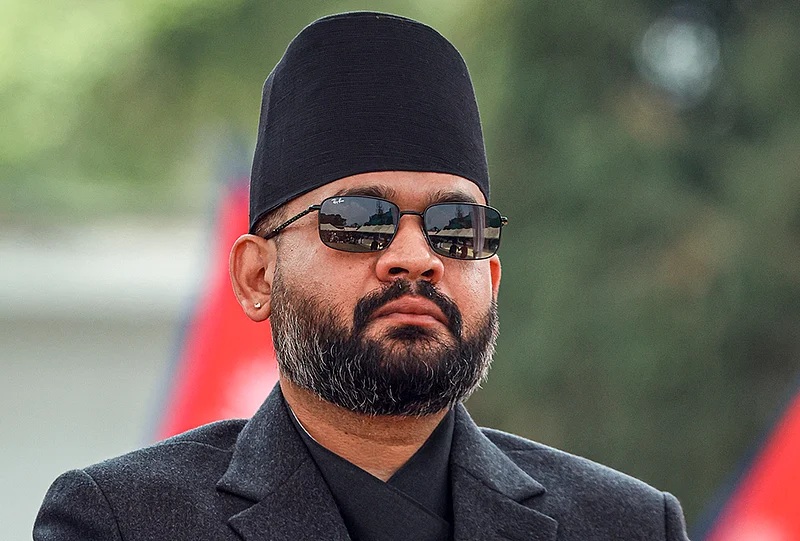
Prime Minister Balen Shah
Opposition lawmakers in the federal parliament have separately moved to strike down the ordinance altogether, arguing it distorts majority rule by letting the chair’s side prevail even in a split vote, though that legislative effort has not yet resolved the underlying dispute, leaving the government’s position largely unaddressed in direct response to the specific allegations of pressure on the three justices.
What do international standards say about how judges should be appointed and removed, and how does Nepal’s situation compare?
Under widely recognised international standards on judicial independence, including principles referenced by the United Nations and reinforced by bodies like the ICJ, judges must be shielded from improper influence, threats or pressure from other branches of government, and any process to remove or discipline them must rest on clearly defined, objective criteria applied through fair and transparent procedures rather than being triggered by political convenience.
Appointment processes are similarly expected to be merit based and insulated from domination by any single branch of government. Nepal’s constitution itself embeds some of these protections, requiring parliamentary hearings and specific grounds for impeachment, but the rights organisations argue that recent practice, particularly the ordinance route around the Constitutional Council and the reported informal pressure on justices, effectively hollows out these formal safeguards from within, achieving through political pressure and procedural manipulation what could not easily be achieved through an open, publicly justified process.
What other issues connected to this controversy should readers be aware of?
Beyond the headline dispute over Sharma’s appointment, several related threads deserve attention. The Judicial Council itself, a separate body responsible for nominating candidates, had forwarded six eligible names including all three senior justices before the Constitutional Council made its final selection, meaning the bypass was a deliberate choice among a slate that included the seniority favourites rather than a case of no senior candidates being available.
There is also an internal administrative dimension to the crisis, since court registrars and staff reportedly resisted directives from the sitting acting chief justice, raising separate questions about accountability within the judiciary’s own bureaucracy independent of any executive interference.
Additionally, past instances of ordinance driven appointments under previous governments took years to resolve in court, suggesting that even if petitions currently pending against the ordinance proceed to a full hearing, a final resolution could still be a long way off, leaving the institution in a prolonged state of uncertainty.
What happens next, and what are legal experts and rights groups recommending?
The immediate questions to watch are whether parliament acts on the pending motions to strike down the ordinance, whether the writ petitions challenging the legality of ordinance progress to a substantive hearing and critically, whether any formal impeachment motions are actually filed against Malla, Regmi or Phuyal once Sharma returns from India and resumes his post on July 28.
Amnesty International, Human Rights Watch and the ICJ have called on the Nepali government to stop pressuring judges to resign, to refrain from pursuing impeachment absent clearly established constitutional grounds, to ensure future judicial appointments follow transparent and merit based procedures, and to have parliament review the Constitutional Council amendments through an open legislative process rather than executive fiat.
Legal commentators in Kathmandu have echoed these calls, warning that unless the ordinance is either repealed or judicially struck down, future governments of any political stripe will likely continue using the same mechanism to reshape the judiciary to their advantage, entrenching a cycle that steadily erodes the courts’ independence regardless of who holds power.