Kathmandu
Friday, July 24, 2026





From high-altitude dog chews to hand-knotted rugs, Nepal launches a targeted five-year roadmap to tackle certification hurdles, cut market reliance on single neighbors, and boost high-potential exports
KATHMANDU: Nepal faces a persistent trade imbalance, importing nearly seven times more than it exports. To address this gap and prepare for its upcoming exit from Least Developed Country (LDC) status, the Ministry of Industry, Commerce and Supplies introduced the National Strategic Action Plan for Export Promotion (2026–2031).
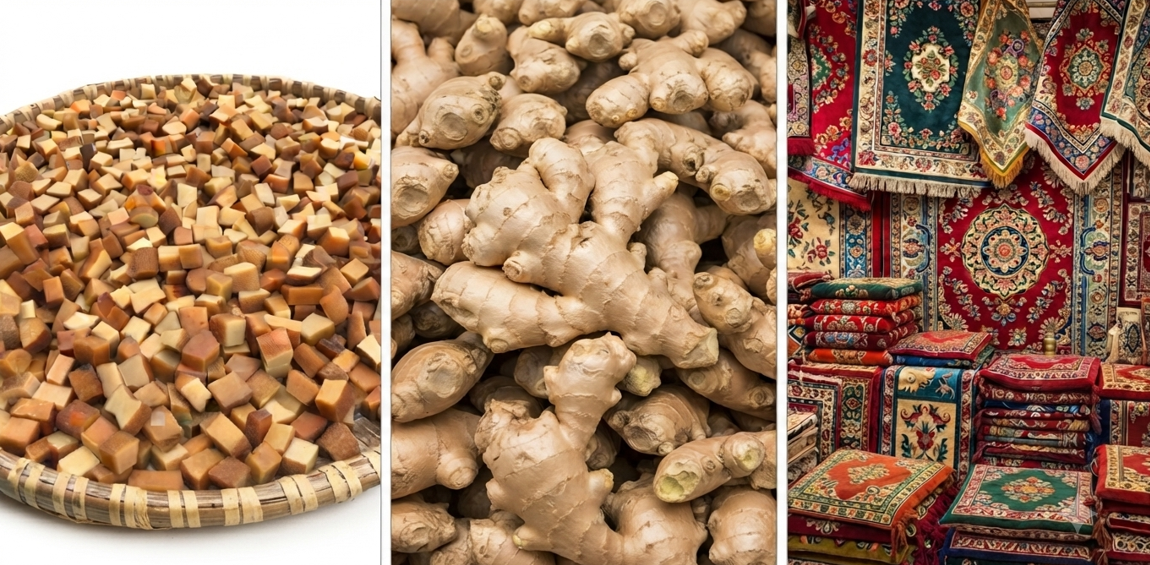
Rather than spreading resources thin across dozens of sectors, this targeted roadmap focuses specifically on three high-potential commodities—chhurpi, ginger, and hand-knotted carpets—to resolve long-standing certification, production, and market-access hurdles.
What has the government actually approved, and when did it take effect?
The Ministry of Industry, Commerce and Supplies has approved and begun implementing the National Strategic Action Plan for Export Promotion, covering fiscal years 2026/27 through 2031/32, built around three specific goods: chhurpi (a traditional hardened dairy product now sold abroad mainly as a dog chew), ginger, and hand-knotted woolen carpets.
The plan received ministerial-level approval on July 1, 2026, and its stated purpose is to give each of these three items its own dedicated implementation roadmap rather than leave them as line items inside a broader, less specific national trade document.

Ministry of Industry, Commerce and Supplies
According to ministry officials, the plan was developed through consultation between different government ministries and umbrella private sector bodies, and each of the three commodity sections identifies distinct production, certification and market-access barriers along with a division of responsibility across federal, provincial and local government layers, plus private industry associations and cooperatives, so that no single agency can plausibly claim the failures belonged to someone else.
How does this new plan relate to Nepal’s existing Trade Integration Strategy?
Nepal has maintained a rolling national trade strategy since 2010, when its first Nepal Trade Integration Strategy identified a limited group of goods and services for concentrated government backing. That approach was updated in 2016 and then substantially broadened under the version covering fiscal years 2022/23 through 2027/28, which expanded the priority export list from twelve products to thirty-two, spanning agriculture, forestry, manufacturing and services, partly to prepare the economy for life after Nepal’s expected exit from least developed country status.
Chhurpi, ginger and woolen carpets already sat inside that expanded thirty-two-item list, but a country-wide strategy document cannot resolve the very different technical problems each commodity faces on its own.
The new action plan functions as an execution layer sitting beneath the wider strategy: it takes three commodities out of the larger list, studies each one in detail, and assigns concrete five-year actions and institutional responsibilities rather than leaving implementation to be worked out later on an ad hoc basis.
Why were these three specific products chosen over the other twenty-nine on the wider list?
Officials describe chhurpi, ginger and carpets as products that already show clear international buyer demand but have failed to convert that demand into export growth commensurate with their potential, largely because of policy and technical gaps rather than any lack of market interest abroad.

Each also represents a different slice of Nepal’s economic geography: chhurpi is tied to high-altitude pastoral communities in districts such as Ilam, Taplejung, Panchthar, Dolakha and Solukhumbu; ginger is grown by smallholder farmers across nearly the entire mid-hill belt; and carpets remain Nepal’s most historically significant handicraft export, employing large numbers of workers, more than sixty-five percent of them women.
By concentrating technical assistance, certification support and market diplomacy on three commodities instead of stretching thin resources across all thirty-two items on the wider list, the ministry appears to be treating this as a pilot approach that, if it works, could later be extended to other priority products.
What exactly is chhurpi, and how did a traditional food product turn into a pet-food export?
Chhurpi is a hardened dairy product made from the milk of yaks, chauris, cows or buffaloes found in Nepal’s high mountain districts, traditionally eaten by herders and mountain households as a long-lasting protein source that does not spoil easily at altitude.
Over roughly the past decade, an entirely unplanned second market opened up abroad: pet owners in North America and, to a lesser degree, Europe began buying the product as a natural, long-lasting chew for dogs, since its hardness and lack of additives suited the growing consumer appetite for simple, minimally processed pet treats.
What started as an incidental discovery by a handful of exporters has since grown into a genuine export category, expanding from a modest base a few years ago to several billion rupees in annual sales, driven almost entirely by pet-food demand overseas rather than any change in domestic consumption patterns.
What do the current export numbers look like, and what is the government’s target?
Chhurpi exports rose from roughly Rs 3.18 billion in fiscal year 2022/23 to about Rs 4.51 billion in fiscal year 2024/25, and figures through the first eleven months of fiscal year 2025/26 already stood close to Rs 4.29 billion, with the United States absorbing the large majority of shipments and Canada, the United Kingdom, Japan, South Korea and a handful of other countries making up smaller volumes.

Chhurpi
Industry representatives have argued publicly that with adequate government support on the technical and certification side, current annual exports of roughly Rs 4 billion could realistically be pushed toward Rs 15 billion within the five-year window covered by the plan, primarily by doubling production volumes and entering markets beyond the current North American concentration, including parts of continental Europe and East Asia.
What specific obstacles is the chhurpi component of the plan trying to fix?
The most frequently cited technical problem is the absence of a single, dedicated customs classification for chhurpi sold as pet food. Shipments are currently filed inconsistently, sometimes under the code covering hard cheese and other dairy products, and sometimes under the code covering prepared pet food, and this inconsistency creates friction at the border in different destination markets: European buyers who require dairy-specific certification often struggle to accept shipments filed under the dairy code, since chhurpi cannot easily meet EU dairy import standards, while American buyers accept the same product without difficulty once it is classified as pet food.
Producers want a single, unambiguous pet-food classification applied consistently. Beyond that coding confusion, the sector still lacks widespread certification against international food safety benchmarks, and production in remote mountain districts remains largely traditional and small-scale, limiting the consistent volume that larger international retail buyers would need before committing to bigger, recurring orders.
What changes does the plan propose for the ginger sector?
Nepal ranks as the world’s fourth-largest producer of fresh ginger, yet close to ninety percent of what it exports currently leaves the country as raw, unprocessed rhizome rather than as a processed product such as dried ginger powder, ginger oil or ginger paste.
The ginger component of the action plan focuses on closing that value-addition gap, proposing financial incentives for processing industries, stronger agricultural research into the rhizome rot disease that has damaged yields in recent seasons, development of disease-resistant seed varieties, better post-harvest cold storage infrastructure, and organic certification aimed at opening markets beyond Nepal’s immediate region.
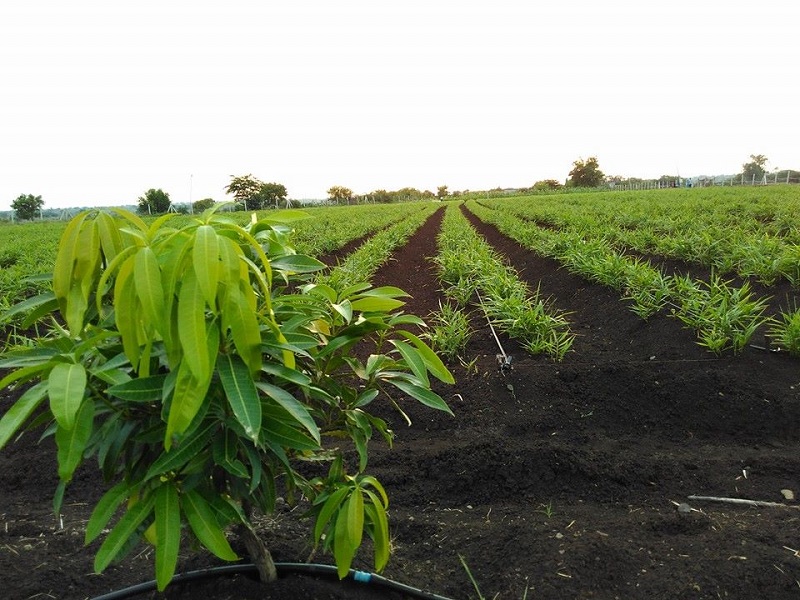
Ginger farming in Rolpa. File photo
A recurring theme in the plan is market diversification, since ginger today depends almost entirely on a single external buyer for nearly all of its export volume, leaving farmers with very little cushion when that buyer’s demand fluctuates.
Why is dependence on a single export market considered such a serious weakness for ginger?
According to figures cited by the Ginger Producers and Traders Association, roughly ninety-five percent of Nepal’s fresh ginger exports go to India, and that market has periodically closed on short notice, citing quality or phytosanitary concerns, leaving growers with unsold produce and no realistic alternative buyer to turn to.
Ginger export earnings actually fell by more than half in value terms between fiscal years 2022/23 and 2024/25, a decline explained by a combination of crop disease and these periodic market disruptions.
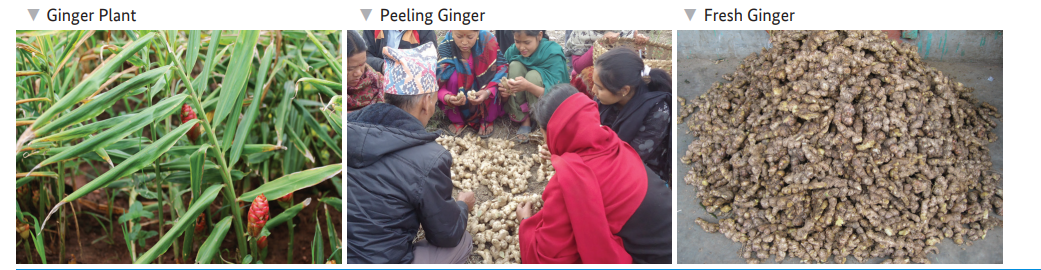
Photo courtesy: GIZ Nepal
Association officials have pointed out that shifting toward Europe as an alternative buyer is currently uneconomical, since shipping costs by sea run roughly four times higher than production costs, and because Nepal has not negotiated government-to-government trade facilitation arrangements that would ease certification requirements for a landlocked exporter trying to compete in a distant, higher-standards market.
What is envisioned for Nepal’s woolen carpet industry under the plan?
The carpet component treats modernization as its central theme. It calls for mandatory adoption of computer-aided design systems to speed up pattern development and product diversification, encourages experimentation with domestically available raw materials such as allo, a Himalayan nettle fiber, and hemp, to reduce total dependence on imported wool, and pushes for structured skills upgrading among weavers alongside expanded training centers meant to draw younger workers into a craft currently facing a shrinking labor pool.
The plan also places heavy emphasis on digital marketing and e-commerce, aiming to let Nepali carpet producers reach international buyers more directly instead of relying solely on traditional wholesale export intermediaries, while continuing to work with the Federation of Handicraft Associations of Nepal and private exporters to keep the craft’s traditional character intact even as production methods modernize.
What structural problems does the carpet sector currently face?
Nepal’s carpet weavers remain almost entirely dependent on imported wool, principally sourced from New Zealand and from across the northern border, because domestic sheep farming has never developed either the volume or the fiber quality the industry needs, leaving producers exposed to currency swings and global wool price movements outside their control.
A shrinking and aging skilled workforce compounds the difficulty, since younger Nepalis show limited interest in weaving as a career while experienced artisans increasingly leave for work in the Gulf states and South Korea, pushing up labor costs even as output per worker declines. As Nepal has no direct sea access, carpets destined for markets outside India must transit through Indian ports, adding time, cost and unpredictability that weakens price competitiveness.
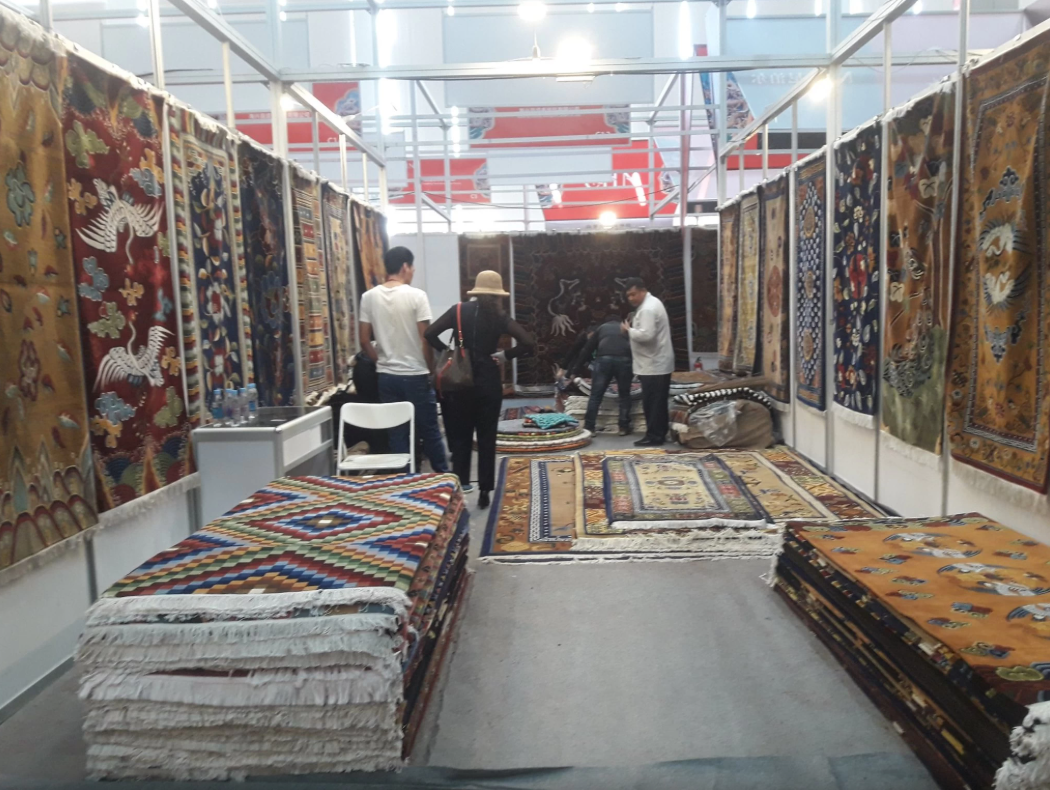
Nepali Carpet in Qinghai, Xinning Fair, China. Photo courtesy: Nepal Carpet Manufacturers & Exporters Association
On top of this, international buyers increasingly expect child-labor-free and organic certification, most notably through GoodWeave, and meeting or maintaining that certification carries a compliance cost that smaller carpet workshops often find difficult to absorb.
How is the plan supposed to be carried out across different levels of government?
All three commodity sections of the plan follow a broadly similar governance structure. Local governments are assigned responsibility for ground-level improvements, such as upgrading livestock sheds for chhurpi producers or supporting local collection points for milk and ginger.
Provincial governments are tasked with coordinating regional infrastructure and market linkages between producing areas and export channels.
The federal government, acting through relevant ministries and departments, is responsible for strengthening laboratories to meet international testing standards, negotiating certification recognition and market access with foreign governments, and channeling whatever financial incentives the plan promises.
Private sector bodies, cooperatives, farmer groups and craft associations are written into the plan as active implementing partners rather than passive beneficiaries, with the explicit goal of making clear which specific agency is accountable for which specific action, something earlier, more generic trade strategies were criticized for failing to do.
Given Nepal’s history with similar plans, is there reason for skepticism that this one will actually be carried out?
Industry figures who spoke around the plan’s rollout have been fairly candid that Nepal has attempted something similar before without much to show for it. One industrialist noted that an earlier five-year plan of this kind was introduced with comparable ambition but was never meaningfully carried out, and effectively sat unused once the initial announcement faded from public attention.
Carpet association leadership and other private sector voices have raised similar doubts, describing government follow-through on certification support, tariff facilitation and export incentive payments as historically slow and bureaucratically difficult to navigate. The recurring private sector message accompanying this latest rollout, essentially urging the government not to let the new plan end up confined to paper the way earlier ones did, reflects a fairly deep institutional fatigue with government trade promises in this space.
Whether this plan turns out differently will likely depend less on the quality of its diagnosis, which is fairly detailed and specific about each sector’s real problems, and more on whether the ministry can sustain funded, coordinated action across three levels of government for a full five-year cycle, something Nepal’s trade policy machinery has historically struggled to do.