Kathmandu
Friday, July 24, 2026






KATHMANDU: Construction of the long-delayed Hetauda-Dhalkebar-Duhabi 400 kV transmission line, which had been stalled for years due to local protests and compensation disputes, has resumed following government intervention.
The project moved forward after initiatives taken by Energy, Water Resources and Irrigation Minister Biraj Bhakta Shrestha.
The transmission line project had remained obstructed for a long time because of disagreements over compensation and land-related issues.
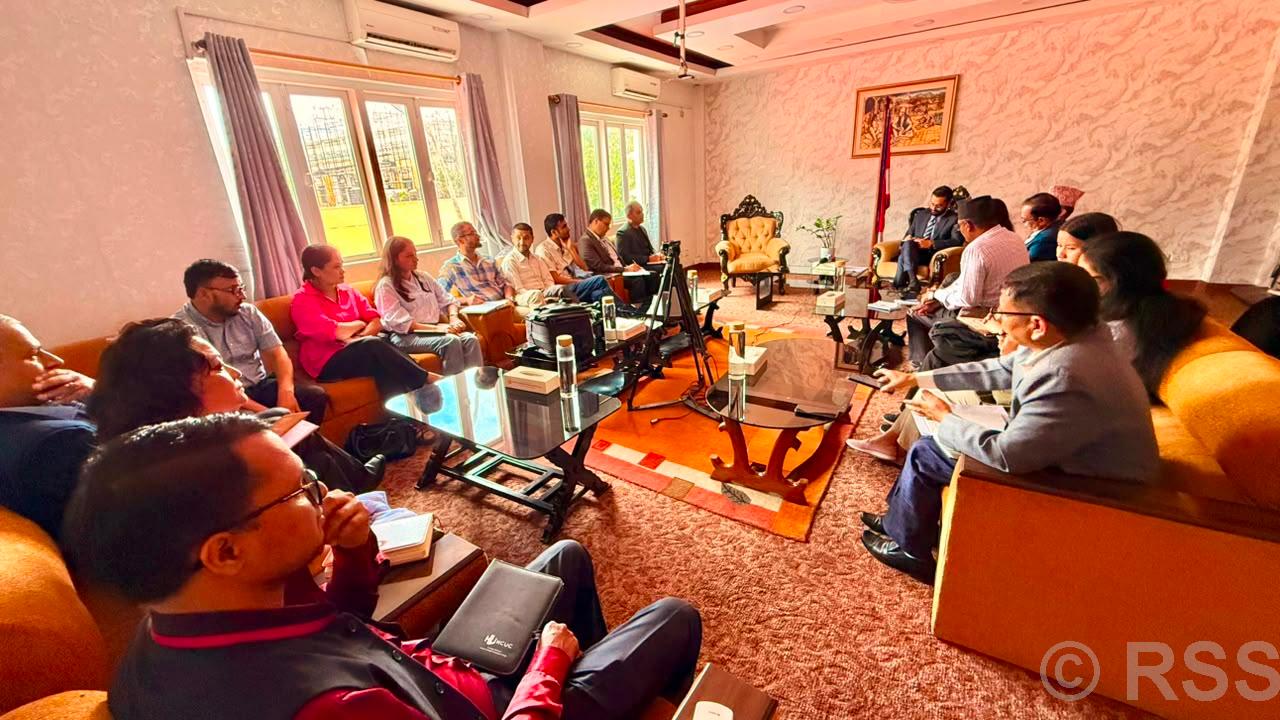
The Nepal Electricity Authority said tower construction resumed after continuous discussions and coordination led by Minister Shrestha with affected locals, elected representatives, and other stakeholders, which eventually convinced landowners to accept compensation.
Construction of the transmission line began in 2012, but tower installation in the Hatiya area of Hetauda had remained halted for years, severely affecting the project timeline.
Of the project’s total 288-kilometer length, the eastern 154-kilometer Dhalkebar-Inaruwa section has already been operational for the past three years.
However, the 134-kilometer Hetauda-Dhalkebar section continued to face delays because of compensation disputes.
The authority stated that among the 14 towers planned for the Hetauda section, construction of three towers has already been completed, while erection work on two others is currently underway.
The authority also said foundation work for all towers has been completed, and the remaining structural work has reached its final stage.
Acting Executive Director of the Nepal Electricity Authority Dirghayu Kumar Shrestha said the process of distributing compensation and damages is being carried out alongside tower construction.
He assured that affected people would receive proper compensation in accordance with the law, adding that once wire-stringing work begins, compensation would be distributed simultaneously to all identified beneficiaries.
According to Shrestha, if the transmission line is not brought into operation within the current fiscal year, there is a risk that around 800 megawatts of electricity generated during the monsoon season could go to waste due to lack of transmission capacity.
He warned that this could result in significant economic losses for the country.
The authority aims to complete the remaining two towers as soon as approvals related to tree cutting in forest areas and land use are obtained.
Once completed, the project is expected to strengthen Nepal’s domestic electricity supply, improve the reliability of the national grid, and significantly contribute to expanding electricity trade with neighboring countries.
Although repeated attempts had previously failed to resolve the disputes surrounding the project, recent efforts have raised hopes that the transmission line construction will now finally be completed.