Kathmandu
Wednesday, June 17, 2026





A rushed MRP roll-out halted cargo nationwide, piling up containers at key border points until authorities stepped in with partial relief after two days
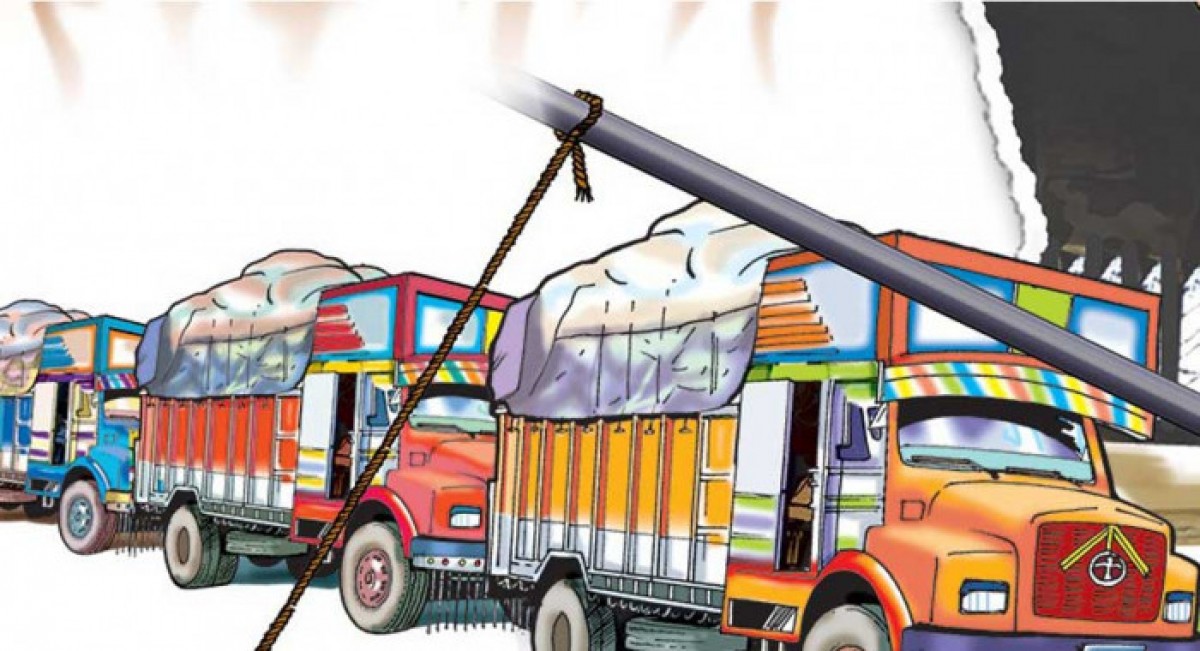
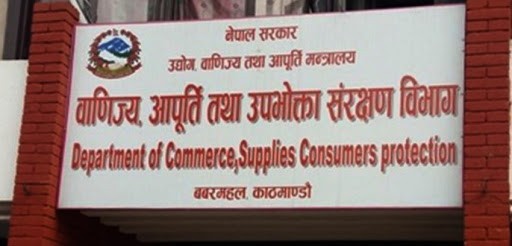
KATHMANDU: Nepal’s government made it mandatory from April 28, 2026, for all imported finished goods to carry Maximum Retail Price (MRP) labels before clearing customs. The Department of Commerce, Supplies and Consumer Protection had issued a public notice on April 13 giving importers just 15 days to comply.
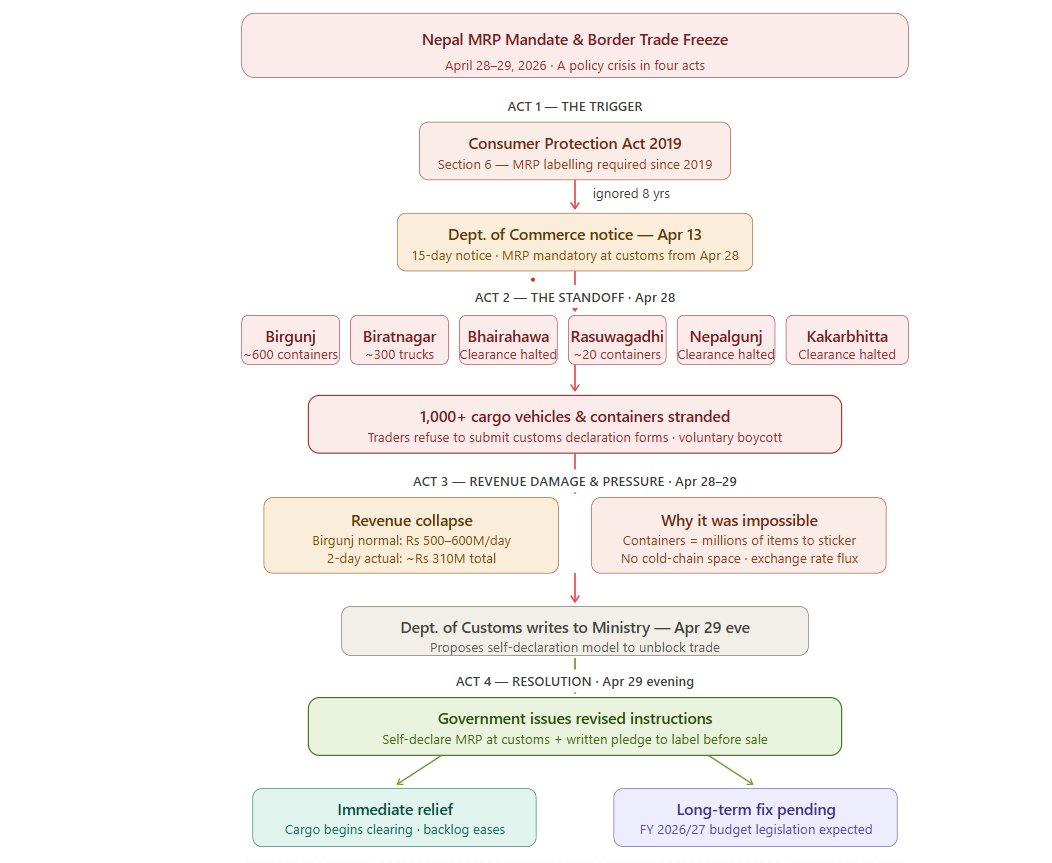
Customs offices across the country, including Birgunj, Bhairahawa, Biratnagar, Rasuwagadhi, Nepalgunj, and Kakarbhitta, immediately stopped clearing goods without MRP stickers, stranding over 1,000 containers at border points.
After two days of near-total trade paralysis and a sharp fall in customs revenue, the government stepped back from strict border-point enforcement on April 29, allowing importers to self-declare the MRP value at customs and submit a written pledge to affix physical labels before selling the goods. It has provided temporary relief to the traders while a more permanent legislative fix is expected through the upcoming fiscal year 2026/27 budget legislation.
What is MRP and why did Nepal make it mandatory at the customs point?
MRP means the highest price at which a product can legally be sold to a consumer, inclusive of all applicable taxes. Nepal’s Consumer Protection Act 2019 (Section 6, Subsection 3) had already required both domestic producers and importers to clearly label goods with MRP in either Nepali or English.
However, successive governments largely ignored enforcement of this provision for nearly eight years after the law was enacted. The current government, operating under a publicly declared 100-point governance reform agenda, prioritized effective market regulation and mandatory MRP implementation as a key commitment.
The Department of Commerce, Supplies and Consumer Protection accordingly issued a notice on April 13 giving 15 days’ notice, declaring that from April 28, no finished imported goods would be allowed to clear customs without visible MRP labeling.
The government’s stated rationale is consumer protection: ensuring buyers across Nepal are not overcharged beyond a declared maximum price. Officials believe enforcing MRP at the point of entry will curb arbitrary pricing and bring discipline to retail trade nationwide.
However, within just a day of enforcement, the policy created a full trade standoff, prompting the government to issue revised instructions on April 29 easing immediate requirements.
When exactly did the MRP rule take effect, and which customs offices are affected?
The MRP mandate took effect on April 28, 2026. The Department of Commerce had issued the public notice on April 13, giving traders exactly 15 days to prepare. Starting April 28, customs offices across Nepal began refusing to process clearance for finished goods lacking MRP labels.
The affected customs offices include all the country’s major border entry points: Birgunj in Parsa district on the India-Nepal border, Bhairahawa in Rupandehi district, Biratnagar in Morang district, Rasuwagadhi in Rasuwa district on the China-Nepal border, Nepalgunj in Banke district, and Kakarbhitta in Jhapa district.
The rule applies to all customs offices nationwide. Customs officials at each post confirmed they were following the Department of Commerce directive and had halted clearance of finished consumer goods. Only essential items, perishables, and industrial raw materials were exempted from the freeze.
After the government issued revised instructions on April 29, the legal trigger point for MRP compliance shifted; importers no longer need to have a physical sticker already on the goods at the customs gate but must now declare the MRP value in writing and commit to labeling before distribution.
How many containers and vehicles were stranded during the standoff?
As of April 30, the third day of enforcement, more than 1,000 cargo vehicles and containers had piled up across Nepal’s customs points. Birgunj customs alone saw approximately 600 containers held up on April 28, the first day of enforcement.
That figure represented a significant backlog given that the Birgunj customs point normally processes between 800 and 900 cargo vehicles per day. At Biratnagar, around 200 cargo trucks were stuck on April 28, with an additional 100 joining by the afternoon of April 29, bringing the total there to roughly 300.
At Rasuwagadhi on the northern border with China, about 20 containers primarily carrying Chinese-made readymade garments and footwear were blocked. Other customs points reported between 20 and 100 containers each stalled at their facilities.
The situation worsened on April 29 as traders refused to even submit customs declaration forms, creating a voluntary boycott of the clearance process.
The government’s revised instructions issued on the evening of April 29 were aimed directly at clearing this backlog by allowing self-declaration in place of physical stickers at the border.
What impact did the standoff have on customs revenue?
The disruption had an immediate and significant negative effect on government revenue. Birgunj customs, Nepal’s single largest revenue-generating border point, normally collects between Rs 500 million and Rs 600 million in customs duties every single day.
During the two-day standoff, with traders refusing to submit customs declaration forms, revenue dropped sharply. Only goods in exempted categories, petroleum products, vegetables, fruits, and industrial raw materials were being processed, generating only around Rs 310 million over the two-day period at Birgunj alone, far below the daily average.
Similar shortfalls were recorded at Biratnagar, Bhairahawa, and other customs offices. The Department of Customs, in its formal letter to the Industry Ministry on April 29, cited this revenue disruption as one of the reasons requiring urgent facilitation of the clearance process.
The government’s decision to allow self-declaration was partly driven by the recognition that a continued standoff would cost the treasury hundreds of millions of rupees in lost customs revenue within days.
What is the new government instruction issued on April 29, 2026, and how does it change the situation?
On April 29, the government issued revised instructions that significantly modify how the MRP requirement is enforced at the customs stage without formally repealing the underlying mandate.
Under the new arrangement, importers are now allowed to self-declare the MRP of their goods at the customs point meaning they write down what the MRP will be rather than having a physical sticker already printed on the product packaging.
Additionally, importers can submit a written commitment stating they will affix proper MRP labels on all goods before those goods are sold or distributed within Nepal. A customs clearance will then be granted on the basis of these two declarations combined.
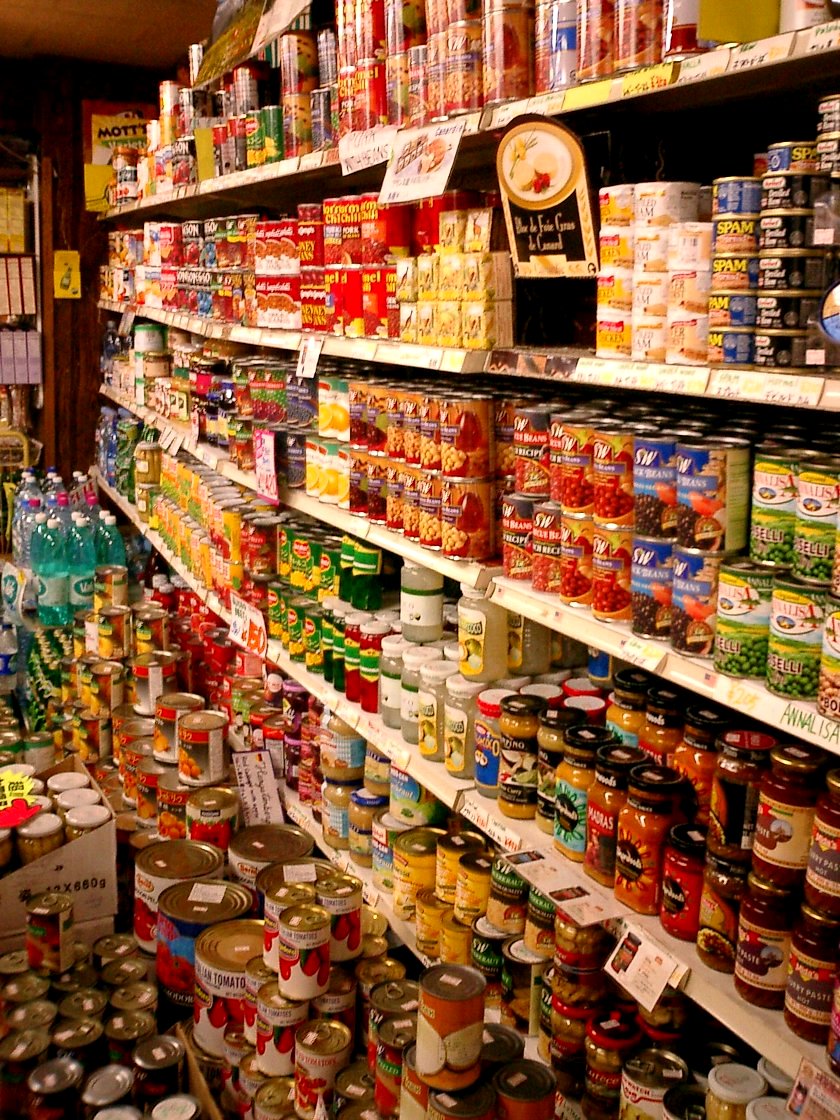
This “self-declaration plus written pledge” model effectively allows goods to enter the country without physical MRP labels, as long as the importer takes legal responsibility for labeling before the point of retail sale.
The Department of Customs had written formally to the Ministry of Industry, Commerce and Supplies recommending exactly this arrangement, and the ministry approved it. This approach addresses the core practical objection traders had raised that affixing labels on millions of individual items inside sealed containers at the border is physically impossible.
What types of goods are exempt from the MRP requirement entirely?
The government and customs authorities clarified that several broad categories of imported goods fall completely outside the MRP requirement and face no clearance delays regardless of labeling status.
Petroleum products fuel, diesel, kerosene, and related energy commodities — are fully exempt. Fresh perishables including vegetables, fruits, garlic, potatoes, and onions are also allowed to pass through without MRP stickers, recognizing that their prices fluctuate daily and that delays would cause food supply disruptions and spoilage losses.
Industrial raw materials used by factories and manufacturing units are similarly excluded, as are construction materials for large infrastructure projects including hydropower plants, and mill machinery and equipment.
The Department of Customs’ letter to the Ministry specifically noted that clearance of industrial raw materials, machinery, tools, and fast-perishable fruits and vegetables was being affected unnecessarily by the original strict enforcement, and that these categories needed facilitation.
Customs officials at Birgunj, Biratnagar, and Bhairahawa all confirmed these categories were passing through normally even during the peak of the standoff.
What does the Consumer Protection Act 2019 actually say about MRP labeling requirements?
Nepal’s Consumer Protection Act 2019 contains detailed labeling requirements under Section 6. Subsection 3 mandates that domestic producers and importers of goods sold in Nepal must compulsorily indicate the MRP on the label in Nepali or English.
Crucially, the MRP must include all applicable taxes levied on the product, meaning it must reflect the final all-inclusive price paid by a consumer, not just the factory or import price.
Beyond price, the law requires labels to clearly state the product’s weight or quantity, date of manufacture, batch number, expiry or best-before date, and any potential side effects or health risks. For hardware, electrical appliances, and machinery, the law additionally requires disclosure of warranty or guarantee periods, fragility warnings, and flammability risks.
Products posing health hazards must carry mandatory cautionary messages or warning images. Violators face fines of up to Rs 300,000.
Despite these provisions having been part of the law since 2019, they went substantially unenforced for nearly eight years before the current government activated them, a fact business associations have repeatedly cited to argue that the sudden and immediate enforcement without transition time was fundamentally unfair.
Why do importers say it was physically impossible to affix MRP stickers at the customs point?
Traders and business associations raised multiple concrete practical objections to the requirement of MRP labeling at the border crossing itself, which ultimately helped convince the government to pivot to the self-declaration model.
First, a single shipping container can hold hundreds of thousands or even millions of individual pieces placing a sticker on each item inside a sealed container at the border is logistically impossible without massive infrastructure that no customs facility in Nepal currently possesses.
Second, refrigerated or temperature-controlled containers carrying cold-chain goods cannot simply be opened and repacked outdoors at a customs yard without specialized refrigerated space, which does not exist at any Nepali customs office.
1643253892.jpg)
File photo
Third, many goods arrive in consolidated bulk cargo that cannot be safely unpacked at the border.
Fourth, the cost of re-packaging and re-labeling at the border compounded by demurrage and detention charges levied for container delays would dramatically inflate product costs, ultimately burdening consumers rather than the businesses the regulation seeks to discipline.
Traders have emphasized that there is simply no physical infrastructure at any customs facility for importers to carry out labeling on site.
Why can’t foreign manufacturers simply put Nepal’s MRP on the packaging before shipping?
This is one of the most fundamental arguments made by Nepal’s business community, and it reflects a structural reality in international trade.
Nepal is a small, landlocked market with relatively modest import volumes compared to major trading economies. Foreign manufacturers in China, India, or other countries produce goods for large regional or global markets with standardized packaging.
They have no commercial incentive to create special Nepal-specific packaging or labeling for small individual orders. According to business federation leaders, when a Nepali importer sources from a foreign supplier — especially from China — the supplier is often one of many vendors contributing to a single consolidated shipment.
The supplier frequently does not know, and cannot know, the final retail price in Nepal, since that depends on shipping costs, customs duties, inland transport, wholesale margins, and retail margins — all determined after the goods reach Nepal.
Traders have specifically noted that exchange rate movements between the time of ordering and the time of arrival alone can significantly change the landed cost, making any pre-shipment MRP declaration unreliable and misleading for consumers.
What are the specific pricing challenges that make border-point MRP calculation impractical?
Importers and trade body leaders outlined several concrete pricing complications that make fixing a reliable MRP at the customs border particularly difficult.
The US dollar exchange rate fluctuates daily — meaning a price accurate when a Letter of Credit was opened one to two months before goods arrive at customs will almost certainly differ from the rate at arrival.
International shipping and freight costs have also been elevated due to geopolitical tensions, including instability in the West Asia, making freight cost prediction difficult for importers placing orders months in advance.
Within Nepal, transport costs vary dramatically by geography: a bag of cement priced at Rs 800 in Birgunj could cost Rs 1,600 by the time it reaches Jumla due to mountain transport costs — meaning a single national MRP is inherently unequal across regions.
Customs duty of 15 percent and VAT of 13 percent — together 28 percent — are added at the border, but wholesale and retail margins are only added further along the supply chain. Calculating a true final retail price at the customs gate, before the goods have even entered the domestic distribution network, is therefore structurally impossible in many trade situations.
The government’s new self-declaration system partly acknowledges this by allowing importers to estimate and declare rather than have a certified pre-printed price.
What has the Department of Commerce said about its commitment to enforcing MRP?
The Department of Commerce, Supplies and Consumer Protection maintained a firm public position throughout the standoff. Department has stated explicitly that the government would not retreat from mandatory MRP enforcement as a policy goal.
It acknowledged that traders may find the transition difficult initially but asserted that no one has the right to challenge a law of the state. The department has pointed out that traders had been ignoring labeling obligations for years, which had led to market disorder and consumer exploitation. Department officials have informed that the issue had been discussed at the highest levels — from the Prime Minister’s Office to the Ministry of Commerce — and the government’s policy direction is firm. They cited the Prime Minister’s 100-point governance reform agenda, which specifically includes effective MRP enforcement and intensive market monitoring as a priority.
File photo
While the new instructions allowing self-declaration represent a practical softening of the immediate enforcement mechanism, the Department’s position is that this is a temporary facilitation measure, not a policy reversal. The underlying legal obligation for all imported goods to carry MRP before retail sale remains fully in force.
What role did the Department of Customs play in breaking the deadlock?
Despite the Commerce Department’s tough public stance, the Department of Customs took a more pragmatic approach to resolving the immediate crisis and played a key role in prompting the government’s revised instructions.
On the evening of April 29, the Department of Customs wrote a formal letter to the Ministry of Industry, Commerce and Supplies requesting a facilitation mechanism to reopen cargo clearance.
The Department of Customs proposed exactly the arrangement the government subsequently approved: that importers be allowed to submit a self-declaration of MRP value at the border and a written commitment to affix physical labels before selling the goods domestically.
The Department also noted in its letter that MRP-related provisions could be further clarified through the upcoming budget legislation for fiscal year 2026/27, signaling that a legislative solution is being considered for the longer term.
This was significant — the Department of Customs was effectively telling the Commerce Ministry that the enforcement approach as originally designed was not workable, and providing the ministry with a face-saving way to modify the requirement without formally abandoning the policy.
The government accepted the Department’s recommendation, and the new instructions were issued accordingly.
What does “self-declaration” mean in practice, and will it fully resolve the standoff?
Under the new self-declaration system approved on April 29, an importer arriving at a customs point no longer needs physical MRP stickers already printed on every individual product in a shipment. Instead, the importer submits two written statements alongside the normal customs documentation.
The first is a self-declaration of the MRP — the importer states what the Maximum Retail Price of the goods will be when sold in Nepal. The second is a written pledge committing that before the goods are sold or distributed, the importer will personally ensure MRP labels are properly affixed to each product. Customs clearance is then granted on the basis of these declarations.
This approach places legal accountability on the importer rather than requiring physical verification at the border gate. Whether this fully resolves the standoff depends on whether traders trust that the self-declaration process is administratively clear and that customs officers uniformly apply the new instructions.
Given that Biratnagar, Bhairahawa, and Birgunj custom officers were each operating on somewhat different interpretations of the original directive, there is some risk that implementation of the new instructions could also vary — something business associations have warned about as they await formal written guidance reaching all customs points.
What is the internal government coordination problem that has worsened the crisis?
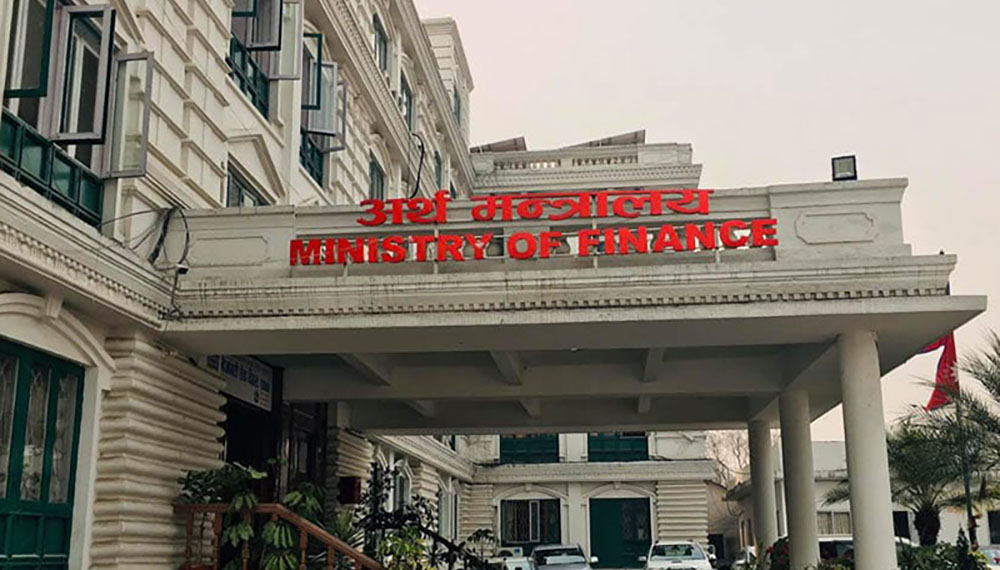
Multiple business federation leaders highlighted that confusion was compounded by a visible lack of coordination among the three key government bodies involved: the Ministry of Finance, the Department of Commerce under the Ministry of Industry, Commerce and Supplies, and the Department of Customs. These bodies issued and interpreted directives inconsistently.
The Commerce Department issued an 18-point action plan to customs offices mandating MRP enforcement at the border. The Customs Department, following that instruction, told traders goods must arrive with MRP already affixed — then within two days wrote to the Ministry seeking a way out of that very requirement.
File photo
The Ministry of Finance had its own concerns related to how MRP declarations would interact with customs valuation. Traders have publicly accused the government of using MRP as a pretext to shift customs valuation methodology — replacing the old customs reference price booklet with MRP-based valuation, which would result in duties being calculated on inflated retail prices rather than actual import costs.
Traders warned this would reduce customs compliance and encourage smuggling and under-invoicing. The government’s new self-declaration instructions are partly an attempt to contain this inter-agency confusion, though critics argue a more coordinated policy framework is still needed.
What happened to goods already in transit when the rule suddenly came into force?
One of the most acute grievances raised by traders concerns shipments that were already in the pipeline when the new rule took effect. A Letter of Credit is typically opened one to two months before goods physically arrive at Nepal customs, with goods often loaded at origin ports weeks before arrival.
Many importers had already committed financially and contractually to shipments before April 29 — some before the April 13 notice was even issued, and others during the 15-day window that was too short to allow changes to packaging or labeling with overseas suppliers.
The Siddhartha Chamber of Commerce and Industry of Rupandehi argued that applying a new compliance requirement retroactively to goods already on ships or trucks was unjust. It has stated that it is simply not feasible to instruct a foreign supplier to relabel goods that have already been loaded and are en route.
The government’s new self-declaration mechanism provides practical relief for these in-transit goods, since importers can now declare MRP and pledge to label upon arrival in their warehouses — resolving the immediate clearance problem for goods already in the pipeline without requiring retrospective physical labeling at the border.
How does Nepal’s approach compare to how India handles MRP requirements?
Several Nepali business associations explicitly proposed that Nepal model its MRP system on India’s approach, which they described as more targeted and commercially realistic.
India’s Legal Metrology (Packaged Commodities) Rules apply MRP requirements primarily to Fast Moving Consumer Goods — everyday packaged products such as food, beverages, toiletries, and household consumables — as well as certain small machinery and appliance categories.
India does not apply blanket MRP requirements to all imported product categories. Traders specifically recommended Nepal limit MRP to FMCG and daily-use consumer products rather than applying it to clothing, footwear, cosmetics, hardware, industrial goods, and virtually everything else crossing the border.
Globally only three or four countries enforce MRP requirements across as wide a range of goods as Nepal is now attempting, and compelling Chinese manufacturers — who supply a large share of Nepal’s imports — to produce Nepal-specific MRP labeling is commercially unviable given Nepal’s small market size.
The Department of Customs’ suggestion that the upcoming fiscal year legislation could clarify MRP-related provisions may open space for a more targeted product-category approach.
What is the outlook going forward — will the standoff be fully resolved?
The government’s revised instructions of April 29 allowing self-declaration and warehouse-level labeling provide meaningful immediate relief and should help cargo begin moving again at major customs points. However, they represent a temporary administrative workaround rather than a permanent policy resolution.
The Department of Customs itself indicated in its letter to the ministry that the upcoming fiscal year 2026/27 budget legislation — currently being drafted — could be used to provide greater legal clarity on MRP obligations, including potentially specifying which product categories are subject to the requirement and at what point in the supply chain compliance must be achieved.
This suggests the government is aware that the current framework is legally and practically incomplete. In the medium term, several unresolved questions remain: whether all customs offices will apply the self-declaration instructions consistently, how self-declared MRP values will be verified or audited, whether traders who abused the absence of enforcement over the past eight years will now face market monitoring, and whether the product scope of MRP will be narrowed to align with international norms.
The private sector has broadly accepted the principle of consumer price transparency but continues to insist that the implementation framework must be practical, phased, and based on genuine consultation — conditions that were demonstrably absent when the initial 15-day enforcement deadline was set.