Kathmandu
Friday, July 24, 2026






KATHMANDU: Nepal News presents today’s snapshot of Nepal’s economic activities. Get quick updates on major market movements, policy shifts, and financial developments shaping the economy of Nepal. Here are the key economic highlights for today:
NRB Withdraws Rs 45 Billion to Manage Excessive Market Liquidity
On Friday, the Nepal Rastra Bank (NRB) successfully executed a deposit collection tool to withdraw Rs 45 billion from the banking system. The 42-day deposit instrument was utilized to manage high liquidity and stabilize market interest rates. The auction was open to ‘A’, ‘B’, and ‘C’ class financial institutions, with the interest rate determined through a competitive bidding process. The principal and interest for this collection are scheduled for repayment on June 26. The NRB frequently employs these structural open market operations, which can last up to six months, to prevent the negative economic impacts of excessive investable funds remaining idle within the financial sector.
NEPSE Gains 1.77 Points as Turnover Falls to Rs 3.09 Billion
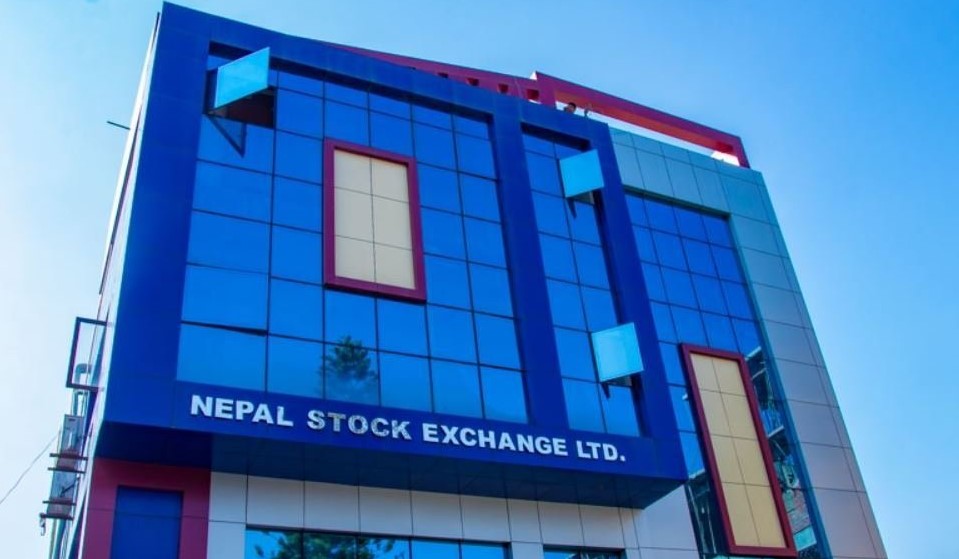
The Nepal Stock Exchange index edged up by 1.77 points on Friday to close at 2,731.94, ending the week with modest gains after three consecutive losing sessions. Daily turnover declined to Rs 3.09 billion from Rs 3.29 billion on Thursday. A total of 7.93 million shares of 338 companies were traded through 43,673 transactions. Share prices of 127 companies increased, while 120 declined. Among sectoral indices, commercial banks, finance, hydropower, non-life insurance, and trading posted gains, while development banks, investment, life insurance, and microfinance ended lower. The sensitive index also rose by 0.07 percent to 467.55 points.
Fuel Price Hike in India Set to Impact Nepal’s Economy
On Friday, Indian state-owned oil companies increased petrol and diesel prices by over 3 percent, the first hike since the Middle East conflict began in February. Prices in Delhi rose to Rs 97.77 for petrol and Rs 90.67 for diesel per liter. As Nepal imports its entire fuel supply from India, this hike is expected to directly increase inflation and transport costs domestically. The price surge stems from Iran’s blockade of the Strait of Hormuz, a vital maritime route for half of India’s crude imports. To mitigate the crisis, India has increased Russian oil imports, though Foreign Minister S. Jaishankar criticized unilateral sanctions that disproportionately affect developing nations. This energy instability poses a significant risk to Nepal’s trade deficit and foreign exchange reserves.
Government Spends Nearly 60 Percent of Annual Budget in 10 Months
The government has spent Rs 1.173 trillion, or 59.75 percent of its annual budget, in the first ten months of the current fiscal year, according to the Office of the Financial Comptroller General. Recurrent expenditure reached 68.98 percent, while capital spending remained weak at just 27.91 percent, reflecting slow progress in development projects. Revenue collection stood at Rs 1.012 trillion, achieving about 66 percent of the annual target. Tax revenue alone reached Rs 988 billion. Foreign grants remained low, with the government receiving only Rs 17.78 billion, or 33.28 percent of the annual target by May 14.
Nepal’s Outstanding Financial Irregularities Reach Rs 755.17 Billion
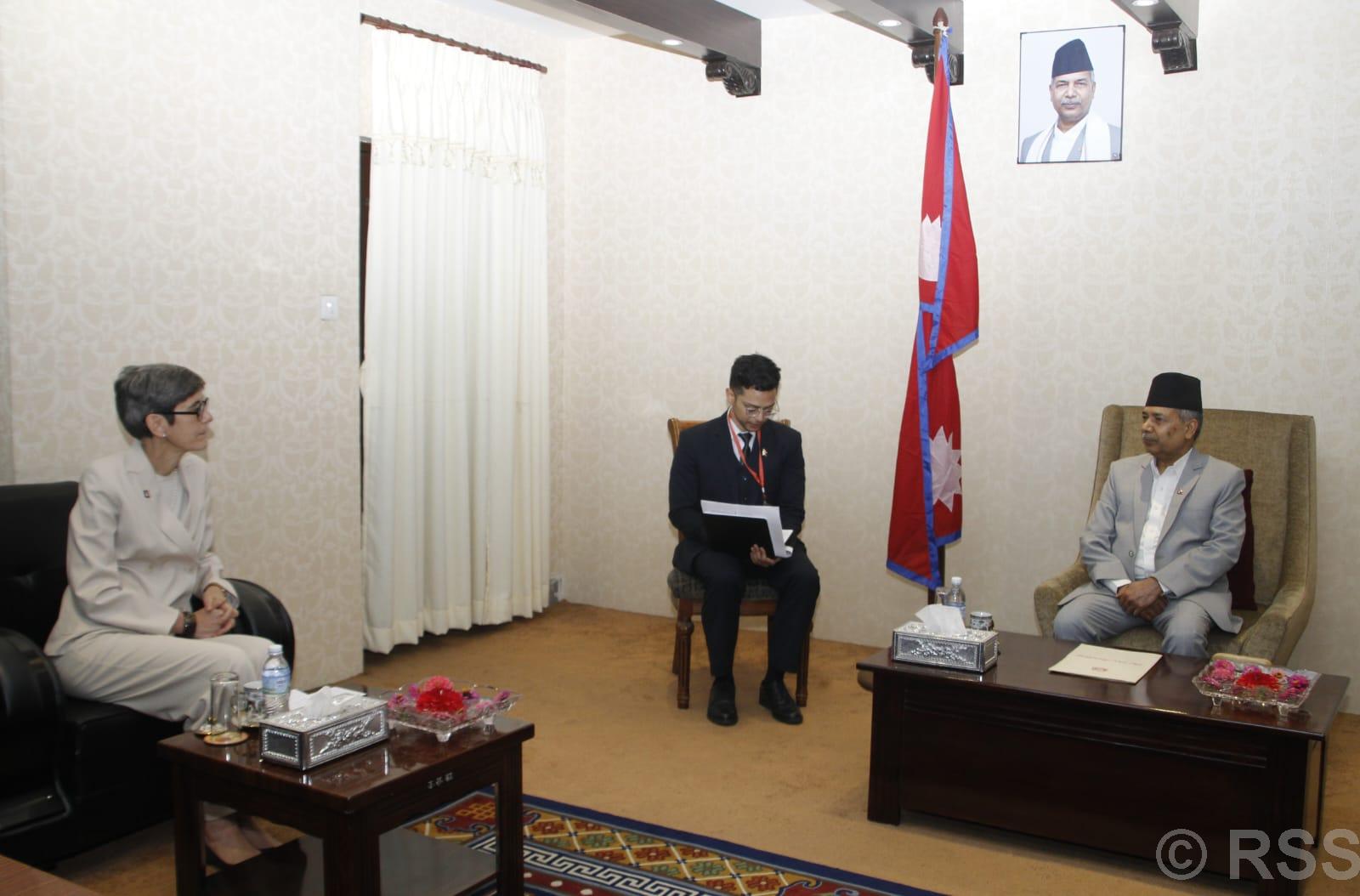
Nepal’s outstanding financial irregularities have climbed to Rs 755.17 billion, according to the Office of the Auditor General’s annual report submitted to President Ram Chandra Paudel on Friday. Auditor General Toyam Raya said Rs 88.09 billion in new irregularities were identified in fiscal year 2024/25 alone. Federal offices accounted for the largest share at Rs 53.48 billion. The report said cumulative irregularities rose by 2.99 percent from last year due to weak enforcement and poor implementation of audit recommendations. Another Rs 787.86 billion has been flagged for further action involving revenue, foreign aid, loans, and reimbursements.
Government Grants Rs 85.23 Billion in Customs Revenue Exemptions
The Auditor General’s 63rd Annual Report reveals that the government provided customs revenue exemptions totaling Rs 85.23 billion in the fiscal year 2024/25. This is an increase from the Rs 79.87 billion exempted in the previous fiscal year. Major exemptions included Rs 5.71 billion under SAFTA facilities and Rs 6.12 billion for various projects and government agencies. The report criticized the lack of records at the Ministry of Finance regarding internal revenue exemptions. Furthermore, it noted that many construction contractors are benefiting directly from these tax breaks via “Master Lists” without passing the savings onto project costs, thereby impacting the government’s overall revenue mobilization and fiscal transparency.
Commercial Banks Slash Interest Rates for Mid-May to Mid-June
Commercial banks in Nepal have further reduced interest rates for this month (May 15 to June 14). According to the latest figures from 20 commercial banks, the average interest rate on individual fixed deposits has dropped to 4.3 percent, down from 4.4 percent in the previous month. The maximum rate offered is 4.75 percent by Rastriya Banijya Bank, while Kumari Bank offers the lowest at 3.96 percent. While 12 banks kept rates stable and Siddharth Bank saw a marginal increase, six banks implemented cuts. This downward trend is driven by excessive liquidity in the banking system, which currently holds over Rs 1.1 trillion in investable funds that banks are struggling to deploy into the market.
Tax Exemptions Approved for 13 Major Development Projects
The government has officially decided to provide significant tax exemptions for 13 specific development projects. According to a notice published in the Nepal Gazette by the Ministry of Finance, goods imported for these construction and development works will receive substantial relief. Most of these projects will only be charged a 1 percent customs duty, with all other fees, charges, and taxes fully waived. For certain other projects, a total tax exemption has been granted. The total value of the goods and materials covered under these new tax-exemption provisions is estimated to be approximately Rs 8.25 billion. This move is intended to accelerate infrastructure development by reducing the initial capital costs of importing specialized equipment and raw materials.
Nepal Airlines’ Debt Swells to Rs 55 Billion
According to the 63rd Annual Report of the Auditor General, Nepal Airlines Corporation’s (NAC) debt has ballooned from an original principal of Rs 36 billion to approximately Rs 55 billion. The national flag carrier had initially borrowed the funds in the fiscal years 2013/14 and 2017/18 under government guarantee to purchase aircraft. Specifically, the debt includes Rs 31.33 billion owed to the Employees’ Provident Fund and Rs 21.12 billion to the Citizen Investment Trust. Due to the corporation’s failure to make timely payments of principal and interest as per the agreed schedule, the total liability has now reached Rs 550.4 million, posing a significant financial challenge to its operational sustainability.
Finance Ministry Records Highest Arrears Among Federal Entities
The Auditor General’s 63rd Annual Report highlights that the Ministry of Finance holds the highest volume of arrears among federal ministries. Out of the total federal government arrears of Rs 53.48 billion, the Finance Ministry and its subordinate bodies account for 70 percent, totaling Rs 37.63 billion. The Ministry of Physical Infrastructure and Transport follows with 13.28 percent (Rs 7.10 billion). Other significant arrears were found in the Ministry of Land Management (Rs 1.53 billion), Forestry (Rs 1.34 billion), and Communication (Rs 1.16 billion). Ministries such as Urban Development, Foreign Affairs, Energy, Home, and Health also reported arrears ranging from Rs 520 million to Rs 800 million, reflecting widespread financial management irregularities across the federal government.
Auditor General Reports Rs 19.05 Billion in Arrears at Local Level
The Auditor General’s Annual Report has identified total arrears amounting to Rs 19.05 billion across local government levels. The audit, which covered 721 local units with a total financial volume of Rs 1.109 trillion, found that the arrears represent 1.72 percent of the audited amount. Specifically, Rs 2.01 billion must be recovered, Rs 15.18 billion needs regularization, and Rs 1.84 billion remains as unaccounted advances. While 681 local units maintained arrears below 5 percent, one unit exceeded 15 percent. Additionally, 15 local units spent Rs 77.09 million on software that was never utilized, and one local unit failed to undergo an audit entirely, raising concerns over financial discipline and administrative accountability.
Telecom Service Providers Fail to Pay Rs 353.6 Million in Royalties
The Auditor General’s report states that 45 telecommunication service providers have not paid their required royalties, amounting to Rs 353.6 million. Based on financial records from the fiscal year 2023/24, these companies generated a total income of Rs 8.84 billion. Under Rule 26 of the Telecommunications Regulation, 1997, licensed entities are mandated to pay 4 percent of their annual gross income as a royalty to the government. The report highlights that this sum remains uncollected and urges the Ministry of Communication and Information Technology to determine and recover the outstanding dues along with necessary penalties. This failure in revenue collection reflects a significant gap in the oversight of the telecommunications sector.
Government Approves Rs 968 Million for Five Bridges on Kaligandaki Corridor
The Ministry of Finance has granted a source agreement for Rs 968 million to construct five permanent bridges under the Kaligandaki Corridor (Beni-Jomsom-Korala) Road Project. These bridges are slated for the Maldhunga-Beni and Beni-Jomsom road sections, including key locations at the Kaligandaki River connecting Parbat and Myagdi, Rupse Waterfall, Sunkhola, Ghatte Khola, and Thapa Khola. The Project Office confirmed that the bidding process will commence within a month. To date, 15 permanent bridges have been completed along this strategic north-south corridor. Additionally, the bridge at Ghami Khola in Upper Mustang is in its final stages and is expected to be completed within the current fiscal year.
Construction Sector Faces Crisis Due to Rising Material Costs
The Lumbini Construction Association has reported that the construction sector is facing a severe crisis due to the skyrocketing prices of fuel and raw materials. Spiraling costs of diesel, bitumen, iron, cement, transportation, and labor have made it impossible to complete projects at previously contracted rates. Construction businesses are under immense financial pressure, which threatens to stall essential development projects and impact the livelihoods of millions of workers. The association has formally requested the government to facilitate adjustments in bank guarantees, insurance, deposits, and advance payments. Without timely cost adjustments and policy support, stakeholders warn that the industry could face a total shutdown, causing long-term damage to the national economy and infrastructure timeline.
Nepalgunj Distribution Centre Recovers Rs 50 Million in Arrears
The Nepal Electricity Authority (NEA), Nepalgunj Distribution Centre, has successfully recovered Rs 50 million in outstanding dues through a massive disconnection campaign. Over the past five months, the center disconnected power lines for approximately 5,500 customers who had long-term unpaid bills. Following the action, 4,500 customers settled their payments to restore their connections. Total outstanding arrears had reached Rs 63 million. Legal provisions require bill payment within 60 days, after which penalties are now being applied automatically. Alongside debt recovery, the center has intensified field inspections during public holidays to control electricity theft, “hooking,” and meter tampering, leading to improved supply stability and reduced leakage across the Banke district.
Rs 2 Million Collected in One Day from Traffic Fines
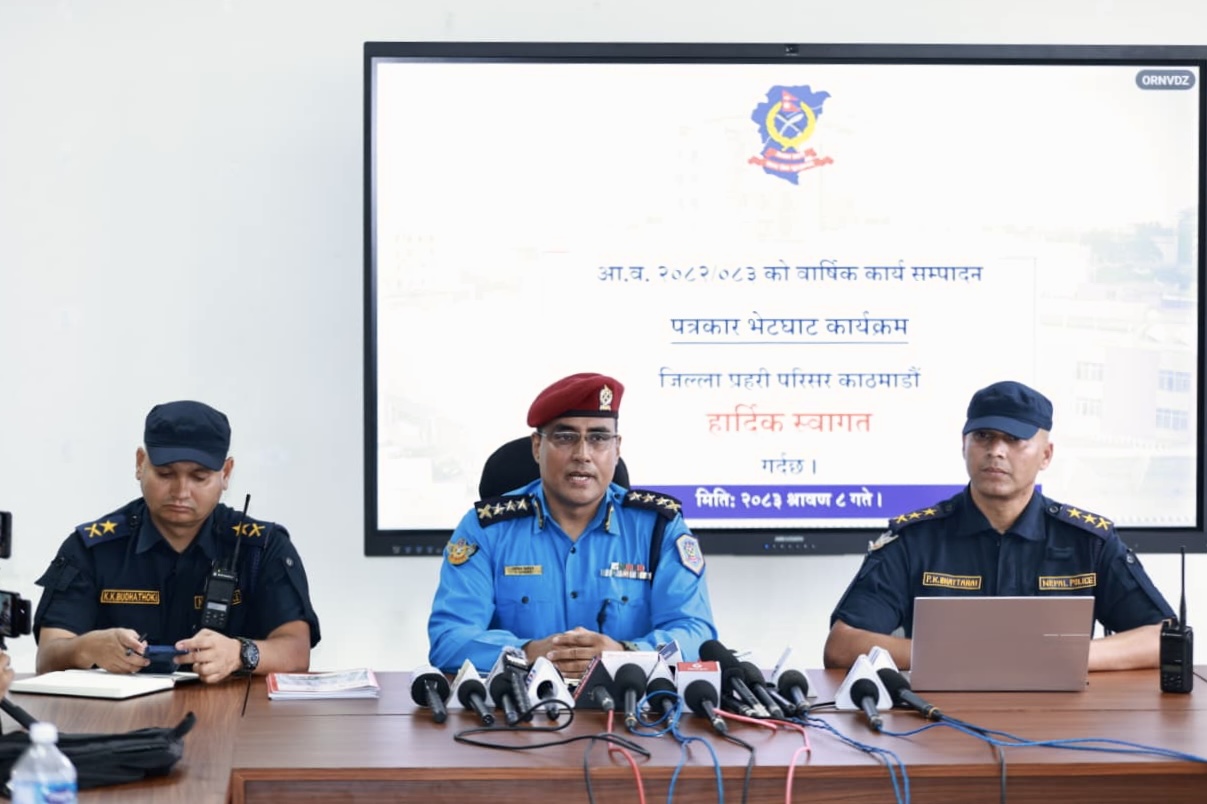
The Kathmandu Valley Traffic Police recorded 2,144 cases of traffic violations in the past 24 hours. In fine, Rs 1.95 million in revenue was collected from the violators of traffic rules. According to the Kathmandu Valley Traffic Police, such cases include 140 of drunk-driving, 151 of ride-sharing against the rule, 149 of traffic signals violations and 186 of over-speed driving. Likewise, 102 incidents of breaching lane disciplines, 142 cases are related to honking in prohibited areas, 95 of parking on roadsides and pavements, 118 violations are related to driving on one-way route and 1,110 other traffic-related violations.
Last Day for Public to Apply for Snow Rivers IPO
Friday marks the final deadline for the general public to apply for the Initial Public Offering (IPO) of Snow Rivers Company. The company received permission to issue 1,875,000 shares, representing 20% of its issued capital of Rs 937.5 million. While portions have already been allotted to local residents, Nepalis working abroad, and mutual funds, the remaining 778,125 shares are currently available for the general public at a par value of Rs 100 per share. Investors can apply for a minimum of 10 shares and a maximum of 1,000 shares through the C-ASBA system. Sanima Capital is serving as the issue and sales manager for this offering, which closes at the end of office hours today.
Gold and Silver Prices Drop in Domestic Market Today
Gold prices in the Nepali market fell on Friday, according to the Federation of Nepal Gold and Silver Dealers’ Association. The price of gold dropped by Rs 4,000 per tola (11.66 grams), bringing it down to Rs 298,500. On the previous day, gold was trading at around Rs 302,500 per tola. Silver prices also declined. The price of silver fell by Rs 355 per tola to Rs 5,390. A day earlier, silver was trading at Rs 5,745 per tola.