Kathmandu
Sunday, July 26, 2026





A breakdown of Nepal's Rs 424.27 billion intergovernmental fiscal transfer for FY 2026/27—how funds are allocated among provinces and local governments, who receives the most, and what the grants mean for service delivery and federal governance.
KATHMANDU: For the upcoming fiscal year 2026/27, Nepal’s federal government has released a detailed breakdown of intergovernmental fiscal transfers to all seven provinces and 753 local government units.
The Ministry of Finance has disclosed that the total transfer amounts to Rs.424.27 billion, covering four categories of grants: equalization, conditional, special, and complementary.
The allocation determines how much each province, metropolitan city, sub-metropolitan city, municipality, and rural municipality will receive to fund local governance and public services.
What is intergovernmental fiscal transfer and why does it matter?
Intergovernmental fiscal transfer is the mechanism through which Nepal’s federal government distributes a portion of national revenue to provincial and local governments.
Under Nepal’s federal structure, the three tiers of government — federal, provincial, and local — each have constitutionally defined responsibilities and corresponding revenue rights. However, local governments and provinces cannot always generate sufficient revenue on their own to meet their spending obligations.
The fiscal transfer system bridges that gap, ensuring that even the most remote or resource-poor units have access to public funds.
The Ministry of Finance calculates and publishes these allocations each year as part of the national budget process. For FY 2026/27, the total fiscal transfer across all tiers stands at Rs.424.27 billion, making it one of the largest components of Nepal’s public expenditure framework and a critical lifeline for local service delivery across the country.
What is the total fiscal transfer and how is it divided between provinces and local governments?
The total intergovernmental fiscal transfer for FY 2026/27 is Rs.424.27 billion. Of this, local governments across Nepal will collectively receive Rs.314.62 billion, which represents the larger share.
The seven provincial governments together will receive Rs.109.65 billion. This division reflects the federal government’s policy of directing a greater portion of fiscal resources to the local level, which is where the bulk of direct public service delivery takes place.
The local government allocation covers all 753 units, including metropolitan cities, sub-metropolitan cities, municipalities, and rural municipalities, while the provincial allocation is distributed among the seven provinces according to a formula that accounts for population, geographic area, and development indicators.
How is the local government share broken down by type of unit?
Within the total local government allocation of Rs.314.62 billion, the breakdown by type of unit is as follows. Rural municipalities receive the largest portion at Rs.152.71 billion.
Municipalities receive Rs.138.66 billion. Metropolitan cities collectively receive Rs.11.73 billion. Sub-metropolitan cities receive Rs.11.50 billion.
The fact that rural municipalities collectively receive the most reflects both their large number and the government’s recognition that rural areas have the greatest infrastructure and service deficits.
Municipalities, which form the second category, also receive a substantial share given the density of population and service requirements in small and mid-sized urban areas.
Metropolitan and sub-metropolitan cities, while receiving smaller aggregate amounts, serve far fewer administrative units and their per-unit allocations are significantly higher than those of ordinary municipalities and rural municipalities.
What are the four types of grants included in fiscal transfers?
The fiscal transfer system uses four distinct grant categories, each serving a different purpose.
Equalization grants are formula-based transfers aimed at reducing fiscal disparities between units with different revenue-generating capacities.
Conditional grants come with specific spending requirements attached, directing funds toward particular sectors such as education, health, or infrastructure.
Special grants address specific development needs or emergencies in particular units.
Complementary grants are designed to supplement units that are undertaking capital projects requiring co-financing.
Every local government and province receives allocations across these categories in varying proportions depending on their size, population, geographic conditions, and the projects they are implementing. The combination of these four grant types gives the transfer system both a redistributive character and a targeted development function, balancing equity concerns with the goal of achieving concrete outcomes on the ground.
Which province receives the most and which receives the least?
Among the seven provinces, Madhesh Province receives the largest allocation for fiscal year 2026/27 at Rs.17.60 billion.
Karnali Province, despite being one of the most geographically remote and underdeveloped regions in the country, receives Rs.17.21 billion, placing it close to Madhesh in overall allocation.
Koshi Province receives Rs.16.47 billion, while Sudurpashchim Province receives Rs.16.01 billion.
Bagmati Province, which is home to the federal capital Kathmandu, receives Rs.15.21 billion.
Lumbini Province is allocated Rs.14.42 billion. Gandaki Province receives the lowest share among the seven at Rs.12.73 billion.
The combined total for all seven provinces is Rs.109.65 billion, as disclosed by the Ministry of Finance.
Why does Madhesh receive the highest provincial allocation while Gandaki receives the least?
The provincial allocations are calculated based on a combination of factors including population size, human development indicators, and fiscal need.
Madhesh Province has a large population concentrated in the Terai plains and has historically faced significant infrastructure gaps and lower human development outcomes in several districts, driving a higher equalization component in its grant.
Karnali Province, despite having a smaller population, also receives a near-comparable amount because of its acute geographical disadvantage, high poverty rates, and the limited revenue it can generate from within its own economy.
Gandaki Province, which receives the smallest share, has comparatively higher economic activity, better infrastructure, and a more manageable population relative to the resources it can mobilize, resulting in a lower equalization need.
The allocation formula is designed to be needs-based rather than simply population-proportional, which is why the rankings do not follow population size alone.
How much do the six metropolitan cities receive and who gets the most?
Nepal has six metropolitan cities: Pokhara, Kathmandu, Bharatpur, Birgunj, Lalitpur, and Biratnagar. Together they receive Rs.11.72 billion in grants for fiscal year 2026/27.
Pokhara Metropolitan City receives the largest individual allocation at Rs.3.19 billion, which includes Rs.496.7 million in equalization grants, Rs.2.62 billion in conditional grants, Rs.55 million in complementary grants, and Rs.18.2 million in special grants.
Kathmandu Metropolitan City receives Rs.2.28 billion, comprising Rs.1.60 billion in conditional grants and Rs.677 million in equalization grants, with no special or complementary grants.
Bharatpur receives Rs.2.05 billion, Birgunj receives Rs.1.98 billion, Lalitpur receives Rs.1.15 billion, and Biratnagar receives Rs.1.07 billion.
Why does Pokhara receive more than Kathmandu among the metropolitan cities?
Pokhara receiving a larger grant than Kathmandu may appear counterintuitive given that Kathmandu is the capital and the largest city by population. However, the grant formula does not simply reward size or administrative status.
Kathmandu Metropolitan City has a comparatively higher own-source revenue base, meaning it generates more income from local taxes, service fees, and other charges than most other cities.
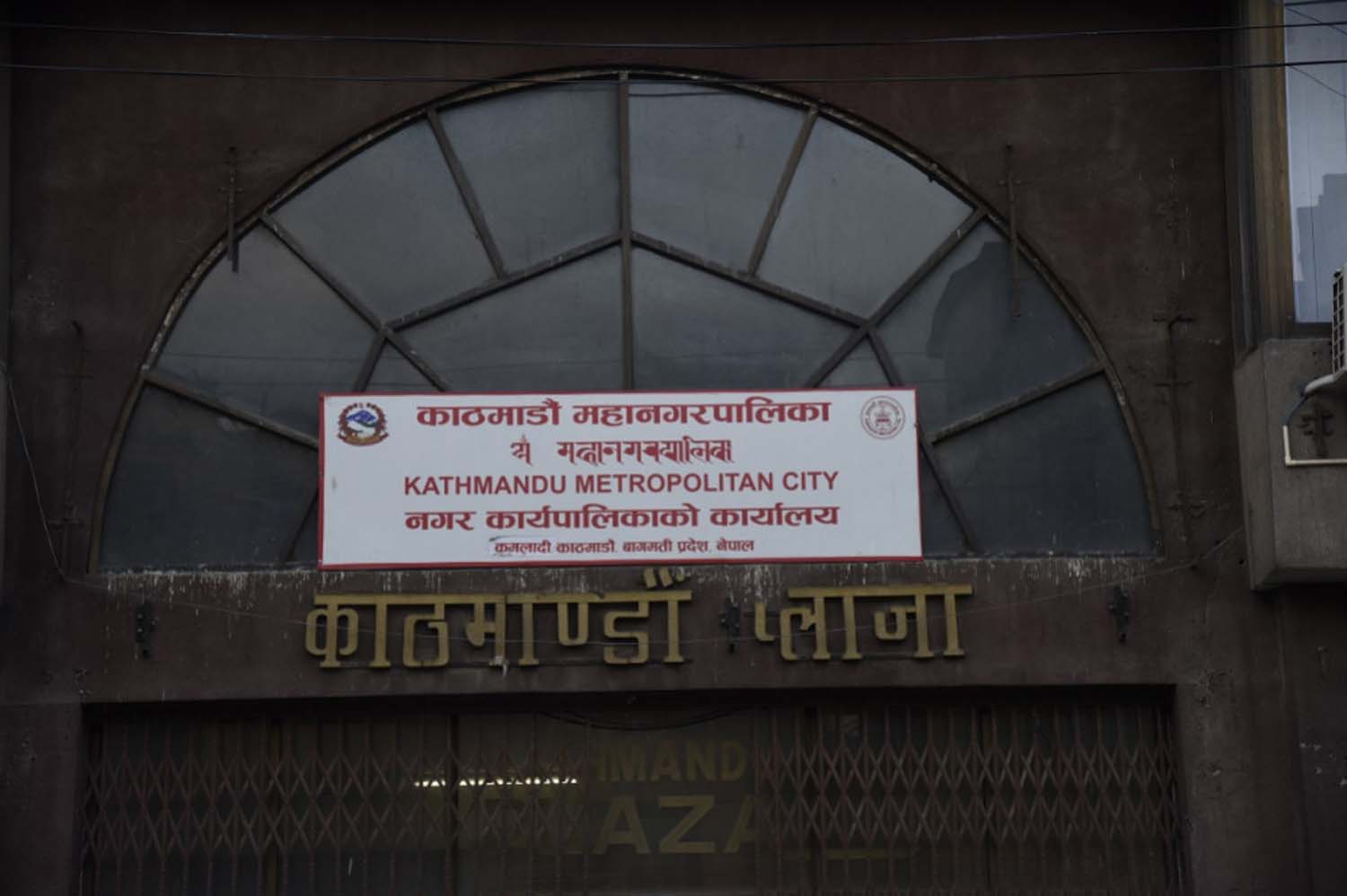
Kathmandu Metropolitan City
The equalization component of its grant is therefore lower relative to Pokhara.
Additionally, conditional grants depend on the specific projects and programs approved under federal-local partnership frameworks.
Pokhara’s larger conditional grant allocation reflects the volume and scale of capital projects being implemented there.
Lalitpur and Biratnagar, which receive the smallest amounts among the six, have narrower conditional grant portfolios and stronger own-revenue positions relative to their size, resulting in lower overall transfers.
What determines how much a rural municipality receives?
Rural municipalities are the most numerous category of local government in Nepal, and they receive their allocations based primarily on equalization criteria.
The Ministry of Finance applies a formula that considers population, geographic area, Human Development Index scores, and revenue-raising capacity. A rural municipality in a remote mountain district with low population density but high service delivery costs would typically qualify for a higher per-unit equalization grant than one in a more accessible lowland area with better infrastructure.
The rural municipality category as a whole receives Rs.152.71 billion for fiscal year 2026/27, the single largest block within the local government transfer envelope.
Individual allocations within this category vary considerably, and the full unit-wise breakdown has been published by the Ministry of Finance as part of its intergovernmental fiscal transfer disclosure.
What is the significance of the conditional grant within the fiscal transfer?
Conditional grants are notable because they come with binding spending obligations.
When a local government or province receives a conditional grant, it is required to use those funds for designated purposes, which typically include priority sectors such as road construction, school buildings, health posts, drinking water, and irrigation.
This category of grant is the primary channel through which the federal government shapes local investment priorities without directly executing the projects itself.
Across the six metropolitan cities, conditional grants make up the largest component of each city’s total allocation, ranging from Rs.760 million in Lalitpur to Rs.2.62 billion in Pokhara.
The conditional grant mechanism ensures that a significant portion of federal resources flowing to local governments is directed toward measurable infrastructure outcomes rather than being left entirely to local discretion, serving as an accountability tool embedded within the transfer system.
What does this fiscal transfer mean for local governance in practice?
The fiscal transfer is the primary source of capital and recurrent funding for most of Nepal’s local governments, particularly those outside the major urban centers.
A rural municipality in Karnali or a small municipality in Sudurpashchim relies almost entirely on federal transfers to pay for staff salaries, community infrastructure, and social programs, because its own-source revenue is negligible.
The Rs.424.27 billion total transfer for fiscal year 2026/27 represents a substantial commitment of national resources to federalism’s core promise: that services should reach citizens at the local level regardless of where they live.
The quality of fiscal transfer management, meaning whether local governments actually spend funds within the fiscal year and on intended purposes, remains a major accountability challenge that oversight bodies and civil society continue to monitor closely.
How does this transfer fit into Nepal’s overall national budget?
Nepal’s total national budget for fiscal year 2026/27 has been set at Rs. 2.124 trillion. The intergovernmental fiscal transfer of Rs.424.27 billion therefore represents approximately 20 percent of the total national budget.
This is a significant proportion, reflecting the constitutional requirement that the federal government share national revenue with sub-national governments.
The fiscal transfer is not the only source of funds for provinces and local governments: they also generate own-source revenue and receive revenue-sharing from natural resources and royalty income.
However, for the vast majority of local units, the intergovernmental transfer remains the dominant funding source.
The size and distribution of this transfer is therefore one of the most consequential fiscal decisions the federal government makes each year, with direct implications for how equitably public services are delivered across Nepal’s diverse geography.