Kathmandu
Monday, July 27, 2026





If Nepal is to shield its economy from soaring fuel prices and supply disruptions caused by geopolitical conflicts such as the war in West Asia, strengthening domestic energy security is no longer an option—it is a necessity.
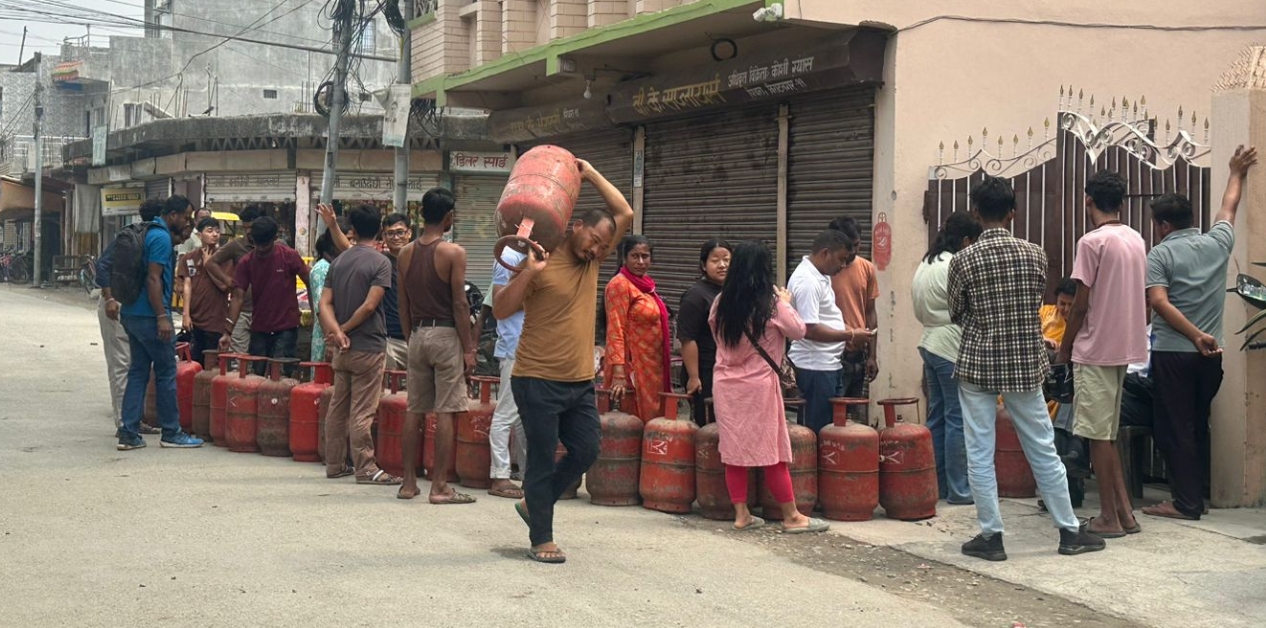
KATHMANDU: The war in West Asia (the Gulf region) has caused fuel prices to surge globally. Following a joint military offensive by the US and Israel, Iran blocked the Strait of Hormuz, a critical adjacent maritime gateway, severely impacting the global supply of petroleum products. It is estimated that nearly 20 percent of the world’s petroleum consumption passes through this strategic waterway.
When a supply chain is disrupted, a country like Nepal, which relies on imports for 100 percent of its fuel needs, bears the full brunt of the impact. While a 20 percent squeeze in global supply has triggered a 50 to 60 percent price hike worldwide, even a minor disruption multiplies the economic shock manifold for an entirely import-dependent nation.
This fuel crisis predominantly triggers seven major domestic impacts:
Being a landlocked country that imports 100 percent of its petroleum products, these exorbitant prices severely pain every sector of our economy. Our primary fuel supplier, India, procures petroleum from diverse global sources. However, instead of adjusting rates favorably, they bill us based on top-tier market prices.
Unable to operate under previously locked-in bidding rates without government intervention, construction activities have ground to a halt. Although the government keeps pushing them to resume work, contractors lack the financial viability to comply. As their operational costs balloon, the entire construction industry suffers, ensuring that major national projects will miss their deadlines.
The fuel crisis birthed by the unrest in West Asia threatens to undo the positive economic plans envisioned by the government. Because the conflict is ongoing, the long-term impacts of this fuel crisis appear far-reaching. Experts suggest that even if the warring factions reach an immediate consensus today to end hostilities, the economic tremors will persist for at least another six months. If the war drags on further, the impact could become indefinite, deepening the crisis for vulnerable countries like Nepal.
Lessons Nepal must learn
We are far from self-reliant in fuel and energy; the vast majority of the energy we consume is imported. While a minor fraction of the population in remote areas might still rely on traditional briquettes or firewood, the usage of Liquified Petroleum (LP) gas for cooking has increased even in rural households. This indicates that our reliance on imported energy is steadily expanding.
Since supply bottlenecks and price shocks are structural vulnerabilities that countries like Nepal will intermittently face, we must learn from this crisis and focus on scaling up domestic hydropower production. We must move toward achieving self-sufficiency in renewable energy as rapidly as possible.
While we continue to import petroleum products, our domestic power generation fails to meet internal demands for roughly eight months of the year, forcing us to import electricity from India. Nepal produces surplus electricity for only about four months during the monsoon season. If India decides to restrict power supply to specific hours in the future, Nepalis will be forced to buy expensive LP gas to get by. A nation cannot transform under such vulnerable conditions.
To achieve genuine energy security, Nepal must ensure a system where every citizen can cook using electricity. Without this transition, the kitchens of 7 million households cannot be modernized. Autonomous clean energy will organically transform our hotels, restaurants, agriculture, transport, and industries. However, our current electricity generation cannot sustain this shift; output must be multiplied fivefold. To achieve this, we need an additional 10,000 megawatts (MW) of power within the next few years.
Relying solely on small 50 to 100 MW projects will not suffice; we must transition to mega-scale initiatives like the Upper Tamakoshi project. While smaller projects were useful in the past, now that the 456 MW Upper Tamakoshi is online, our national target must shift toward initiating 700 MW, 1,000 MW, and 1,200 MW projects annually, aiming to complete them within an 8-to-10-year horizon. Failing this, we will remain dependent on India and structurally insecure. If we want an economically resilient nation, energy self-reliance is non-negotiable.
Streamlining logistics management
A resilient country must maintain a minimum of three months’ worth of emergency supply storage. Given our vulnerability to earthquakes, economic blockades, or geopolitical friction, a robust internal backup mechanism is critical to weathering temporary supply shocks.
We must formulate and strictly implement an effective logistics management policy. Storage focus should not be restricted to petrol and diesel alone, but extended to essential construction materials like stone, sand, and cement. While building large storage infrastructure initially increases capital expenditure and bank interest burdens, it is a necessary investment to safeguard national momentum. A hand-to-mouth approach of consuming imports the very day they arrive leaves a nation structurally crippled.
When a project stalls due to unforeseen disruptions—whether it is a delay in completing the Mid-Hill Highway or the Fast Track—the budget escalates exponentially. We routinely tolerate a 200-to-300-billion-rupee project ballooning into a Rs 600-billion-rupee liability due to delays, yet we hesitate to take bank loans to build a 3-month strategic reserve for essential commodities. We must place long-term economic viability at the center of our fiscal planning and manage these reserves through the national budget.
The government must also create policy frameworks to incentivize private sector participation in logistics and industrial storage infrastructure. By building this cushion, minor external shocks will not derail the nation, ensuring economic continuity.
Similarly, we must aggressively prioritize Electric Vehicles (EVs) and transition toward a green economy. Shifting away from fossil fuels will dilute the economic shock of maritime blockades in gateways like the Strait of Hormuz, enhancing our national resilience.
Simultaneously, we need to overhaul our public transport system to encourage mass transit over private vehicles. Our current system forces citizens to purchase private cars or motorcycles, artificially inflating fuel consumption. If we develop an organized, punctual mass transit network that safely gets people to their schools, colleges, and workplaces on time, the necessity for private vehicles will diminish, organically discouraging their usage.
Major urban centers across the country require reliable, structured, and rapid public transport systems. We need to construct Rapid Transit Systems (RTS) capable of ferrying commuters to city centers within 30 minutes. This requires a sharp focus on building ring roads, expanding wide arterial roads leading to downtown cores, and managing traffic flow efficiently. We can also explore public-private partnerships (PPP) to develop short-distance monorails and trams.
By implementing these structural changes, Nepal can insulate its economy from the severe shocks of external energy crises, such as the one currently presented by the geopolitical tensions in West Asia.
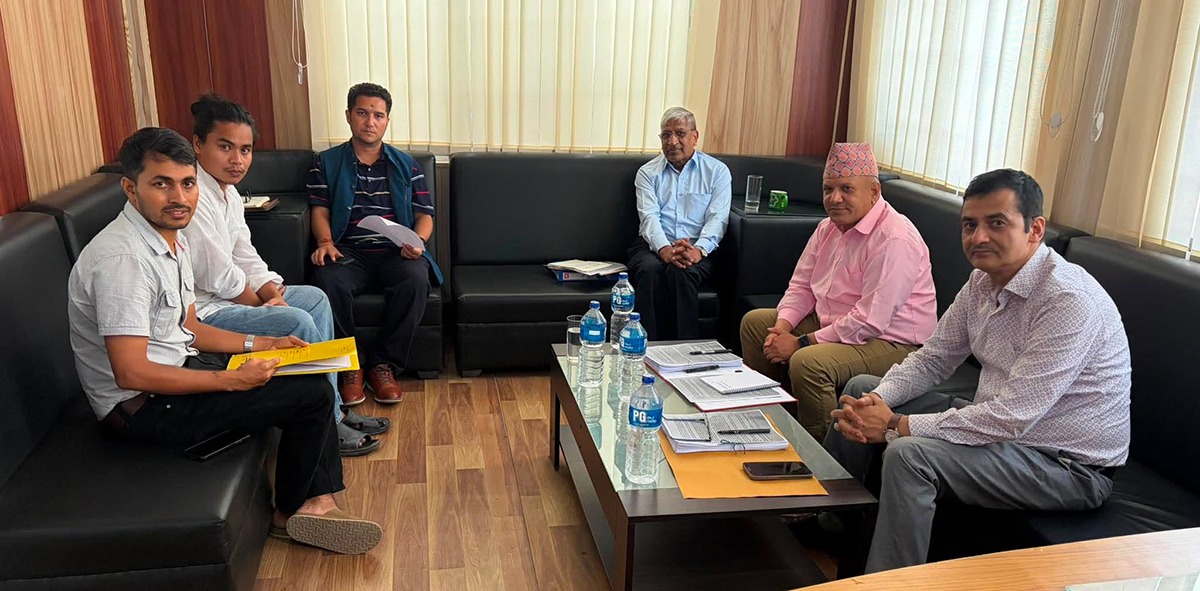
(This article is based on a conversation between Economist and former Executive Director of Nepal Rastra Bank, Laxmi Prapanna Thapa, and journalist Gopal Dahal.)