Kathmandu
Friday, July 17, 2026





Despite intensified traffic enforcement, a growing number of drivers in Koshi Province are being caught operating public and private vehicles under the influence of narcotic drugs, prompting police warnings, rising accident concerns, and calls for stronger regulatory and social intervention
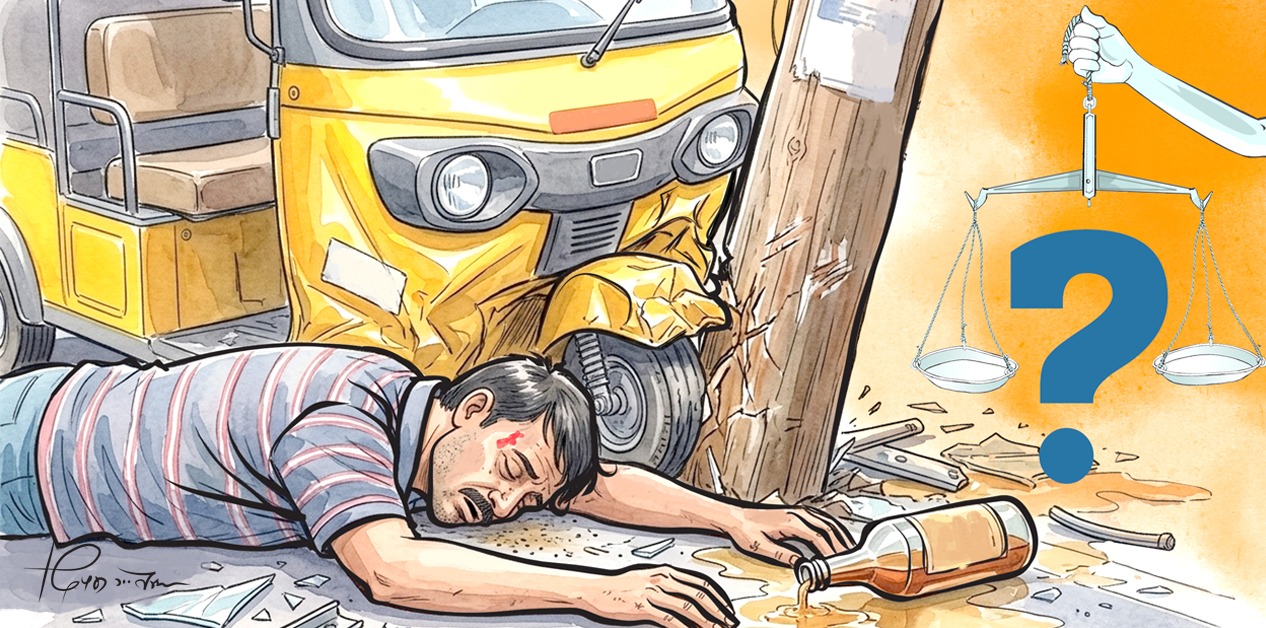
BIRATNAGAR: Amrit Kumar Kamat, a 35-year-old City Safari driver from Biratnagar Metropolitan City-16, had taken passengers to Rani border checkpoint on 31 March 2026. After parking his vehicle there, he crossed into Jogbani, India to consume drugs. Intoxicated, he was carrying four passengers back toward Biratnagar market from the Rani checkpoint when police stopped him at the nearby Hulas Chowk.
A health examination at the “Can Center” operated by a joint team of Nepal Police, Traffic Police, and health workers confirmed that he had consumed drugs. Police transferred the passengers to another safari and took Kamat into custody.
During the checkup at Hulas Chowk that day, not only Amrit Kumar Kamat but seven other City Safari drivers and one motorcycle rider were also taken into custody. They were 31-year-old Sunny Kumar Thapa of Ward 15, 24-year-old Shivam Sah and 27-year-old Suraj Paswan of Ward 6, 45-year-old Pramod Paswan of Ward 8, 28-year-old Shankar Mahato Nuniya of Ward 13, and 29-year-old Mo. Imtiyaz of Ward 1. That same day police also took into custody 42-year-old Suresh Mandal of Kathari-2 and 32-year-old Manjil Hang Limbu of Ratuwamai Rural Municipality-4. Area Police Office Rani has registered cases against them and is proceeding with legal action.
Being penalized for driving under the influence of alcohol is common across the country, but in Koshi Province recently, those caught have also included drivers operating vehicles under the influence of other drugs.
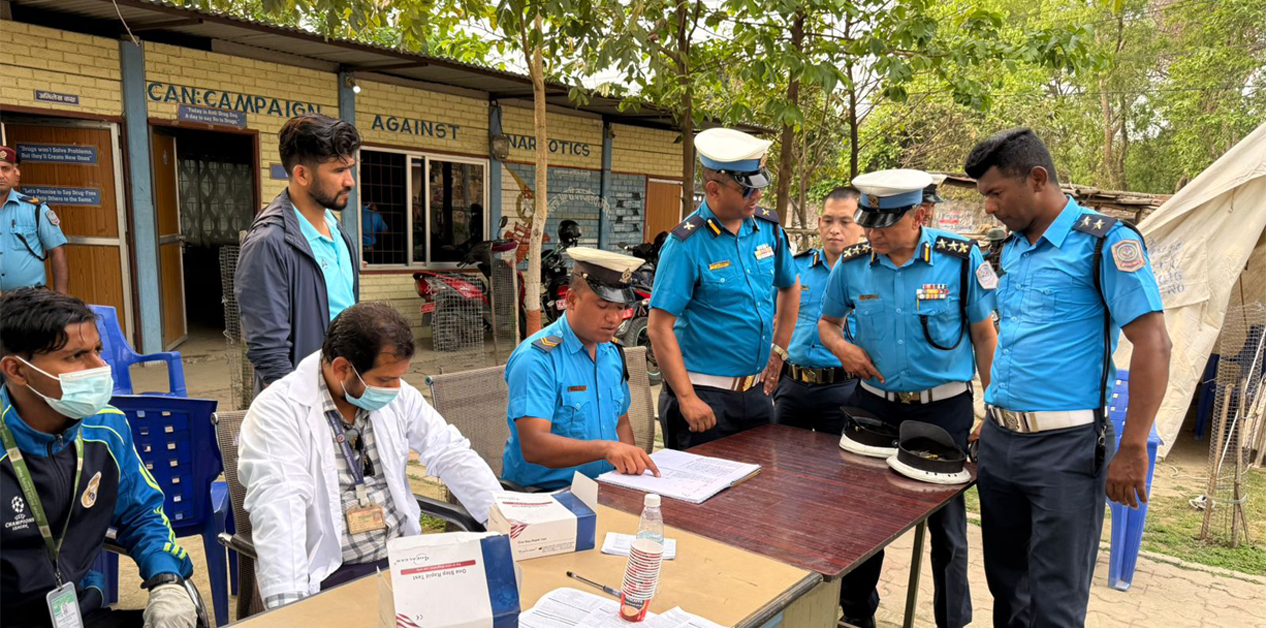
Police and health workers conducting drug tests on drivers in Rani, Ward No. 16, Biratnagar. All photos: Anil Shrestha.
A random check carried out on 8 January 2025 at Nemuwa in Budhiganga Rural Municipality-4 of Morang brought out even more alarming facts about drug-driving. Of 54 drivers tested, 11 were found to have consumed drugs – eight motorcycle riders, two bus drivers, and one tanker driver. Similarly, on 20 September 2023, nine City Safari drivers were caught in drug tests near Hulas Metal. On 2 April 2025, a health examination of 55 public transport drivers in Belbari-1 of Morang found 11 had been driving under the influence of drugs. The fact that drivers of both small and large vehicles are consuming drugs has raised serious questions about the safety of ordinary passengers.
Morang police chief Kabit Katawal says 20 drivers caught driving under the influence of drugs in the current fiscal year alone have been taken to Morang court and brought under legal action. “If a driver is found to have driven under the influence of alcohol, we fine them and hand them over to a licensed family member or someone else. If drug consumption while driving is confirmed, we proceed with action under the narcotic case process,” he says.
Drug-driving on the rise
Drug-driving has been increasing in recent years across the 14 districts of Koshi Province. According to Traffic Police records, of 901 drivers tested over the past three years and nine months (from FY 2022/23 to 31 March 2026), 337 were confirmed to have consumed drugs.
In FY 2022/23, as many as 26 of 62 drivers tested were confirmed positive; in 2023/24, as many as 110 of 194; and in 2024/25, as many as as 152 of 480.
In the current FY 2025/26 up to March 31, 2026 alone, 49 of 165 drivers tested have been found positive for drug use.
In FY 2021/22, action was taken against 5,120 drunk drivers and fines of Rs 5.123 million were collected. In 2022/23, action against 8,363 drunk drivers collected Rs 8.39 million in fines. In 2023/24, action against 6,388 drunk drivers collected Rs 6.42 million.
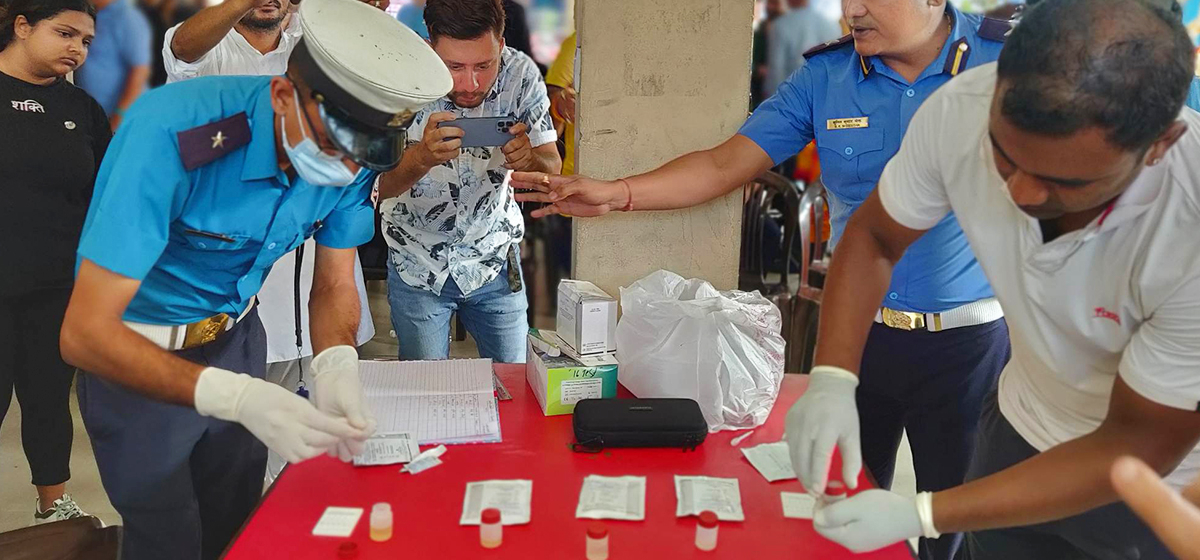
Police preparing for drug tests by collecting urine samples from drivers in containers.
In 2024/25, action against 10,506 drunk drivers collected Rs 6.42 million . Up to 5 April 2026 of the fiscal year 2025/26, action against 3,965 drunk drivers has collected Rs 2.13 million in fines.
On the other hand, from FY 2022 to date – over four years and nine months – 21,096 traffic accidents have occurred in Koshi Province, killing 2,085 people and injuring 35,250. Police analysis identifies drivers’ consumption of intoxicants as a primary cause of these accidents.
Narcotic drugs instead of alcohol
Superintendent of Police (SP) Deepak Giri, chief of the Traffic Management Office in Sunsari, Itahari, says that after traffic police tightened enforcement on alcohol, drivers began choosing narcotic drugs as an alternative. “Alcohol is easily detected through smell and behavior, but drug consumption leaves no smell and cannot be detected without testing. That is why the trend of drivers consuming drugs to evade police has been found to be increasing,” he says.
According to police, most drivers consume cannabis, banned pills, and cough syrups. Long-distance drivers in particular take such risks under the pretext of staying awake or to satisfy drug cravings. The trend is also growing because narcotic drug consumption by users cannot be easily identified. “After drinking alcohol, you can tell from behavior and smell. But drug use leaves no smell. It can only be known after testing,” says SP Giri. “Unlike alcohol, you can’t detect it with a breathalyzer. For drug testing you need urine examination, test kits, and a team of laboratory technicians.”
SP Giri says drug testing is being done only at a sample level with the aim of making people aware that they should not drive under the influence of drugs or board vehicles driven by such drivers. “Even though the message that one should not consume alcohol, drugs, or any intoxicant while driving has reached people, this pattern has not stopped,” he says. “Driving this way puts the driver at risk, and the passengers at risk because of them.”
Secretary of the Ministry of Internal Affairs and Law (Koshi Province) Asman Tamang says the provincial government is working in coordination with police for drug prevention and control. According to him, the budget allocated for drug control is currently frozen. “We have already written to the Ministry of Economic Affairs and Planning to release the frozen budget. As soon as the budget is received, all pre-planned programs will be implemented,” he says.
How is testing done?
According to police, checking whether a driver has consumed narcotic drugs is not as quick as an alcohol test. A multi-drug urine test kit is used for drug testing. The driver is asked to fill a small container with urine, which is then placed in the kit and results are obtained within 10 to 15 minutes. The kit also indicates what type of drug was consumed.
District Traffic Police Office Morang Inspector Santosh Neupane says testing has found cannabis to be the most widely consumed drug among drivers. “Taking advantage of the open border to go to Jogbani and use pills and cough syrup has also been found,” he says.
Neupane says the drug-testing campaign has been intensified to reduce accidents. “Unlike alcohol checks where all drivers are tested, only those suspected are tested. It is not financially feasible to test all drivers,” he says.
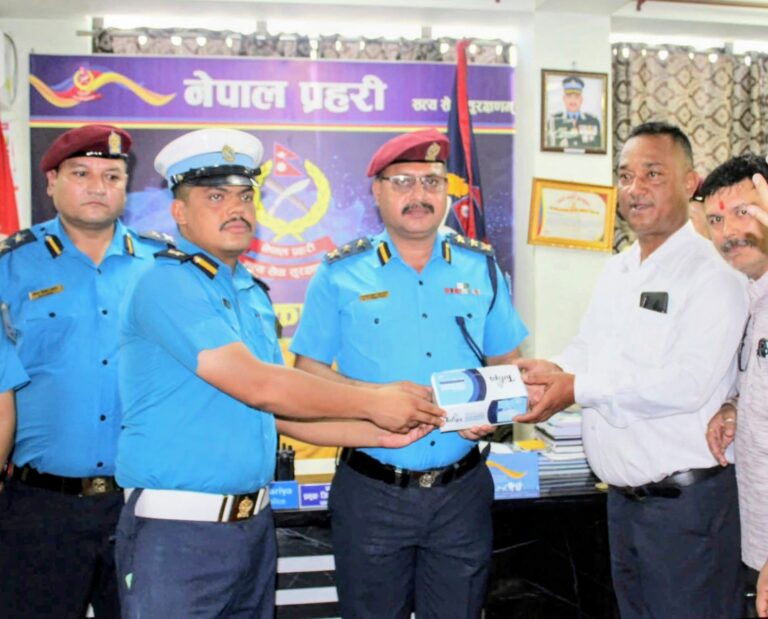
Pharmaceutical dealer Desh Bandhu Dhakal distributing free drug-testing kits to police for drug screening.
Drug testing is expensive; each kit costs around Rs 500. Nepal Pharmaceutical Dealers Association Morang chairperson Desh Bandhu Dhakal says the association has provided 500 kits to police under its social responsibility mandate over the past five years.
Legal action and challenges
While alcohol offenders are usually released with a simple fine and awareness session, drug-driving carries strict legal provisions. According to Deputy Inspector General (DIG) of Koshi Province Police Office Binod Ghimire, when drug consumption is confirmed, a drug use case is filed. Ghimire says: “Driver negligence and intoxication are the primary causes of accidents. We have adopted a strategy of making checks even stricter. Those who gamble with passengers’ lives will not be let off under any circumstances.”
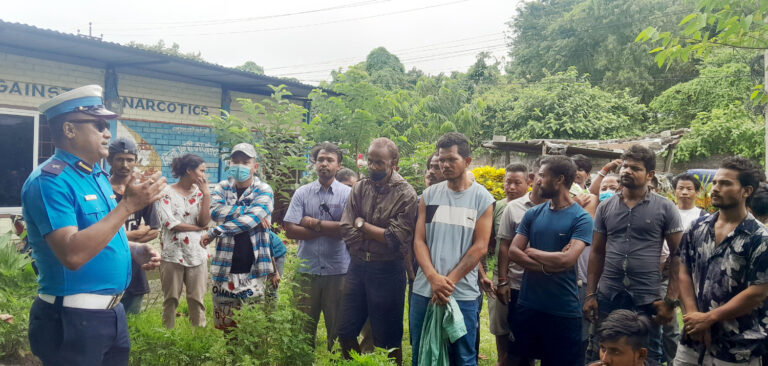
Traffic Police Inspector Sunil Shrestha counseling individuals who have consumed narcotic drugs.
Anti-drug activist Sanjib Chapagain recommends that both the state and transport operators must take responsibility. “Right now the problem of drug-driving is more alarming than drunk driving. Transport operators must secure a commitment from drivers at the time of hiring that they will not consume drugs,” he says. “Police activity alone is not enough; the moral responsibility of drivers and the vigilance of passengers are equally necessary. Otherwise, vehicles running on the rhythm of intoxication can turn the roads bloody at any time.”
What does the law say?
The Narcotic Drugs (Control) Act, 1976 defines drug consumption and actions performed under its influence as serious crimes. Section 14 of the Act provides for up to one year’s imprisonment or a fine of up to Rs 100,000 for anyone who drives under the influence of narcotic drugs.
Section 14(d) of the Act provides for one year’s imprisonment or a fine of up to Rs 10,000 for consuming opium, cocaine, or drugs derived from them including brown sugar.
Section 14(i) of the Act provides for up to two months’ imprisonment or a fine of up to two thousand rupees for consuming natural or synthetic drugs and psychotropic substances.
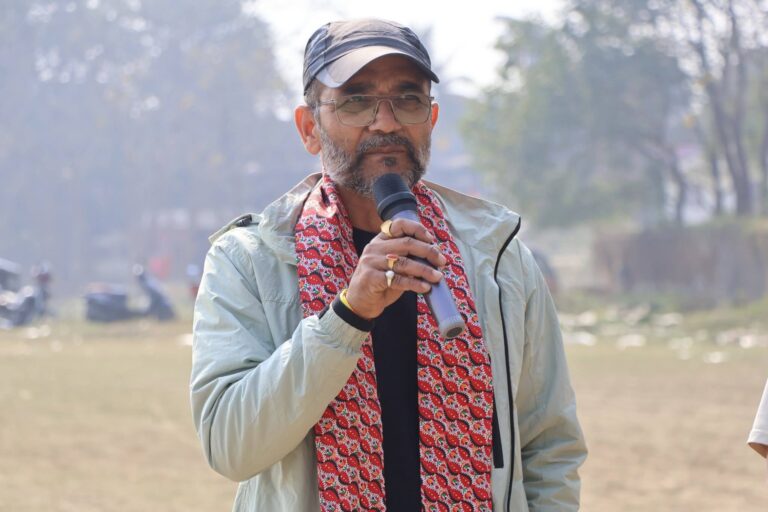
Sanjib Chapagain.
According to advocate Paris Subedi, about 80 percent of cases registered at Morang court are drug-related. On 8 April 2026, nine cases were heard for remand at Morang District Court, of which seven were drug cases. After the hearings, the court ordered all seven accused sent to remand. “This shows that drug addiction is spreading in society in an alarming way. Young people in particular are falling victim and increasingly finding themselves before the law,” says advocate Subedi, who has been practicing at Morang District Court for a long time.
According to activist Sanjib Chapagain, drug testing is being targeted at people coming from the border area of Jogbani near Biratnagar. “During drug testing, not only cannabis but various types of synthetic drugs – pills, cough syrups – and other illegal narcotics have also been found,” he says. “To eradicate this problem from the root, strong cooperation is needed between relevant government agencies, police, and transport operator associations. Regular orientation of transport sector stakeholders on this issue is essential.”