Kathmandu
Friday, July 17, 2026





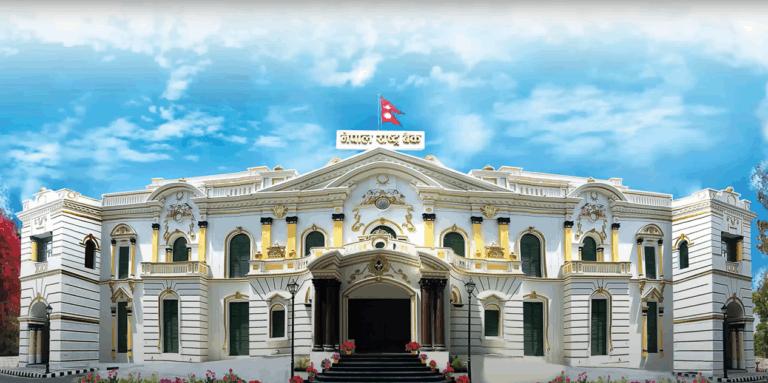
KATHMANDU: The Monetary Management Department of Nepal Rastra Bank (NRB) has officially announced an invitation for bidding to collect deposits worth Rs 50 billion in an effort to manage excess liquidity within the financial system.
According to the notice issued by the central bank, the bidding for this 90-day liquidity absorption instrument is scheduled to take place on July 17, with the deadline for submissions set for 3:00 PM on the same day.
Licensed Class ‘A’ commercial banks, Class ‘B’ development banks, and Class ‘C’ finance companies are eligible to participate, and they must submit their bids electronically through the Online Bidding System Software (OBSS).
The interest rate for the deposits will be determined through a competitive bidding process, where participating institutions can bid at multiple interest rates specified up to four decimal places.
Under the terms of the issuance, the minimum bidding amount is set at Rs 100 million, with larger bids permitted in multiples of Rs 50 million up to the total call amount of Rs. 50 billion.
The allotment of the deposits will prioritize the lowest interest rates bid, and in the event that multiple bids at the same interest rate exceed the total issue size, the allocation will be made on a pro-rata basis.
The principal and accrued interest are scheduled for payout at maturity on October 15, 2026.
While the accepted deposits cannot be used to fulfill the mandatory Cash Reserve Ratio (CRR) since they are classified under the bidding institutions’ investment portfolios, they can be utilized to meet the Statutory Liquidity Ratio (SLR) and overall Liquidity Ratio requirements in accordance with NRB directives.
Furthermore, these deposits are eligible to be pledged as collateral in other banks and financial institutions, excluding the central bank itself.
NRB has warned that successful bidders must maintain sufficient funds in their accounts on the day of issuance, as failure to do so will result in the institution being blacklisted and barred from future auctions.