Kathmandu
Sunday, June 14, 2026





Generations of Nepali workers in Kumaon’s labor economy live between survival today and the hope of employment reform in Nepal tomorrow
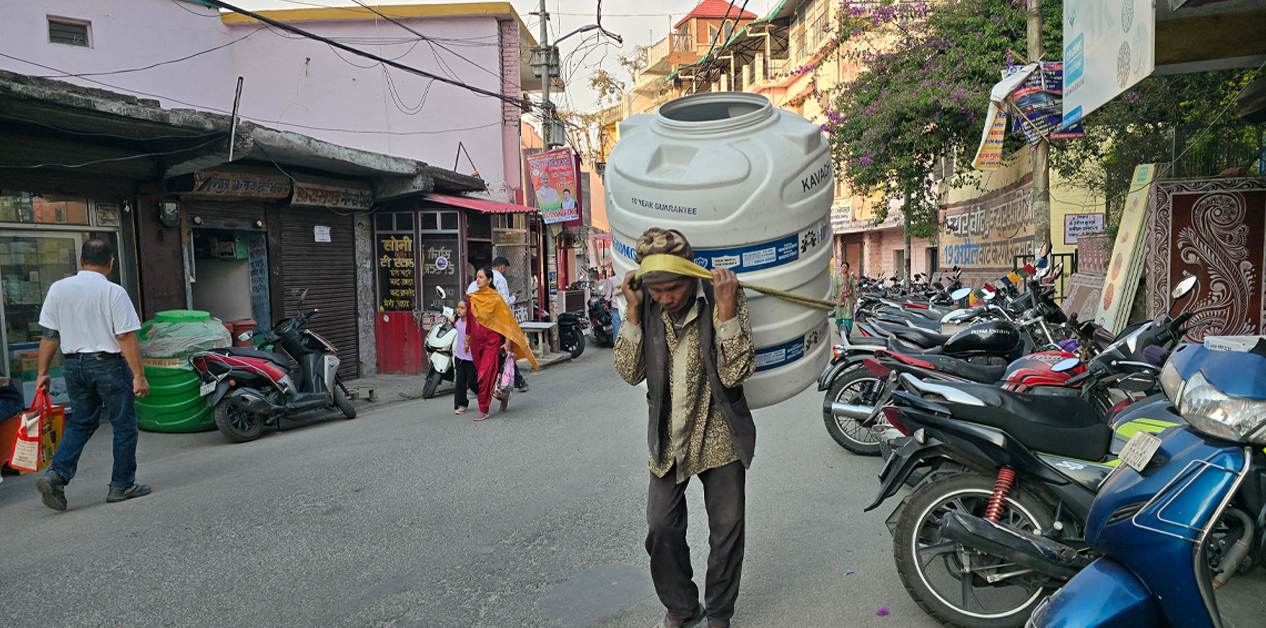
NAINITAL (INDIA): On April 23, just before 9:00 PM, the market in Nainital, located in India’s Uttarakhand state, was slowly winding down. But in a warehouse nearby, a group of Nepali laborers was still hard at work, unloading and storing goods well into the night.
For Ganga Ram Jaisi of Mahawai Rural Municipality-1, Kalikot, there is no fixed schedule. “After nightfall, everyone heads to bed. But this is exactly when we get work. We must finish and return to our rooms. If there is work, we work at night and in the morning. There is no fixed time,” he said. Around 100 Nepalis are engaged in menial labor in the area, he added.
Among them is Kabiraj BK, a 65-year-old from Kalikot, easily identified by his traditional Dhaka topi, a symbol of Nepali identity. Carrying heavy loads is his daily reality. “I have no education. There is no question of choosing work. I do whatever comes,” he said. “If I don’t work, I don’t earn. Life runs on money.” He earns between Rs 1,000 and Rs 1,500 per day.
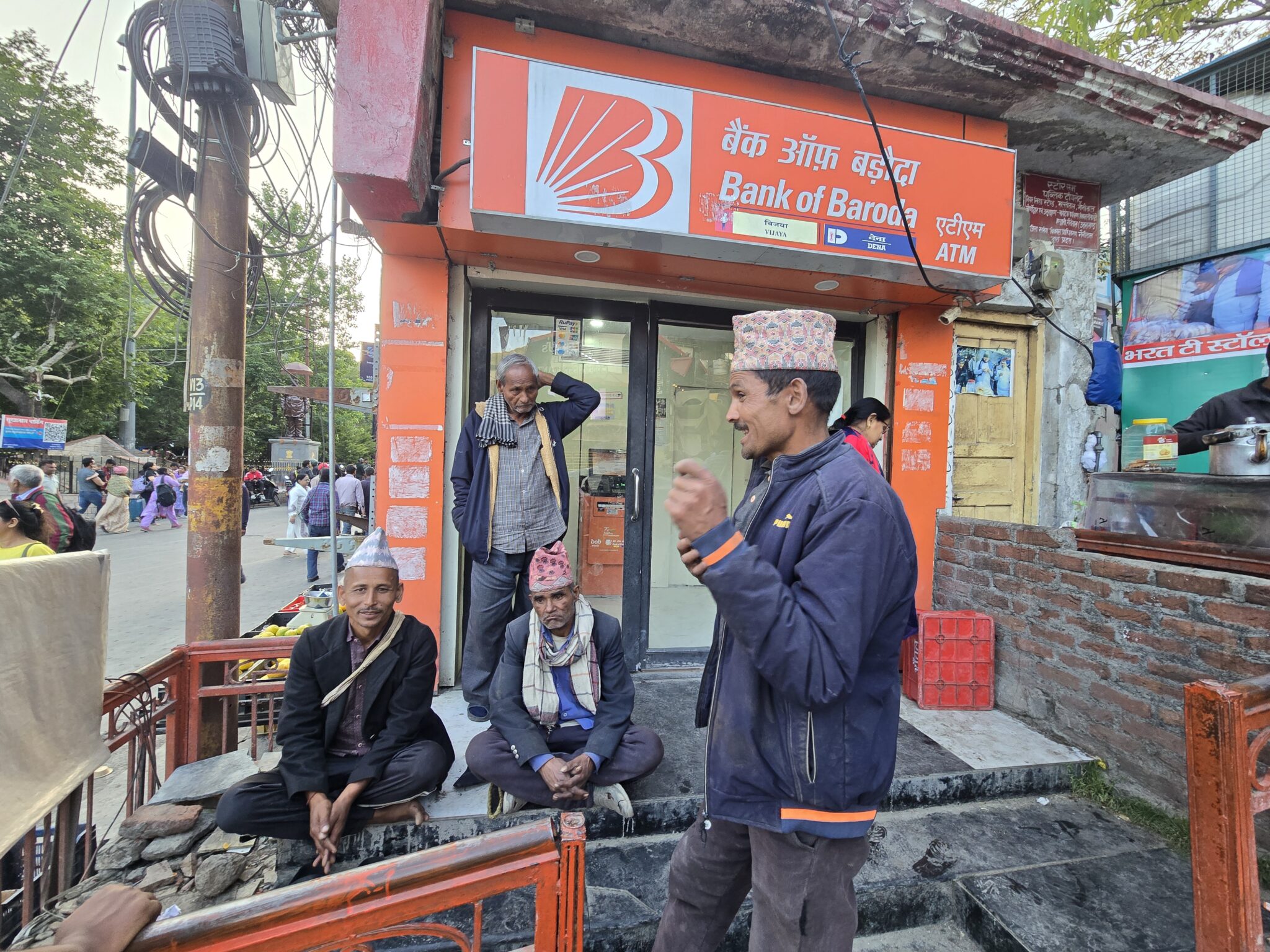
Nepali workers resting at a tea shop in Nainital, India
He admitted the work was physically difficult at first but said he has now adapted. In the mornings, Nepali laborers also gather near the stadium in Nainital, where contractors come to hire workers on the spot.
Another worker, Dhan Bahadur Rawat of Kalikot, has followed this routine for 15 years. His work includes transporting goods, repairing roads, and delivering gas cylinders. “I could not find work in my own country. I had to come to another country even to carry loads,” he said.
Life and labor in ‘Almora’
In Almora, a cultural city in Uttarakhand, another Nepali worker, Dhan Bahadur Rokaya of Soru Rural Municipality-3, Mugu, was seen resting near Malla Mahal around 4:00 PM after delivering a gas cylinder. He began working in Nainital at the age of 16 and is now 45 years old.
His entire family depends on his income. He works alongside his daughter and son-in-law after marrying off his daughter last year. They share a rented room costing Rs 2,500 and take on whatever work is available, from transporting goods to construction jobs.
“Some days there is work, some days there is not. When there is, we manage; when there isn’t, we struggle,” he said.
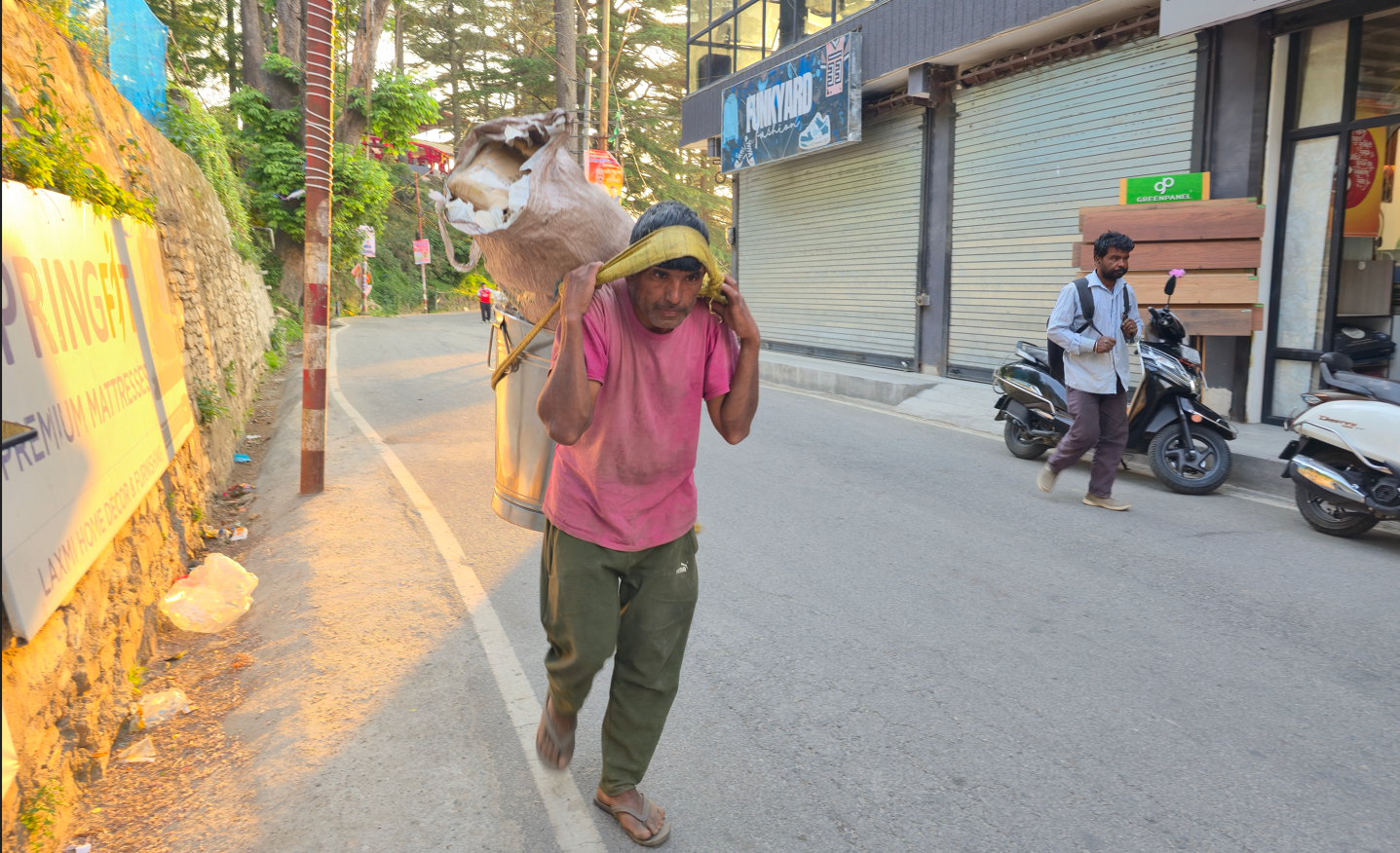
Mugu resident Dhan Bahadur Rokaya transporting goods in Almora
He recently returned to Mugu to vote in the March 5 election and came back with renewed hope. “A new government has been formed. Maybe our situation will improve,” he said.
He expressed hope that policymakers understand the hardship of migrant laborers. “The pain of living here is very hard. If I do not work, what do I feed my children and family? I hope the new government understands our suffering,” he said.
In Almora, Nepali workers are paid based on distance and weight for transporting construction materials such as cement, iron rods, and gas cylinders. Many are also employed in road construction and hotels, forming an essential part of the local labor force.
Kumaon’s Nepal Connection
The Kumaon region, which includes Nainital and Almora, carries a deep historical link with Nepal dating back more than two centuries. It was once under the rule of the Gorkha Shah dynasty, and Malla Mahal served as the administrative center of the Gorkha state.
Nepalis began settling here permanently after Gorkhali forces led by Chautariya Hasti Dal Shah, Amar Singh Thapa, Jagjit Pande, and others conquered Kumaon in 1790.
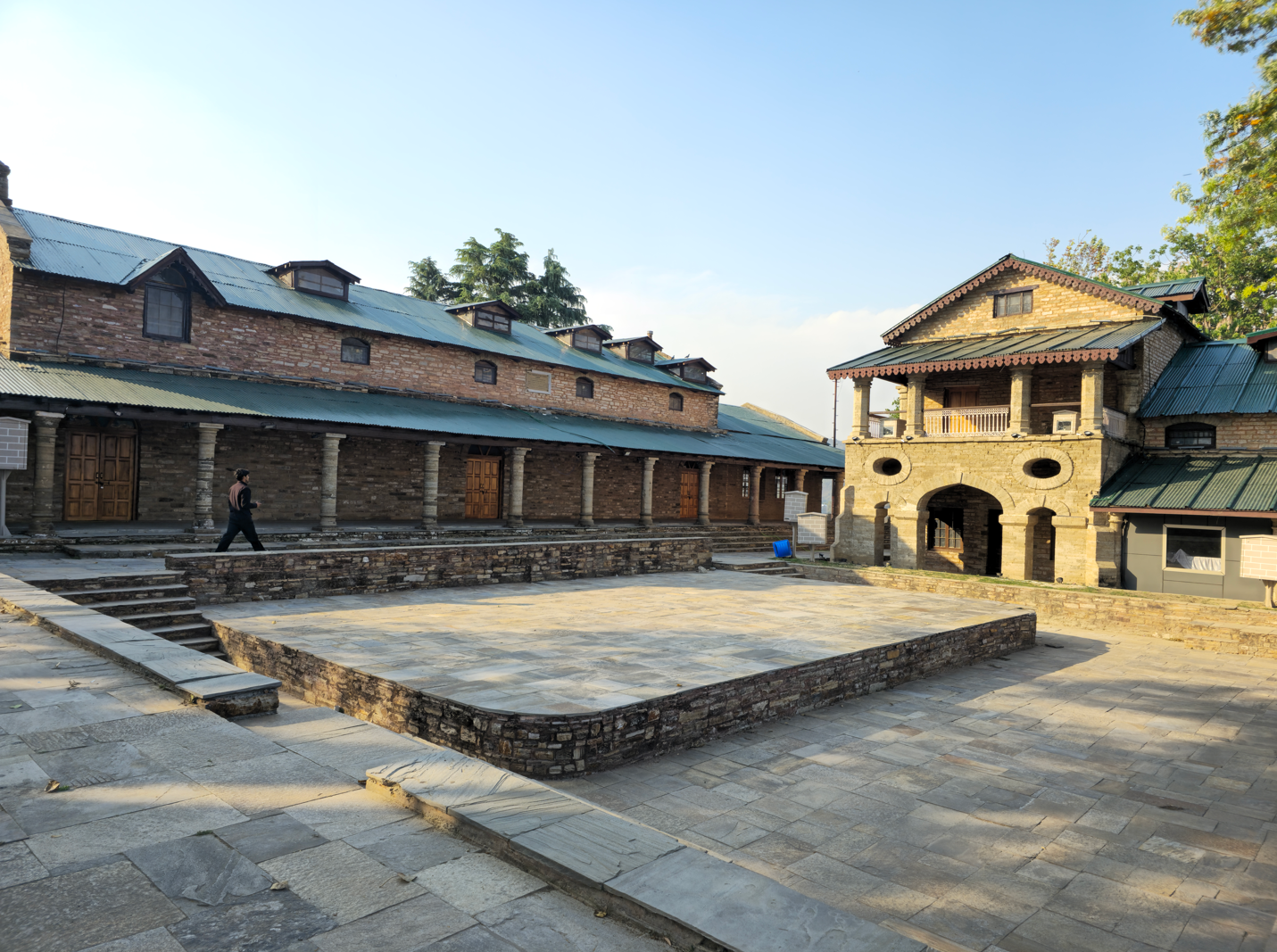
Malla Mahal, which served as the palace for the Chand Kings before becoming the administrative hub for Gorkha governance
Historian Ajay Kumar Singh Rawat, in his book Political History of Uttarakhand, notes that Almora’s documented history spans 236 years. During this period, the Chand kings shifted their capital from Champawat to Almora. After the defeat of Mahendra Chand, the Gorkha State ruled the region for about 25 years, governing through appointed representatives.
Following the conquest, Joga Malla was appointed the first Subba (administrative clerk-level position) to oversee administration. The Chand rulers had earlier built a grand palace for governance, named Malla Mahal. Under Gorkha rule, this same structure became the administrative headquarters. The stone-built palace still stands today, reflecting its historical grandeur.
From 1790 to 1815, the region remained under Gorkha control. Royal representatives and military officials operated from Malla Mahal, which has now been converted into a museum. Even today, stone pathways, traditional houses, and narrow lanes across Almora reflect the character of an old Nepali-style settlement.
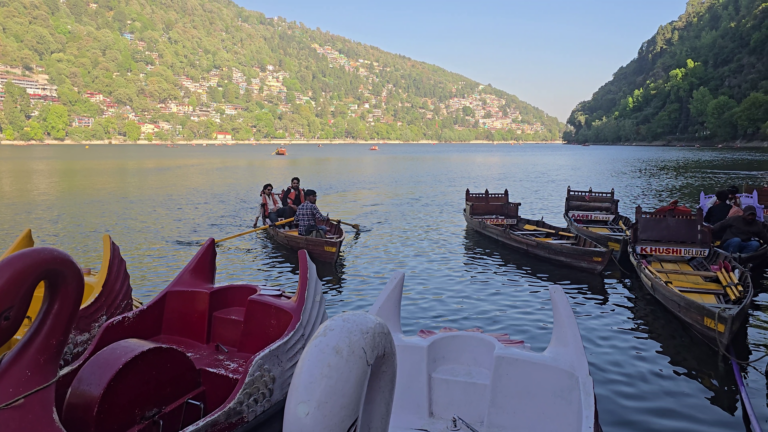
Nainital located in the Kumaon foothills of the outer Himalayas within the Uttarakhand state in northern India
The Gorkha administration ended after the Sugauli Treaty of 1816, following which many Nepalis returned home. However, traces of that shared history remain. Mahesh Dhami, a hotel worker in Almora, says the town’s architecture continues to preserve a Nepali feel, while museum official Mina Rawat notes that Nepalis still come for labor opportunities.
Cultural similarities in language, attire, and traditions have made Kumaon a familiar space for Nepalis. Historic sites have been preserved, transportation is accessible, and Almora’s scenic market view from Malla Mahal has turned it into a growing tourist attraction. With the Indian government promoting the area as a cultural city, rising tourism has also expanded job opportunities for Nepali workers.