Kathmandu
Saturday, June 13, 2026





With audiences embracing his standout performance in The Pyramid Scheme, Jhalanath Khatri discusses the road from Dang to the global streaming stage.
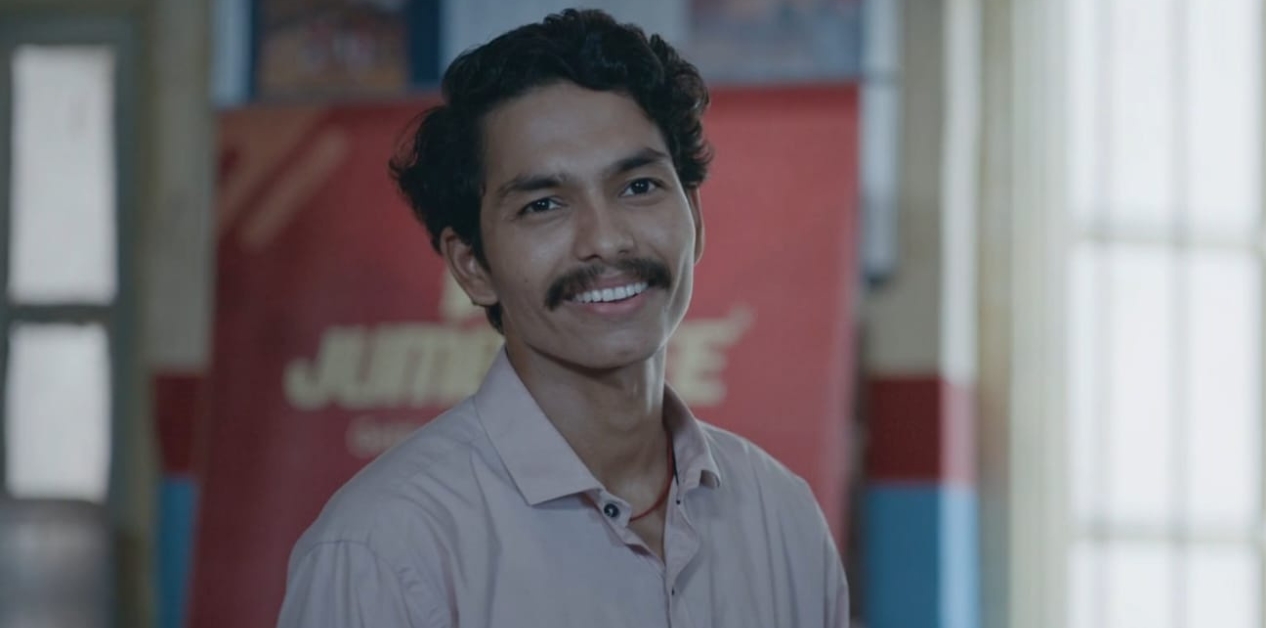
Nepal News Presents: Seven Questions with Jhalanath Khatri, a dedicated actor whose recent performance is drawing widespread attention across the digital streaming landscape.
The global streaming market is currently buzzing with the release of The Pyramid Scheme, a web series produced by The Viral Fever (TVF) and directed by Shreyansh Pandey and Ashish R. Shukla. Since its premiere on Amazon Prime Video on June 5, the series has rapidly climbed the charts to become a top trending sensation. While the production itself is garnering massive attention, it is the standout performance of a young Nepali actor that has truly captivated audiences.
He is Jhalanath Khatri, a committed artist who honed his craft in theater and street plays and is currently carving out his path in the highly competitive film industry of Mumbai. As his impactful portrayal of Ganesh earns widespread appreciation, Nepal News sits down with Khatri to discuss his inspiring transition from Dang to global streaming screens.
1. The web series you acted in, ‘The Pyramid Scheme,’ is being widely discussed and has even started trending. How does it feel?
I felt truly happy to see it at Trending Number 1. What brings me even more joy is that the audience has liked my character and is giving positive feedback. I have encountered people discussing my work during various meetings. Such responses make me experience the reality that art knows no boundaries.
It has also taught me another important lesson: one should never stop dreaming. I realize that anyone can go anywhere if they work honestly, no matter their background or language.
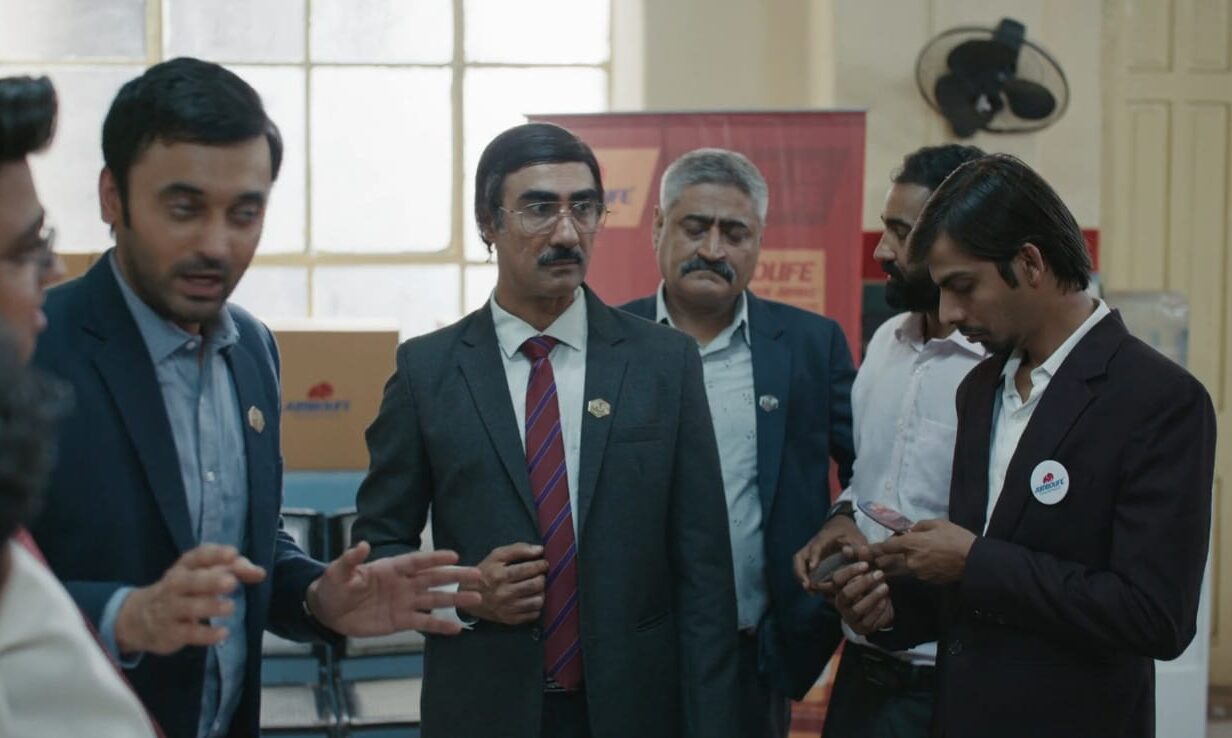
Jhalanath Khatri (first from right) in a scene from ‘The Pyramid Scheme’
2. You are seen in the role of the character Ganesh in the series. How important is this character’s role in the series? How long is Ganesh’s screen presence?
Ganesh is a young man who takes care of an elderly couple. Ganesh is the sole support system for the couple whose son and daughter-in-law live in Germany. They also love and trust Ganesh like their son.
The twist in the story occurs after Ganesh gets trapped in the web of the pyramid scheme, which leads to ups and downs in their relationship. As one of the important characters within the story, this character’s ‘character arc’ is meaningful. In terms of screen time, I have an appearance of 35 to 40 minutes in this series.
3. How did the journey from being a person from Dang to reaching Mumbai’s film industry shape up?
I have had a fascination for films and acting since childhood. In our village, scraping together Rs 2 or Rs 3 to go watch a movie was a big deal. Sometimes, I even stole money from home just to watch movies.
My father had a small mobile phone that could only record videos for 10 to 11 seconds. I started making movies in my own style by shooting tiny scenes on that phone and joining them together. After android phones arrived, I started making short videos with friends and preparing my own stories, influenced by the movies I watched.
Later, the family moved to Kathmandu. While leaving the village, I told my friends, “I will return to the village after learning filmmaking and make films in the village itself.” However, after arriving in Kathmandu, there was no financial capacity to study film or learn acting. My mother sustained the family by bringing vegetables early in the morning to sell on the street, working in the Singha Durbar canteen during the afternoon, and selling vegetables again in the evening.
Life became easier to sustain after we started running a small tea shop in Maitidevi, but the situation to study film was still not there. I used to collect goat fat to sell and receive a commission from it. During that time, I regularly read newspapers, film-related articles, and magazines.
At that time, theater was considered the main pathway to learn acting. After hearing about the National School of Drama in India, I began dreaming of reaching there. I saved the little money I earned and reached Delhi via Raxaul on May 26, 2018.
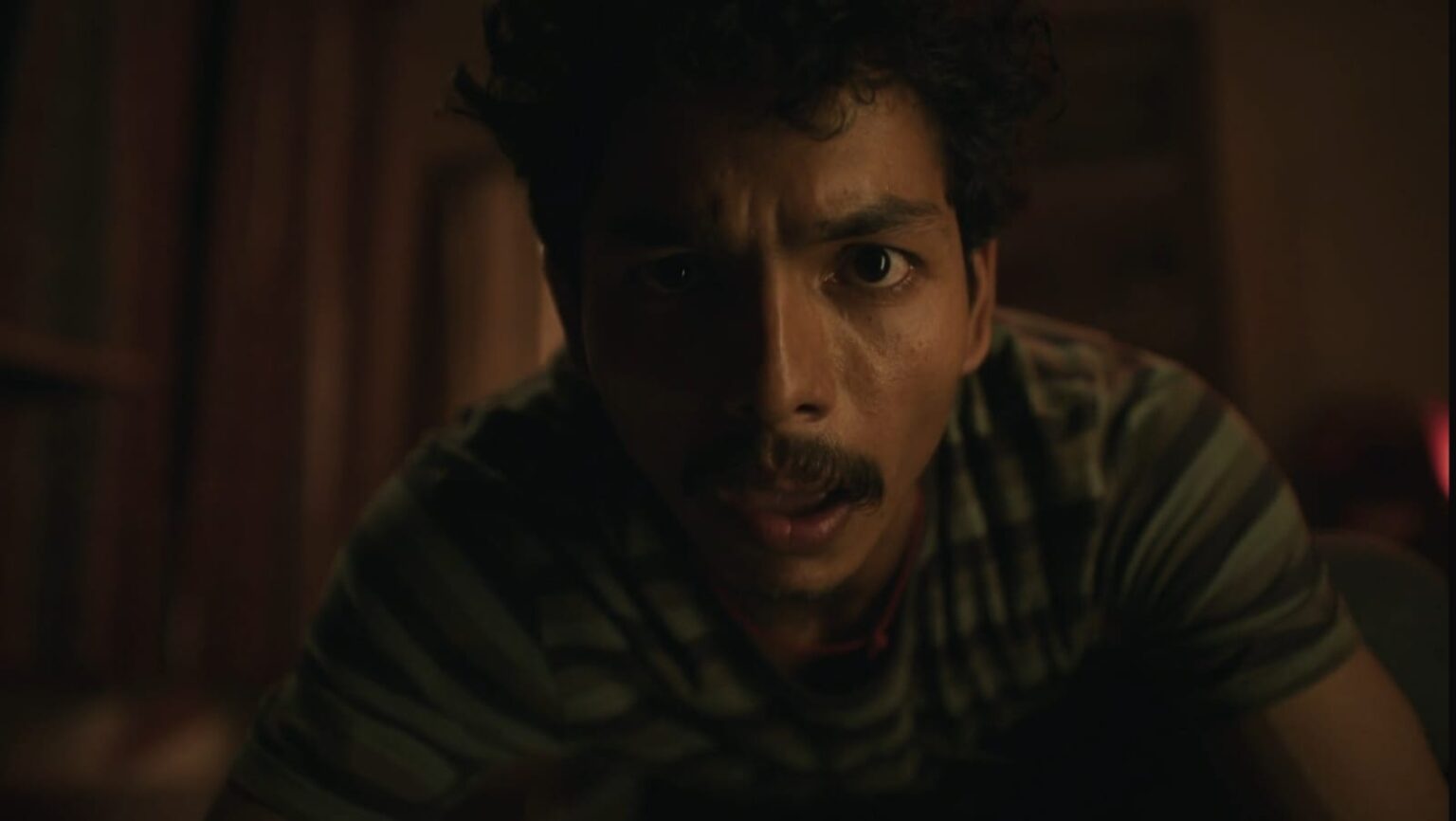
A scene from ‘The Pyramid Scheme’
I did not know Hindi well. To survive, I started working 12 hours a day in a hotel. One day, I found out about a workshop by the ‘Asmita Theater Group’ and participated. Working through the night and learning theater during the day became my daily routine. In that manner, I continued my acting practice doing theater, street plays, and various dramas.
I returned to Nepal during the lockdown. I started studying at the Oscar International College (College of Film Studies). Alongside my studies, I continued with short films, theater, and various creative works. After completing my studies, I reached Mumbai again. The competition there was massive. I gave various auditions, and at one point, the thought of ‘I will return to Nepal now’ had even crossed my mind. However, about one and a half months later, the news arrived that I was selected in an audition.
4. What was the most fun experience while working in ‘The Pyramid Scheme’?
The most fun aspect of working on The Pyramid Scheme was being associated with such a large project. The vanity van, organized team, excellent facilities, and staying in a five-star hotel were all things that were happening for the first time.
There is a scene in the series where my character is kicked out of the house. While preparing for that scene, I had genuinely started feeling the condition of my character. I began to feel as if I were truly kicked out of the house and had no one with me. That emotion had such a deep impact that I became very emotional during the filming of the scene.
5. What is the most significant feedback you received after the series was released?
The best feedback regarding my work is coming from directors, crew members, and casting directors. Many have openly praised me and expressed confidence that my future will be bright. However, the most important thing for me is my family’s happiness.
Specifically, my mother, father, and elder brother are very happy. The happiness reflecting on the faces of my family members is the biggest ‘compliment’ of my life.
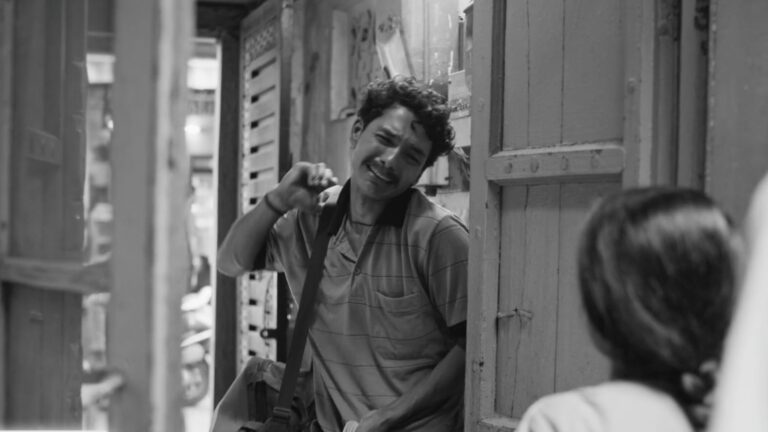
A scene from ‘The Pyramid Scheme’
6. What meaning does getting work under a big banner in India and gaining buzz from it hold for your upcoming artistic journey?
It certainly holds a huge meaning. It has made me understand that art can reach anywhere and the doors of possibility are always open for an artist.
I feel this is an opportunity that inspires many artists like me to keep dreaming. Regardless of our background, if there is continuous hard work and belief, one can take their art to any stage in the world. Perhaps I became an example of that myself!
7. What are your future plans and dreams?
Proposals for new projects are coming in. Some good projects are also arriving soon. Speaking of future plans, Nepali cinema is currently expanding into the international stage. As an artist, my biggest desire is to become a part of this journey. I wish to connect with films that introduce Nepal and bring Nepali stories and Nepali sensibilities to the world and contribute from my side, even if it is small.