Kathmandu
Saturday, June 27, 2026





From constitutional reform and anti-corruption measures to a borderless digital economy, hydropower expansion, education overhaul, and employment generation, the Government of Nepal’s Policy and Program for FY 2026/27 lays out an ambitious 100-point roadmap aimed at transforming the country’s governance, economy, and public service delivery under a newly elected majority government

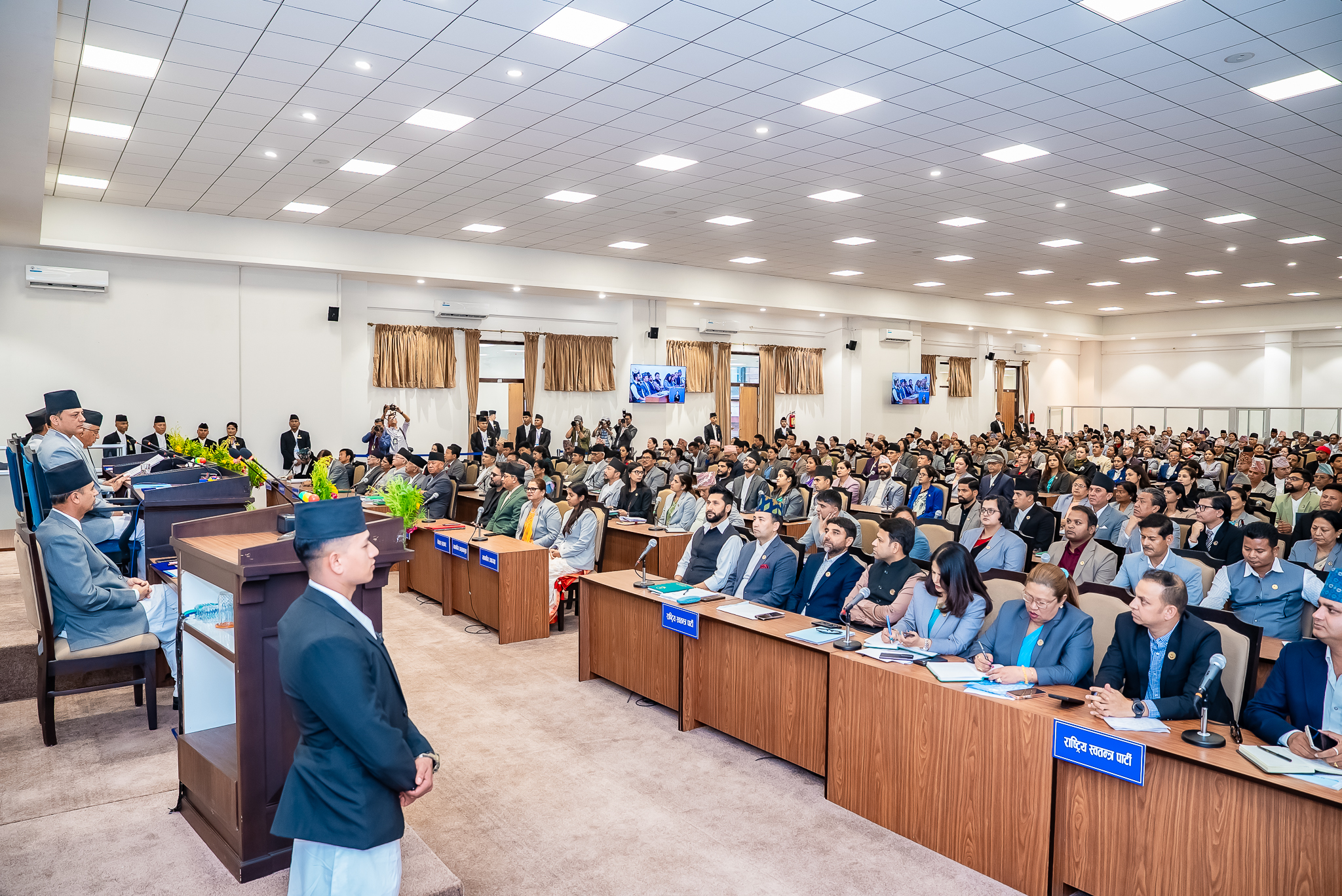
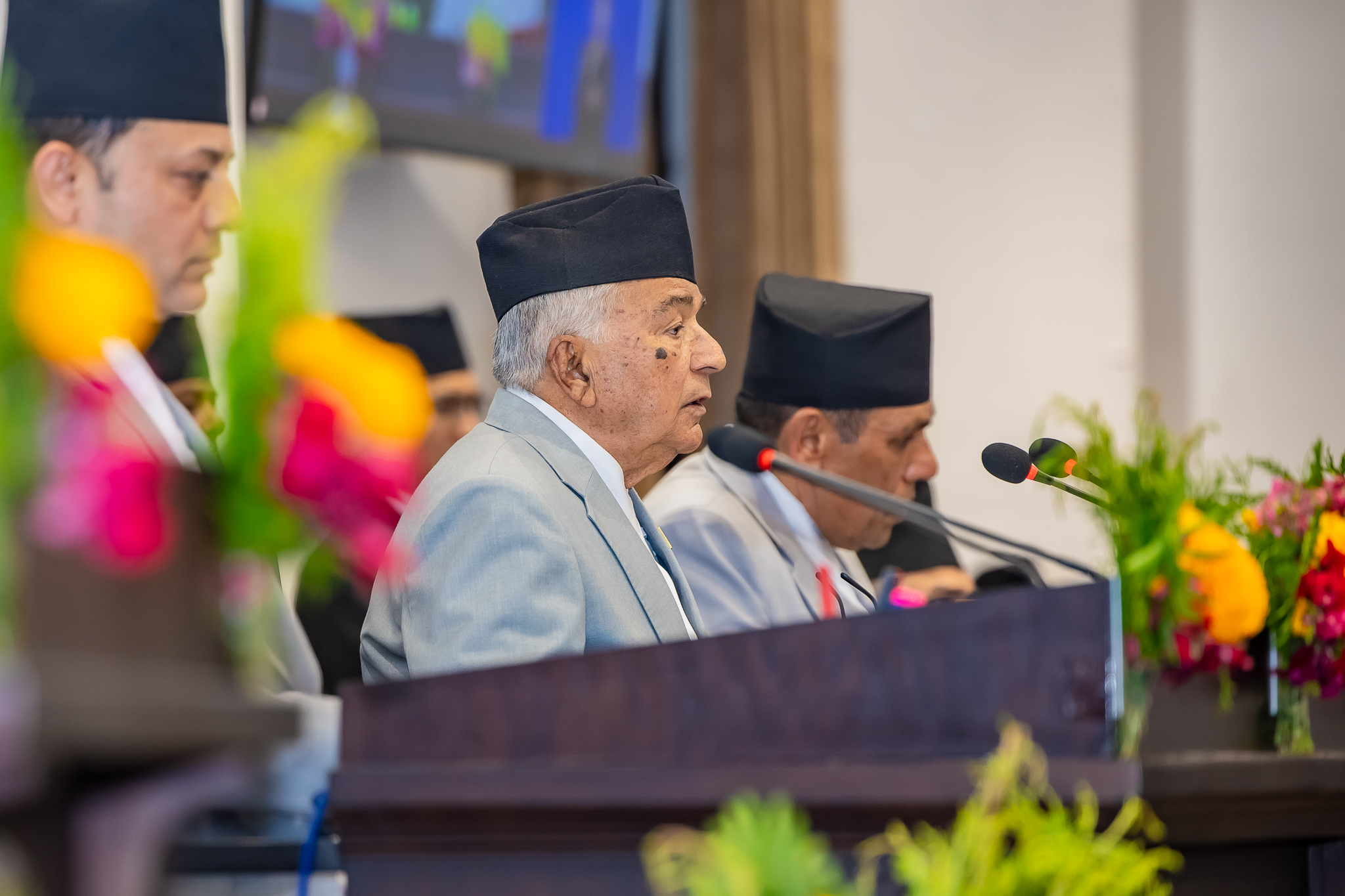
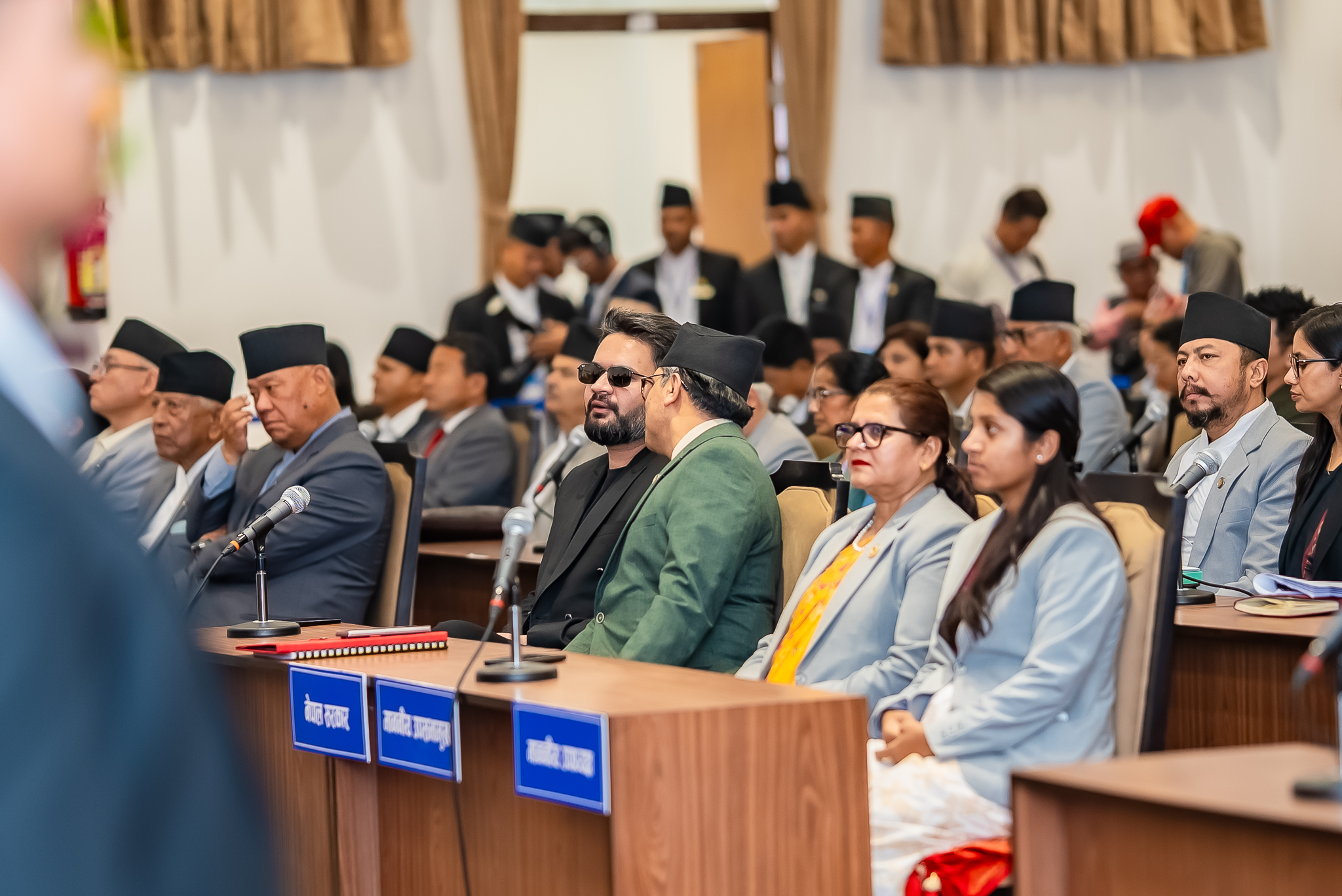
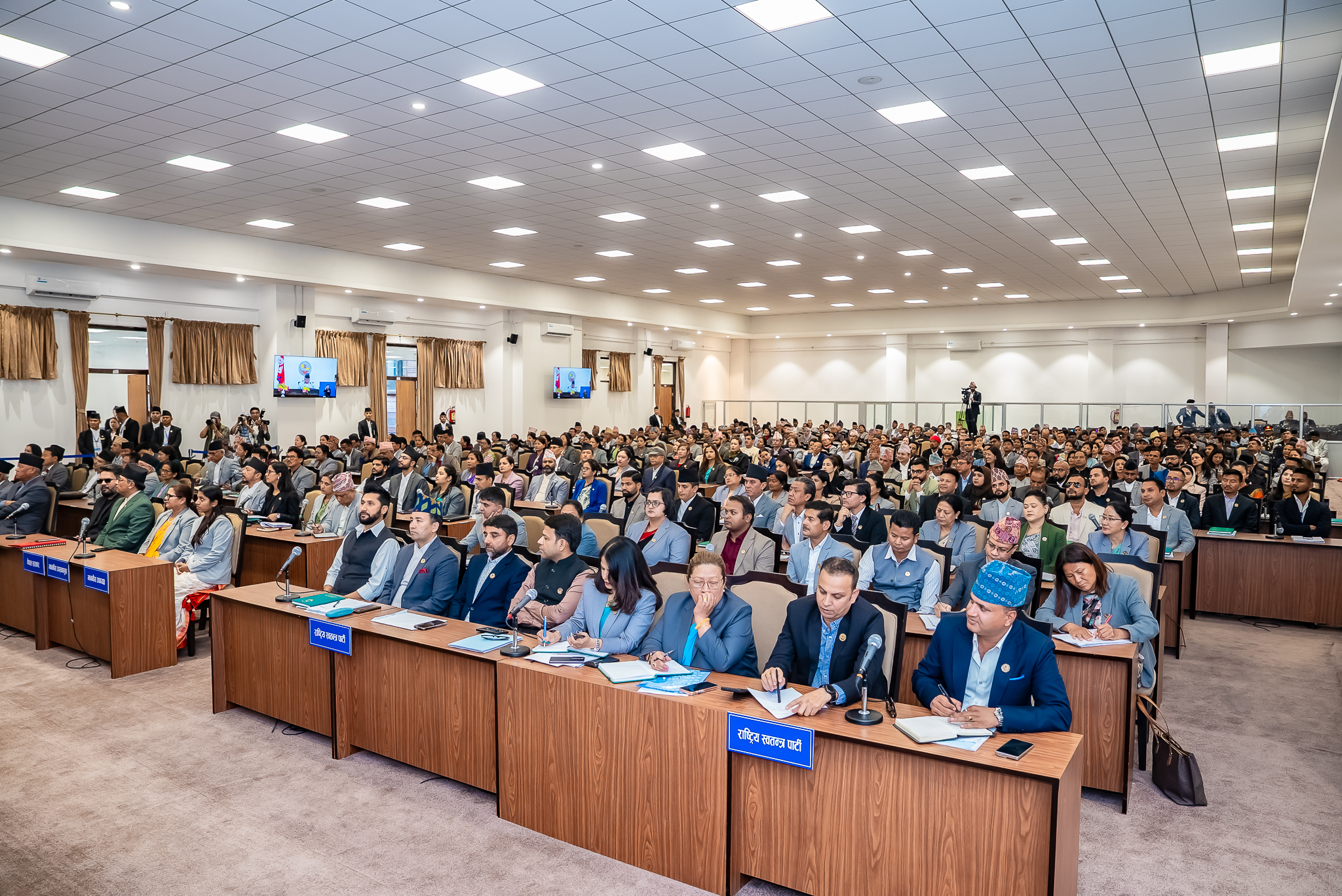
KATHMANDU: President Ram Chandra Paudel presented the Government of Nepal’s Policy and Program for the fiscal year 2026/27 before a joint session of the Federal Parliament on May 11, 2026, in accordance with Article 95 of the Constitution. The document serves as the government’s annual governance blueprint and forms the foundation for the upcoming national budget.
The policy document comes at a politically significant moment following the March 5, 2026 general election, which produced a clear parliamentary majority government after years of coalition instability.
It also arrives in the aftermath of the 2025 Gen Z protests, which the government describes as a historic uprising demanding civic supremacy, good governance, corruption control, accountability, and economic transformation.
Framed as both a constitutional obligation and a national reform agenda, the 100-point program outlines the government’s priorities across economic reform, digital governance, infrastructure, agriculture, hydropower, education, healthcare, tourism, foreign policy, anti-corruption efforts, and civil service restructuring.
What is this document, and what authority requires it to be presented to parliament?
The Government Policy and Program is the annual roadmap that every elected Nepali government is constitutionally required to present before the Federal Parliament. Under Article 95 of the Constitution of Nepal, the President must address a joint session of both the House of Representatives and the National Assembly at the commencement of the first session after a House of Representatives election and at the start of the first session of each subsequent year.
The document presented today by President Ram Chandra Paudel is therefore not merely a political statement — it is a constitutional obligation. It is the first such address by the government formed after the March 5 election, which delivered a clear mandate to Rastriya Swatantra Party.

The policy and program is the foundational document from which the annual national budget is subsequently prepared. It signals to parliament, citizens, investors, and development partners what the government intends to do across all sectors of national life in the coming fiscal year and the years ahead. Today’s address thus formally opens the government’s legislative and budgetary session.
How does the document open, and what moral framing does it set for the entire governance agenda?
The document opens with President Paudel expressing profound pride at addressing the joint session on behalf of the government formed with a clear mandate from the March 5 election. Before any policy point is stated, the text pays solemn and heartfelt tribute to the martyrs of Nepal’s democratic movements generally and, with particular emphasis, to the citizens and civil servants who gave their lives in the historic youth movement of September 8 and 9, 2025.
The document describes that uprising as a moment of “historic participation of youth” driven by aspirations for civic supremacy, freedom, good governance, corruption control, economic transformation, and accountable governance. Condolences are expressed to families of the fallen, and the government expresses its wish for swift and full recovery for all those wounded.
The text then states explicitly that the sacrifice of these martyrs will be permanently honored through result-oriented governance. This moral framing is not decorative — it places the entire 100-point agenda under a specific obligation: that every policy commitment is the government’s answer to the aspirations that drove citizens to sacrifice their lives. Accountability is thus framed not merely as administrative virtue but as a debt owed to the dead.
What is the government’s commitment regarding political stability and constitutional amendment?
Point 1 of the policy establishes political stability as the foundational condition for all national transformation. The document notes that the formation of a government with a single-party majority in the House of Representatives after the election is a historic opportunity for policy clarity, good governance, and transformational reform.
The government commits to treating good governance as the cornerstone of a prosperous Nepal and to pursuing zero tolerance toward corruption, improvement in public service delivery, economic revival, and social progress as a campaign-level national mission.
On the politically sensitive question of constitutional amendment, the document takes a carefully consensus-oriented approach. Rather than using its majority to act unilaterally, the government commits to holding dialogue with all political parties to identify common issues requiring amendment, and to prepare a formal “Constitution Amendment Work Plan” based on those shared findings.
The government will also ensure full implementation of the 100-point governance reform agenda already launched. This combination — using parliamentary strength for reform while pursuing constitutional change through consensus — defines the political character of the entire policy document.
What economic growth ambition does the policy set, and what structural reforms will support it?
Point 2 sets the headline economic ambition: achieving an average real GDP growth rate of seven percent annually over the next decade as the path to graduating Nepal to middle-income country status. To achieve this, the government launches what it calls a “New Phase of Economic Reform Series” encompassing major legal and institutional changes.
The specific measures identified are reducing production costs, simplifying the business environment, removing policy and legal obstacles, and creating a foundational restructuring of economic incentives to attract domestic, foreign, and diaspora investment.
Crucially, the policy commits to establishing an institutional mechanism capable of maintaining stable, long-term, and predictable economic policy — so that investment decisions are not disrupted by political changes.
A capable institutional coordination system will ensure continuity of national development priorities across planning selection and implementation. Sector-specific policies will be formulated and implemented for all priority sectors.
This combination of growth targets, structural reform, and institutional continuity represents a deliberate departure from the short-term, politically driven economic management that has characterized previous governments.
How does the policy plan to formalize the economy and reform the tax system?
Points 3 and 4 together outline a comprehensive transformation of Nepal’s fiscal and economic transaction architecture. All economic transactions will be brought onto a cashless digital platform to create a transparent, politically neutral economy — eliminating the opacity of cash transactions that has long enabled tax evasion and corruption.
The tax structure will be reviewed to reduce the burden on entrepreneurs and middle-class families. Voluntary tax compliance will be promoted through taxpayer-friendly revenue administration and a fast-track tax dispute resolution system, so that businesses are not trapped in prolonged litigation.
The government will expand double taxation avoidance agreements with more countries. Scattered levies including pollution charges and surcharges will be gradually converted into a single unified Green Tax system.
Controls on counterfeit goods at customs checkpoints will be tightened. All tax refund systems — including VAT — will be fully automated and made strictly time-bound, removing the discretion that currently makes refunds slow and prone to manipulation.
These reforms together aim to make Nepal’s revenue system genuinely enterprise-friendly while simultaneously closing the avenues that have historically enabled evasion, smuggling, and corruption.
What does the policy say about cooperatives, financial integrity, and the capital market?
Points 5 and 6 address two related financial sector challenges. On cooperatives, the government commits to full compliance with international anti-money laundering standards through risk-based regulation, supervision, and prosecution.
The capacity of the National Cooperative Regulation Authority will be strengthened for proper governance and management of the sector. To directly address the cooperative depositor crisis — where thousands of small depositors have been unable to recover their savings — a unified “Depositor Protection Fund” will be established.
Recovery from defaulters will be actively pursued and proceeds used to refund depositors. A debtor information system will control excessive lending, deceptive practices, and financial crime. On the capital market, NEPSE and the clearing system will be structurally reformed.
Institutional investors — pension funds, insurance companies, mutual funds, and non-resident Nepalis — will be brought into the market to deepen liquidity and stability. New financial instruments including a debt market, bond market, infrastructure bonds, and risk management tools will be developed to build long-term capital.
These twin commitments address both the immediate crisis of broken public trust in cooperatives and the longer-term structural weakness of Nepal’s shallow capital market.
What is the government’s vision for infrastructure financing and public expenditure management?
Points 7 and 8 together address how development projects will be financed and managed differently from the past. On financing, the government commits to mobilizing alternative development finance, diaspora capital, and concessional investment to fund infrastructure through new models.
Transformative projects will have clear targets, fixed costs, and hard deadlines — and crucially, project heads will not be transferred or reassigned until a project is completed. Progress will be tracked digitally. This directly targets Nepal’s chronic problem of officials rotating away from projects before accountability can be established.
On public expenditure, Point 8 commits to making all public spending result-oriented. Public institutions will be systematically classified and then directed toward merger with other institutions, partnership with the private sector, strategic partnership arrangements, or outright divestment as appropriate.
This rationalization of public institutions — which have proliferated and drained public resources for decades — is a significant governance commitment. Together these two points signal an intent to fundamentally change how public money is spent and how projects are delivered, moving from process compliance to outcome accountability.
What is the “Borderless Economy” strategy, and what sectors are named as economic engines?
Points 9 and 10 represent a philosophical shift in Nepal’s economic strategy. The government formally adopts “Borderless Economy” and “Tariff-Free Trade” as national economic strategies. The document identifies five primary engines of economic transformation: information technology-based service exports, hydroelectricity, tourism, high-value agriculture, and green industrialization.
These five sectors will be developed as the foundational pillars of economic transformation. Equally important is Point 10’s explicit commitment to moving the economy away from its current dependence on labour exports — where economic growth is driven primarily by remittances from Nepali workers abroad — toward a knowledge, services, digital trade, remote work, and value-added services economy. International payment gateways will be given legal recognition to facilitate digital transactions in foreign currency.
Export competitiveness will be improved through market diversification, an integrated trade strategy, and an industrial logistics master plan. This naming of sectors and the explicit rejection of remittance dependence as a sustainable model gives the economic strategy a clarity and honesty that is rare in Nepali government documents.
What specific measures does the policy take to attract investors and simplify business registration?
Points 12 and 13 contain some of the most operationally specific investment promotion commitments in the document. An “Investment Express” policy will be implemented under which the entire process from company registration through to construction permit can be completed within a single day — a dramatic simplification of what currently takes months or years.
The Foreign Investment Act will be amended to expand automatic approval routes, removing layers of discretionary bureaucratic gatekeeping. A “Nepal Investment Visa” will be provided to investors who invest above a government-set threshold, giving serious foreign investors a formal, facilitated pathway.
Special Economic Zones will be expanded, and “Industrial Villages” with shared infrastructure will be established for multiple industries. IT parks, agricultural production centers, and innovation-based industrial zones will be developed and linked to industrial tourism.
A “Startup Nepal Portal” will provide same-day access to company registration, tax exemption, and seed capital through a single window, lowering the barrier to entrepreneurship for young Nepalis. The IT sector specifically will be declared a national strategic industry and given financial support, investment facilitation, government co-investment, and tax incentives for research and innovation.
What are the main commitments to reviving agriculture and supporting farmers directly?
Points 14 through 17 represent a comprehensive agricultural revival agenda. The government commits to two-sided investment supporting both production and market access. The most direct and measurable commitment is in Point 15: minimum support prices for major crops will be fixed before the planting season — not after — and payments will be made directly into farmers’ bank accounts digitally, eliminating the middlemen who have historically captured much of the benefit.
Companies and cooperatives procuring at minimum support price will receive government subsidies, and the Food Management and Trading Company will be strengthened. Point 16 commits to establishing public-private agriculture companies and cold chain networks to reduce post-harvest losses — a critical problem given that a large portion of Nepal’s agricultural production is lost before it reaches market.
International quality standards and certification will be developed for identified export products, with laboratories at border and market points for pesticide testing. Point 17 tackles fallow land by activating a land bank system to channel unused land toward young people, women, and marginal farmers, alongside promotion of contract farming, cooperative farming, and agro-forestry systems.
What does the policy commit to for the forestry sector and human-wildlife conflict?
Points 21 through 25 set out a detailed forestry agenda that treats forests as both economic assets and ecological necessities. Sustainable forest management will develop timber, herbal medicine, carbon trading, tourism, and forest-based industries to increase the forest sector’s measurable contribution to the national economy.
Non-timber forest products will be prioritized for processing, value addition, and export. Grassland development and forest-based livelihoods will be promoted. Specific plant species within forests — will be utilized by local communities and the private sector to produce organic compost, bricks, and biochar, generating income at community level.
A “Nepal Carbon Authority” will be established and the REDD-Plus carbon credit program expanded, with community forest user groups receiving direct benefits from carbon credits rather than having those benefits absorbed by intermediaries.
A “Forest Fire High Alert Center” will be established with continuous monitoring using drones and satellites. On human-wildlife conflict — a serious and growing problem in communities bordering forests and parks — the government commits to compensation, early warning systems, preventive structures, translocation, relocation, and alternative crop promotion to protect both communities and wildlife.
What is the energy sector’s ten-thousand-megawatt target and how will it be achieved?
Point 29 sets Nepal’s most ambitious energy commitment: achieving ten thousand megawatts of electricity production within the next decade. To make this achievable, laws governing energy, forest, land, and environment will be reformed simultaneously and a single-window clearance system established — directly addressing the multi-ministry bottleneck that has historically delayed hydropower projects for years.
A landmark policy innovation is the commitment that citizens in project-affected areas will be offered equity shareholding in projects instead of cash compensation, building community ownership and reducing the resistance and delays caused by compensation disputes.
Points 30 and 31 extend the energy agenda: private sector participation in hydropower generation, transmission, distribution, and trade will be guaranteed. Energy-based industries will be promoted to grow domestic consumption dramatically, making hydropower commercially viable without depending entirely on export contracts.
Off-grid solar, wind, and micro-hydro systems will be expanded to areas not yet connected to the national grid. Green hydrogen, green ammonia, and chemical fertilizer industries will receive tax and customs exemptions, subsidized electricity tariffs, capital incentives, and investment-friendly policies. Commercial hydrogen infrastructure for the transport sector will be initiated as a forward-looking measure.
What are the employment and labour market commitments, and what is the Employment Promotion Decade?
Points 41 through 44 contain some of the most politically significant commitments in the document. The headline announcement is in Point 44: the government will formally declare the period from FY 2026/27 through to 2035/36 — an entire decade — the “Employment Promotion Decade,” signalling that the transformation of Nepal’s labour market from foreign-employment dependence to domestic opportunity is a multi-year national project, not a single-budget promise.
A new National Employment Policy will integrate skills, education, labour market information, social security, and employment services into a unified system. A national apprenticeship program based on “Learn While You Earn” will be launched.

A “Remote Work Policy” will provide legal recognition for Nepalis working for foreign employers from within Nepal — formalizing a fast-growing reality. Returning migrant workers will receive a digital “Skill Passport” that documents their international experience and links it to internationally recognized vocational certification, making their skills legible and bankable at home.
A “Remittance-Investment Matching Fund” will channel remittances from consumption toward productive investment. Workers going abroad will have dedicated banking and service access, and a unified incentive package will encourage reverse migration.
What does the policy say about education reform at the school and university levels?
Points 45 through 48 address education comprehensively across all levels. Free education up to secondary level will be guaranteed, and free textbooks, midday meals, and school uniforms will be distributed — making the cost of keeping children in school negligible for poor families.
Curriculum at all levels will be reviewed to make it current, practically useful, and employment-oriented, moving away from rote learning. Long-term investment in public education will increase and private institutions will be regulated for quality and service orientation rather than pure profit.
E-learning, virtual classrooms, open digital content, and AI-based learning systems will be expanded, with ten thousand community schools receiving high-speed internet, digital content, and AI-based learning infrastructure.
Higher education governance will be reformed to align universities with labor market needs. Teacher recruitment, promotion, and evaluation will be made merit-based and transparent, with proper remuneration and professional development ensured, and an outstanding teacher incentive program launched.
Children with autism and neurodiversity will receive therapy, assistive technology, specially trained teachers, and inclusive school systems. All scholarships across all programs will be merit-based and disbursed directly into students’ bank accounts through a digital system.
What health system reforms are proposed, and what new institutions will be created?
Points 55 through 59 build a comprehensive health reform architecture. A “minimum standard” will be established and applied to basic health services nationwide, guaranteeing every citizen access to integrated services with the right personnel, medicines, equipment, and infrastructure at local level.
Community health workers and female health volunteers will be expanded in numbers, capacity, and service range. The health insurance program will be restructured for sustainability.
A telemedicine platform will bring specialist consultation to remote area citizens who currently have no such access. Two entirely new national institutions will be created: a “Center for Disease Control” for disease surveillance and epidemic response, and a “National Health Accreditation Authority” for healthcare quality assurance.
A “minimum standard” will be established and applied to basic health services nationwide, guaranteeing every citizen access to integrated services with the right personnel, medicines, equipment, and infrastructure at local leve
A federal-level “National Biomedical Research Laboratory” will be established for biological research and epidemic control capacity. Mental health will be integrated as a core component of public health, not treated as a marginal issue, with a national mental health policy implemented. Yoga, meditation, and community health programs will be expanded.
Advanced disability rehabilitation centers will provide prosthetics, physiotherapy, and specialized services, integrated down to local government level.
What does the policy commit to on clean water, sanitation, and river restoration?
Points 60 through 62 address water and sanitation with a firm deadline. By 2030, all citizens will have access to clean drinking water and basic sanitation — a target that requires coordinated action across all three levels of government.
Large pending water supply projects will be completed quickly. In the Terai-Madhesh region specifically, arsenic-free water systems, deep boring, and surface water infrastructure will be developed to address the severe arsenic contamination problem.
Sewage management systems will be upgraded to maintain river cleanliness. Water quality testing laboratories and systematic regular testing will be established to maintain public confidence in drinking water quality. Nepal’s water identity will be developed through the “Himalayan Origin Certified Water” branding concept.
Large cities including the Kathmandu Valley will receive integrated sewage treatment plants, with processed wastewater reused for irrigation and industry rather than discharged into rivers.
Water quality testing laboratories and systematic regular testing will be established to maintain public confidence in drinking water quality.
The Bagmati and other rivers will be restored to environmental health. Groundwater recharge, rainwater harvesting, reservoir-based projects, and spring conservation will be prioritized as climate adaptation measures.
What road, transport, and urban infrastructure priorities are identified?
Points 63 through 70 cover infrastructure across roads, transport, housing, and urban development. The Hulaki, Pushpalal, and North-South highway networks will be upgraded and expanded rapidly, and the Kathmandu-Terai-Madhesh Fast Track expressway completed as a priority.
All local governments will be connected to year-round road access. Electric mass rapid transit will be developed. Public transport and road laws will be revised. A reformed contracting system with strict engineering standards will be applied to large projects.
A unified National Transport Master Plan integrating road, rail, water, ropeway, and air will be prepared. GPS tracking, AI traffic cameras, digital traffic management, and strict speed controls will reduce road accidents.
Studies on Kerung-Kathmandu and Raxaul-Kathmandu railway corridors will advance.
Pedestrian and cycling infrastructure will be built and safe public transport access for women ensured. Kathmandu’s Bus Rapid Transit design and implementation will formally begin.
Studies on Kerung-Kathmandu and Raxaul-Kathmandu railway corridors will advance. On urban development, integrated waste management systems will be developed. Affordable housing programs will serve homeless, marginalized, and disaster-affected communities.
New towns along the Mid-Hill Highway will be identified and developed. The National Building Code will be mandatorily implemented for all new constructions with earthquake-resistant and fire safety standards.
What does the policy commit to on disaster preparedness and public procurement reform?
Points 71 and 72 address two critical operational failures of previous governments. On disaster management, the policy shifts from a reactive to a preparedness-oriented approach. Risk mapping, early warning systems, and disaster safety drills will be institutionalized.
An integrated Nepal Army, Nepal Police, and Armed Police Force Command system will be developed for search and rescue operations. Drones, helicopters, and modern technology will be deployed in partnership with the private sector for emergency response.
This systematic approach to preparedness — embedding early warning and response capacity into institutions rather than improvising after each disaster — represents a significant policy evolution. On procurement, Point 72 addresses the deeply entrenched problem of public budget execution.
A “Zero-Day Procurement Policy” will require procurement processes to begin from July— the start of the fiscal year — rather than concentrating expenditure in June, the final month. Detailed project reports, environmental clearances, and land acquisition must all be completed before budget approval is granted.
Open competitive procurement will apply to large purchases. Together these two points target governance failures that have cost Nepal enormously in both lives and public money.
How does the policy plan to transform digital governance and public service delivery?
Points 73, 74, 79, 93, and 94 collectively construct a digital governance architecture aimed at eliminating the human discretion that enables corruption and delays in public services.
A National Digital Infrastructure will be established with a central government cloud and a National Data Policy. AI, data analytics, cybersecurity, and digital technology will be used to drive innovation and develop a knowledge-based economy. Telecommunications frequency management and monitoring systems will be strengthened.
Remote areas will receive expanded digital connectivity to reduce the digital divide. An e-KYC system will enable digital verification across banking, telecommunications, and public services. An interoperable government database will be built on the principle of “one document for all services,” meaning a citizen submits their information once and it is used across all agencies.
AI, data analytics, cybersecurity, and digital technology will be used to drive innovation and develop a knowledge-based economy.
At least 100 government services will be accessible through a unified “Citizen App.” Every public service will have a legally mandated time limit, and officials will be automatically held accountable for violations.
A “One Identity Card Policy” will link the national ID with citizenship, banking, health, education, and social security services. Single Service Centers will operate seven days a week at all government offices.
What are the anti-corruption and accountability measures in the policy?
Points 95 and 96 address corruption directly and institutionally. The Commission for Investigation of Abuse of Authority will be institutionally strengthened, with its investigation, prosecution, and accountability systems made more effective.
The National Vigilance Centre will be restructured as a dedicated “Anti-Corruption Unit.” A system for protecting and rewarding whistle-blowers who report corruption will be formally established — giving citizens a safe mechanism to expose wrongdoing.
High-ranking officials will be required to publicly declare their assets annually, making wealth accumulation visible and subject to public scrutiny. Public procurement, revenue administration, and bureaucratic processes will be made transparent, technology-driven, and competitive to reduce human discretion at every point.
The National Vigilance Centre will be restructured as a dedicated “Anti-Corruption Unit.”
A Citizen Trust and Governance Perception Index will be developed using digital audit systems to identify high-risk corruption areas and enable preventive action before corruption occurs.
These measures, taken alongside the civil service reforms in Points 91 and 92, form a comprehensive anti-corruption architecture that works simultaneously from the top — public asset declarations by officials — and from the bottom — citizen whistleblower protection and digital service automation.
What civil service reforms does the policy commit to, and how will bureaucracy be depoliticized?
Points 91 and 92 are among the most detailed and structurally significant in the entire document. They directly confront Nepal’s deeply entrenched problem of partisan capture of the civil service.
The government commits to abolishing party-linked trade unions within the civil service, establishing strict conflict-of-interest regulations, implementing a performance indicator-based evaluation system, instituting mandatory cooling-off periods before officials can move between sensitive roles, and — most strikingly — making permanent disqualification from government service the consequence for any official found to have participated in political party activities. Departmental and project heads will face quarterly performance evaluations.
An ethics testing mechanism will be established. Underperforming officials will be placed on a formal negative list. A performance-based incentive system will reward strong civil servants. A Civil Service Board will be reformed to oversee these changes.
Point 93 reinforces this through technology: a single interoperable government database on the “one document for all services” principle will reduce the human gatekeeping that has enabled partisan and corrupt manipulation of service delivery for decades.
What does the policy say about women, children, persons with disabilities, and social inclusion?
Points 50 through 54 address social inclusion as a governance priority, not merely a welfare measure. The economic, social, and political empowerment of women, children, senior citizens, persons with disabilities, sexual minorities, and all targeted groups is given explicitly high priority, with rights-based development ensured through effective implementation of international commitments.
Zero tolerance toward all forms of gender-based violence is declared, and a campaign will be launched to end discrimination and harmful cultural practices through social transformation.
Violence victim-centred service systems will be strengthened with rescue, legal aid, rehabilitation, and social reintegration. Two commitments stand out for their specificity: first, Nepal will be declared child-labor-free within the current fiscal year — an ambitious timeline that will be closely watched; second, a “Child-Responsible Budget Code” will be applied across all three tiers of government, meaning every level of government must account for how its spending affects children.
Persons with disabilities will receive entrepreneurship and employment skills training for self-reliance, and all public infrastructure will be made fully disability-friendly. NGO-channelled investment will be directed toward national priority areas.
What are the tourism development commitments, and what is the “Dev Bhumi Nepal” campaign?
Points 36 through 40 present a multi-layered tourism strategy that combines infrastructure, digital systems, cultural promotion, and community-level participation.
Aviation infrastructure will be expanded, international airports modernized, and diplomatic efforts made to attract more airlines to Gautam Buddha and Pokhara International Airports. All tourist permits, approvals, and services will be integrated into a single digital system at immigration — eliminating the current fragmented and time-consuming process.
A pre-preparation campaign for “Visit Nepal 2028” will be launched internationally to grow arrivals, per-tourist spending, and average stay duration. The “Dev Bhumi Nepal” national campaign will position Nepal as a global spiritual tourism destination, developing religious, cultural, wellness, educational, film, spiritual, and leisure tourism products.
Pashupatinath, Lumbini, Janakpur, and Muktinath circuits will be specifically promoted through Spiritual Pilgrimage Diplomacy. At the community level, at least five thousand new homestay units will be created and linked to international booking platforms under the “Nepal Homestay” brand.
Karnali, Sudurpaschim, Madhesh, and Koshi provinces will receive special priority for new destination development and at least ten new trekking routes will be identified across all geographic zones.
What is the foreign policy direction of this government as stated in the document?
Points 86 through 90 outline a foreign policy built on Nepal’s foundational diplomatic principles. The government commits to basing its foreign policy on the United Nations Charter, the principles of Non-Alignment, and Panchasheel — placing sovereignty, territorial integrity, and national interest explicitly at the centre of all diplomatic decisions.
Relations with neighboring and friendly nations will be developed on the basis of mutual benefit, mutual respect, and bilateral cooperation. Nepal’s cultural identity, language, arts, and heritage will be projected internationally as soft power, and a “Brand Nepal Campaign” will be run through foreign missions to promote Nepali goods, services, culture, and tourism globally.
Traditional diplomacy will be transformed into economic diplomacy, with Nepal positioned as an international destination for IT, innovation, education, and health tourism. Foreign investment will be promoted in tourism infrastructure, energy, and IT. Consular services will be fully digitalized.
A 24-hour “Central Response Unit” will be established at the Ministry of Foreign Affairs, with rescue teams at missions to protect Nepalis abroad. A “Diaspora Expert Network” and “Knowledge Bank” will connect the Nepali diaspora’s capital, skills, experience, and technology with national development.
Non-resident Nepali investment will be facilitated with legal protection, easy financial access, and reliable profit repatriation.
How does the document conclude, and what does Point 100 say about the purpose of governance?
Points 99 and 100 together constitute the concluding philosophical statement of the entire document and deserve careful reading. Point 99 states that national resources, means, and equity will be justly mobilized to ensure social justice, equitable opportunity, and rapid economic development through accountable governance — anchored in the ruling party’s election manifesto and the shared commitments of major political parties.
This is a rare explicit linking of governance accountability to election promises, creating a measurable standard for the government to be held to. Point 100 makes the most sweeping claim in the document: that political stability — established through the trust and sovereign participation of the Nepali people — must be treated as a rare and precious opportunity for comprehensive national transformation.
Accountable governance will build citizen trust in the state. Result-oriented, citizen-centered governance will be institutionalized not merely as policy but as national culture. And the strengthening of the Federal Democratic Republican governance system will be the government’s overarching guiding principle.
This final point frames the entire 100-point agenda not as a list of government programs but as a civilizational project—the building of a state that Nepali citizens can genuinely trust and be proud of.