Kathmandu
Sunday, July 12, 2026





A dead telecom company’s towers and equipment have sparked a major governance controversy in Nepal. A bank CEO was arrested, a telecom chairman remains in custody, and a former communications minister is under political pressure. At the center of the dispute is a key question: who owned SmartCell’s assets when they were sold to Ncell for Rs 4.6 billion?
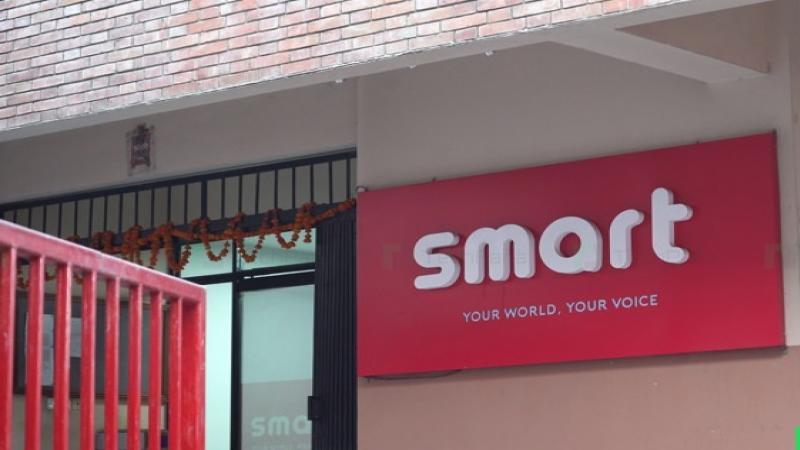
KATHMANDU: SmartCell, the mobile brand of Smart Telecom Private Limited, was Nepal’s third mobile operator, established in 2008 and granted a unified telecom license in 2013. It expanded 4G services across 19 districts but spent years drowning in regulatory dues and bad debt.
By April 2023, the company had piled up roughly Rs 30 billion in unpaid fees to the Nepal Telecommunications Authority, covering license renewal, frequency charges, royalties, and fines. When it could not pay even in installments, the NTA revoked its license and declared all of Smart’s infrastructure, towers, networks, and equipment as state property.
What should have ended there became the starting point of a scandal that has since pulled in a bank CEO, a telecom chairman, two auction-related operatives, a former minister, and Nepal’s most powerful private telecom company.
What Is SmartCell and why does it matter to ordinary Nepalis?
SmartCell was the commercial name under which Smart Telecom Private Limited operated its mobile services in Nepal. The company was founded in 2008 during a period when Nepal’s government was actively encouraging private players to break the duopoly that Nepal Telecom enjoyed. Smart Telecom received a basic telephone services license and later an integrated or unified license in 2013, which gave it permission to operate across the country using both 2G and 4G technology.
At its peak, the company had covered 19 districts with 4G service and 26 additional districts with 2G coverage, making it genuinely accessible to a wide swath of the population, particularly in areas where the two dominant operators had thinner networks. It had over 2.4 million subscribers on its 4G network alone, which was a meaningful number for a country Nepal’s size.
The company positioned itself as an affordable alternative, drawing in price-sensitive users who could not afford Ncell’s premium plans or did not want to depend on the often-congested Nepal Telecom network. For those users, SmartCell’s collapse in 2023 was an abrupt loss of service without compensation or transition.
More broadly, SmartCell’s failure eliminated the only competitive pressure in a market now back to a two-operator structure, which has significant long-term implications for pricing, service quality, and the prospects of 5G deployment in the country.
How did Smart Telecom’s license get cancelled and what led to that point?
Smart Telecom’s fall was not sudden. It was the slow accumulation of financial mismanagement, regulatory evasion, and failed negotiations stretched across years. The company received its unified operating license from the Nepal Telecommunications Authority on April 15, 2013. Under Nepal’s Telecommunications Act of 1997, all operators are required to renew their licenses periodically and pay all associated regulatory obligations, including license renewal fees, frequency charges, royalties, and administrative fines.
Smart Telecom had been defaulting on these obligations for years before the final cancellation. The NTA had actually initiated cancellation proceedings as far back as July 2019, but the company successfully obtained a court-issued stay order that temporarily blocked that decision. That legal protection eventually ran its course.
By early 2023, with dues accumulating well beyond Rs 30 billion and the company making no credible progress toward clearing even a fraction of it, the NTA issued final warnings and offered the company one last chance to pay in installments. Smart Telecom could not meet even that reduced obligation.
The license was automatically revoked in April 2023 under the clear provisions of the Telecommunications Act, which holds that failure to renew a license results in its automatic expiry. The NTA formally announced the cancellation and declared the company closed as a telecom service provider, leaving its millions of subscribers without services and its massive infrastructure sitting idle and technically now in government hands.
What happened to Smart Telecom’s assets after the license was cancelled?
The legal consequences of the license cancellation were supposed to be clear. Nepal’s Telecommunications Service Provider Asset Management Regulation of 2022, a bylaw promulgated specifically to handle situations like this, is explicit about what follows when a telecom company’s license lapses. All physical assets of the company, including its towers, base stations, data centers, office equipment, network infrastructure, and telecommunications systems, are to come under the control of the Nepal Telecommunications Authority and effectively become state property.
The NTA issued a public notice in May 2023 formally declaring that all of Smart Telecom’s physical assets had come under government ownership as a direct consequence of the license revocation. The authority then formed a five-member asset management committee, headed by then NTA board member Gokarna Mani Sitaula, to oversee the transition and eventually arrange for the auction or reallocation of the company’s assets and license through a transparent global tender process. That process, however, moved at a glacial pace.
The committee remained largely inactive for months due to internal disagreements, including one member refusing to participate. No proper valuation was completed for an extended period. No global tender was called. The government’s inaction over two-plus years created a vacuum that, investigators now allege, was exploited by the bank to conduct its own auction of assets the state had already claimed.
How much did Smart Telecom owe the banks, and which institutions were involved?
While Smart Telecom was racking up unpayable dues to the government, it was simultaneously borrowing heavily from the commercial banking sector. The company used its telecom infrastructure, towers, network equipment, and systems as collateral to raise capital for its expansion and operational needs.
A lending consortium led by Nepal Investment Mega Bank (NIMB) and Prime Commercial Bank extended a combined credit exposure of approximately Rs 5.2 billion to Smart Telecom through various instruments, including letters of credit used to import telecom equipment, overdraft facilities, and both short-term and long-term loans.
NIMB was the lead institution in this consortium and held the largest share of the exposure. When Smart Telecom stopped servicing its debt obligations, the bank’s outstanding claim stood at around Rs 3.95 billion. On the government side, the company owed the NTA over Rs 30 billion in regulatory dues, and investigators additionally found that the company had at least Rs 700 million in unpaid government revenue obligations separate from license fees.
The collision between the bank’s loan recovery rights and the government’s ownership claim over the same assets is the legal fault line running through this entire controversy. Investigators have also raised concerns that some portions of the bank’s lending may have been extended without adequate collateral verification, a line of inquiry that remained open at the time the arrests were made.
How did Ncell end up buying the assets of a company whose property belonged to the government?
This is the question at the heart of the scandal. After Smart Telecom’s license was cancelled in April 2023 and the NTA declared its assets state property in May 2023, the question of how to dispose of those assets properly lingered unresolved for over two years.
The government’s asset management committee met rarely and moved slowly. No global tender was called. Meanwhile, NIMB, sitting on a bad loan of nearly Rs 4 billion, decided to act on its own. In August 2025, more than two years after the NTA had taken formal control of Smart Telecom’s assets, NIMB published a public notice announcing a 35-day window for loan recovery through an auction of the assets Smart Telecom had pledged as collateral.
A second notice was published in September 2025. Former Smart Telecom chairman Sarvesh Joshi sent a letter to the bank on September 5, 2025, agreeing in writing to allow the company’s assets to be sold for loan recovery purposes. The auction was eventually conducted on October 6, 2025.
Three companies participated. Tansgate submitted a bid of Rs 442 million. Professional Business Network bid Rs 425 million. Ncell submitted an offer of Rs 4.60 billion, dramatically outbidding the others. NIMB accepted Ncell’s bid and transferred the assets, recovering its outstanding loan of roughly Rs 3.95 billion from the proceeds. The transaction was completed. The state had received nothing.
Why do investigators consider the auction illegal?
The CIB’s legal argument rests on two layers. The first is the NTA’s Asset Management Regulation of 2022. Rule 6(2) of that regulation expressly prohibits a telecom company from pledging, mortgaging, selling, or otherwise transferring ownership of any assets that are destined to become government property at least three years before its license expires, without the prior approval of the NTA.
Rule 3 goes further and states that any such transaction conducted in violation of these provisions is automatically void. Since Smart Telecom’s license had already lapsed in April 2023 and the NTA had formally declared all assets state property in May 2023, the CIB argues that the bank’s auction in October 2025 was not merely procedurally irregular but fundamentally null and void from the start, because it involved assets that had already transferred to a different legal owner.
The second layer is the National Criminal Code of 2017. The CIB has charged the accused under provisions related to fraud and criminal breach of trust, arguing that the auction was conducted with full knowledge that the assets belonged to the state, and that the deliberate intent to deprive the government of its rightful claim constitutes criminal conduct.
The bank’s counter-argument draws on Section 57 of the Secured Transactions Act, which grants financial institutions the right to auction pledged collateral to recover loans when borrowers default, stating this right prevails regardless of other prevailing laws. This clash between two legal frameworks has not been adjudicated by a court, and its resolution will set a precedent with nationwide implications.
Who is Sarvesh Joshi and why was he arrested?
Sarvesh Joshi is the man who built and ultimately presided over the collapse of Smart Telecom. He served simultaneously as both chairman and managing director of Smart Telecom Private Limited, giving him singular authority over the company’s decisions at every stage of its troubled existence. He is 45 years old and a resident of Khursanitar in Kathmandu Metropolitan City Ward 2.
The CIB arrested him on May 4, 2026, from his Khursanitar residence, acting on an arrest warrant issued by the Kathmandu District Court. He was the first major figure taken into custody in this case. Investigators focused on Joshi early because the paper trail pointed directly at him.
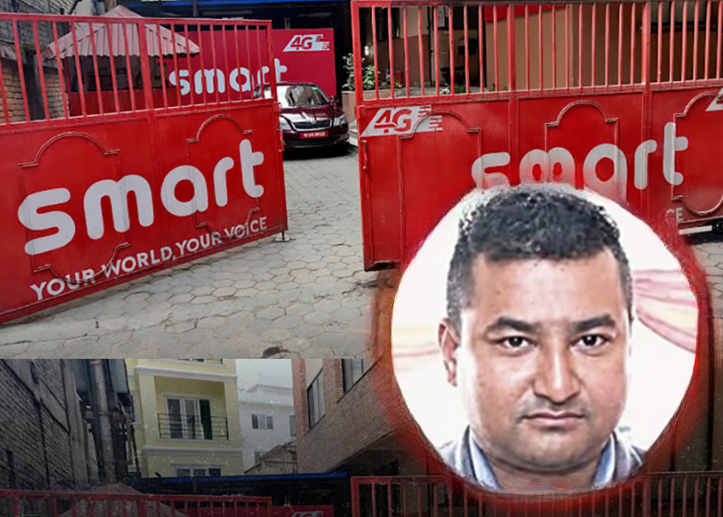
On September 5, 2025, two years after the NTA had formally declared Smart Telecom’s assets as state property, Joshi wrote a letter to Nepal Investment Mega Bank explicitly requesting that the bank proceed with auctioning the company’s assets to recover its outstanding loans.
The CIB’s position is that this letter was not a routine banking communication but a deliberate act of facilitating the transfer of government-owned property to a private party with full knowledge that those assets no longer belonged to Smart Telecom or its former management.
That intent, investigators argue, is what makes it criminal under the National Criminal Code’s fraud and criminal breach of trust provisions. Joshi’s arrest signaled that the investigation was serious and expanding.
Who is Jyoti Prakash Pandey and what was his role in the auction?
Jyoti Prakash Pandey is the chief executive officer of Nepal Investment Mega Bank. He is 63 years old, originally from the Raktakali area of Kathmandu and resident of Manbhawan in Lalitpur. He is the most senior banking official to be arrested in Nepal in recent memory and his detention sent a visible tremor through the country’s financial establishment.
Pandey was arrested on the night of May 12, 2026, from Kamalamai Municipality Ward 6 in Sindhuli district after the CIB tracked him down following reports that he had switched off his phone and was apparently attempting to avoid contact. The Sindhuli District Police Office assisted in the operation and he was subsequently brought to Kathmandu for investigation.
The CIB’s case against Pandey rests on his institutional role. As NIMB’s CEO and the chairman of the bank’s loan recovery committee, he was the person with ultimate authority over the decision to publish the auction notice, proceed with the bidding process, accept Ncell’s bid, and execute the transfer of assets. Investigators allege that Pandey did all of this with full awareness that the NTA had already declared those assets to be government property in May 2023, more than two years before the auction he authorized.
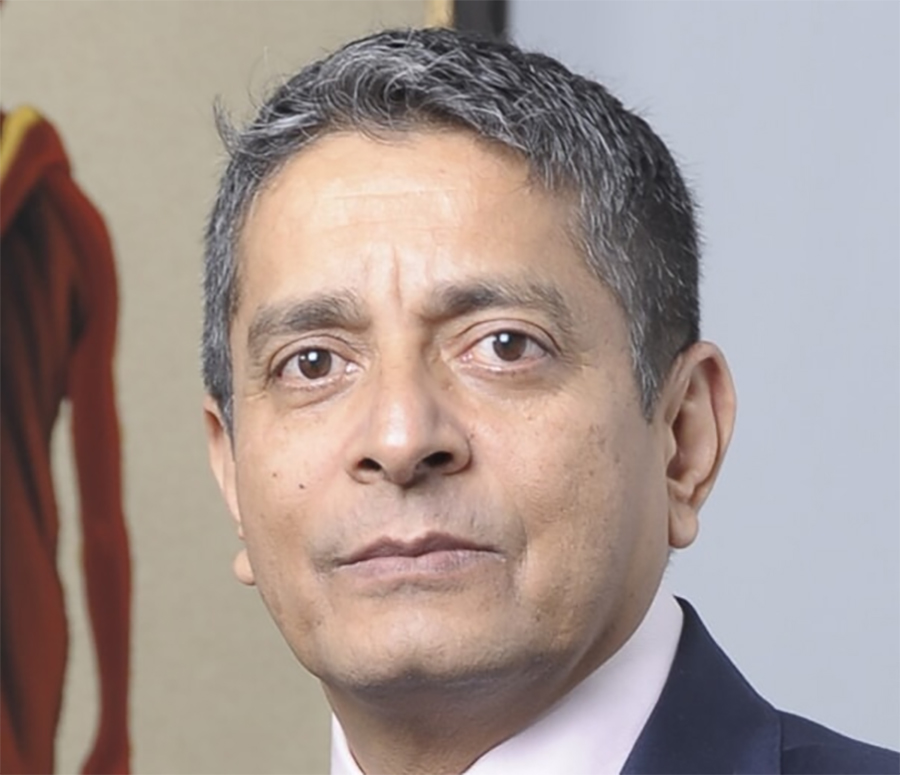
The charge against him is fraud and criminal breach of trust under the National Criminal Code of 2017, the same provisions applied to Joshi. After his arrest, NIMB issued an official statement asserting that the bank had operated entirely within the legal framework of the Bank and Financial Institutions Act of 2017 and the Secured Transactions Act of 2006.
Who else has been arrested and how wide has the investigation spread?
The CIB’s net has been widening steadily. Beyond Sarvesh Joshi and Jyoti Prakash Pandey, two more individuals were arrested on May 9, 2026. Palina Shrestha, a 55-year-old woman residing in Jhamshikhel, Lalitpur Metropolitan City Ward 3, and Narendra Ulak, originally from Panauti in Kavrepalanchok district and currently living in Tokha Municipality Ward 7, were both taken into custody.
The CIB confirmed that both are accused of direct involvement in the illegal auction of assets that the NTA had already seized from Smart Telecom. AIG of the CIB, Manoj KC, confirmed their arrests to the media. The specific roles of Shrestha and Ulak in the auction process have not been fully detailed in public statements, but investigators have characterized their involvement as active participation in a process designed to sever the government’s ownership rights over state property.
Beyond the four arrests, the investigation has reportedly expanded to examine the financial arrangements within NIMB more broadly. Sources indicate that investigators found indications that loans worth more than four billion rupees may have been disbursed without adequate collateral verification.
Investigators have also indicated that another commercial bank may have had involvement in the broader financial arrangements. No formal charges related to that angle of inquiry had been announced as of mid-May 2026, but the direction of the investigation suggests more arrests or charges cannot be ruled out.
What is Nepal Investment Mega Bank’s defense against the charges?
Nepal Investment Mega Bank has not accepted the CIB’s framing of events and has issued a formal clarification disputing the narrative around its CEO’s arrest. The bank’s defense is built on a specific reading of Nepal’s banking and secured transactions law.
The core argument is that Section 57 of the Secured Transactions Act of 2006 gives banks and financial institutions the explicit authority to recover their principal and interest by auctioning assets pledged as collateral, regardless of what any other law says, when a borrower defaults on their obligations.
The bank points out that it followed due process: it issued a 35-day public notice in September 2025 before proceeding with the auction, giving all interested parties including the government adequate time to raise any legal objection. It also notes that no court had issued any order prohibiting the auction at any point.

The bank argues that the money it lent to Smart Telecom came from public depositors, not institutional shareholders, and that failing to recover those funds would directly harm ordinary Nepalis whose savings were at stake. Banking sector observers have added that if the government’s interpretation prevails in court, it will create serious uncertainty for the entire lending ecosystem.
Banks that have extended credit to airlines, energy companies, hydropower projects, and other firms operating under government licenses could find that their collateral has no legal value the moment a license lapses, which would make lending to licensed industries far riskier and far more expensive, ultimately raising costs for businesses and consumers alike.
How did former communication minister Jagdish Kharel end up at the center of a telecom scandal?
Jagdish Kharel is one of the more unusual figures to emerge from Nepal’s Gen Z political moment. Born on August 6, 1982, he spent roughly 16 years as a television journalist before entering politics, becoming widely recognized as the host of a confrontational interview program in which he grilled senior politicians with the kind of directness rarely seen on Nepali television.
His public persona was that of an outsider holding power to account, which made his entry into government a point of curiosity for many. After the Gen Z protests of 2025 triggered major political changes and led to the formation of an interim government under Prime Minister Sushila Karki, Kharel was appointed Minister for Communications and Information Technology, a role he held from September 22, 2025, to January 19, 2026.
His appointment was unexpected, and reports at the time noted that youth activists who had driven the political movement had not formally backed his nomination. His brief tenure as minister is precisely the period during which the disputed auction of Smart Telecom’s assets played out.
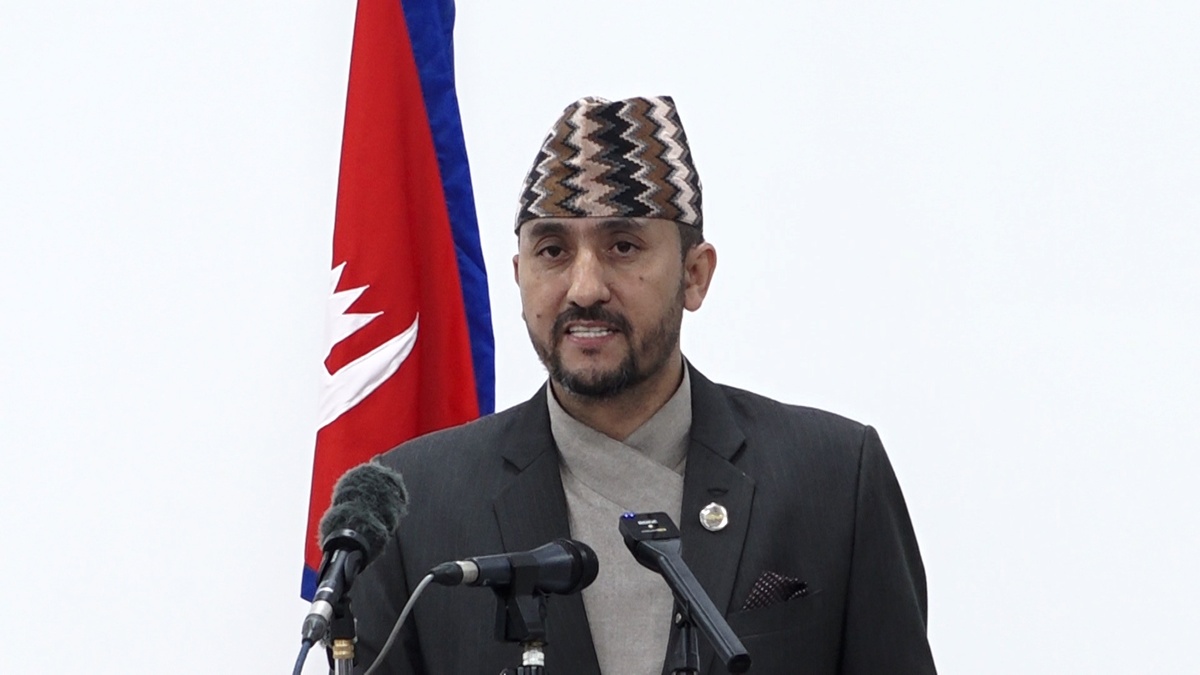
Jagdish Kharel/ File photo
NIMB published the auction notice in September 2025, Sarvesh Joshi’s consent letter was submitted in September 2025, and the auction was conducted in October 2025. All of this happened while Kharel was the cabinet minister responsible for overseeing Nepal’s entire telecommunications sector, including the NTA. That chronological overlap is what placed his name in the public domain.
What specifically are the accusations against Kharel?
Kharel has not been formally charged or arrested. The accusations against him have come through media reporting, social media commentary, and political debate rather than through any official legal proceeding.
The core suspicion is that as the minister with direct responsibility for the NTA and Nepal’s telecom policy, he either failed to act or actively chose not to act when the bank was publicly announcing and then proceeding with an auction of assets that the NTA had already declared state property two years earlier.
The NTA’s August 2025 public notice by the bank was publicly available. The government’s own position that those assets belonged to the state was on record. Critics ask why the ministry issued no legal challenge, no court petition, and no directive to halt the process during the weeks and months it was unfolding openly.
Some media reports went further, alleging that Kharel had some role in facilitating or enabling the transaction, though no documentary evidence of this has been presented publicly. Reports also alleged that Kharel had traveled to Switzerland while the controversy was building, which some interpreted as flight.
Additionally, the timing of the NTA’s failure to assert its ownership more forcefully has been questioned, with some commentators suggesting that political pressure from within the ministry may have contributed to the authority’s passivity.
The broader suspicion, circulating particularly on social media, was that the asset transfer to Ncell was engineered with political protection, and Kharel’s name became the shorthand for that suspicion given his ministerial position at the time.
How did Kharel respond to the accusations and what steps has he taken?
Kharel’s response has been vigorous on every available platform. His first public statement came through a Facebook post issued while he was in Switzerland, where he characterized the reports linking him to the SmartCell scandal as fabricated, deliberately misleading, and designed as a targeted political hit on him personally and on his party, the Rastriya Swatantra Party.
He insisted that he had traveled to Switzerland for a pre-scheduled official program, that he had informed both the Speaker of the House and RSP party chair Rabi Lamichhane before departing, and that there was nothing secretive or suspicious about his travel. He said he had done nothing wrong and had no reason to be afraid, inviting anyone to investigate him freely.
When he returned to Nepal, he raised the matter himself on the floor of the House of Representatives during an emergency session, making a formal statement in parliament. He stated categorically that during his entire tenure as communications minister, he never held a single meeting with any representative of Smart Telecom and never touched a single file related to the company.
He called media reports linking him to the Rs 30-billion fraud case so baseless and irresponsible that he refused to dignify them with a detailed rebuttal, calling one particular story something not even worthy of being called journalism of any grade.
He then issued a direct challenge: if anyone could prove he had attended one meeting, signed one file, or taken one action related to Smart Telecom during his ministerial tenure, he would permanently retire from political life.
He also filed formal complaints against Rajdhani Daily with the Press Council of Nepal and the Cyber Bureau of Nepal Police, accusing the paper of publishing false and defamatory content, and indicated he was considering legal action against social media platforms that had spread similar claims.
What does this case reveal about the conflict between banking law and government ownership in Nepal?
The SmartCell controversy has forced into the open a serious and previously unaddressed contradiction at the heart of Nepal’s regulatory framework. On one side stands the Secured Transactions Act of 2006, which gives commercial banks the explicit right to auction pledged collateral to recover loans when borrowers default, with language suggesting this right supersedes other laws.
On the other side stands the Telecommunications Service Provider Asset Management Regulation of 2022, which says that the assets of a company whose license has lapsed automatically become state property and that any transfer of such assets is void from the moment the license expires.
These two frameworks have never been tested against each other in Nepal’s courts, and the SmartCell case is forcing that test. The broader significance goes well beyond telecom. Nepal has dozens of industries where companies operate under government-issued licenses and simultaneously borrow from commercial banks using their licensed assets as security.
This includes hydropower projects, airlines, internet service providers, and energy companies. If the courts rule in favor of the government’s position, every bank in Nepal that has lent money to a licensed company will need to reconsider the true legal value of its collateral.
If the courts side with the banks, the government’s ability to enforce its ownership over assets of failed regulated companies becomes legally precarious. Either way, the ruling will reshape how lending, regulation, and government ownership interact across Nepal’s entire economy for years to come.
What was the government’s own failure in handling Smart Telecom after 2023?
Even those most critical of the bank’s conduct in this case acknowledge that the government’s handling of Smart Telecom after taking control of its assets in 2023 was deeply problematic. The NTA formed an asset management committee but it met infrequently and accomplished little. One member of the committee refused to participate, leaving the body incomplete and largely non-functional.
The process of valuing Smart Telecom’s assets, which should have been the first step before any auction or reallocation, was delayed by months. The global tender that was supposed to be called to attract international investors to buy Smart’s assets or license was announced in principle but never actually launched. This paralysis extended over two full years, from April 2023 to well into 2025.
During that entire period, thousands of SmartCell subscribers remained without service, Smart Telecom’s infrastructure sat idle and depreciating, and the government’s Rs 30-billion claim against the company remained unrecovered. The regulatory vacuum that resulted from this inaction is precisely the space the bank’s auction moved into.
Critics point out that if the government had acted efficiently and transparently, called a proper global tender, and sold Smart Telecom’s assets or license through a legitimate process in 2023 or 2024, the Rs 4.6 billion that Ncell paid to the bank would have gone into the state treasury, providing some partial recovery of the enormous dues the company owed. Instead, the money went to a private bank, the state recovered nothing, and now a criminal investigation is the only mechanism by which the government is attempting to reassert its claim.
Where does the case stand now and what happens next?
The SmartCell scandal is moving on multiple tracks simultaneously and none of them have reached their conclusion. On the criminal track, four people are in custody as of mid-May 2026: Sarvesh Joshi, the former chairman and managing director of Smart Telecom; Jyoti Prakash Pandey, the CEO of Nepal Investment Mega Bank; Palina Shrestha; and Narendra Ulak.
All four are being investigated by the CIB for fraud and criminal breach of trust under the National Criminal Code of 2017. The CIB has indicated that the investigation continues and that additional figures may be implicated as the inquiry proceeds into the financial arrangements surrounding the loan and the auction.
On the legal track, the fundamental question of whether the bank had the right to auction assets that the NTA had declared government property has not yet been adjudicated by any court. That ruling, when it comes, will establish a binding precedent affecting banking and regulatory practice across the country.
On the political track, Jagdish Kharel remains in public scrutiny but faces no formal legal proceedings. He has filed complaints against media organizations he accuses of defamation and has offered a standing challenge to anyone who can prove his involvement.
Whether the CIB’s investigation expands to encompass the ministry’s conduct during his tenure is the political variable most closely watched.
Nepal’s telecom sector, meanwhile, continues to operate as a two-player market, with Nepal Telecom and Ncell as the only active operators. Ncell now holds the infrastructure it acquired through the disputed auction, and that asset remains the subject of an active criminal investigation into how it changed hands.