Kathmandu
Thursday, July 2, 2026





The draft law replacing the three-decade-old Water Resources Act would place a restructured Water and Energy Commission at the centre of how Nepal shares, licenses and protects its rivers, groundwater and dams, while forcing federal, provincial and local governments to work from a common rulebook
KATHMANDU: The government has registered a bill to amend and consolidate Nepal’s water resources laws, meant to replace the Water Resources Act, 1992. Framed around integrated, multi-purpose development, equitable benefit-sharing, inter-generational equity and disaster risk reduction, the bill folds the long-standing Water and Energy Commission into statute, sets a national water-use hierarchy, and introduces new chapters on water accounting, groundwater recharge, environmental flows and dam safety.
What exactly is this bill trying to achieve?
The bill is officially described as legislation to amend and integrate Nepal’s scattered water resources laws into a single framework named the Water Resources Act 2026. Its preamble sets out multiple goals at once: protecting and developing water resources for many purposes simultaneously, reducing risks from water-induced disasters, ensuring the benefits of that development are shared fairly, preserving the natural character of rivers and aquifers, keeping them free of pollution, and guaranteeing that both present and future generations can draw value from the same resource.
In effect, the drafters are trying to replace a narrower, decades-old statute with a more comprehensive instrument that can govern everything from a single household tube well to a multi-billion-rupee hydropower reservoir under one coherent legal umbrella, rather than through a patchwork of separate rules, executive orders and commission mandates that have accumulated since the early 1990s.
Why does Nepal need to replace the Water Resources Act of 1992 now?
The existing 1992 law was written before federalism restructured Nepal’s governance, before the current wave of hydropower investment, and before climate-driven hazards such as glacial lake outburst floods and erratic monsoons became central planning concerns.
The Water and Energy Commission itself has functioned since the 1970s largely through government decisions and administrative orders rather than a dedicated act, meaning its authority has rested on a shifting institutional foundation rather than durable legislation.
Provincial and local governments, which now have constitutional roles in irrigation, small hydropower and drinking water, have lacked a single statute clarifying where their jurisdiction ends and federal authority begins. The new bill is designed to close these gaps by giving the commission statutory footing, spelling out a three-tier division of authority in schedules attached to the law, and adding modern regulatory tools such as water accounting and water audits that did not exist in the earlier framework.
Who legally owns Nepal’s water resources under the bill?
The bill declares that ownership and authority over water resources located within Nepal rest with the Nepali state itself, a continuation of the public-ownership principle found in the earlier law. However, it carves out two important exceptions.
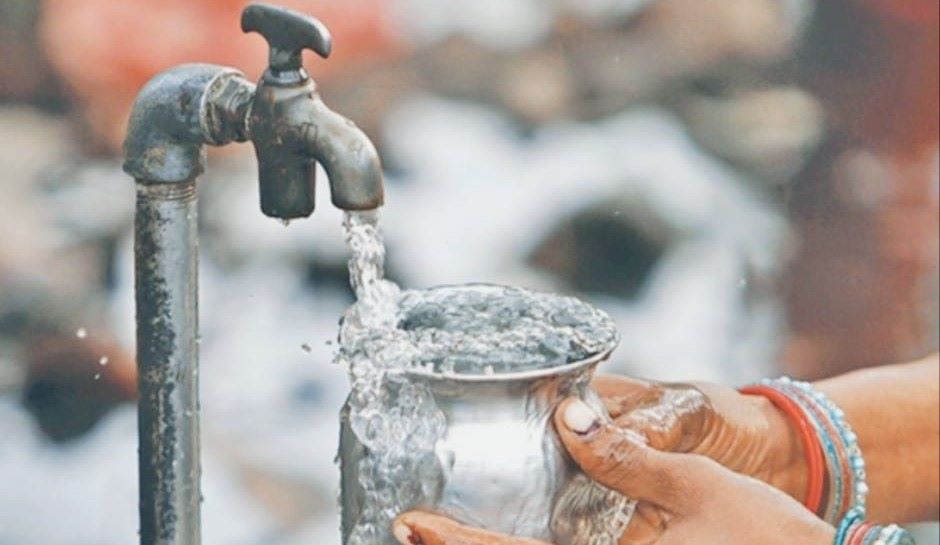
First, an individual retains the right to use water resources situated on land they lawfully possess for their own personal needs, such as drinking water or domestic use. Second, where a community has traditionally and customarily used a particular water source for collective purposes, that community retains priority of use over that source.
The bill further clarifies that if privately held water could also serve a nearby community’s or settlement’s drinking water needs, the individual must first secure the water required for their own reasonable use and then allow any surplus to be used by the community, with the state expected to support communities that have historically relied on shared, customary water use.
How does the bill divide authority between federal, provincial and local governments?
Article 4 assigns the overall power to protect, develop and manage water resources jointly to the federal government, provincial governments and local levels, with detailed jurisdictional boundaries set out in two schedules attached to the bill.
Schedule 1 splits authority over irrigation and hydropower by project size and geographic reach: for instance, irrigation schemes covering more than two hundred hectares in hill and mountain areas or five thousand hectares in the plains, projects spanning more than one province, and larger landslide-control or embankment works fall under federal jurisdiction, while mid-sized and single-province projects go to provinces, and the smallest local schemes go to local governments.
A similar tiered structure applies to hydropower, split roughly by installed capacity, with municipalities handling projects up to five megawatts and provinces handling mid-sized capacity bands.
Schedule 2 applies a similar sliding scale to rivers, wetlands, reservoirs and lakes, classified by size and strategic importance.
What is the priority order in which water can be used?
Article 5 sets out a ranked list of purposes the state must generally favour when allocating scarce water: first, drinking water and domestic use, including livestock rearing, fish farming and the needs of aquatic life; second, irrigation; third, hydropower generation; fourth, religious and cultural purposes; fifth, mineral extraction, commercial and industrial use; sixth, water transportation; seventh, recreation and tourism; and eighth, use by wildlife.
This ordering does not disturb water uses that were already underway when the law takes effect, so existing irrigation canals or power plants are not automatically reshuffled down the list.
The bill also allows the government, on the commission’s recommendation and through a notice in the Nepal Gazette, to adjust how available water is apportioned if drought, flood, climate change or other natural causes significantly alter how much water is actually available in a given period, giving the framework some built-in flexibility for hydrological stress.
What is the Water and Energy Commission and who sits on it?
The bill formally establishes a Water and Energy Commission tasked with the integrated development, management, study and research of water and energy resources, replacing the commission’s previous existence through cabinet decisions with a statutory body.
It would be chaired by the minister for energy, water resources and irrigation, with a full-time vice chair appointed by the government from candidates holding at least a postgraduate degree and fifteen years of relevant experience in water or energy engineering, water management or natural resource conservation.
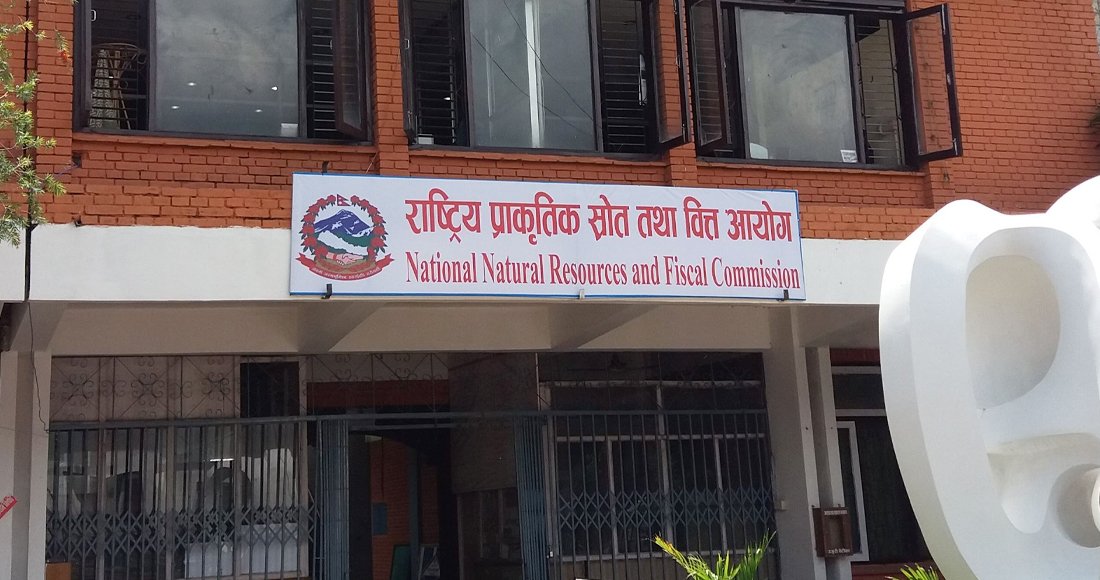
Voting members include secretaries from ministries covering law, agriculture, drinking water, foreign affairs, forests and environment, land management and cooperatives, plus a representative from the National Natural Resources and Fiscal Commission and the National Planning Commission.
Three additional expert members, including at least one woman, are appointed for their technical background in engineering, energy management, environmental science, economics or law, and the commission secretary serves as member-secretary. The vice chair and expert members serve four-year terms, renewable once.
What powers and duties does the commission actually have?
Beyond chairing meetings and coordinating between tiers of government, the commission is assigned a wide catalogue of functions in Article 10. These include drafting and updating national water and energy policy for government approval, preparing river basin plans and sectoral master plans, advising the government on international treaties and agreements related to water and energy and granting the consent needed before other authorities can issue water-use licences.
Similarly,other functions of the commission will be setting boundaries for rivers, lakes and public ponds, establishing the basis for fair distribution of benefits from multi-purpose water development, studying and regulating groundwater, monitoring groundwater tables, setting standards and inspection checklists for dam safety and issuing directives to dam operators and licence holders.
The commission is also expected to recommend guidelines on excavation standards for riverbeds and to work with universities and research institutions on questions of benefit-sharing and inter-generational equity, positioning it as both a policy body and a technical regulator across the water and energy sectors.
What is “water accounting” and how would it work in practice?
Article 14 introduces a formal system the bill calls water accounting, under which the commission must maintain time-bound records for every river basin showing how much water is available and how it is being used. These records are to be organised around several categories: surface and groundwater sources, rainfall and other water sources, water used to maintain religious, cultural or natural environmental values, water used for drinking, irrigation, hydropower and other specified purposes, and finally any surplus remaining after those uses are accounted for.
The system is meant to be continuously updated using data and records submitted under separate provisions on water-use consent, and any entity currently using water resources is required to submit its usage details to the commission.
In principle, this creates a live national ledger of water availability and consumption that planners can use to judge whether a river basin has room for new irrigation, drinking water or hydropower allocations before granting further permits.
When is Commission consent required to use water, and who is exempt?
Under Article 16, federal, provincial and local governments may use water within their own jurisdiction and grant permits for others to do so, but before any licensing authority issues a permit to a person, company or institution, it must first obtain the commission’s consent, unless the government body itself is the one directly using the water.
The bill then lists specific categories exempted from this consent requirement, recognising that not every water use carries the same regulatory weight. These exemptions cover shallow tube wells and domestic household use, traditional water mills operated as cottage industry, water used for customary, religious or cultural purposes, community drinking water and irrigation systems that have traditionally operated in a given area, and small-scale boat operation for personal local transport.
Provincial and local governments issuing their own water-use permits under their own laws must still follow nationally approved river basin plans and the usage standards set under the bill, preserving a degree of central coordination even where consent is not formally required.
What are river basin plans and sectoral master plans?
The bill creates a two-layered planning structure. Under Article 18, the commission must prepare a river basin plan for each basin, covering the sustainable development, coordinated use, conservation and management of the water available there, in coordination with the relevant provincial and local governments, before submitting it for government approval.
These plans must address water availability, demand and allocation criteria, existing and future projects or infrastructure, risks from climate change and water-induced disasters, the volumes local residents currently use and may use in future, environmental flow requirements, and the economic, social, cultural and environmental effects of water use, including the interrelationship between water, hydropower, energy, food production and other natural resources.
Under Article 19, the commission then prepares sectoral master plans for each basin, built on top of the basin plan, focused on the beneficial and efficient use of available water in specific sectors, again in coordination with subnational governments, which may themselves prepare such plans in consultation with the commission for matters within their own jurisdiction.
How does the bill address groundwater management and recharge?
A dedicated chapter obliges federal, provincial and local governments to collect groundwater data, regulate and monitor its use, test its quantity and quality, and issue permits for its use outside zones where extraction has been restricted.
Article 21 empowers the commission, working with provincial and local governments, to identify locations and techniques for artificial or natural groundwater recharge wherever an area’s water table has dropped, and requires that any party building infrastructure likely to interfere with natural recharge must make compensatory recharge arrangements and avoid discharging harmful or chemical substances into recharge zones.
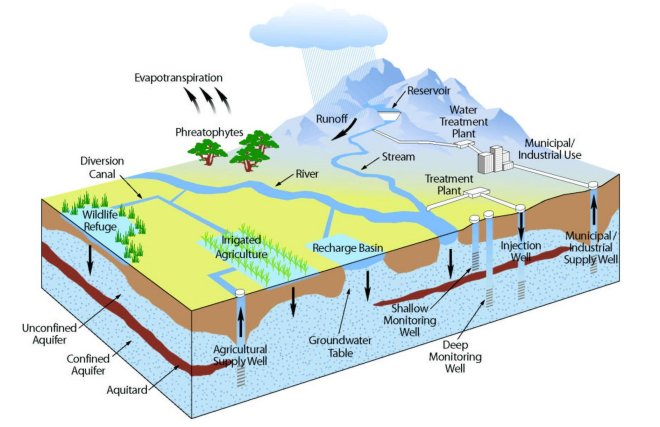
Article 22 goes further, allowing authorities to fully or partially halt groundwater extraction in specific locations on the commission’s recommendation if excessive withdrawal has degraded water quantity or quality, if falling water tables have created or risk creating hazards, if over-extraction is damaging wetlands or aquatic habitats nearby, or if chemical, biological or other contamination has rendered the water unusable, with a formal explanation defining what counts as “excessive extraction” for these purposes.
What environmental flow and river conservation rules does the bill introduce?
Article 23 requires the government to ensure that below any dam, a minimum environmental flow continues to flow year-round in the river, set at whichever is higher between fifteen percent of the average flow of the river and the flow volume recommended in the project’s environmental impact assessment. This flow is explicitly defined to serve downstream communities, wildlife, aquatic life, biodiversity, cultural and religious practices, irrigation systems and the broader hydrology of the river, rather than being treated as a token residual release.
The same article requires authorities to keep riverbanks and floodplains clean, manage flooding caused by landslide-blocked rivers, build climate-resilient infrastructure and adaptation measures, protect glaciers and glacial lakes from climate risk, provide alternative water sources if natural springs dry up due to climate change, protect traditional ponds and stone spouts during construction, and set standards for riverbed excavation.
The government also gains explicit power to gazette religiously, culturally or ecologically significant rivers, lakes, wetlands and ponds as protected zones where construction or encroachment is prohibited.
What do the dam safety and dam security provisions require?
The bill distinguishes between “dam security,” meaning protection against deliberate interference or attack on a dam structure, which becomes the government’s responsibility, and “dam safety,” meaning ongoing technical monitoring and maintenance, which remains the operator’s responsibility.
Article 32 places an extensive list of obligations on dam operators, including following commission-set safety standards, installing and running hydro-meteorological and seismic monitoring stations, establishing flood and dam-failure early warning systems, keeping monitoring equipment functional and securely archiving hydrological, catchment, environmental, engineering and geological records.
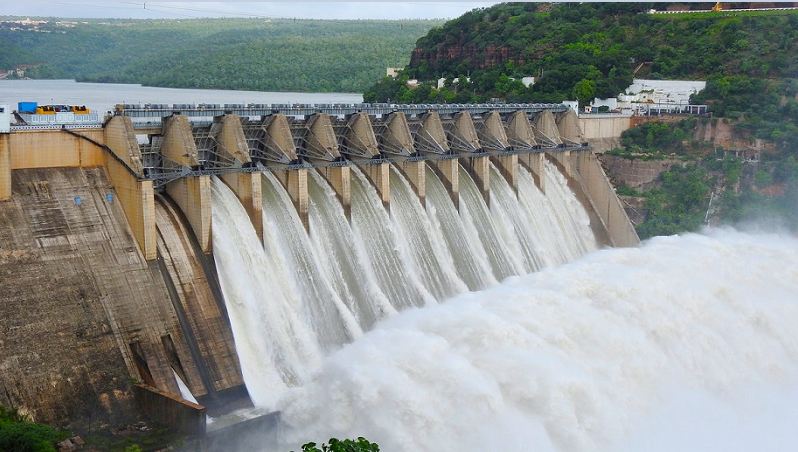
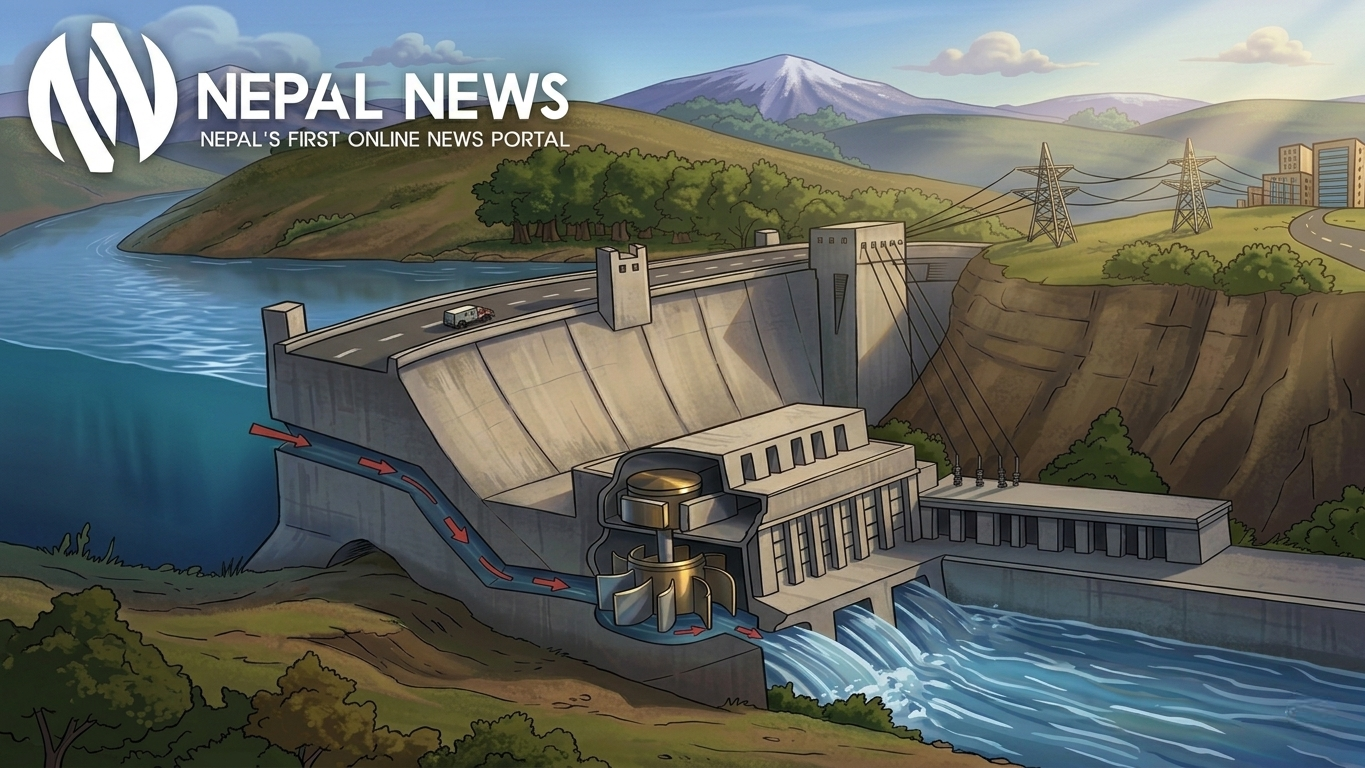
Hydropower. File photo
Other obligations of the dam operators include digitally storing and analysing monitoring data and sharing it regularly with the commission, preparing and implementing maintenance manuals and emergency action plans in coordination with disaster management authorities, maintaining a dedicated dam safety unit with adequate staff, inspecting dams at least twice a year before and after the monsoon and reporting findings to the commissionand arranging dam insurance.
Article 33 additionally requires an independent panel of experts to conduct a comprehensive dam evaluation every five years, based on the dam’s classification, with a copy of that evaluation also going to the commission.
What penalties does the bill prescribe for violations?
Chapter 10 defines a range of offences and matches them to specific punishments. Using water without the required commission consent draws a fine of up to five hundred thousand rupees. More serious violations, such as acting contrary to restrictions on groundwater extraction, carry fines of up to Rs 1 million plus imprisonment of up to ten years.
Building prohibited structures or encroaching on protected river, lake or wetland zones, and causing serious damage to a riverbed, similarly carry fines of up to Rs 1 million or imprisonment of up to ten years, or both, with damages tied to the actual assessed loss where that can be determined.
Violating water quality standards carries a lighter penalty of up to Rs 100,000 or three months to one year in prison, or both, while a dam operator’s failure to follow commission directives, or other general violations of the act, draw fines of up to Rs 100,000.
District courts handle the more serious cases, while the commission secretary handles minor offences directly, with appeal rights to the relevant high court.
How has Nepal’s private sector, particularly hydropower developers, reacted to this legislative push?
While formal industry feedback on the proposed Water Resources Bill is still emerging, the Independent Power Producers’ Association, Nepal says several provisions could increase regulatory uncertainty and reduce the commercial viability of hydropower projects.
Its main concern is the requirement that provincial and local governments obtain prior consent from the Water and Energy Commission before issuing water-use licences. Although Nepal’s Constitution devolves certain water-resource powers to subnational governments, IPPAN argues the provision effectively recentralises authority by making the commission the final gatekeeper for licensing decisions.
The association has also objected to the bill’s stricter environmental flow requirement, which raises the minimum river release below dams from the current 15% of the average monthly flow—or more if required by an environmental impact assessment.
According to IPPAN, this could reduce electricity generation, lower project capacity and affect the financial viability of existing and future hydropower projects. It has further questioned the dam security provisions, arguing they are unclear because the government is assigned responsibility for dam security, yet operators must bear the full cost if government protection is requested.
More broadly, IPPAN has urged the government to make the wider legal framework more investor-friendly. It has sought 10–15 years of tax relief for private hydropower projects, incentives for projects commissioned before the mid-2030s, direct private access to transmission lines and cross-border power trading, a single-window licensing system, and fixed timelines for forest clearance and environmental approvals.
The association has also highlighted delays in power purchase agreements, land acquisition hurdles and forest-related prosecutions, indicating that the private sector’s overarching demand is for faster, more predictable and investment-friendly implementation rather than opposition to the state’s central role in water governance.